
[NOTE: Our Lean Office presentation has been trusted by an array of prestigious organizations, including industry leaders such as Apple, DHL, Cummins, Stryker, Avery Dennison, Volvo Cars, Baker Tilly, Viasat, Rubix, Techaerospace, Pacific Helmets, BBA, to name just a few.]
Transform your office operations with the power of Lean principles using this expertly crafted slide deck. Designed to inspire and equip teams, this presentation offers an in-depth exploration of Lean Office concepts, practical tools, and actionable strategies to eliminate waste, optimize processes, and build a culture of continuous improvement.

This slide deck is a must-have for administrative staff, office managers and service professionals seeking to create high-performing office environments. Whether you're a manager looking to streamline processes, a team leader eager to boost productivity, or a Lean champion aiming to embed continuous improvement, this presentation equips you with actionable insights and tools to lead your Lean Office transformation effectively.
||||||||||||||||||||||||||||||||||||||||||||||||||||||||||||||||||||||||||||||||||||||||||||||||||||||||||||||||||||||||||||||||||||||||||||||||||||||
This training package includes:
1. Lean Office PPT training presentation (PowerPoint format in 16:9 widescreen)
2. Eight Wastes of Lean poster (PDF format, in color and monochrome, printable in A3 size)
||||||||||||||||||||||||||||||||||||||||||||||||||||||||||||||||||||||||||||||||||||||||||||||||||||||||||||||||||||||||||||||||||||||||||||||||||||||
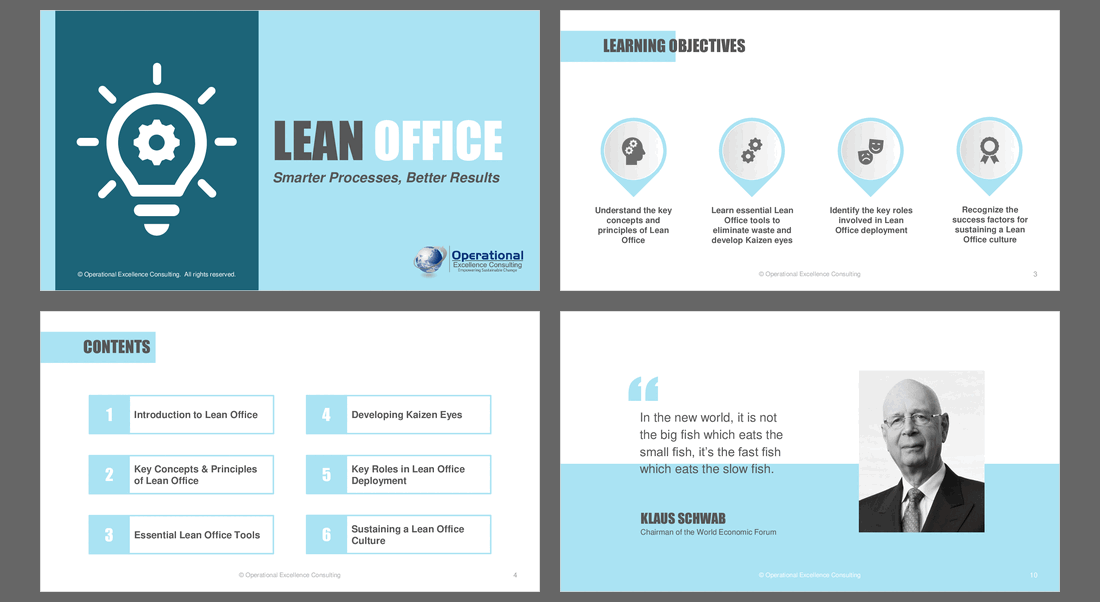
LEARNING OBJECTIVES
1. Understand Lean Office Fundamentals: Dive into the foundational principles and concepts that underpin Lean Office.
2. Master Waste Elimination Tools: Gain practical knowledge of tools and techniques to identify inefficiencies and maximize value.
3. Identify Key Roles: Understand the responsibilities and importance of roles in successful Lean Office implementation.
4. Sustain Lean Practices: Learn the strategies necessary for embedding Lean into your office culture for long-term success.
CONTENTS
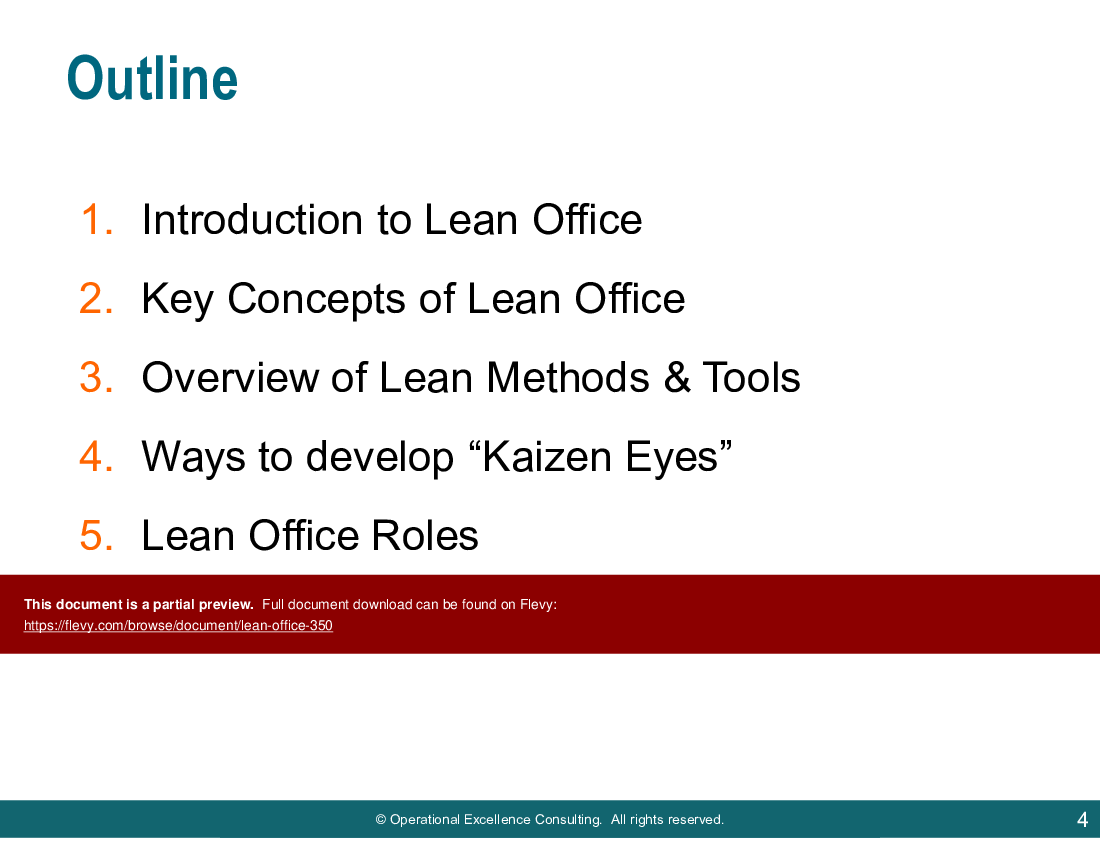
1. Introduction to Lean Office
• Gain clarity on Lean thinking, its differences from traditional approaches, and its applications in office environments. Learn how Lean can transform office operations and deliver lasting benefits.
2. Key Concepts and Principles of Lean Office
• Explore the eight types of waste, value-added vs. non-value-added activities, and the core Lean principles that drive continuous improvement.
3. Essential Lean Office Tools
• Discover practical tools like 5S, value stream mapping, Kaizen, and PDCA problem-solving, which will empower your team to streamline processes and eliminate inefficiencies.
4. Developing Kaizen Eyes
• Learn how to spot waste and improvement opportunities by cultivating "Kaizen eyes," a critical skill for continuous process improvement.
5. Key Roles in Lean Office Deployment
• Understand the roles of Lean steering committees, champions, coaches, and other key players who drive the Lean transformation in your organization.
6. Sustaining a Lean Office Culture
• Learn how to sustain Lean efforts through critical success factors, real-life lessons from other adopters, and strategies for embedding Lean into your office culture.
Got a question about the product? Email us at support@flevy.com or ask the author directly by using the "Ask the Author a Question" form. If you cannot view the preview above this document description, go here to view the large preview instead.
Executive Summary
The Lean Office presentation is a structured training resource designed to help organizations optimize their office processes through Lean methodologies. Developed by a Certified Lean Six Sigma Black Belt with extensive experience at Microsoft, IBM, and Panasonic, this presentation equips teams with the tools and knowledge necessary to eliminate waste, enhance productivity, and foster a culture of continuous improvement. By leveraging Lean principles, organizations can achieve operational excellence, streamline workflows, and ultimately deliver greater value to customers.
Who This Is For and When to Use
• Office managers and team leaders seeking to improve operational efficiency
• Continuous improvement teams focused on waste reduction
• HR and training departments responsible for employee development
• Executives looking to implement Lean practices across the organization
Best-fit moments to use this deck:
• During training sessions for new employees on Lean principles
• As part of a strategic initiative to enhance office efficiency
• When introducing new processes aimed at waste elimination and productivity improvement
Learning Objectives
• Understand the key concepts and principles of Lean Office
• Identify the key roles involved in Lean Office deployment
• Learn essential Lean Office tools to eliminate waste and develop Kaizen eyes
• Recognize the success factors for sustaining a Lean Office culture
Table of Contents
• Introduction to Lean Office (page 5)
• Key Concepts & Principles of Lean Office (page 26)
• Essential Lean Office Tools (page 36)
• Developing Kaizen Eyes (page 127)
• Key Roles in Lean Office Deployment (page 134)
• Sustaining a Lean Office Culture (page 144)
Primary Topics Covered
• Lean Office Definition - A structured approach to eliminating waste in office processes, ensuring workflows align with customer needs and drive continuous improvement.
• Five Principles of Lean Office - Value, Value Stream, Flow, Pull, and Perfection, adapted from Lean Thinking to optimize office processes.
• Lean Tools - Essential tools such as 5S, Value Stream Mapping, and Kaizen that help eliminate waste and improve efficiency.
• Kaizen Eyes - The ability to identify inefficiencies in daily workflows, crucial for fostering a culture of continuous improvement.
• Lean Roles - Defined roles within a Lean Office, including leadership, process improvement advocates, and execution teams.
• Sustaining Lean Culture - Strategies for maintaining a Lean culture, including management commitment and addressing resistance to change.
Deliverables, Templates, and Tools
• Lean Office training slides for team workshops
• Value Stream Mapping templates for process analysis
• 5S implementation checklists for workspace organization
• Kaizen event planning templates for continuous improvement initiatives
• Standard work documentation examples for consistent process execution
Slide Highlights
• Overview of Lean Office principles and their application in administrative settings
• Case studies showcasing successful Lean Office implementations by companies like GE and Amazon
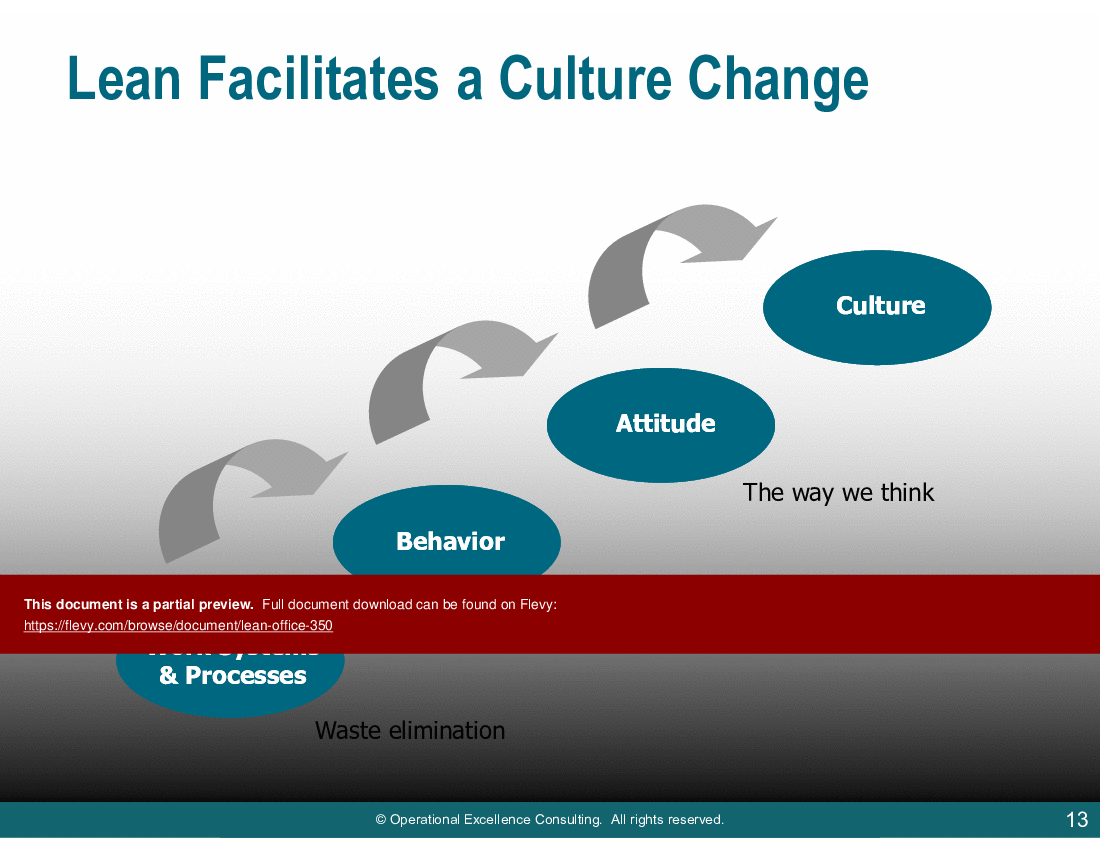
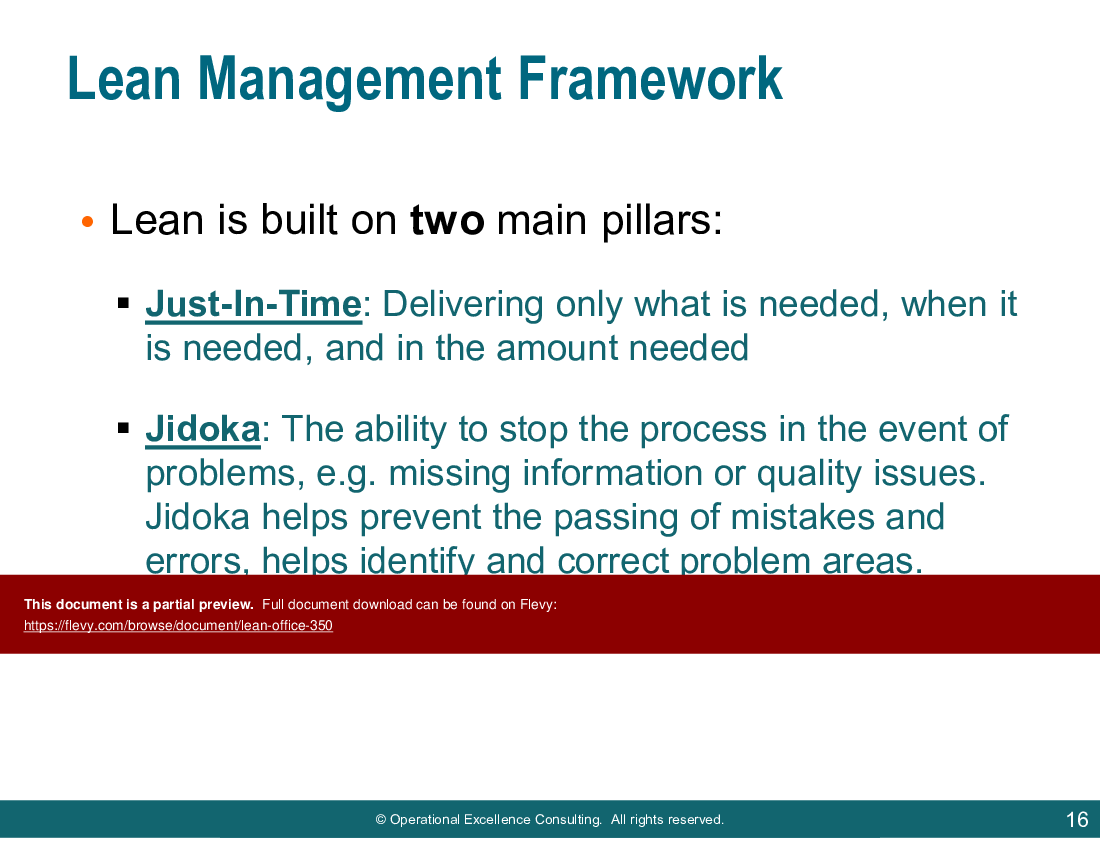
• Visual aids illustrating the Lean Office framework and its alignment with the House of Toyota
• Examples of common Lean wastes in office environments and strategies for their elimination
Potential Workshop Agenda
Lean Office Introduction (60 minutes)
• Overview of Lean principles and their relevance to office environments
• Discussion on the benefits of adopting Lean methodologies
Lean Tools Workshop (90 minutes)
• Hands-on training on 5S and Value Stream Mapping
• Group activities to identify and eliminate waste in current processes
Kaizen Eyes Development Session (60 minutes)
• Training on recognizing inefficiencies and fostering a culture of continuous improvement
• Interactive exercises to practice developing Kaizen eyes
Customization Guidance
• Tailor the presentation to reflect specific organizational processes and challenges
• Incorporate company-specific examples in training sessions to enhance relevance
• Adjust the workshop agenda based on participant experience levels and organizational goals
Secondary Topics Covered
• The origins of Lean principles and their evolution over time
• The role of leadership in driving Lean initiatives
• Strategies for overcoming common challenges in Lean Office implementation
FAQ
What is Lean Office?
Lean Office is a structured approach to eliminating waste in office processes, ensuring workflows align with customer needs and drive continuous improvement.
What are the key principles of Lean Office?
The key principles include defining value from the customer’s perspective, mapping value streams, ensuring smooth workflows, implementing pull systems, and striving for perfection.
How can Lean tools help my organization?
Lean tools such as 5S and Value Stream Mapping help identify inefficiencies, eliminate waste, and foster a culture of continuous improvement, leading to enhanced productivity.
What roles are involved in Lean Office deployment?
Roles include leadership and oversight (Lean Steering Committee), process improvement advocates (Champions), and execution teams (Team Leaders and Members).
How do I sustain a Lean culture in my organization?
Sustaining a Lean culture requires management commitment, alignment with organizational vision, regular training, and addressing resistance to change.
What is Kaizen?
Kaizen is a philosophy centered around continuous improvement, involving everyone in the organization to enhance processes and workplace practices.
How can I develop Kaizen eyes in my team?
Encourage staff to focus on root causes, train them to ask "Why?" repeatedly, and use tools like 5S and Value Stream Mapping to visualize problems.
What are the common challenges in Lean Office implementation?
Challenges include lack of leadership commitment, insufficient resources, resistance to change, and focusing too much on tools rather than cultural change.
Glossary
• Lean Office - A structured approach to eliminating waste in office processes.
• Kaizen - Continuous improvement involving all employees.
• 5S - A methodology for organizing and maintaining a tidy workspace: Sort, Set in Order, Shine, Standardize, Sustain.
• Value Stream Mapping - A tool for visualizing processes to identify inefficiencies.
• Muda - Waste; activities that consume resources without adding value.
• Standard Work - Agreed-upon procedures for completing tasks efficiently.
• Visual Management - Using visual cues to monitor and manage workflows.
• PDCA - Plan-Do-Check-Act; a problem-solving process.
• Pareto Chart - A tool for identifying the most significant factors contributing to a problem.
• 5 Whys - A technique for identifying root causes by asking "Why?" repeatedly.
• Cause and Effect Diagram - A visual tool for organizing potential causes of a problem.
• Lean Culture - An organizational culture focused on continuous improvement and waste elimination.
Source: Best Practices in Operational Excellence, Lean, Lean Office PowerPoint Slides: Lean Office PowerPoint (PPTX) Presentation Slide Deck, Operational Excellence Consulting
|
Receive our FREE presentation on Operational Excellence
This 50-slide presentation provides a high-level introduction to the 4 Building Blocks of Operational Excellence. Achieving OpEx requires the implementation of a Business Execution System that integrates these 4 building blocks. |