


This presentation is a 6 sigma training document of a major consulting firm.
The contents include: Definitions, Background and Benefits, Scope and Organization, Focus Areas:Designed Experiment Example, Sample Six Sigma Firms, Books and Software, Appendix: Six Sigma Problem Solving and Statistical Tools
six sigma, 6 sigma, training, presentation, consulting
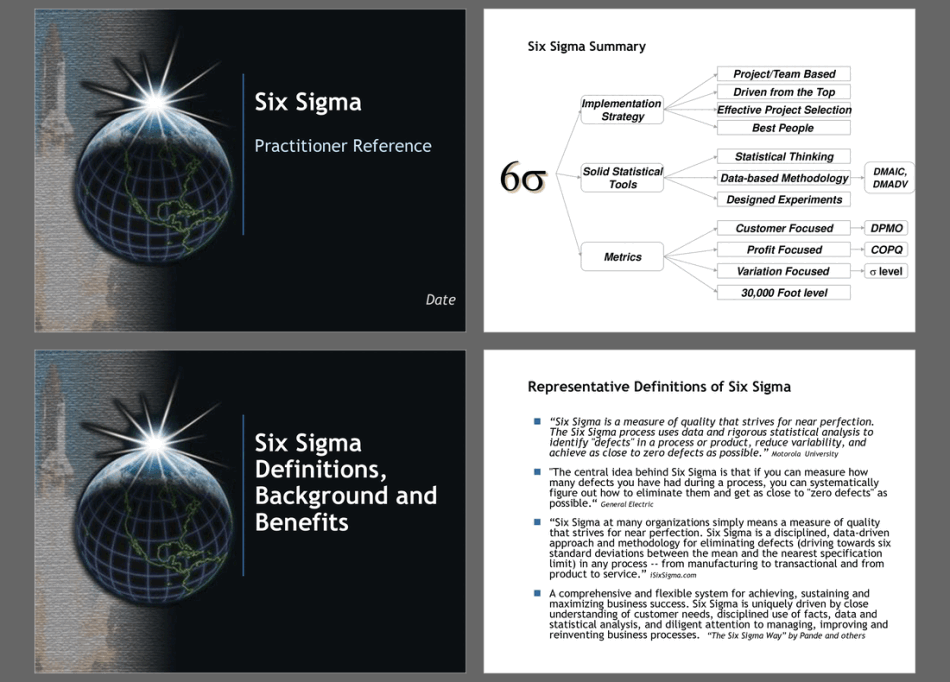
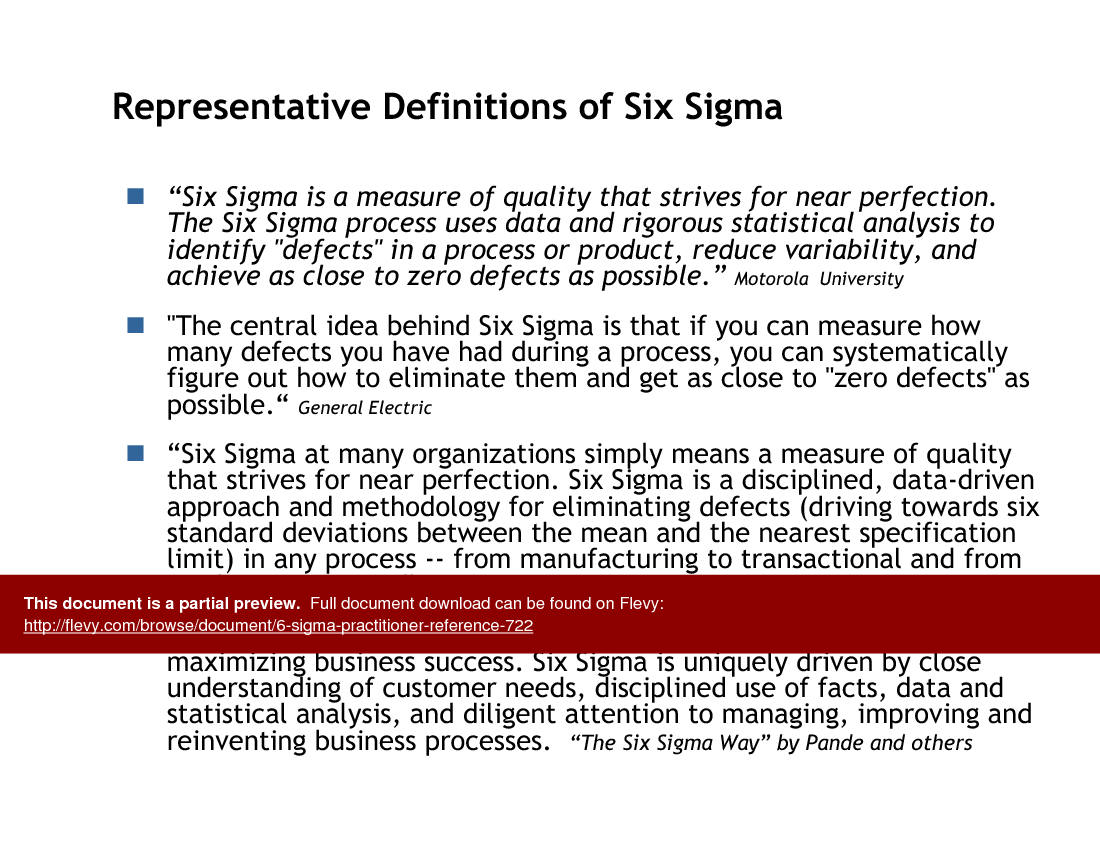
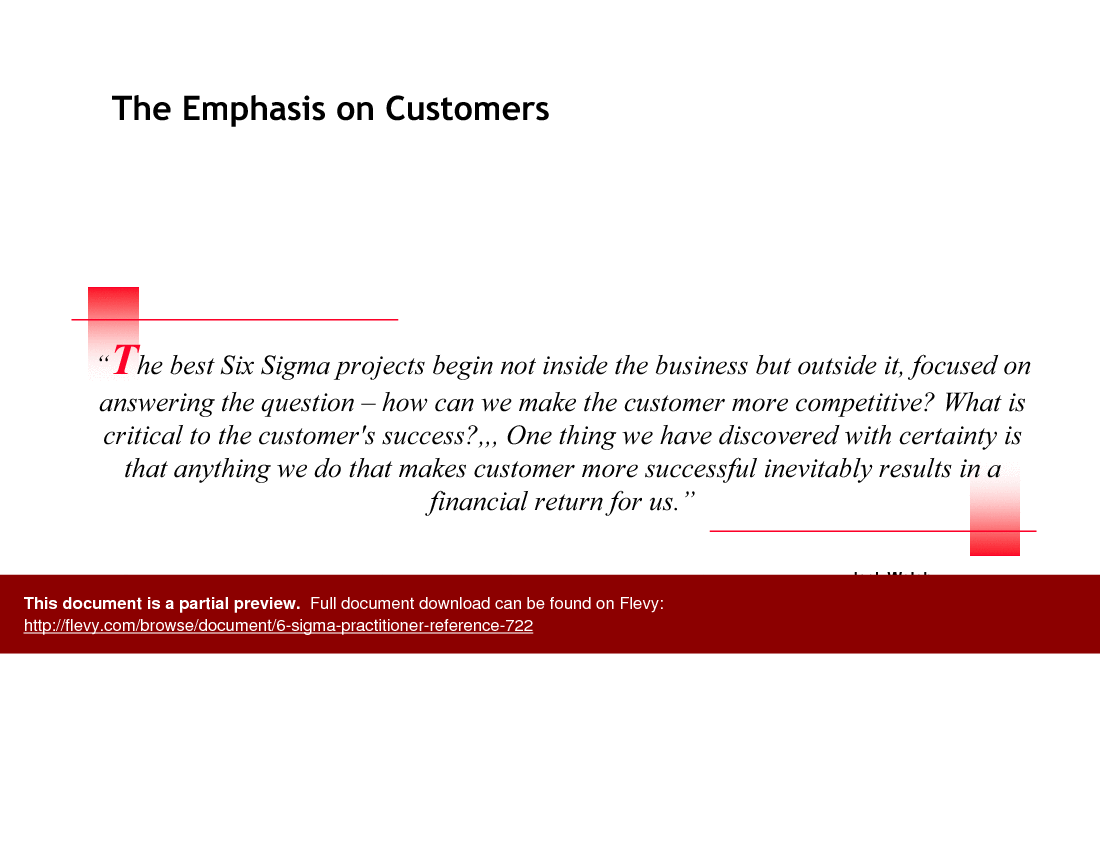
This document delves into the core principles of Six Sigma, providing a detailed exploration of its definitions and methodologies. It includes representative definitions from leading organizations, emphasizing the goal of achieving near-zero defects through data-driven processes. The emphasis on customer-centric projects highlights the importance of aligning Six Sigma initiatives with customer success, ultimately driving financial returns.
The scope and organization section outlines the structured approach of Six Sigma, detailing the DMAIC (Define, Measure, Analyze, Improve, Control) methodology. This section provides a clear framework for implementing Six Sigma projects, ensuring that all aspects of the process are meticulously planned and executed. The focus areas cover statistical principles, example measures, and tools, offering practical insights into the application of Six Sigma techniques.
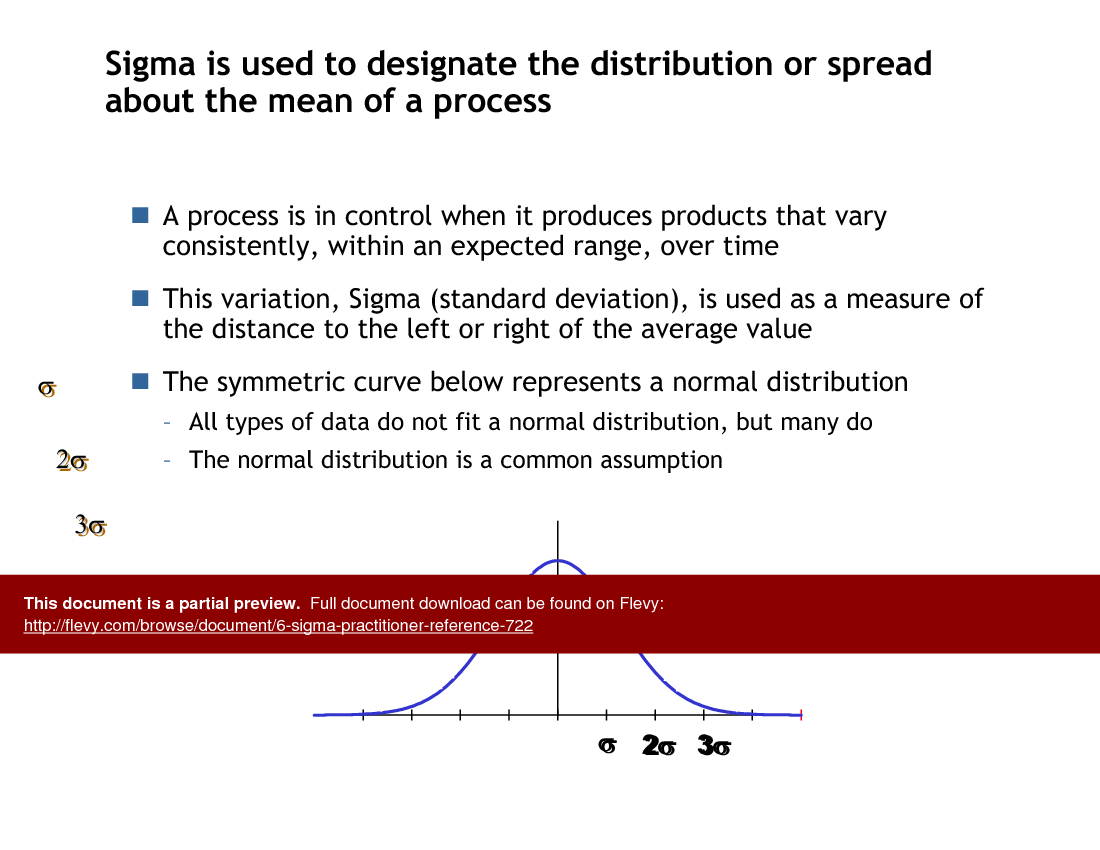
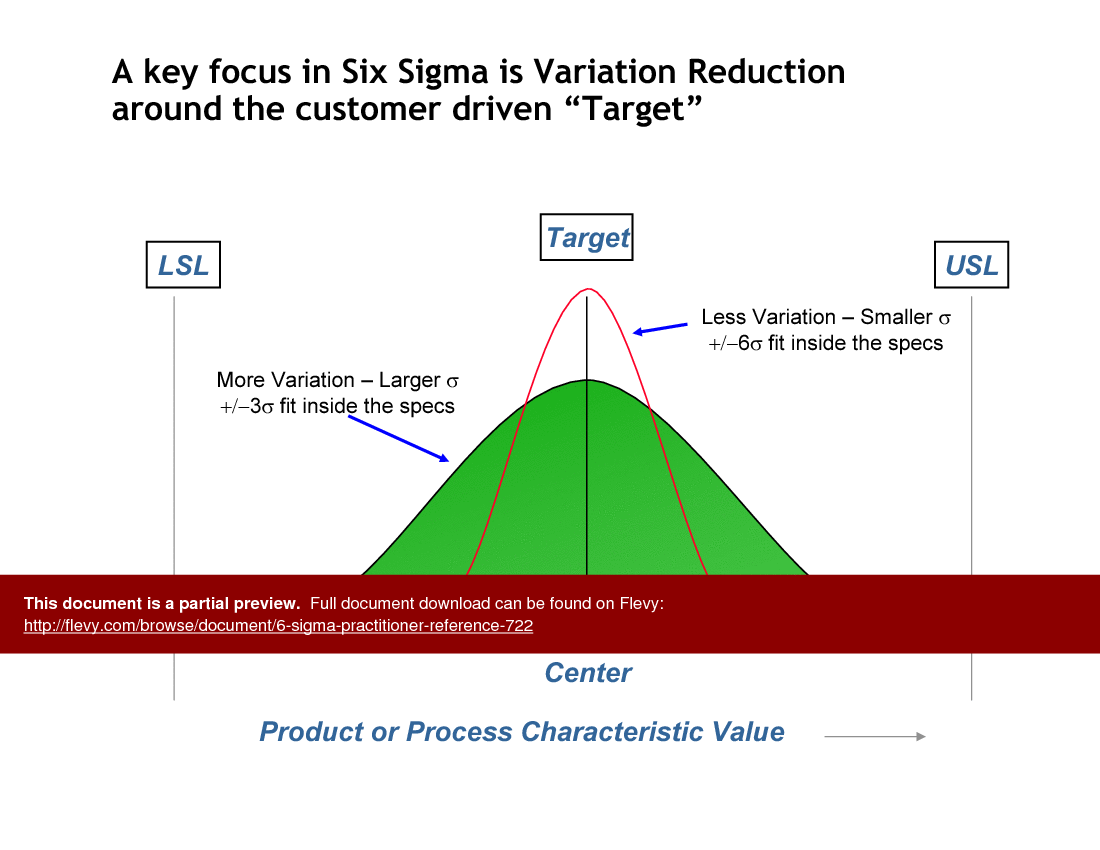
A key focus is on variation reduction, with detailed explanations of how to measure and control process variability. The document includes visual aids such as control charts and histograms to illustrate these concepts. These tools are essential for monitoring process performance and identifying areas for improvement, ensuring that processes remain within specified limits.
The appendix is a valuable resource, containing additional examples of Six Sigma statistical tools and problem-solving techniques. This section includes flowcharts, Pareto diagrams, and cause-and-effect diagrams, providing a comprehensive toolkit for Six Sigma practitioners. The document also lists sample Six Sigma consulting firms and services, offering guidance on where to seek further expertise and training.
Got a question about the product? Email us at support@flevy.com or ask the author directly by using the "Ask the Author a Question" form. If you cannot view the preview above this document description, go here to view the large preview instead.
Executive Summary
The Six Sigma Practitioner Reference PPT is a comprehensive training guide designed to enhance understanding of Six Sigma methodologies, including DMAIC and DMADV frameworks. This presentation equips professionals with essential tools for process improvement, focusing on statistical analysis, variation reduction, and customer satisfaction. Users will gain insights into effective project selection, team dynamics, and the application of statistical tools to drive sustainable business improvements. This resource is ideal for organizations aiming to achieve operational excellence and enhance product quality.
Who This Is For and When to Use
• Quality Assurance Managers overseeing process improvement initiatives
• Project Managers leading Six Sigma projects
• Business Analysts focused on data-driven decision-making
• Executives aiming to implement Six Sigma across their organization
Best-fit moments to use this deck:
• During Six Sigma training sessions for new team members
• In workshops aimed at refining process improvement strategies
• For project kick-off meetings to align team objectives and methodologies
Learning Objectives
• Define Six Sigma principles and their application in business processes
• Build a structured approach using DMAIC and DMADV methodologies
• Establish metrics for measuring process performance and improvement
• Identify and apply statistical tools for data analysis and decision-making
• Develop effective project charters and process maps
• Analyze process variations and implement control measures
Table of Contents
• Summary (page 1)
• Definitions, Background and Benefits (page 4)
• Scope and Organization (page 13)
• Focus Areas (page 16)
• Designed Experiment Example (page 35)
• Sample Six Sigma Firms, Books and Software (page 42)
• Appendix: Six Sigma Problem Solving and Statistical Tools (page 47)
Primary Topics Covered
• Six Sigma Overview - An introduction to Six Sigma as a structured methodology for business improvement, emphasizing defect reduction and process control.
• DMAIC Methodology - A detailed exploration of the Define, Measure, Analyze, Improve, and Control phases for existing process improvements.
• DMADV/DFSS Approach - A framework for designing new processes and products that meet Six Sigma standards.
• Statistical Tools - An overview of essential statistical tools such as control charts, Pareto analysis, and histograms for data-driven decision-making.
• Project Management in Six Sigma - Insights into managing Six Sigma projects, including team roles and responsibilities.
• Customer Focus - Emphasizing the importance of understanding customer needs in driving Six Sigma initiatives.
Deliverables, Templates, and Tools
• Project charter template for defining Six Sigma initiatives
• Process flowchart template for visualizing process steps
• Statistical analysis tools for measuring process capability
• Control chart examples for monitoring process stability
• FMEA template for identifying and prioritizing potential failure modes
• QFD matrix for aligning customer requirements with product features
Slide Highlights
• Overview of Six Sigma principles and implementation strategies
• Detailed explanation of the DMAIC and DMADV methodologies
• Visual representations of statistical tools and their applications
• Case studies of successful Six Sigma implementations in various industries
• Examples of process mapping and analysis techniques
Potential Workshop Agenda
Introduction to Six Sigma (60 minutes)
• Overview of Six Sigma principles and methodologies
• Discussion on the importance of customer focus in process improvement
DMAIC Workshop (90 minutes)
• Breakout sessions to define project goals and customer deliverables
• Hands-on activities to measure current process performance
Statistical Tools Training (60 minutes)
• Introduction to key statistical tools used in Six Sigma
• Practical exercises to analyze data and interpret results
Customization Guidance
• Tailor project charters to reflect specific organizational goals and metrics
• Adjust process maps to align with current operational workflows
• Incorporate company-specific examples in training sessions to enhance relevance
Secondary Topics Covered
• Change Management in Six Sigma initiatives
• Role of leadership in driving Six Sigma culture
• Continuous improvement strategies beyond Six Sigma
• Integration of Lean principles with Six Sigma methodologies
• Best practices for sustaining Six Sigma improvements over time
Topic FAQ
Document FAQ
These are questions addressed within this presentation.
What is Six Sigma?
Six Sigma is a data-driven methodology aimed at improving business processes by reducing defects and variability, ultimately enhancing customer satisfaction.
What are DMAIC and DMADV?
DMAIC is a structured approach for improving existing processes, while DMADV (or DFSS) focuses on designing new processes and products to meet Six Sigma standards.
What statistical tools are essential for Six Sigma?
Key tools include control charts, Pareto analysis, histograms, and FMEA, which help in analyzing data and identifying areas for improvement.
How can I implement Six Sigma in my organization?
Start by defining clear project goals, training team members on Six Sigma methodologies, and utilizing statistical tools to monitor progress and outcomes.
What are the benefits of using Six Sigma?
Benefits include reduced process variation, improved product quality, enhanced customer satisfaction, and increased operational efficiency.
How do I measure process performance in Six Sigma?
Utilize metrics such as DPMO (Defects Per Million Opportunities) and process capability indices (Cp, Cpk) to assess and monitor performance.
What is the role of leadership in Six Sigma?
Leadership is crucial for fostering a Six Sigma culture, providing support for initiatives, and ensuring alignment with organizational goals.
Can Six Sigma be applied in non-manufacturing sectors?
Yes, Six Sigma methodologies can be effectively applied in various sectors, including healthcare, finance, and service industries, to improve processes and outcomes.
Glossary
• DMAIC - Define, Measure, Analyze, Improve, Control; a Six Sigma methodology for process improvement.
• DMADV - Define, Measure, Analyze, Design, Verify; a Six Sigma approach for designing new processes.
• DPMO - Defects Per Million Opportunities; a metric for measuring process performance.
• FMEA - Failure Mode and Effects Analysis; a tool for identifying and prioritizing potential failure modes in a process.
• QFD - Quality Function Deployment; a method for linking customer requirements to product design.
• Cp - Process Capability index; a measure of how well a process meets specifications.
• Cpk - Process Capability index adjusted for process centering; indicates how close a process is to its target.
• Control Chart - A statistical tool used to monitor process stability over time.
• Pareto Analysis - A technique for identifying the most significant factors in a dataset, based on the 80/20 rule.
• Histogram - A graphical representation of the distribution of numerical data.
• Root Cause Analysis - A method for identifying the underlying causes of problems.
• Statistical Process Control (SPC) - A method of quality control that uses statistical methods to monitor and control a process.
• Lean - A methodology focused on minimizing waste and maximizing value in processes.
• Continuous Improvement - An ongoing effort to improve products, services, or processes.
• Customer Satisfaction - A measure of how products or services meet or exceed customer expectations.
• Variation - The degree to which a process deviates from its target or standard.
• Process Mapping - A visual representation of the steps in a process to identify areas for improvement.
• Design of Experiments (DOE) - A statistical method for planning and conducting experiments to understand the effects of multiple variables.
• Regression Analysis - A statistical technique for examining the relationship between variables.
Source: Best Practices in Six Sigma Project PowerPoint Slides: 6 Sigma Practitioner Reference PowerPoint (PPT) Presentation Slide Deck, Documents & Files
|
Receive our FREE presentation on Operational Excellence
This 50-slide presentation provides a high-level introduction to the 4 Building Blocks of Operational Excellence. Achieving OpEx requires the implementation of a Business Execution System that integrates these 4 building blocks. |