Incident Reporting - Safety Talk   19-page PDF document
$22.00

Incident Reporting - Safety Talk (19-page PDF document) Preview Image
Flevy is the marketplace for business best practices.
Incident Reporting - Safety Talk (19-page PDF document) Preview Image
Arrow   Click main image to view in full screen.

Incident Reporting - Safety Talk (PDF)

PDF document 19 Pages

$22.00

Add to Cart


Immediate download
Editable with PDF editor
Free lifetime updates

WORKPLACE SAFETY PDF DESCRIPTION

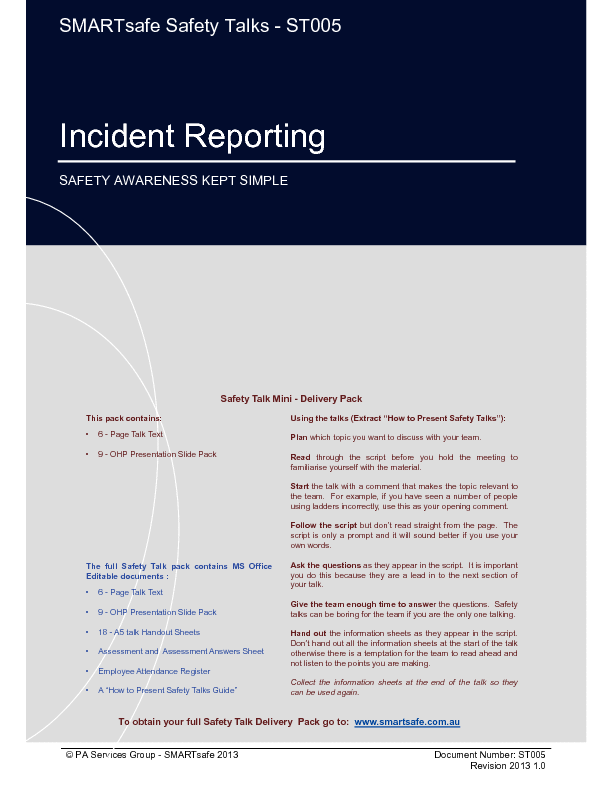
Editor Summary Incident Reporting - Safety Talk is a 19-page PDF safety-talk document by PA Services Group that explains why all workplace accidents and incidents must be reported and what happens after reporting. Read more

Accidents and incidents happen all the time. They can range from minor accidents and incidents like cuts and bruises, to major accidents and incidents that sometimes result in death. The reason for this safety talk is to explain why it is important to report all accidents and incidents and what the company does with the information you give them.

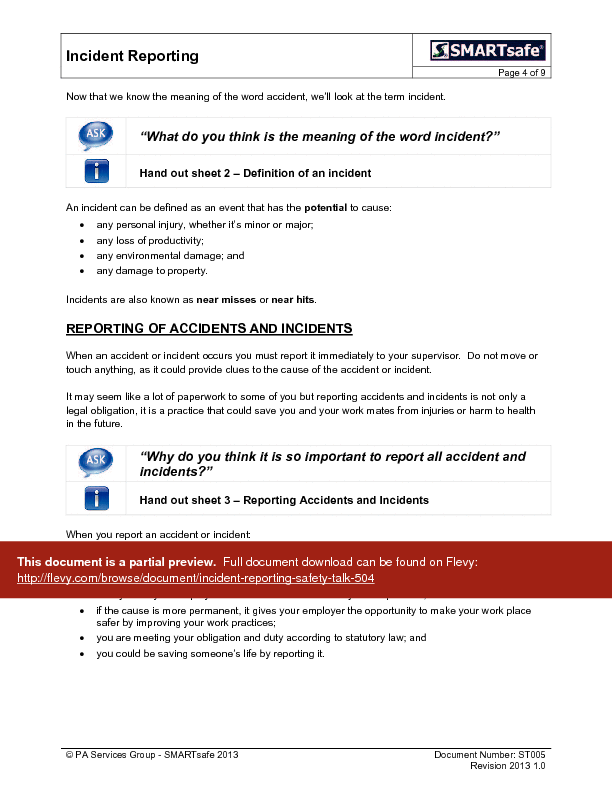
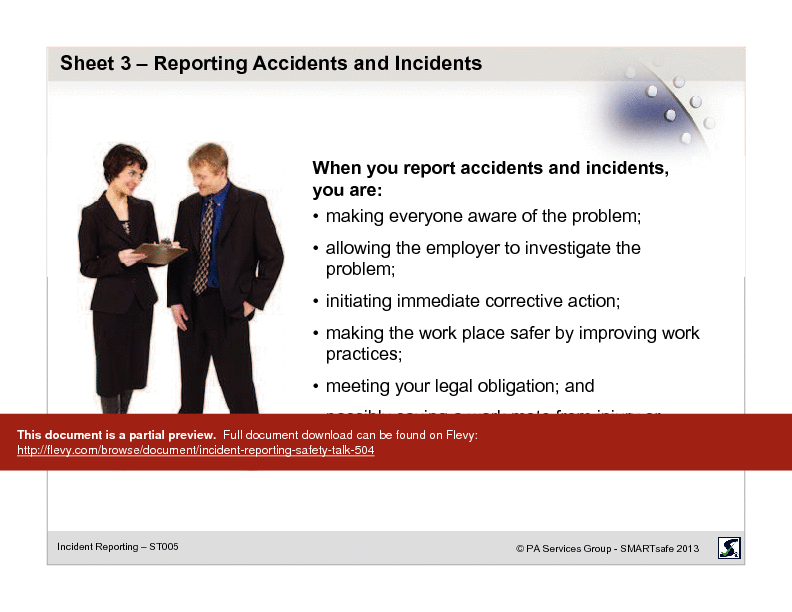
Accidents and incidents will continue to occur if they are not reported. By reporting them to your supervisor when they first happen, you will:
•  make sure everyone is aware of possible hazards;
•  reduce the chance that they will occur again;
•  meet your legal obligations; and
•  instigate an investigation to find out why it happened.

By reporting and investigating accidents and incidents you help to make your work place safer for yourself and your work mates.

Incident Reporting – Safety Talk provides a comprehensive overview of the critical importance of reporting all workplace accidents and incidents. This PDF delves into the definitions of both accidents and incidents, emphasizing their potential to cause personal injury, loss of productivity, environmental damage, and property damage. It highlights the necessity of immediate reporting to supervisors and the role of such reports in preventing future occurrences.

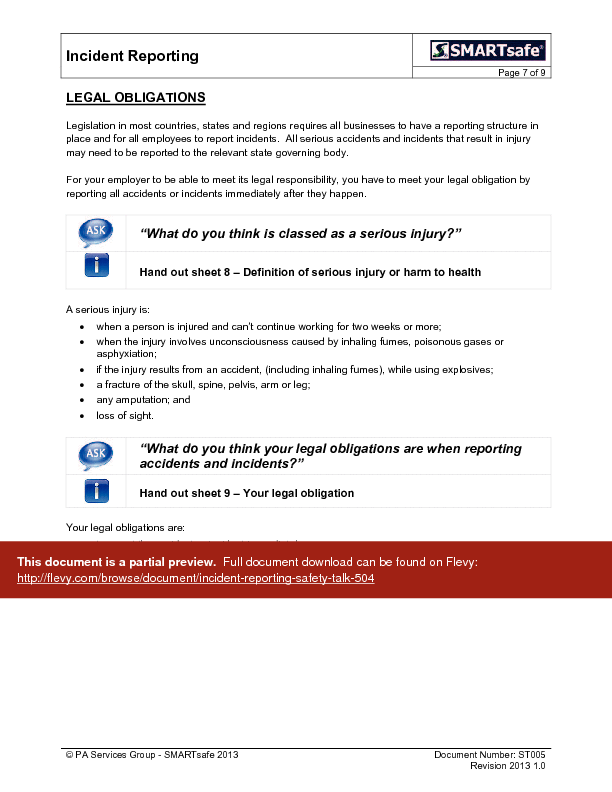
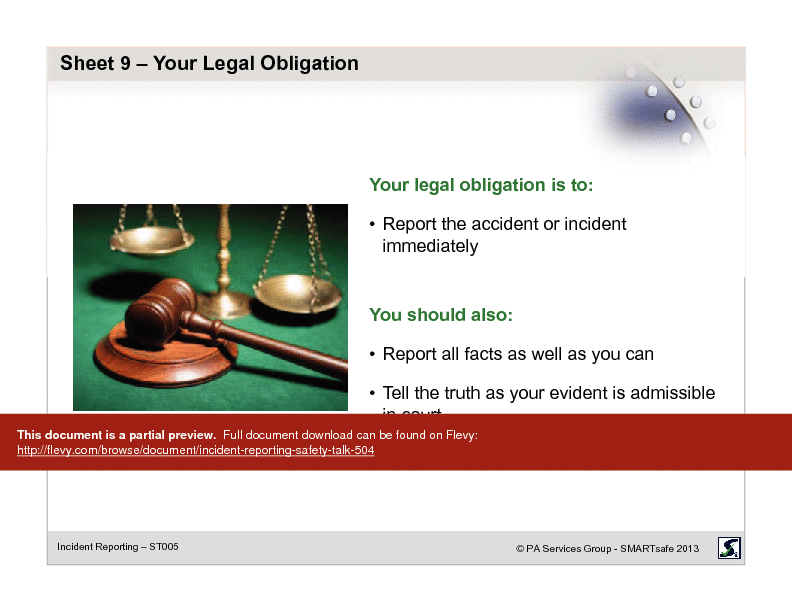
The document outlines the legal obligations of both employees and employers in reporting incidents. It explains that serious injuries, such as those causing unconsciousness, fractures, amputations, or loss of sight, must be reported to the relevant state governing body. This ensures compliance with legislation and helps maintain a safe working environment.

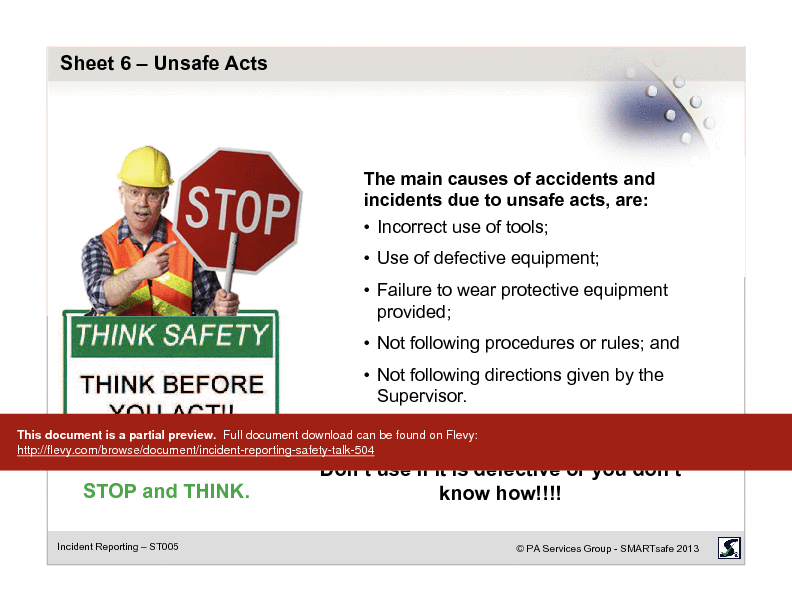
The guide also addresses the main causes of accidents due to unsafe acts, such as incorrect use of tools, defective equipment, and failure to follow procedures. It provides actionable steps for employees to take when an incident occurs, including not moving or touching anything that could provide clues to the cause. The emphasis is on creating a culture of safety and accountability within the workplace.

Got a question about the product? Email us at support@flevy.com or ask the author directly by using the "Ask the Author a Question" form. If you cannot view the preview above this document description, go here to view the large preview instead.

TOPIC FAQ

What information should employees include when reporting a workplace accident?

Employees should report what happened, who was involved, any injuries, immediate actions taken, and observable hazards. They should also avoid moving or touching anything that could help identify the cause. The guidance emphasizes documenting serious injuries such as unconsciousness, fractures, amputations, or loss of sight.

What are common root causes of workplace accidents I should look for during an investigation?

Common causes include unsafe acts like incorrect use of tools, defective or poorly maintained equipment, and failure to follow established procedures. Investigations should seek to identify these causal factors so corrective actions can be designed for prevention, focusing on equipment, behavior, or procedural failures.

Who is responsible for reporting incidents and to whom should incidents be reported?

Employees must report accidents and incidents to their supervisor when they occur; employers and employees share legal obligations for reporting. Serious injuries that cause unconsciousness, fractures, amputations, or loss of sight must also be reported to the relevant state governing body.

What should I look for when choosing an incident-reporting safety-talk or template for toolbox talks?

Look for clear definitions of accidents versus incidents, steps for immediate reporting, legal obligations for serious injuries, guidance on preserving scene evidence, and prompts for investigation follow-up. Flevy’s Incident Reporting - Safety Talk addresses these elements in a 19-page PDF.

Are downloadable incident-reporting templates useful for small teams on tight budgets?

Ready-made PDFs can save time by providing structured content for safety talks, checklists for reporting, and legal-notification prompts that small teams can adapt. The format reduces preparation effort and helps maintain consistent messaging across sessions; for example, one resource is a 19-page PDF.

After a near miss, what immediate actions should workers take before an investigation starts?

Workers should report the near miss immediately to their supervisor, avoid moving or touching objects that could provide clues, and record what occurred and who witnessed it. Preserving the scene and notifying supervisors promptly supports a proper investigation and corrective actions.

How do I decide whether an injury must be reported to the state authority?

Evaluate the severity: injuries causing unconsciousness, fractures, amputations, or loss of sight are identified as reportable to the relevant state governing body. If an incident meets those criteria, follow your workplace procedure and notify the appropriate regulator.

How does reporting incidents help reduce future accidents at work?

Reporting raises awareness of hazardous conditions, enables investigations to identify root causes, and prompts corrective actions to reduce recurrence. The process also helps organizations meet legal obligations and document findings, ultimately instigating investigations to find out why incidents happened.

Source: Best Practices in Workplace Safety, Incident Management PDF: Incident Reporting - Safety Talk PDF (PDF) Document, PA Services Group


$22.00

Add to Cart
  

ABOUT THE AUTHOR

Additional documents from author: 74

PA Services Group is the company that hold the development brands of SMARTsafe, EZI Safety and EZI Library. Our documents have been developed during of our 50 plus years of consulting and our Safety Talks (also know as toolbox talks) are the original Australian/New Zealand safety talks, which are all aligned to ISO. They are under our SMARTsafe brand which was formerly Training National. ... [read more]

Ask the Author a Question

You must be logged in to contact the author.

Click here to log in Click here register

Did you know?
The average daily rate of a McKinsey consultant is $6,625 (not including expenses). The average price of a Flevy document is $65.


Trusted by over 10,000+ Client Organizations
Since 2012, we have provided business templates to over 10,000 businesses and organizations of all sizes, from startups and small businesses to the Fortune 100, in over 130 countries.
AT&T GE Cisco Intel IBM Coke Dell Toyota HP Nike Samsung Microsoft Astrazeneca JP Morgan KPMG Walgreens Walmart 3M Kaiser Oracle SAP Google E&Y Volvo Bosch Merck Fedex Shell Amgen Eli Lilly Roche AIG Abbott Amazon PwC T-Mobile Broadcom Bayer Pearson Titleist ConEd Pfizer NTT Data Schwab


Read Customer Testimonials

 
"As a consultant requiring up to date and professional material that will be of value and use to my clients, I find Flevy a very reliable resource.

The variety and quality of material available through Flevy offers a very useful and commanding source for information. Using Flevy saves me time, enhances my expertise and ends up being a good decision."

– Dennis Gershowitz, Principal at DG Associates
 
"As a small business owner, the resource material available from FlevyPro has proven to be invaluable. The ability to search for material on demand based our project events and client requirements was great for me and proved very beneficial to my clients. Importantly, being able to easily edit and tailor "

– Michael Duff, Managing Director at Change Strategy (UK)
 
"I have used FlevyPro for several business applications. It is a great complement to working with expensive consultants. The quality and effectiveness of the tools are of the highest standards."

– Moritz Bernhoerster, Global Sourcing Director at Fortune 500
 
"I am extremely grateful for the proactiveness and eagerness to help and I would gladly recommend the Flevy team if you are looking for data and toolkits to help you work through business solutions."

– Trevor Booth, Partner, Fast Forward Consulting
 
"One of the great discoveries that I have made for my business is the Flevy library of training materials.

As a Lean Transformation Expert, I am always making presentations to clients on a variety of topics: Training, Transformation, Total Productive Maintenance, Culture, Coaching, Tools, Leadership Behavior, etc. Flevy "

– Ed Kemmerling, Senior Lean Transformation Expert at PMG
 
"Flevy is now a part of my business routine. I visit Flevy at least 3 times each month.

Flevy has become my preferred learning source, because what it provides is practical, current, and useful in this era where the business world is being rewritten.

In today's environment where there are so "

– Omar Hernán Montes Parra, CEO at Quantum SFE
 
"Last Sunday morning, I was diligently working on an important presentation for a client and found myself in need of additional content and suitable templates for various types of graphics. Flevy.com proved to be a treasure trove for both content and design at a reasonable price, considering the time I "

– M. E., Chief Commercial Officer, International Logistics Service Provider
 
"As a consulting firm, we had been creating subject matter training materials for our people and found the excellent materials on Flevy, which saved us 100's of hours of re-creating what already exists on the Flevy materials we purchased."

– Michael Evans, Managing Director at Newport LLC


Customers Also Bought These Documents


Customers Also Like These Documents

Explore Templates on Related Management Topics


Your Recently Viewed Documents
Receive our FREE presentation on Operational Excellence

This 50-slide presentation provides a high-level introduction to the 4 Building Blocks of Operational Excellence. Achieving OpEx requires the implementation of a Business Execution System that integrates these 4 building blocks.