
 Click main image to view in full screen.


WORKPLACE SAFETY PDF DESCRIPTION
Accidents and incidents happen all the time. They can range from minor accidents and incidents like cuts and bruises, to major accidents and incidents that sometimes result in death. The reason for this safety talk is to explain why it is important to report all accidents and incidents and what the company does with the information you give them.
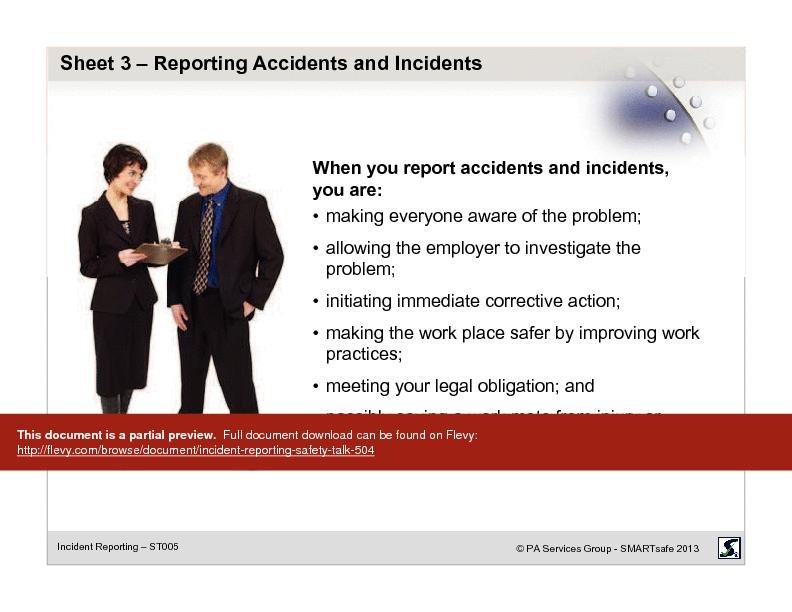
Accidents and incidents will continue to occur if they are not reported. By reporting them to your supervisor when they first happen, you will:
• make sure everyone is aware of possible hazards;
• reduce the chance that they will occur again;
• meet your legal obligations; and
• instigate an investigation to find out why it happened.
By reporting and investigating accidents and incidents you help to make your work place safer for yourself and your work mates.
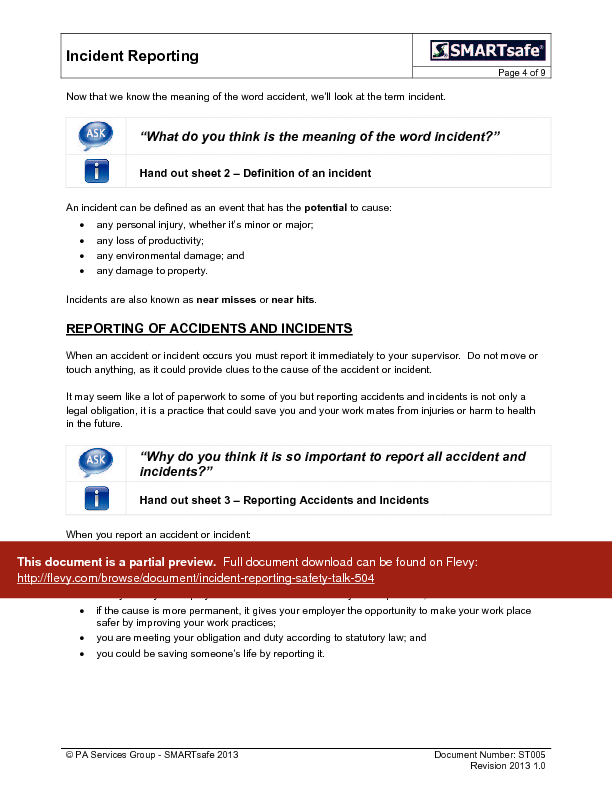
Incident Reporting – Safety Talk provides a comprehensive overview of the critical importance of reporting all workplace accidents and incidents. This PDF delves into the definitions of both accidents and incidents, emphasizing their potential to cause personal injury, loss of productivity, environmental damage, and property damage. It highlights the necessity of immediate reporting to supervisors and the role of such reports in preventing future occurrences.
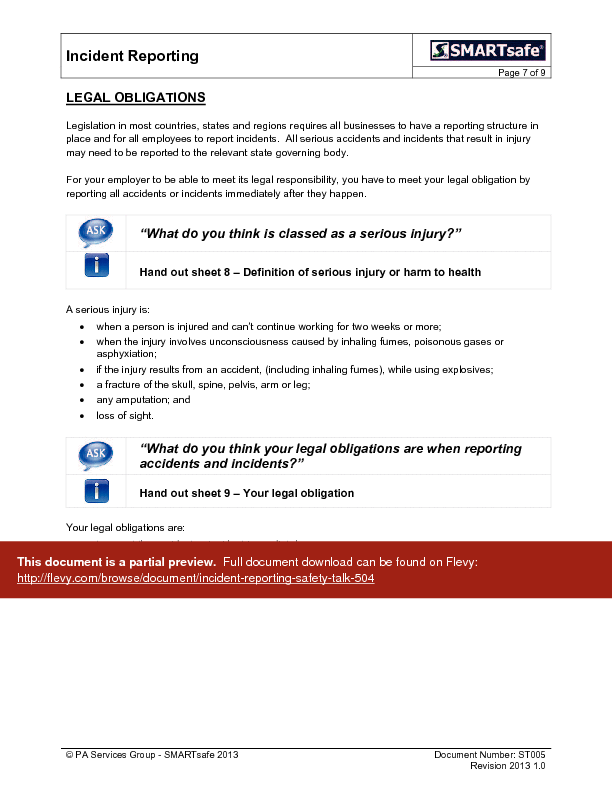
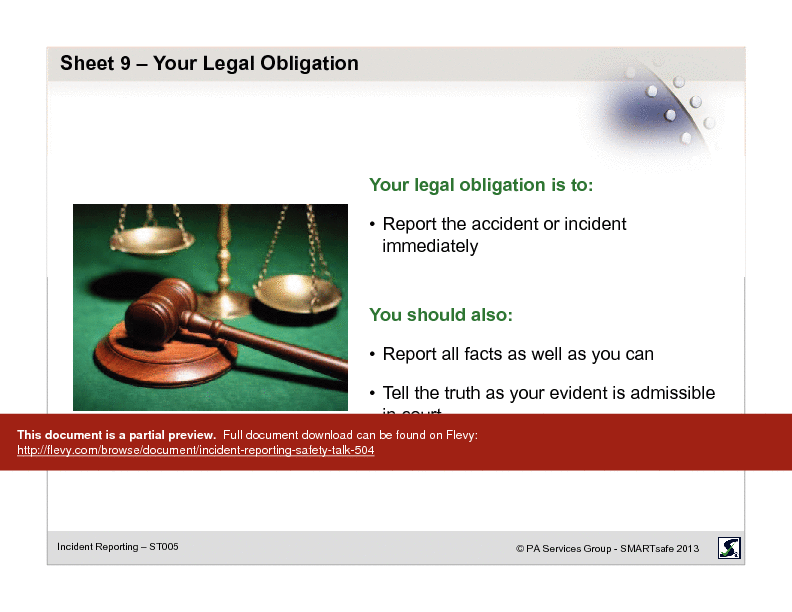
The document outlines the legal obligations of both employees and employers in reporting incidents. It explains that serious injuries, such as those causing unconsciousness, fractures, amputations, or loss of sight, must be reported to the relevant state governing body. This ensures compliance with legislation and helps maintain a safe working environment.
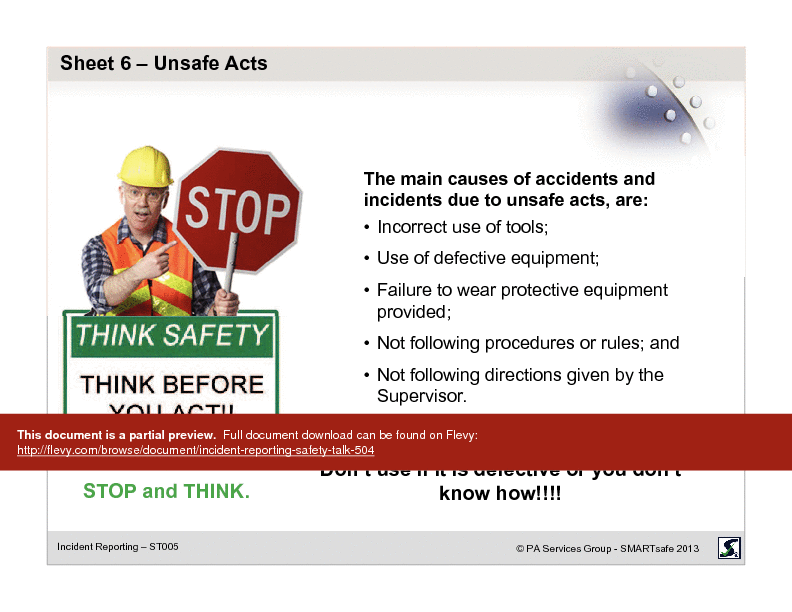
The guide also addresses the main causes of accidents due to unsafe acts, such as incorrect use of tools, defective equipment, and failure to follow procedures. It provides actionable steps for employees to take when an incident occurs, including not moving or touching anything that could provide clues to the cause. The emphasis is on creating a culture of safety and accountability within the workplace.
Got a question about the product? Email us at support@flevy.com or ask the author directly by using the "Ask the Author a Question" form. If you cannot view the preview above this document description, go here to view the large preview instead.
TOPIC FAQ
What information should employees include when reporting a workplace accident?
Employees should report what happened, who was involved, any injuries, immediate actions taken, and observable hazards. They should also avoid moving or touching anything that could help identify the cause. The guidance emphasizes documenting serious injuries such as unconsciousness, fractures, amputations, or loss of sight.What are common root causes of workplace accidents I should look for during an investigation?
Common causes include unsafe acts like incorrect use of tools, defective or poorly maintained equipment, and failure to follow established procedures. Investigations should seek to identify these causal factors so corrective actions can be designed for prevention, focusing on equipment, behavior, or procedural failures.Who is responsible for reporting incidents and to whom should incidents be reported?
Employees must report accidents and incidents to their supervisor when they occur; employers and employees share legal obligations for reporting. Serious injuries that cause unconsciousness, fractures, amputations, or loss of sight must also be reported to the relevant state governing body.What should I look for when choosing an incident-reporting safety-talk or template for toolbox talks?
Look for clear definitions of accidents versus incidents, steps for immediate reporting, legal obligations for serious injuries, guidance on preserving scene evidence, and prompts for investigation follow-up. Flevy’s Incident Reporting - Safety Talk addresses these elements in a 19-page PDF.Are downloadable incident-reporting templates useful for small teams on tight budgets?
Ready-made PDFs can save time by providing structured content for safety talks, checklists for reporting, and legal-notification prompts that small teams can adapt. The format reduces preparation effort and helps maintain consistent messaging across sessions; for example, one resource is a 19-page PDF.After a near miss, what immediate actions should workers take before an investigation starts?
Workers should report the near miss immediately to their supervisor, avoid moving or touching objects that could provide clues, and record what occurred and who witnessed it. Preserving the scene and notifying supervisors promptly supports a proper investigation and corrective actions.How do I decide whether an injury must be reported to the state authority?
Evaluate the severity: injuries causing unconsciousness, fractures, amputations, or loss of sight are identified as reportable to the relevant state governing body. If an incident meets those criteria, follow your workplace procedure and notify the appropriate regulator.How does reporting incidents help reduce future accidents at work?
Reporting raises awareness of hazardous conditions, enables investigations to identify root causes, and prompts corrective actions to reduce recurrence. The process also helps organizations meet legal obligations and document findings, ultimately instigating investigations to find out why incidents happened.Source: Best Practices in Workplace Safety, Incident Management, Incident Investigation PDF: Incident Reporting - Safety Talk PDF (PDF) Document, PA Services Group