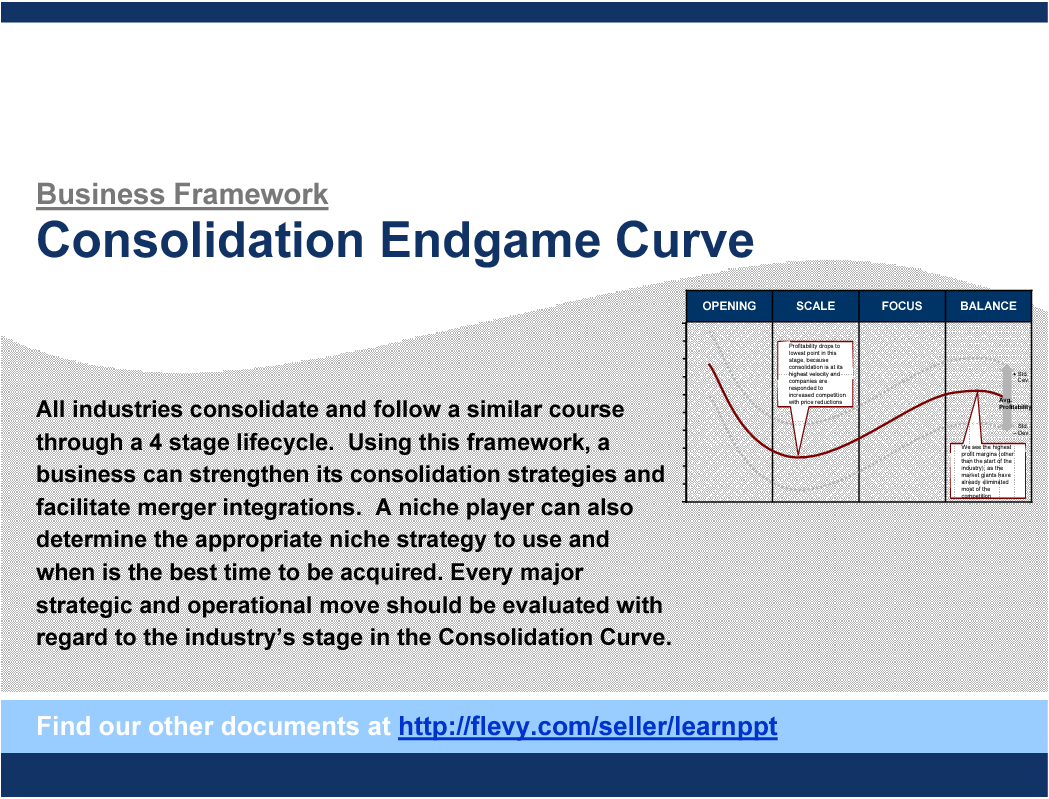
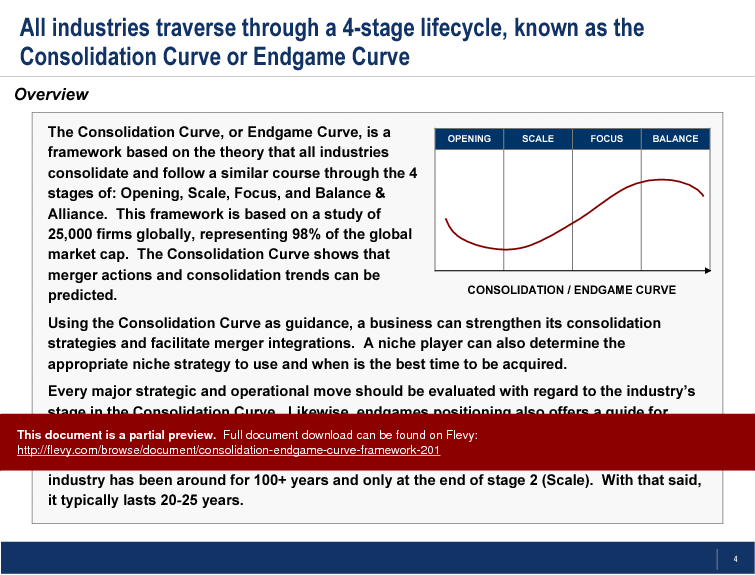

The Consolidation Curve, or Endgame Curve, is a framework based on the theory that all industries consolidate and follow a similar course through the 4 stages of: Opening, Scale, Focus, and Balance & Alliance. This framework is based on a study of 25,000 firms globally, representing 98% of the global market cap, conducted by the strategy consulting firm AT Kearney. The Consolidation Curve shows that merger actions and consolidation trends can be predicted.
Using the Consolidation Curve as guidance, a business can strengthen its consolidation strategies and facilitate merger integrations. A niche player can also determine the appropriate niche strategy to use and when is the best time to be acquired.
Every major strategic and operational move should be evaluated with regard to the industry's stage in the Consolidation Curve. Likewise, endgames positioning also offers a guide for portfolio optimization.
This document explains the framework in detail and includes case examples and PowerPoint templates. Topics include:
• Stages of Consolidation
• Growth strategy implications
• Stage impact on financials (e.g. revenue growth, profitability)
• Stage impact on strategy and operations
• Stage impact on management/organization
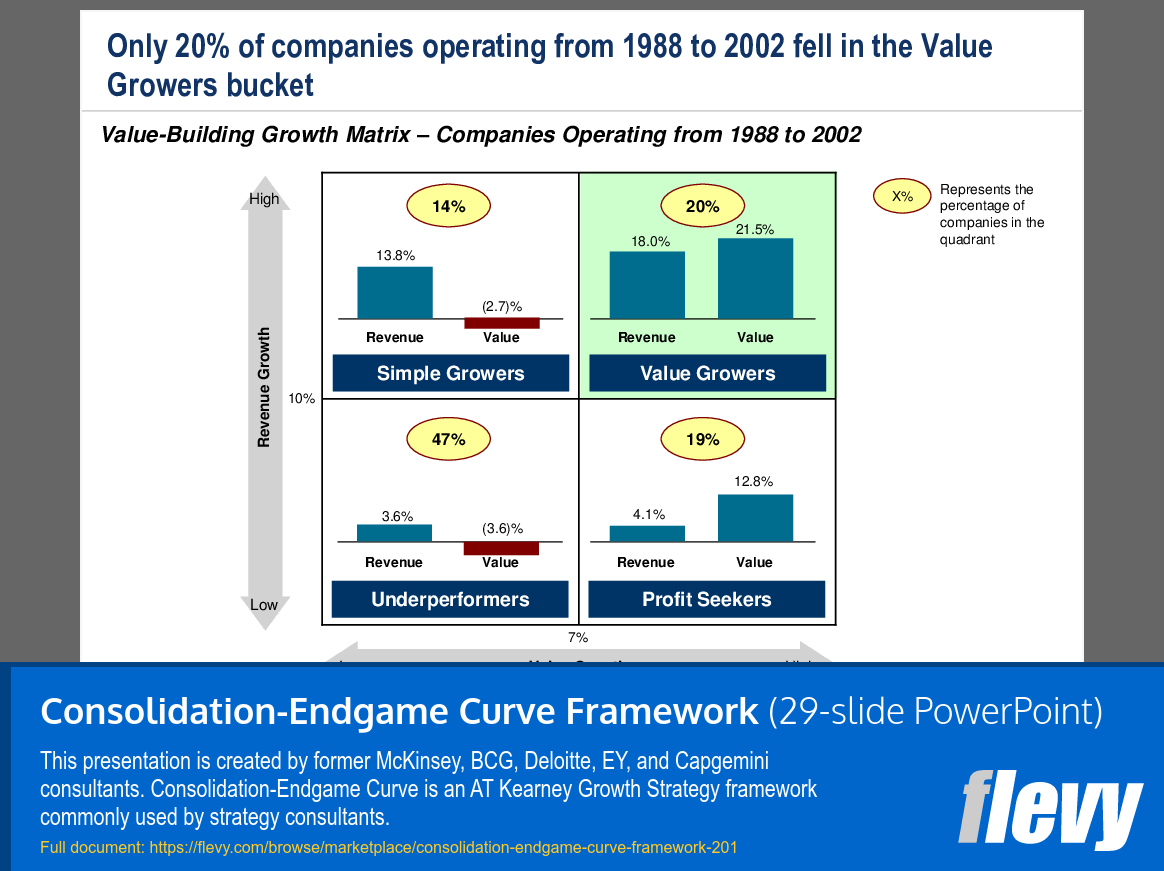
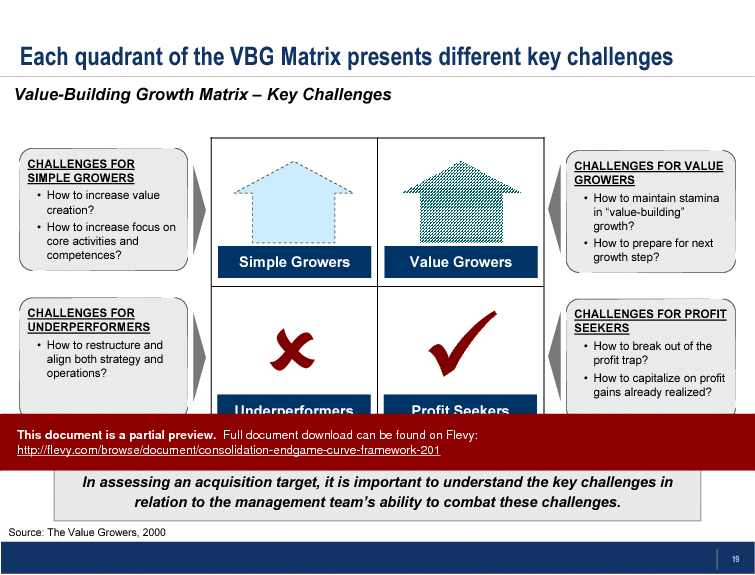
• Value-Building Growth Matrix
• Niche strategies
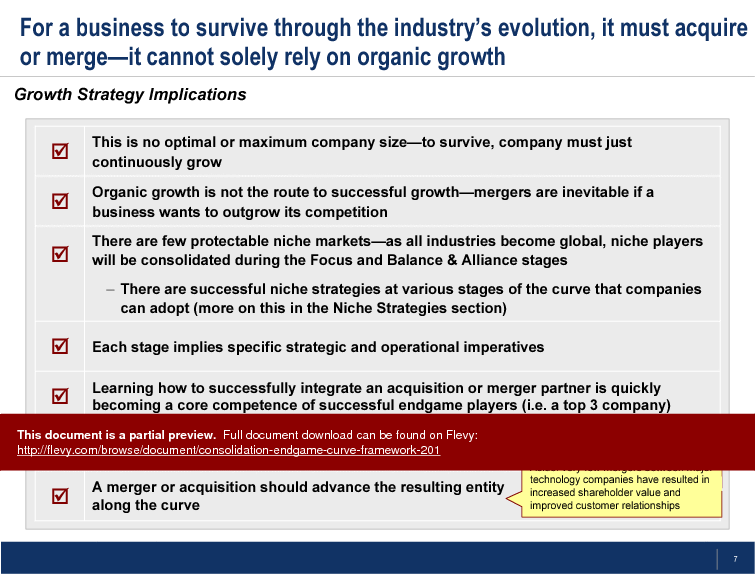
The Consolidation-Endgame Curve Framework document provides a comprehensive analysis of the stages of industry consolidation, emphasizing the critical importance of strategic and operational alignment at each phase. It highlights that the survival and growth of a company depend on its ability to navigate through the Opening, Scale, Focus, and Balance & Alliance stages effectively. The document underscores the inevitability of mergers for companies aiming to outpace competition and achieve sustainable growth.
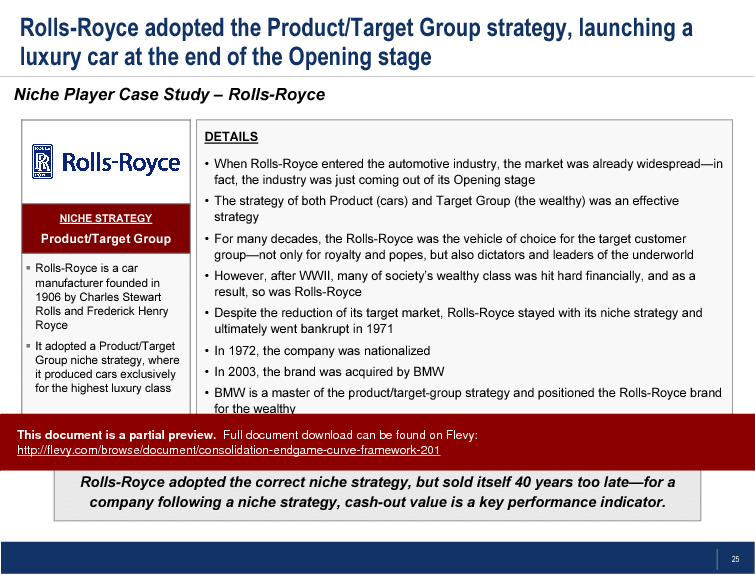
The framework also addresses the challenges faced by companies at different stages, such as the need for continuous innovation during the Balance & Alliance stage and the shift from product development to financial optimization during the Scale stage. Detailed case studies, including those of niche players like Rolls-Royce, illustrate practical applications of the framework, providing valuable insights for executives looking to optimize their consolidation strategies.
Got a question about the product? Email us at support@flevy.com or ask the author directly by using the "Ask the Author a Question" form. If you cannot view the preview above this document description, go here to view the large preview instead.
Executive Summary
The Consolidation-Endgame Curve Framework is a strategic tool designed to help businesses navigate the 4 stages of industry consolidation: Opening, Scale, Focus, and Balance & Alliance. Developed by former consultants from McKinsey, BCG, Deloitte, EY, and Capgemini, this framework offers insights into optimizing growth strategies and facilitating merger integrations. It empowers niche players to identify the right time for acquisition or to adopt appropriate niche strategies. By evaluating strategic and operational moves against the industry's stage in the Consolidation Curve, executives can enhance decision-making and drive sustainable growth.
Who This Is For and When to Use
• Corporate executives overseeing strategic planning and growth initiatives
• Integration leaders managing merger and acquisition processes
• Strategy consultants advising clients on consolidation strategies
• Niche market players seeking to optimize their positioning and timing for acquisitions
Best-fit moments to use this deck:
• During strategic planning sessions to assess industry positioning
• When evaluating potential mergers or acquisitions
• In workshops focused on growth strategy development
• For analyzing competitive landscapes and consolidation trends
Learning Objectives
• Define the 4 stages of the Consolidation Curve and their implications for business strategy
• Analyze industry positioning to determine optimal growth strategies
• Identify appropriate niche strategies based on the industry lifecycle
• Evaluate merger integration processes to enhance operational efficiency
• Develop frameworks for assessing acquisition targets using the Value-Building Growth Matrix
• Create actionable plans for navigating the challenges of each consolidation stage
Table of Contents
• Overview (page 3)
• Stages of Consolidation (page 5)
• Growth Study Implications (page 7)
• Key Takeaways (page 8)
• Consolidation / Endgame Curve (page 9)
• Market Consolidation (page 10)
• Revenue Growth and Profitability (page 11)
• Strategy and Operations (page 13)
• Management and Organization (page 14)
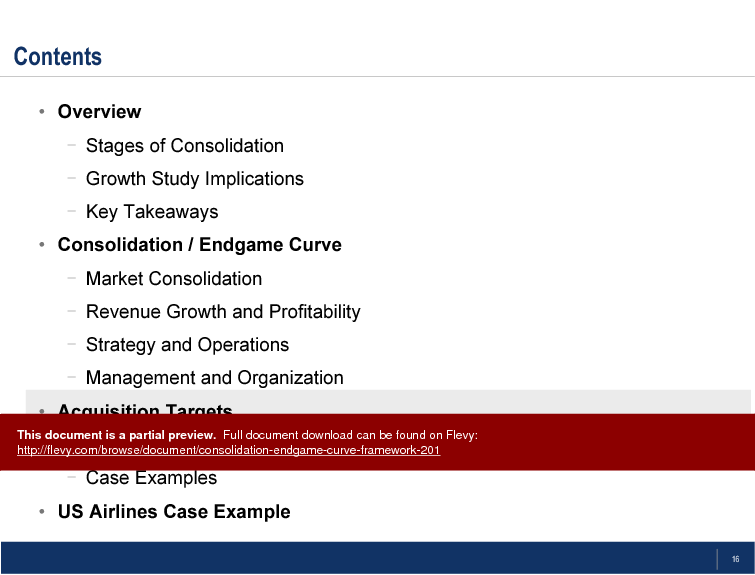
• Acquisition Targets (page 16)
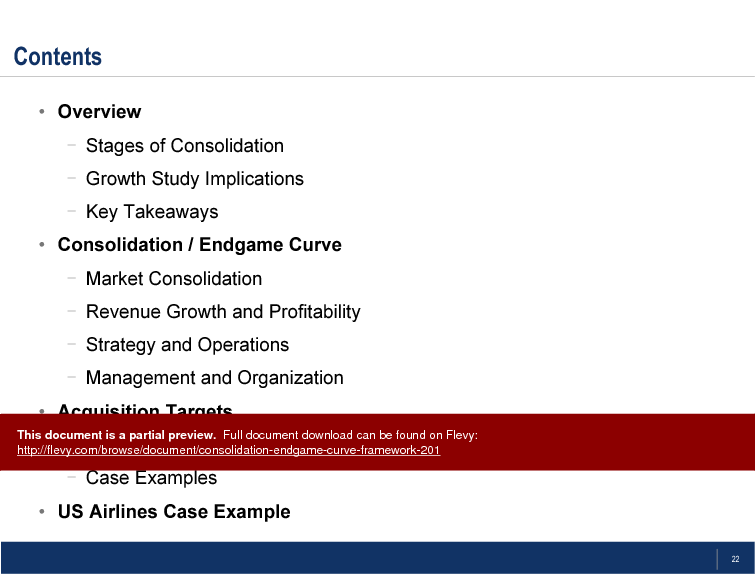
• Niche Strategies (page 22)
• Case Examples (page 25)
• US Airlines Case Example (page 28)
Primary Topics Covered
• Stages of Consolidation - The Consolidation Curve outlines the 4 stages—Opening, Scale, Focus, and Balance & Alliance—that all industries traverse, highlighting the strategic implications at each phase.
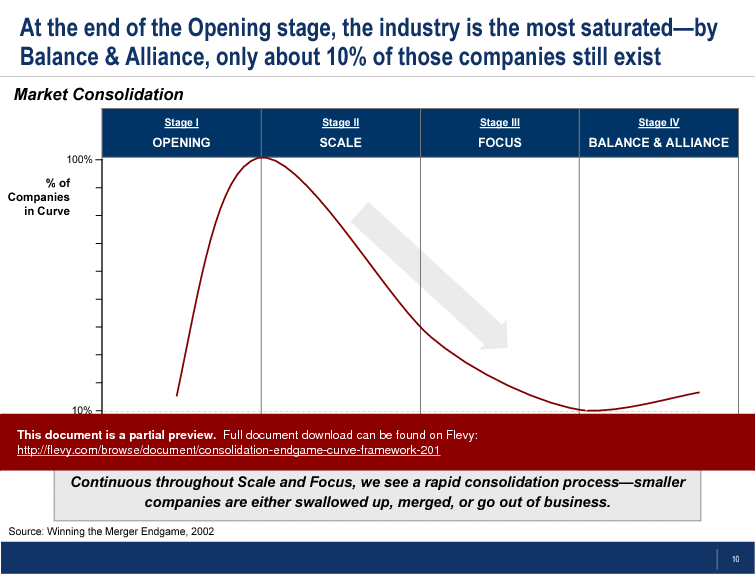
• Market Consolidation - This section discusses the continuous consolidation process, emphasizing how smaller companies are absorbed or exit the market during the Scale and Focus stages.
• Revenue Growth and Profitability - Revenue growth trends remain stable across the Consolidation Curve, while profitability varies significantly, often peaking in the Focus and Balance stages.
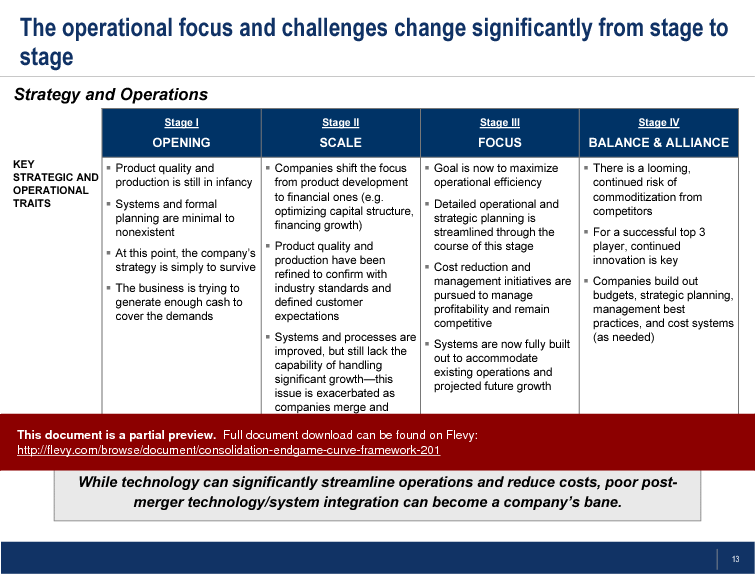
• Strategy and Operations - Key operational focuses shift from survival in the Opening stage to maximizing efficiency and innovation in later stages, necessitating robust strategic planning.
• Management and Organization - Each stage demands different management styles and organizational structures, with a focus on delegation and strategic planning as companies mature.
• Acquisition Targets - The Value-Building Growth Matrix is introduced as a tool for identifying and evaluating potential acquisition targets based on revenue and value growth.
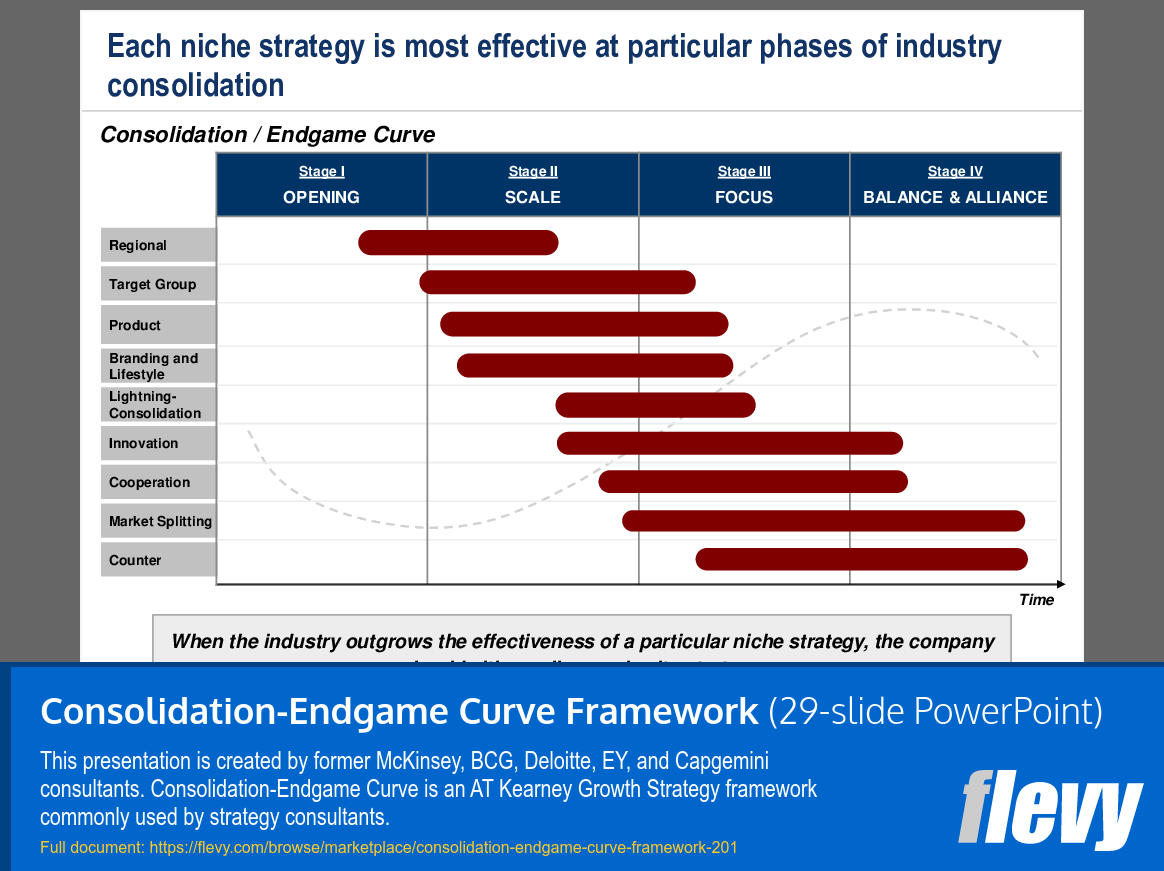
• Niche Strategies - Nine proven niche strategies are detailed, illustrating how companies can leverage their unique positioning within the industry lifecycle.
Deliverables, Templates, and Tools
• Consolidation-Endgame Curve framework template for assessing industry stages
• Value-Building Growth Matrix for evaluating acquisition targets
• Niche strategy identification guide for aligning business strategies with industry phases
• Case study examples illustrating successful niche strategies in practice
• Strategic planning worksheets for merger integration and operational efficiency
• Market analysis templates for evaluating competitive landscapes
Slide Highlights
• Overview of the 4 stages of the Consolidation Curve, illustrating key characteristics and market dynamics
• Visual representation of market consolidation trends over time, showcasing the S-curve of top players
• Revenue growth and profitability graphs highlighting the differences across consolidation stages
• Strategic and operational traits associated with each stage of the Consolidation Curve
• Case studies of niche players, such as Rolls-Royce and Porsche, demonstrating effective niche strategies
Potential Workshop Agenda
Understanding the Consolidation Curve (90 minutes)
• Review the 4 stages of the Consolidation Curve and their implications
• Discuss industry-specific examples and case studies
• Identify strategic opportunities based on current positioning
Evaluating Acquisition Targets (60 minutes)
• Introduce the Value-Building Growth Matrix
• Analyze potential acquisition candidates using the matrix
• Discuss integration strategies for selected targets
Developing Niche Strategies (90 minutes)
• Explore the nine niche strategies and their effectiveness at different stages
• Facilitate group discussions on aligning niche strategies with industry dynamics
• Create action plans for evolving niche strategies as the industry matures
Customization Guidance
• Tailor the Consolidation Curve framework to reflect specific industry characteristics and dynamics
• Adjust the Value-Building Growth Matrix to incorporate unique metrics relevant to your organization
• Modify case studies to align with your company's strategic objectives and market conditions
• Update niche strategy examples to reflect current market trends and competitive landscapes
Secondary Topics Covered
• Competitive landscape analysis and its impact on strategic decision-making
• The role of innovation in sustaining growth during the Focus and Balance stages
• Challenges faced by niche players in a consolidating market
• Best practices for merger integration and operational alignment
• Insights into global consolidation trends and their implications for local markets
FAQ
What is the Consolidation-Endgame Curve Framework?
The framework outlines the 4 stages of industry consolidation—Opening, Scale, Focus, and Balance & Alliance—providing strategic insights for businesses navigating these phases.
How can this framework help in merger integrations?
It offers guidance on evaluating strategic moves and operational decisions based on the industry's current stage, enhancing the effectiveness of integration efforts.
What are the key characteristics of each stage in the Consolidation Curve?
Each stage has distinct traits: Opening focuses on survival, Scale emphasizes growth and efficiency, Focus drives operational excellence, and Balance & Alliance involves strategic partnerships.
How do I identify the right niche strategy for my business?
Assess your industry stage and leverage the nine proven niche strategies to determine the most effective approach for your market position.
What is the Value-Building Growth Matrix?
This matrix is a tool for evaluating potential acquisition targets based on their revenue and value growth, helping businesses identify strategic opportunities.
Why is understanding industry consolidation important?
Recognizing consolidation trends enables businesses to anticipate market changes, optimize strategies, and make informed decisions regarding mergers and acquisitions.
What challenges do niche players face during consolidation?
Niche players often struggle with market pressures and must adapt their strategies to remain competitive as larger companies consolidate their positions.
How can I apply the insights from this framework to my organization?
Utilize the framework to assess your current market position, evaluate potential mergers or acquisitions, and develop strategies aligned with industry dynamics.
Glossary
• Consolidation Curve - A framework illustrating the 4 stages of industry consolidation.
• Opening Stage - The initial phase characterized by low market concentration and emerging players.
• Scale Stage - A phase where major players begin to dominate, leading to increased competition.
• Focus Stage - Successful companies streamline operations and eliminate secondary business units.
• Balance & Alliance Stage - The final phase where few players dominate, and alliances are formed for growth.
• Value-Building Growth Matrix - A tool for evaluating potential acquisition targets based on revenue and value growth.
• Niche Strategy - A focused approach that targets specific market segments or product offerings.
• Market Consolidation - The process by which smaller companies are absorbed or exit the market during consolidation phases.
• Profitability Trap - A situation where companies face declining profitability due to competitive pressures.
• Strategic Planning - The process of defining an organization's direction and making decisions on allocating resources.
• Merger Integration - The process of combining 2 organizations into one, focusing on aligning operations and cultures.
• Operational Efficiency - The ability to deliver products or services in the most cost-effective manner without sacrificing quality.
• Case Study - An in-depth analysis of a specific instance or example to illustrate broader principles.
• Competitive Landscape - The overall market environment, including key players, market share, and competitive dynamics.
• Acquisition Target - A company identified as a potential candidate for purchase or merger.
• Strategic Partnerships - Collaborations between companies to achieve mutual benefits, often seen in the Balance & Alliance stage.

• Innovation - The process of developing new ideas, products, or methods to maintain competitive advantage.
• Market Dynamics - The forces that impact the supply and demand of goods and services in a market.
• Portfolio Optimization - The process of managing a collection of investments or business units to maximize returns.
• Customer Segmentation - The practice of dividing a customer base into groups based on shared characteristics.
• Cash-Out Value - The financial worth of a company at the time of sale or acquisition.
• Operational Alignment - The process of ensuring that all parts of an organization work together effectively toward common goals.
Source: Best Practices in Growth Strategy, Maturity Model, Industry Analysis, Small Business PowerPoint Slides: Consolidation-Endgame Curve Framework PowerPoint (PPT) Presentation Slide Deck, LearnPPT Consulting
This document is available as part of the following discounted bundle(s):
Save %!
Growth Strategy Frameworks
This bundle contains 6 total documents. See all the documents to the right.
|
Download our FREE Strategy & Transformation Framework Templates
Download our free compilation of 50+ Strategy & Transformation slides and templates. Frameworks include McKinsey 7-S, Balanced Scorecard, Disruptive Innovation, BCG Curve, and many more. |