
 Click main image to view in full screen. Unlock all 25 preview images:
Innovation Management Frameworks – PowerPoint PPTX Template
PowerPoint (PPTX) 127 Slides


BENEFITS OF THIS DOWNLOADABLE POWERPOINT DOCUMENT
- Provides 20 leading innovation management frameworks, models and methodologies.
- Serves as rough orientation for business leaders, senior executives and other experts.
- Frameworks are curated for their broad applicability across various industries and organizational contexts.
INNOVATION MANAGEMENT PPT TEMPLATE DESCRIPTION
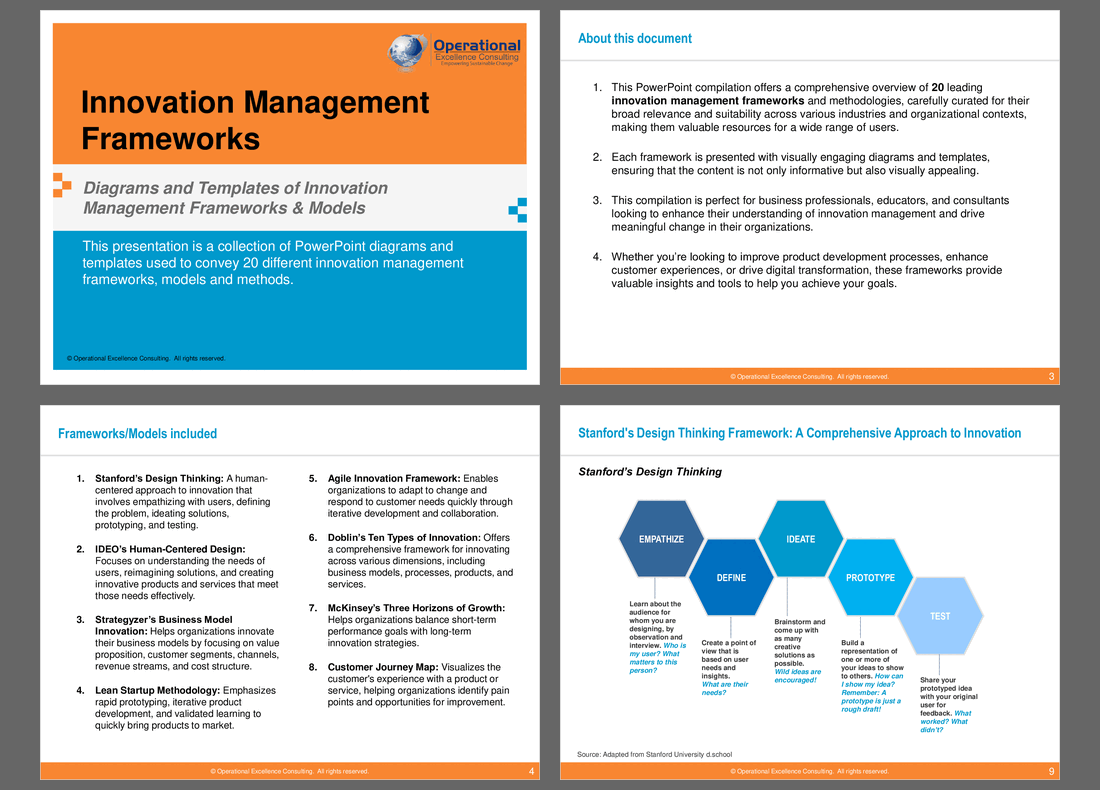
This PowerPoint compilation offers a comprehensive overview of 20 leading innovation management frameworks and methodologies, selected for their broad applicability across various industries and organizational contexts. These frameworks are valuable resources for a wide range of users, including business professionals, educators, and consultants.
Each framework is presented with visually engaging diagrams and templates, ensuring the content is both informative and appealing. While this compilation is thorough, please note that the slides are intended as supplementary resources and may not be sufficient for standalone instructional purposes.
This compilation is ideal for anyone looking to enhance their understanding of innovation management and drive meaningful change within their organization. Whether you aim to improve product development processes, enhance customer experiences, or drive digital transformation, these frameworks offer valuable insights and tools to help you achieve your goals.
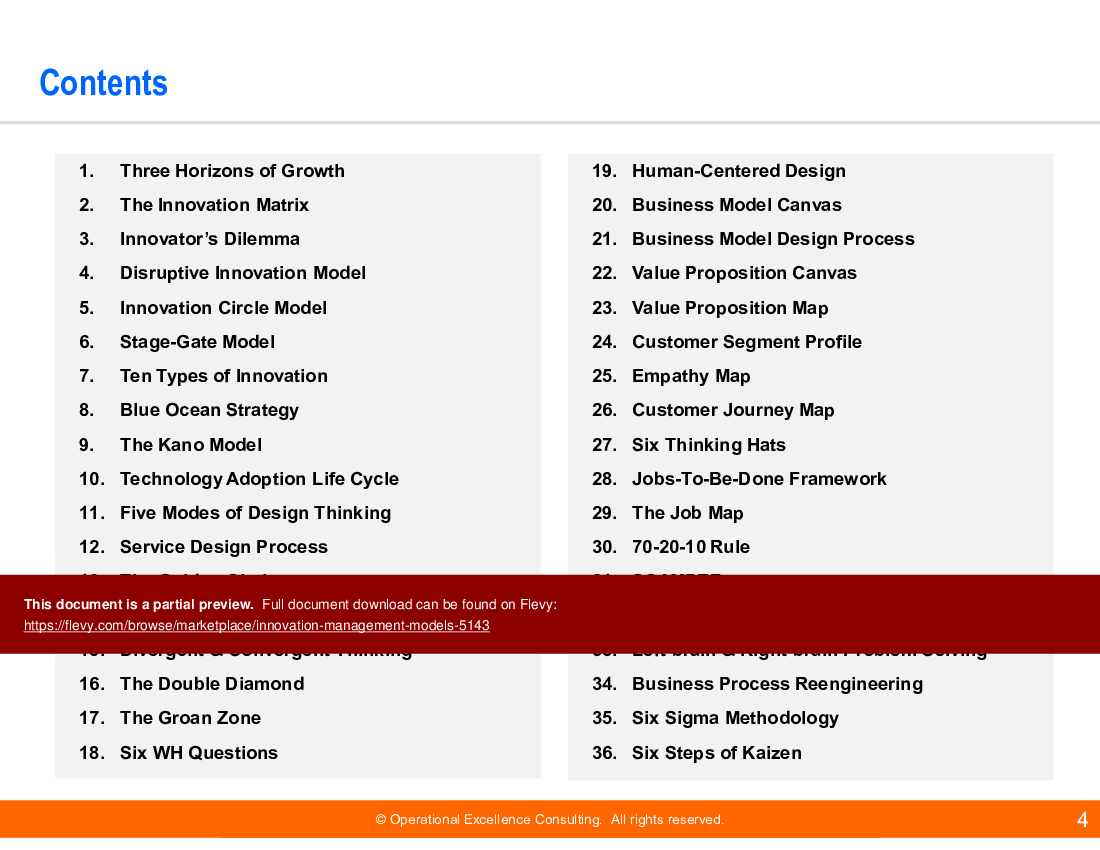
INCLUDED FRAMEWORKS/MODELS:
1. Stanford's Design Thinking: A human-centered approach to innovation that involves empathizing with users, defining the problem, ideating solutions, prototyping, and testing.
2. IDEO's Human-Centered Design: Focuses on understanding the needs of users, reimagining solutions, and creating innovative products and services that meet those needs effectively.
3. Strategyzer's Business Model Innovation: Helps organizations innovate their business models by focusing on value proposition, customer segments, channels, revenue streams, and cost structure.
4. Lean Startup Methodology: Emphasizes rapid prototyping, iterative product development, and validated learning to quickly bring products to market.
5. Agile Innovation Framework: Enables organizations to adapt to change and respond to customer needs quickly through iterative development and collaboration.
6. Doblin's Ten Types of Innovation: Offers a comprehensive framework for innovating across various dimensions, including business models, processes, products, and services.
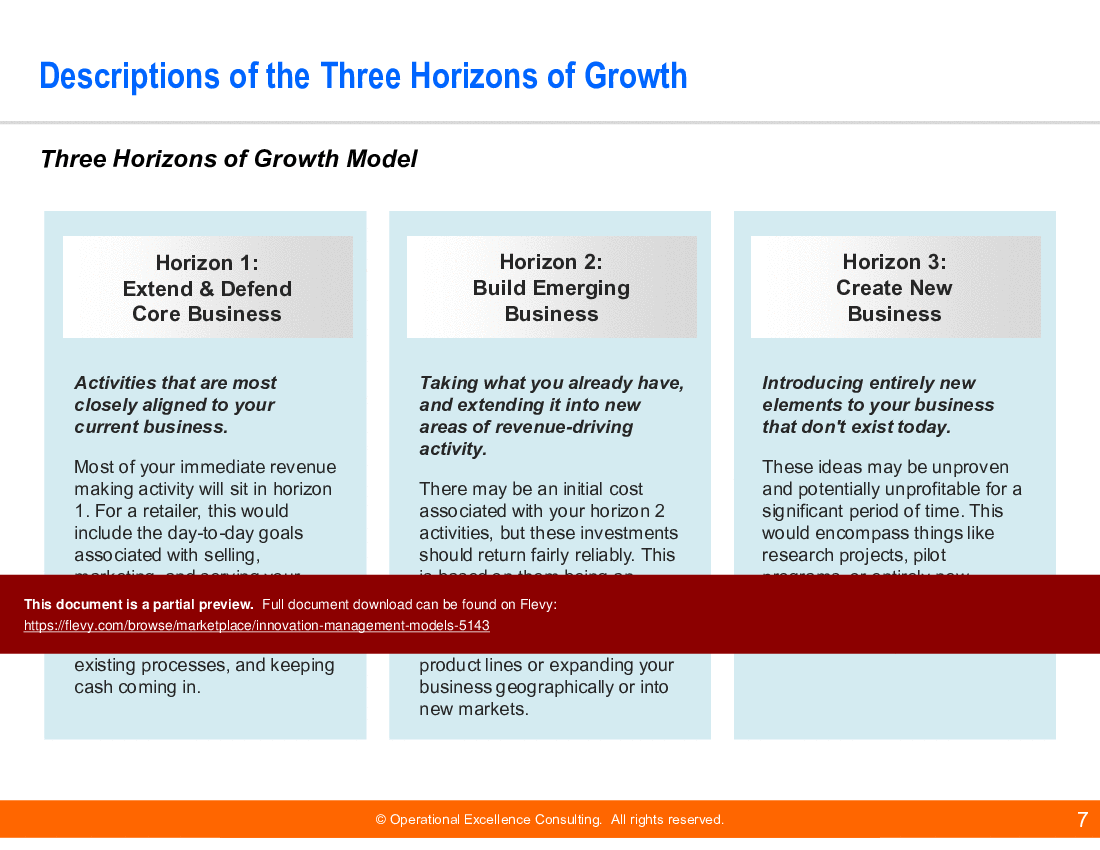
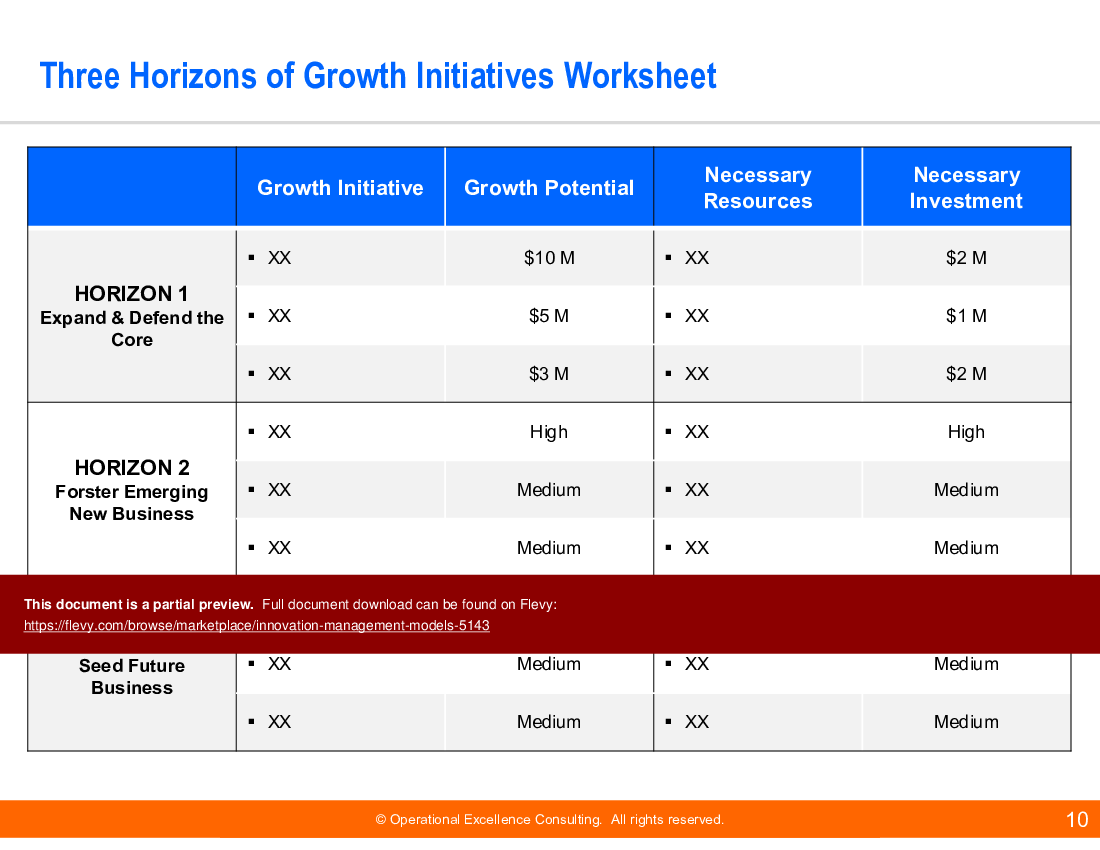
7. McKinsey's Three Horizons of Growth: Helps organizations balance short-term performance goals with long-term innovation strategies.
8. Customer Journey Map: Visualizes the customer's experience with a product or service, helping organizations identify pain points and opportunities for improvement.
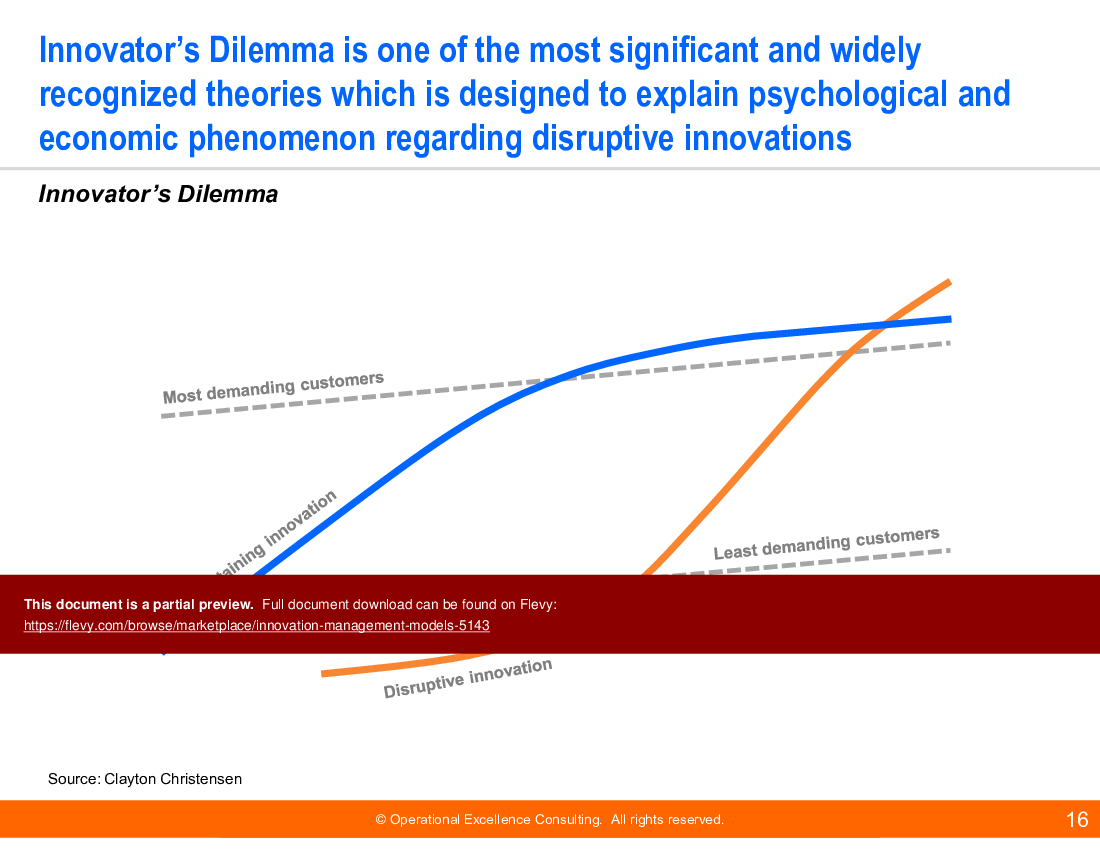
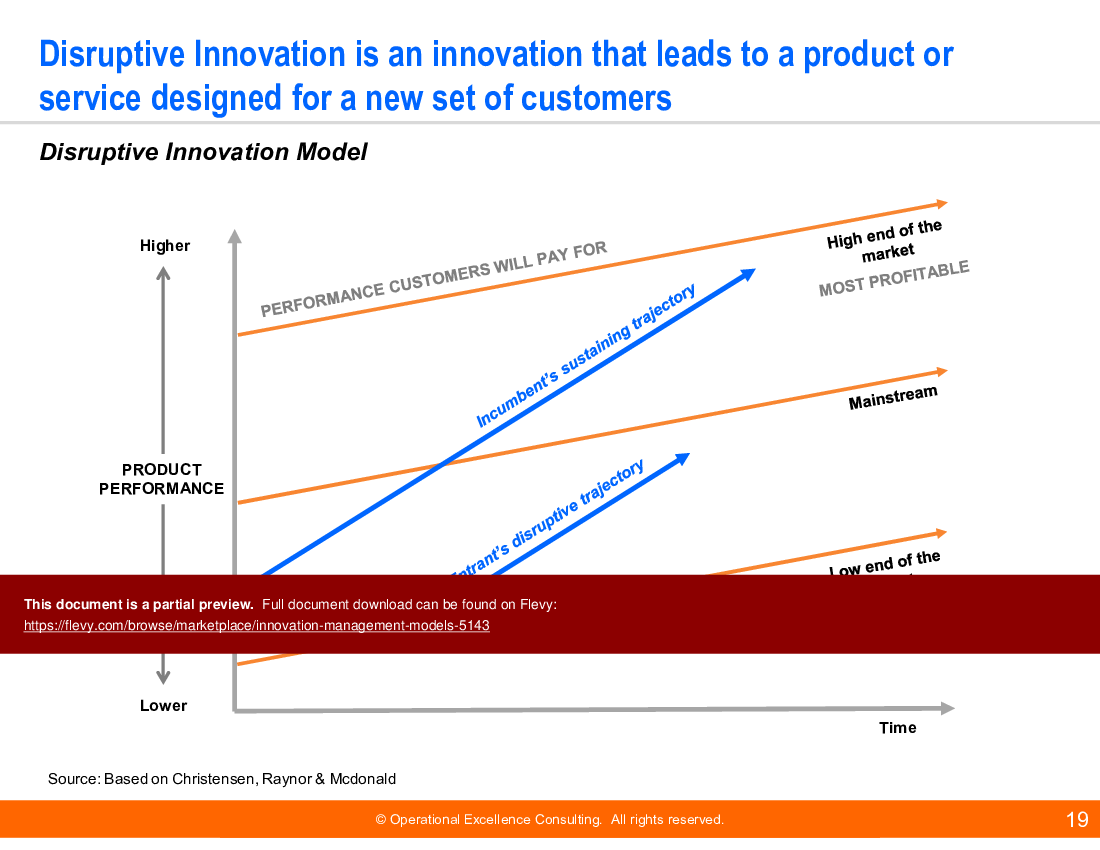
9. Christensen's Disruptive Innovation Theory: Explains how new technologies and business models can disrupt existing markets and industries.
10. Blue Ocean Strategy: Focuses on creating uncontested market space by making competition irrelevant through innovative products or services.
11. Strategyn's Jobs-To-Be-Done (JTBD) Framework with Job Map: Helps organizations understand the underlying motivations behind customer purchases, enabling them to design products and services that better meet customer needs.
12. Design Sprint Framework: A time-constrained process for answering critical business questions through design, prototyping, and testing ideas with customers.
13. The Double Diamond: A visual representation of the design process, emphasizing divergent and convergent thinking to generate innovative solutions.
14. Lean Six Sigma DMAIC: A structured problem-solving methodology for improving processes by defining, measuring, analyzing, improving, and controlling them.
15. TRIZ Problem-Solving: A systematic approach to problem-solving that emphasizes finding innovative solutions by identifying contradictions in the problem.
16. Edward de Bono's Six Thinking Hats: A technique for group discussion and decision-making that encourages participants to think from different perspectives.
17. Stage-Gate Model: A process for managing new product development projects, from idea generation to launch, in a structured and systematic way.
18. Toyota's Six Steps of Kaizen: A continuous improvement methodology that focuses on making small, incremental changes to improve processes and reduce waste.
19. Microsoft's Digital Transformation Framework: A framework for driving innovation and efficiency through digital transformation, focusing on modern workplace, business applications, applications & infrastructure, and data & AI.
20. Design for Six Sigma (DFSS): A methodology for designing new products, services, and processes that meet customer needs and are defect-free.
Got a question about the product? Email us at support@flevy.com or ask the author directly by using the "Ask the Author a Question" form. If you cannot view the preview above this document description, go here to view the large preview instead.
PRESENTATION DEEP DIVE ANALYSIS
This deep-dive analysis was generated from the full 127-slide PowerPoint presentation.
Source: Best Practices in Innovation Management, Business Framework PowerPoint Diagrams PowerPoint Slides: Innovation Management Frameworks PowerPoint (PPTX) Presentation Slide Deck, Operational Excellence Consulting
ABOUT THE AUTHOR

Operational Excellence Consulting, founded in 2009 by Allan Ung, draws from extensive experience at Microsoft, IBM, and Underwriters Laboratories (UL). We specialize in strategy deployment, customer experience design, and operational excellence, applying Design Thinking, Lean, and Systems Thinking to maximize customer value and minimize waste.
Our
... [read more]
Ask the Author a Question
You must be logged in to contact the author.




























