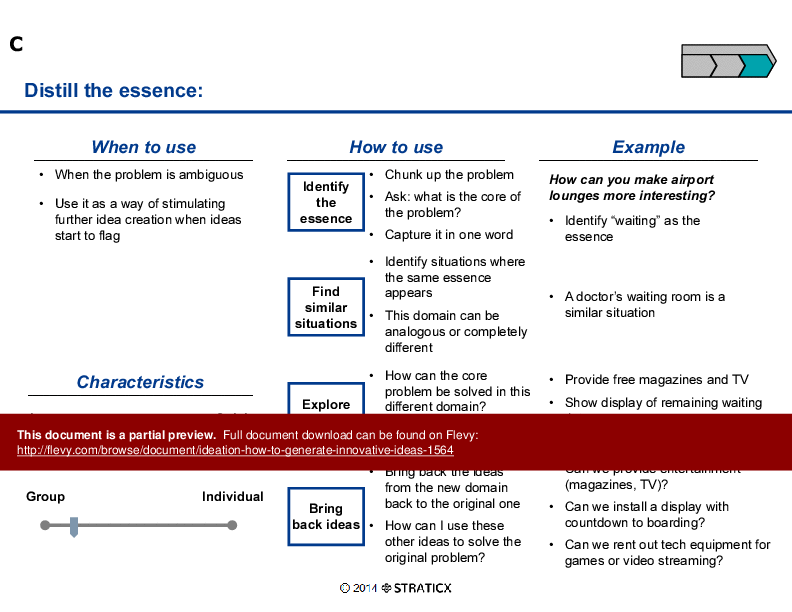
The first document in Straticx's new InnovationWorks series focuses on Ideation: A framework and process for developing new innovative ideas. The deck covers the tools and methodologies for:
1. Uncovering unmet needs
2. Defining the problem
3. Creating solutions
The tools and methodologies are agnostic and can be used in all situations, industries etc. The deck is suitable for anyone looking to build innovation capabilities.
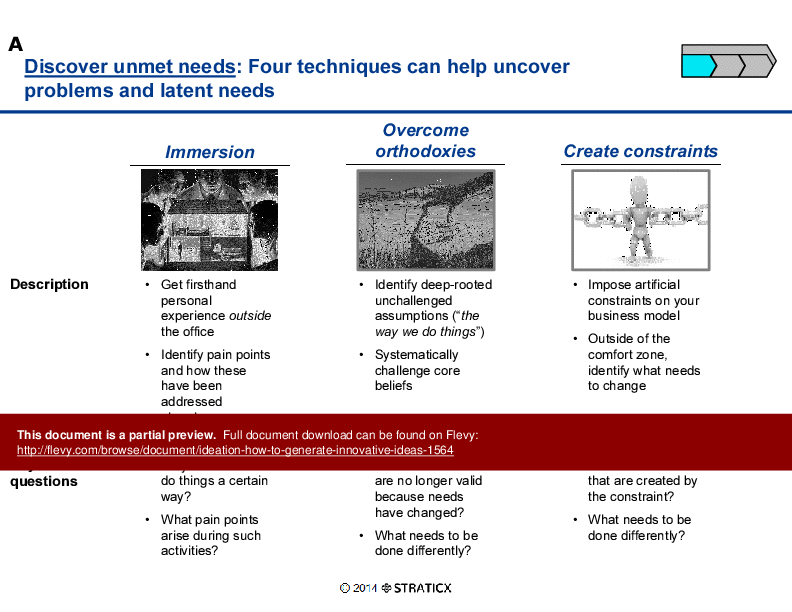
This presentation dives deep into the practical techniques for discovering unmet needs, overcoming orthodoxies, and creating constraints to foster innovation. It offers a comprehensive guide on how to immerse yourself in the problem space, systematically challenge core beliefs, and impose artificial constraints to drive creative thinking. These methods are designed to push your team out of their comfort zones, encouraging them to identify what needs to change to achieve breakthrough solutions.
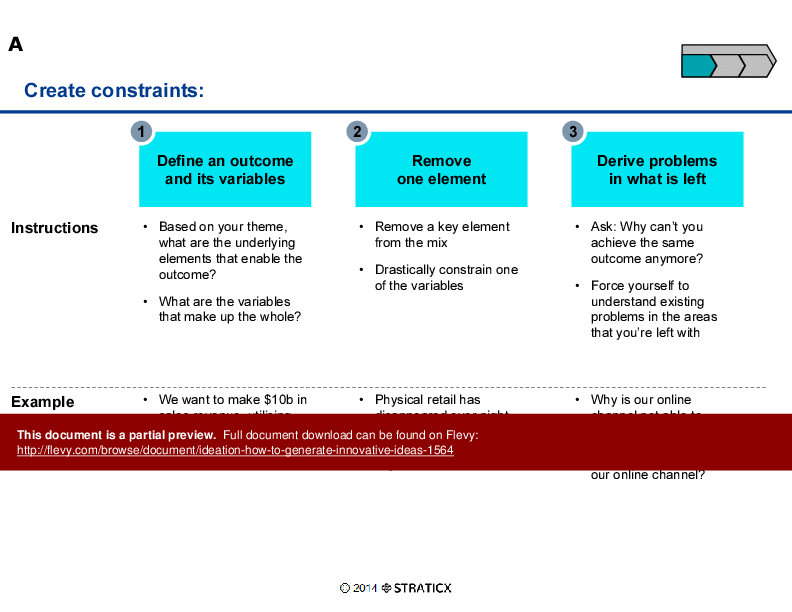
The deck also provides a step-by-step approach for defining outcomes and their variables, removing key elements to create constraints, and deriving problems from what remains. This structured process helps in pinpointing the underlying elements that enable desired outcomes and forces a reevaluation of existing assumptions. By removing one element from the mix, it becomes easier to identify areas that need innovation and understand the problems that arise from these constraints.
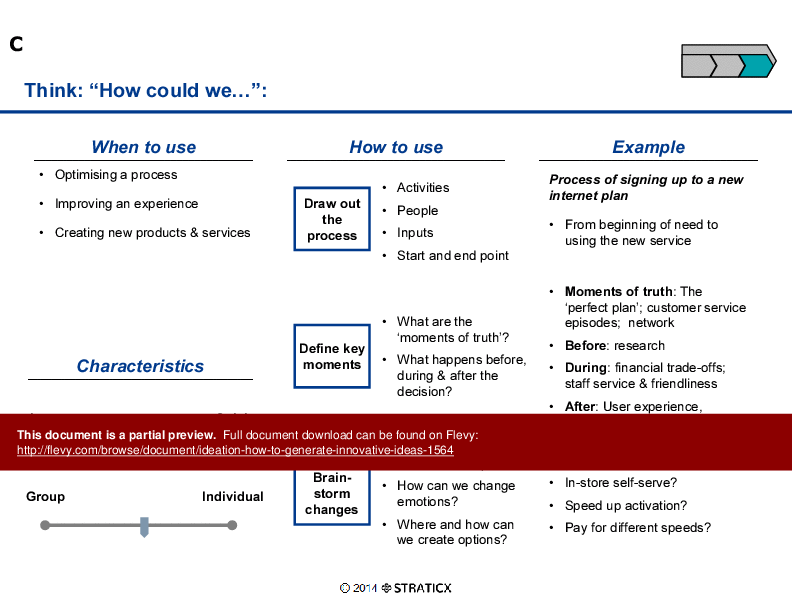
In addition, the presentation covers the "How could we..." method, which is essential for optimizing processes, improving experiences, and creating new products and services. This method involves drawing out the process, defining key moments, and brainstorming changes to enhance customer experiences. Examples provided, such as improving the process of signing up for a new internet plan, illustrate how to apply these techniques in real-world scenarios. This deck is a must-have for executives looking to instill a culture of innovation within their organizations.
Got a question about the product? Email us at support@flevy.com or ask the author directly by using the "Ask the Author a Question" form. If you cannot view the preview above this document description, go here to view the large preview instead.
Executive Summary
The "Ideation - How to Generate Innovative Ideas" presentation from Straticx offers a structured yet flexible approach to innovation, emphasizing the critical first step of ideation. This consulting-grade deck (McKinsey, Bain, or BCG-quality; not affiliated) equips executives and teams with the tools to generate new ideas, evaluate customer demand, and validate concepts effectively. By leveraging various techniques to discover unmet needs, define problems, and create solutions, users will be able to foster a continuous pipeline of innovative ideas that can lead to successful product and service development.
Who This Is For and When to Use
• Corporate executives seeking to drive innovation within their organizations
• Product development teams focused on creating new offerings
• Marketing professionals aiming to understand customer needs and preferences
• Consultants advising clients on innovation strategies
Best-fit moments to use this deck:
• During brainstorming sessions to kickstart the ideation process
• When assessing customer pain points and unmet needs
• In workshops aimed at developing innovative solutions
• For strategic planning meetings focused on new product development
Learning Objectives
• Define the ideation process and its significance in innovation
• Identify and analyze customer pain points and unmet needs
• Develop a clear problem statement that guides solution creation
• Generate innovative ideas through structured brainstorming techniques
• Validate concepts through customer feedback and market testing
• Create a working prototype to test feasibility and demand
Table of Contents
• Introduction to Ideation (page 3)
• Objectives of Ideation (page 5)
• Techniques for Discovering Unmet Needs (page 7)
• Defining the Problem (page 10)
• Creating Solutions (page 12)
• Summary and Next Steps (page 15)
Primary Topics Covered
• Objectives of Ideation - The primary goals of ideation include generating new ideas and receiving feedback to refine concepts.
• Discover Unmet Needs - Techniques such as immersion and ethnography help identify customer pain points and latent needs.
• Define the Problem - Crafting a specific problem statement that outlines the customer segment, activity, and constraints is essential for focused innovation.
• Create Solutions - Various brainstorming techniques support the generation of innovative ideas to address defined problems.
• Overcome Orthodoxies - Challenging existing beliefs and assumptions can lead to new insights and innovative solutions.
• Create Constraints - Imposing limitations can stimulate creative thinking and uncover new problem-solving avenues.
Deliverables, Templates, and Tools
• Ideation framework template to guide the innovation process
• Problem statement template for defining customer needs and constraints
• Brainstorming session guidelines to facilitate idea generation
• Feedback collection tools for validating concepts with customers
• Prototype development checklist to ensure feasibility and market readiness
• Market testing framework to evaluate customer demand
Slide Highlights
• Overview of the ideation process and its significance in innovation
• Techniques for discovering unmet needs, including immersion and ethnography
• Step-by-step guide for defining a clear problem statement
• Brainstorming techniques to generate innovative solutions
• Examples of how to challenge orthodoxies and create constraints for creative thinking
Potential Workshop Agenda
Ideation Kickoff Session (60 minutes)
• Introduce the ideation process and its objectives
• Discuss techniques for discovering unmet needs
• Begin brainstorming potential ideas
Problem Definition Workshop (90 minutes)
• Guide participants in crafting specific problem statements
• Review customer segments and constraints
• Validate problem statements with group feedback
Solution Generation Session (120 minutes)
• Facilitate brainstorming using various techniques
• Encourage participants to challenge existing beliefs
• Collect and prioritize innovative ideas for further exploration
Customization Guidance
• Tailor the problem statement template to reflect specific customer segments and constraints
• Adjust brainstorming techniques based on team dynamics and preferences
• Incorporate industry-specific examples to enhance relevance
• Modify feedback collection tools to align with organizational goals
Secondary Topics Covered
• The role of customer feedback in the ideation process
• Techniques for evaluating the feasibility of generated ideas
• Strategies for fostering a culture of innovation within teams
• The importance of continuous iteration in the innovation process
FAQ
What is the primary goal of the ideation process?
The primary goal is to generate new ideas and receive feedback to refine those concepts, ultimately leading to innovative products and services.
How can we identify customer pain points effectively?
Utilizing techniques like immersion and ethnography allows teams to observe customer behaviors and uncover latent needs.
What should be included in a problem statement?
A problem statement should define the customer segment, outline the valuable activity, and specify the constraints that hinder that activity.
What brainstorming techniques are recommended?
Techniques include overcoming orthodoxies, creating constraints, and using the "How could we..." approach to stimulate innovative thinking.
How can we validate our ideas with customers?
Collect feedback through surveys, interviews, or prototype testing to gauge customer demand and refine concepts accordingly.
What is the significance of challenging orthodoxies?
Challenging existing beliefs can lead to new insights and innovative solutions that better meet customer needs.
How can constraints foster creativity?
Imposing limitations can stimulate creative thinking by forcing teams to explore alternative solutions and uncover new problem-solving avenues.
What steps should we take after generating ideas?
Evaluate the feasibility of ideas, create prototypes, and conduct market testing to validate concepts before full-scale rollout.
Glossary
• Ideation - The process of generating new ideas and concepts for innovation.
• Unmet Needs - Customer requirements that are not currently being fulfilled by existing products or services.
• Problem Statement - A clear definition of the issue to be addressed, including customer segment and constraints.
• Brainstorming - A creative technique for generating a large number of ideas in a short period.
• Immersion - A method of observing and analyzing customer behaviors in their natural environments.
• Ethnography - A qualitative research method focused on understanding cultural and social dynamics through observation.
• Orthodoxies - Established beliefs or assumptions that may limit innovative thinking.
• Constraints - Limitations imposed on a problem that can stimulate creative solutions.
• Prototype - An early sample or model of a product used to test concepts and gather feedback.
• Market Testing - The process of evaluating a product or service with potential customers to assess demand.
• Feedback Loop - A continuous process of gathering input from customers to refine and improve ideas.
• Innovation Pipeline - A structured approach to continuously generate and develop new ideas for products and services.
Source: Best Practices in Innovation Management, Ideation PowerPoint Slides: Ideation - How to Generate Innovative Ideas PowerPoint (PPTX) Presentation Slide Deck, STRATICX
|
Download our FREE Strategy & Transformation Framework Templates
Download our free compilation of 50+ Strategy & Transformation slides and templates. Frameworks include McKinsey 7-S, Balanced Scorecard, Disruptive Innovation, BCG Curve, and many more. |










