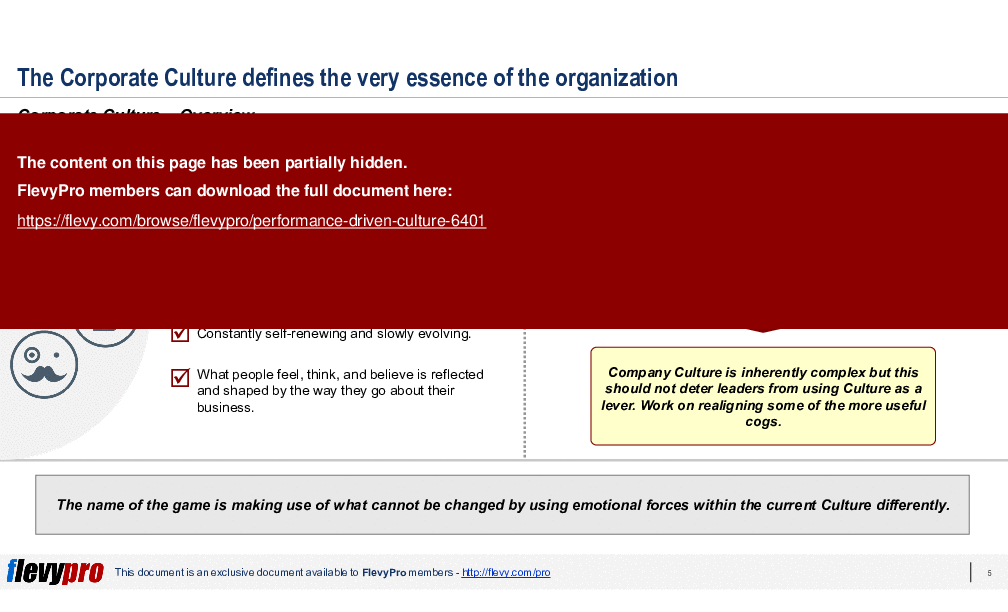

The Corporate Culture defines the very essence of the organization. A strong, positive Corporate Culture in the workplace fosters a good feeling in employees about their work and the work environment.
This presentation provides a lot context around the important of behavior, as the most powerful determinant of change is behavior. And, change in behavior is more effective when organizations keep it simple, rather than taking an all-encompassing cultural change approach.
Organizations with the most effectual culture look for and recurrently strengthen "Bedrock Behaviors." Bedrock Behaviors is a set of acts that has the influence to initiate a domino effect, altering other Behaviors as they travel through an organization. Organizations that identify and embrace such behavior are in a position to create Cultures with sway that go further than Employee Engagement and directly improve Performance.
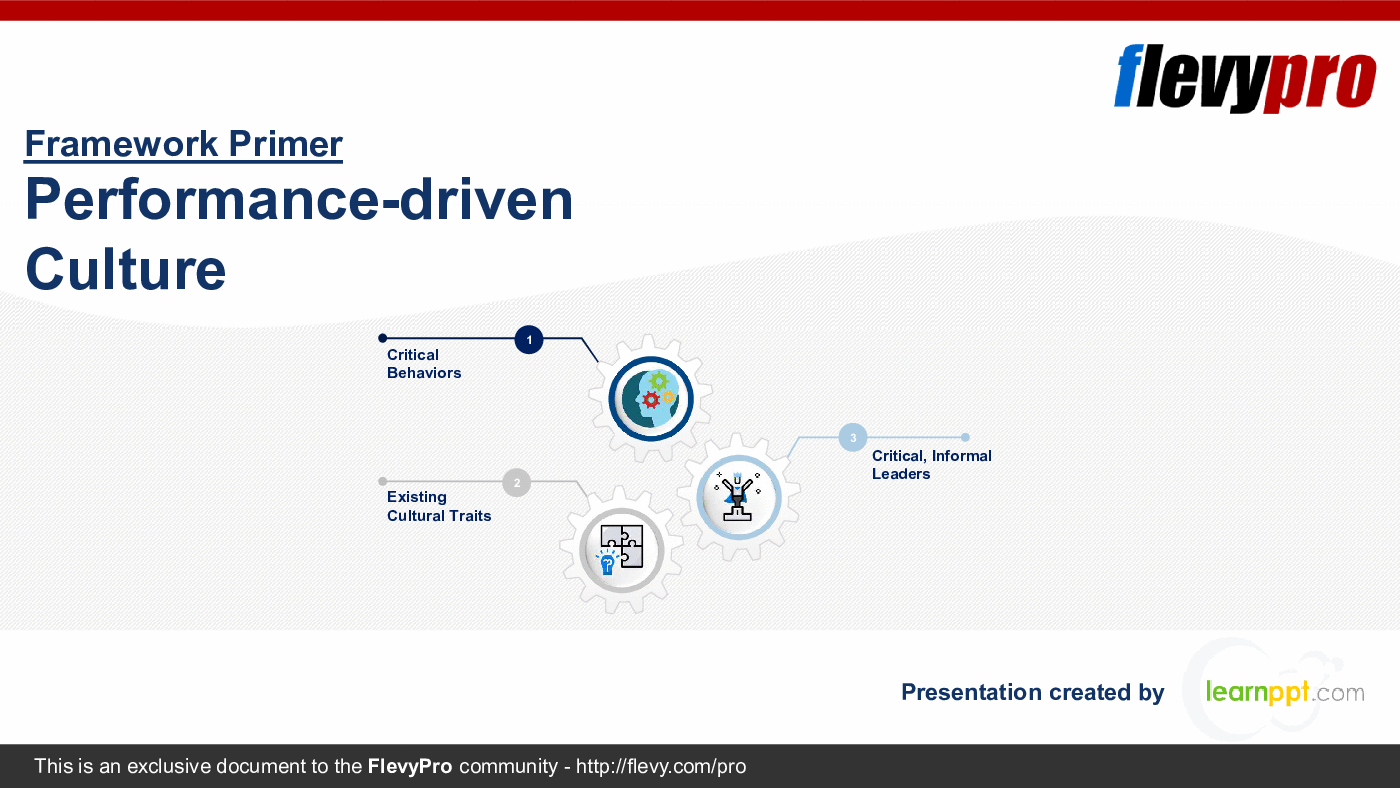
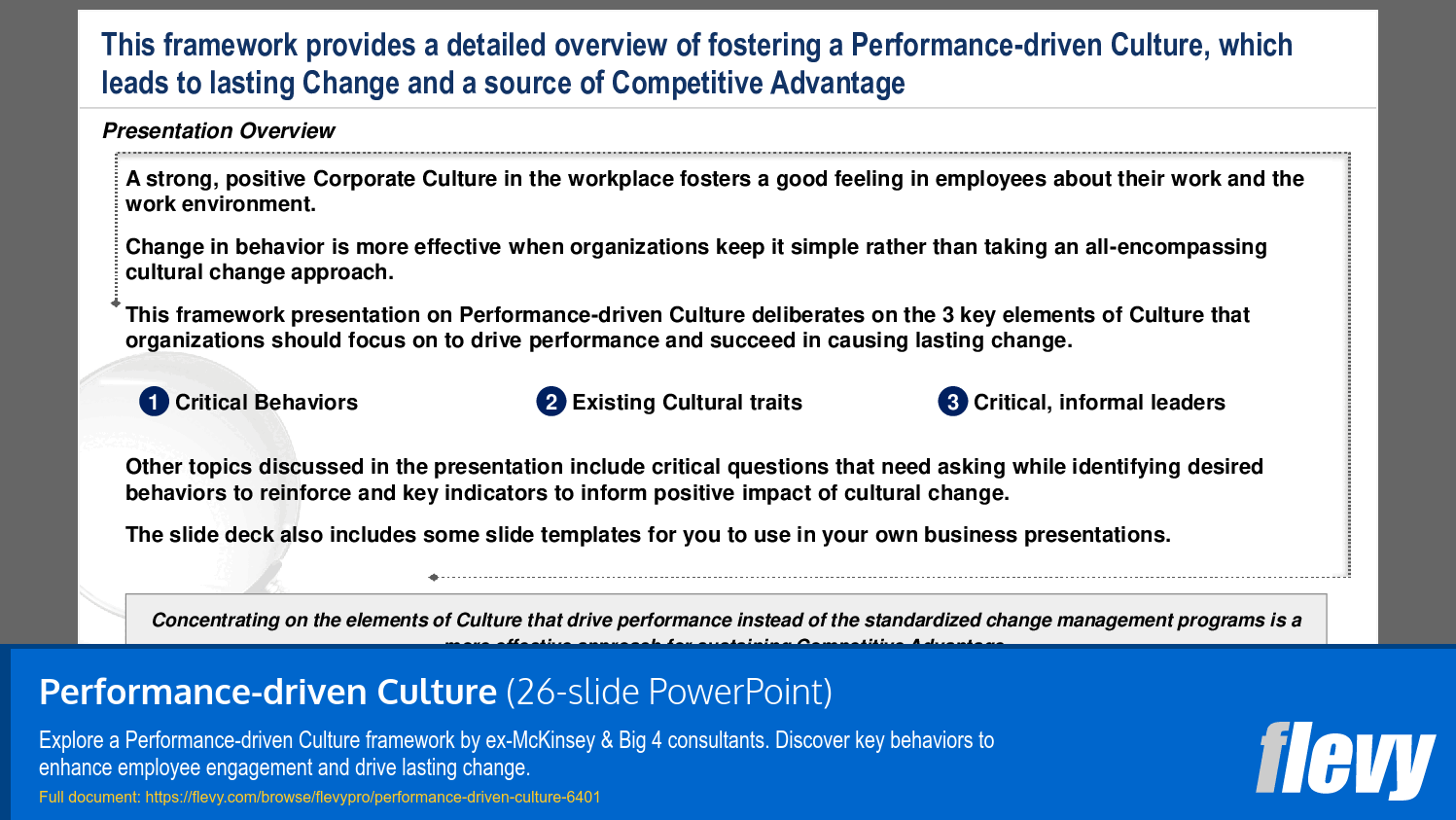
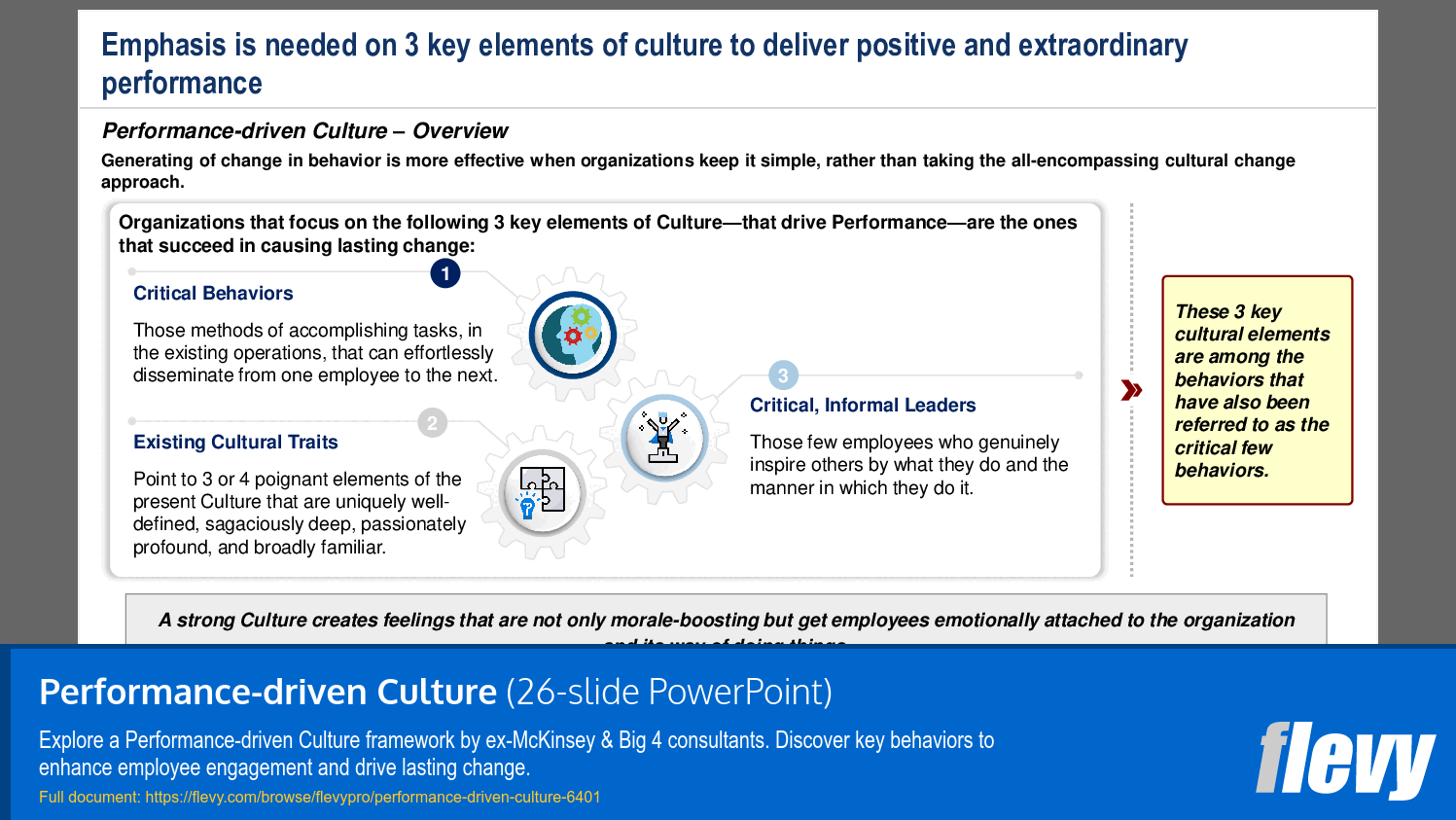
Sustaining a strong Culture demands identifying and reinforcing certain behaviors that have a positive impact on Performance. This PowerPoint presentation on Performance-driven Culture deliberates on the 3 key elements of Performance-driven Culture that organizations should focus on to drive Performance and succeed in causing lasting change.
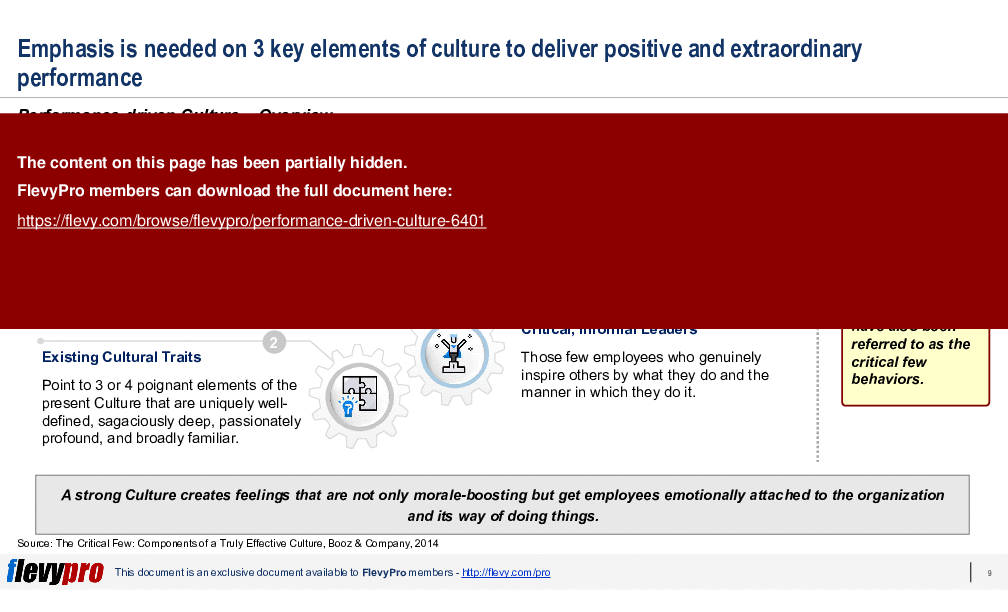
1. Critical Behaviors – These are those methods of accomplishing tasks, in the existing operations, that can effortlessly disseminate from one employee to the next.
2. Existing Cultural Traits – These point to 3 or 4 poignant elements of the present Culture that are uniquely well-defined, sagaciously deep, passionately profound, and broadly familiar.
3. Critical, Informal Leaders – These leaders refer to those few employees who genuinely inspire others by what they do and the manner in which they do it.
These 3 elements are discussed in depth within this presentation.
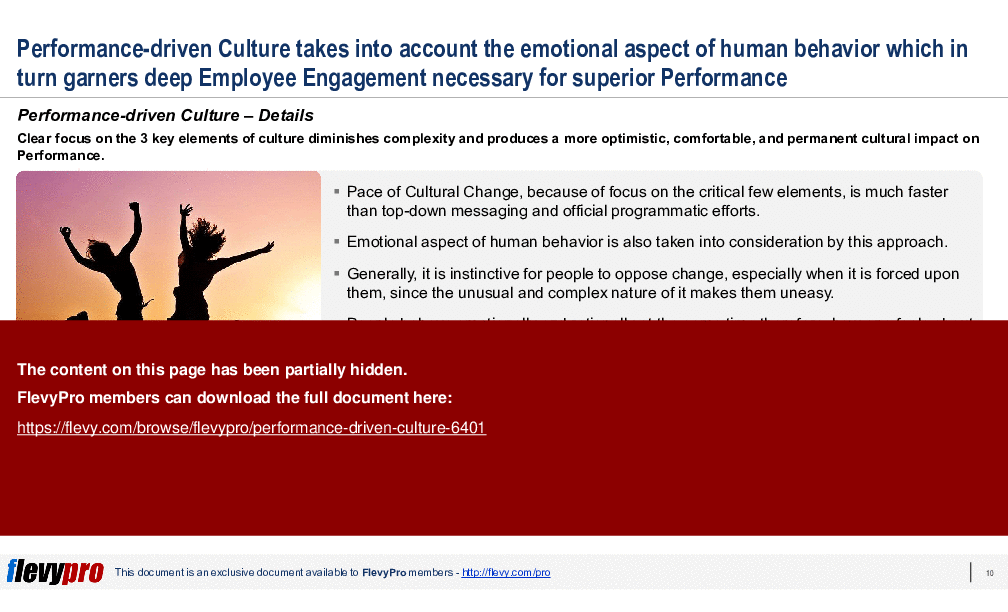
Performance-driven Culture takes into account the emotional aspect of human behavior which in turn garners deep Employee Engagement necessary for superior Performance.
Other topics discussed in the PowerPoint include critical questions that need asking while identifying desired behaviors to reinforce, key indicators to inform positive impact of Cultural Change, the 3 Dimensions of Cultural Alignment, among others.
The Performance & Culture PPT also includes some slide templates that depict the 3 Dimensions of Cultural Alignment and the 3 Elements of Performance-driven Culture for you to use in your own business presentations.
This framework provides a detailed overview of fostering a Performance-driven Culture, which leads to lasting Change and a source of Competitive Advantage. Emphasis is needed on 3 key elements of culture to deliver positive and extraordinary performance.
Got a question about this document? Email us at flevypro@flevy.com.
Executive Summary
The Performance-driven Culture presentation provides a comprehensive framework for fostering a culture that enhances employee performance and drives organizational success. This PowerPoint template outlines the significance of corporate culture and its direct impact on employee engagement and overall performance. By focusing on 3 key elements—Critical Behaviors, Existing Cultural Traits, and Critical Informal Leaders—organizations can implement effective cultural changes that yield lasting results. This presentation serves as a valuable resource for leaders aiming to cultivate a performance-driven environment.
Who This Is For and When to Use
• Corporate executives seeking to enhance organizational culture
• HR leaders focused on employee engagement and performance improvement
• Change management consultants advising on cultural transformation
• Team leaders aiming to align team behaviors with organizational goals
Best-fit moments to use this deck:
• During strategic planning sessions to align culture with business objectives
• In workshops aimed at developing employee engagement initiatives
• When assessing current cultural traits and identifying areas for improvement
• For training sessions focused on leadership development and informal leadership dynamics
Learning Objectives
• Define the concept of a performance-driven culture and its importance
• Identify and articulate the 3 key elements that drive cultural performance
• Analyze existing cultural traits and their impact on organizational effectiveness
• Develop strategies to reinforce critical behaviors within teams
• Recognize the role of informal leaders in shaping and sustaining culture
• Create actionable plans for cultural transformation that align with business goals
Table of Contents
• Overview (page 3)
• Corporate Culture (page 5)
• Performance-driven Culture (page 9)
• Elements of Performance-driven Culture (page 13)
• Templates (page 19)
Primary Topics Covered
• Corporate Culture - Defines the essence of an organization, encompassing employee interactions and behaviors that shape the workplace environment.
• Performance-driven Culture - Emphasizes the importance of focusing on key cultural elements that drive employee engagement and performance.
• Critical Behaviors - Identifies specific actions that can be easily disseminated among employees to foster a performance-oriented environment.
• Existing Cultural Traits - Highlights the significance of recognizing and leveraging positive existing traits within the organization.
• Critical Informal Leaders - Discusses the role of influential employees who inspire others and drive cultural change through their actions.
Deliverables, Templates, and Tools
• Framework for identifying and reinforcing Critical Behaviors
• Template for assessing Existing Cultural Traits
• Guide for engaging Critical Informal Leaders in cultural initiatives
• Action plan template for implementing cultural change strategies
• Metrics for measuring the impact of cultural changes on performance
Slide Highlights
• Overview of the 3 key elements of a performance-driven culture
• Visual representation of the relationship between corporate culture and employee engagement
• Case study examples illustrating successful cultural transformations
• Key indicators for assessing the effectiveness of cultural change initiatives
• Templates for practical application in organizational settings
Potential Workshop Agenda
Understanding Corporate Culture (60 minutes)
• Define corporate culture and its components
• Discuss the impact of culture on employee performance
• Identify existing cultural traits within the organization
Engaging Informal Leaders (90 minutes)
• Explore the role of informal leaders in cultural change
• Develop strategies for leveraging informal leadership
• Create an action plan for engaging informal leaders
Reinforcing Critical Behaviors (60 minutes)
• Identify critical behaviors that align with organizational goals
• Develop a framework for reinforcing these behaviors
• Establish metrics for tracking progress and impact
Customization Guidance
• Tailor the presentation to reflect specific organizational values and goals
• Adjust examples and case studies to align with industry context
• Modify templates to incorporate unique metrics and performance indicators
• Update language and terminology to resonate with the target audience
Secondary Topics Covered
• The emotional aspect of human behavior in organizational culture
• Strategies for simplifying cultural change initiatives
• The importance of emotional commitment in driving performance
• Challenges and traps to avoid in cultural transformation efforts
Topic FAQ
Document FAQ
These are questions addressed within this presentation.
What is a performance-driven culture?
A performance-driven culture is one that emphasizes behaviors and practices that enhance employee engagement and drive organizational success. It focuses on aligning cultural elements with business objectives.
How can we identify critical behaviors in our organization?
Identify behaviors that are easily disseminated among employees and align with organizational goals. Engage teams in discussions to surface these behaviors.
What role do informal leaders play in cultural change?
Informal leaders inspire and influence their peers through their actions. They can be pivotal in driving cultural change by modeling desired behaviors and engaging others.
How can we measure the impact of cultural changes?
Establish metrics that track employee engagement, performance outcomes, and feedback on cultural initiatives. Regularly assess these metrics to gauge progress.
What are existing cultural traits?
Existing cultural traits are the positive elements of an organization's culture that are well-defined and widely recognized. They can serve as a foundation for cultural transformation.
How do we engage informal leaders effectively?
Identify informal leaders within the organization and collaborate with them to develop tools and strategies that resonate with their peers. Empower them to lead by example.
What are the common traps in implementing cultural change?
Common traps include relying too heavily on traditional change management methods, neglecting emotional aspects, and failing to engage informal leaders.
How can we simplify our cultural change initiatives?
Focus on a few critical behaviors and traits rather than attempting to address every aspect of culture at once. This targeted approach can lead to more effective and lasting change.
Glossary
• Corporate Culture - The shared values, beliefs, and practices that shape how an organization operates.
• Performance-driven Culture - A culture focused on behaviors that enhance employee performance and engagement.
• Critical Behaviors - Specific actions that can be easily adopted and disseminated within an organization.
• Existing Cultural Traits - Positive elements of an organization's culture that are well-defined and recognized.
• Critical Informal Leaders - Employees who inspire others through their actions and influence.
• Emotional Commitment - The emotional investment employees have in their work and the organization.
• Cultural Change - The process of transforming an organization's culture to align with new goals or strategies.
• Engagement Metrics - Measurements used to assess employee engagement and the effectiveness of cultural initiatives.
• Behavior Reinforcement - Strategies used to encourage and sustain desired behaviors within an organization.
• Cultural Transformation - A comprehensive change in an organization's culture to improve performance and engagement.
• Leadership Development - Programs and initiatives aimed at enhancing the skills and effectiveness of leaders within an organization.
• Change Management - The structured approach to transitioning individuals, teams, and organizations to a desired future state.
Source: Best Practices in Corporate Culture, Performance Management, Circular Economy PowerPoint Slides: Performance-driven Culture PowerPoint (PPTX) Presentation Slide Deck, LearnPPT Consulting
Did you need more documents?
Consider a FlevyPro subscription from $39/month. View plans here.
For $10.00 more, you can download this document plus 2 more FlevyPro documents. That's just $13 each.
|
Download our FREE Strategy & Transformation Framework Templates
Download our free compilation of 50+ Strategy & Transformation slides and templates. Frameworks include McKinsey 7-S, Balanced Scorecard, Disruptive Innovation, BCG Curve, and many more. |