
This presentation is an example of the process taken to execute a strategic sourcing exercise for Wireless spend. The Wireless spend category relates to mobile phone services (e.g. Verizon Wireless, AT&T Wireless).
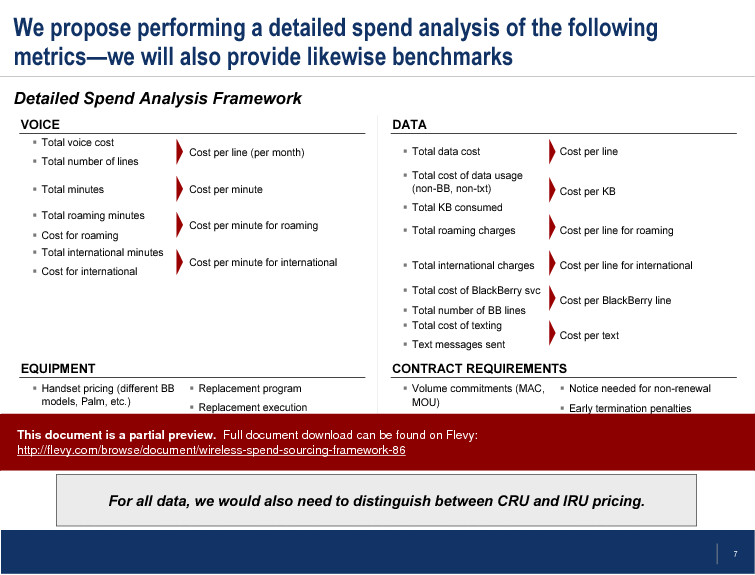
This Wireless Spend Sourcing Framework provides a comprehensive approach to managing wireless expenses. It begins with a detailed spend analysis, covering metrics such as total voice cost, data usage, and equipment pricing. This analysis is crucial for identifying cost-saving opportunities and benchmarking against industry standards. The framework also emphasizes the importance of capturing contract terms and early termination fees to avoid unexpected costs.
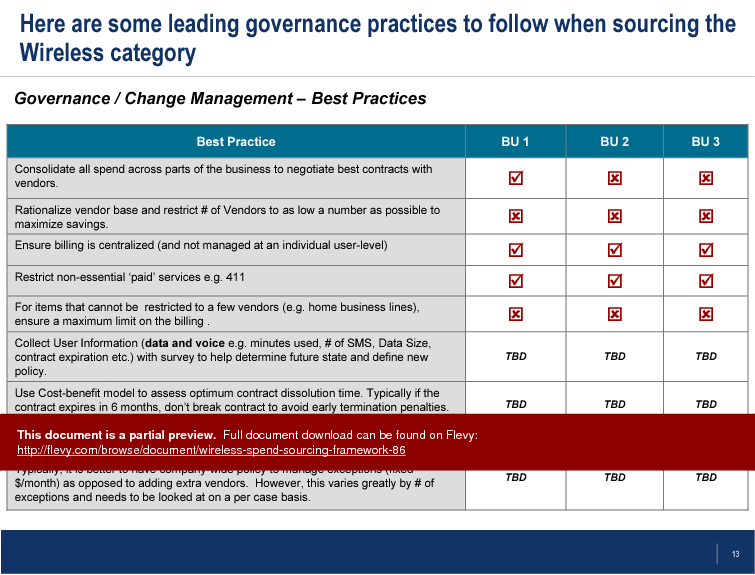
The PPT outlines best practices for governance and change management, ensuring that procurement processes are both compliant and efficient. It includes strategies for consolidating spend, rationalizing vendor bases, and centralizing billing. These practices are designed to streamline operations and maximize savings across the organization. The framework also highlights the need for a cost-benefit model to determine the optimal contract dissolution time, helping to avoid unnecessary penalties.
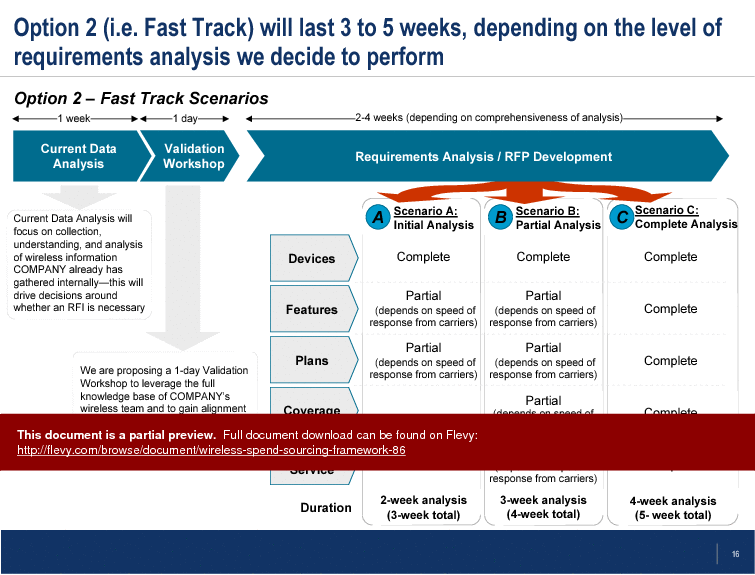
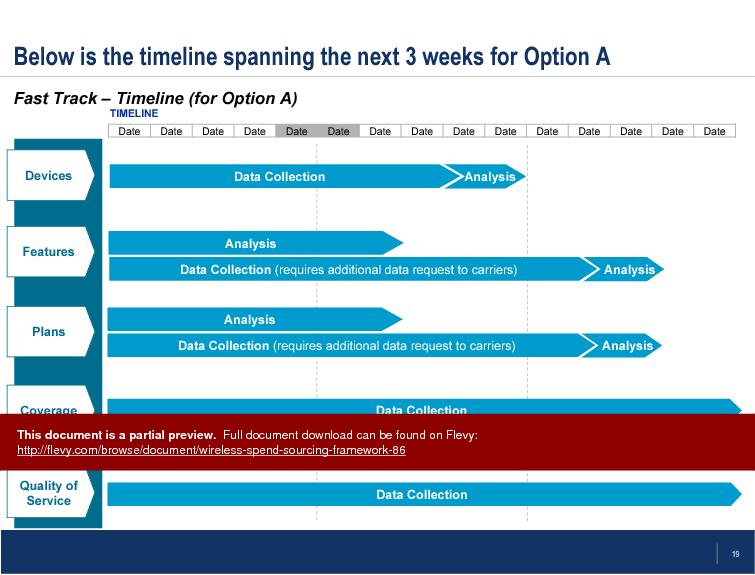
The framework offers a fast-track option for requirements analysis and RFP development, which can be completed in as little as three weeks. This option includes a validation workshop to leverage internal knowledge and align stakeholders. The final step in the process is contract negotiation, which should be a collaborative effort between the Wireless Sourcing and Legal teams. The two-phase Reverse RFP process is recommended to secure the best possible rates from vendors.
Got a question about the product? Email us at support@flevy.com or ask the author directly by using the "Ask the Author a Question" form. If you cannot view the preview above this document description, go here to view the large preview instead.
Executive Summary
The Wireless Spend Sourcing Framework presentation outlines a structured approach to executing a strategic sourcing exercise specifically for mobile phone services. This framework is designed to optimize procurement processes for wireless spend, focusing on key phases such as data analysis, RFP development, and contract negotiation. By following this framework, organizations can effectively assess their current wireless contracts, estimate potential penalties for early termination, and identify opportunities for cost savings through strategic vendor selection.
Who This Is For and When to Use
• Procurement teams responsible for managing wireless service contracts
• Financial analysts evaluating cost-saving opportunities in mobile services
• Project managers overseeing sourcing initiatives for telecommunications
• Stakeholders involved in governance and compliance for procurement processes
Best-fit moments to use this deck:
• When initiating a sourcing exercise for mobile phone services
• During contract negotiations with wireless service providers
• For conducting a detailed spend analysis to identify savings opportunities
Learning Objectives
• Define the strategic sourcing process for wireless spend
• Conduct a thorough data analysis to assess current wireless contracts
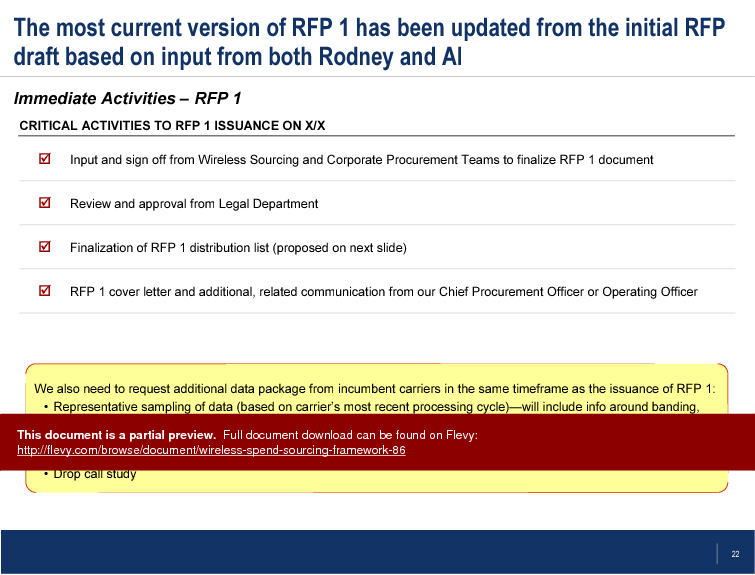
• Develop a comprehensive RFP tailored to organizational needs
• Estimate potential penalties and early termination fees for existing contracts
• Implement effective governance practices to manage procurement processes
• Create a stakeholder communication plan to facilitate engagement and buy-in
Table of Contents
• Introduction to Wireless Spend Sourcing (page 1)
• High-Level Process Overview (page 2)
• Phase 1: Data Analysis and Preparation (page 3)
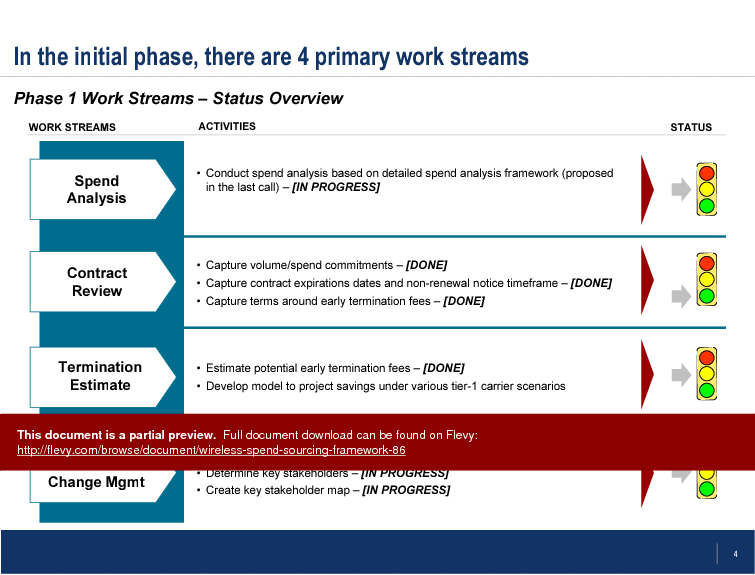
• Phase 1 Work Streams Overview (page 4)
• Contract Review and Termination Estimate (page 5)
• Detailed Spend Analysis Framework (page 7)
• Governance and Change Management Overview (page 8)
• Stakeholder Communication Plan (page 11)
• Phase 2: RFP Development and Issuance (page 14)
• Phase 3: Contract Negotiation (page 24)
Primary Topics Covered
• Data Analysis and Preparation - This phase involves conducting a detailed spend analysis and preparing for RFP development to ensure informed decision-making.
• RFP Development - The creation of a Request for Proposal (RFP) that captures the organization's requirements and solicits competitive bids from vendors.
• Contract Negotiation - A collaborative effort to finalize agreements with selected vendors, focusing on favorable terms and conditions.
• Governance and Change Management - Establishing a governance framework to ensure compliance and effective management of the sourcing process.
• Stakeholder Engagement - Developing a communication plan to keep all relevant parties informed and engaged throughout the sourcing process.
• Spend Analysis Framework - A structured approach to analyzing current wireless expenditures and identifying areas for cost reduction.
Deliverables, Templates, and Tools
• Spend analysis template to evaluate current wireless expenditures
• RFP template for soliciting bids from wireless service providers
• Stakeholder map template for identifying key participants in the sourcing process
• Communication plan template for engaging stakeholders effectively
• Governance framework outline to ensure compliance and accountability
• Early termination fee estimation model for assessing potential penalties
Slide Highlights
• Overview of the strategic sourcing process for wireless spend
• Detailed breakdown of phase 1 work streams and their status
• Contract review and termination fee estimation scenarios
• Framework for conducting a comprehensive spend analysis
• Best practices for governance and stakeholder engagement
Potential Workshop Agenda
Kick-off Meeting (60 minutes)
• Introduce the Wireless Spend Sourcing Framework
• Discuss objectives and expected outcomes
• Identify key stakeholders and their roles
Data Analysis Workshop (90 minutes)
• Review current wireless spend data
• Conduct a gap analysis of existing contracts
• Develop a preliminary communication plan
RFP Development Session (120 minutes)
• Draft the RFP based on stakeholder input
• Discuss evaluation criteria for vendor selection
• Plan for stakeholder review of RFP drafts
Customization Guidance
• Tailor the spend analysis framework to reflect specific organizational needs and historical data
• Adjust the RFP template to include unique requirements relevant to the wireless category
• Modify the stakeholder communication plan to align with organizational culture and preferences
Secondary Topics Covered
• Best practices for vendor rationalization in wireless procurement
• Strategies for minimizing rogue spend and ensuring compliance
• Techniques for effective change management during sourcing initiatives
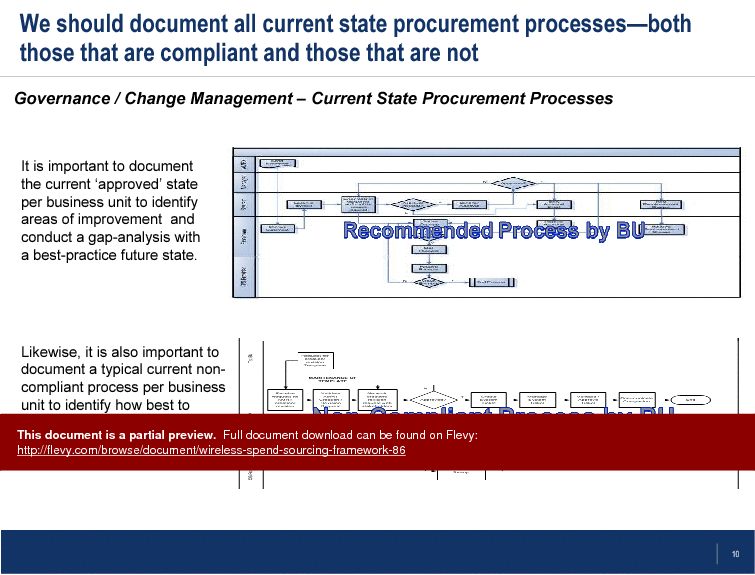
• Analysis of current state procurement processes to identify areas for improvement
Topic FAQ
Document FAQ
These are questions addressed within this presentation.
What is the purpose of the Wireless Spend Sourcing Framework?
The framework aims to provide a structured approach to sourcing mobile phone services, focusing on optimizing procurement processes and maximizing cost savings.
Who should use this framework?
This framework is designed for procurement teams, financial analysts, project managers, and stakeholders involved in wireless service procurement.
What are the key phases of the sourcing process?
The sourcing process consists of 3 key phases: data analysis and preparation, RFP development, and contract negotiation.
How can we estimate potential penalties for early contract termination?
The framework includes a model for estimating early termination fees based on current contracts and usage patterns.
What tools are included in the framework?
The framework provides templates for spend analysis, RFP development, stakeholder mapping, and communication planning.
How can we ensure stakeholder engagement throughout the process?
A stakeholder communication plan is included to facilitate engagement and keep all relevant parties informed.
What best practices should we follow during the sourcing process?
Best practices include consolidating spend, rationalizing the vendor base, and ensuring compliance with procurement policies.
How long does the RFP development process take?
The RFP development process can vary in duration, typically taking 3 to 5 weeks depending on the level of requirements analysis performed.
What is the significance of governance in the sourcing process?
Effective governance ensures stakeholder buy-in, tracks compliance, and reduces rogue spending, ultimately leading to increased savings.
Glossary
• RFP - Request for Proposal, a document soliciting bids from vendors.
• ETFs - Early Termination Fees, penalties for terminating contracts before their expiration.
• Spend Analysis - The process of reviewing and analyzing spending data to identify cost-saving opportunities.
• Governance - The framework for managing compliance and decision-making in procurement processes.
• Stakeholder - An individual or group with an interest in the sourcing process.
• Vendor Rationalization - The process of reducing the number of suppliers to maximize savings.
• Change Management - Strategies for managing the transition to new processes or policies.
• Contract Negotiation - The process of discussing and finalizing terms with vendors.
• Procurement - The act of acquiring goods or services, often through a formal process.
• Communication Plan - A strategy for engaging stakeholders and keeping them informed.
• Gap Analysis - A method for comparing current performance with desired outcomes to identify areas for improvement.
• Cost-Benefit Analysis - A process for evaluating the financial implications of decisions.
• Service Level Agreement (SLA) - A contract that defines the level of service expected from a vendor.
• Mobile Services - Telecommunications services related to mobile devices.
• Wireless Spend - Expenditures related to mobile phone services and devices.
• Stakeholder Map - A visual representation of stakeholders involved in a project.
• Spend Leakage - Unintentional overspending due to non-compliance with procurement processes.
• Telecommunications - The transmission of information over significant distances by electronic means.
• Procurement Process - The series of steps taken to acquire goods or services.
• Negotiation Tactics - Strategies employed during discussions to achieve favorable outcomes.
• Reverse Auction - A bidding process where suppliers compete to offer the lowest price.
• Contract Management - The process of managing contracts throughout their lifecycle.
Source: Best Practices in Procurement Strategy PowerPoint Slides: Wireless Spend Sourcing Framework PowerPoint (PPT) Presentation Slide Deck, vinay
|
Receive our FREE presentation on Operational Excellence
This 50-slide presentation provides a high-level introduction to the 4 Building Blocks of Operational Excellence. Achieving OpEx requires the implementation of a Business Execution System that integrates these 4 building blocks. |










