
Includes frameworks, models and tools to help build an effective, strategic and value-driven board
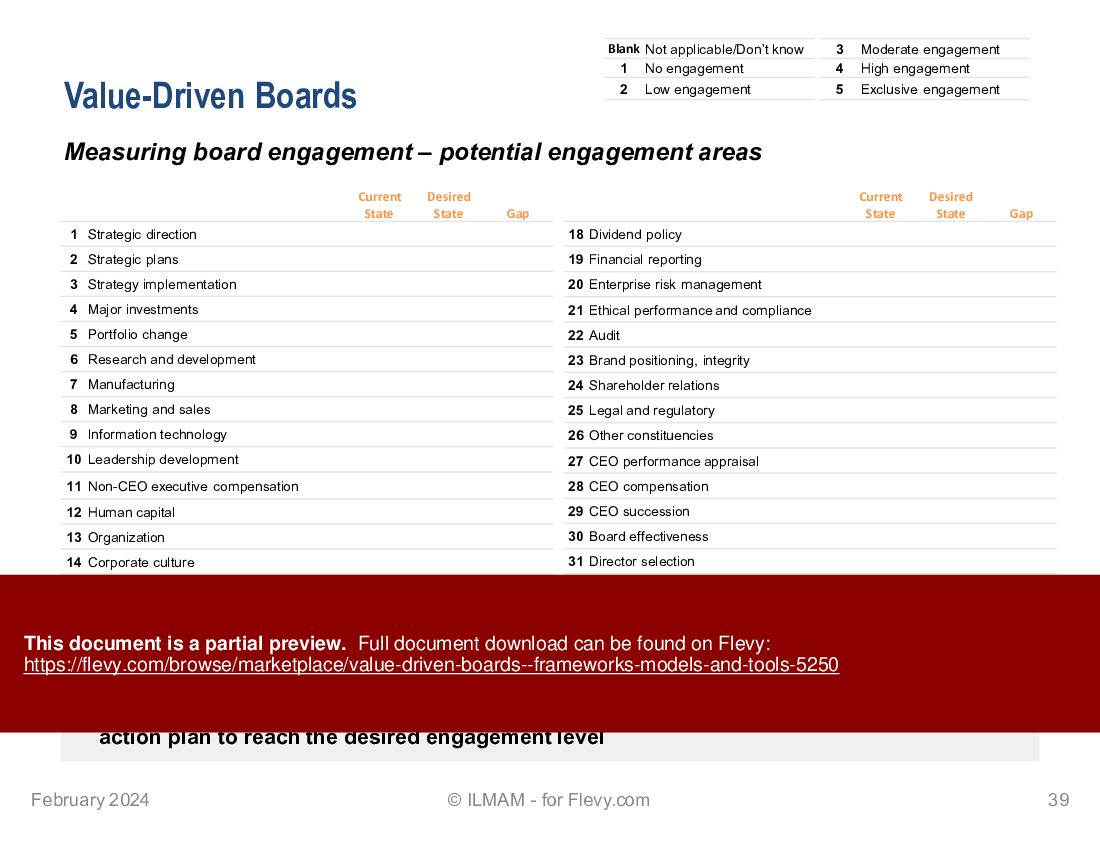
Illustrates to measure current board engagement against a desired level
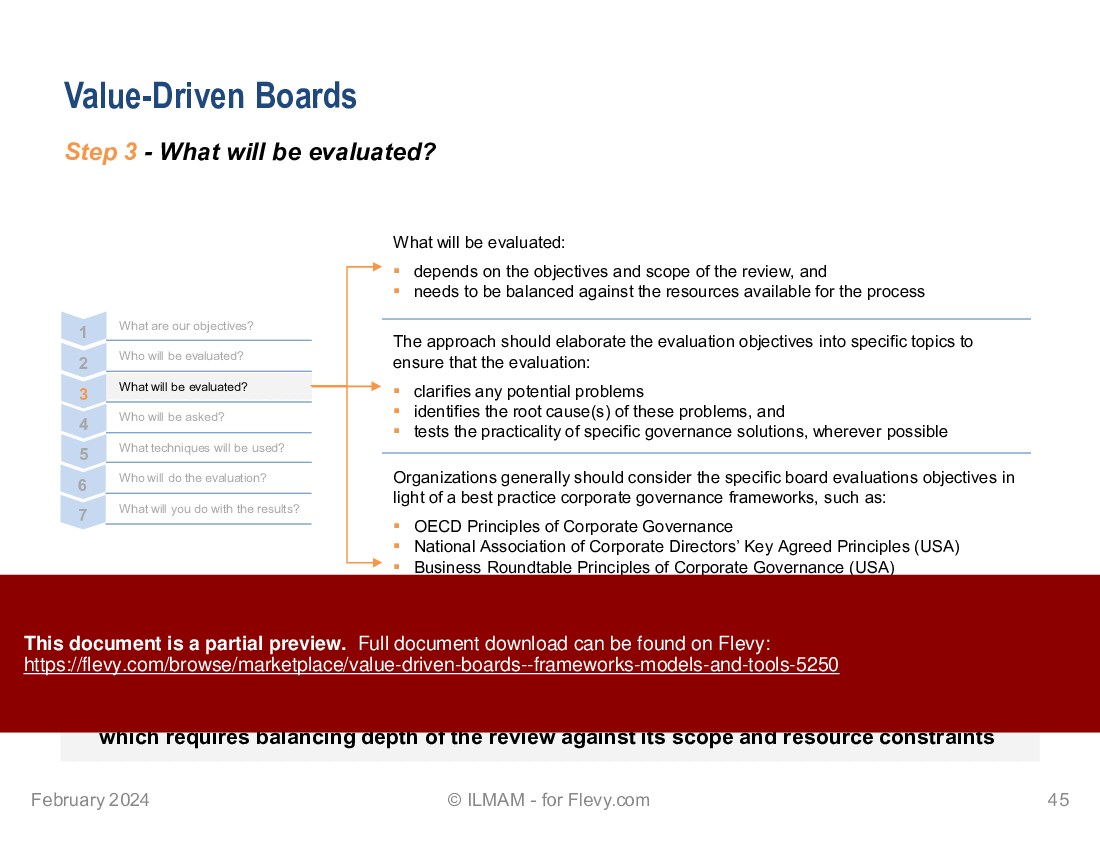
Includes steps for developing an effective board evaluation
VALUE CREATION PPT DESCRIPTION
This product (Value-Driven Boards - Frameworks, Models and Tools) is a 53-slide PPT PowerPoint presentation slide deck (PPTX) with a supplemental Excel document, which you can download immediately upon purchase.
Boards often focus their most of their time and efforts on activities related to regulatory compliance and risk oversight, which helps preserve existing shareholder value. Increasingly, however, shareholders expect CEOs and boards to spend more time on long-term value creation activities.
This document explores select frameworks, models and tools that can help:
• build an effective, strategic and value-driven board
• measure current board engagement against a desired level, and
• develop an effective board evaluation
A supplementary self-explanatory Excel worksheet to help graph current and desired board engagement levels is also included. Only the "Current Level" and "Desired Level" columns need to be filled using the drop down list, with cells left blank for "Not applicable/Don't know".
Contents
1. Context and overview
• Context
• Primary parties to corporate relations
• Corporate governance stakeholders
• Corporate governance vs corporate management
2. Leadership versus management
• Leadership versus management
• Leadership and management requirements
• Role of chairman versus role of CEO
3. Building an effective board
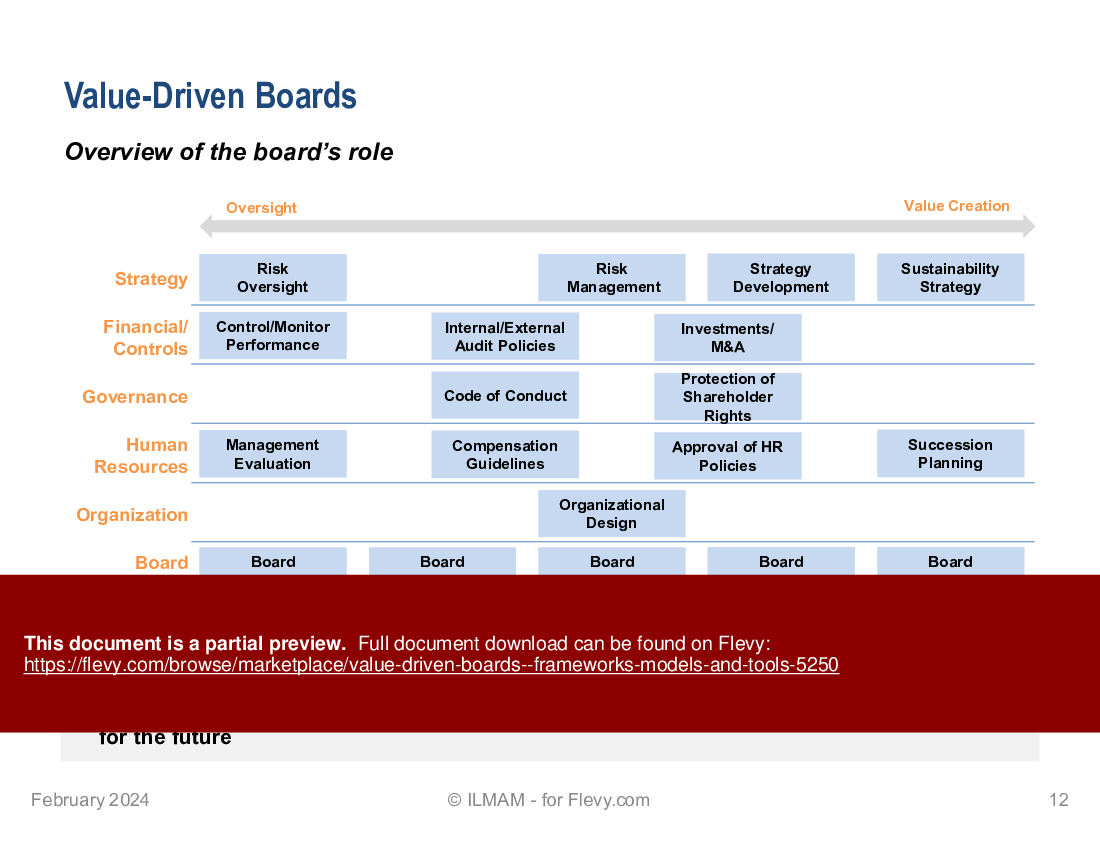
• Overview of the board's role
• Board-building framework
• The board as a source of competitive advantage
• The contingent role of boards
4. Boards and strategy
• Multiple strategy approaches
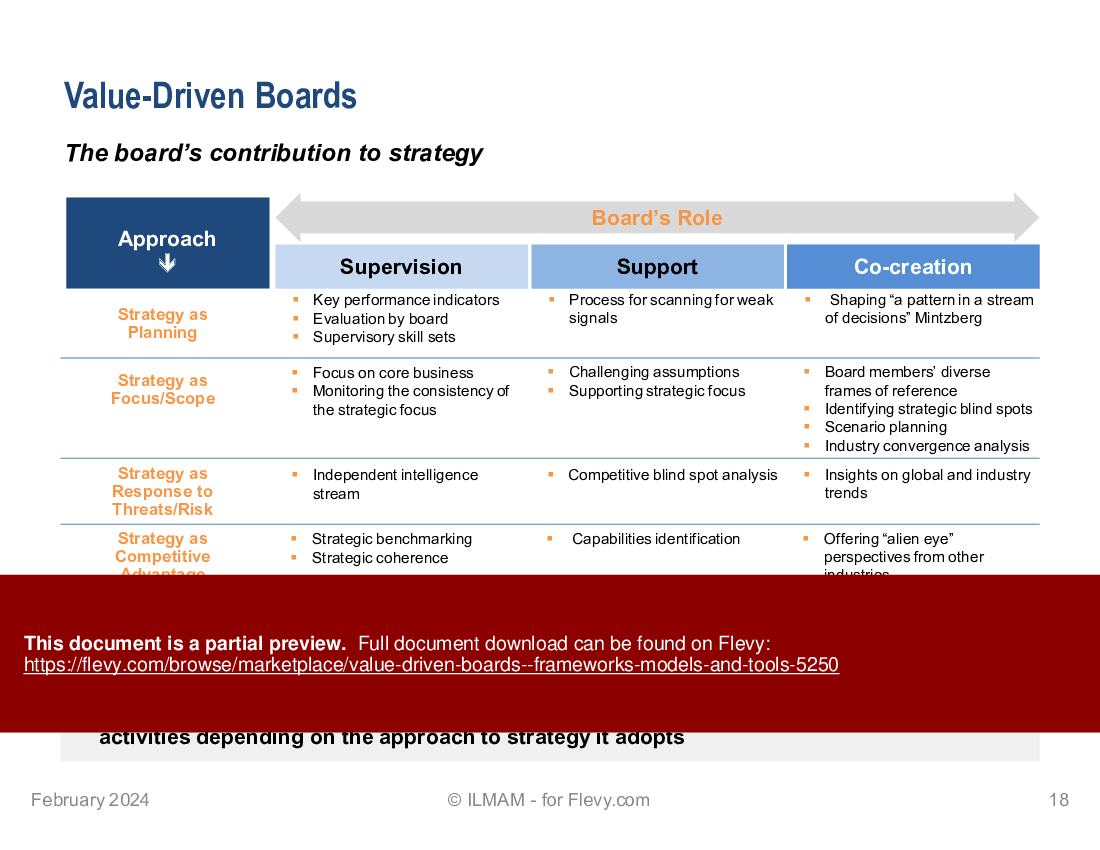
• The board's contribution to strategy
• The board's changing levels of contribution to strategy
• The impact of context on a board's role and strategic views
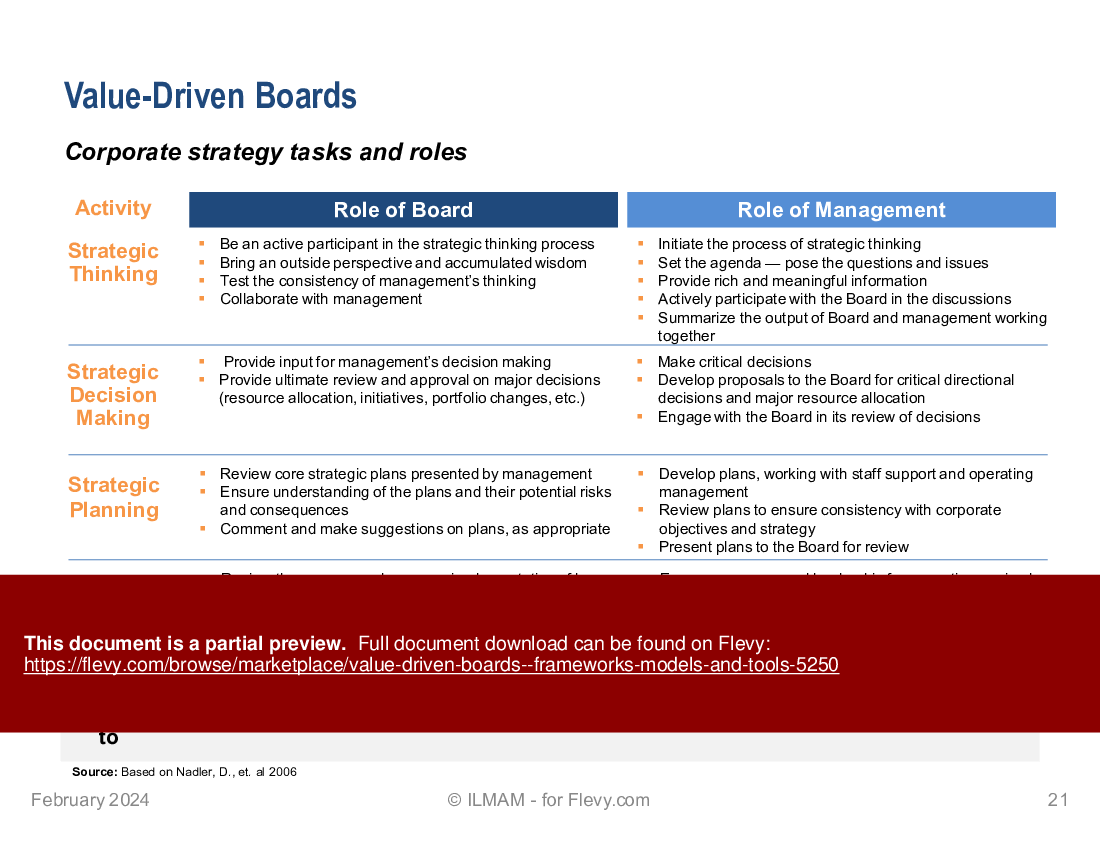
• Corporate strategy tasks and roles
• Engaging the board in strategic planning
• How forward-looking boards should spend their time
5. Governance as Leadership
• Governance as Leadership
• Three governance modes
• Overlapping modes of governing
• Four quadrants of engagement
• The generative curve
6. Value-creation
• Tricker model
• Tricker model ? detailed
• Tricker model ? current versus desired
• Four pre-conditions to value-added board governance
• Value focused board governance
7. Board engagement
• Degree of board involvement
• The engaged board
• Measuring board engagement ? potential engagement areas
• Measuring board engagement ? illustrative outcome
8. Board evaluation
• A framework used for board evaluations
• Step 1 – What are our objectives?
• Step 2 – Who will be evaluated?
• Step 3 – What will be evaluated?
• Corporate Governance Practice Framework
• High performance board model
• Step 4 – Who will be asked?
• Step 5 – What techniques will be used?
• Board evaluation methodologies
• Step 6 – Who will do the evaluation?
• Step 7 – What will you do with the results?
The PPT emphasizes the importance of aligning corporate governance with strategic management to enhance accountability and supervision. It provides a comprehensive analysis of the roles and requirements of leadership versus management in various business environments.
Got a question about the product? Email us at support@flevy.com or ask the author directly by using the "Ask the Author a Question" form. If you cannot view the preview above this document description, go here to view the large preview instead.
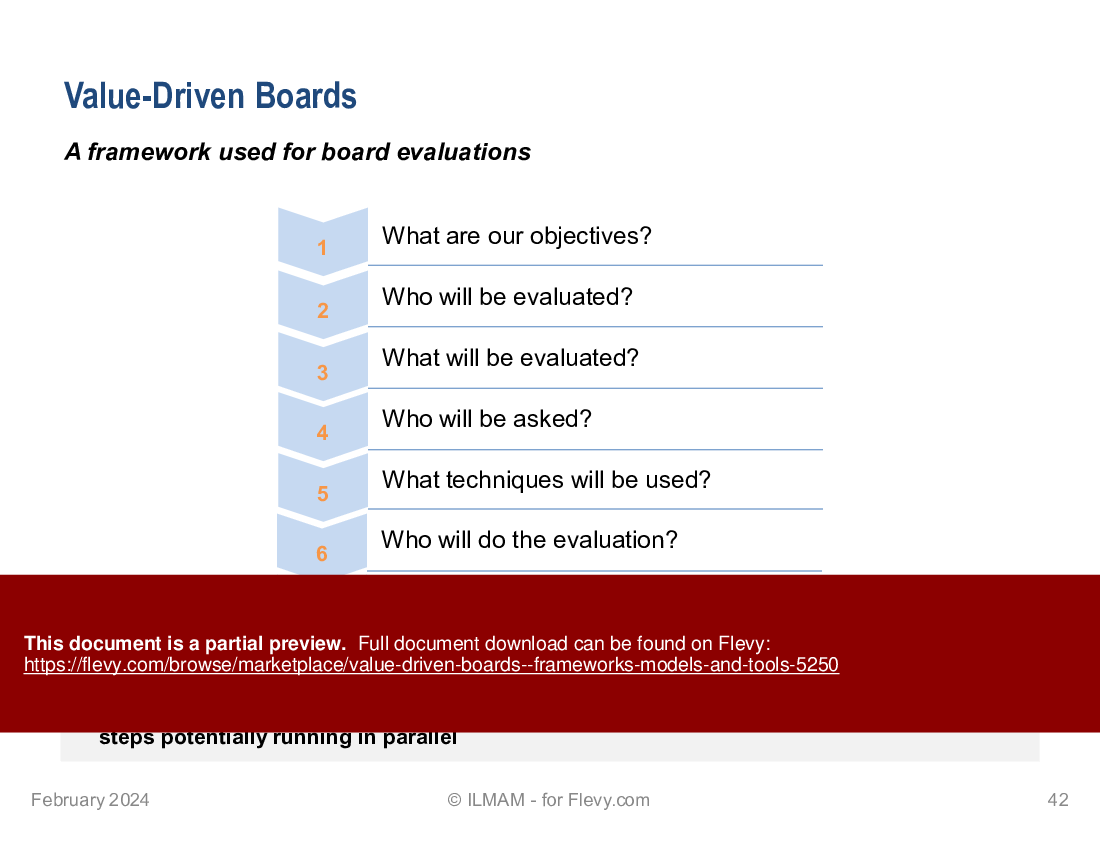
This PPT slide titled "Value-Driven Boards" outlines a structured framework for conducting board evaluations. It presents 7 critical questions that guide the evaluation process, ensuring that all relevant aspects are considered.
The first question, "What are our objectives?" emphasizes the importance of defining clear goals for the evaluation. This sets the stage for the entire process, as objectives will shape the subsequent steps. The second question, "Who will be evaluated?" addresses the specific individuals or groups that will undergo assessment, which is crucial for accountability and clarity.
Next, "What will be evaluated?" focuses on the criteria or areas of performance that need assessment. This could range from governance practices to individual contributions. The fourth question, "Who will be asked?" highlights the need to identify stakeholders or participants whose input will be valuable in the evaluation. This ensures a comprehensive perspective.
The fifth question, "What techniques will be used?" pertains to the methodologies or tools that will facilitate the evaluation process. This could involve surveys, interviews, or other assessment methods. The sixth question, "Who will do the evaluation?" is about designating individuals or teams responsible for carrying out the evaluation, which is vital for maintaining objectivity.
Finally, "What will you do with the results?" underscores the importance of actionable insights. It prompts organizations to consider how they will implement findings to drive improvements. The note at the bottom indicates that while these steps are presented linearly, they may not always follow that order in practice, suggesting flexibility in the approach. This framework serves as a comprehensive guide for organizations aiming to enhance their board effectiveness.
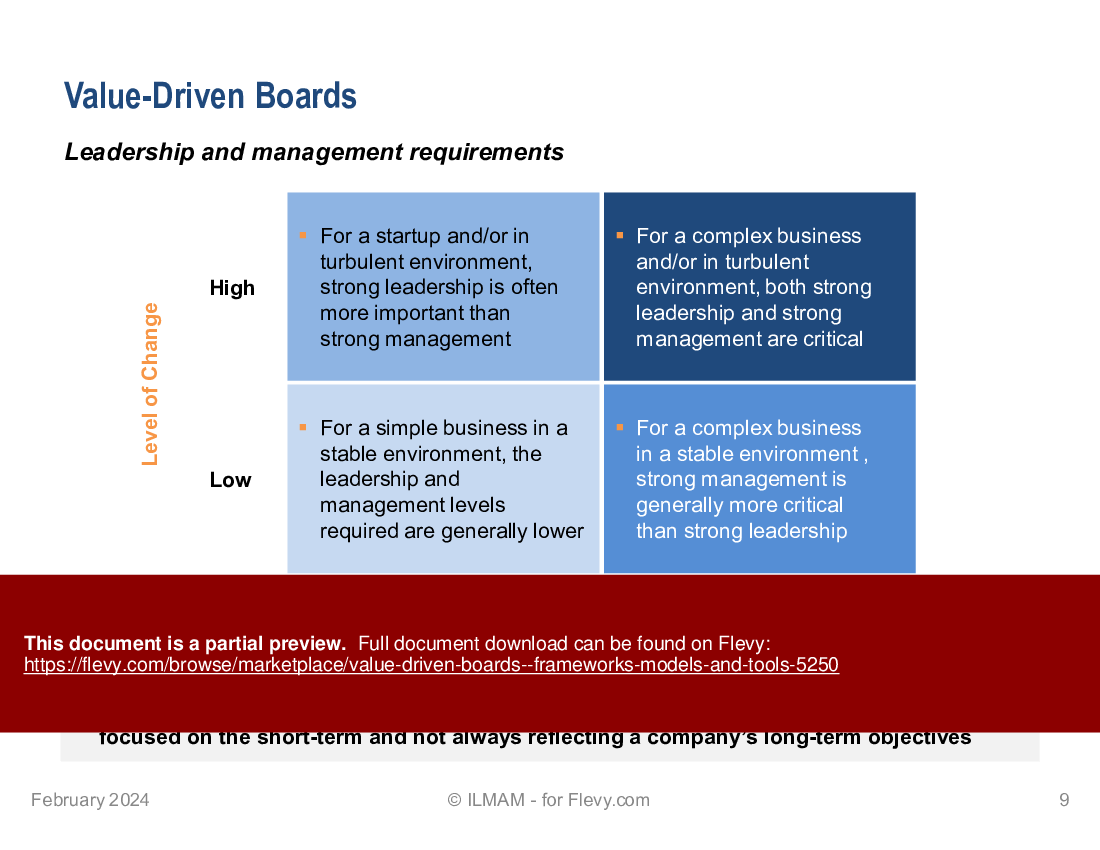
This PPT slide presents a comparative analysis of leadership and management, emphasizing their distinct roles within an organization. It begins with definitions, where leadership is described as the art of influencing others to reach their maximum potential, while management is characterized as the science of achieving results through the efforts of others. This foundational distinction sets the stage for understanding their respective objectives.
The objectives of leadership focus on generating valuable and essential change, in contrast to management, which aims to produce consistency and meet other specific goals. This difference highlights the proactive nature of leadership compared to the reactive stance of management.
The core processes for each role further delineate their functions. Leadership involves establishing direction, considering long timeframes, and aligning people towards common goals. It emphasizes consensus-building and commitment, aiming to motivate and inspire teams. On the other hand, management is centered on planning, budgeting, and organizing resources. It prioritizes short timeframes, detail orientation, and risk elimination, focusing on compliance and predictability.
The overall processes section underscores that both leadership and management share commonalities. They both determine what needs to be accomplished, assemble teams to execute plans, and ensure that tasks are completed effectively. This section suggests that while their approaches differ, both roles are essential for organizational success.
This slide serves as a valuable resource for understanding the complementary nature of leadership and management, providing insights for organizations seeking to balance these functions effectively.
This PPT slide presents a comprehensive framework for corporate governance, emphasizing the importance of value-driven boards. It is structured into 4 key quadrants: Defining Governance Roles, Key Board Functions, Improving Board Processes, and Board Effectiveness. Each quadrant highlights critical aspects that contribute to effective governance.
In the "Defining Governance Roles" section, the roles of various stakeholders are outlined. This includes the Board, individual directors, the Chair, the Company Secretary, and the CEO. Understanding these roles is fundamental for establishing clear responsibilities and expectations within the board.
The "Key Board Functions" quadrant identifies essential functions that boards must perform, such as strategy formulation, monitoring compliance, and risk management. This section underscores the need for boards to engage in proactive decision-making and stakeholder communication, ensuring alignment with the organization's strategic objectives.
"Improving Board Processes" focuses on the operational aspects of board meetings. It covers elements like the meeting agenda, board papers, and minutes, which are vital for maintaining organized and effective discussions. A well-structured process enhances the board's ability to function efficiently.
Lastly, the "Board Effectiveness" quadrant emphasizes the importance of ongoing evaluation and development of directors. Topics such as director protection, remuneration, selection, and induction are crucial for fostering a capable and committed board.
The slide concludes with a statement highlighting that to maximize its value, a board must effectively address a wide range of governance aspects. This framework serves as a valuable tool for organizations aiming to enhance their governance practices and ensure that their boards operate at peak effectiveness.
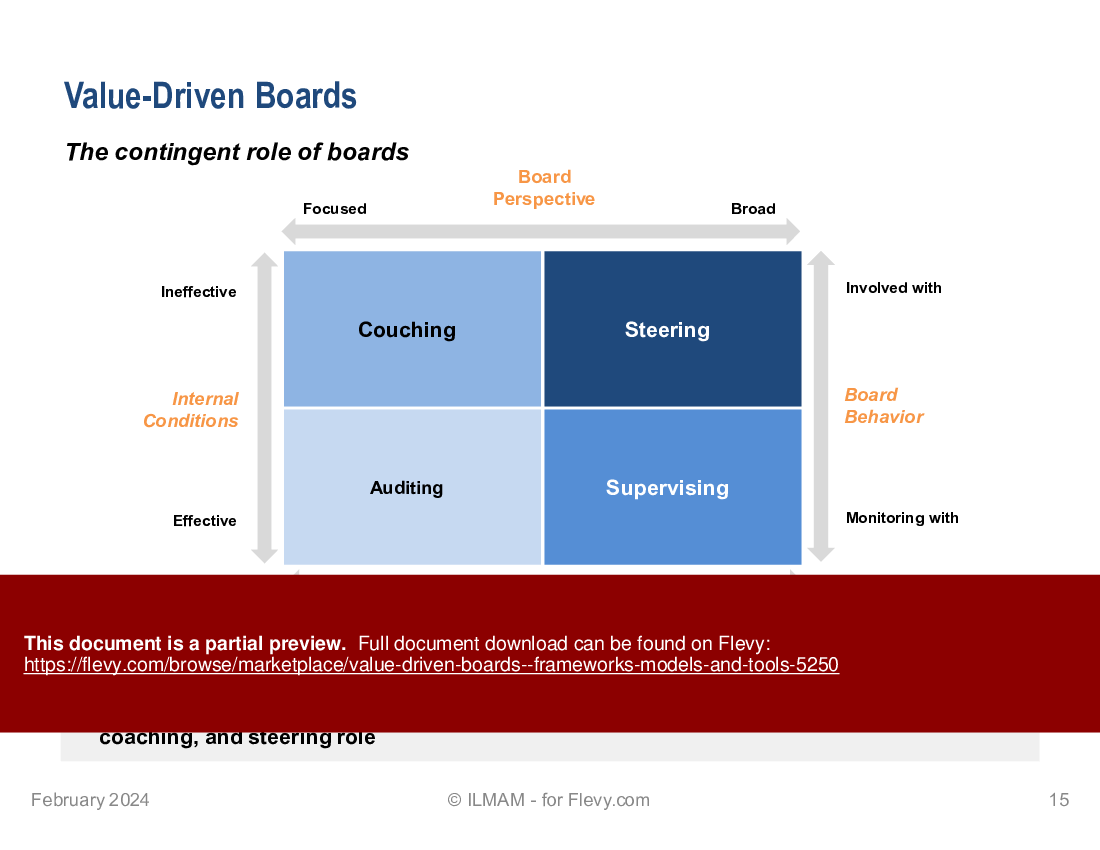
This PPT slide presents a framework illustrating the contingent roles of boards in organizations, categorized into 4 distinct quadrants: Couching, Steering, Auditing, and Supervising. Each quadrant is influenced by 2 axes: Internal Conditions and External Conditions, with effectiveness and significance as key metrics.
Couching is positioned in the upper left quadrant, indicating a scenario where internal conditions are effective, but external conditions are insignificant. This suggests that boards in this role focus on guiding and mentoring management without extensive external engagement. Steering, located in the upper right quadrant, represents a broader board perspective where both internal conditions are effective and external conditions are significant. Here, boards actively engage in strategic direction and oversight, aligning closely with management to navigate external challenges.
The lower left quadrant, Auditing, reflects a situation where internal conditions are ineffective and external conditions are insignificant. In this role, boards primarily focus on compliance and oversight, ensuring that the organization adheres to necessary regulations without significant external pressures. Finally, the Supervising quadrant in the lower right corner indicates a scenario where internal conditions are ineffective, but external conditions are significant. Boards in this role are tasked with monitoring and ensuring that the organization responds effectively to external challenges, often requiring a more hands-on approach.
The slide emphasizes that a board's role is not static; it varies based on the interplay of internal and external conditions. This framework provides valuable insights for organizations seeking to optimize board effectiveness, ensuring that the board's focus aligns with the prevailing circumstances. Understanding these dynamics can help organizations better leverage their boards for strategic success.
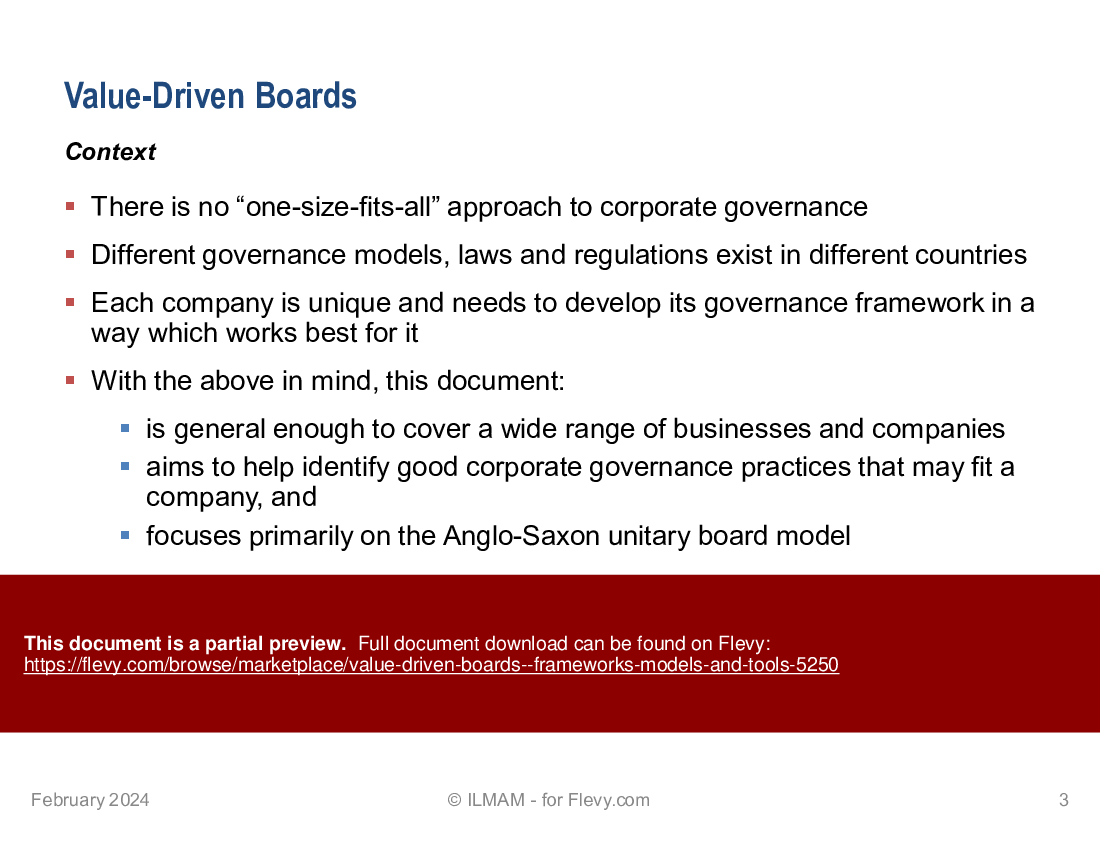
This PPT slide presents a framework for understanding the relationships among 3 primary parties in corporate governance: Shareholders, the Board, and Management. Each of these entities plays a crucial role in the governance structure, and their interactions are vital for effective decision-making.
At the center, Shareholders are depicted as the key stakeholders, influencing both the Board and Management. Their interests are represented through aspects like investments and dividends, highlighting the financial expectations that shareholders have from the company. The arrows indicate a two-way communication flow, suggesting that shareholders not only receive information, but also provide input that shapes corporate strategy.
The Board is positioned as the intermediary, responsible for appointments and ensuring accountability. This suggests that the Board's role extends beyond mere oversight; it actively engages in strategic decision-making and executive appointments. The text emphasizes the importance of communication and accountability, which are essential for maintaining trust and transparency between the Board and shareholders.
Management is shown as the operational arm, tasked with executing the strategies set forth by the Board. The slide notes that Management is accountable for performance reporting, transparency, and risk management. This highlights the necessity for Management to align its actions with the expectations of both the Board and shareholders.
Overall, the slide effectively illustrates the interconnectedness of these 3 parties, underscoring the importance of their collaboration in driving corporate governance. Understanding these dynamics can help organizations enhance their governance frameworks and ensure that all parties are aligned towards common goals.
This PPT slide presents a visual representation of the generative curve in the context of board involvement over time. It highlights the relationship between generative work, strategic direction, and fiduciary execution. The graph is divided into 3 key phases: Generative, Strategic, and Fiduciary.
The green line, labeled as the Generative Curve, illustrates how the opportunity for generative work—characterized by activities such as framing and inquiry—declines as time progresses. This decline suggests that boards may become less engaged in innovative and forward-thinking tasks as they shift focus towards strategic planning and execution. The orange line represents the Typical Board Involvement Curve, which rises as boards transition from generative activities to oversight and execution.
Key activities are plotted along the timeline. In the Generative phase, activities like framing and sense-making are emphasized, indicating a period where boards can significantly influence strategic direction. As boards move into the Strategic phase, the focus shifts to thinking and planning, where the generative work begins to taper off. Finally, in the Fiduciary phase, oversight and inquiry become paramount, reflecting a more traditional role of boards in governance.
The slide underscores a critical insight: as boards become more involved in execution, they risk losing the generative capacity that is vital for long-term success. This dynamic presents a challenge for organizations aiming to maintain a balance between oversight and innovation. Understanding this curve can help boards strategize their involvement effectively, ensuring they remain relevant and impactful.
This PPT slide presents a framework for understanding the dynamics of high-performance boards, emphasizing the interplay between various components that contribute to effective governance. At the center is the concept of "Board Dynamics," which acts as a nexus connecting 3 key elements: Board Competencies, Board Behaviors, and Board Structures.
Board Competencies focus on the essential attributes that members should possess, including knowledge, skills, abilities, and contacts. These competencies are crucial for informed decision-making and strategic oversight. The slide suggests that a board's effectiveness is significantly influenced by the collective expertise of its members.
Board Behaviors encompass the interpersonal aspects that govern how board members interact. This includes their personality traits, values, norms, and the nature of board-management relations. The emphasis here is on the qualitative aspects of board interactions, which can greatly affect the board's overall performance and cohesion.
Board Structures refer to the formal mechanisms that guide the board's operations. This includes established policies, processes, procedures, and committees. These structures provide the necessary framework for accountability and governance, ensuring that the board functions smoothly and effectively.
To the right, the slide outlines specific Board Roles, which include strategic functions such as CEO selection and monitoring, risk management, compliance, and stakeholder communication. This section highlights the practical applications of the board's dynamics and structures in fulfilling its responsibilities.
The overarching message is clear: for a board and management team to achieve sustainable value, they must operate at a high level across these interconnected dimensions. This framework serves as a guide for organizations aiming to enhance their governance practices.
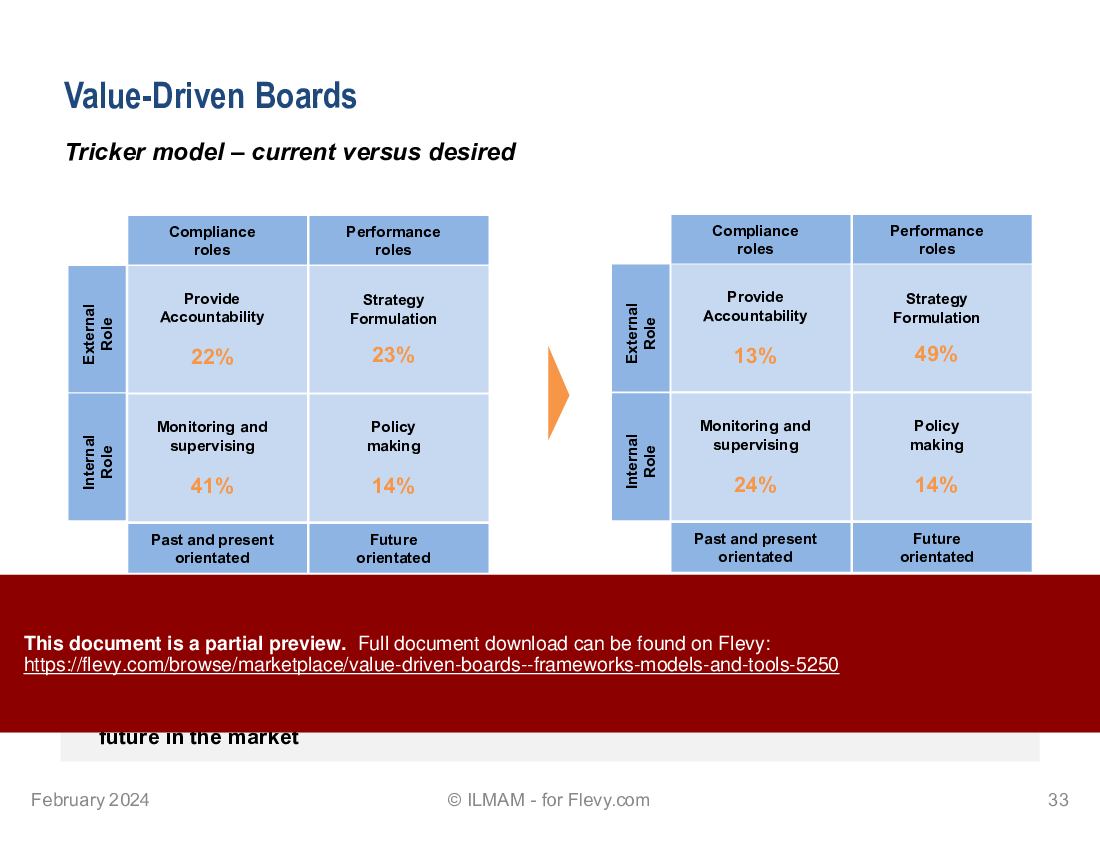
This PPT slide presents a comparative analysis of the current versus desired roles of board directors, utilizing the Tricker model. It highlights how directors allocate their time across compliance and performance roles, categorized into external and internal roles.
On the left side, the current allocation shows that 22% of time is spent on providing accountability and 23% on strategy formulation, with a significant 41% dedicated to monitoring and supervising. This suggests a heavy focus on compliance and oversight, with only a small portion of time directed towards strategic initiatives. The internal role of monitoring and supervising dominates, indicating a reactive approach rather than a proactive one.
The right side illustrates the desired allocation, revealing a marked shift in focus. The percentage for providing accountability drops to 13%, while strategy formulation rises sharply to 49%. This indicates a strong desire among directors to prioritize strategic thinking and future-oriented activities. The internal role of monitoring and supervising also decreases to 24%, suggesting a move towards a more balanced approach that emphasizes both oversight and strategic engagement.
The slide underscores a critical insight: effective boards need to adapt their focus from predominantly past-oriented compliance roles to future-oriented performance roles. This shift is essential for boards aiming to drive value and strategic direction within their organizations. The data reflects a growing recognition among directors of the need to evolve their roles to better align with the demands of modern governance.
This PPT slide presents a framework illustrating the evolving role of boards in strategic decision-making across different business contexts. It categorizes these contexts into 4 distinct levels: Simple, Complicated, Complex, and Chaotic. Each level reflects a corresponding increase in the board's contribution to strategy, moving from basic oversight to more collaborative and integrative roles.
The vertical axis indicates the board's role in strategy, while the horizontal axis represents the business context. As one moves from left to right, the complexity of the business environment increases, necessitating a shift in how boards engage with strategy. In the Simple context, boards primarily focus on supervision, ensuring compliance and basic governance. As the context becomes Complicated, boards begin to support management, offering insights and guidance without direct involvement in strategy formulation.
In the Complex environment, the board's role evolves further into co-creation, where collaboration with management becomes essential. This level emphasizes the need for boards to actively participate in shaping strategic initiatives. Finally, in the Chaotic context, the board's contribution peaks, requiring a dynamic and responsive approach to strategy development. Here, boards must navigate uncertainty and rapidly changing conditions, underscoring the importance of adaptability and proactive engagement.
The slide also includes a note emphasizing that unlike mere supervision, the time boards dedicate to supporting and co-creating strategy varies significantly across these contexts. This insight is crucial for organizations aiming to optimize board effectiveness in alignment with their specific business challenges.
This PPT slide presents a framework for understanding the role of an engaged board within the context of corporate governance. It categorizes boards along a spectrum from passive to dominating, highlighting the engaged board as a pivotal point. The engaged board is positioned centrally, indicating its crucial role in balancing oversight and involvement.
Three key areas are outlined: when the board should take charge, when to partner with management, and when to refrain from interference. The "When to take charge" section emphasizes critical responsibilities such as defining the company's purpose, selecting the CEO, and ensuring board competence and integrity. This suggests that the engaged board must be proactive in foundational governance aspects.
The "When to Partner" section identifies strategic areas where collaboration with management is essential. Topics like strategy formulation, financial goals, and risk appetite are mentioned, indicating that the engaged board should contribute to high-level decision-making while supporting management in achieving organizational objectives.
Conversely, the "When to stay out of the way" section outlines areas where board involvement may be counterproductive. This includes execution, operations, and non-strategic decisions. By delineating these boundaries, the slide underscores the importance of the board knowing when to allow management autonomy.
Overall, this framework serves as a guide for boards aiming to enhance their effectiveness. It provides a clear understanding of the engaged board's responsibilities and the balance required between oversight and operational involvement. The insights presented can help organizations refine their governance structures and improve board dynamics.
This PPT slide outlines a comprehensive framework for building value-driven boards. It begins with the identification of critical contextual factors that influence board dynamics, such as corporate purpose, strategic intent, and the regulatory environment. This initial step emphasizes the importance of understanding both the internal and external factors that shape board effectiveness.
Next, the framework suggests assessing the current state of the board, which involves a thorough evaluation of its existing roles and engagement levels. This assessment is crucial for determining how well the board aligns with the organization's strategic objectives and stakeholder expectations.
The central component of the framework is the design of board elements, which includes various aspects such as board composition, collective capabilities, and director performance. Each of these elements plays a vital role in shaping the board's overall effectiveness. The slide also highlights the significance of board processes, including information management, agenda structuring, and cultural dynamics, which are essential for fostering productive interactions among board members.
The framework culminates in the goal of achieving enhanced board performance. This is not merely about meeting compliance standards, but rather about driving value creation through effective governance. The final step involves assessing board performance, ensuring that the board continuously evolves to meet the changing demands of the organization and its stakeholders.
Overall, this slide serves as a strategic guide for organizations looking to optimize their board's structure and function, ultimately leading to improved governance and decision-making.
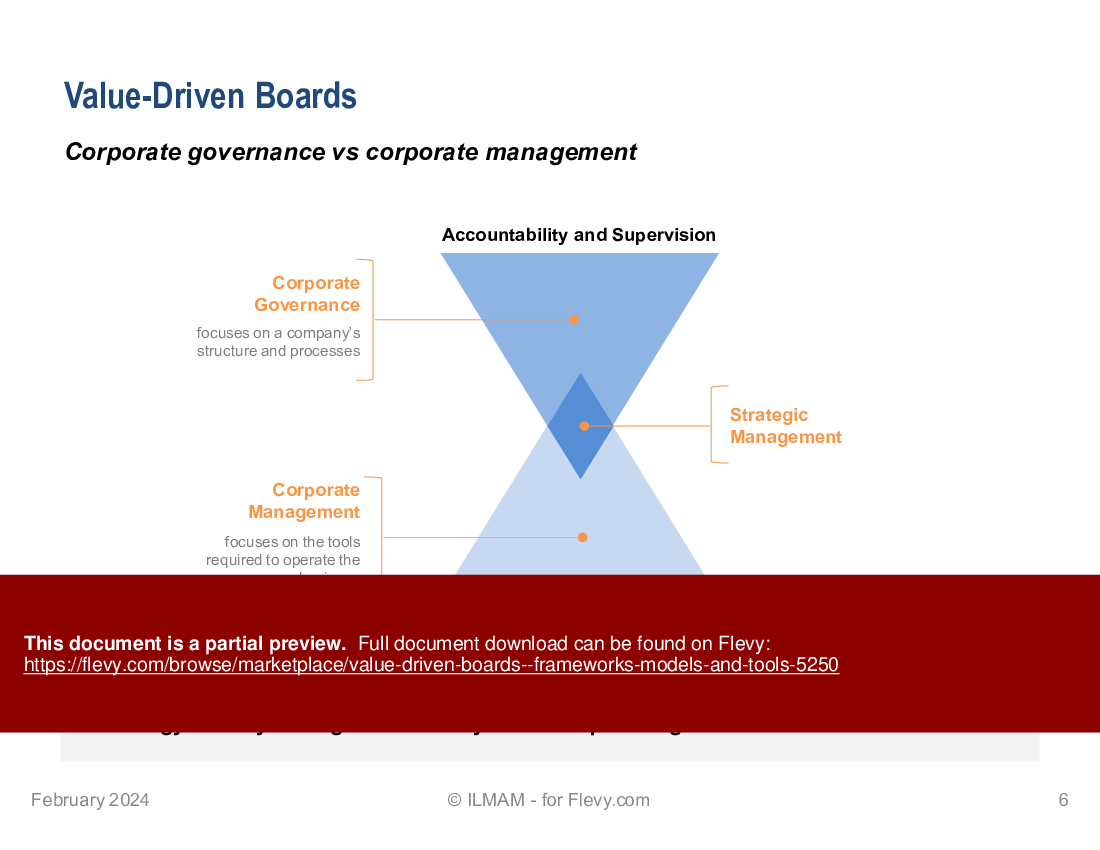
This PPT slide titled "Value-Driven Boards" outlines the key stakeholders involved in corporate governance, emphasizing the interplay between internal and external factors. At the core, shareholders are depicted as the primary source of capital, holding the power to elect and dismiss the Board of Directors. This board is responsible for appointing and monitoring management, which operates the day-to-day functions of the organization. Employees are also highlighted as integral to the management structure, indicating their role in executing the company's strategy.
On the external side, various stakeholders influence corporate governance. Markets are identified as critical, with elements such as competitive factors, product markets, foreign direct investments, and corporate control playing significant roles. This suggests that external market conditions can directly impact governance practices.
Reputational agents, including accountants, lawyers, and investment advisors, are shown as intermediaries that help maintain transparency and accountability. Their involvement is crucial for mitigating information asymmetry, which can affect stakeholder trust and corporate reputation.
The slide further categorizes external influences into standards, laws, and the financial sector. Standards such as accounting and auditing are essential for regulatory compliance, while laws and regulations provide a framework for corporate governance. The financial sector is also highlighted, with debt and equity being key components that influence corporate decision-making.
Lastly, influencers such as customers, suppliers, and NGOs are noted, indicating that broader societal expectations and stakeholder interests are increasingly relevant in governance discussions. This comprehensive view of stakeholders underscores the complexity of corporate governance and the necessity for boards to navigate both internal dynamics and external pressures effectively.
This PPT slide presents a framework that correlates the level of change within a business environment to the necessary leadership and management requirements. It is structured as a two-by-two matrix, with the vertical axis representing the "Level of Change" and the horizontal axis indicating the "Level of Business Complexity."
In the upper left quadrant, it emphasizes that in startups or turbulent environments, strong leadership is paramount, often outweighing the need for robust management. This suggests that agility and vision are critical in such scenarios. The upper right quadrant indicates that in complex and turbulent settings, both strong leadership and management are essential. This reflects the need for a balanced approach to navigate challenges effectively.
The lower left quadrant addresses simple businesses in stable environments, where the requirements for leadership and management are generally lower. This implies that in less dynamic contexts, organizations can function effectively with minimal oversight. Conversely, the lower right quadrant highlights that in complex, but stable environments, strong management is more crucial than leadership. This indicates that operational efficiency and structured processes take precedence in such scenarios.
The overarching message is that many companies face the issue of being over-managed and under-led. This insight serves as a call to action for executives to evaluate their organizational structures and leadership strategies, ensuring they align with the specific complexities and changes their businesses encounter. Understanding these dynamics can aid in making informed decisions about leadership development and management practices.
This PPT slide outlines a structured approach for forward-looking boards to allocate their time effectively throughout the year. It presents a calendar divided into months, detailing various activities that boards should prioritize, categorized under fiduciary responsibilities, strategy, investment, talent management, risk, and board reinvention.
The fiduciary section emphasizes essential tasks such as reviewing annual accounts, budget directives, and audit planning. These activities are crucial for maintaining compliance and ensuring financial health. The strategy section highlights the importance of setting frameworks, defining options, and approving strategies, which are vital for long-term planning and alignment with organizational goals.
Investment activities focus on the ongoing review of proposals, ensuring that boards remain engaged with financial decisions that impact the company’s future. Talent management is also prioritized, with specific objectives set for talent reviews, underscoring the importance of human capital in achieving strategic goals.
Risk management is addressed through annual reviews and the establishment of risk objectives, which are crucial for safeguarding the organization against potential threats. The board reinvention section encourages continuous evaluation and improvement of board processes, ensuring that governance remains dynamic and responsive to changing circumstances.
Overall, this slide serves as a practical guide for boards to enhance their effectiveness by balancing traditional responsibilities with forward-looking initiatives. The clear structure allows for easy tracking of activities, promoting accountability and strategic focus. Organizations considering this framework can expect to foster a proactive governance culture that aligns with their long-term objectives.
MARCUS OVERVIEW
This synopsis was written by Marcus [?] based on the analysis of the full 53-slide presentation.
Executive Summary
This presentation, titled "Value-Driven Boards - Frameworks, Models and Tools," is crafted in a McKinsey, Bain, or BCG-quality style (consulting-grade; not affiliated). It provides a comprehensive exploration of frameworks, models, and tools essential for building effective, strategic, and value-driven boards. The document aims to equip corporate executives and board members with the knowledge to enhance governance practices, align leadership with management, and foster value creation through strategic engagement and evaluation.
Who This Is For and When to Use
• Corporate executives seeking to enhance board effectiveness
• Board members involved in governance and strategic oversight
• Consultants advising organizations on governance frameworks
• Leadership teams focused on aligning strategy with board activities
Best-fit moments to use this deck:
• During board strategy sessions to align on governance practices
• When evaluating current board performance and engagement levels
• In workshops aimed at enhancing board member skills and capabilities
• For onboarding new board members to familiarize them with governance frameworks
Learning Objectives
• Define the roles and responsibilities of effective boards in governance
• Build frameworks for strategic alignment between management and the board
• Establish processes for board engagement and evaluation
• Identify best practices for value creation through governance
• Develop tools for assessing board performance and effectiveness
• Analyze different governance models and their applicability to various organizations
Table of Contents
• Context and Overview (page 1)
• Leadership Versus Management (page 2)
• Building an Effective Board (page 3)
• Boards and Strategy (page 4)
• Governance as Leadership (page 5)
• Value-Creation (page 6)
• Board Engagement (page 7)
• Board Evaluation (page 8)
Primary Topics Covered
• Context and Overview - Discusses the importance of tailored governance frameworks and the interaction among shareholders, boards, and management.
• Leadership Versus Management - Explores the distinctions between leadership and management roles within the board context.
• Building an Effective Board - Outlines the necessary oversight and value creation activities for boards.
• Boards and Strategy - Examines various approaches to strategy that boards can adopt for effective governance.
• Governance as Leadership - Introduces the Governance as Leadership framework, emphasizing generative governance.
• Value-Creation - Details the compliance and performance roles of boards in driving organizational value.
• Board Engagement - Analyzes the levels of board involvement and strategies for enhancing engagement.
• Board Evaluation - Provides a framework for evaluating board performance and effectiveness.
Deliverables, Templates, and Tools
• Governance framework template for assessing organizational needs
• Board evaluation checklist to measure effectiveness and engagement
• Strategic alignment model for integrating board and management objectives
• Performance monitoring dashboard for tracking board activities
• Engagement strategy outline for enhancing board member participation
• Risk management framework for overseeing compliance and governance
Slide Highlights
• Overview of the board's role in oversight and value creation
• Comparison of leadership versus management responsibilities
• Framework for building an effective board tailored to organizational needs
• Multiple strategy approaches that boards can adopt
• Governance as Leadership framework illustrating different governance modes
• Tricker model outlining compliance and performance roles of boards
• Engagement levels of boards from passive to dominating
• Framework for conducting board evaluations
Potential Workshop Agenda
Understanding Board Dynamics (90 minutes)
• Discuss the roles of leadership and management in governance
• Identify best practices for effective board engagement
• Explore frameworks for strategic alignment
Evaluating Board Performance (60 minutes)
• Review the board evaluation framework and its components
• Conduct a group exercise to assess current board effectiveness
• Develop action plans for enhancing board performance
Strategic Planning for Boards (90 minutes)
• Analyze different strategic approaches boards can adopt
• Collaborate on creating a strategic alignment model
• Present findings and gather feedback from participants
Customization Guidance
• Tailor governance frameworks to fit the specific needs of your organization
• Adjust evaluation criteria based on the unique objectives of your board
• Incorporate relevant industry standards and regulations into governance practices
• Define roles and responsibilities clearly to enhance accountability
• Modify engagement strategies to suit the dynamics of your board members
Secondary Topics Covered
• The impact of corporate governance models on board effectiveness
• The relationship between board composition and organizational performance
• Strategies for managing board dynamics and fostering collaboration
• The importance of stakeholder engagement in governance practices
• Trends in corporate governance and their implications for boards
FAQ What is the primary focus of this presentation?
The presentation focuses on frameworks, models, and tools that enhance the effectiveness of boards in governance and strategic oversight.
Who can benefit from this deck?
Corporate executives, board members, and consultants involved in governance practices will find this deck beneficial.
How does the Governance as Leadership framework apply to boards?
This framework emphasizes the importance of generative governance, where boards engage in strategic thinking and decision-making alongside management.
What are the key roles of a board in value creation?
Boards must fulfill both compliance and performance roles to effectively drive organizational value.
How can board engagement be measured?
Engagement can be assessed through various metrics, including participation levels in meetings, involvement in strategic discussions, and feedback from board evaluations.
What is the significance of the Tricker model?
The Tricker model outlines the dual roles of boards in compliance and performance, highlighting the need for balance in governance activities.
How can this presentation be customized for specific organizations?
Organizations can tailor frameworks, evaluation criteria, and engagement strategies to align with their unique governance needs and objectives.
What are the benefits of conducting board evaluations?
Board evaluations help identify strengths and weaknesses, clarify roles, and enhance overall governance effectiveness.
How does the board's role change in different business contexts?
The board's role may shift from supervisory to supportive or co-creative depending on the complexity and challenges of the business environment.
What tools are provided in this deck for board evaluation?
The deck includes checklists and frameworks for assessing board performance and engagement levels.
Glossary
• Governance Framework - A structured approach to defining roles, responsibilities, and processes in corporate governance.
• Board Engagement - The level of involvement and participation of board members in governance activities.
• Value Creation - The process of enhancing the worth of an organization through effective governance and strategic oversight.
• Tricker Model - A framework outlining the compliance and performance roles of boards in governance.
• Generative Governance - A mode of governance focused on strategic thinking and co-creation between boards and management.
• Board Evaluation - A systematic assessment of board performance and effectiveness.
• Stakeholder Engagement - The process of involving stakeholders in governance practices and decision-making.
• Compliance Role - The responsibilities of the board to ensure adherence to laws, regulations, and policies.
• Performance Role - The board's role in driving organizational performance and strategic direction.
• Strategic Alignment - The process of ensuring that board activities are aligned with organizational goals and objectives.
• Leadership vs. Management - The distinction between guiding and inspiring (leadership) versus organizing and controlling (management).
• Board Composition - The makeup of the board in terms of skills, experience, and diversity.
• Oversight Activities - Actions taken by the board to monitor and supervise organizational performance.
• Value-Added Governance - Governance practices that enhance the overall value and effectiveness of the board.
• Corporate Governance - The system by which companies are directed and controlled, focusing on the relationships among stakeholders.
• Strategic Planning - The process of defining an organization's strategy and making decisions on resource allocation.
• Risk Management - The identification, assessment, and prioritization of risks followed by coordinated efforts to minimize, monitor, and control the probability of unfortunate events.
• Board Dynamics - The interactions and relationships among board members and between the board and management.
• Fiduciary Duty - The obligation of board members to act in the best interest of the organization and its stakeholders.
• Board Committees - Subgroups of the board that focus on specific areas such as audit, governance, or compensation.
• Stakeholder Communication - The process of sharing information and engaging with stakeholders regarding governance and performance.
• Decision-Making Process - The steps taken by the board to make informed decisions regarding governance and strategy.
Source: Best Practices in Value Creation, Board of Directors PowerPoint Slides: Value-Driven Boards - Frameworks, Models and Tools PowerPoint (PPTX) Presentation Slide Deck, ILMAM - Strategy & Management Consulting
ILMAM is a strategy and management consulting provider that specializes in:
• Strategic management, including strategic planning and performance management
• Strategy enablers, such as key business processes and governance
Select top quality guides and tools are offered through to enable you to perform work at your company or support your clients effectively and
... [read more] efficiently.
The average daily rate of a McKinsey consultant is $6,625 (not including expenses). The average price of a Flevy document is $65.
Trusted by over 10,000+ Client Organizations
Since 2012, we have provided best practices to over 10,000 businesses and organizations of all sizes, from startups and small businesses to the Fortune 100, in over 130 countries.
"Flevy.com has proven to be an invaluable resource library to our Independent Management Consultancy, supporting and enabling us to better serve our enterprise clients.
The value derived from our [FlevyPro] subscription in terms of the business it has helped to gain far exceeds the investment made, making a subscription a no-brainer for any growing consultancy – or in-house strategy team."
– Dean Carlton, Chief Transformation Officer, Global Village Transformations Pty Ltd.
"Flevy is our 'go to' resource for management material, at an affordable cost. The Flevy library is comprehensive and the content deep, and typically provides a great foundation for us to further develop and tailor our own service offer."
– Chris McCann, Founder at Resilient.World
"If you are looking for great resources to save time with your business presentations, Flevy is truly a value-added resource. Flevy has done all the work for you and we will continue to utilize Flevy as a source to extract up-to-date information and data for our virtual and onsite presentations!"
– Debbi Saffo, President at The NiKhar Group
"As a young consulting firm, requests for input from clients vary and it's sometimes impossible to provide expert solutions across a broad spectrum of requirements. That was before I discovered Flevy.com.
Through subscription to this invaluable site of a plethora of topics that are key and crucial to consulting, I
have been able to exceed expectations and deliver quality advice and solutions to my clients. The quality and expertise of the authors are exemplary and gives me great confidence to use as part of my service offerings.
I highly recommend this company for any consultant wanting to apply international best practice standards in their service offerings.
"
– Nishi Singh, Strategist and MD at NSP Consultants
"I have used Flevy services for a number of years and have never, ever been disappointed. As a matter of fact, David and his team continue, time after time, to impress me with their willingness to assist and in the real sense of the word. I have concluded in fact
that it is not at all just a repository of documents/resources but, in the way that David and his team manage the firm, it is like dealing with consultants always ready to assist, advise and direct you to what you really need, and they always get it right.
I am an international hospitality accomplished senior executive who has worked and lived during the past 35 years in 23 countries in 5 continents and I can humbly say that I know what customer service is, trust me.
Aside from the great and professional service that Flevy's team provide, their wide variety of material is of utmost great quality, professionally put together and most current.
Well done Flevy, keep up the great work and I look forward to continue working with you in the future and to recommend you to a variety of colleagues around the world.
"
– Roberto Pelliccia, Senior Executive in International Hospitality
"FlevyPro has been a brilliant resource for me, as an independent growth consultant, to access a vast knowledge bank of presentations to support my work with clients. In terms of RoI, the value I received from the very first presentation I downloaded paid for my subscription many times over! The
quality of the decks available allows me to punch way above my weight – it's like having the resources of a Big 4 consultancy at your fingertips at a microscopic fraction of the overhead.
"
– Roderick Cameron, Founding Partner at SGFE Ltd
"I am extremely grateful for the proactiveness and eagerness to help and I would gladly recommend the Flevy team if you are looking for data and toolkits to help you work through business solutions."
– Trevor Booth, Partner, Fast Forward Consulting
"Flevy is now a part of my business routine. I visit Flevy at least 3 times each month.
Flevy has become my preferred learning source, because what it provides is practical, current, and useful in this era where the business world is being rewritten.

many challenges and there is the need to make the right decisions in a short time, with so much scattered information, we are fortunate to have Flevy. Flevy investigates, selects, and puts at our disposal the best of the best to help us be successful in our work.
Download our free compilation of 50+ Strategy & Transformation slides and templates. Frameworks include McKinsey 7-S, Balanced Scorecard, Disruptive Innovation, BCG Curve, and many more.