
 Click main image to view in full screen. Unlock all 22 preview images:
Utility-Scale Solar Project Finance: Guide and Handbook – PowerPoint PPTX Template
PowerPoint (PPTX) + supplemental PDF 128 Slides


BENEFITS OF THIS DOWNLOADABLE POWERPOINT DOCUMENT
- Provides a complete five-stage, gated methodology for taking a utility-scale solar project from candidate sites to a signed investment decision.
- Shows exactly how resource data quality converts into P90 energy, debt capacity and equity return, with the full equations and worked substitutions.
- Includes a fully worked 50 MWp / 38 MWac Atacama case carried consistently from irradiance through debt sculpting to investment committee.
PROJECT FINANCE PPT TEMPLATE DESCRIPTION
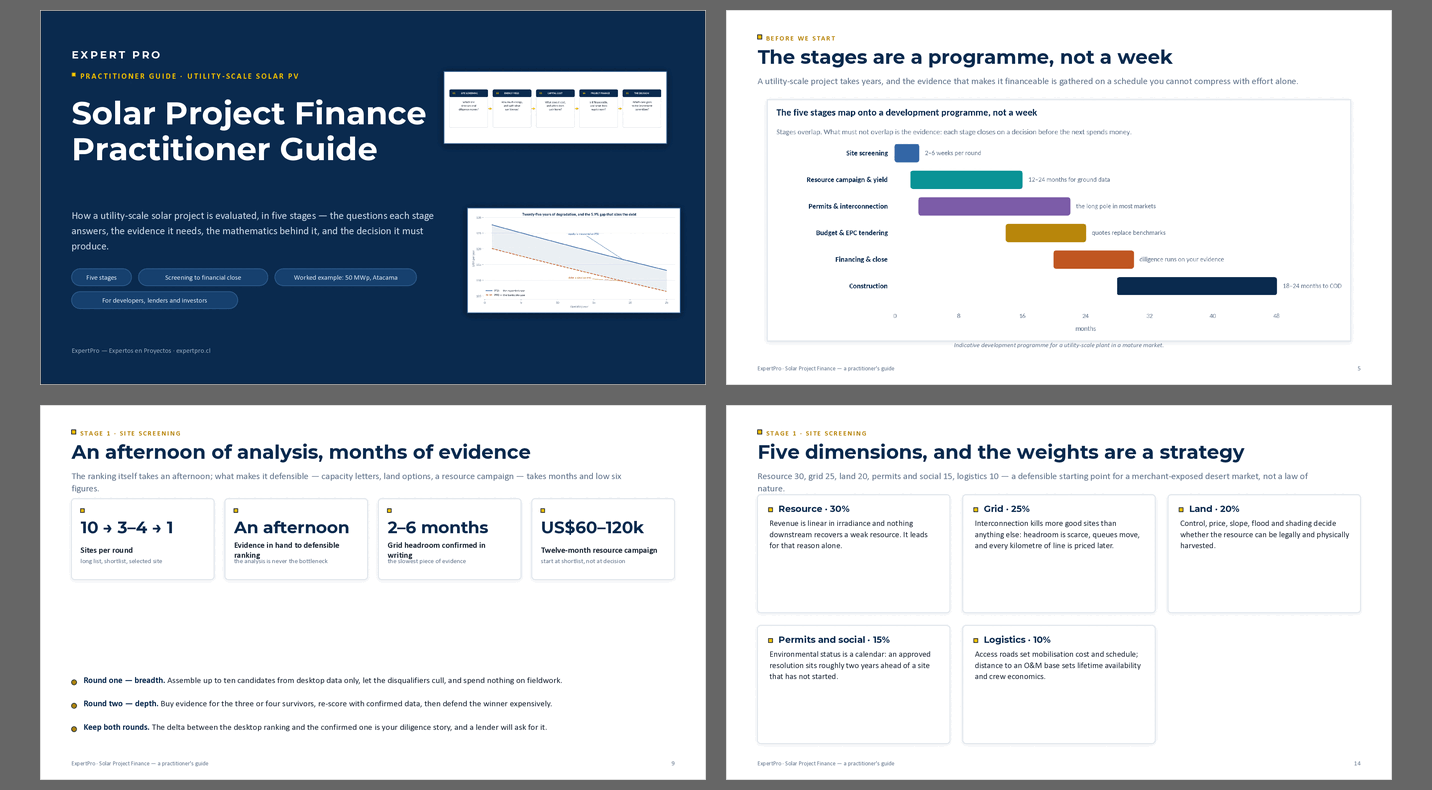
This bundle contains two complementary documents covering the full development and project finance chain for a utility-scale solar PV plant: a 128-slide Practitioner Guide (primary document, PowerPoint, with speaker notes) and a 149-page Practitioner Handbook (secondary document, PDF) that develops the solar physics, the mathematics, the uncertainty treatment, the financing conventions, the benchmarks and the sources behind the guide.
Both follow one worked case end to end: a 50 MWp DC / 38 MWac single-axis tracker plant, conceptually located in Chile's Atacama desert.
The intellectual spine of the material is a single causal chain: data quality drives sigma, sigma drives P90, P90 drives CFADS, CFADS drives debt capacity, and debt capacity drives equity return. Physical uncertainty about the solar resource is converted, step by step, into a quantified financial consequence. That chain is introduced in Stage 1 and carried consistently through to the investment committee.
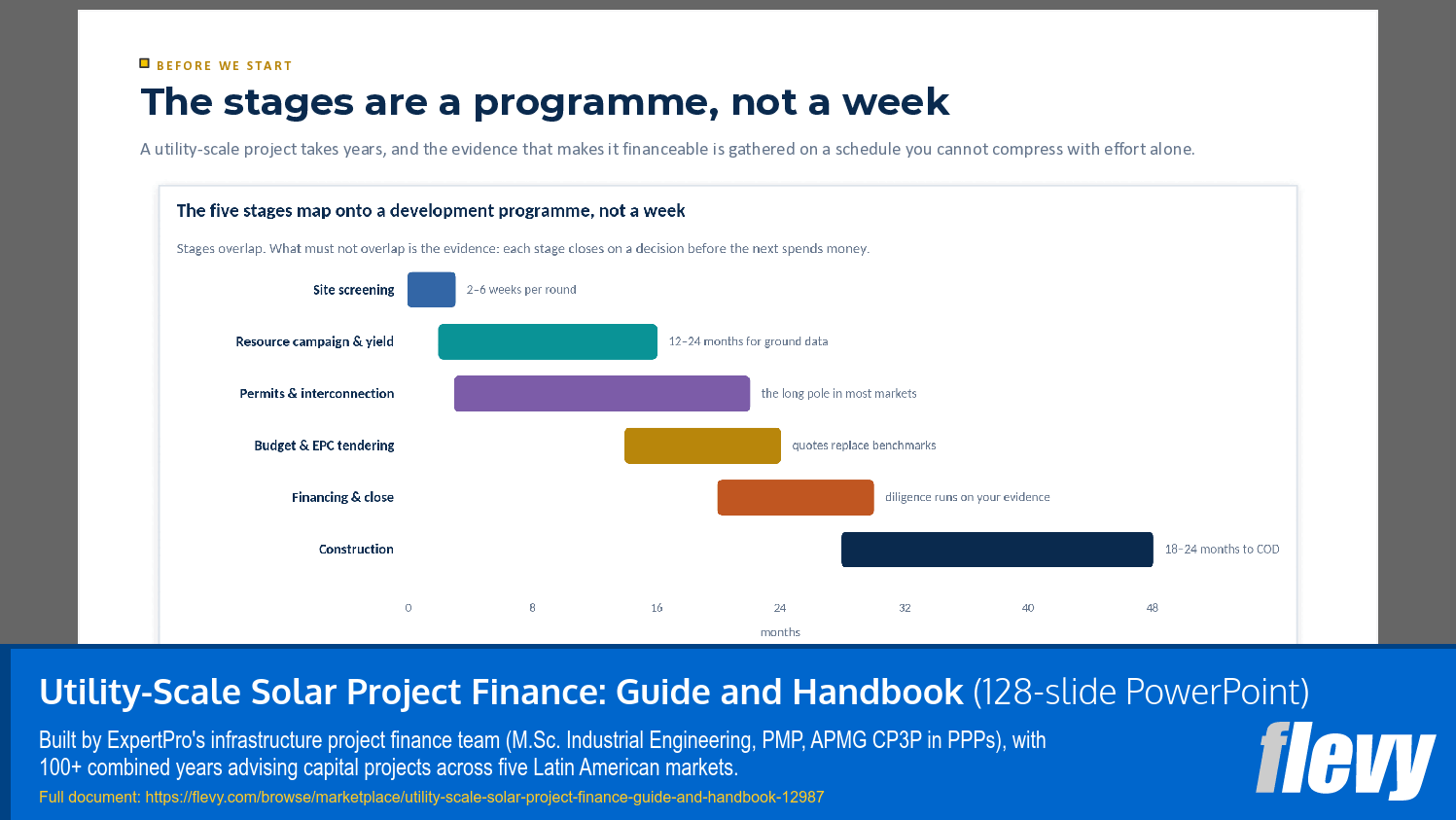
Five consecutive stages, each with evidence in, method, outputs and a signed gate:
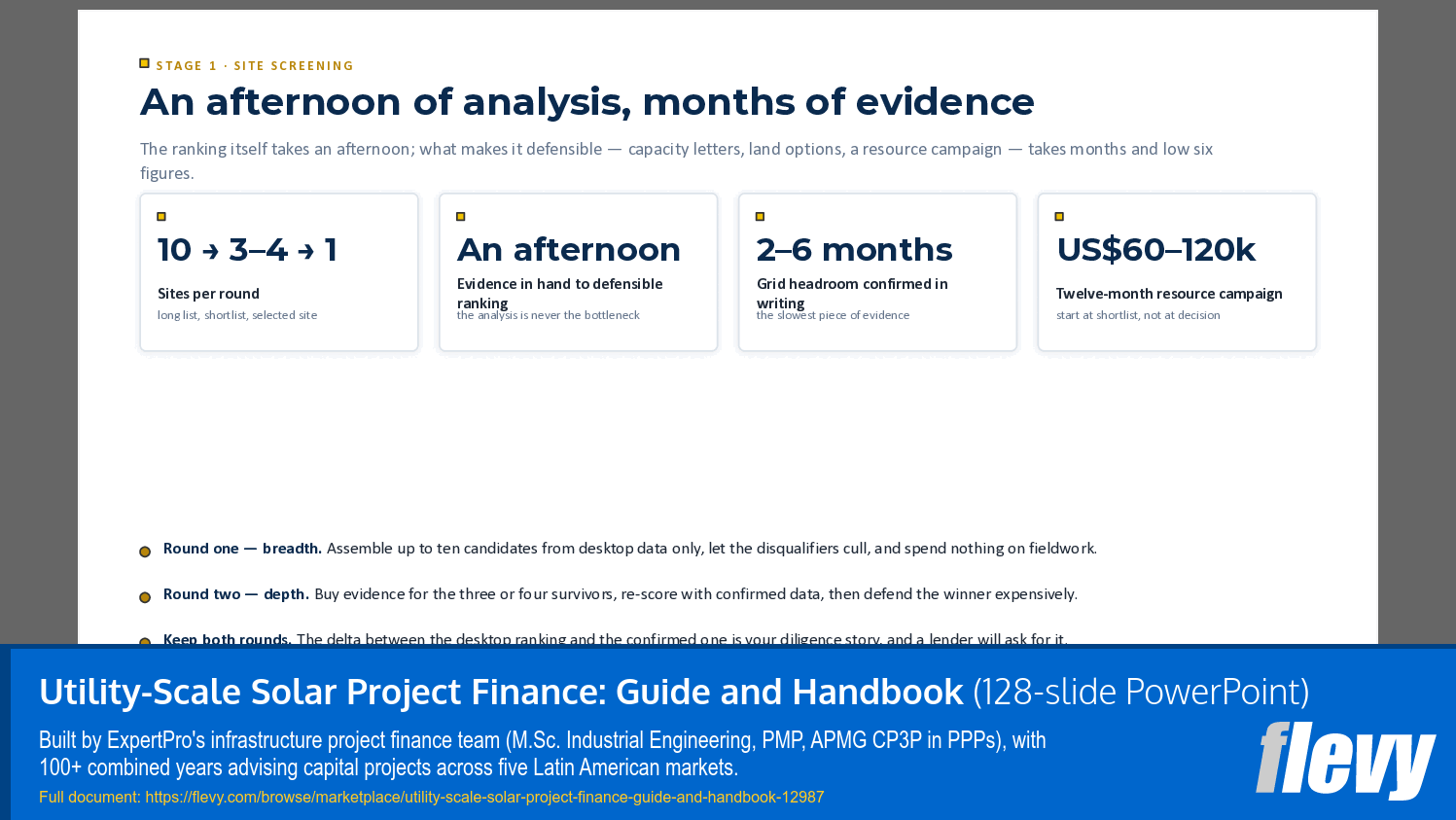
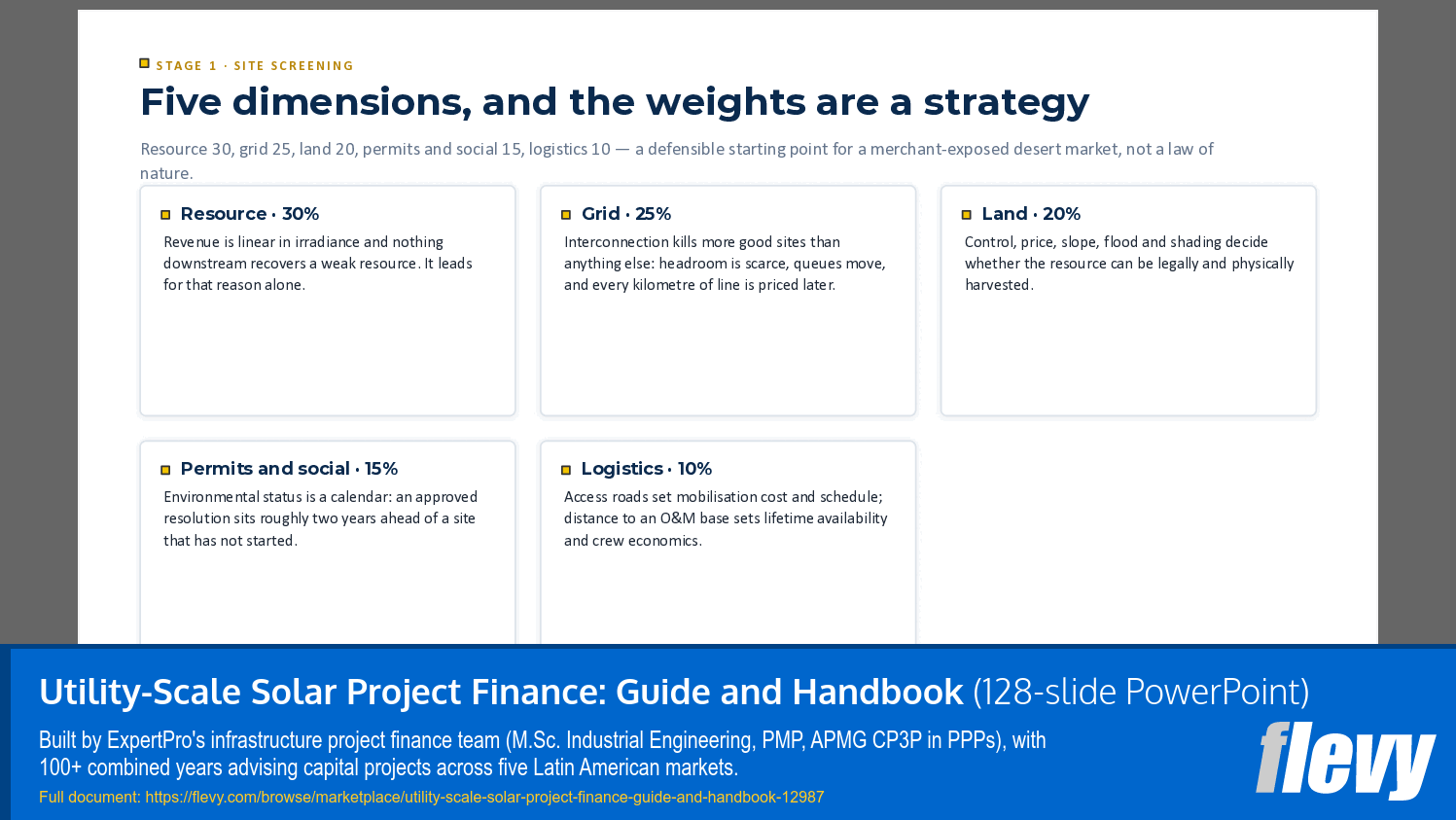
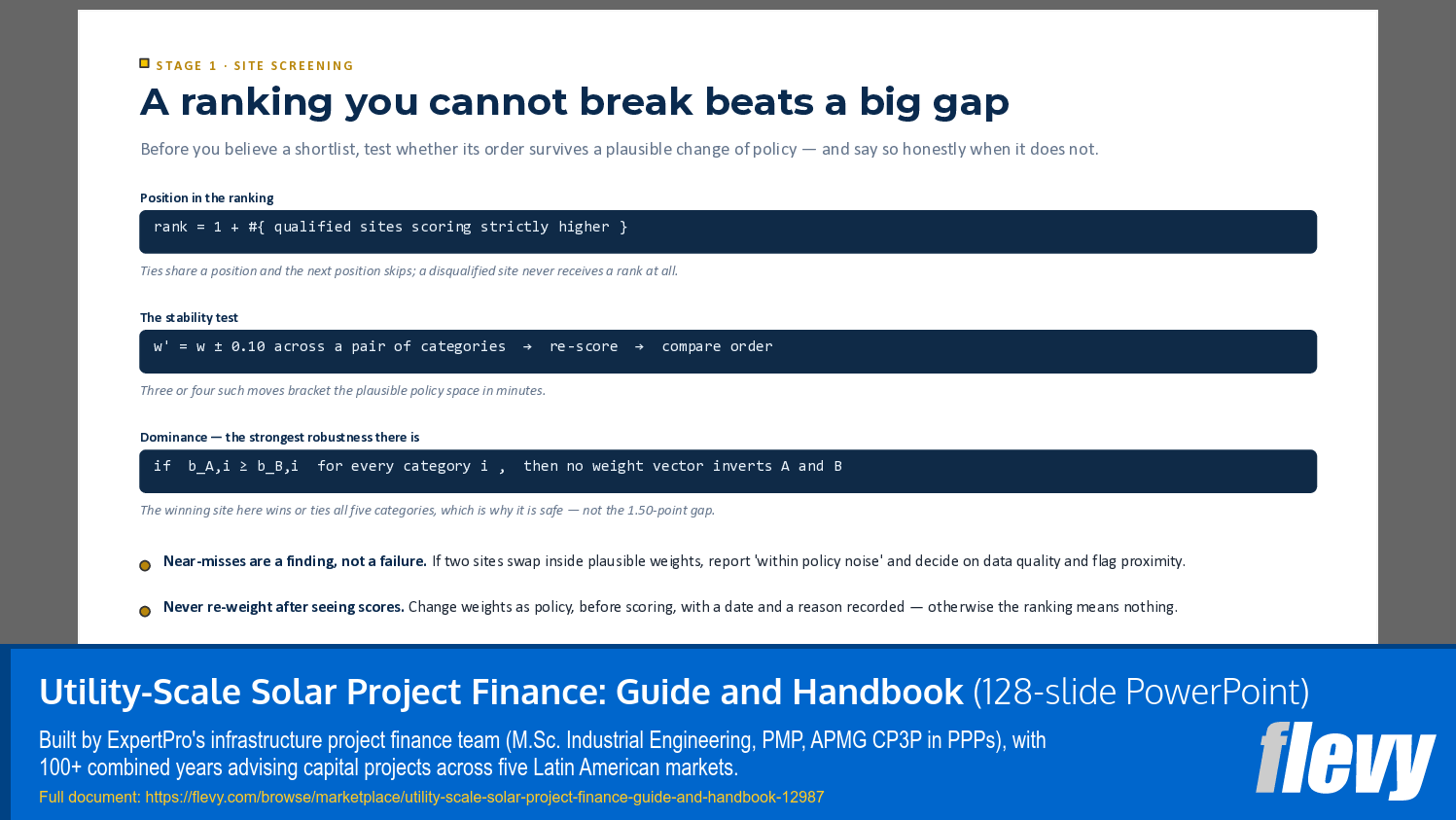
STAGE 1 – SITE AND RESOURCE SCREENING. A two-round funnel (roughly ten desktop candidates to three or four studied sites to one) with a 19-attribute scorecard across five weighted dimensions: Resource 30%, Grid 25%, Land 20%, Permits and Social 15%, Logistics 10%. Six hard disqualifiers that ranking cannot compensate. Every input tagged Confirmed, Estimate or Placeholder with source and date. Includes the formal resource definitions (GHI, DNI, DHI, POA, zenith angle) and the Atacama-specific development context: altitude, aridity, soiling, water scarcity, mining concessions, community issues, quebradas and alluvial fans.
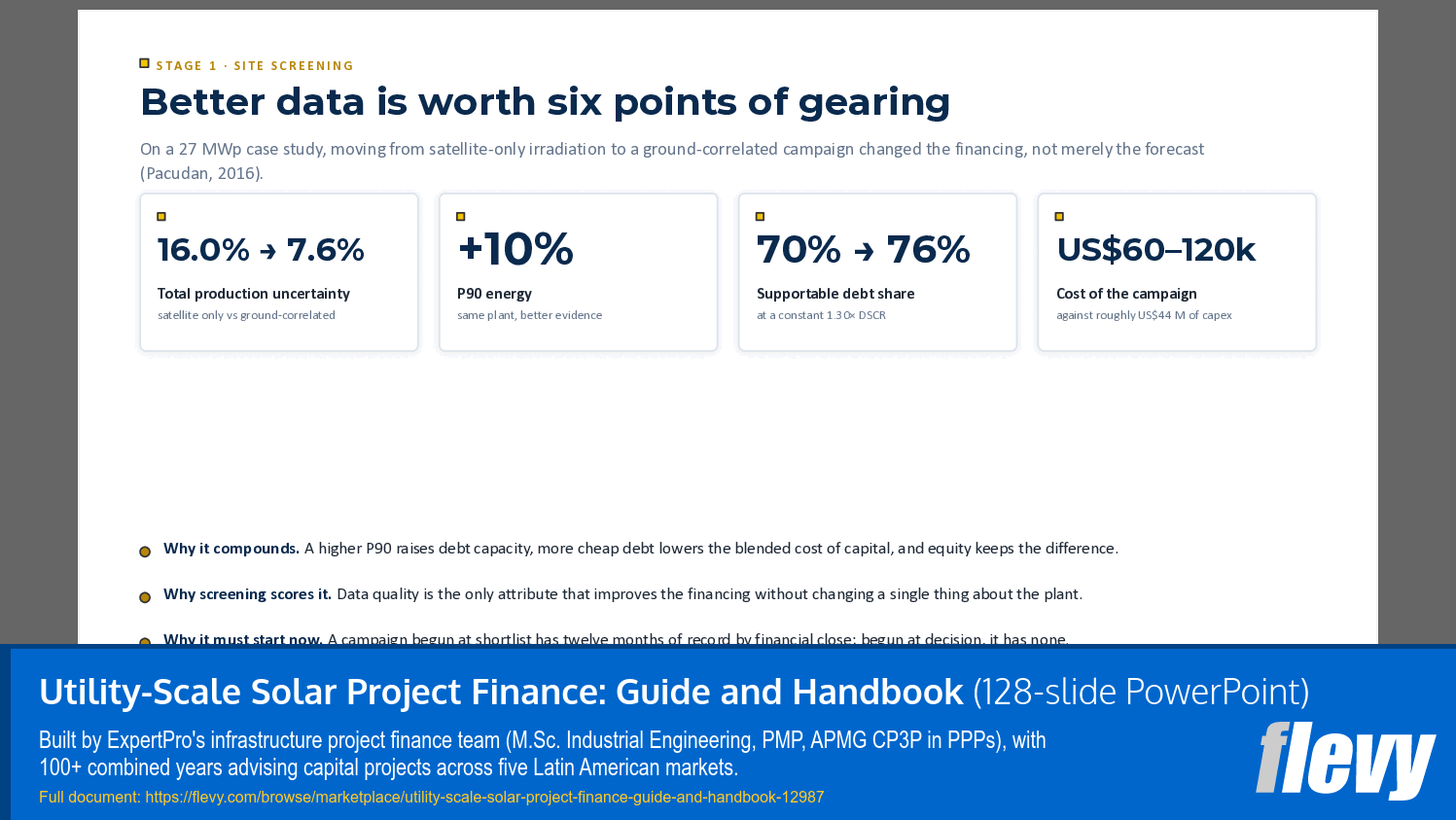
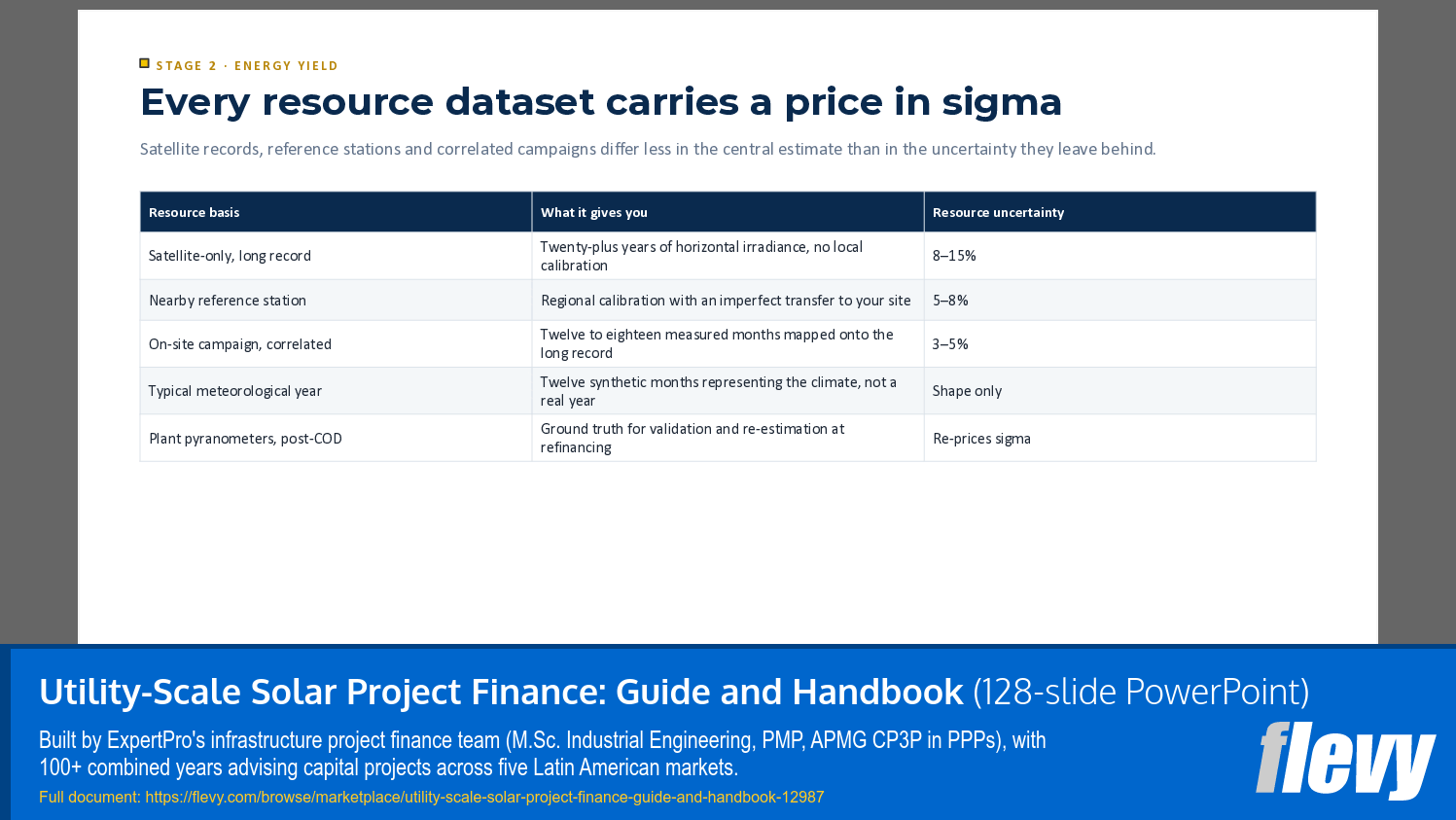
STAGE 2 – ENERGY YIELD ASSESSMENT. Satellite data versus a measure-correlate-predict campaign, and why a campaign costing around USD 100k can unlock materially more senior debt on an identical plant. GHI to POA transposition including Hay-Davies and Perez treatment, beam, circumsolar, isotropic and ground-reflected components, albedo and bifacial gain. A full loss stack rather than a single hidden performance ratio. Cell temperature via NOCT. Soiling treated as a cleaning-contract optimisation rather than a fixed percentage. ILR and clipping compared as an economic decision, not just a concept. Degradation, including the distinction between the module warranty curve and the expected degradation curve. And the exceedance framework: combined sigma, P50, P75, P90, and the rule that equity uses P50 while debt uses P90, plus the difference between one-year and multi-year P90.
STAGE 3 – CAPITAL COST AND CONSTRUCTION SCHEDULE. A line-by-line budget split into land, hard cost and soft cost. Estimating basis classification for every figure (Quote, Benchmark, Allowance, chain-linked). Explicit algebra for the three lines that must be calculated rather than quoted, including the self-excluding development fee. Contingency as a policy tied to design maturity. Capital intensity in USD per Wp and per MWac. And a month-by-month disbursement calendar built from milestone, straight-line and S-curve shapes, because a budget is an amount plus a calendar.
STAGE 4 – PROJECT FINANCE AND RETURNS. SPV structure, sources and uses, equity-first versus pro-rata funding and how timing alone changes equity IRR. Interest during construction and the two real circularities it creates, resolved by explicit iteration. Contracted PPA plus merchant tail. Operating expenses, tax with depreciation and loss carry-forward, and a careful CFADS definition. Debt sized as the minimum of debt capacity from P90 CFADS at target DSCR and the gearing cap. Sculpted amortisation, DSRA, waterfall, lock-up, LLCR and the distinction between a sizing target and a covenant floor. Project IRR, equity IRR, NPV, equity multiple, payback and a tornado sensitivity set.
STAGE 5 – THE INVESTMENT DECISION. No new modelling. A decision pack, comparability rules, hurdles set before results are seen, and a clear separation between a downside case (a plausible worse world, fully re-solved) and a stress test (the existing financing held fixed to find where lock-up appears). Conditions precedent, minutes and post-investment review.
The Handbook adds notation and conventions, a chapter on how errors born in one stage surface several stages later, an extensive glossary spanning solar physics through project finance, eight families of consolidated reference benchmarks and a source bibliography including IEC 61724-1, IRENA, NREL, ADB, Yescombe and Gatti. The material is software-agnostic: it describes a discipline, not a spreadsheet.
Got a question about the product? Email us at support@flevy.com or ask the author directly by using the "Ask the Author a Question" form. If you cannot view the preview above this document description, go here to view the large preview instead.
Source: Best Practices in Project Finance, Solar Energy PowerPoint Slides: Utility-Scale Solar Project Finance: Guide and Handbook PowerPoint (PPTX) Presentation Slide Deck, ExpertPro Consulting
ABOUT THE AUTHOR

ExpertPro is an advisory firm that builds the financial and decision infrastructure behind capital projects. Our work sits at the intersection of project finance, engineering economics and data: we model, stress-test and document infrastructure investments so that sponsors, lenders and investment committees can decide on evidence rather than intuition.
The practice is led by Eduard Kofman, .
... [read more]
Ask the Author a Question
You must be logged in to contact the author.




























