
 Click main image to view in full screen. Unlock all 10 preview images:
Solar Energy Plant Financial Model and Valuation – Excel XLSX
Excel (XLSX)


BENEFITS OF THIS DOWNLOADABLE EXCEL DOCUMENT
- Data-Driven Investment Decisions: Empowers large-scale investors with accurate financial projections, minimizing risks and optimizing returns in significant solar plant ventures.
- Holistic Strategy Development: Facilitates strategic optimization through comprehensive scenario analysis, guiding operational efficiencies and growth strategies in substantial solar projects.
- Enhanced Investor Trust: Establishes credibility with transparent valuation metrics, fostering investor confidence and facilitating substantial funding for solar plant endeavors.
ENERGY INDUSTRY EXCEL DESCRIPTION
Download Ready-to-Use (PV) Solar Energy Power Plant Financial Model Template !
Highly versatile and user-friendly Excel template for Solar Project Finance, delivering a 25-year 3-statement financial projection (Income Statement, Balance Sheet, Cash Flow) tailored to utility-scale or commercial solar plants. Perfect for Solar Energy Investment Analysis, this model dynamically forecasts revenue from energy production, adapts to degradation rates, tariffs, and financing structures, and calculates key viability metrics like ROI, NPV, and IRR.
Download a comprehensive tool built for investors, developers, and analysts to validate Solar Farm Financial Projections in minutes—no advanced Excel skills needed!
🔑 KEY OUTPUTS
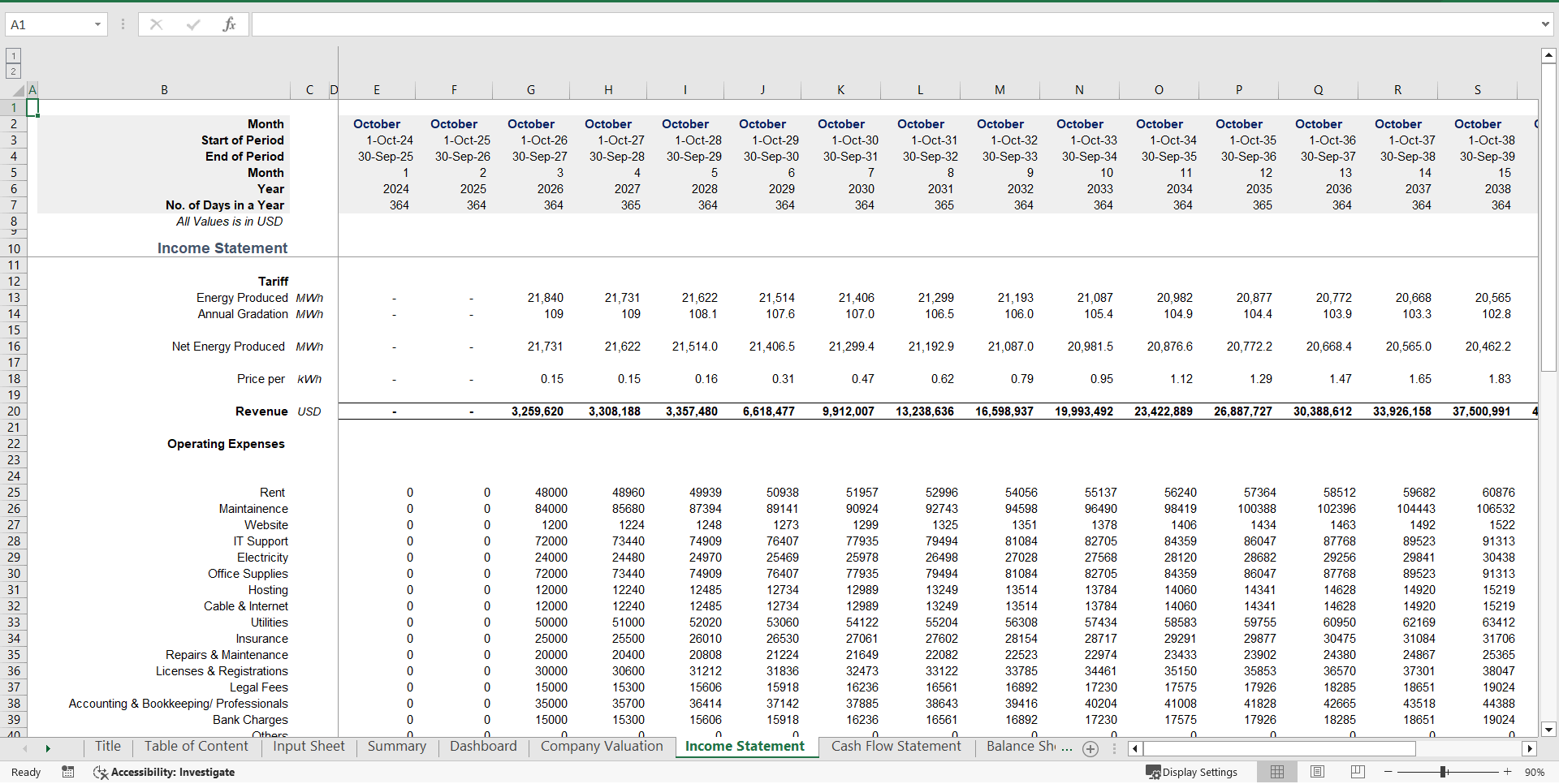
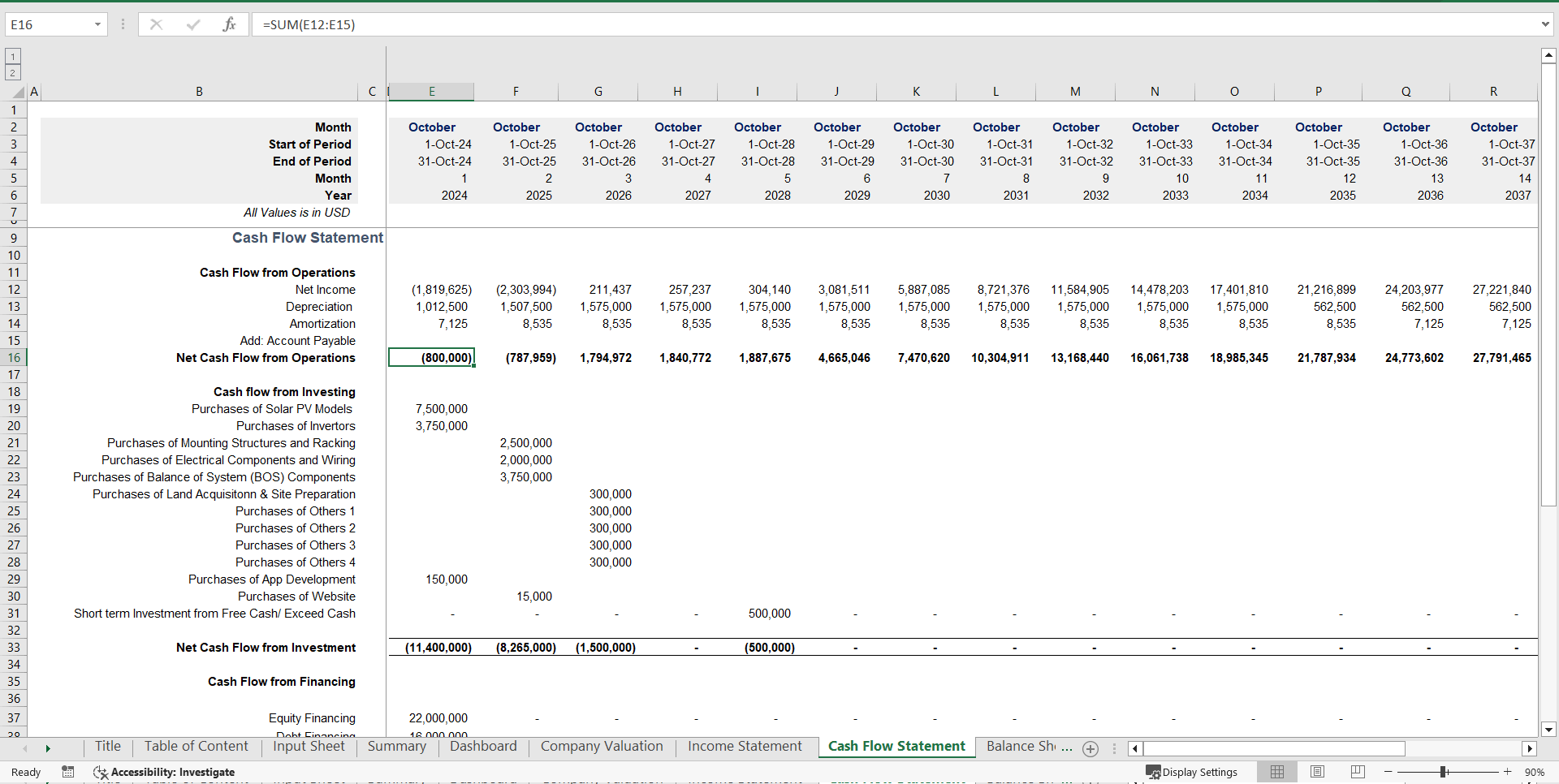
Projected Financial Statements: Yearly Income Statement, Balance Sheet, and Cash Flow Statement spanning 25 years.
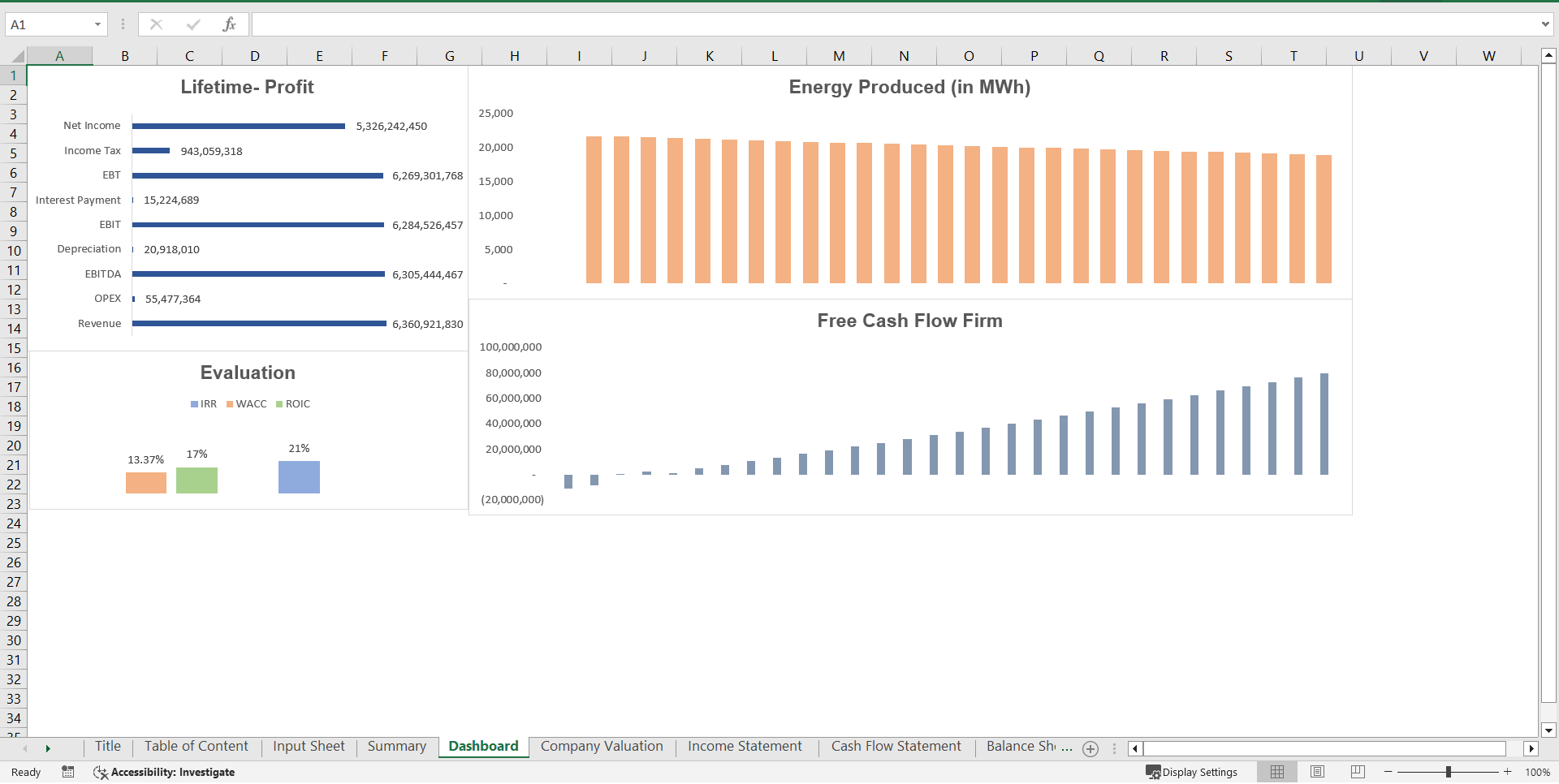
Valuation Dashboard:
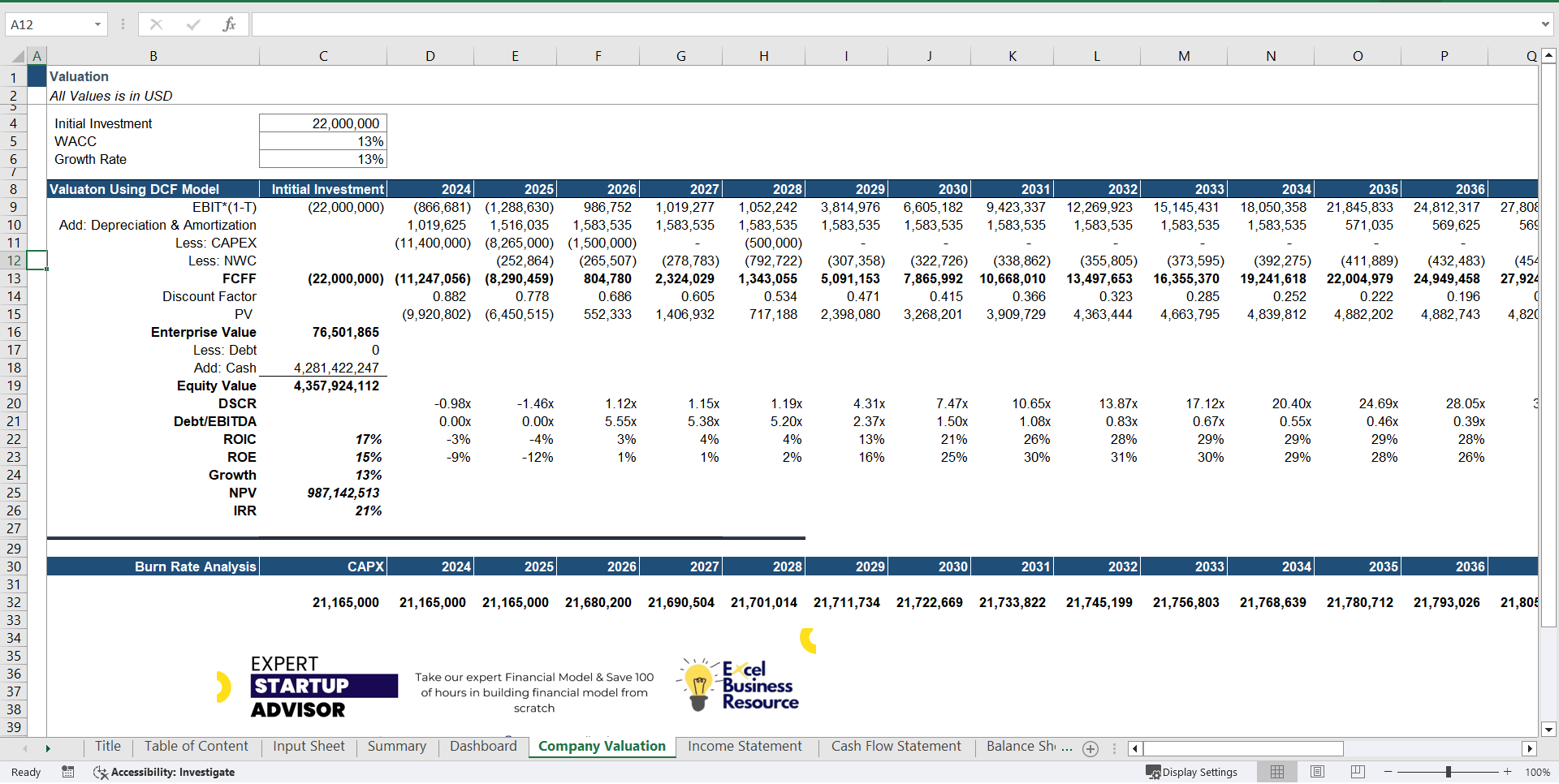
DCF-based Solar PV Project Valuation (WACC-adjusted).
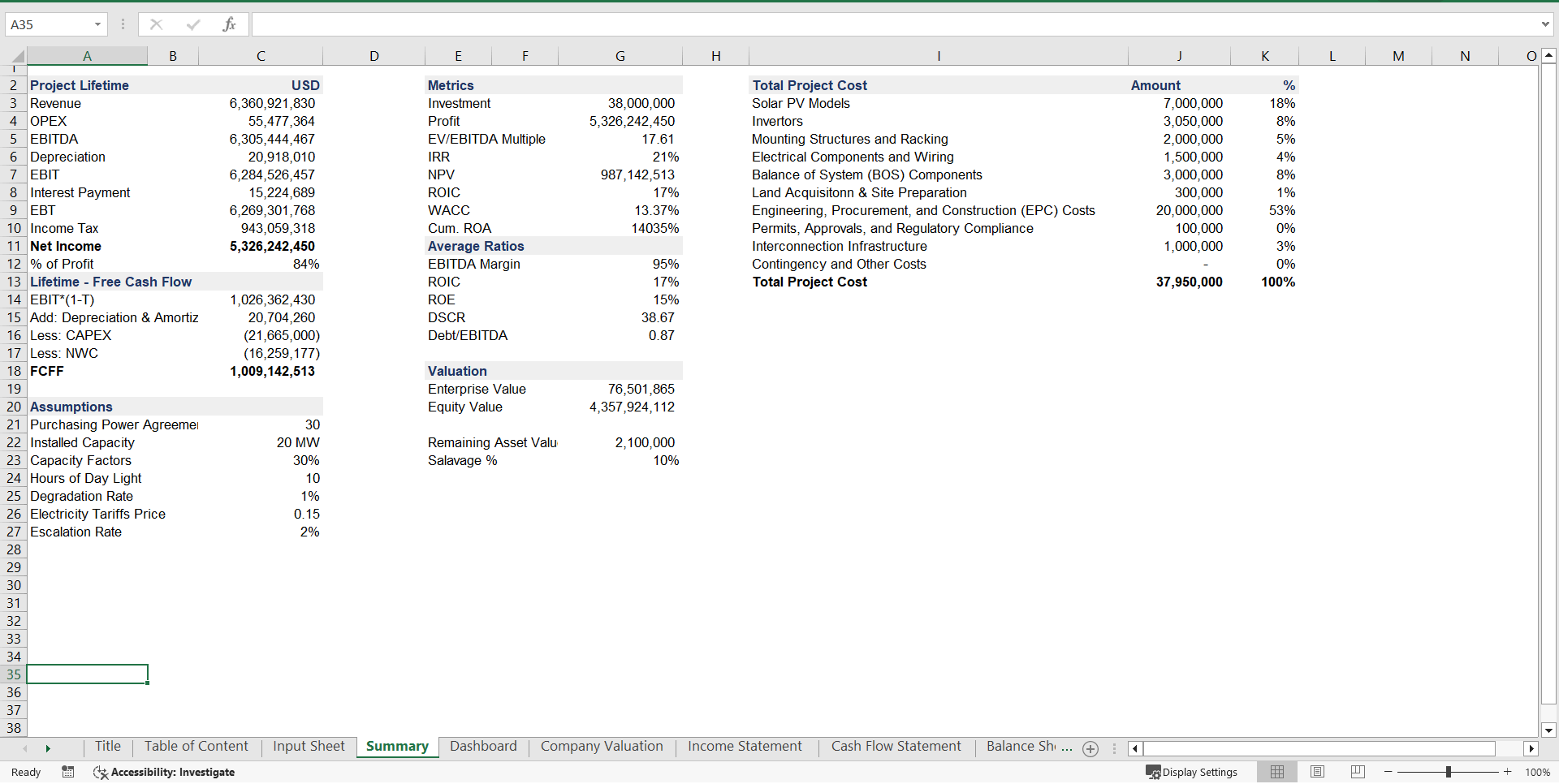
Solar ROI Analysis: IRR, NPV, Payback Period, and Debt/EBITDA ratios.
Sensitivity tables for tariff changes, capacity factors, and financing costs.
Investment Insights:
Equity/debt breakdowns, loan amortization, and investor returns.
Salvage value and terminal value calculations.
⚙️ KEY INPUTS
Simple Setup for Complex Projects!
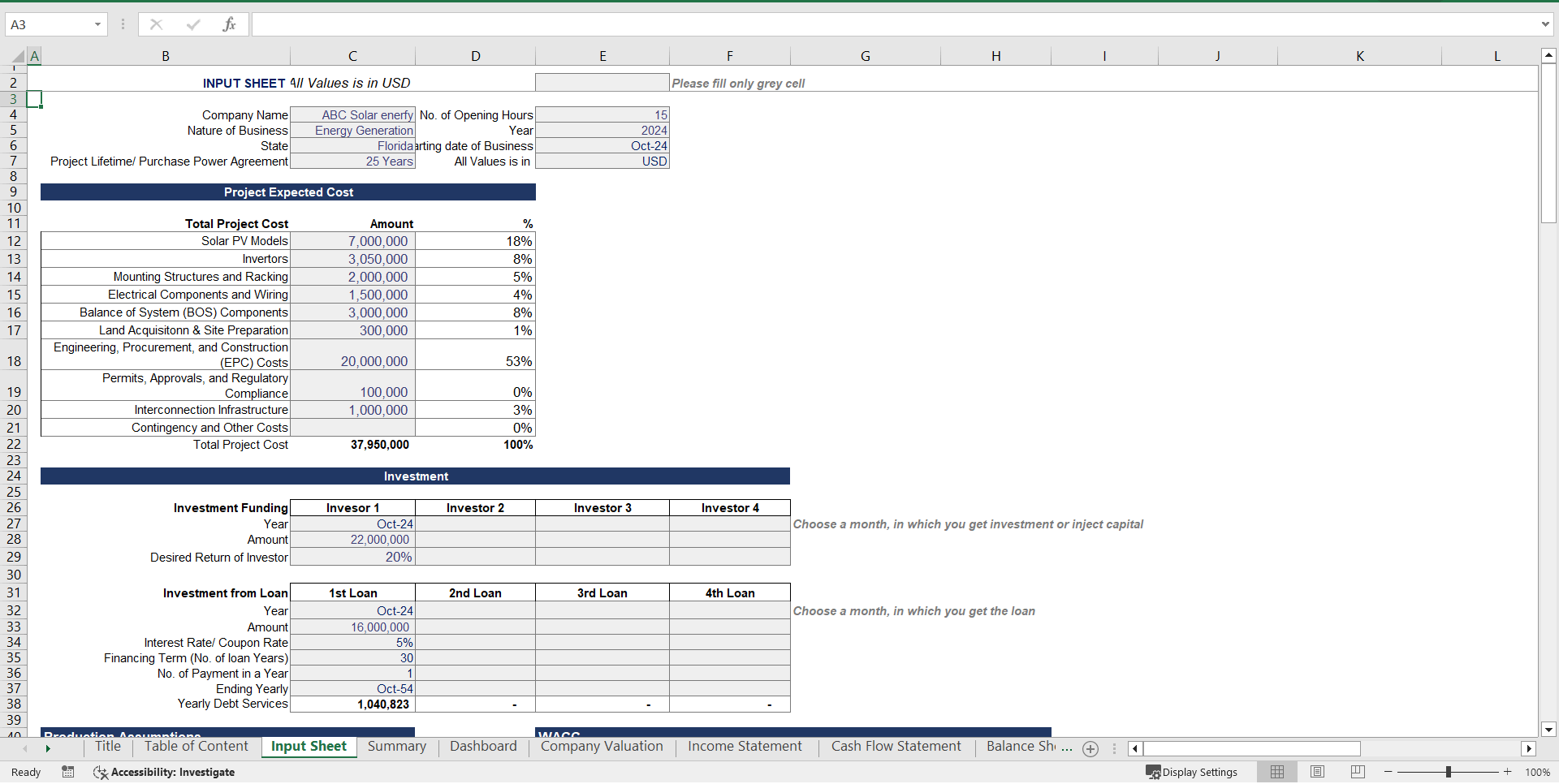
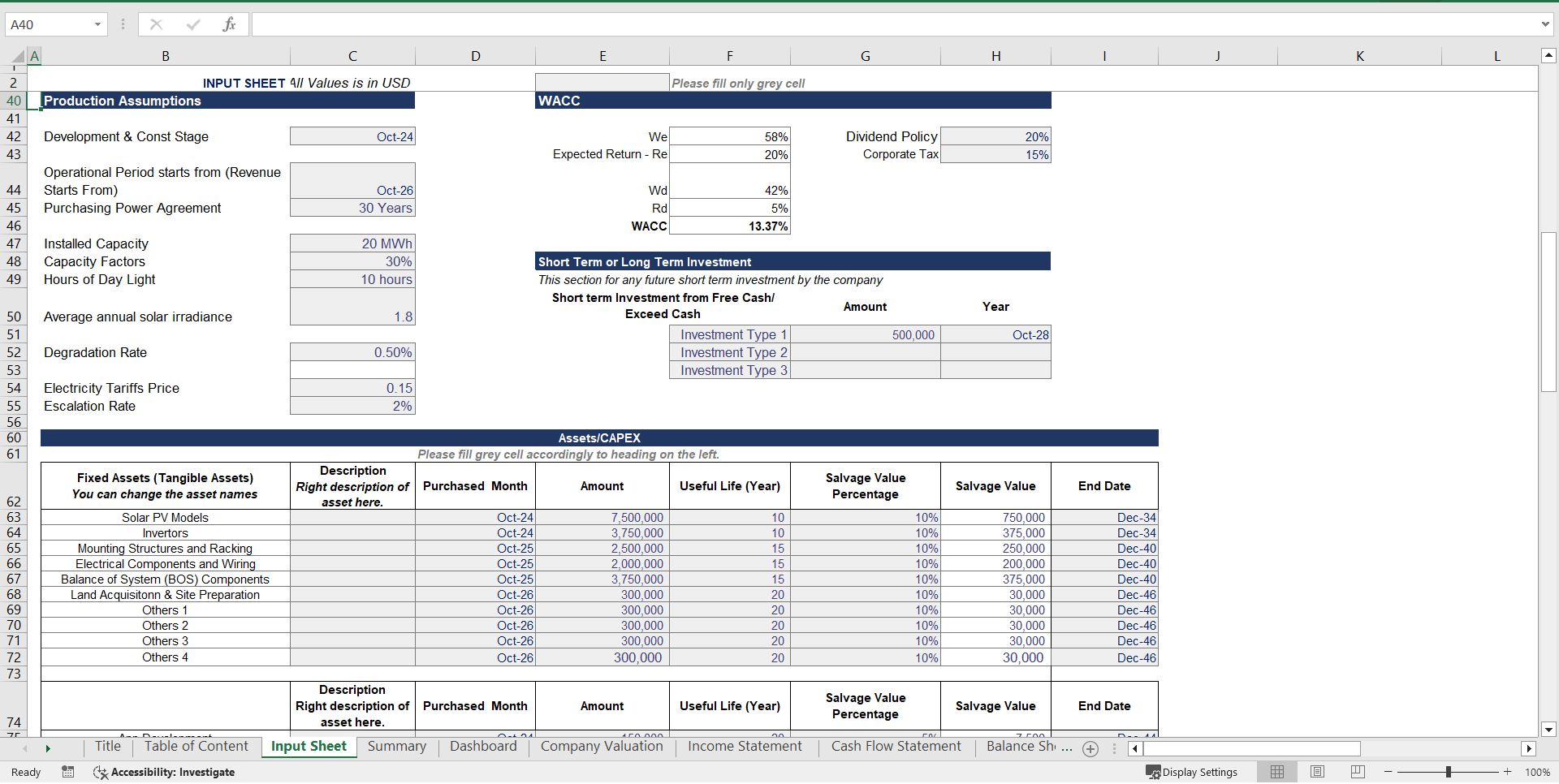
Project Assumptions: Installed capacity, solar irradiance, degradation rates, PPA terms.
Cost Structure: CAPEX (solar panels, inverters, land) and OPEX (maintenance, salaries, permits).
Financing: Equity investments, loan terms (interest rates, tenure), and WACC.
Revenue Drivers: Electricity tariffs, escalation rates, and production forecasts.
Ready-to-use input tables with color-coded guidance—fill only yellow cells!
🚀 KEY FEATURES
✅Dynamic & Scalable:
Model utility-scale (Utility-Scale Solar Financial Model) or commercial projects (Commercial Solar Financial Model).
Adjust 25+ variables: tariffs, degradation, debt-equity mix, tax rates.
✅Proven Financial Rigor:
Solar Cash Flow Model integrates depreciation, CAPEX, and working capital.
Automated debt servicing and investor payout calculations.
✅User-Friendly Design:
Solar Financial Model Excel Template with error checks, instructions, and tooltips.
Dashboard summaries, sensitivity analysis, and scenario comparisons.
✅Comprehensive Analysis:
Solar Plant Profitability Model tracks EBITDA margins, ROIC, and DSCR.
Feasibility Study outputs: project lifetime revenue, cumulative FCF, and breakeven.
🛠️ MODIFICATIONS & SUPPORT
+ We Offer Free Support & Customization!
+ Need to adapt the Renewable Energy Financial Model (Solar) for unique tax incentives, irradiance profiles, or funding structures? Email us!
+ We'll help you refine Solar Project Economic Analysis or add new modules.
✅ WHY CHOOSE THIS SOLAR FINANCIAL MODEL?
+ Mitigate Risks: Quantify Solar Power Plant Investment Risks via stress-tested scenarios.
+ Attract Funding: Validate Financial Viability for lenders/investors with professional projections.
+ Speed Up Decisions: Download and start modeling immediately—no build-from-scratch hassle!
Perfect For: Solar developers, energy investors, financial advisors, and sustainability consultants tackling PV Project Investment or Green Energy Project Finance.
Download Your Solar Energy Financial Projections Spreadsheet Today!
Unlock Solar Investment Opportunities with a tool that turns sunlight into financial confidence 🌞💸.
Got a question about the product? Email us at support@flevy.com or ask the author directly by using the "Ask the Author a Question" form. If you cannot view the preview above this document description, go here to view the large preview instead.
TOPIC FAQ
What inputs are required to build a solar PV financial model?
Key inputs include installed capacity, solar irradiance and degradation rates, PPA terms, CAPEX components (panels, inverters, land), OPEX (maintenance, salaries, permits), financing terms (equity, loan interest and tenure), electricity tariffs and escalation, and production forecasts. The model uses ready-to-use input tables with color-coded guidance for data entry.How is a solar plant valued using a DCF approach?
A DCF values the project by forecasting free cash flows from the 25-year income statement, balance sheet, and cash flow model, then discounting those cash flows using a WACC-adjusted rate. Terminal or salvage value is added to final-year cash flows to produce NPV and IRR outputs for valuation.Which sensitivity analyses matter most for solar project finance?
Sensitivity testing typically focuses on electricity tariffs and escalation, plant capacity factor (production volumes), and financing costs (interest rates and debt terms). These drivers materially affect projected revenues, cash flows, and valuation metrics, and are commonly captured in sensitivity tables for scenario comparison.How should debt and investor returns be modeled for a solar project?
Model equity/debt breakdowns, construct loan amortization schedules, and automate debt servicing and investor payout calculations. Include metrics like DSCR, Debt/EBITDA, and investor IRR to assess servicing capacity and return profiles; these elements support lender and investor decision-making.What should I look for when choosing a ready-made solar financial model template?
Prioritize templates that include a 25-year three-statement projection, WACC-adjusted DCF valuation, sensitivity and scenario analysis, automated debt schedules, error checks, and clear input guidance. A dashboard summary and ability to model both utility-scale and commercial projects are practical attributes to seek.What outputs are expected in a solar feasibility study?
Typical feasibility outputs include projected lifetime revenue, cumulative free cash flow, breakeven analysis, EBITDA margins, ROIC, DSCR, and investor metrics such as IRR, NPV, and payback period. These outputs inform viability and funding discussions for the project.Can one model serve both utility-scale and commercial PV projects?
A scalable model can be configured for both project types by adjusting capacity, CAPEX/OPEX assumptions, tariff structures, and production profiles. Templates that allow modification of 25+ variables enable reuse across utility-scale and commercial solar use cases.How much time can a ready-made model save compared with building from scratch?
A prebuilt template lets users populate inputs and validate financial projections quickly rather than building formulas and schedules from zero; some templates support immediate validation and scenario testing, delivering 25-year three-statement projections and valuation outputs in a short setup period.Source: Best Practices in Energy Industry, Renewable Energy, Solar Energy, Integrated Financial Model Excel: Solar Energy Plant Financial Model and Valuation Excel (XLSX) Spreadsheet, Excel Business Resource
ABOUT THE AUTHOR

Excel Business Resource offers a leading-edge solution for streamlined financial modeling, budgeting, and reporting. Our customizable templates, curated by FP&A and FMVA experts, provide the foundation for precise, tailored financial analysis. From dynamic modeling to flexible budgeting and board-ready reports, our platform empowers informed decision-making for businesses of all sizes. ... [read more]
Ask the Author a Question
You must be logged in to contact the author.




























