
 Click main image to view in full screen. Unlock all 32 preview images:
Total Quality Management (TQM) Fundamentals – PowerPoint PPTX Template
PowerPoint (PPTX) 128 Slides


BENEFITS OF THIS DOWNLOADABLE POWERPOINT DOCUMENT
- Turnkey Facilitation: A complete 1-day course with logical modules and integrated team activities.
- Immediate Application: 14+ reusable templates to turn theory into daily workplace habits.
- Operational Excellence Foundation: The essential "operating system" to sustain Lean and Six Sigma process gains.
TQM PPT TEMPLATE DESCRIPTION
TOTAL QUALITY MANAGEMENT (TQM) FUNDAMENTALS TRAINING PRESENTATION
Serving as the foundational "operating system" for modern performance excellence, this turnkey, facilitator-ready 120+ slide toolkit supplies a practical, cross-industry implementation roadmap accompanied by 14 reusable templates. It is built to transition teams from mere theoretical awareness to hands-on, daily operational habits through a structured one-day training format.
EXECUTIVE SUMMARY
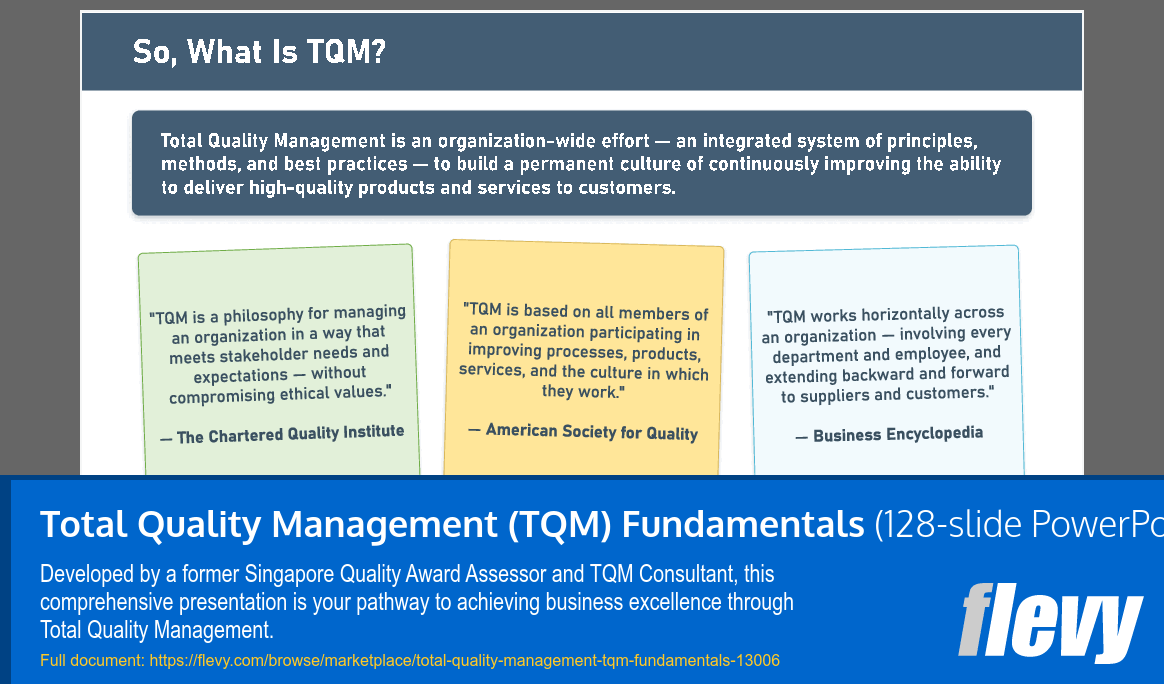
Total Quality Management (TQM) Fundamentals bridges the divide between abstract quality philosophy and practical shopfloor execution. Rather than focusing exclusively on high-level strategy, this curriculum treats TQM as the essential framework that supports and sustains broader Lean and Six Sigma programs. By synthesizing the foundational teachings of Deming, Juran, Crosby, and Ishikawa, the course guides participants through a six-module progression covering core paradigms down to tactical tool deployment. It reinforces the premise that quality is an enterprise-wide responsibility achieved through rigorous systems and total workforce engagement.
KEY BENEFITS FOR YOUR APPLIED WORKSHOP
★ Rapid Deployment: Execute a complete one-day workshop complete with a clear progression from foundational concepts to a 90-day action plan.
★ Standardized Problem Solving: Replace reactive "firefighting" with disciplined Plan-Do-Check-Act (PDCA) routines for predictable, repeatable outcomes.
★ Bridging Strategy and Practice: Leverage over 14 functional worksheets—including Fishbone diagrams, RACI matrices, and PDCA trackers—to turn concepts into measurable improvements.
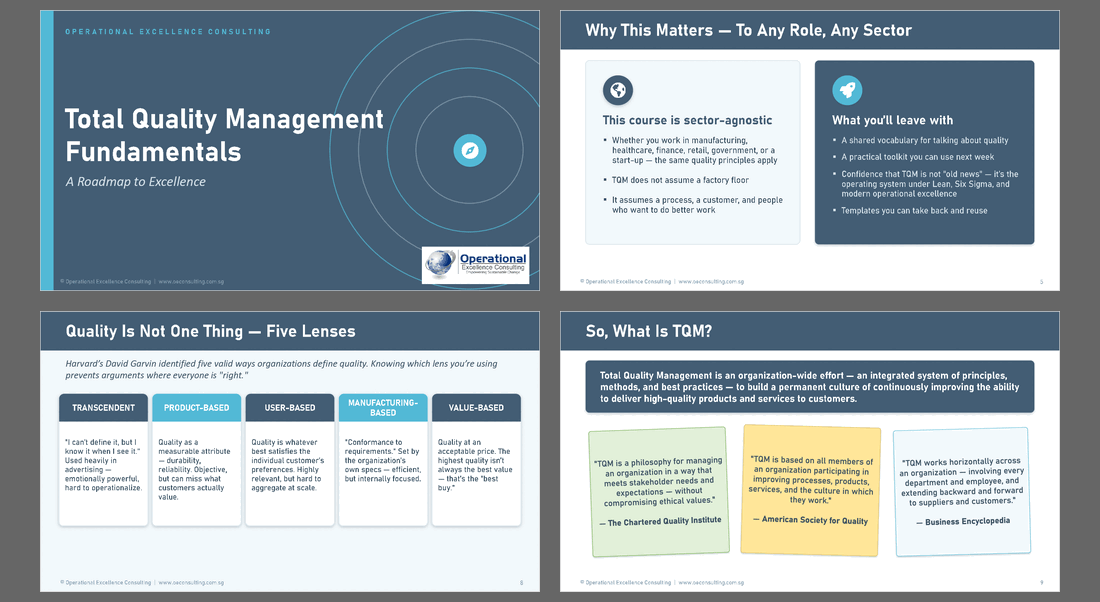
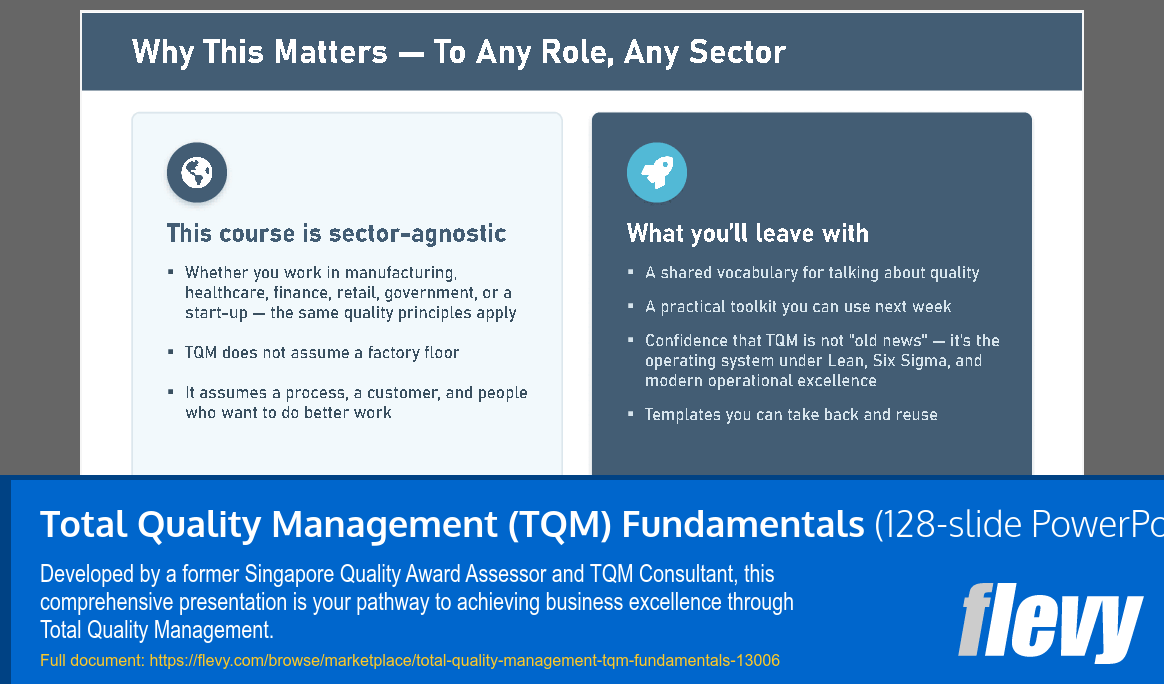
★ Universal Applicability: Designed to fit any sector (including healthcare, finance, and manufacturing) by focusing on core elements: defined processes, explicit customers, and engaged people.
TARGET AUDIENCE
This toolkit is tailored for leaders and practitioners seeking a ready-to-implement training package:
• Continuous Improvement & Operational Excellence Leads: For equipping teams with a standardized problem-solving methodology.
• Training Facilitators: For running an engaging, one-day TQM workshop backed by interactive team exercises.
• Department Supervisors & Managers: For defining internal customer-supplier handoffs and instilling daily quality standards.
• Frontline Personnel: For mastering the Seven Basic Tools and the PDCA cycle without requiring advanced statistical training.
WHAT'S IN THE PACKAGE?
★ The TQM Fundamentals Masterclass Deck (120+ Slides): A comprehensive slide deck detailing the evolution, key figures, core frameworks, and toolsets of TQM.
★ Collaborative Team Exercises: Six integrated activities, such as "Defining Our Quality Lens" and "The Fishbone Sprint," designed to foster active participation.
★ 14 Reusable Templates (Appendix): Ready-to-use worksheets for root-cause brainstorming, PDCA scheduling, responsibility charting, and culture audits.
★ Implementation Roadmap: A practical "First 90 Days" guide detailing how to select, execute, and evaluate a pilot improvement cycle.
LEARNING OBJECTIVES
Upon finishing this masterclass, participants will be equipped to:
• Define TQM: Understand its tripartite structure encompassing organization-wide scope, customer focus, and disciplined management systems.
• Apply Master Philosophies: Examine the core tenets of Deming, Juran, Crosby, and Ishikawa and utilize their business "Chain Reaction" models.
• Adopt Systems Thinking: Map internal customer-supplier handoffs to eliminate workflow bottlenecks and communication failures.
• Execute the PDCA Cycle: Utilize the four-step iterative methodology for continuous, systematic process enhancement.
• Deploy the Seven Basic Tools: Use graphical data analysis techniques to distinguish true process signals from random noise.
• Climb the Empowerment Ladder: Progress from being merely informed to taking active ownership within a quality-driven culture.
DETAILED TRAINING CONTENTS
The curriculum is structured across six strategic modules:
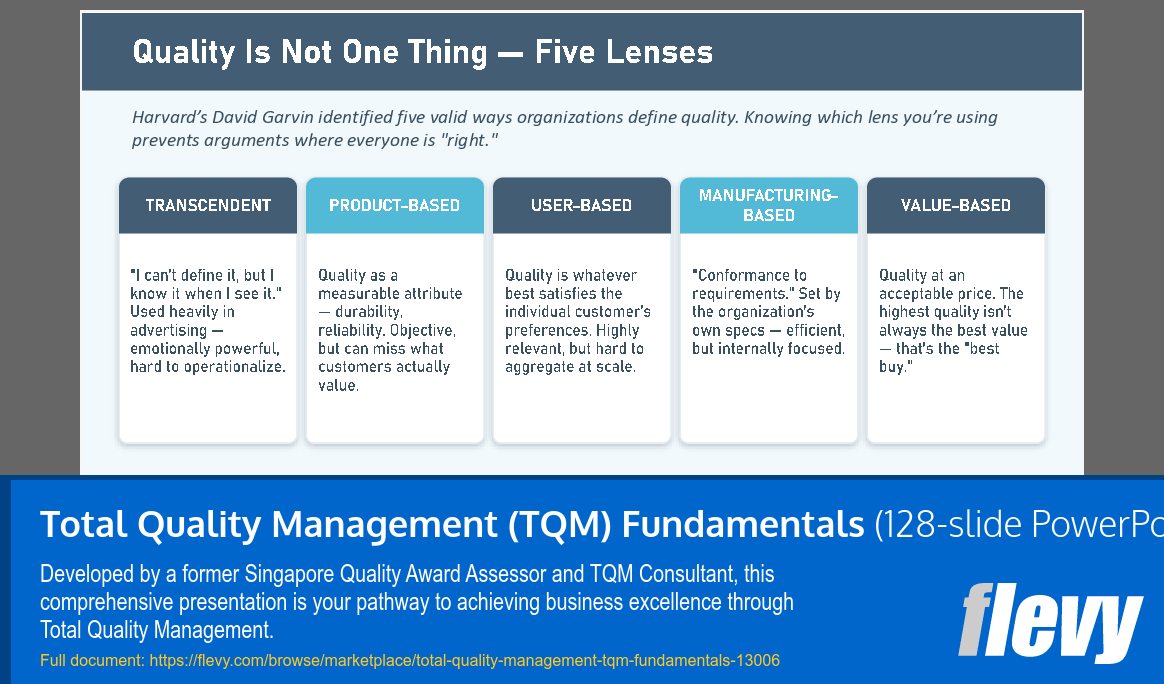
• Module 1: The Evolution & Paradigm of TQM: Explores the five quality lenses and the operational shift from defect detection to proactive prevention.
• Module 2: The Masters of Quality: Applies the foundational teachings of Deming, Juran, Crosby, and Ishikawa to modern business hurdles.
• Module 3: Frameworks for Continuous Improvement: Analyzes the PDCA cycle, systems thinking perspectives, and the Baldrige Excellence framework.
• Module 4: The TQM Toolbox: Provides practical instruction on the Seven Basic Tools, alongside an introduction to 5S, Lean, and Six Sigma concepts.
• Module 5: Building a Quality Culture: Examines the Four Pillars of TQM—problem-solving rigor, interpersonal communication, teamwork, and process enhancement.
• Module 6: Implementation & Wrap-Up: Establishes a 90-day rollout plan supported by customer satisfaction and quality metrics.
PROPOSED 1-DAY WORKSHOP AGENDA
• 09:00 – 10:30: Modules 1 & 2: Quality Lenses, Historical Evolution, and the Gurus (Activity: Defining Our Lens)
• 10:45 – 12:30: Module 3: Frameworks for Excellence (Activity: Mapping the Internal Chain)
• 13:30 – 15:00: Module 4: The TQM Toolbox & Modern Trends (Activity: The Fishbone Sprint)
• 15:15 – 16:30: Modules 5 & 6: Cultivating Quality & Implementation (Activity: The Empowerment Ladder)
• 16:30 – 17:00: Monday Morning Action Plan: Defining Your First PDCA Step
GLOSSARY OF KEY TERMS
• Plan-Do-Check-Act (PDCA): Also recognized as the Deming Wheel; an iterative four-stage approach for controlling and upgrading operational processes.
• Internal Customer: The downstream recipient of work within a value stream; upholding the principle that "your next process is your customer."
• Zero Defects: A performance standard prioritizing error prevention over acceptable tolerance thresholds, emphasizing correct execution from the start.
• The 6 Ms: The categorization model used during root-cause brainstorming—Machine, Method, Material, Manpower, Measurement, and Mother Nature (Environment).
• Pareto Principle: The 80/20 rule, reflecting that roughly 20% of root causes typically generate 80% of quality issues.
• Kaizen: Derived from Japanese terms for change (kai) and good (zen), denoting ongoing, incremental enhancement involving all personnel.
• Systems Thinking: A perspective viewing an organization as an interconnected network of dynamic processes rather than isolated departments.
• Baldrige Criteria: An internationally recognized framework providing performance excellence guidelines across seven organizational categories.
FREQUENTLY ASKED QUESTIONS (FAQs)
How does this differ from general TQM overview decks? While high-level presentations emphasize broad strategy and organizational change, this Fundamentals deck acts as an applied, hands-on workshop package complete with integrated activities and 14 templates.
Is a background in statistics required? No. The toolsets are built for accessibility across all organizational tiers without requiring advanced statistical expertise.
Are the included templates customizable for internal use? Yes. Delivered in standard PowerPoint format, the appendix supplies reusable worksheets for PDCA tracking, Fishbone diagramming, 5S audits, and more.
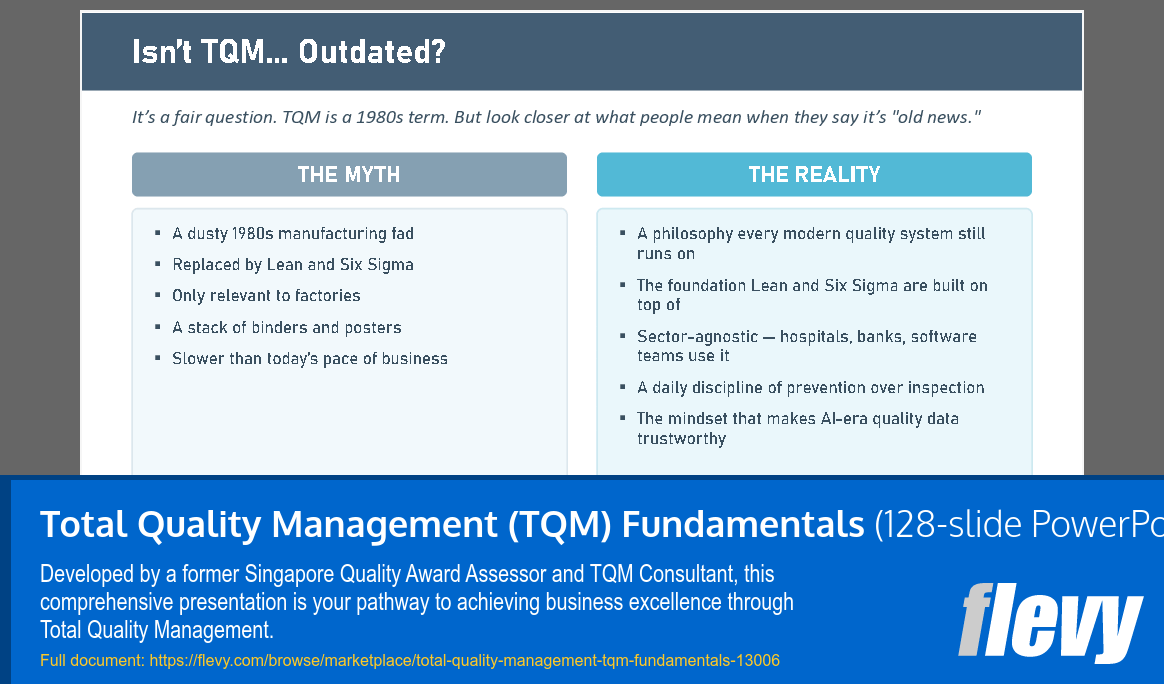
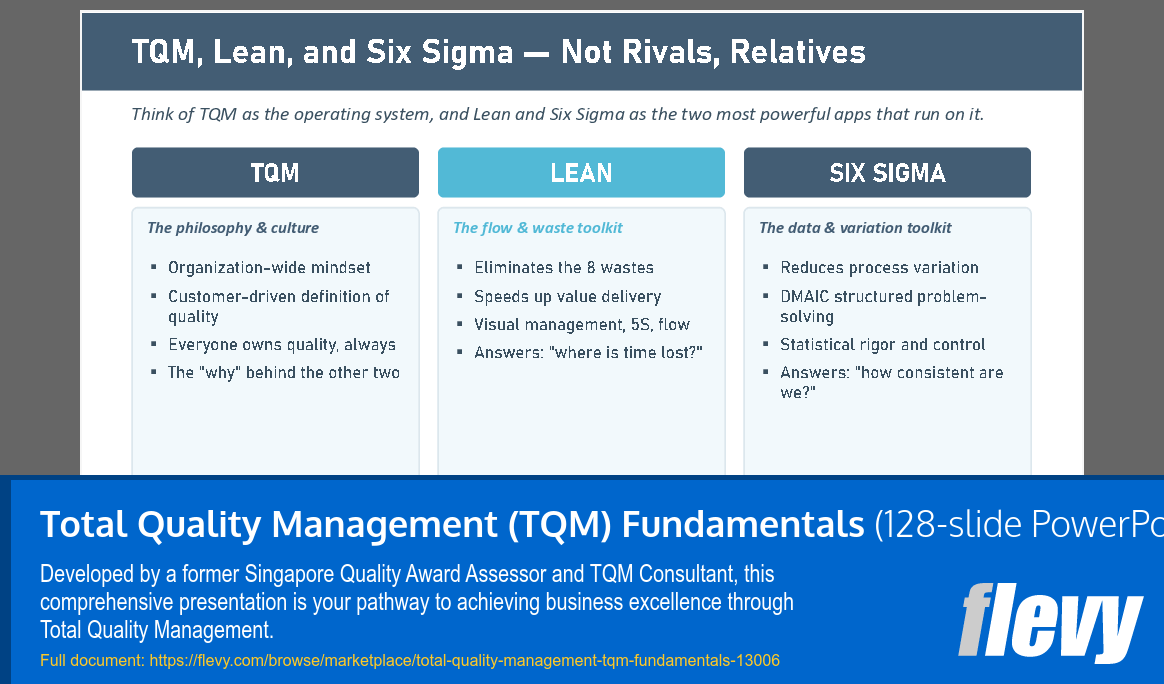
How does TQM connect with Lean and Six Sigma? TQM functions as the foundational organizational "operating system," whereas Lean and Six Sigma operate as specialized toolkits for eliminating waste and reducing variation.
What distinguishes TQM from ISO 9001 certification? TQM is a sweeping managerial philosophy focused on total organizational culture, whereas ISO 9001 provides a specific documentation standard for quality management compliance.
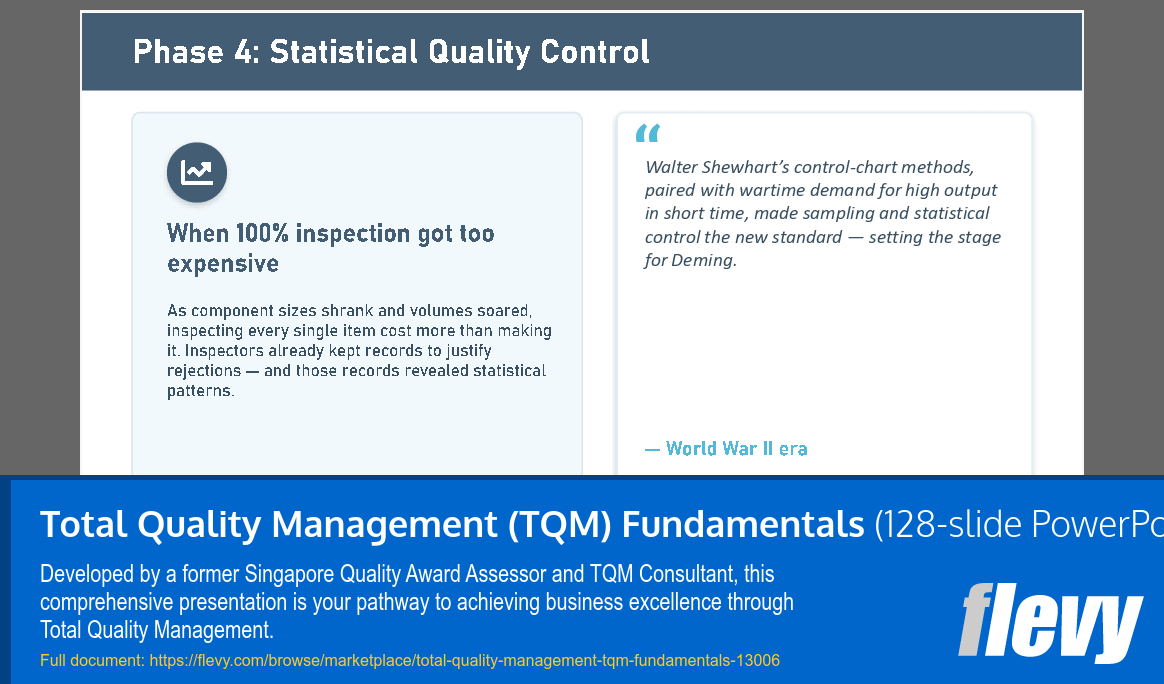
Which quality experts are featured in the curriculum? The course highlights four primary pioneers: W. Edwards Deming (statistical process control), Joseph Juran (the Quality Trilogy), Philip Crosby (Zero Defects), and Kaoru Ishikawa (company-wide quality control).
Is the curriculum applicable outside manufacturing? Yes. Because the framework only assumes a process, a customer, and people seeking better outcomes, it translates seamlessly to service sectors like healthcare, finance, and government.
What exercises are built into the workshop agenda? The deck integrates six team-based tasks, including "The Fishbone Sprint" for structured problem solving and "Mapping the Internal Chain" to trace process handoffs.
Got a question about the product? Email us at support@flevy.com or ask the author directly by using the "Ask the Author a Question" form. If you cannot view the preview above this document description, go here to view the large preview instead.
Source: Best Practices in TQM PowerPoint Slides: Total Quality Management (TQM) Fundamentals PowerPoint (PPTX) Presentation Slide Deck, Operational Excellence Consulting
ABOUT THE AUTHOR

Operational Excellence Consulting, founded in 2009 by Allan Ung, draws from extensive experience at Microsoft, IBM, and Underwriters Laboratories (UL). We specialize in strategy deployment, customer experience design, and operational excellence, applying Design Thinking, Lean, and Systems Thinking to maximize customer value and minimize waste.
Our
... [read more]
Ask the Author a Question
You must be logged in to contact the author.




























