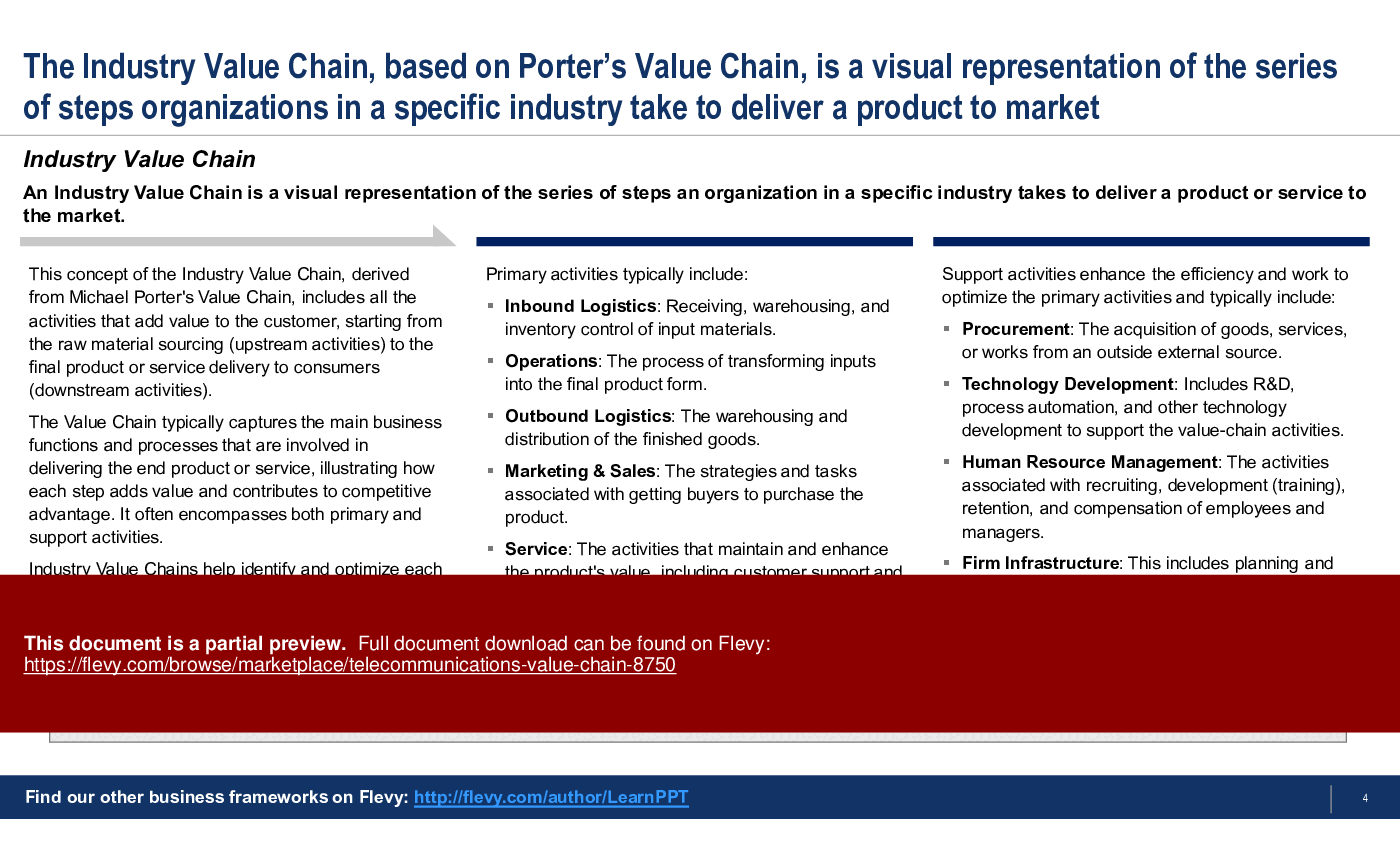

An Industry Value Chain is a visual representation of the series of steps an organization in a specific industry takes to deliver a product or service to the market. It captures the main business functions and processes that are involved in delivering the end product or service, illustrating how each step adds value and contributes to a Competitive Advantage. It often encompasses both primary and support activities.

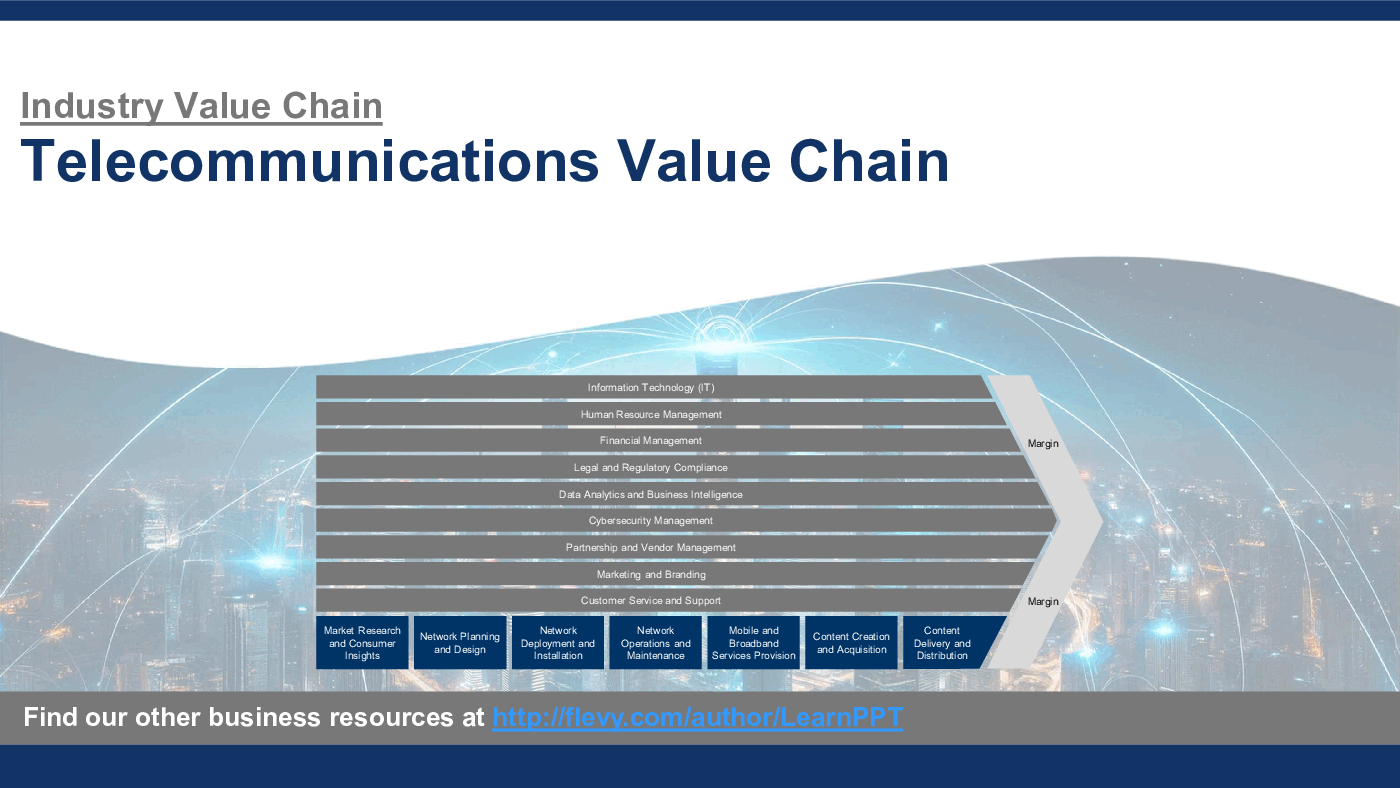
This PowerPoint presentation captures the Telecommunications Industry Value Chain, which includes the following primary and support activities for Telecommunications:
Primary Activities
1. Market Research and Consumer Insights
2. Network Planning and Design
3. Network Deployment and Installation
4. Network Operations and Maintenance
5. Mobile and Broadband Services Provision
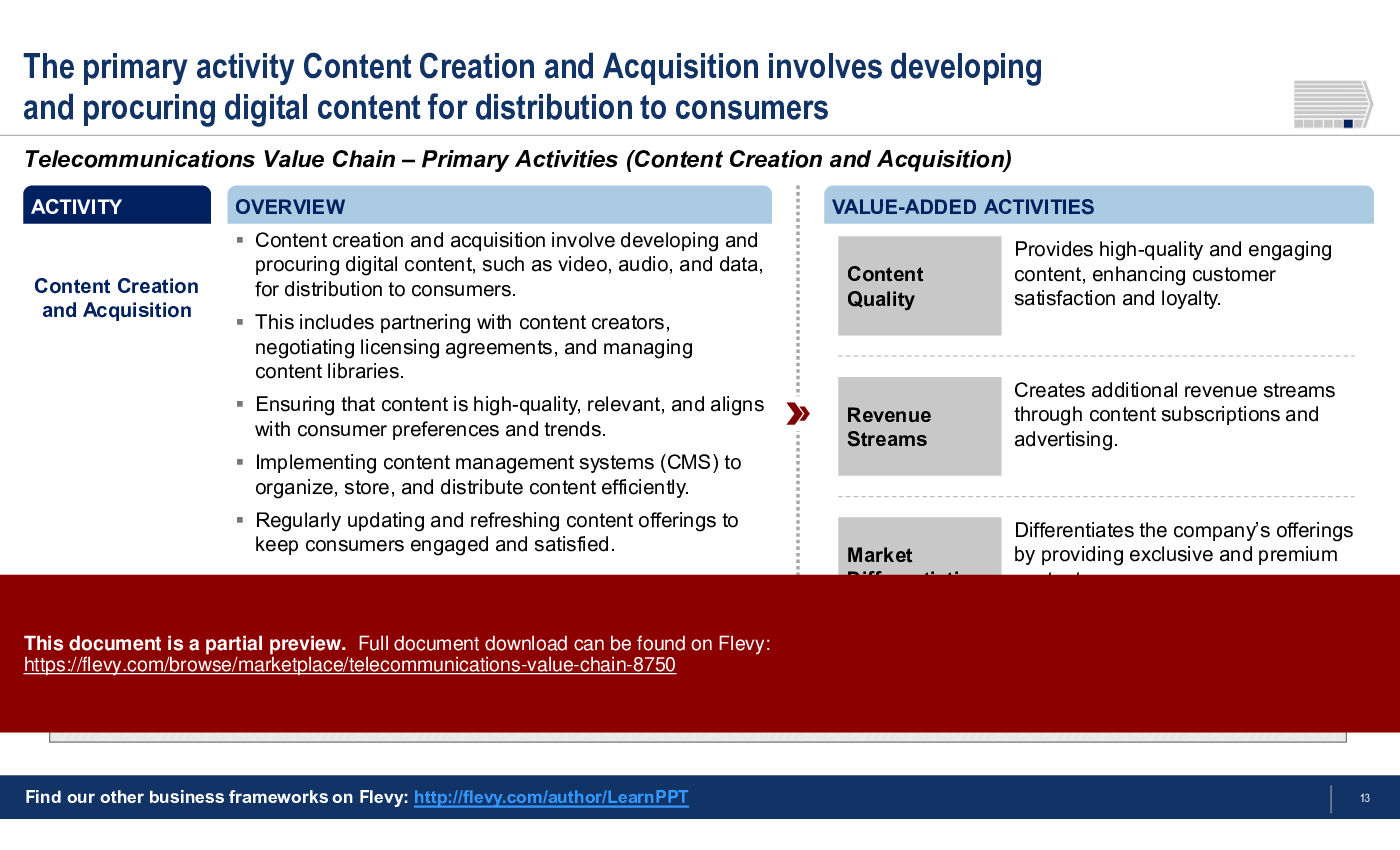
6. Content Creation and Acquisition
7. Content Delivery and Distribution
Support Activities
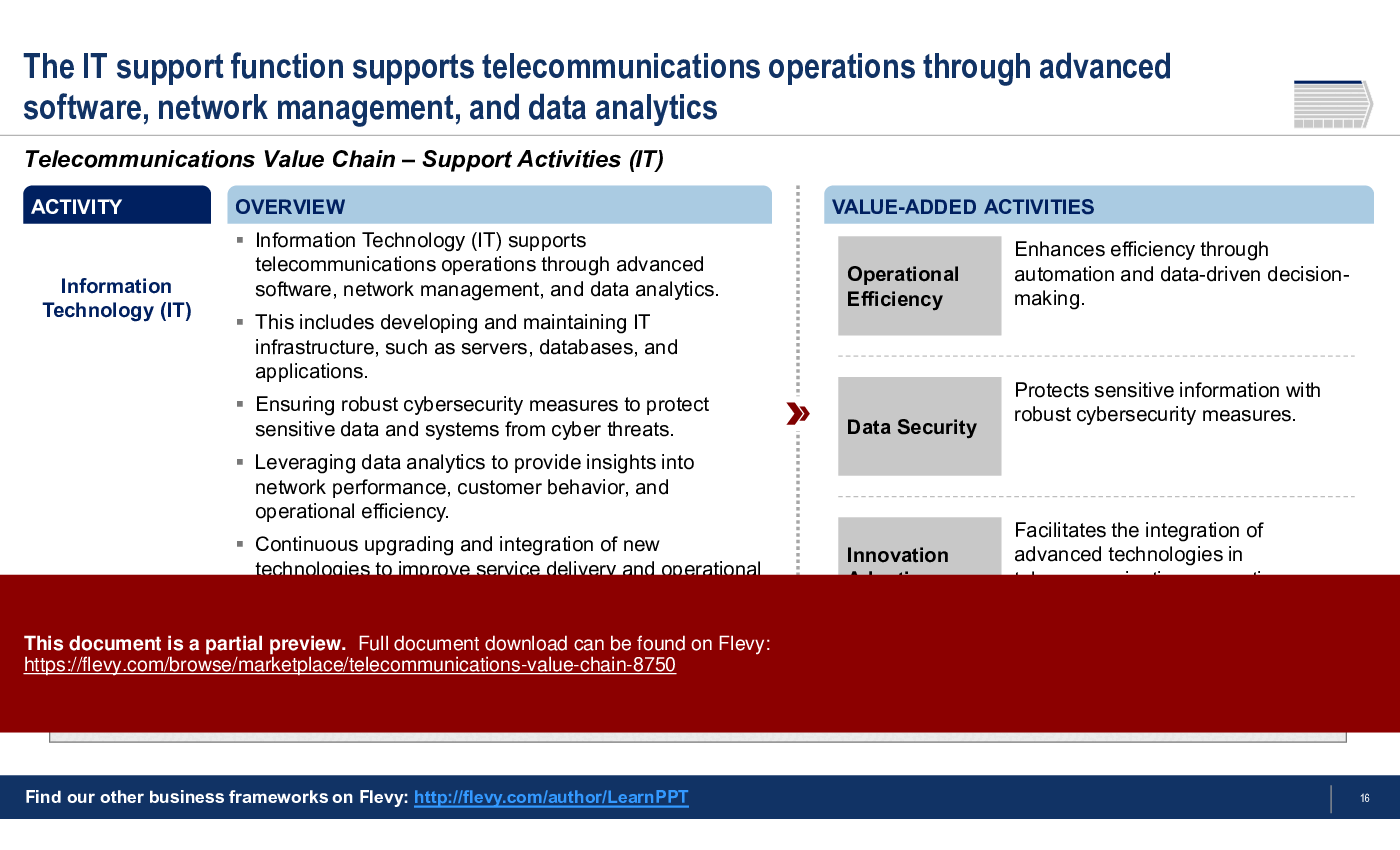
1. Information Technology (IT)
2. Human Resource Management
3. Financial Management
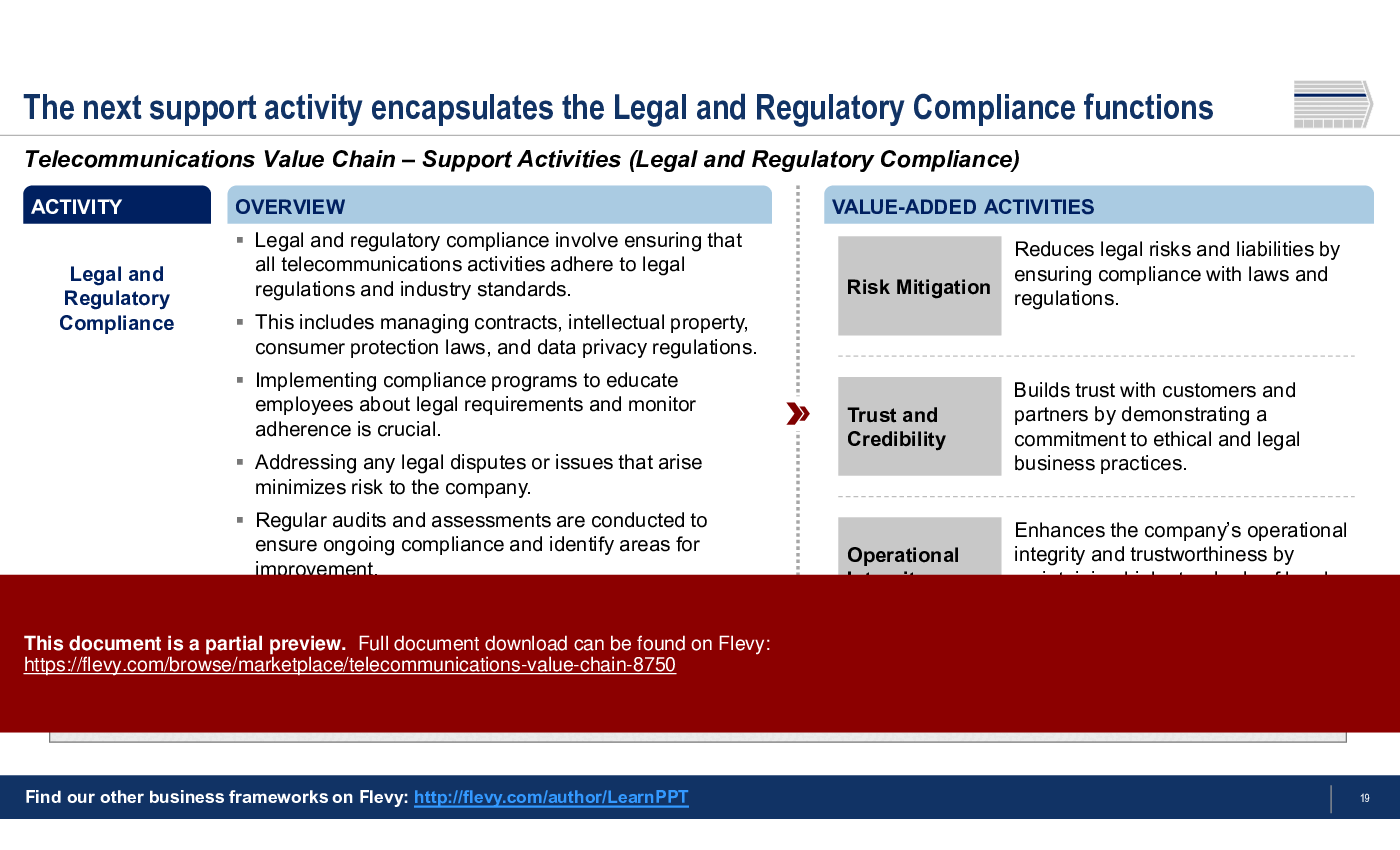
4. Legal and Regulatory Compliance
5. Data Analytics and Business Intelligence
6. Cybersecurity Management
7. Partnership and Vendor Management
8. Marketing and Branding
9. Customer Service and Support
This PowerPoint presentation dives deeper into each of these activities, highlighting key elements.
The Telecommunications Industry Value Chain integrates network planning, deployment, and operations to deliver seamless connectivity and high-quality service to consumers. Efficient content delivery and robust mobile and broadband services are essential for meeting and exceeding customer demands. Strategic partnerships and advanced IT infrastructure drive innovation and operational efficiency across the Telco Value Chain. Continuous monitoring and maintenance ensure network reliability and performance, crucial for customer satisfaction. Leveraging market research and consumer insights helps tailor services to evolving market needs, enhancing customer engagement and loyalty.
This PPT presentation also discusses Telecommunications Value Chain Analysis, highlighting a multitude of key considerations and potential insights to pay attention to. Value Chain Analysis provides a comprehensive understanding of how each stage contributes to overall efficiency, cost management, and service quality. We further discuss the significant impact of Digital Transformation and various specific emergent technologies on the Telecom Industry.
This presentation offers a detailed exploration of the Telecommunications Value Chain, emphasizing the critical interplay between primary and support activities. It equips executives with actionable insights to streamline operations and enhance service delivery, ensuring alignment with market demands and customer expectations.
Got a question about the product? Email us at support@flevy.com or ask the author directly by using the "Ask the Author a Question" form. If you cannot view the preview above this document description, go here to view the large preview instead.
Executive Summary
This presentation provides a detailed analysis of the Telecommunications Value Chain, showcasing both primary and support activities essential for delivering high-quality telecommunications services. Created by former consultants from top-tier firms such as McKinsey, BCG, and Deloitte, this framework is designed to help organizations understand how each component contributes to overall efficiency and competitive advantage. By leveraging insights from market research, network planning, and customer service, executives can enhance operational performance and drive strategic growth in a rapidly evolving industry.
Who This Is For and When to Use
• Telecommunications executives seeking to optimize operational efficiency
• Strategy and planning teams focused on service delivery improvements
• Marketing and customer experience leaders aiming to enhance customer engagement
• IT and network management professionals responsible for infrastructure reliability
Best-fit moments to use this deck:
• During strategic planning sessions to align on value chain activities
• When assessing operational performance and identifying areas for improvement
• In workshops focused on customer experience enhancement and service delivery
Learning Objectives
• Define the Telecommunications Value Chain and its significance in service delivery
• Analyze primary and support activities to identify optimization opportunities
• Develop strategies for leveraging market research and consumer insights
• Establish best practices for network planning and deployment
• Enhance customer service operations to improve satisfaction and loyalty
• Implement data analytics for informed decision-making and performance tracking
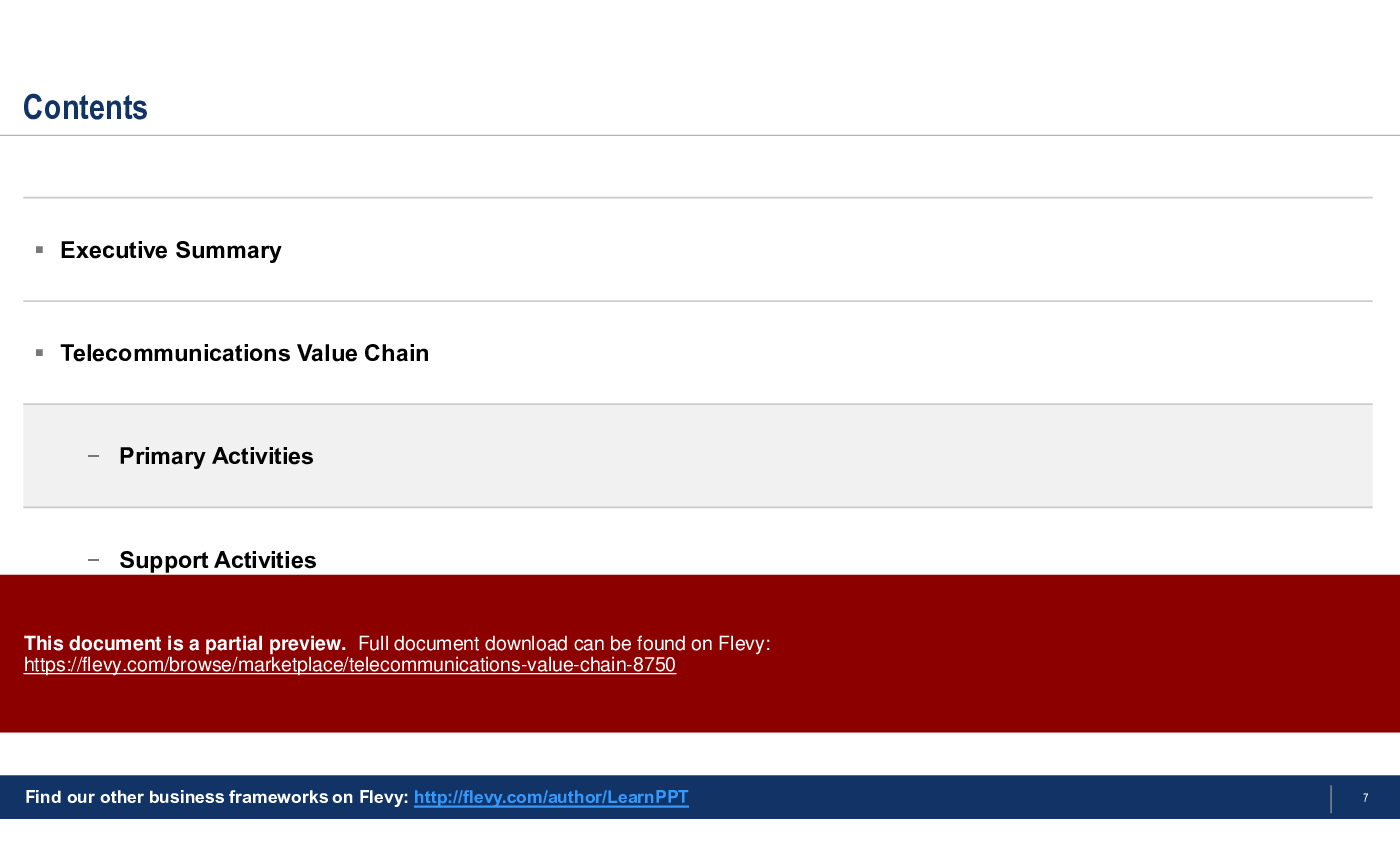
Table of Contents
• Executive Summary (page 1)
• Telecommunications Value Chain (page 2)
• Primary Activities (page 3)
• Support Activities (page 4)
• Telecommunications Value Chain Analysis (page 5)
Primary Topics Covered
• Market Research and Consumer Insights - Gathering and analyzing data to understand market trends and customer needs, driving service optimization.
• Network Planning and Design - Developing strategic plans for infrastructure deployment to enhance service coverage and operational efficiency.
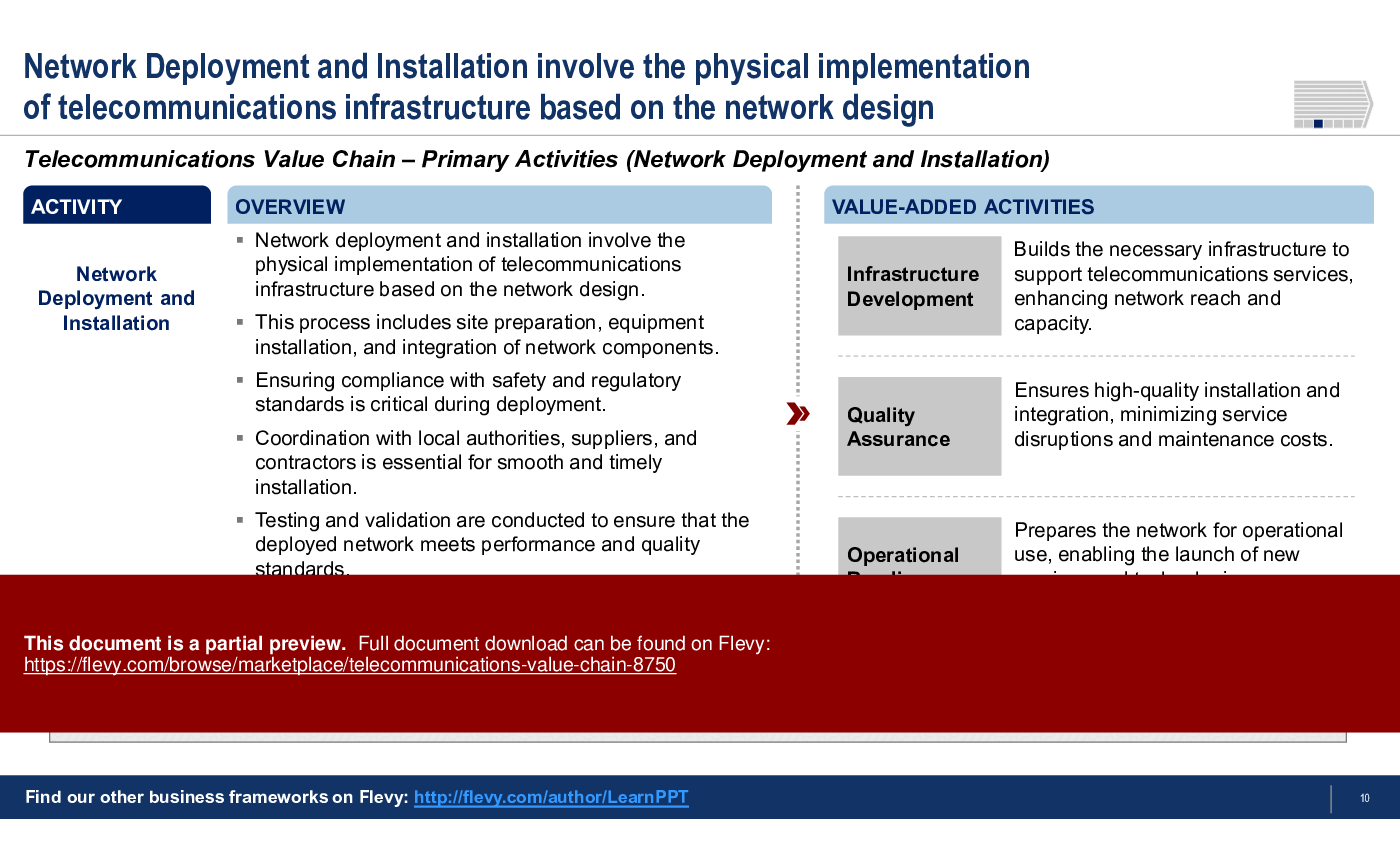
• Network Deployment and Installation - Implementing telecommunications infrastructure, ensuring compliance with safety and regulatory standards.
• Network Operations and Maintenance - Continuous monitoring and management of networks to ensure reliability and performance.
• Mobile and Broadband Services Provision - Delivering high-speed internet and mobile connectivity, enhancing customer experience.
• Content Creation and Acquisition - Developing and procuring digital content to engage consumers and differentiate service offerings.
• Content Delivery and Distribution - Ensuring efficient delivery of digital content over telecommunications networks.
Deliverables, Templates, and Tools
• Market research analysis template for understanding consumer preferences
• Network planning and design framework for strategic infrastructure deployment
• Deployment checklist to ensure compliance with regulatory standards
• Operations and maintenance monitoring dashboard for real-time performance tracking
• Service provision plan template for mobile and broadband services
• Content management system guidelines for effective content delivery
Slide Highlights
• Overview of the Telecommunications Value Chain illustrating primary and support activities
• Detailed breakdown of Market Research and Consumer Insights with actionable strategies
• Visual representation of Network Planning and Design processes for optimal infrastructure placement
• Key metrics for Network Operations and Maintenance to ensure service reliability
• Insights on Mobile and Broadband Services Provision highlighting advanced technologies
Potential Workshop Agenda
Value Chain Optimization Session (90 minutes)
• Review the Telecommunications Value Chain and its components
• Identify key areas for operational improvement
• Develop action plans for enhancing service delivery
Customer Experience Enhancement Workshop (60 minutes)
• Analyze current customer service operations
• Brainstorm strategies for improving customer engagement
• Establish metrics for tracking customer satisfaction
Customization Guidance
• Tailor the market research approach to align with specific consumer demographics
• Adjust network planning strategies to reflect regional regulatory requirements
• Modify service provision plans to incorporate new technologies and customer needs
Secondary Topics Covered
• Regulatory compliance considerations in telecommunications
• The role of data analytics in optimizing business operations
• Strategies for effective partnership and vendor management
• Importance of cybersecurity in protecting telecommunications infrastructure
• Marketing and branding strategies to enhance market visibility
FAQ
What is the Telecommunications Value Chain?
The Telecommunications Value Chain is a framework that outlines the series of steps organizations take to deliver telecommunications services, encompassing both primary and support activities that add value.
How can market research improve service offerings?
Market research provides insights into consumer preferences and market trends, enabling organizations to tailor their services and enhance customer engagement.
What are the primary activities in the Telecommunications Value Chain?
Primary activities include Market Research and Consumer Insights, Network Planning and Design, Network Deployment and Installation, Network Operations and Maintenance, Mobile and Broadband Services Provision, Content Creation and Acquisition, and Content Delivery and Distribution.
Why is network operations and maintenance critical?
Effective network operations and maintenance ensure consistent service delivery, minimize downtime, and enhance customer satisfaction through proactive management.
How does data analytics contribute to decision-making?
Data analytics provides insights into performance metrics and customer behavior, enabling informed strategic decisions that optimize business operations.
What role does cybersecurity play in telecommunications?
Cybersecurity is essential for protecting sensitive data and maintaining the integrity of telecommunications systems, ensuring compliance with regulatory standards.
How can organizations enhance customer experience?
By implementing effective customer service strategies, leveraging data insights, and continuously improving service delivery processes, organizations can enhance customer satisfaction and loyalty.
What are the benefits of strategic partnerships in telecommunications?
Strategic partnerships can enhance service quality, reduce costs, and drive innovation, supporting overall business growth and competitiveness.
How can organizations ensure regulatory compliance?
Implementing compliance programs, conducting regular audits, and educating employees on legal requirements are crucial for maintaining adherence to regulations.
Glossary
• Telecommunications Value Chain - A framework outlining the steps organizations take to deliver telecommunications services.
• Market Research - The process of gathering and analyzing data on consumer preferences and market trends.
• Network Planning - Developing strategic plans for the deployment and expansion of telecommunications infrastructure.
• Network Operations - Continuous monitoring and management of telecommunications networks to ensure reliability.
• Mobile Services - High-speed internet and mobile connectivity provided to consumers and businesses.
• Content Delivery - The process of delivering digital content to consumers over telecommunications networks.
• Cybersecurity - Measures taken to protect telecommunications systems and data from cyber threats.
• Data Analytics - The practice of collecting and analyzing data to support strategic decision-making.
• Regulatory Compliance - Ensuring adherence to legal regulations and industry standards in telecommunications.
• Customer Experience - The overall perception and satisfaction of customers with a company's services.
• Partnership Management - Establishing and maintaining relationships with suppliers and strategic partners.
• Operational Efficiency - The ability to deliver services effectively while minimizing costs and maximizing performance.
• Service Quality - The standard of service provided to customers, impacting satisfaction and loyalty.
• Financial Management - Planning and controlling financial resources to ensure organizational health.
• Human Resource Management - Recruiting, training, and retaining skilled personnel to support operations.
• Innovation - The process of developing new ideas and technologies to enhance service offerings.
• Sustainability - Practices aimed at reducing environmental impact in telecommunications operations.
• Customer Support - Assistance provided to customers for inquiries and issue resolution.
• Performance Metrics - Key indicators used to measure success and identify areas for improvement.
• Content Creation - The development of digital content for distribution to consumers.
Source: Best Practices in Telecom Industry PowerPoint Slides: Telecommunications Value Chain PowerPoint (PPTX) Presentation Slide Deck, LearnPPT Consulting
|
Download our FREE Strategy & Transformation Framework Templates
Download our free compilation of 50+ Strategy & Transformation slides and templates. Frameworks include McKinsey 7-S, Balanced Scorecard, Disruptive Innovation, BCG Curve, and many more. |