
 Click main image to view in full screen. Unlock all 9 preview images:
Systems Thinking for Strategic Problem Solving – PowerPoint PPTX Template
PowerPoint (PPTX) 21 Slides


BENEFITS OF THIS DOWNLOADABLE POWERPOINT DOCUMENT
- Gives consultants a practical architecture for connecting systems thinking, strategic diagnosis, and disciplined problem-solving execution.
- Creates evidence-based decision gates that help consultants challenge assumptions, prevent solution jumping, and distinguish completed work from genuine readiness.
- Helps identify unintended consequences, feedback effects, displacement, and sustainment risks before an intervention is scaled or handed over.
PROBLEM SOLVING PPT TEMPLATE DESCRIPTION
Systems Thinking for Strategic Problem Solving helps consultants move beyond symptom-level problem solving and apply a systems lens to the decisions that matter most: where to intervene, what evidence is sufficient, what unintended consequences could emerge, and whether an improvement is actually holding.
Designed as a practical deployment playbook, this resource connects systems thinking with disciplined tactical execution. It provides consultants, Lean and continuous improvement practitioners, transformation leaders, and project leaders with a structured way to examine complex problems before committing to a solution.
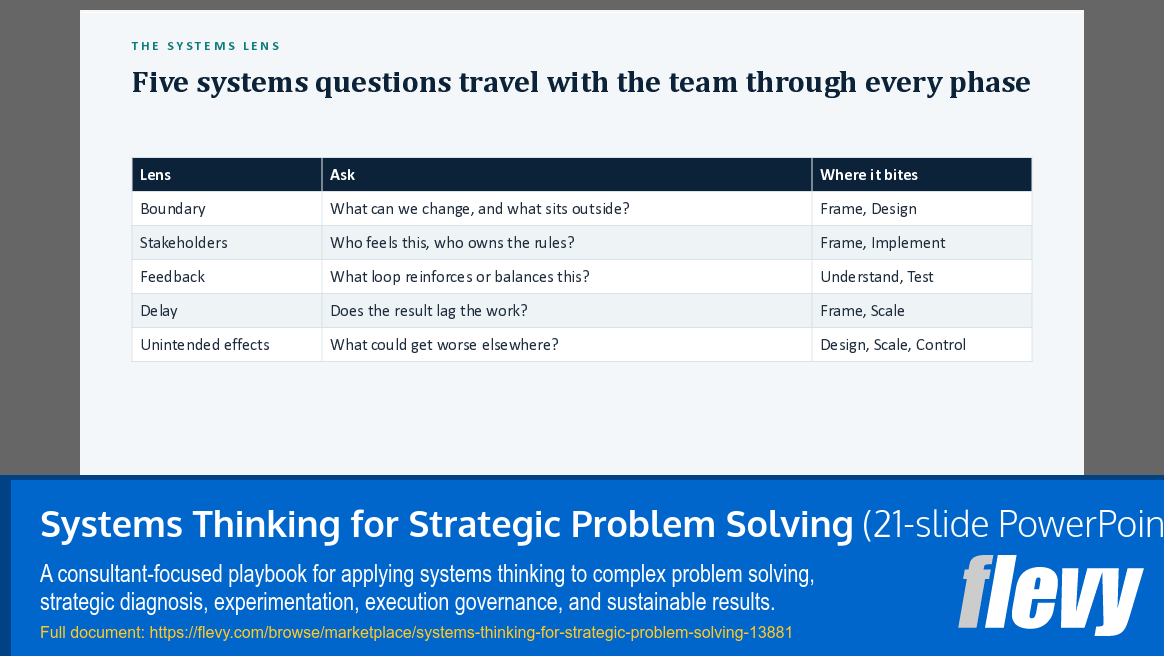
The playbook begins with a fundamental consulting question: are we solving the problem that matters, or simply improving the most visible symptom? It introduces five systems questions that travel through the engagement: What is inside and outside the boundary? Who influences or experiences the outcome? What feedback loops reinforce or balance the behavior? Where are the delays between action and result? What could improve locally while making the overall system worse?
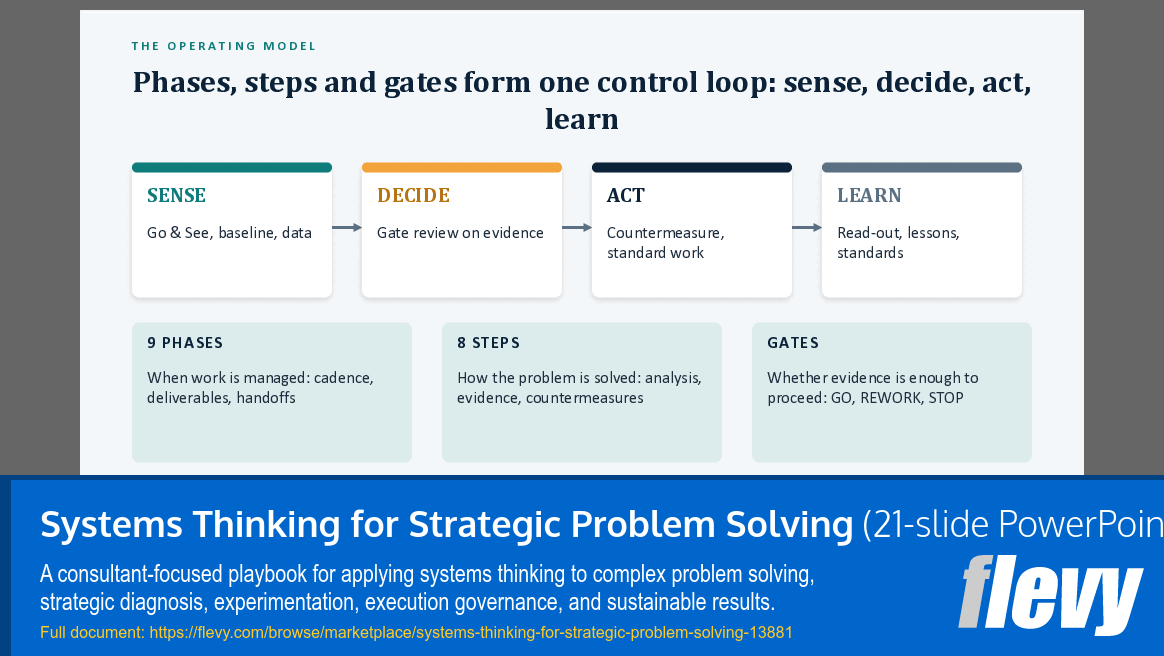
These questions are integrated into a nine-phase execution model covering Frame, Understand, Explain, Design, Test, Implement, Scale, Control, and Learn. The model connects the "when" of execution, the "how" of problem solving, and the "whether" of evidence through formal decision gates. Consultants can use this structure to establish a common operating model with clients and create greater discipline around problem definition, analysis, countermeasure selection, experimentation, implementation, and sustainment.
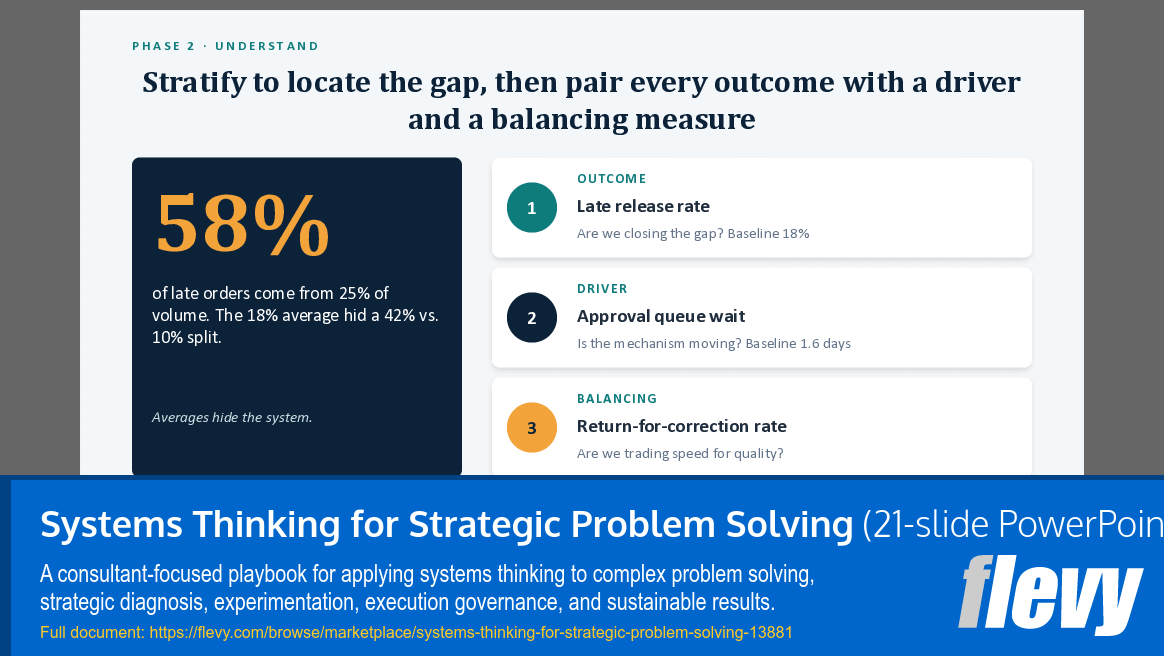
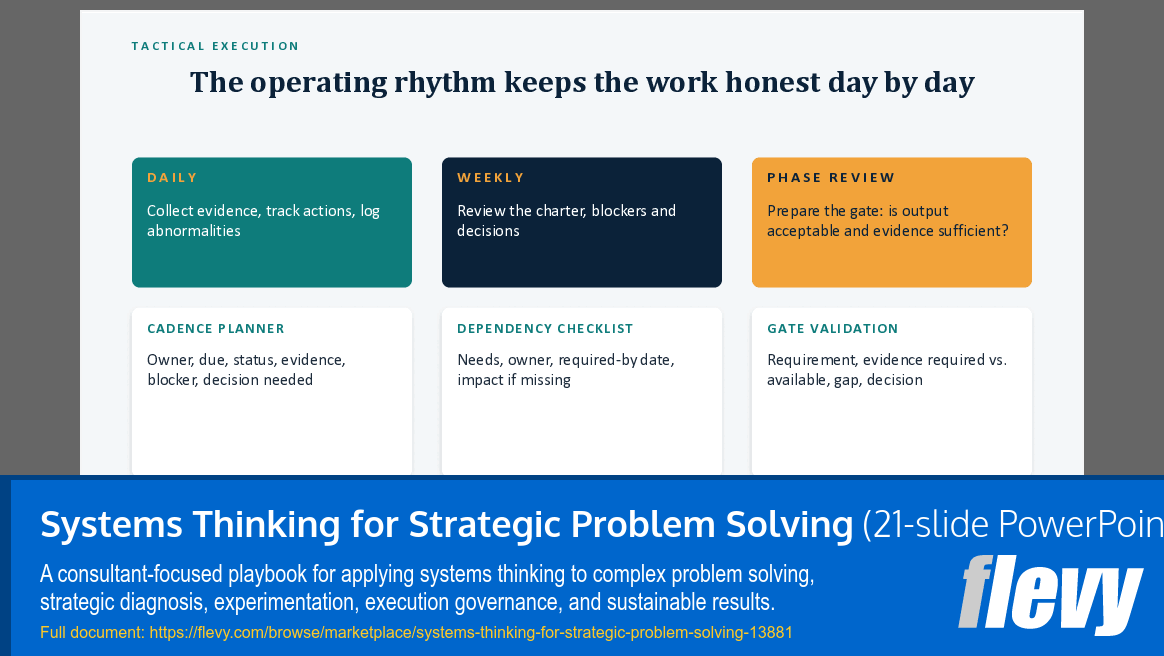
A central consulting principle is that activity completion does not equal progress. Useful output, evidence, and readiness must support the next decision. The playbook therefore emphasizes evidence-based gates, competing explanations, explicit confidence and uncertainty, cause-linked countermeasures, predefined success and failure criteria, and clear GO, REWORK, or STOP decisions.
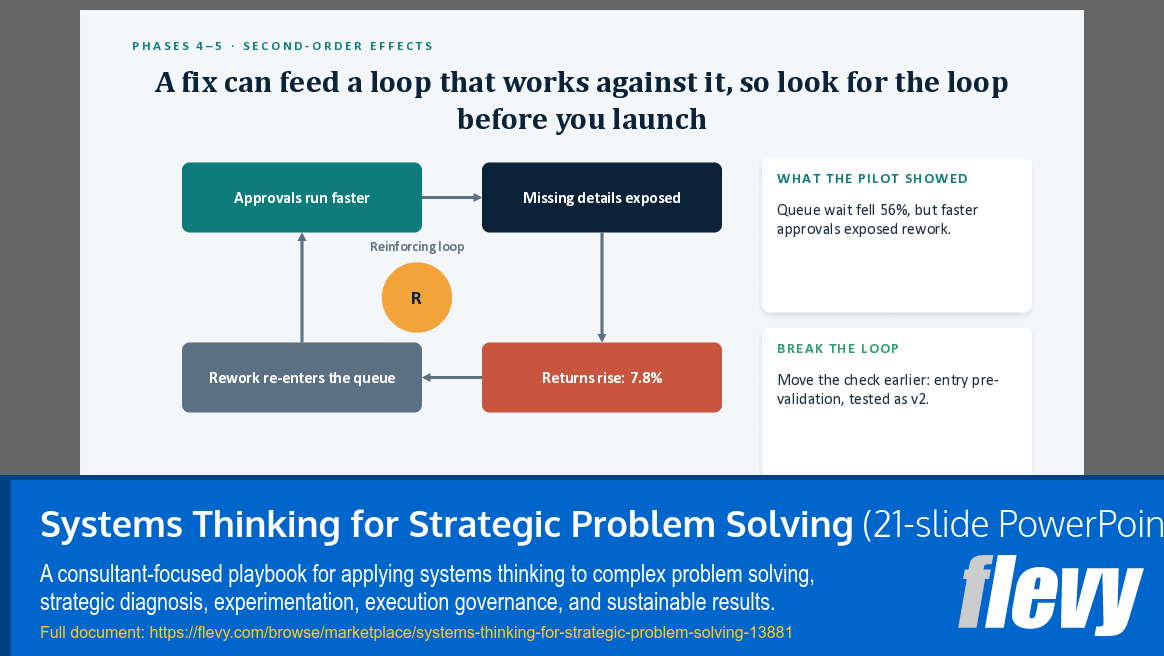
The systems lens becomes particularly valuable during solution design and implementation. The playbook demonstrates how an intervention can improve one measure while creating deterioration elsewhere through feedback loops, delays, rework, or displacement. It therefore encourages consultants to examine neighboring processes, balancing measures, leading and lagging indicators, and second-order effects before scaling an intervention.
The execution model also addresses the transition from project work to operational ownership. Sustainment requires defined limits, leading measures, named responders, response plans, escalation rules, ownership acceptance, and future monitoring. The final phase converts project experience into organizational learning by documenting lessons, transferring knowledge to named recipients, updating standards, and feeding learning into the next improvement opportunity.
For consultants, the value is not simply learning systems-thinking concepts. The value is having a practical consulting architecture for applying those concepts during real client engagements.
Use this playbook to strengthen diagnostic conversations, challenge premature solutions, structure client decision-making, facilitate evidence-based reviews, expose unintended consequences, and improve the probability that solutions survive beyond the project team.
Got a question about the product? Email us at support@flevy.com or ask the author directly by using the "Ask the Author a Question" form. If you cannot view the preview above this document description, go here to view the large preview instead.
Source: Best Practices in Problem Solving, Systems Thinking PowerPoint Slides: Systems Thinking for Strategic Problem Solving PowerPoint (PPTX) Presentation Slide Deck, EDS SYSTEMS
ABOUT THE AUTHOR
EDS SYSTEMS develops practical business frameworks, professional training, and enterprise toolkits that help organizations solve complex problems, improve operational performance, strengthen project execution, and build lasting organizational capability.
Our products transform proven engineering, project management, operational excellence, and continuous improvement practices into structured,
... [read more]
Ask the Author a Question
You must be logged in to contact the author.




























