
Leveraging Ways of Thinking to Managing Complex Problems   88-slide PPT PowerPoint presentation slide deck (PPTX)
$55.00

Leveraging Ways of Thinking to Managing Complex Problems (88-slide PPT PowerPoint presentation slide deck (PPTX)) Preview Image
Log in to unlock full preview.
Leveraging Ways of Thinking to Managing Complex Problems (88-slide PPT PowerPoint presentation slide deck (PPTX)) Preview Image
Arrow   Click main image to view in full screen.

Leveraging Ways of Thinking to Managing Complex Problems (PowerPoint PPTX Slide Deck)

PowerPoint (PPTX) 88 Slides

$55.00
Developed by a team of experts with global consulting experience at McKinsey, Deloitte, and Capgemini.
Add to Cart


Immediate download
Fully editable PowerPoint
Free lifetime updates

PROBLEM SOLVING PPT DESCRIPTION

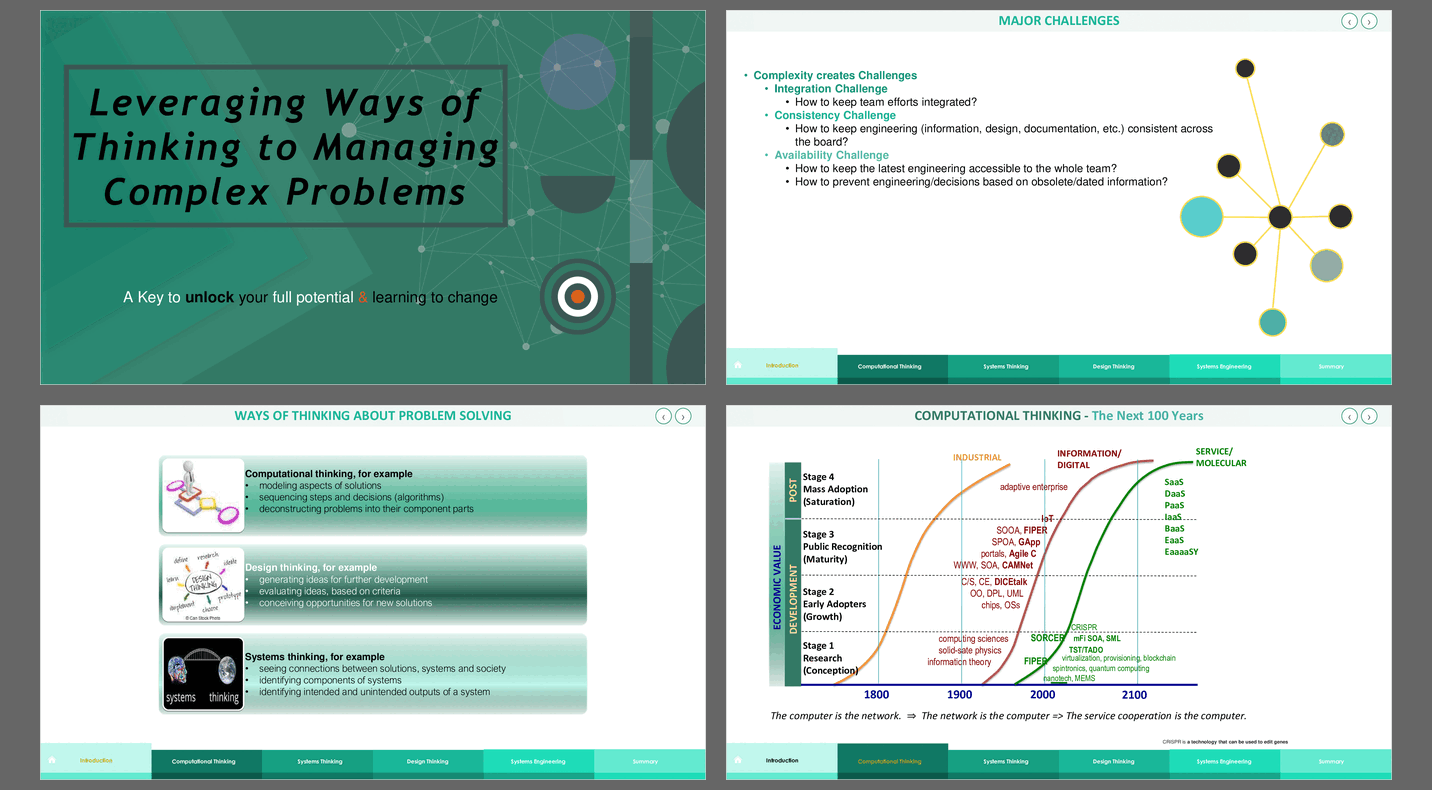
Editor Summary An 88-slide PowerPoint presentation titled "Leveraging Ways of Thinking to Managing Complex Problems" that outlines computational thinking, systems thinking, design thinking, and systems engineering for organizational problem-solving. Read more

The premise of Systems Thinking is that organizations are open systems that process the inputs of the environment to produce outputs or results. Those open systems that respond most effectively to the external environment to produce the desired results are the more successful ones.
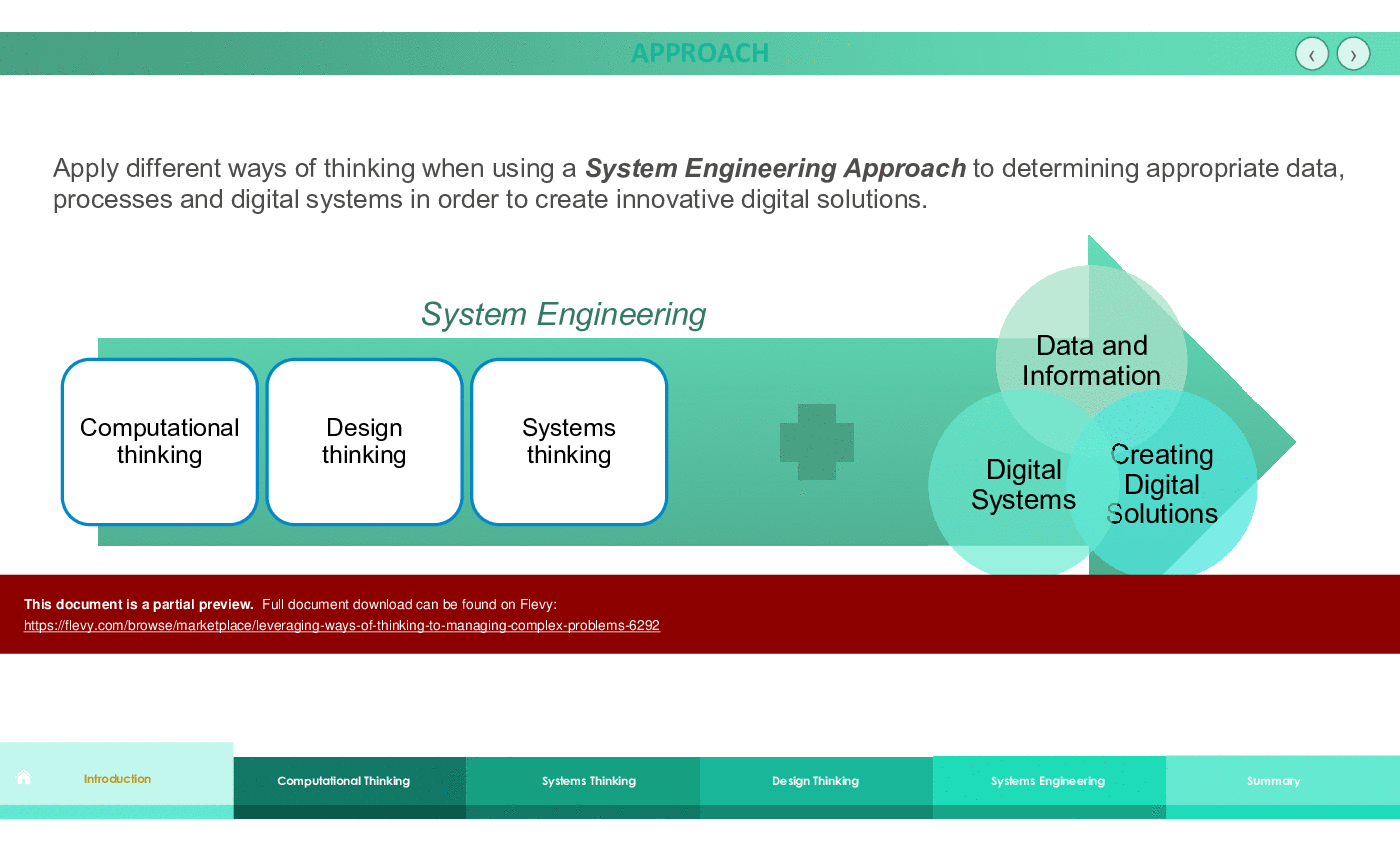
Computational Thinking, Systems Thinking, Design Thinking are efficient mindsets that if leveraged in Systems Engineering Approach, can help us to unlock our full potential & learning to change.

Computational Thinking
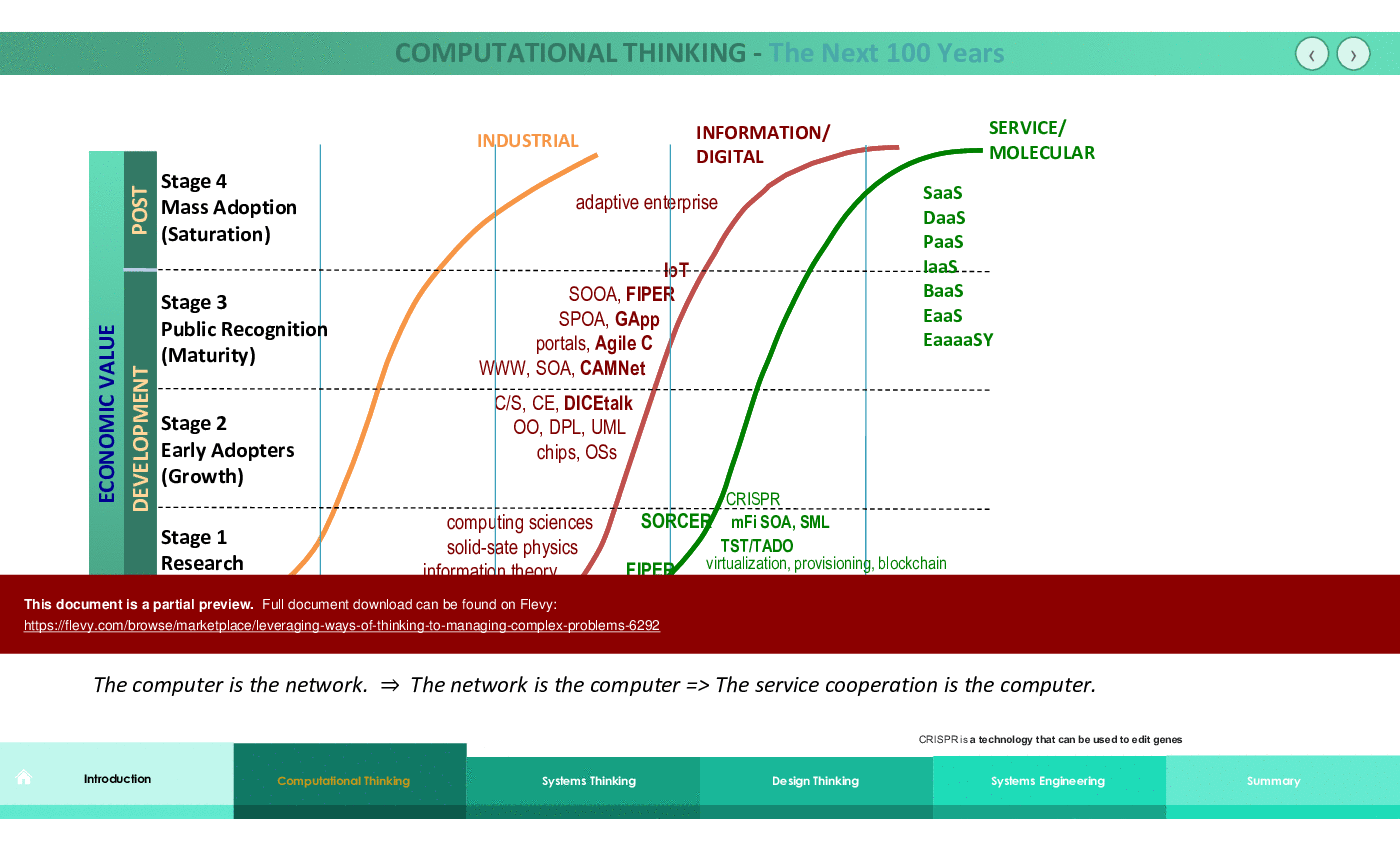
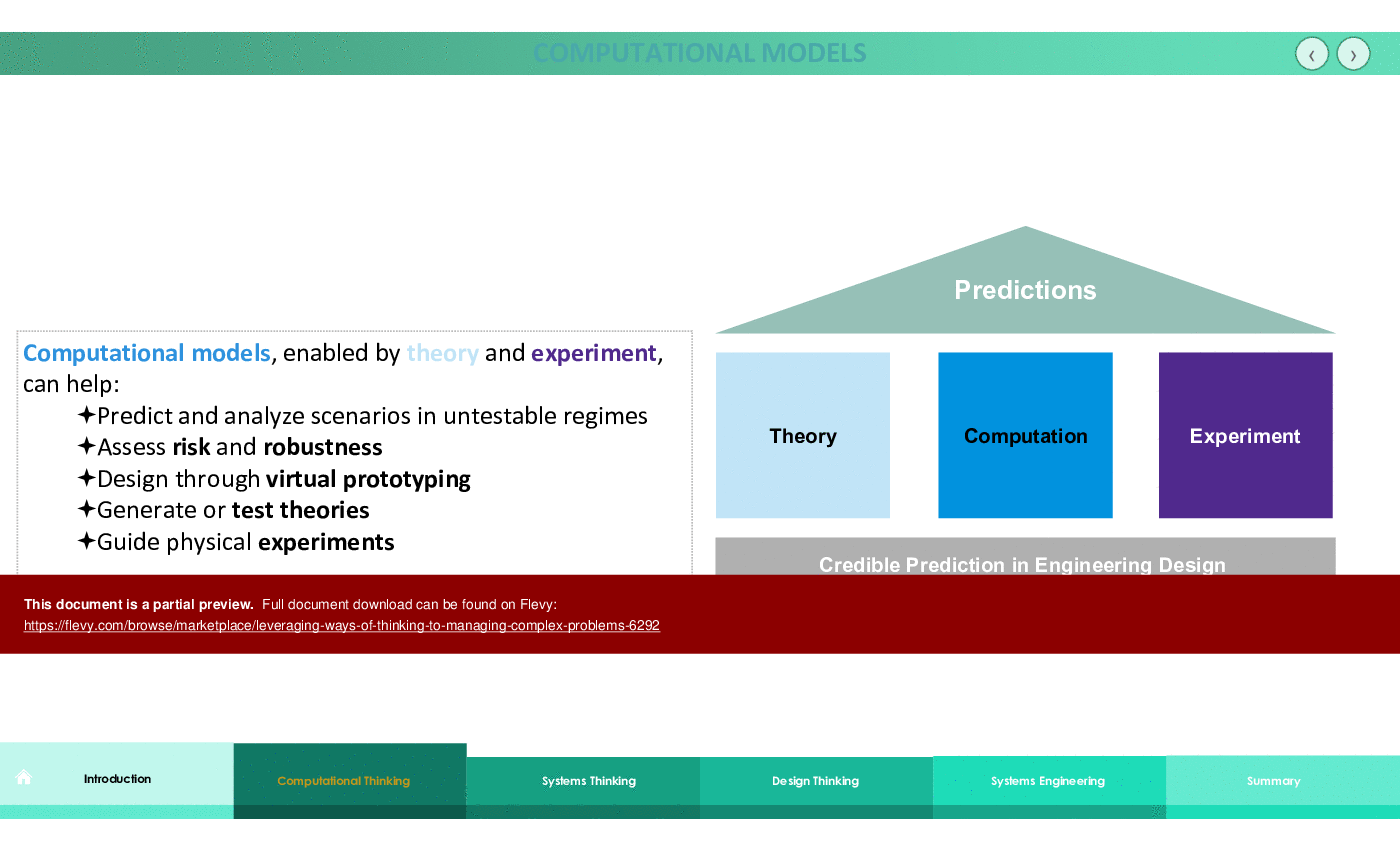
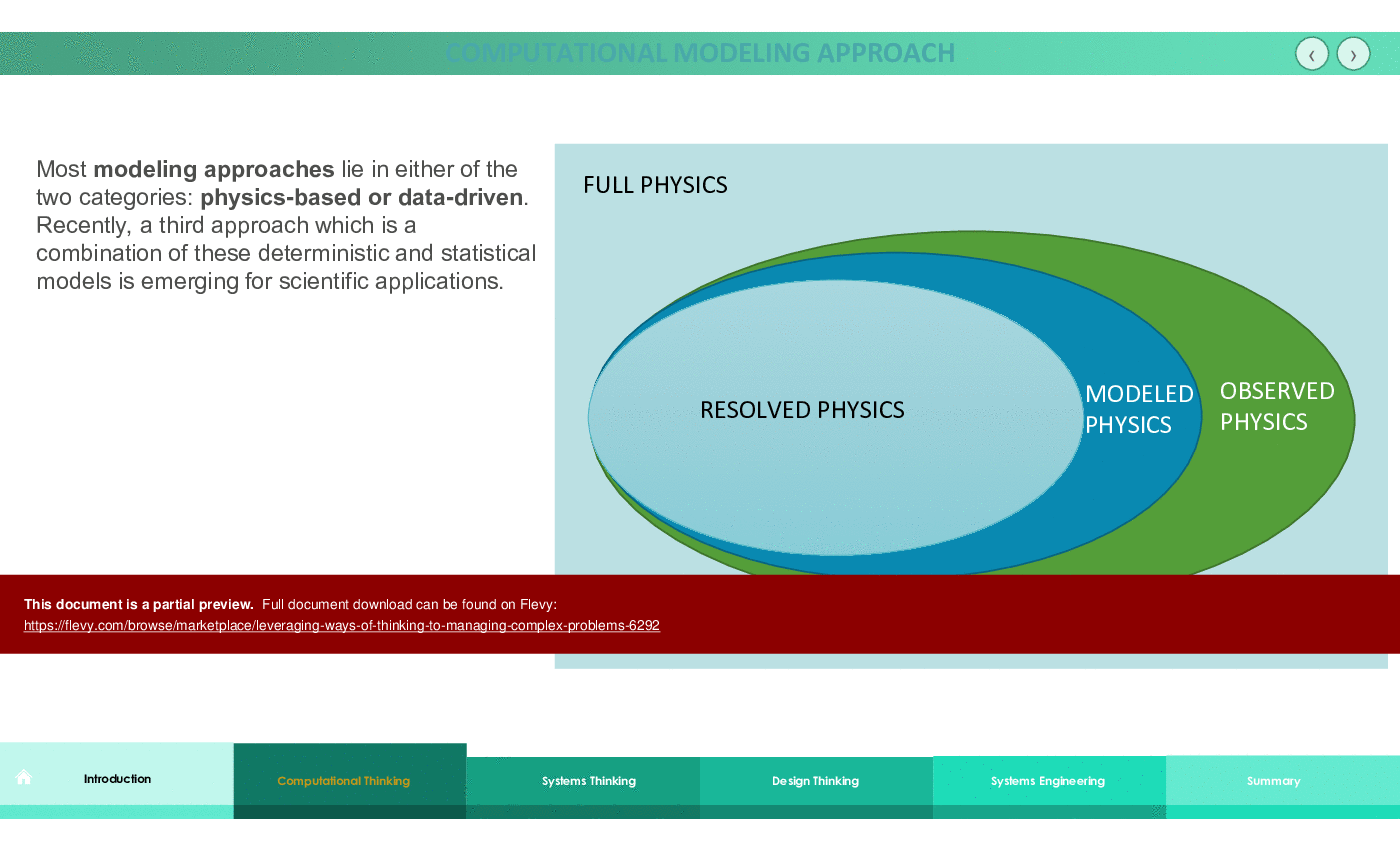
A problem-solving methodology that involves various techniques and strategies in order to solve problems that can be implemented by digital systems.

Systems Thinking
Systems thinking is a way of helping a person view systems from abroad perspective that includes seeing overall structures, patterns and cycles in systems, rather than seeing only specific events in the system.

Design Thinking
Purposeful use of strategies for understanding design problems and opportunities, visualizing and generating creative and innovative ideas, and analyzing and evaluating those ideas that best meet the criteria for success and planning.

Systems Engineering
Systems engineering is an interdisciplinary field of engineering focusing on how complex engineering projects should be designed and managed over their life cycles.

The work explains three MINDSETs Concepts and the Systems Engineering as an integrator of these WAYS OF THINKING.
This document is easily customizable, content can be removed (or skipped over during presentation). Plenty of graphics are included in order to get the holistic vision of the interrelated concepts.

Got a question about the product? Email us at support@flevy.com or ask the author directly by using the "Ask the Author a Question" form. If you cannot view the preview above this document description, go here to view the large preview instead.

MARCUS OVERVIEW

This synopsis was written by Marcus [?] based on the analysis of the full 88-slide presentation.


Executive Summary
This presentation, titled "Leveraging Ways of Thinking to Managing Complex Problems," serves as a comprehensive guide for corporate executives, integration leaders, and consultants seeking to navigate the complexities of modern problem-solving. Developed by experts with backgrounds in McKinsey, Deloitte, and Capgemini, this deck explores various methodologies such as computational thinking, systems thinking, and design thinking. It equips users with the tools to address systemic challenges effectively, fostering a mindset that embraces complexity and encourages innovative solutions.

Who This Is For and When to Use
•  Corporate executives aiming to enhance strategic decision-making.
•  Integration leaders managing cross-functional teams and projects.
•  Consultants facilitating workshops focused on complex problem-solving.
•  Project managers overseeing multifaceted initiatives requiring diverse thinking approaches.

Best-fit moments to use this deck:
•  During strategic planning sessions to align teams on complex challenges.
•  In workshops aimed at fostering innovative thinking and collaboration.
•  When addressing systemic issues that require a multifaceted approach.

Learning Objectives
•  Define the principles of computational, systems, and design thinking.
•  Build frameworks for managing complexity in organizational contexts.
•  Establish methods for integrating diverse thinking approaches into problem-solving.
•  Identify systemic challenges and develop actionable solutions.
•  Create collaborative environments that encourage innovative thinking.
•  Analyze the implications of complexity on project management and decision-making.

Table of Contents
•  Introduction to Complex Problems (page 3)
•  Understanding Computational Thinking (page 5)
•  Exploring Systems Thinking (page 10)
•  Applying Design Thinking (page 15)
•  Systems Engineering Overview (page 20)
•  Summary of Key Concepts (page 25)

Primary Topics Covered
•  Computational Thinking - A structured approach to problem-solving that involves breaking down complex issues into manageable components and utilizing algorithms for effective solutions.
•  Systems Thinking - A holistic perspective that emphasizes understanding the interconnections and relationships within systems to address complex challenges effectively.
•  Design Thinking - A user-centered methodology focused on empathy, ideation, and prototyping to develop innovative solutions for ill-defined problems.
•  Systems Engineering - An interdisciplinary approach that integrates various engineering disciplines to ensure the successful design and management of complex projects.
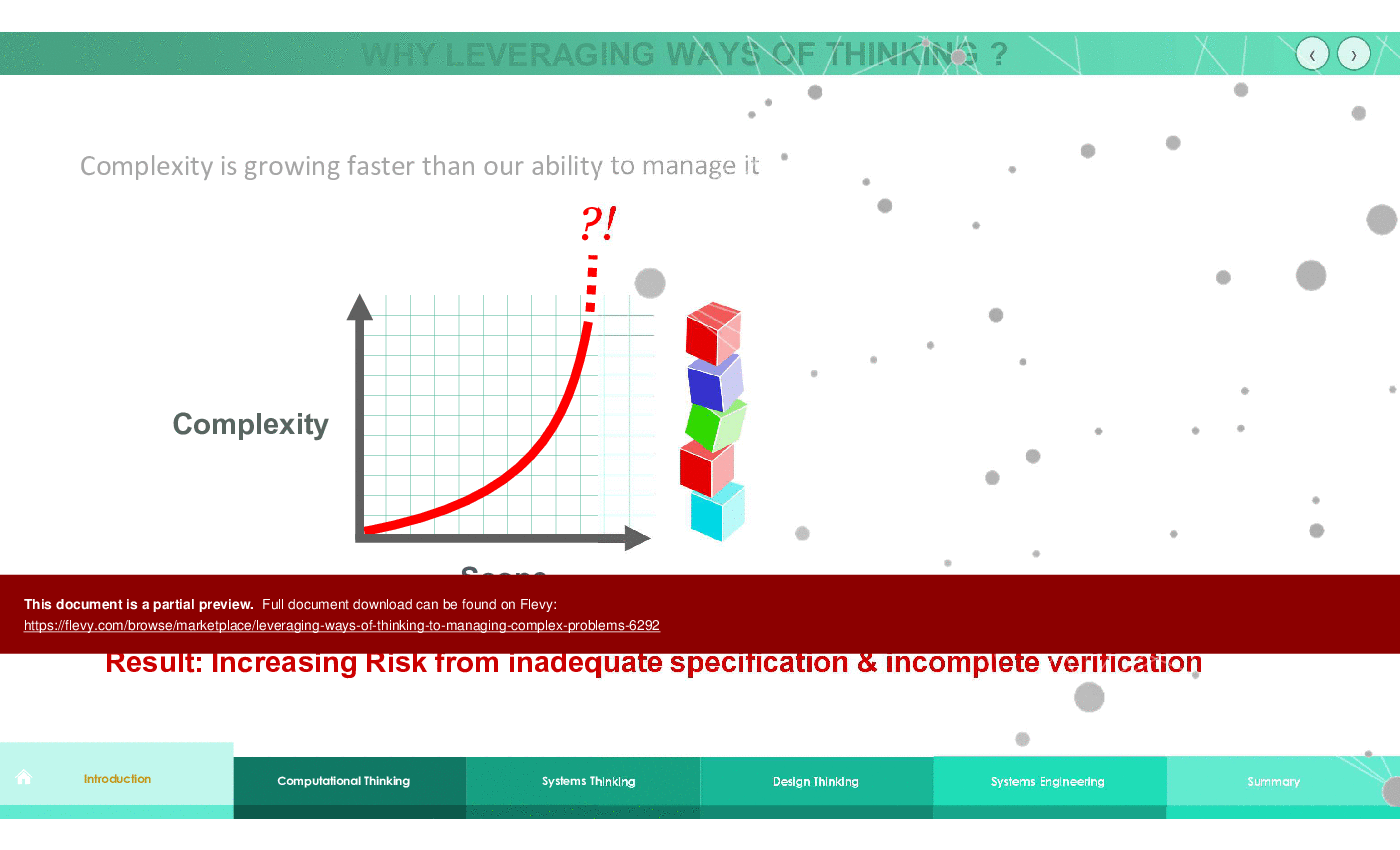
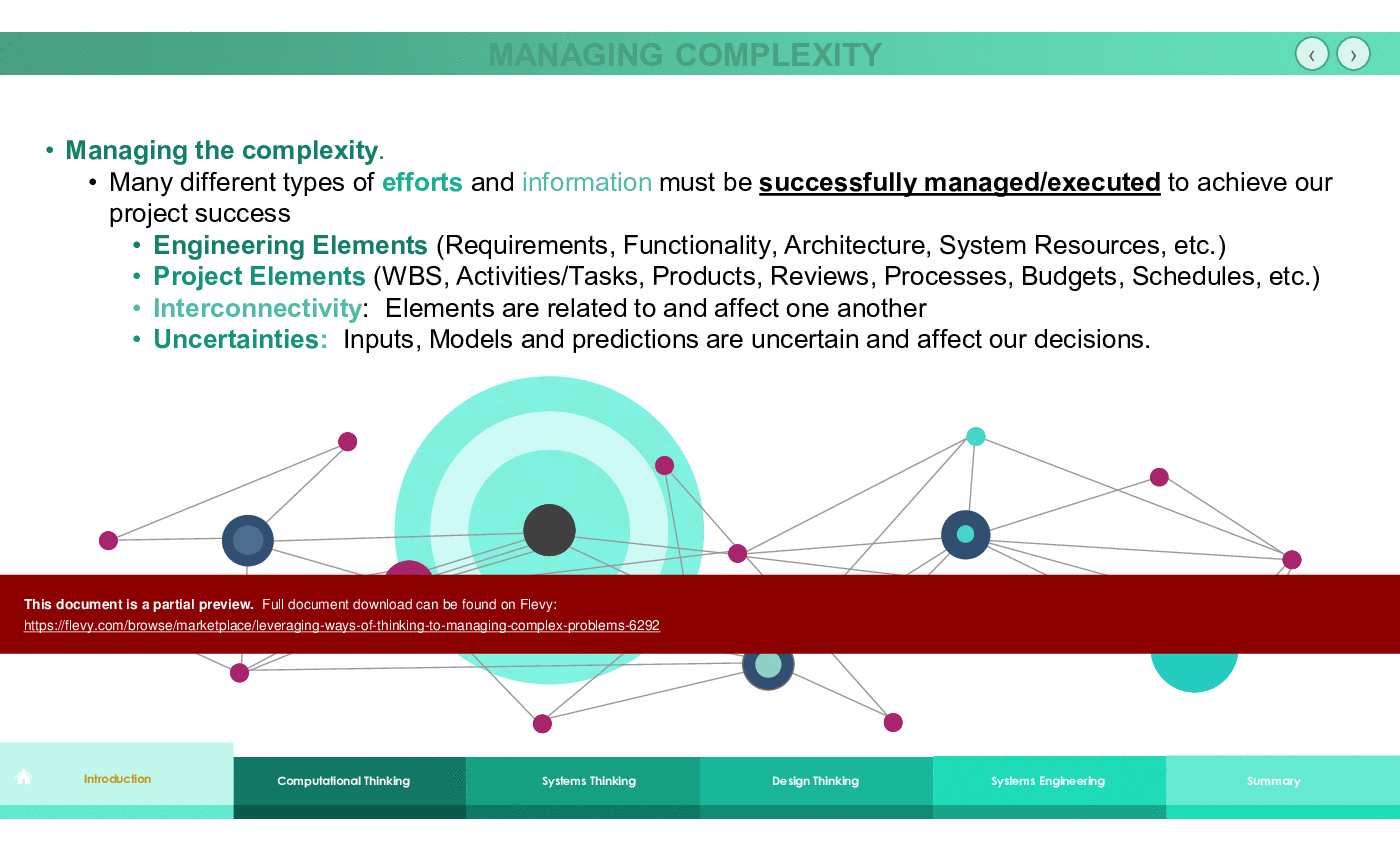
•  Managing Complexity - Strategies for navigating the intricacies of modern projects by recognizing interdependencies and uncertainties.
•  Digital Solutions - The role of information systems and digital tools in enhancing problem-solving capabilities across organizations.

Deliverables, Templates, and Tools
•  Framework for integrating computational, systems, and design thinking into project workflows.
•  Templates for mapping complex problems and identifying systemic relationships.
•  Tools for conducting stakeholder analysis and gathering diverse perspectives.
•  Guidelines for prototyping and testing innovative solutions.
•  Checklists for assessing project complexity and determining appropriate management strategies.

Slide Highlights
•  Visual representation of the interconnectedness of systems and their components.
•  Case studies illustrating the application of design thinking in real-world scenarios.
•  Diagrams showcasing the principles of computational thinking and its impact on problem-solving.
•  Infographics summarizing the benefits of systems thinking in organizational contexts.
•  Flowcharts detailing the systems engineering process and its key phases.

Potential Workshop Agenda
Introduction to Complex Problems (30 minutes)
•  Discuss the nature of complex problems and their systemic characteristics.
•  Explore the importance of diverse thinking approaches in problem-solving.

Hands-On Session: Applying Computational Thinking (60 minutes)
•  Break down a complex problem into its components using computational techniques.
•  Develop algorithms and models to address the identified issues.

Systems Thinking in Action (60 minutes)
•  Analyze a case study to identify interconnections and feedback loops.
•  Collaborate in groups to propose systemic solutions.

Design Thinking Workshop (90 minutes)
•  Engage in empathy exercises to understand user needs.
•  Brainstorm and prototype innovative solutions collaboratively.

Customization Guidance
•  Tailor the frameworks and templates to align with specific organizational goals and challenges.
•  Adjust case studies and examples to reflect industry-specific contexts.
•  Incorporate organizational terminology and metrics to enhance relevance.

Secondary Topics Covered
•  The role of uncertainty in complex problem-solving.
•  Techniques for fostering collaboration among interdisciplinary teams.
•  Strategies for managing stakeholder expectations and communication.
•  The impact of digital transformation on problem-solving methodologies.
•  Ethical considerations in systems thinking and design thinking.

Topic FAQ

What are the main "ways of thinking" used to tackle complex organizational problems?

Commonly referenced approaches are computational thinking (breaking problems into components and using algorithms), systems thinking (seeing interconnections and feedback loops), and design thinking (empathy, ideation, prototyping). Systems engineering is presented as the integrator of these mindsets, combining them into project management and design activities across these 4 areas.

How does systems thinking differ from design thinking in practice?

Systems thinking emphasizes holistic understanding of structures, patterns, and interdependencies within a system, while design thinking emphasizes user empathy, idea generation, and rapid prototyping to address ill‑defined problems. The 2 approaches are complementary: systems thinking maps relationships and design thinking focuses on user‑centered solutions through prototyping and testing.

What is computational thinking and how is it applied in organizations?

Computational thinking is a problem‑solving methodology that decomposes problems into manageable parts, identifies patterns, and develops algorithmic procedures that can be implemented by digital systems. In organizational contexts it supports structured analysis and model building; this presentation covers computational thinking in a dedicated section on page 5.

What should I look for when choosing a slide deck on managing complexity?

Look for clear frameworks that integrate multiple thinking modes, ready‑to‑use templates (mapping, stakeholder analysis), workshop agendas, customization guidance, and visible author pedigree. The Flevy product "Leveraging Ways of Thinking to Managing Complex Problems" provides frameworks, templates, and customization guidance in an 88‑slide PowerPoint.

Can templates and tools for complexity management be adapted across industries?

Yes; the documented deliverables include templates and guidance designed to be tailored to industry‑specific contexts and organizational terminology, allowing users to modify case studies and examples to reflect their sector, using the deck’s customizable templates and examples.

How can I structure a workshop to teach these thinking modes to interdisciplinary teams?

Use a mix of short conceptual sessions and hands‑on exercises: an introductory segment on complex problems, hands‑on computational thinking exercises, systems thinking case analysis, and a design thinking prototyping session. The product’s suggested agenda includes blocks of 30, 60, 60, and 90 minutes for these activities.

What methods help map stakeholder influence in systemic challenges?

Use stakeholder analysis tools and mapping templates to identify interests, influence, and interdependencies, then visualize relationships within system maps and feedback loops. The presentation explicitly includes stakeholder analysis tools and mapping templates to support this activity.

What do I actually receive if I purchase a complexity‑management deck versus building one internally?

Purchasing such a deck typically provides prebuilt frameworks, mapping and stakeholder templates, prototyping guidelines, checklists, and suggested workshop agendas that can be customized. The referenced product, "Leveraging Ways of Thinking to Managing Complex Problems," is delivered as an 88‑slide PowerPoint with those elements included.

Document FAQ
These are questions addressed within this presentation.

What is the primary focus of this presentation?
The presentation focuses on leveraging various thinking methodologies to manage complex problems effectively within organizations.

Who can benefit from this deck?
Corporate executives, integration leaders, and consultants can all benefit from the insights and frameworks provided in this presentation.

How can I apply these methodologies in my organization?
Utilize the frameworks and templates provided to integrate computational, systems, and design thinking into your project management processes.

What are the key differences between systems thinking and design thinking?
Systems thinking emphasizes understanding interconnections within systems, while design thinking focuses on user-centered problem-solving through empathy and prototyping.

Can this presentation be customized for specific industries?
Yes, the frameworks and examples can be tailored to reflect the unique challenges and contexts of different industries.

What tools are recommended for implementing these methodologies?
Tools for mapping systems, conducting stakeholder analysis, and prototyping solutions are recommended for effective implementation.

How does uncertainty impact decision-making in complex problems?
Uncertainty can lead to challenges in predicting outcomes and requires adaptive strategies to manage risks and opportunities effectively.

What is the significance of interdisciplinary collaboration?
Interdisciplinary collaboration fosters diverse perspectives, enhances creativity, and leads to more comprehensive solutions for complex problems.

Glossary
•  Computational Thinking - A problem-solving methodology involving data organization and algorithm design.
•  Systems Thinking - A holistic approach to understanding interconnections within systems.
•  Design Thinking - A user-centered methodology focused on empathy and innovation.
•  Systems Engineering - An interdisciplinary field focused on managing complex projects.
•  Complex Problems - Issues characterized by interdependencies and uncertainties.
•  Digital Solutions - Technologies and systems that enhance problem-solving capabilities.
•  Stakeholder Analysis - The process of identifying and understanding the interests of stakeholders.
•  Prototyping - The creation of preliminary models to test ideas and solutions.
•  Interdisciplinary Collaboration - Working across disciplines to leverage diverse expertise.
•  Feedback Loops - Mechanisms through which outputs of a system influence its future behavior.
•  Empathy - Understanding and addressing the needs and perspectives of users.
•  Innovation - The process of developing new ideas and solutions.
•  Risk Management - The identification and mitigation of potential challenges in projects.
•  Holistic Perspective - Viewing problems in the context of their broader systems and environments.
•  User-Centered Design - An approach that prioritizes the needs and experiences of users in the design process.
•  Algorithm - A step-by-step procedure for solving a problem or performing a task.
•  Interdependencies - The relationships between different elements of a system that affect each other.
•  Systems Integration - The process of ensuring that different components of a system work together effectively.
•  Innovation Framework - A structured approach to fostering and implementing new ideas.
•  Complexity Management - Strategies for navigating and addressing the intricacies of modern challenges.

Source: Best Practices in Problem Solving, Business Complexity, Systems Thinking PowerPoint Slides: Leveraging Ways of Thinking to Managing Complex Problems PowerPoint (PPTX) Presentation Slide Deck, RadVector Consulting


$55.00
Developed by a team of experts with global consulting experience at McKinsey, Deloitte, and Capgemini.
Add to Cart
  

ABOUT THE AUTHOR

Additional documents from author: 182

We are a group of aviation experts & specialists (PhDs, Engineers, Pilots, Navigators, ...), leaders in helping organizations to transform their business performance using Methodologies and Principles of Lean, Agile, Six Sigma, and Innovation.

Ask the Author a Question

You must be logged in to contact the author.

Click here to log in Click here register

Did you know?
The average daily rate of a McKinsey consultant is $6,625 (not including expenses). The average price of a Flevy document is $65.


Trusted by over 10,000+ Client Organizations
Since 2012, we have provided business templates to over 10,000 businesses and organizations of all sizes, from startups and small businesses to the Fortune 100, in over 130 countries.
AT&T GE Cisco Intel IBM Coke Dell Toyota HP Nike Samsung Microsoft Astrazeneca JP Morgan KPMG Walgreens Walmart 3M Kaiser Oracle SAP Google E&Y Volvo Bosch Merck Fedex Shell Amgen Eli Lilly Roche AIG Abbott Amazon PwC T-Mobile Broadcom Bayer Pearson Titleist ConEd Pfizer NTT Data Schwab


Read Customer Testimonials

 
"One of the great discoveries that I have made for my business is the Flevy library of training materials.

As a Lean Transformation Expert, I am always making presentations to clients on a variety of topics: Training, Transformation, Total Productive Maintenance, Culture, Coaching, Tools, Leadership Behavior, etc. Flevy "

– Ed Kemmerling, Senior Lean Transformation Expert at PMG
 
"I have found Flevy to be an amazing resource and library of useful presentations for lean sigma, change management and so many other topics. This has reduced the time I need to spend on preparing for my performance consultation. The library is easily accessible and updates are regularly provided. A wealth of great information."

– Cynthia Howard RN, PhD, Executive Coach at Ei Leadership
 
"The wide selection of frameworks is very useful to me as an independent consultant. In fact, it rivals what I had at my disposal at Big 4 Consulting firms in terms of efficacy and organization."

– Julia T., Consulting Firm Owner (Former Manager at Deloitte and Capgemini)
 
"[Flevy] produces some great work that has been/continues to be of immense help not only to myself, but as I seek to provide professional services to my clients, it gives me a large "tool box" of resources that are critical to provide them with the quality of service and outcomes they are expecting."

– Royston Knowles, Executive with 50+ Years of Board Level Experience
 
"FlevyPro provides business frameworks from many of the global giants in management consulting that allow you to provide best in class solutions for your clients."

– David Harris, Managing Director at Futures Strategy
 
"As an Independent Management Consultant, I find Flevy to add great value as a source of best practices, templates and information on new trends. Flevy has matured and the quality and quantity of the library is excellent. Lastly the price charged is reasonable, creating a win-win value for "

– Jim Schoen, Principal at FRC Group
 
"As a consulting firm, we had been creating subject matter training materials for our people and found the excellent materials on Flevy, which saved us 100's of hours of re-creating what already exists on the Flevy materials we purchased."

– Michael Evans, Managing Director at Newport LLC
 
"I have used Flevy services for a number of years and have never, ever been disappointed. As a matter of fact, David and his team continue, time after time, to impress me with their willingness to assist and in the real sense of the word. I have concluded in fact "

– Roberto Pelliccia, Senior Executive in International Hospitality


Customers Also Like These Documents

Explore Related Management Topics

8D


Your Recently Viewed Documents
Receive our FREE whitepaper on the Top 101 Consulting Frameworks

Download our 200+ page guide summarizing the Top 101 Management Consulting Frameworks. Each framework provides a structured approach to analyzing and solving a common business problem.










