
Today's executives are dealing with a complex and unprecedented brew of social, environmental, market, and technological trends which requires sophisticated Sustainability-Based Management.
A large group of executives have their own reluctance of various levels toward Sustainability due to the mistaken perception that Sustainability costs outweigh benefits. We now have more academic research and business experience in place, to give them the right perspective and needed confidence to champion Sustainability-Based Business Management.
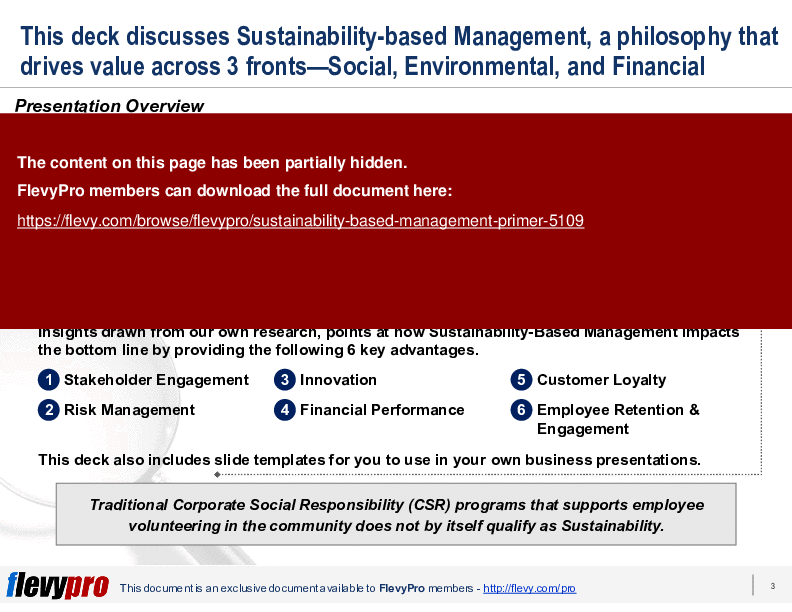
Michael Porter and Mark Kramer pioneered the idea of "creating shared value," stating that businesses can generate economic value by identifying and addressing social problems that intersect with their business. Traditional Corporate Social Responsibility (CSR) programs that supports employee volunteering in the community does not by itself qualify as Sustainability.
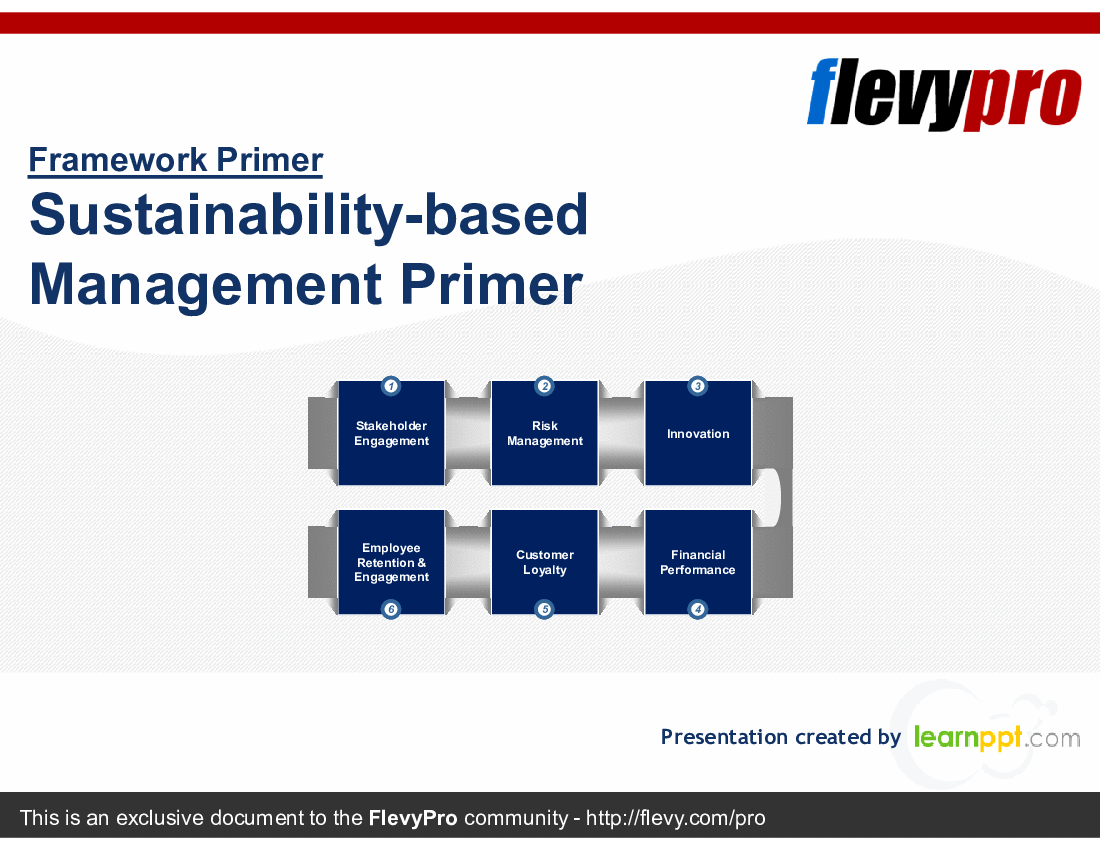
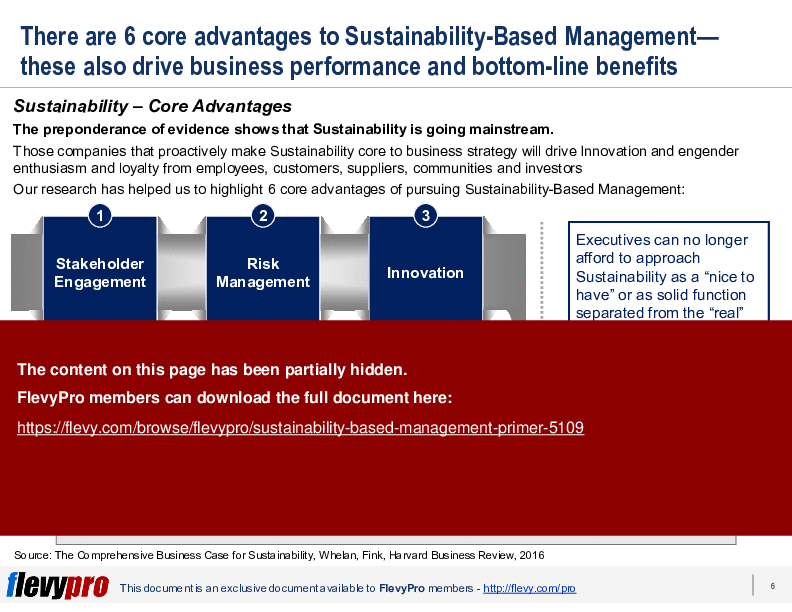
Insights drawn from our own research, points at how Sustainability-Based Management impacts the bottom line by providing the following 6 key advantages.
1. Stakeholder Engagement
2. Risk Management
3. Innovation
4. Financial Performance
5. Customer Loyalty
6. Employee Retention & Engagement
This deck also includes slide templates for you to use in your own business presentations.
This presentation delves into the core principles of Sustainability-Based Management, emphasizing its impact on social, environmental, and financial fronts. It provides a comprehensive overview of how sustainability can be integrated into business strategies to drive innovation and stakeholder engagement. The PPT highlights real-world examples and case studies, demonstrating the tangible benefits of adopting sustainable practices.
The primer also addresses common misconceptions about the cost of sustainability, offering evidence-based insights into its long-term financial advantages. It includes detailed templates and frameworks that can be customized for your organization, making it a practical tool for executives looking to champion sustainability initiatives. This resource is essential for leaders aiming to align their business objectives with sustainable development goals.
Got a question about this document? Email us at flevypro@flevy.com.
Executive Summary
The Sustainability-Based Management Primer is a meticulously crafted presentation designed to equip corporate executives and consultants with essential insights into integrating sustainability into business strategies. This document outlines the multifaceted advantages of sustainability, emphasizing its impact on stakeholder engagement, risk management, innovation, financial performance, customer loyalty, and employee retention. By leveraging this primer, organizations can enhance their operational frameworks, align with contemporary market expectations, and ultimately drive long-term value creation.
Who This Is For and When to Use
• Corporate executives seeking to embed sustainability into their strategic initiatives
• Consultants advising organizations on sustainability integration
• Change management leaders focused on aligning corporate responsibility with business objectives
• HR professionals aiming to enhance employee engagement through sustainability initiatives
Best-fit moments to use this deck:
• During strategic planning sessions to align sustainability goals with business objectives
• In workshops aimed at educating teams about the benefits of sustainability
• When developing corporate social responsibility (CSR) initiatives that require stakeholder buy-in
• For presentations to investors emphasizing the financial benefits of sustainability practices
Learning Objectives
• Define sustainability and its relevance to contemporary business practices
• Identify the core advantages of sustainability-based management
• Develop strategies for stakeholder engagement that enhance corporate reputation
• Establish risk management frameworks that incorporate sustainability considerations
• Create innovative solutions that leverage sustainability for competitive differentiation
• Measure the financial performance impacts of sustainability initiatives
Table of Contents
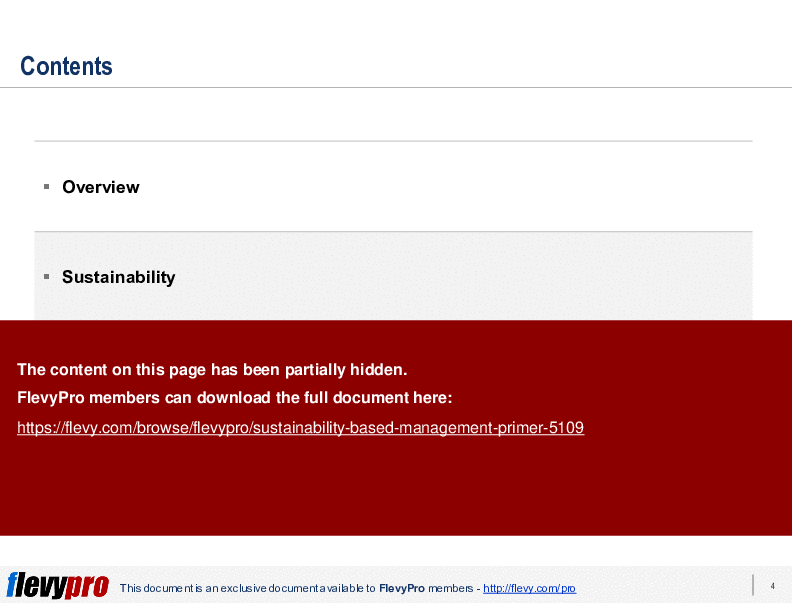
• Overview (page 3)
• Sustainability (page 5)
• Core Advantages (page 6)
• Templates (page 17)
Primary Topics Covered
• Sustainability Overview - This section defines sustainability as a business philosophy that balances economic, social, and environmental considerations to drive value.
• Core Advantages of Sustainability - Highlights 6 key benefits, including stakeholder engagement, risk management, innovation, financial performance, customer loyalty, and employee retention.
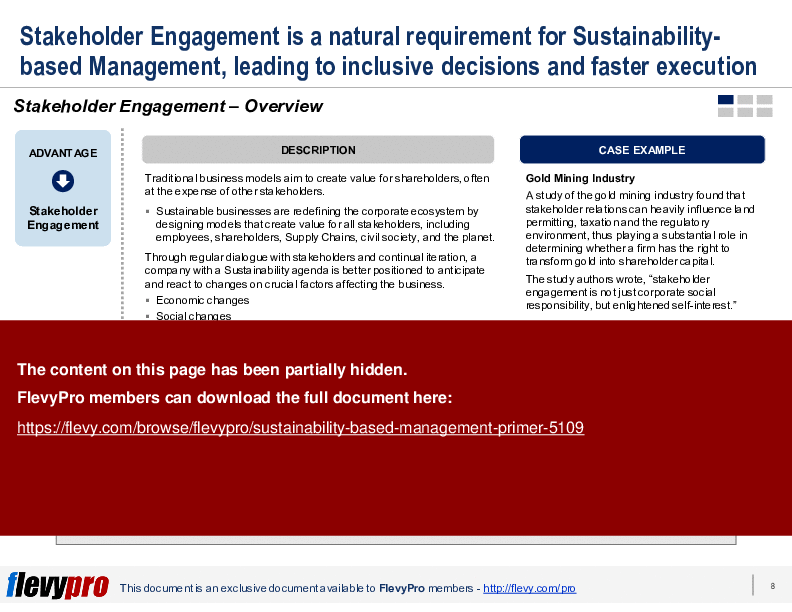
• Stakeholder Engagement - Discusses the importance of engaging stakeholders to create inclusive decision-making processes that enhance operational efficiency.
• Risk Management - Explores how sustainability practices can mitigate risks associated with environmental changes and market dynamics.
• Innovation - Details how sustainability can drive innovative practices that lead to operational efficiencies and new market opportunities.
• Financial Performance - Analyzes the financial implications of sustainability, including cost savings and improved investor confidence.
Deliverables, Templates, and Tools
• Stakeholder engagement framework template for mapping stakeholder relationships
• Risk management assessment tool to evaluate sustainability risks
• Innovation strategy template focused on sustainability-driven initiatives
• Financial performance metrics dashboard to track sustainability impacts
• Employee engagement survey template to assess sustainability perceptions
• Customer loyalty analysis framework to measure the impact of sustainability on brand loyalty
Slide Highlights
• Overview of Sustainability-Based Management principles
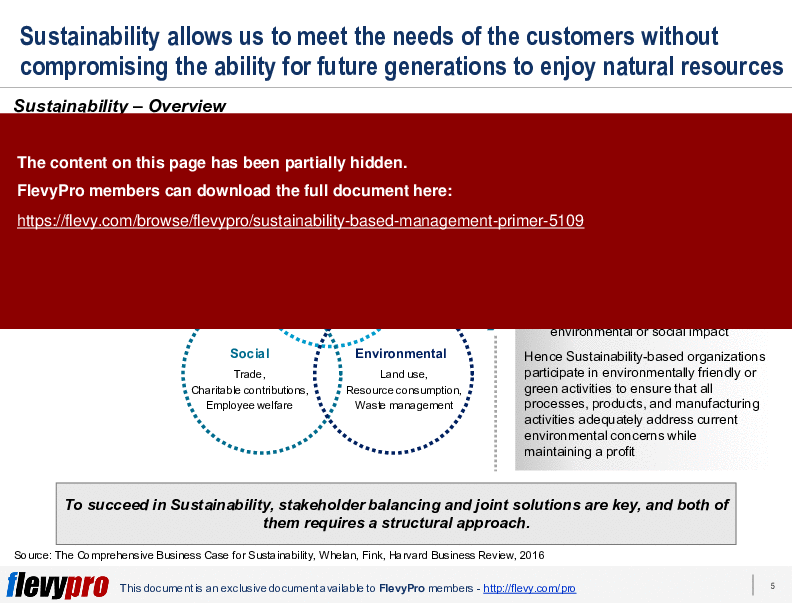
• Visual representation of the Triple Bottom Line framework
• Case studies illustrating successful stakeholder engagement strategies
• Data-driven insights on the financial benefits of sustainability practices
• Templates for practical implementation of sustainability initiatives
Potential Workshop Agenda
Sustainability Strategy Development Session (90 minutes)
• Define sustainability objectives and align with business goals
• Identify key stakeholders and their interests in sustainability
• Develop a preliminary action plan for sustainability initiatives
Risk Management in Sustainability Workshop (60 minutes)
• Assess current risks associated with sustainability practices
• Brainstorm adaptive strategies for mitigating identified risks
• Create a risk management framework tailored to sustainability
Innovation and Sustainability Brainstorming Session (90 minutes)
• Explore innovative practices that can enhance sustainability efforts
• Identify potential barriers to innovation and develop solutions
• Create a roadmap for implementing sustainability-driven innovations
Customization Guidance
• Tailor the stakeholder engagement framework to reflect specific organizational contexts and stakeholder dynamics
• Adjust risk management templates to align with industry-specific sustainability challenges
• Incorporate company-specific sustainability metrics into financial performance dashboards
• Modify employee engagement surveys to capture unique organizational culture aspects
Secondary Topics Covered
• The role of corporate social responsibility in sustainability
• Best practices for measuring sustainability impacts
• Strategies for communicating sustainability efforts to stakeholders
• The intersection of sustainability and regulatory compliance
Topic FAQ
Document FAQ
These are questions addressed within this presentation.
What is Sustainability-Based Management?
Sustainability-Based Management is a strategic approach that integrates social, environmental, and economic considerations into business practices to create long-term value.
Why is stakeholder engagement important for sustainability?
Engaging stakeholders fosters inclusive decision-making, enhances corporate reputation, and improves operational efficiency by aligning interests.
How can sustainability drive innovation?
Sustainability encourages organizations to rethink processes and products, leading to innovative solutions that differentiate them in the market.
What are the financial benefits of implementing sustainability practices?
Companies that adopt sustainability practices often experience cost savings, improved operational efficiencies, and enhanced investor confidence.
How can organizations measure the impact of their sustainability initiatives?
Organizations can use metrics such as cost savings, customer loyalty, and employee engagement to evaluate the effectiveness of their sustainability efforts.
What role does risk management play in sustainability?
Effective risk management identifies potential sustainability-related risks and develops strategies to mitigate them, ensuring long-term business resilience.
How can companies enhance employee engagement through sustainability?
By embedding sustainability into corporate culture, companies can foster a sense of purpose and pride among employees, leading to higher retention and productivity.
What is the Triple Bottom Line?
The Triple Bottom Line is an accounting framework that evaluates a company's commitment to social, environmental, and financial performance.
Glossary
• Sustainability - The ability to meet present needs without compromising future generations' ability to meet theirs.
• Stakeholder Engagement - The process of involving stakeholders in decision-making to create shared value.
• Risk Management - The identification and mitigation of risks associated with sustainability practices.
• Innovation - The development of new ideas and practices that enhance sustainability efforts.
• Financial Performance - The measurement of a company's financial health, often influenced by sustainability initiatives.
• Employee Engagement - The level of commitment and involvement an employee has towards their organization and its sustainability goals.
• Customer Loyalty - The tendency of consumers to continue purchasing from a brand that demonstrates sustainable practices.
• Triple Bottom Line - A framework that evaluates a company's social, environmental, and financial performance.
• Corporate Social Responsibility (CSR) - A business model that helps a company be socially accountable to itself, its stakeholders, and the public.
• Environmental, Social, and Governance (ESG) - Criteria used to evaluate a company's ethical impact and sustainability practices.
• Stranded Assets - Investments that become obsolete due to regulatory, environmental, or market constraints.
• Sustainable Practices - Actions that do not harm the environment and create value for stakeholders.
• Market Capitalization - The total market value of a company's outstanding shares, often influenced by sustainability reputation.
• Operational Efficiency - The ability to deliver products or services in the most cost-effective manner without compromising quality.
• Green Business - A business that has minimal negative impact on the global or local environment.
• Corporate Responsibility - A company's commitment to conducting business ethically and contributing to economic development while improving the quality of life for the workforce, their families, the local community, and society at large.
• Sustainability Metrics - Measurements used to assess the effectiveness of sustainability initiatives.
• Supply Chain Sustainability - The management of environmental, social, and economic impacts of the supply chain throughout the entire lifecycle of a product.
• Lifecycle Assessment - A technique to assess environmental impacts associated with all the stages of a product's life from cradle to grave.
• ESG Performance - A measure of how a company performs in environmental, social, and governance criteria.
• Sustainable Development Goals (SDGs) - A collection of 17 global goals set by the United Nations to address global challenges, including those related to poverty, inequality, climate change, environmental degradation, peace, and justice.
Source: Best Practices in Innovation, Risk Management, Employee Engagement, Sustainability, Customer Loyalty, Corporate Social Responsibility PowerPoint Slides: Sustainability-based Management Primer PowerPoint (PPTX) Presentation Slide Deck, LearnPPT Consulting
Did you need more documents?
Consider a FlevyPro subscription from $39/month. View plans here.
For $10.00 more, you can download this document plus 2 more FlevyPro documents. That's just $13 each.
|
Download our FREE Organization, Change, & Culture, Templates
Download our free compilation of 50+ slides and templates on Organizational Design, Change Management, and Corporate Culture. Methodologies include ADKAR, Burke-Litwin Change Model, McKinsey 7-S, Competing Values Framework, etc. |