
Editor Summary
Supply Chain Strategy Tools & Techniques is a 67-slide PowerPoint deck (PPT) developed by Documents & Files that provides frameworks, checklists, and templates for supply chain visioning and diagnostics.

Read moreIncludes named tools such as a Supply Chain Matrix, Analysis Plan template, Porter’s Five Forces, Value Chain Analysis, Supply Chain Insight Framework, and Core Competency Analysis template. Target users include Supply Chain Executives, Operations Managers, Business Analysts, and Consultants. Used for aligning supply chain solutions with Go to Market strategy and performance diagnostics; sold as a digital download on Flevy.
Use this deck when an organization needs to align supply chain initiatives with its Go to Market strategy, assess current performance, or establish a diagnostic framework at project kickoff.
Supply Chain Executives mapping supply chain elements to customer needs using the Supply Chain Matrix to connect activities to cost, cash, satisfaction, and growth.
Operations Managers defining infrastructure requirements and sourcing approaches to inform implementation plans.
Business Analysts structuring hypothesis-driven diagnostics, data collection, and sensitivity testing using the Analysis Plan template.
Consultants facilitating workshops and customizing Value Chain or Supply Chain Insight frameworks for clients.
The document’s hypothesis-driven analysis, defined data requirements, and visual frameworks reflect standard consulting diagnostic practice.
This deck was developed to support supply chain visioning and strategic diagnostics. It provides checklists of key questions to ask in formulating a supply chain strategy, core frameworks, tools and techniques that facilitate the strategic thinking process.
See also "Supply Chain Performance and Metrics"
See also "4 Stage Model Supply Chain Assessment"
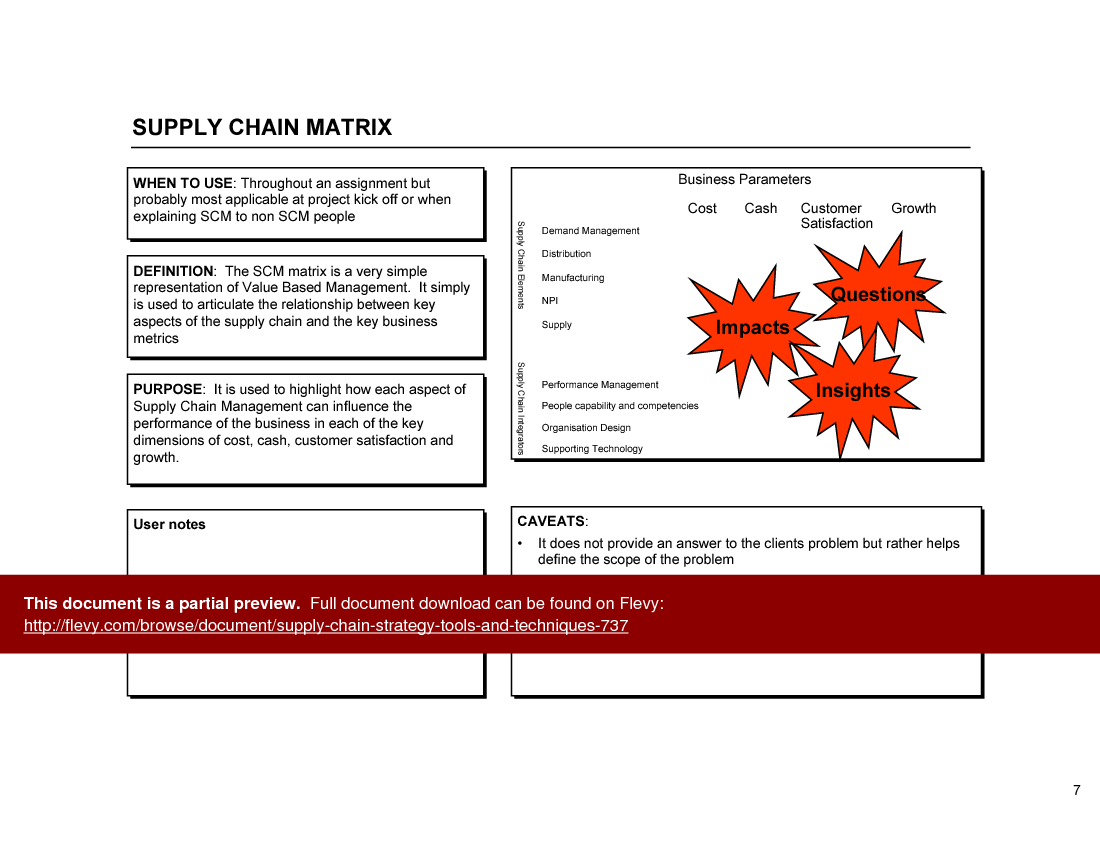
This comprehensive PowerPoint deck delves deep into the intricacies of supply chain strategy, offering a robust set of tools and techniques for C-level executives. The document includes a detailed Supply Chain Matrix, which highlights how each aspect of Supply Chain Management can influence key business metrics like cost, cash, customer satisfaction, and growth. This matrix is particularly useful for articulating the relationship between supply chain activities and business performance, making it an essential tool for strategic planning.
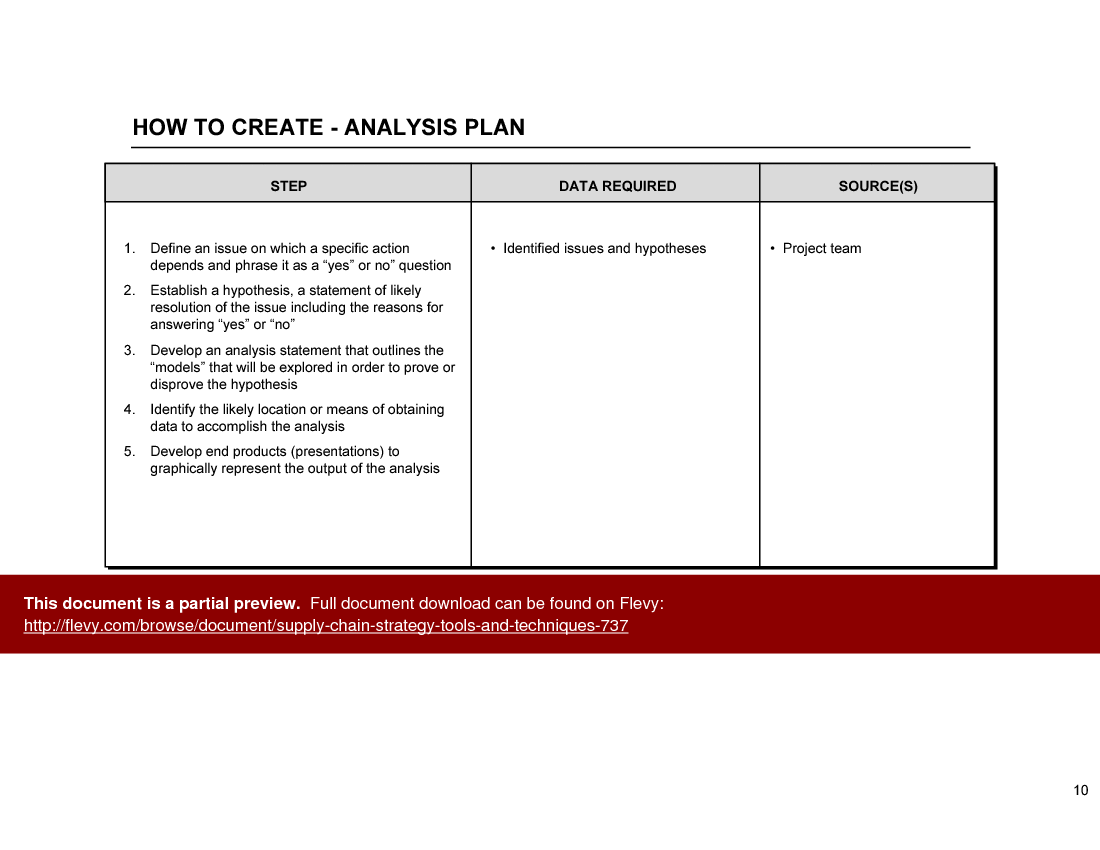
The deck also provides a step-by-step guide on creating an analysis plan. This section outlines how to define issues, establish hypotheses, and develop analysis statements to explore various models. It emphasizes the importance of identifying data sources and developing presentations to graphically represent analysis outputs. This structured approach ensures that executives can make informed decisions based on thorough analysis and clear visualizations.
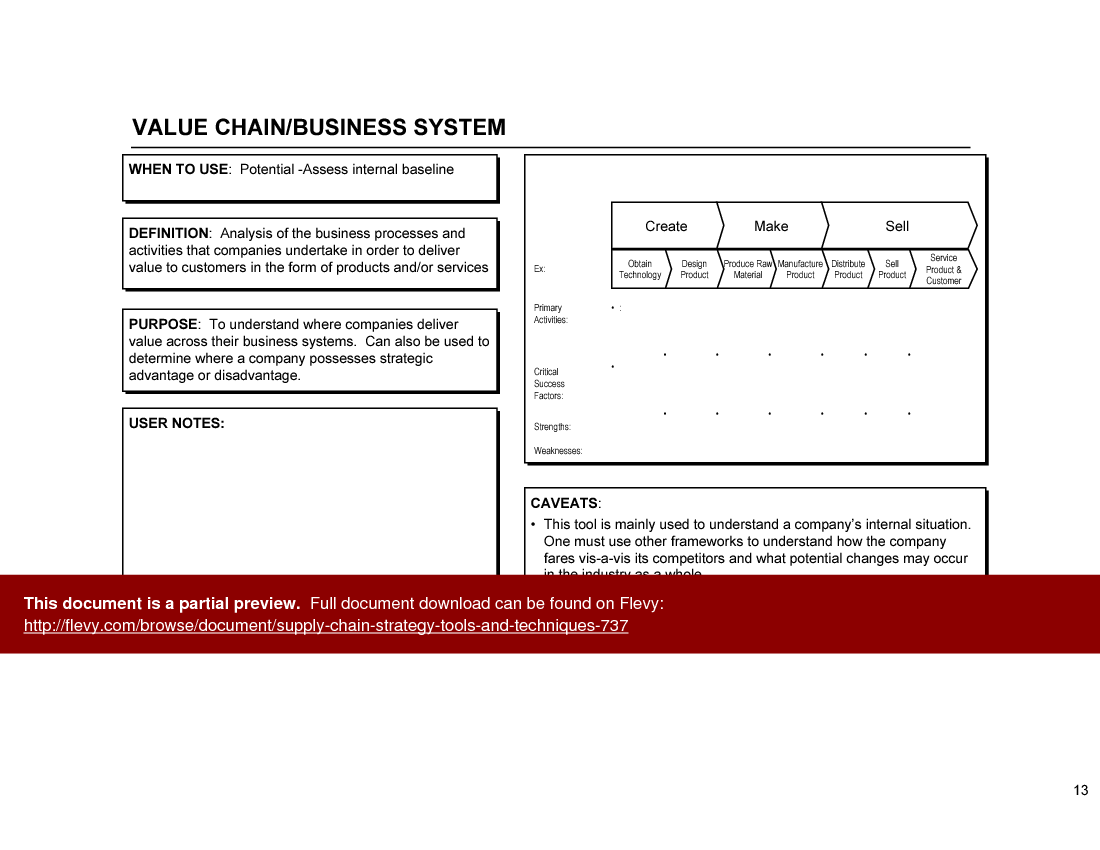
Another key feature is the Value Chain/Business System analysis, which helps companies understand where they deliver value across their business systems. This tool is crucial for identifying strategic advantages or disadvantages and can be used to assess internal baselines. The document also includes caveats to highlight the limitations of this tool, ensuring that users are aware of its scope and applicability.
The deck also covers various methodologies for supply chain modeling, including hypothesis testing, data collection, and sensitivity analysis. These sections provide detailed steps and data requirements, making it easier for executives to implement these techniques within their organizations. The inclusion of supporting tools and techniques such as SWOT analysis, financial analysis, and customer segmentation further enhances the document's utility, offering a comprehensive toolkit for supply chain strategy development.
Got a question about the product? Email us at support@flevy.com or ask the author directly by using the "Ask the Author a Question" form. If you cannot view the preview above this document description, go here to view the large preview instead.
MARCUS OVERVIEW
This synopsis was written by Marcus [?] based on the analysis of the full 67-slide presentation.
Executive Summary
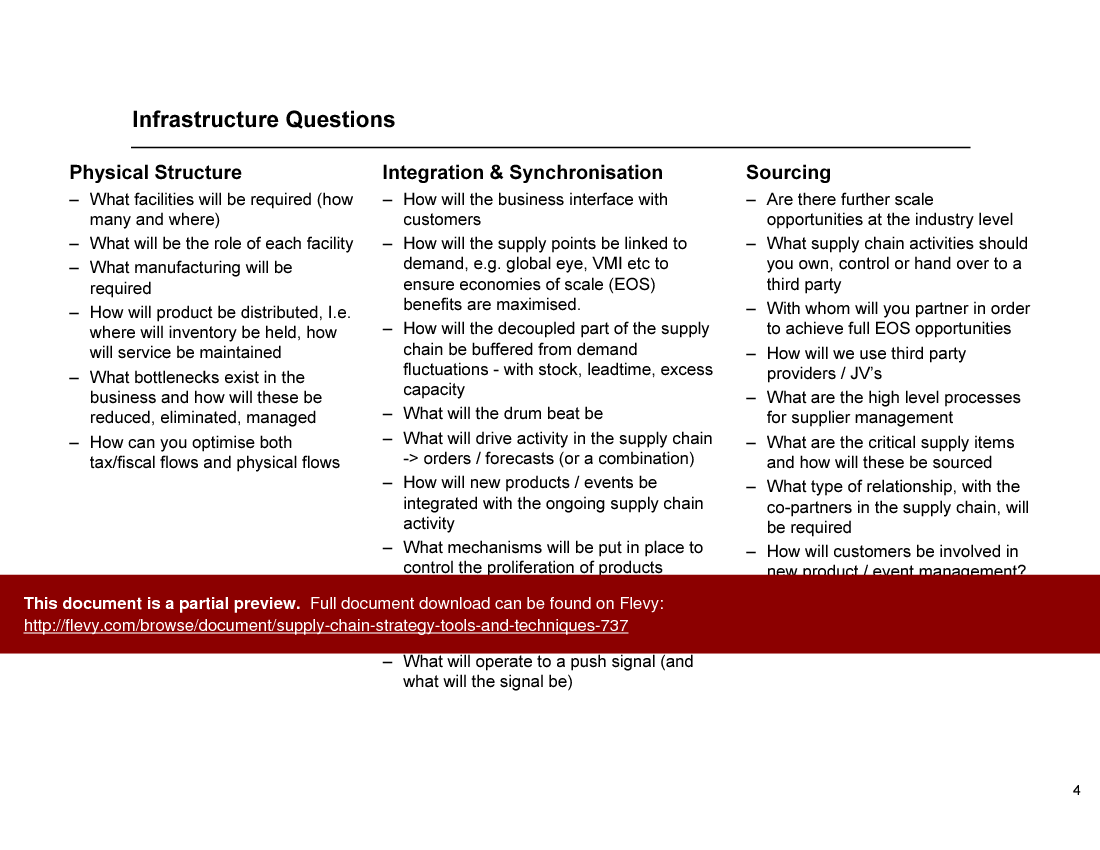
The Supply Chain Strategy (Visioning & Diagnostics) Handbook is a consulting-grade resource designed to enhance your organization's supply chain strategy through a comprehensive exploration of strategic questions, tools, and techniques. This handbook provides a structured approach to align supply chain solutions with your business's Go to Market Strategy, ensuring that customer needs drive every decision. Executives and consultants will gain insights into critical infrastructure, sourcing, and performance management questions, enabling them to make informed decisions that enhance operational efficiency and customer satisfaction.
Who This Is For and When to Use
• Supply Chain Executives seeking to refine their strategic approach
• Operations Managers responsible for implementing supply chain solutions
• Business Analysts focused on diagnosing supply chain issues
• Consultants advising organizations on supply chain optimization
Best-fit moments to use this handbook:
• During strategic planning sessions to align supply chain initiatives with business goals
• When assessing current supply chain performance and identifying areas for improvement
• At project kick-offs to establish a clear framework for supply chain diagnostics
Learning Objectives
• Define the relationship between supply chain solutions and Go to Market Strategy
• Identify key infrastructure requirements for effective supply chain management
• Analyze sourcing strategies to optimize supplier relationships
• Establish performance metrics that align with overall business goals
• Utilize diagnostic tools to uncover root causes of supply chain inefficiencies
• Develop a comprehensive understanding of customer needs to inform supply chain decisions
Table of Contents
• Introduction to Supply Chain Strategy (page 3)
• Strategic Questions for Supply Chain Solutions (page 4)
• Infrastructure Considerations (page 5)
• Sourcing Strategies (page 6)
• Performance Management Framework (page 7)
• Supporting Technology and People Capabilities (page 8)
• Core Tools and Techniques (page 9)
• Caveats and User Notes (page 10)
Primary Topics Covered
• Go to Market Strategy - The alignment of supply chain solutions with customer needs and business objectives.
• Infrastructure Requirements - Key considerations for physical structures, distribution, and manufacturing roles.
• Sourcing Strategies - Evaluation of supplier relationships and third-party partnerships to maximize efficiency.
• Performance Management - Metrics and measures to link individual behavior to overarching business goals.
• Supporting Technology - The role of technology in enhancing supply chain visibility and decision-making.
• People Capabilities - Skills and behaviors required for effective supply chain management and customer interaction.
Deliverables, Templates, and Tools
• Supply Chain Matrix for visualizing the relationship between supply chain elements and business metrics
• Analysis Plan template for structuring problem-solving processes
• Porter’s Five Forces Analysis framework for assessing market attractiveness
• Value Chain Analysis tool for identifying competitive advantages
• Supply Chain Insight Framework for evaluating supply chain drivers
• Core Competency Analysis template for assessing organizational strengths
Slide Highlights
• Overview of the Supply Chain Matrix illustrating key business parameters
• Detailed analysis plan outlining hypotheses and required data
• Visual representation of Porter’s Five Forces impacting market dynamics
• Value Chain Analysis highlighting primary activities and critical success factors
• Supply Chain Insight Framework showcasing the integration of supply chain drivers
Potential Workshop Agenda
Introduction to Supply Chain Strategy (60 minutes)
• Overview of supply chain fundamentals and strategic alignment
• Discussion on the importance of customer-centric approaches
Infrastructure and Sourcing Workshop (90 minutes)
• Identify infrastructure needs and roles in the supply chain
• Evaluate sourcing strategies and supplier relationships
Performance Management and Technology Session (60 minutes)
• Establish key performance metrics and measures
• Discuss the role of technology in enhancing supply chain efficiency
Customization Guidance
• Tailor the Supply Chain Matrix to reflect specific business metrics and goals
• Modify the analysis plan to align with organizational objectives and key issues
• Adapt the Value Chain Analysis to focus on critical success factors relevant to your industry
Secondary Topics Covered
• Customer Insight and Alignment strategies for understanding market needs
• Customer Segmentation techniques for targeted marketing approaches
• Logic Trees for structured problem-solving and analysis
• SWOT Analysis for evaluating internal and external factors affecting the supply chain
• Economic Value Added (EVA) Analysis for assessing capital efficiency
Topic FAQ
What are the core components of a supply chain strategy diagnostic?
A supply chain diagnostic typically examines alignment with Go to Market strategy, infrastructure requirements, sourcing strategies, performance management, supporting technology, and people capabilities. Diagnostic work is supported by visual and analytical tools such as a Supply Chain Matrix and an Analysis Plan template that structure findings and recommendations around business metrics and customer needs.
How do I use a Supply Chain Matrix to link activities to business metrics?
A Supply Chain Matrix visually maps supply chain elements (distribution, manufacturing, sourcing) against business metrics like cost, cash, customer satisfaction, and growth to reveal trade-offs and priorities. The matrix helps prioritize investments and clarify impacts; Flevy’s Supply Chain Strategy Tools & Techniques includes a detailed Supply Chain Matrix for this purpose.
How does Porter’s Five Forces inform supply chain decisions?
Porter’s Five Forces provides a market-level assessment of competitiveness and supplier power, which informs sourcing strategy, supplier relationship choices, and third-party partnerships. Insights from Five Forces analysis feed into sourcing evaluations and strategic positioning, and are presented as a named framework in the deck.
What should I look for when choosing a supply chain strategy toolkit on a limited timeline?
Prioritize toolkits that include structured analysis templates, clear data requirements, and visual frameworks to accelerate diagnostics—specifically an Analysis Plan template, Supply Chain Matrix, and performance management guidance. These items reduce upfront design time and help rapidly produce decision-ready outputs such as an Analysis Plan template.
Are paid supply chain templates worth the cost compared to building frameworks from scratch?
Paid templates provide pre-built frameworks and step-by-step guidance—such as a Supply Chain Matrix and Analysis Plan—that can shorten the diagnostic design phase and standardize outputs. For teams needing a ready diagnostic approach and workshop materials, templates like these can reduce prep time and provide reusable artifacts such as the Supply Chain Matrix and Analysis Plan.
I need to redesign sourcing after supplier failures—what diagnostic tools should I use?
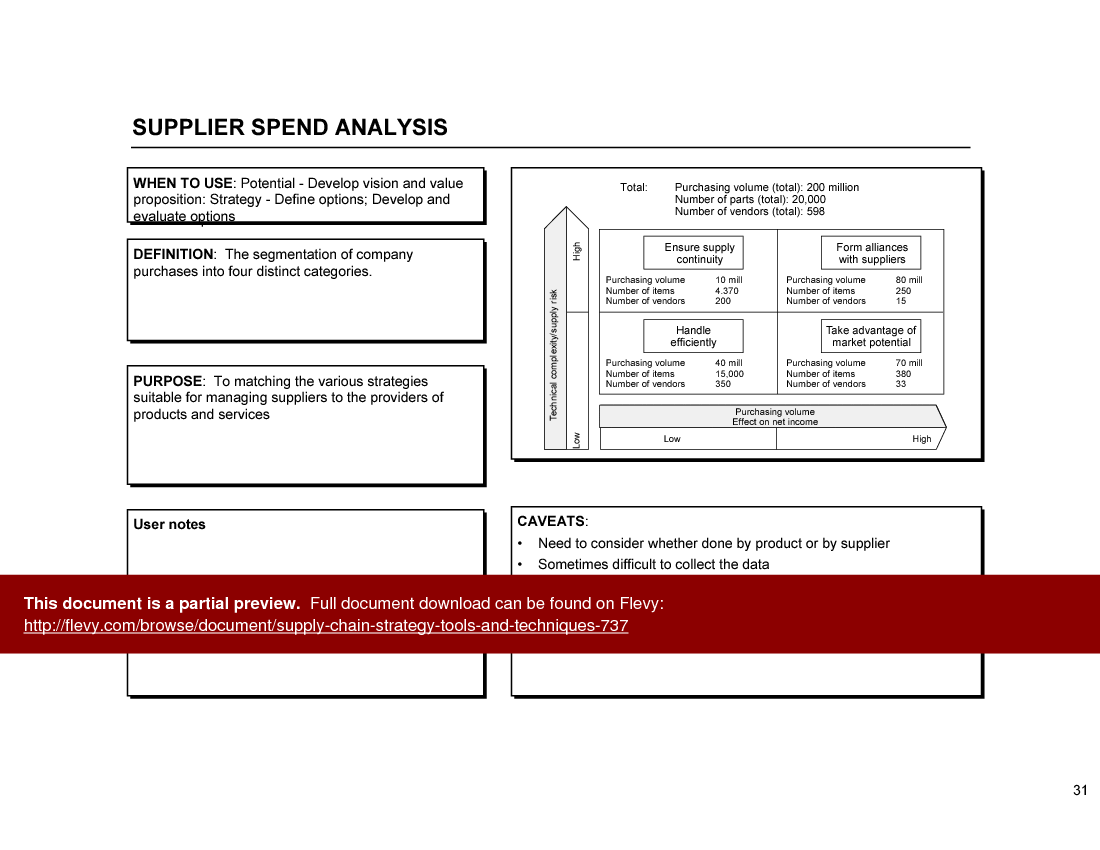
Focus on Supplier Spend Analysis, sourcing strategy evaluation, supplier relationship assessment, root cause analysis, sensitivity analysis, and trade-off analysis to identify vulnerabilities and redesign options. Flevy’s Supply Chain Strategy Tools & Techniques references Supplier Spend Analysis and sourcing strategies as specific tools to guide this work.
How do I set performance metrics that align to overall business goals?
Define metrics that map to business objectives—examples include cost efficiency, customer satisfaction, inventory turnover, and lead time reduction—and ensure measures link individual behavior to company targets using a Performance Management Framework. The deck lists these key performance metrics and their alignment considerations.
Can I use these frameworks during a strategic planning workshop and what agenda structure fits?
Yes; the materials support workshop formats with suggested sessions such as an introductory 60-minute strategy overview, a 90-minute infrastructure and sourcing workshop, and a 60-minute performance management and technology session. The deck includes a potential workshop agenda that specifies these session lengths and topics.
Document FAQ
These are questions addressed within this presentation.
What is the purpose of the Supply Chain Matrix?
The Supply Chain Matrix visually represents the relationship between supply chain elements and key business metrics, helping organizations identify areas for improvement.
How can I customize the analysis plan for my organization?
You can tailor the analysis plan by aligning it with your specific business goals and the key issues you aim to address during the project.
What are the key performance metrics for supply chain management?
Key performance metrics include cost efficiency, customer satisfaction, inventory turnover, and lead time reduction, all linked to overall business objectives.
How does the Value Chain Analysis help in supply chain strategy?
Value Chain Analysis identifies the primary activities that create value and competitive advantages, allowing organizations to focus on areas that enhance performance.
What is the significance of the Supply Chain Insight Framework?
The Supply Chain Insight Framework helps organizations understand the underlying drivers of their supply chains, enabling better strategic decision-making.
How can I assess supplier relationships effectively?
Utilize Supplier Spend Analysis to evaluate purchasing patterns and identify opportunities for strategic partnerships or improvements in supplier management.
What is the role of technology in supply chain management?
Technology enhances visibility, improves data sharing, and supports decision-making processes, ultimately leading to more efficient supply chain operations.
How can I ensure my supply chain strategy aligns with customer needs?
Conduct customer insight research to gather feedback on requirements and satisfaction levels, ensuring that your supply chain solutions are customer-centric.
Glossary
• Go to Market Strategy - The plan for delivering products or services to customers.
• Supply Chain Matrix - A visual tool for assessing the relationship between supply chain elements and business metrics.
• Porter’s Five Forces - A framework for analyzing market competitiveness and attractiveness.
• Value Chain Analysis - A method for identifying activities that create value within an organization.
• Core Competency - A unique capability that provides a competitive advantage.
• EVA (Economic Value Added) - A measure of a company's financial performance based on residual wealth.
• SWOT Analysis - A strategic planning tool for identifying strengths, weaknesses, opportunities, and threats.
• Customer Segmentation - The process of dividing a market into distinct groups of buyers.
• Performance Metrics - Standards used to measure the efficiency and effectiveness of an organization.
• Supply Chain Insight Framework - A tool for understanding the drivers of supply chain performance.
• Supplier Spend Analysis - An assessment of purchasing patterns and supplier relationships.
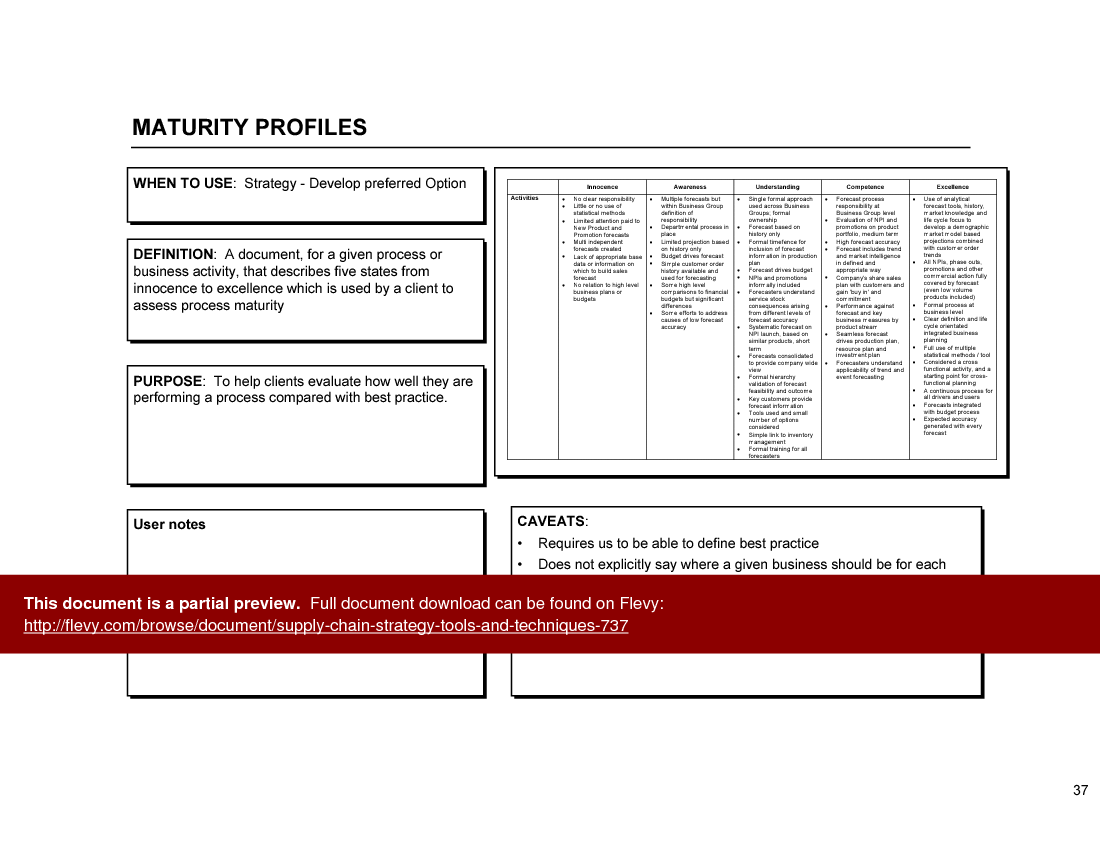
• Maturity Profiles - A framework for evaluating the performance of processes against best practices.
• Root Cause Analysis - A method for identifying the underlying causes of problems in a process.
• Sensitivity Analysis - A technique for assessing how changes in variables impact outcomes.

• Trade-Off Analysis - An evaluation of the relationships between different supply chain performance variables.
• Focus Groups - A qualitative research method for gathering insights from a representative group.
• Conjoint Analysis - A statistical technique for understanding customer preferences among product attributes.
• Logic Trees - A visual representation of the relationships between problems and solutions.

• Kano Model - A framework for analyzing customer satisfaction based on product attributes.
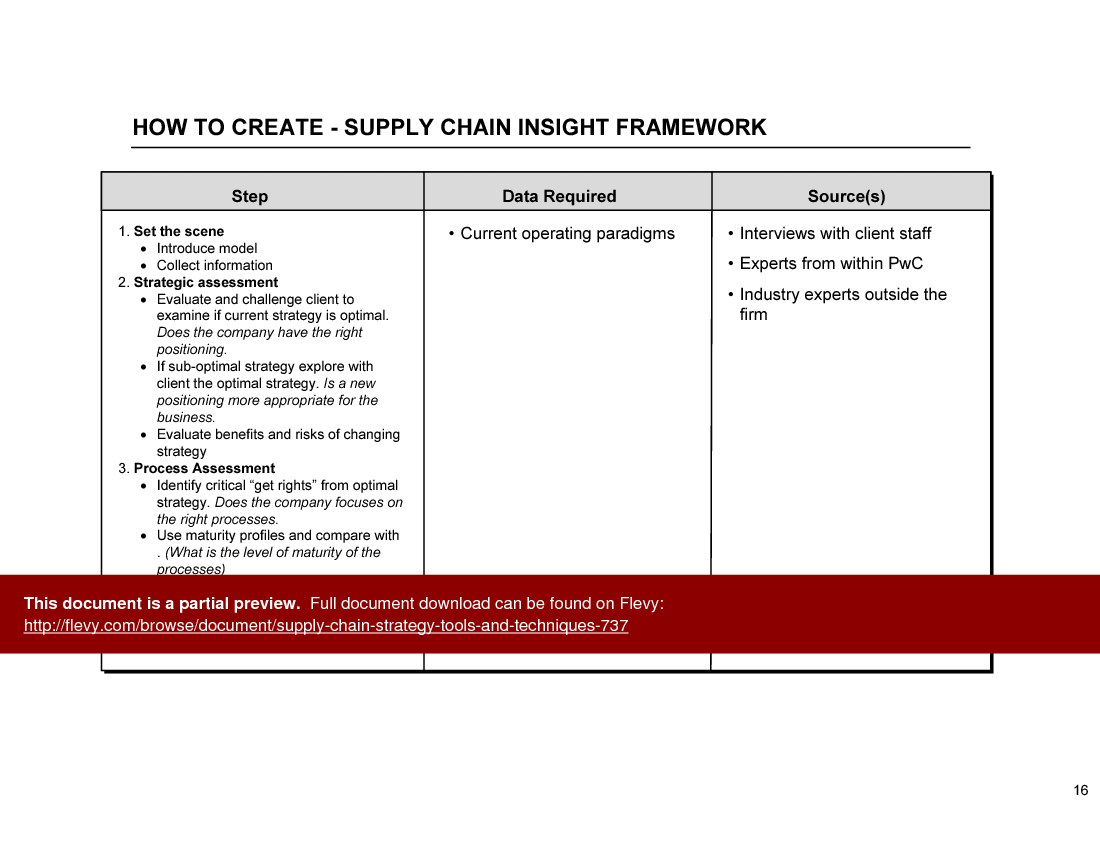
The Supply Chain Insight Framework (SCIF) is a strategic tool for analyzing supply chain dynamics. It is applicable during strategic planning to develop a vision and value proposition. SCIF helps organizations understand how different supply chains operate and their unique features, which is essential for optimizing supply chain strategies based on market conditions. The framework identifies underlying drivers of supply chains and systematizes decision-makers' mental models for analyzing and comparing business approaches. Guiding questions focus on customer interface design, responsiveness versus efficiency, new product importance, economies of scale, supply chain decoupling, and supplier integration. SCIF is versatile, but should be adapted to specific business contexts for effective application.
This PPT slide outlines a strategic framework for supply chain efficiency analysis, relevant during strategy formulation for option evaluation and development. The core objective is to assess synchronization of supply flow along the supply chain, optimizing operations to meet market demands. Key analytical tools include "Reliability Analysis," "Changeover Analysis," and "Demand Profiling," indicating a comprehensive approach to supply chain performance. The "Triple Play Chart" emphasizes data visualization for decision-making. The analysis is most effective under conditions of a linear relationship between production and market dynamics and a relatively static product range, highlighting its limitations and applicability for executives seeking operational enhancements.
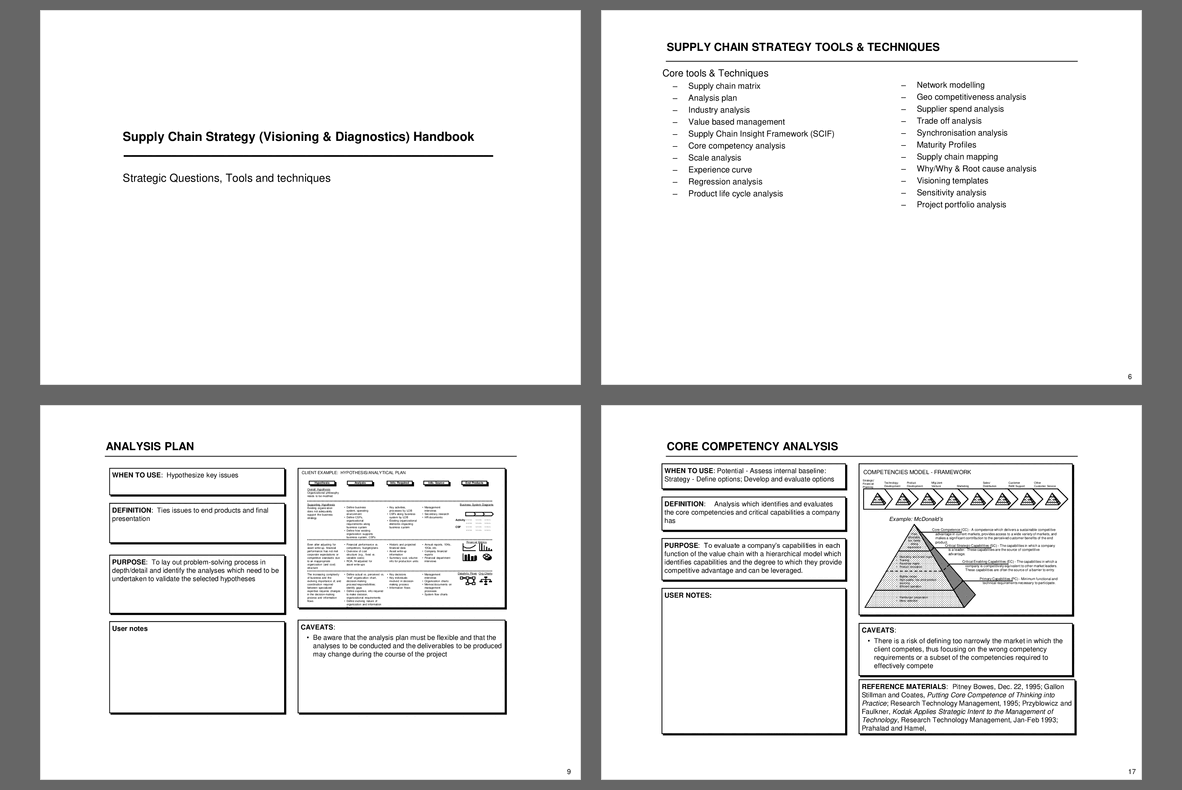
This PPT slide outlines a structured approach to Core Competency Analysis, focusing on evaluating a company's internal capabilities. It emphasizes identifying core competencies and critical capabilities essential for strategic decision-making. The analysis is beneficial for assessing potential and establishing a strategic baseline, defining options, and evaluating them effectively. It assesses capabilities within the value chain using a hierarchical model that categorizes competencies, illustrating how they contribute to organizational effectiveness. An example from McDonald's demonstrates the structure of core competencies, critical strategic capabilities, and enabling capabilities. Caution is advised against narrowly defining the market to maintain alignment with market requirements. This analysis is a valuable tool for executives to enhance their understanding of internal capabilities and strategic positioning.
The Kano Model analyzes product attributes and their impact on customer satisfaction, focusing on which characteristics are most valued by customers. It is applicable in assessing the external environment and aids decision-making regarding investment priorities. The model identifies key product features that enhance customer satisfaction, allowing organizations to allocate resources effectively. A graphical representation illustrates the relationship between satisfaction and fulfillment, categorizing product attributes into levels of customer satisfaction, with axes depicting a spectrum from dissatisfaction to satisfaction, highlighting 'Basic Fulfillment' and 'Excitement.' The model also addresses discrepancies between objective quality and user perceptions, correlating them for a nuanced understanding of customer satisfaction. It emphasizes the relationship between fulfilling basic requirements and achieving higher satisfaction levels, suggesting user feedback can reveal varying rewards associated with different product attributes.
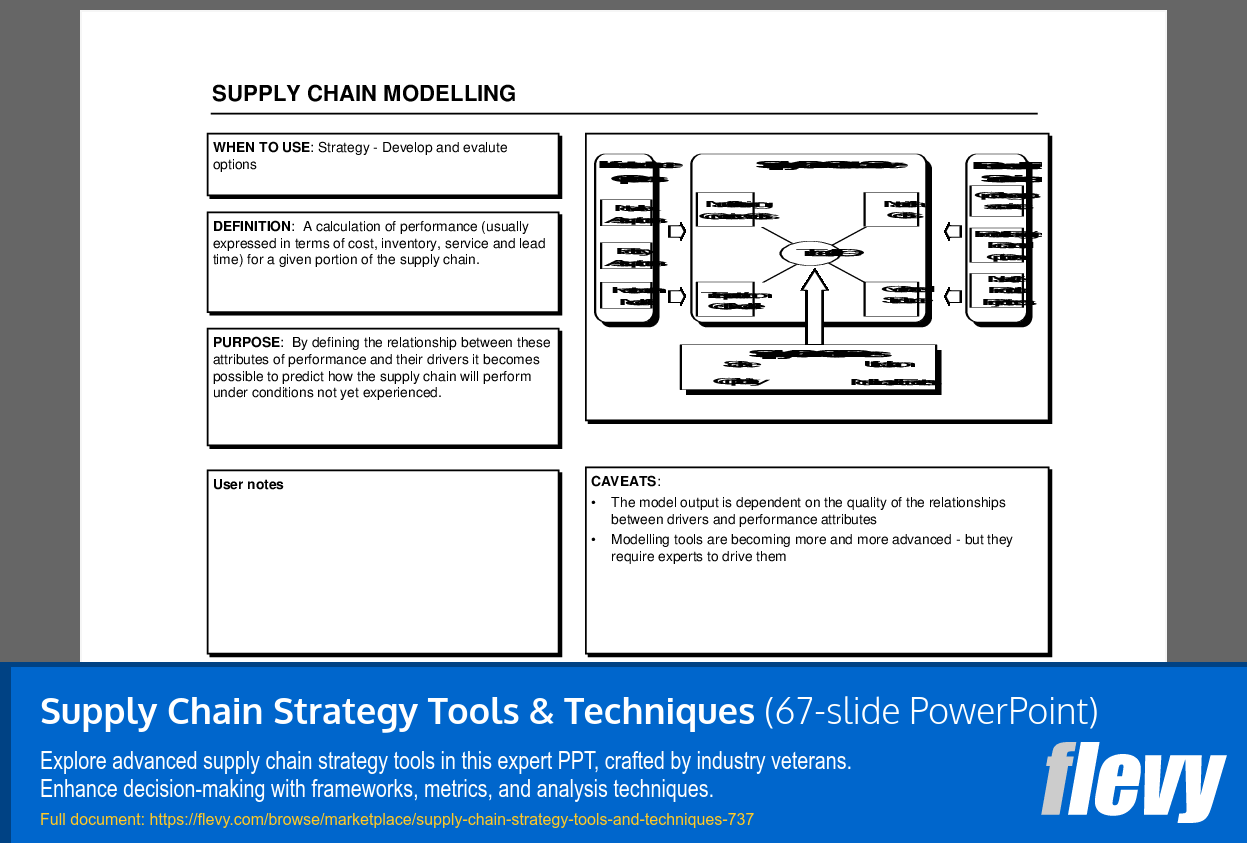
This PPT slide outlines a strategic framework for supply chain modeling, utilized during the strategy phase to assess and optimize supply chain performance. The model calculates performance metrics, focusing on cost, inventory, service, and lead time for specific supply chain segments. Defining relationships between performance attributes and their drivers enables organizations to forecast supply chain responses under various conditions, essential for risk management and strategic planning. The model's effectiveness relies on the quality of relationships established between drivers and performance attributes, highlighting the need for skilled personnel to operate advanced modeling tools. Understanding these dynamics is crucial for enhancing decision-making processes and achieving strategic objectives in supply chain management.
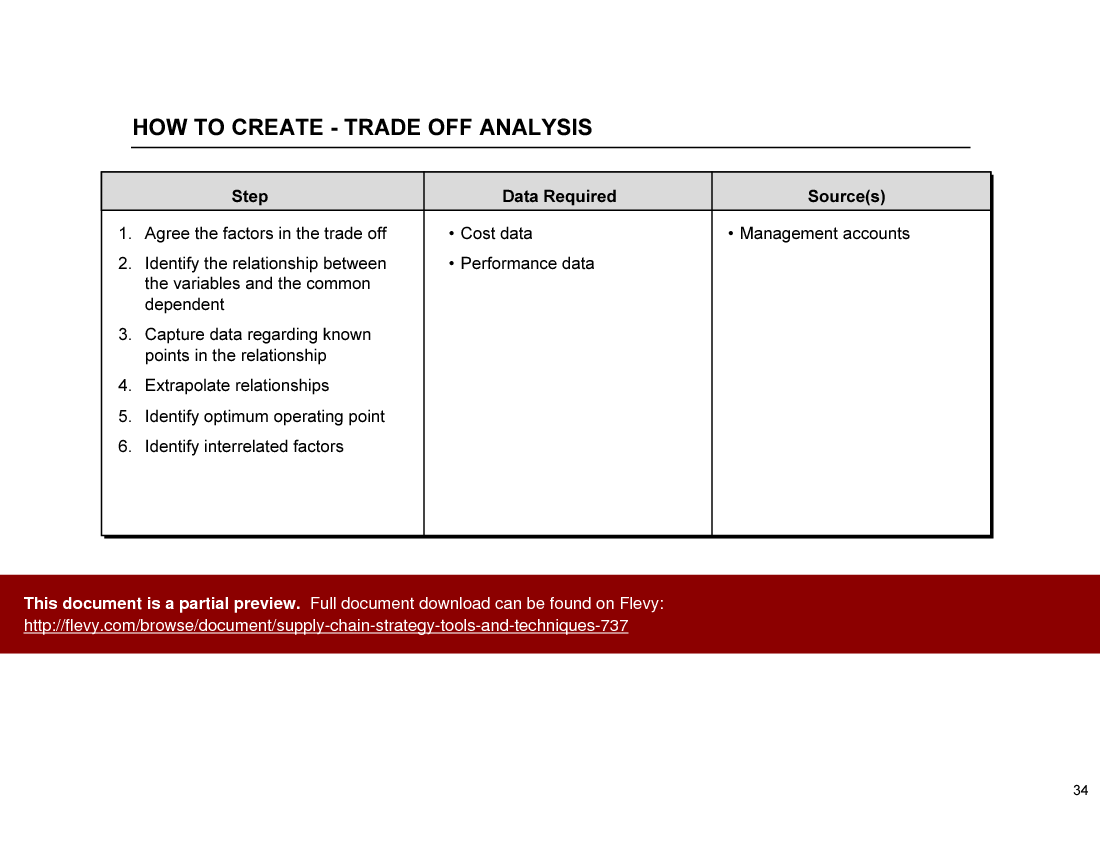
This PPT slide outlines trade-off analysis in supply chain management, focusing on optimizing resource allocation to meet varying demand. Trade-off analysis examines dependent variables related to supply chain performance, such as stock levels and capacity, especially for seasonal products. The analysis explores alternatives to identify the most effective operational stance, emphasizing flexibility and adaptability in decision-making. It highlights that trade-offs are often assessed in isolation, which can overlook interactions between variables and lead to suboptimal decisions. A holistic view is necessary for evaluating options, considering interdependencies among elements to guide informed and strategic decisions.
This PPT slide outlines a structured "Analysis Plan" for hypothesis-driven analysis, emphasizing its use during the identification of key issues. It highlights the necessity of linking identified issues to end products and final presentations, ensuring analyses remain relevant and actionable for decision-making. The plan details the problem-solving process, specifying required analyses to validate selected hypotheses, thereby enhancing investigation rigor. A client example illustrates practical application, demonstrating the framework's utility in real-world scenarios. Additionally, it includes caveats about maintaining flexibility, acknowledging that analyses and deliverables may evolve throughout the project, which is essential for responsiveness to changing circumstances.
This PPT slide outlines a framework for conducting Conjoint Analysis to assess customer preferences for product or service attributes. Conjoint Analysis quantifies customer preferences, providing insights into the importance of specific features. It is particularly useful in understanding the external environment and aligning offerings with customer needs. The graphical representation contrasts importance ratings from 2 respondent groups, clinicians and Glaxo, using x-axis and y-axis scales to compare attributes like "Low price" and "Support/service." This visual aids in identifying potential underestimations or overestimations of customer needs. Limitations include the need for comparable attributes and ensuring they represent controllable items for actionable insights.
This PPT slide outlines the SWOT analysis framework, a strategic tool for evaluating an organization’s internal and external environments through its 4 quadrants: Strengths, Weaknesses, Opportunities, and Threats. Strengths include expertise in financial areas, while weaknesses highlight insufficient industry experience. Opportunities focus on learning and expanding service offerings, whereas threats encompass competitive pressures and resource limitations. The analysis is valuable for assessing market opportunities and establishing an internal baseline, helping organizations understand their market position. However, it may be overly simplistic and should be complemented with deeper analysis for a comprehensive view.
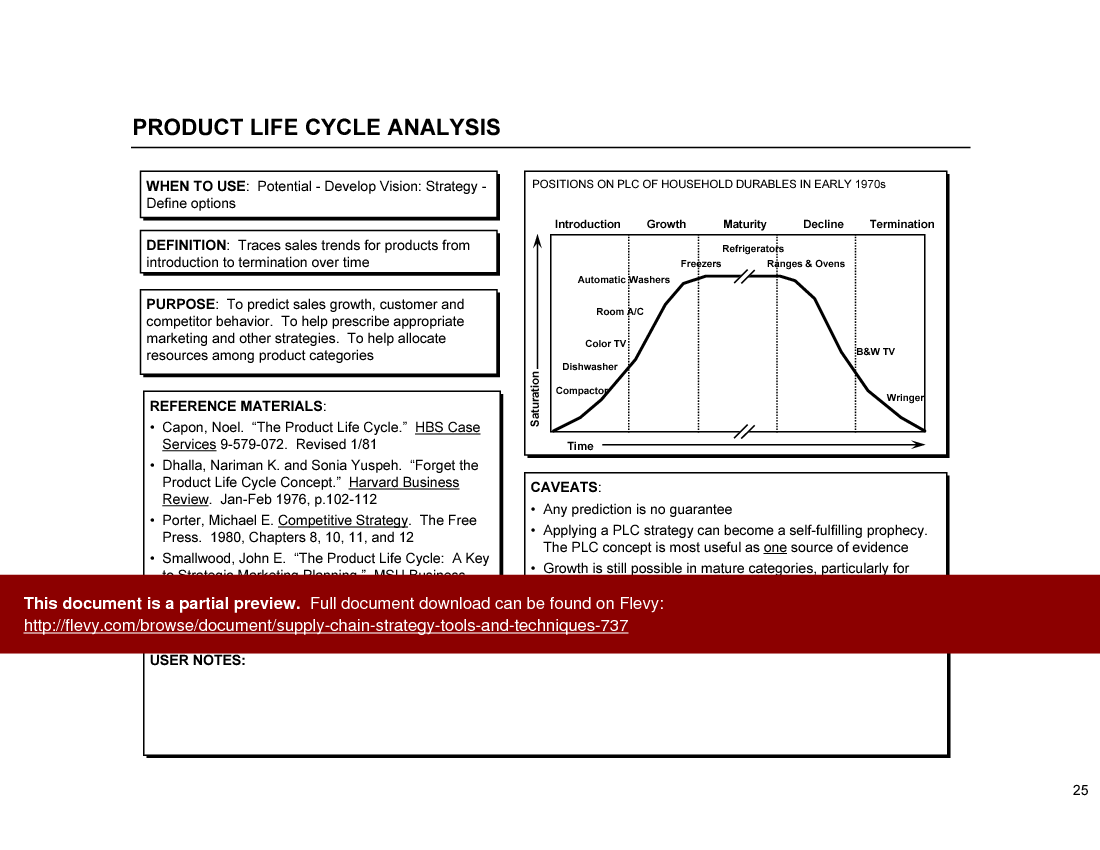
This PPT slide provides an overview of the Product Life Cycle (PLC) analysis, essential for understanding product sales trends from introduction to termination. The PLC traces sales trends over time, aiding in forecasting, predicting sales growth, customer behavior, and competitor actions, which are critical for effective marketing strategies. Resource allocation among product categories is emphasized to optimize investments. A graphical representation illustrates household durable goods on the PLC curve across stages: introduction, growth, maturity, decline, and termination. Caveats highlight that PLC predictions are not guarantees and that growth can still occur in mature categories, often requiring significant investment or creativity. This nuanced understanding is vital for leveraging PLC insights effectively.
Since 2012, we have provided business templates to over 10,000 businesses and organizations of all sizes, from startups and small businesses to the Fortune 100, in over 130 countries.
"Last Sunday morning, I was diligently working on an important presentation for a client and found myself in need of additional content and suitable templates for various types of graphics. Flevy.com proved to be a treasure trove for both content and design at a reasonable price, considering the time I
saved. I encountered a download issue during the ordering process. However, a quick email to Flevy's support team, even on a Sunday (!!!), resulted in assistance within less than an hour, allowing me to download the content I needed. Fantastic job, Flevy! I give 5 stars for both content/price and customer service. Thank you!
"
– M. E., Chief Commercial Officer, International Logistics Service Provider
"If you are looking for great resources to save time with your business presentations, Flevy is truly a value-added resource. Flevy has done all the work for you and we will continue to utilize Flevy as a source to extract up-to-date information and data for our virtual and onsite presentations!"
– Debbi Saffo, President at The NiKhar Group
"The wide selection of frameworks is very useful to me as an independent consultant. In fact, it rivals what I had at my disposal at Big 4 Consulting firms in terms of efficacy and organization."
– Julia T., Consulting Firm Owner (Former Manager at Deloitte and Capgemini)
"I am extremely grateful for the proactiveness and eagerness to help and I would gladly recommend the Flevy team if you are looking for data and toolkits to help you work through business solutions."
– Trevor Booth, Partner, Fast Forward Consulting
"FlevyPro provides business frameworks from many of the global giants in management consulting that allow you to provide best in class solutions for your clients."
– David Harris, Managing Director at Futures Strategy
"As an Independent Management Consultant, I find Flevy to add great value as a source of best practices, templates and information on new trends. Flevy has matured and the quality and quantity of the library is excellent. Lastly the price charged is reasonable, creating a win-win value for
the customer, Flevy and the various authors. This is truly a service that benefits the consulting industry and associated clients. Thanks for providing this service.
"
– Jim Schoen, Principal at FRC Group
"Flevy is our 'go to' resource for management material, at an affordable cost. The Flevy library is comprehensive and the content deep, and typically provides a great foundation for us to further develop and tailor our own service offer."
– Chris McCann, Founder at Resilient.World
"I have used Flevy services for a number of years and have never, ever been disappointed. As a matter of fact, David and his team continue, time after time, to impress me with their willingness to assist and in the real sense of the word. I have concluded in fact
that it is not at all just a repository of documents/resources but, in the way that David and his team manage the firm, it is like dealing with consultants always ready to assist, advise and direct you to what you really need, and they always get it right.
I am an international hospitality accomplished senior executive who has worked and lived during the past 35 years in 23 countries in 5 continents and I can humbly say that I know what customer service is, trust me.
Aside from the great and professional service that Flevy's team provide, their wide variety of material is of utmost great quality, professionally put together and most current.
Well done Flevy, keep up the great work and I look forward to continue working with you in the future and to recommend you to a variety of colleagues around the world.
"
– Roberto Pelliccia, Senior Executive in International Hospitality
Save with Bundles
This document is available as part of the following discounted bundle(s):
Receive our FREE presentation on Operational Excellence
This 50-slide presentation provides a high-level introduction to the 4 Building Blocks of Operational Excellence. Achieving OpEx requires the implementation of a Business Execution System that integrates these 4 building blocks.
Receive our FREE presentation on Operational Excellence
Get Our FREE Product.
This 50-slide presentation provides a high-level introduction to the 4 Building Blocks of Operational Excellence. Achieving OpEx requires the implementation of a Business Execution System that integrates these 4 building blocks.