

Editor Summary
Strategic Analysis Primer is a 155-slide PowerPoint training deck prepared by a top-tier consulting firm, presented in 5 main sections (Introduction; General Analytical Techniques; Supply Side Analysis; Demand Side Analysis; Wrap-Up).
Read moreIt includes 5 deliverable types: analytical framework templates, regression analysis models, customer segmentation matrices, visual data tools, and cost-structure templates. Target users include MBA students, business analysts, corporate executives, and consultants. Used for strategic planning, market assessment, and analyst training; sold as a digital download on Flevy.
Use this deck when an organization or team needs to strengthen analytic rigour for strategy work—during strategic planning, market assessments, or analyst training. Key users include:
MBA students practicing regression and case-based strategic exercises in coursework.
Business analysts building supply-and-demand models to evaluate market dynamics and pricing.
Corporate executives assessing cost structures to inform competitive positioning and resource allocation.
Management consultants preparing segmentation-driven growth recommendations for clients.
The deck’s integrated quantitative/qualitative, hypothesis-driven structure and emphasis on clear visual diagnostics reflect practices used at McKinsey, Bain, and BCG.
This deck is a strategy training deck prepared by a top-tier consulting firm. The contents include: General analytical techniques, Supply side analysis, Demand side analysis. This deck can give flavor of expected analyses, show which analyses have been most productive historically and explain basic techniques and warn of common methodological errors
It is an ideal reference document for MBA students, corporate managers, business/financial analysts and management consultants.
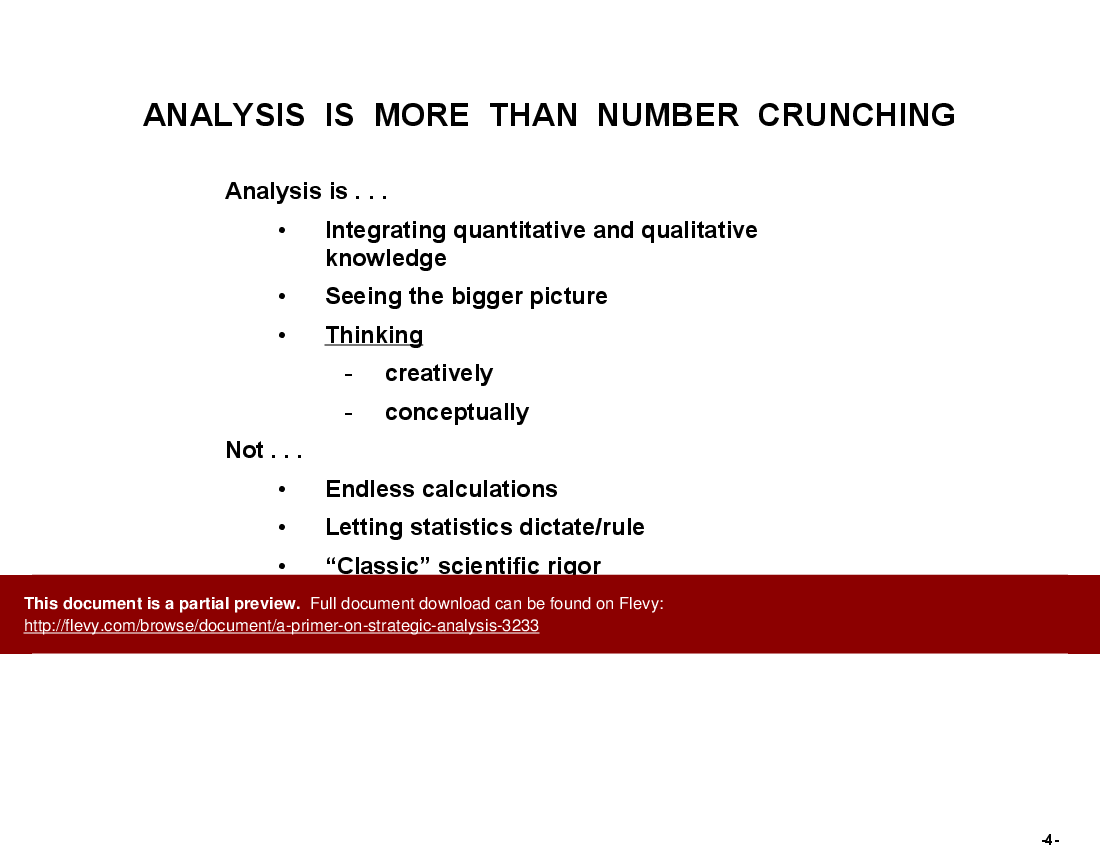
This Strategic Analysis Primer goes beyond traditional number-crunching. It emphasizes integrating both quantitative and qualitative insights, encouraging creative and conceptual thinking. This approach helps you see the bigger picture and avoid common pitfalls like endless calculations and over-reliance on statistics. The primer is designed to enhance your analytical skills by providing a comprehensive understanding of various analytical techniques.
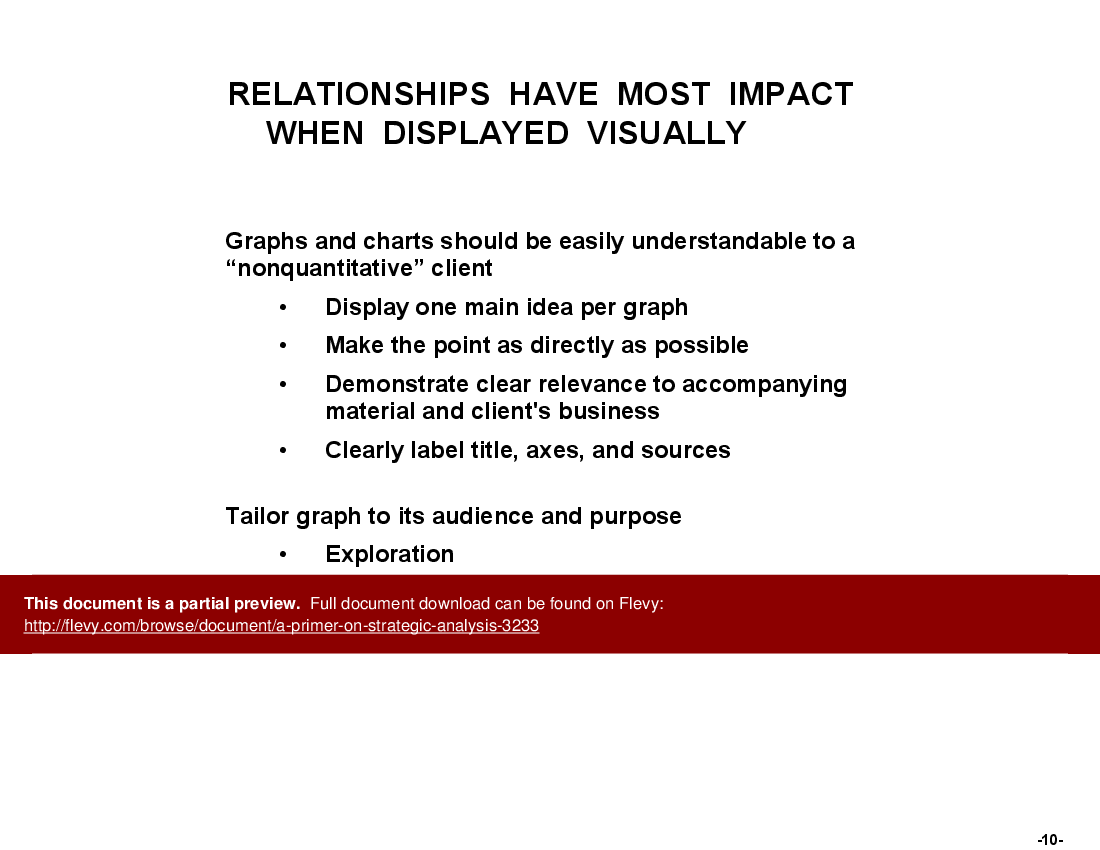
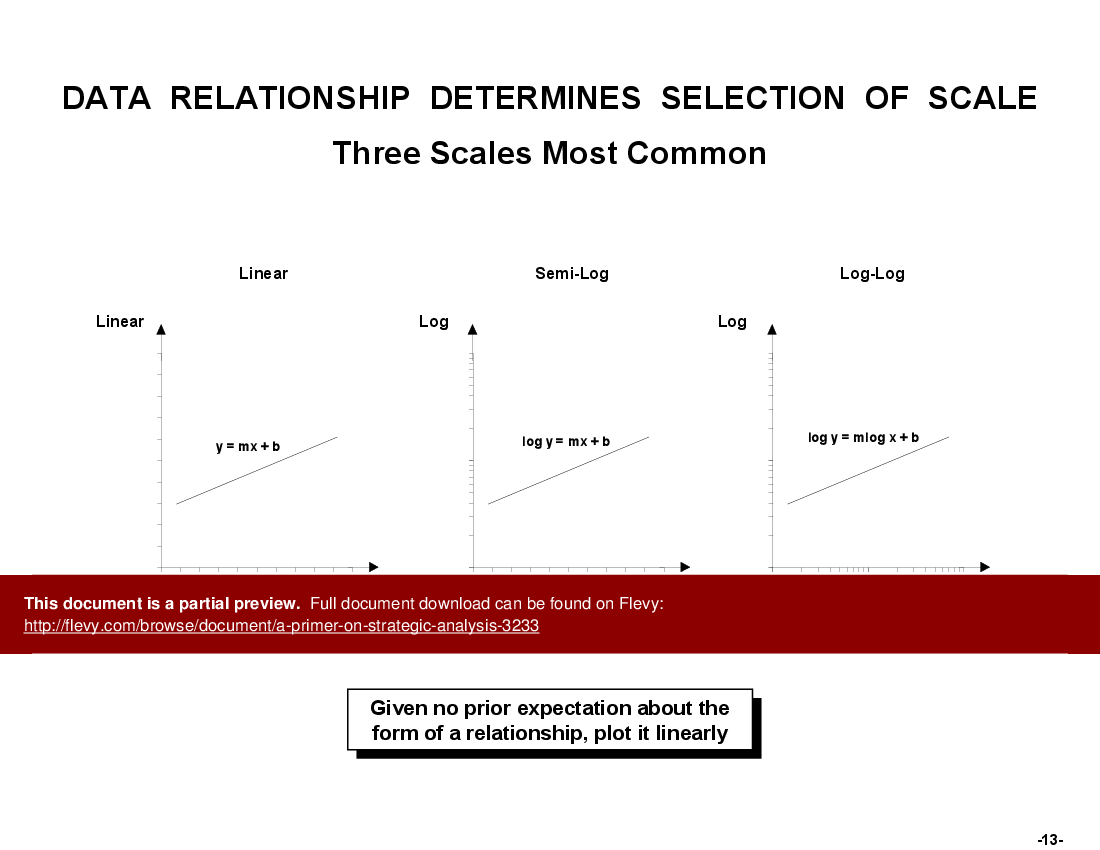
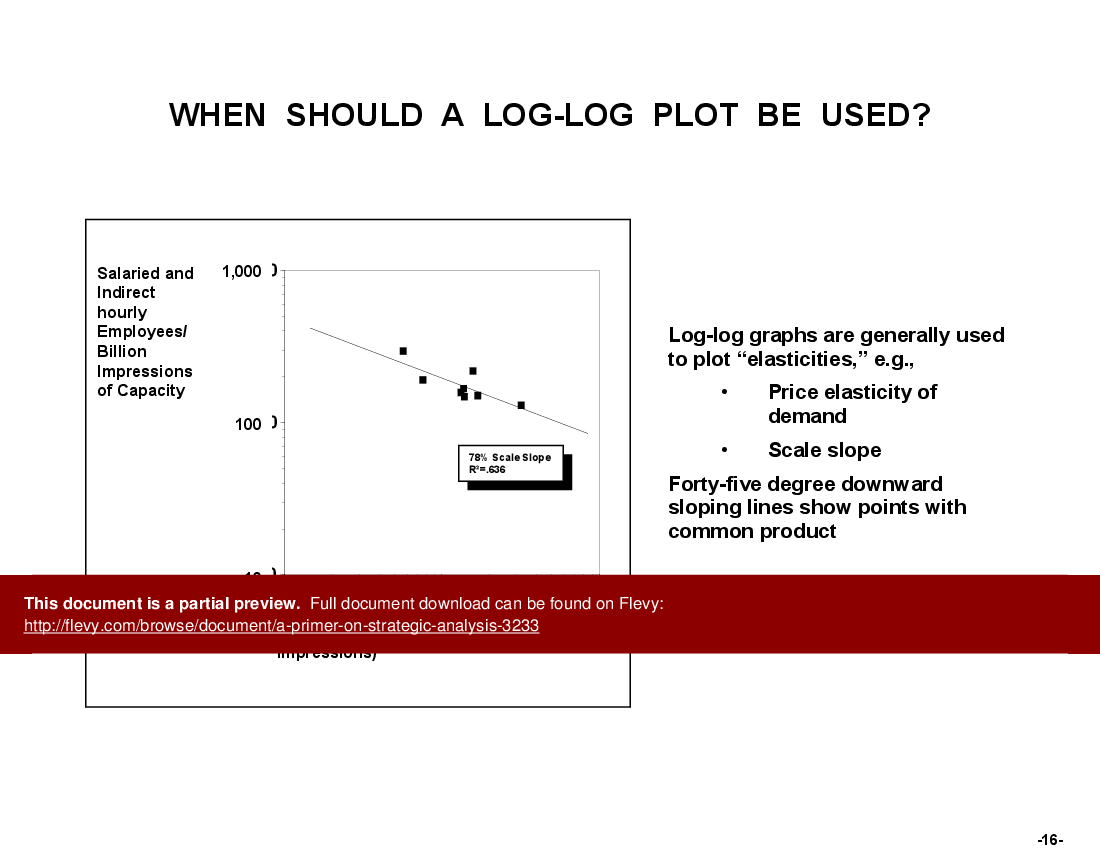
The document also delves into the importance of visual representation in analysis. Graphs and charts should be tailored to the audience, ensuring they are easily understandable and directly relevant to the client's business. This ensures that the data presented is not just informative, but also impactful. The primer guides you on how to effectively use different types of scales, such as linear, semi-log, and log-log, to best represent data relationships.
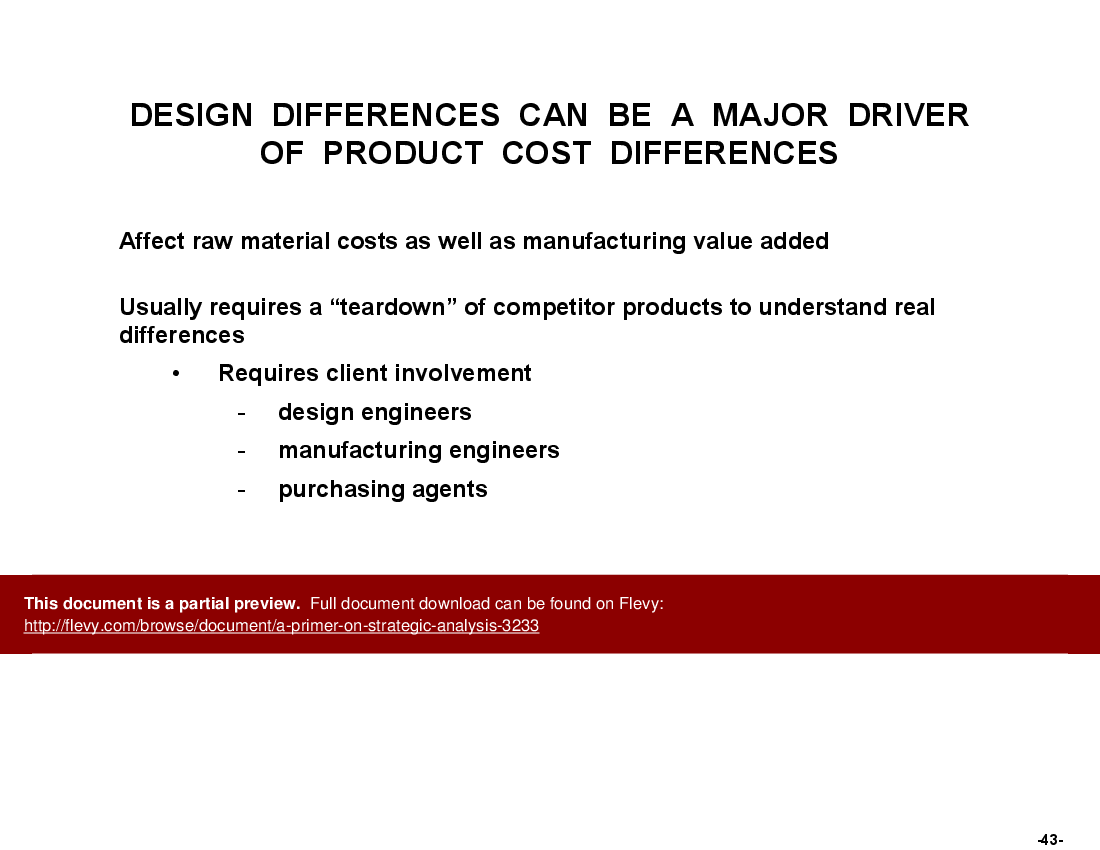
Moreover, the primer covers the nuances of cost analysis, highlighting the significance of understanding cost structures, design differences, and factor costs. It explains how scale, experience, complexity, and utilization affect costs and provides practical examples to illustrate these concepts. This section is particularly useful for those involved in competitive cost analysis and strategic decision-making.
The primer addresses the importance of understanding customer needs through segmentation and conjoint analysis. It provides a framework for identifying the most attractive customer segments and developing targeted action plans. This customer-focused approach ensures that your strategies are aligned with market demands, ultimately driving growth and profitability.
Got a question about the product? Email us at support@flevy.com or ask the author directly by using the "Ask the Author a Question" form. If you cannot view the preview above this document description, go here to view the large preview instead.
MARCUS OVERVIEW
This synopsis was written by Marcus [?] based on the analysis of the full 155-slide presentation.
Executive Summary
This Strategic Analysis Primer is designed to enhance analytical skills essential for effective strategy development, embodying the rigor and clarity you would expect from a McKinsey, Bain, or BCG-quality presentation (consulting-grade; not affiliated). It serves as a foundational resource for understanding complex business dynamics, integrating both qualitative and quantitative insights. Users will learn to apply various analytical techniques to evaluate competitive environments, customer behaviors, and market trends, ultimately enabling informed decision-making and strategic planning.
Who This Is For and When to Use
• MBA students seeking to deepen their analytical capabilities
• Business analysts focused on strategic insights and market assessments
• Corporate executives aiming to refine their strategic frameworks
• Consultants involved in competitive analysis and client advisory roles
Best-fit moments to use this deck:
• During strategic planning sessions to inform decision-making
• When conducting market assessments to identify growth opportunities
• For training sessions aimed at enhancing analytical skills within teams
Learning Objectives
• Define key analytical techniques for strategic analysis
• Build comprehensive supply and demand models to evaluate market dynamics
• Establish effective methods for customer segmentation and understanding
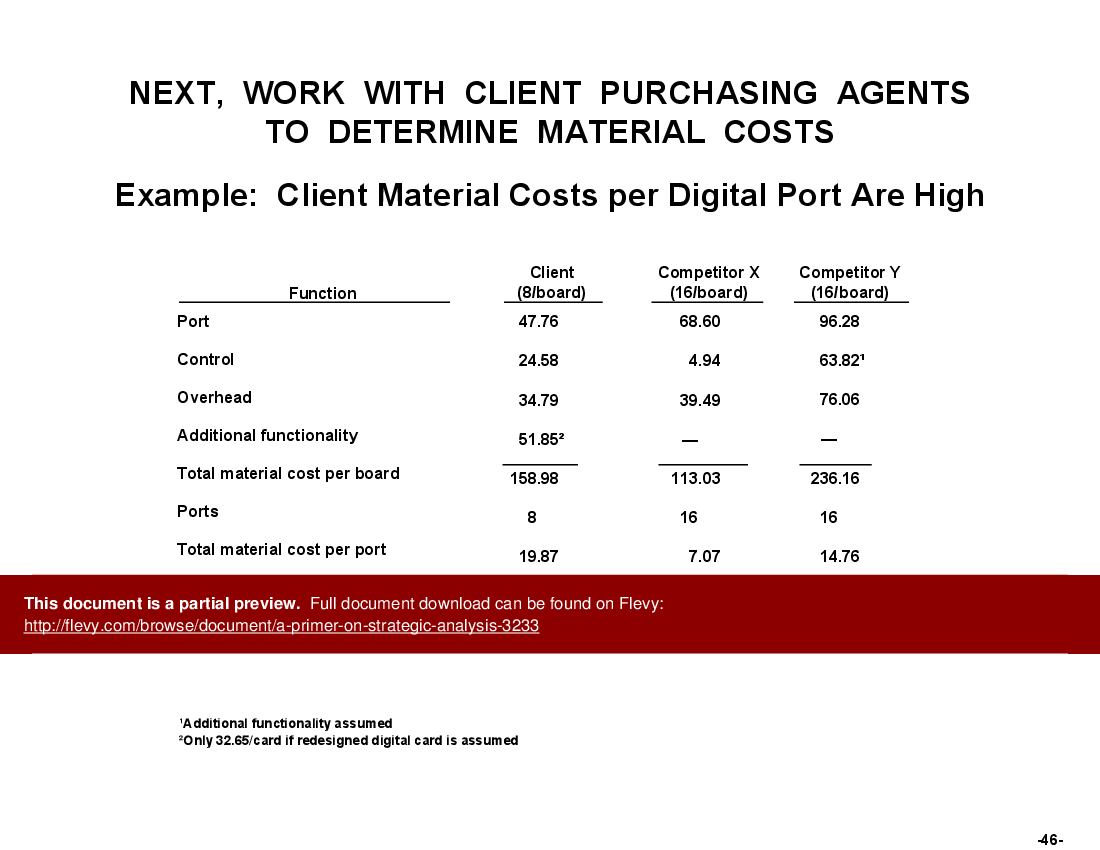
• Analyze cost structures and their impact on competitive positioning
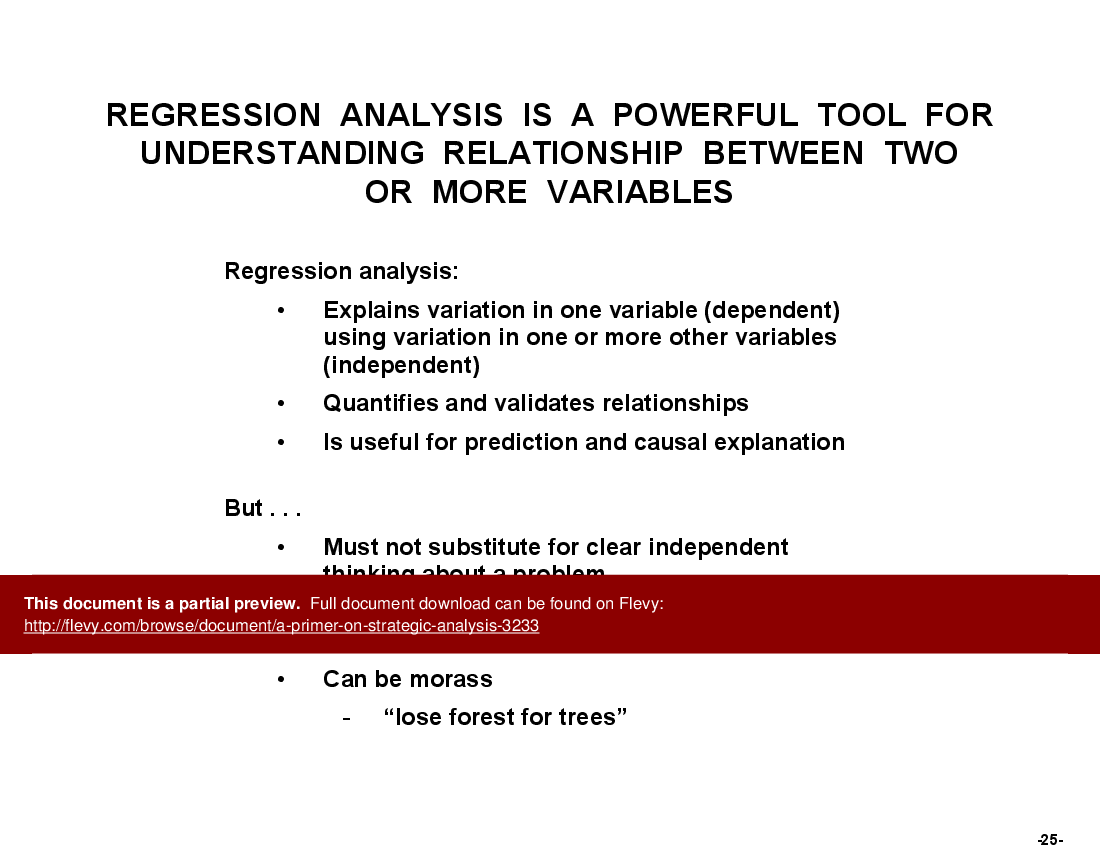
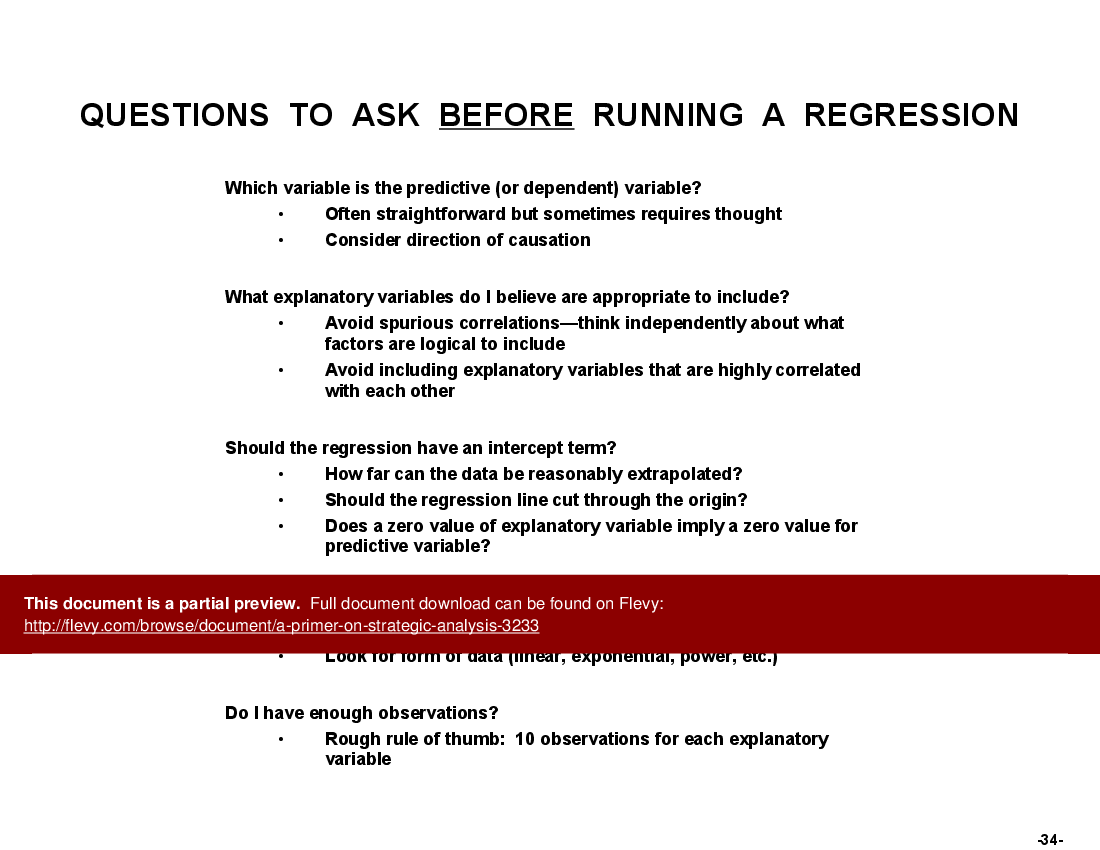
• Apply regression analysis to quantify relationships between variables
• Develop skills in visual data representation for clear communication
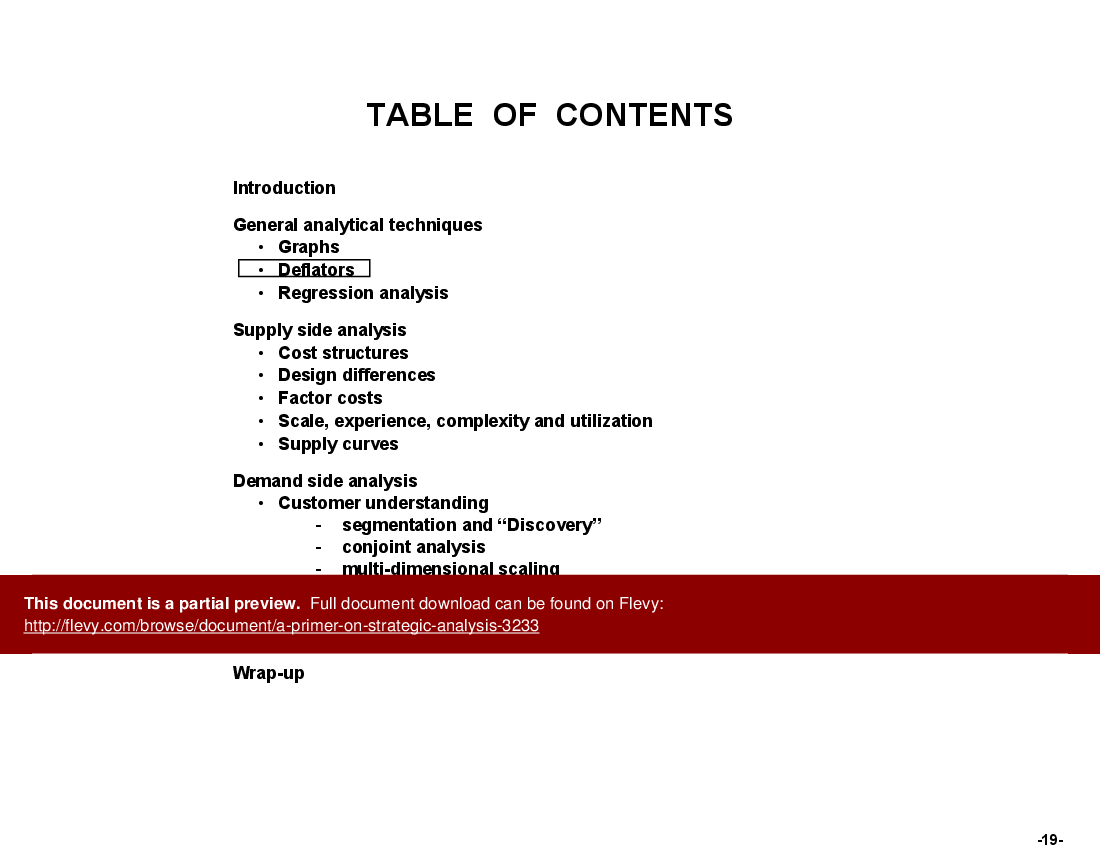
Table of Contents
• Introduction (page 1)
• General Analytical Techniques (page 2)
• Supply Side Analysis (page 10)
• Demand Side Analysis (page 19)
• Wrap-Up (page 49)
Primary Topics Covered
• General Analytical Techniques - This section introduces foundational analytical methods, including graphs, deflators, and regression analysis, essential for strategic evaluation.
• Supply Side Analysis - Focuses on understanding cost structures, design differences, and factors affecting supply, enabling a comprehensive view of operational efficiency.
• Demand Side Analysis - Covers customer understanding through segmentation, conjoint analysis, and demand forecasting, crucial for aligning offerings with market needs.
• Price-Volume Curves and Elasticity - Discusses the relationship between pricing strategies and demand elasticity, providing insights into optimizing revenue.
• Technology/Substitution Curves - Explores how technological advancements impact market dynamics and consumer preferences, essential for forecasting trends.
Deliverables, Templates, and Tools
• Analytical framework templates for supply and demand analysis
• Regression analysis models for quantifying relationships
• Customer segmentation matrices for targeted marketing strategies
• Visual data representation tools for effective communication of findings
• Cost structure analysis templates for competitive benchmarking
Slide Highlights
• Overview of general analytical techniques with visual examples
• Graphical representation of supply and demand curves
• Case studies illustrating the application of regression analysis
• Visual aids for understanding elasticity and pricing strategies
• Examples of effective customer segmentation methodologies
Potential Workshop Agenda
Introduction to Strategic Analysis Techniques (60 minutes)
• Overview of analytical frameworks and their applications
• Discussion on the importance of data-driven decision-making
Hands-On Regression Analysis Workshop (90 minutes)
• Interactive session on building and interpreting regression models
• Group exercises on analyzing real-world data sets
Customer Segmentation and Demand Forecasting (60 minutes)
• Techniques for effective customer segmentation
• Practical applications of demand forecasting models
Customization Guidance
• Adapt the analytical frameworks to align with specific industry contexts
• Modify customer segmentation criteria based on unique market characteristics
• Tailor regression models to reflect relevant variables in client scenarios
Secondary Topics Covered
• The importance of visual data representation in analysis
• Common pitfalls in analytical methodologies and how to avoid them
• The role of qualitative insights in quantitative analysis
• Best practices for conducting effective market research
Topic FAQ
What are the most common analytical techniques used in strategic analysis?
Strategic analysis commonly uses regression analysis to quantify relationships, supply-and-demand modeling to understand market dynamics, customer segmentation and conjoint analysis for preference assessment, and price-volume/elasticity analysis for pricing decisions. Visual data representation is also emphasized, with tools like customer segmentation matrices and regression analysis models.
How does regression analysis help with strategic decision-making?
Regression analysis quantifies relationships between variables, helps test hypotheses, and supports forecasting and scenario assessment. It enables analysts to move from qualitative intuition to data-driven inferences that inform strategy choices. Training decks like Flevy’s Strategic Analysis Primer include regression analysis models to practice building and interpreting regressions.
What approaches are used to analyze cost structure for competitive positioning?
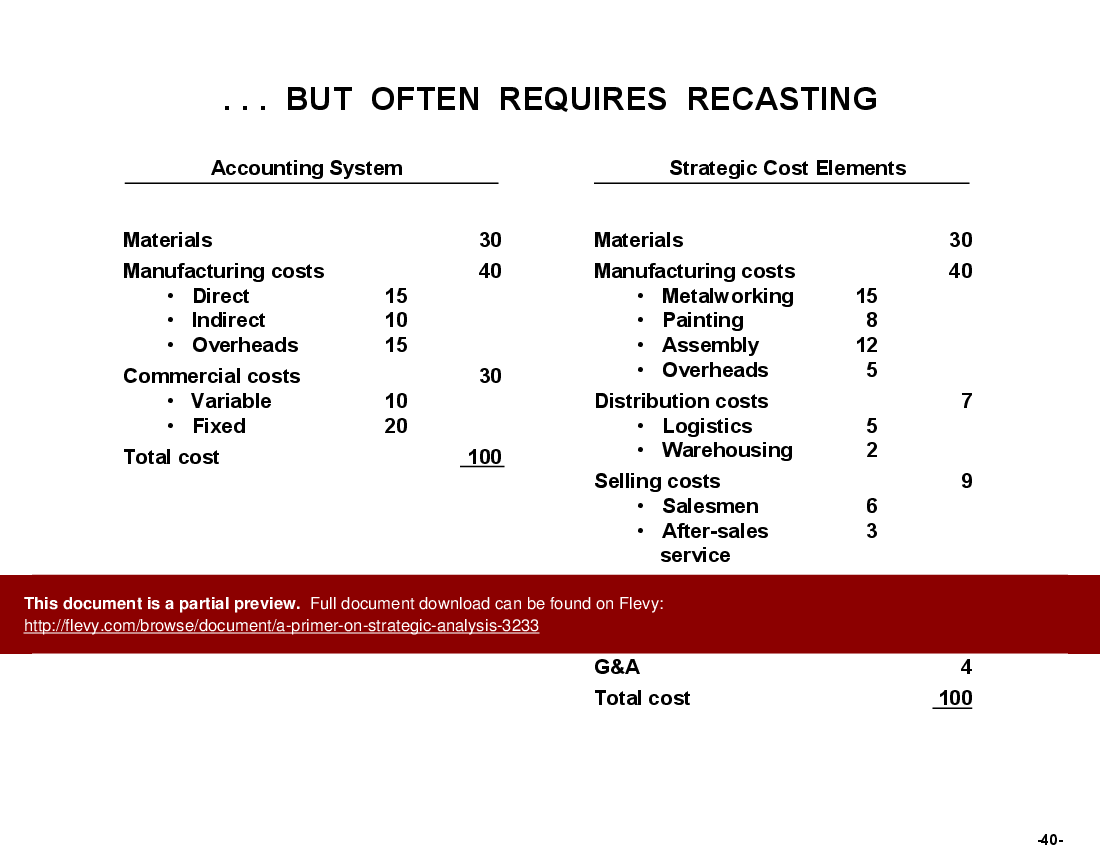
Cost-structure analysis examines fixed vs. variable costs, scale and experience effects, complexity, and utilization to understand unit costs and competitive advantage. Analysts use templates to map factor costs and design differences, enabling benchmarking and scenario comparisons using cost structure analysis templates.
How should I evaluate market demand when planning a product launch?
Evaluate demand by segmenting customers, applying conjoint analysis to assess attribute preferences, and building demand-forecasting models that incorporate price-volume curves and elasticity. Combine qualitative insights with quantitative forecasts to align offerings with market needs, using tools such as demand forecasting and conjoint analysis.
What should I look for when choosing a strategic analysis training deck or template set?
Choose materials that integrate quantitative and qualitative methods, offer supply and demand analytical frameworks, include regression and cost-analysis tools, and provide guidance on visual communication and common methodological pitfalls. Look for adaptability to industry contexts and included artifacts like customer segmentation matrices and regression models.
How long should a workshop on strategic analysis last and what modules are typical?
A sample workshop agenda provided in the primer divides content into modular sessions: a 60-minute introduction to techniques, a 90-minute hands-on regression workshop, and a 60-minute customer segmentation and forecasting module, totaling a 210-minute sample agenda.
What are best practices for visualizing complex analytical results for executives?
Tailor graphs and charts to the audience, use appropriate scales (linear, semi-log, log-log) to reveal relationships, minimize clutter, and link visuals directly to business implications. The primer provides guidance on choosing scales and visual formats to ensure clarity and relevance, including use of linear, semi-log, and log-log scales.
Can templates and models substitute for external consulting when performing strategic analysis?
Templates and models accelerate analysis, help standardize methods, and support internal capability building,, but they do not replicate bespoke advisory services. As a reference, Flevy’s Strategic Analysis Primer offers analytical framework templates and regression analysis models to support internal strategy work.
Document FAQ
These are questions addressed within this presentation.
What analytical techniques are covered in this primer?
The primer covers various techniques, including regression analysis, supply and demand modeling, and customer segmentation, essential for strategic evaluation.
How can I apply these techniques in my organization?
Utilize the frameworks and templates provided in the primer to conduct market assessments, enhance decision-making, and refine strategic initiatives.
Is this primer suitable for beginners in strategic analysis?
Yes, the primer is designed to provide foundational knowledge while also offering advanced insights for experienced analysts.
Can I customize the templates for my specific industry?
Absolutely, the templates are designed to be adaptable to various industries and contexts.
What resources are included for further learning?
The primer includes references to additional readings and resources for deepening your understanding of strategic analysis techniques.
How does regression analysis enhance strategic decision-making?
Regression analysis quantifies relationships between variables, allowing for data-driven insights that inform strategic choices and predictions.
What is the significance of customer segmentation?
Customer segmentation helps identify distinct groups within the market, enabling tailored marketing strategies and improved customer engagement.
How can I visualize complex data effectively?
The primer provides guidelines on creating clear and impactful visual representations of data, enhancing communication of insights.
Glossary
• Regression Analysis - A statistical method for examining the relationship between variables.
• Elasticity - A measure of how much demand changes in response to price changes.
• Customer Segmentation - The process of dividing a market into distinct groups of buyers.
• Supply Curve - A graphical representation of the relationship between price and quantity supplied.
• Demand Curve - A graphical representation of the relationship between price and quantity demanded.
• Conjoint Analysis - A market research technique used to determine consumer preferences for product attributes.
• Multi-Dimensional Scaling (MDS) - A statistical technique for visualizing the similarities or dissimilarities of data points.
• Cost Structure - The various costs incurred by a business in its operations.
• Deflator - An index used to convert nominal values into real values by adjusting for inflation.
• Price-Volume Curve - A graphical representation that illustrates the relationship between price and quantity sold.
• Technology Substitution Curve - A model that describes the rate at which one technology is adopted in place of another.
• Market Research - The process of gathering, analyzing, and interpreting information about a market.
• Qualitative Analysis - An analysis that focuses on understanding underlying reasons and motivations.
• Quantitative Analysis - An analysis that focuses on numerical data and statistical methods.
• Competitive Positioning - The process of establishing a brand or product in relation to competitors.
• Opportunity Cost - The potential benefits lost when choosing one alternative over another.
• Market Dynamics - The forces that impact the supply and demand of goods and services in a market.
• Cumulative Volume - The total amount of a product sold over a specific period.
• Strategic Planning - The process of defining an organization's direction and making decisions on allocating resources.
• Analytical Framework - A structured approach to analyzing data and drawing conclusions.
• Data Visualization - The graphical representation of information and data.
This PPT slide compares linear and logarithmic scales for data representation. The linear scale maintains consistent distances between values, exemplified by the equal movement from 100 to 200 and from 200 to 300, reflecting an additive relationship. In contrast, the logarithmic scale operates on a multiplicative basis, where the distance covered by a ratio remains constant, such as the jump from 1 to 10 being equivalent to that from 10 to 100. This scale is particularly relevant in fields like finance and scientific data analysis, where exponential growth or decay occurs. A critical note is that the ratio of anything to zero is infinite, emphasizing the need to avoid zero values in logarithmic representations. Choosing the appropriate scale is essential for accurate data analysis and visualization.
This PPT slide analyzes how scale impacts cost per unit across various business elements, highlighting that larger suppliers benefit from lower costs due to economies of scale. A graph plots cost per unit against volume, showcasing slopes of 100%, 75%, and 50%, indicating that increased volume leads to decreased costs per unit. Specific elements exhibiting economies of scale are categorized into manufacturing, advertising, selling, and engineering. For example, automated manufacturing lines show high effects of scale, while job shops exhibit low effects. Television advertising has a high impact compared to direct mail, and fragmented customers in selling demonstrate a high effect, while concentrated customers show a low effect. Standard products in engineering benefit from high economies of scale, contrasting with custom products that do not.
This PPT slide outlines a framework for understanding customers at 3 levels: Aggregate, Major Segment, and Segment of One.
At the Aggregate level, organizations focus on metrics like cumulative customers and revenue, addressing key issues such as fully loaded cost to serve, cumulative profit, customer satisfaction, and end-user usage patterns.
The Major Segment level emphasizes segmentation dimensions, segment attractiveness, and cost to serve, utilizing data from interviews, focus groups, and external databases like D&B.
The Segment of One level highlights the unique value of individual customers, their business drivers, and specific product development needs, informed by perceptual mapping and direct interactions.
This structured approach enables organizations to tailor strategies effectively, enhancing customer engagement and driving better business outcomes.
This PPT slide analyzes the price-volume relationship, focusing on elasticity and inelasticity. It features a graph illustrating the interaction between price and volume, with areas labeled as elastic, unit elasticity, and inelastic. The downward slope indicates that as price decreases, volume increases. If the elasticity value is greater than one, reducing price leads to increased volume, suggesting a responsive market. Conversely, if elasticity is less than one, increasing price likely decreases volume, indicating a less responsive market. The unit elasticity point is where price changes do not affect overall revenue. A cautionary note highlights the complexity of consumer behavior, warning against confusing inelastic buyers with other types, which is critical for accurate pricing strategies. Understanding these dynamics is essential for optimizing pricing strategies and maximizing revenue.
This PPT slide analyzes customer metrics: cumulative sales, variable margin, and fully allocated profit. Cumulative sales percentage levels off with increasing customers, indicating diminishing returns and a saturation point. Cumulative variable margin follows a similar trend, suggesting that while acquiring new customers is vital, incremental benefits decline after a threshold. Cumulative fully allocated profit underscores the importance of understanding cost structures in customer acquisition, with "100% FAP = $446K" serving as a profitability benchmark.
Five major drivers of customer satisfaction are outlined, with reliability and durability identified as critical factors, alongside features/functions and warranty. Areas for improvement include user-friendliness and documentation, providing insights for refining customer engagement strategies and enhancing overall satisfaction. Understanding these metrics and drivers informs better resource allocation and strategic initiatives.
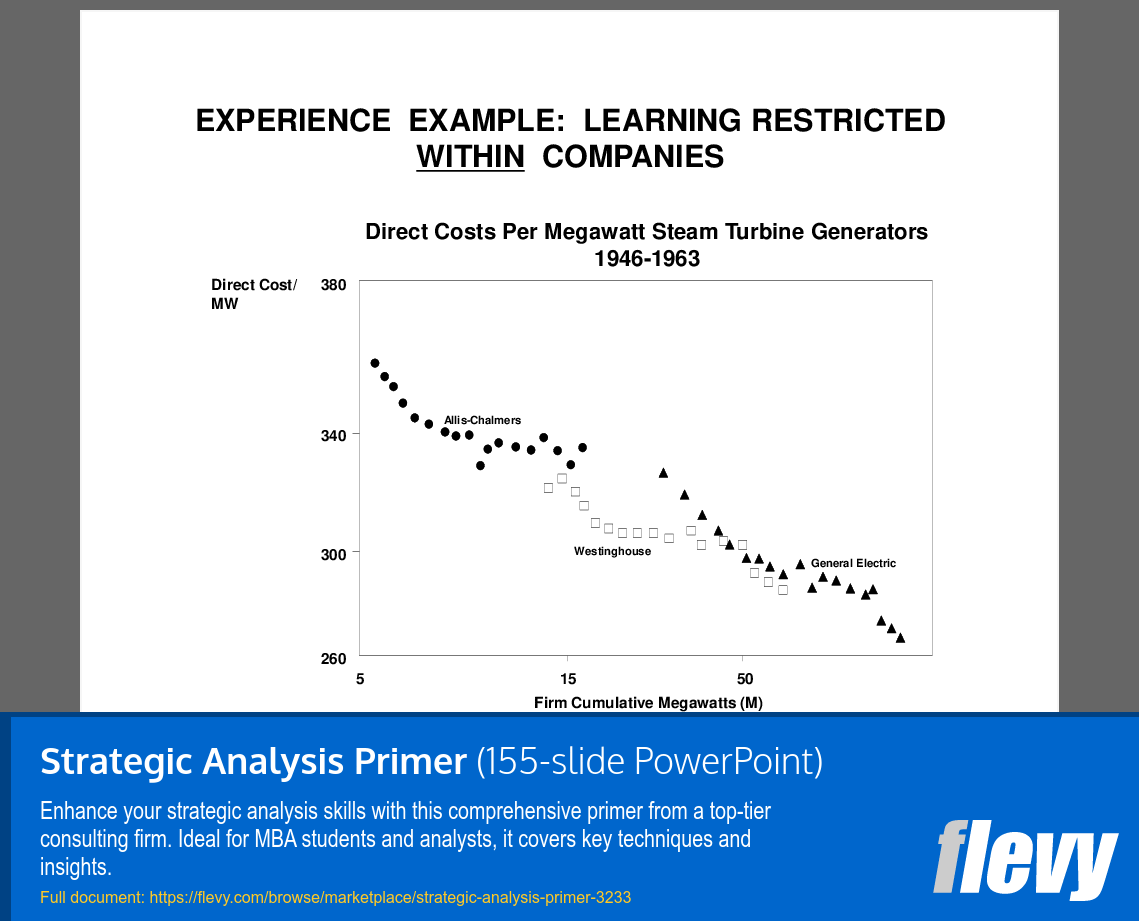
This PPT slide illustrates direct costs per megawatt (MW) of steam turbine generators from 1946 to 1963, showing the relationship between cumulative megawatts produced by Allis-Chalmers, Westinghouse, and General Electric. The vertical axis indicates direct costs, while the horizontal axis tracks cumulative megawatts. A trend line suggests a decline in direct costs as cumulative megawatts increase, indicating a learning curve effect. The title "Learning Restricted Within Companies" implies that cost efficiencies gained through experience are confined to individual firms. Allis-Chalmers shows a more pronounced decline in costs, indicating effective leverage of production experience, while Westinghouse and General Electric exhibit less steep declines, suggesting less efficient learning curves. This highlights the impact of internal learning mechanisms on cost structures over time.
This PPT slide illustrates the relationship between scale and complexity in operational efficiency and cost structures. The vertical axis represents "Overhead Cost/Unit," while the horizontal axis denotes scale from 1 to 1,000 units. Three curves are plotted: Combined Impact, Complexity Impact, and Scale Impact. The Combined Impact curve shows that as scale increases, costs per unit decrease until complexity rises, making management more challenging and costly. The Complexity Impact curve indicates that higher complexity leads to greater overhead costs, suggesting that expanding organizations often introduce complexity that negates scale benefits. The Reduced Complexity Cost line intersects with the Complexity Impact curve, indicating that effective complexity management can mitigate costs. Mastering this balance can lead to significant cost efficiencies and improved performance.
This PPT slide analyzes customer engagement strategies through an "Estimated Breakdown" of resource allocation across customer segments, essential for targeting marketing and sales initiatives. It illustrates a correlation between customer ranking and response rates, indicating that higher-ranked customers yield better engagement. Increasing outreach to these customers is a strategic move to boost response rates, supported by a cumulative average response rate graph showing improved engagement with targeted mailings. The "Company’s Value Delivery System" outlines components like advertising, customer engagement, pricing, and inventory management, providing insights to enhance customer relationships. Lastly, the "Six Critical Capabilities/Needs" identifies essential areas for organizational development to meet customer expectations effectively.
Source: Best Practices in Strategic Analysis PowerPoint Slides: Strategic Analysis Primer PowerPoint (PPT) Presentation Slide Deck, Documents & Files
The average daily rate of a McKinsey consultant is $6,625 (not including expenses). The average price of a Flevy document is $65.
Trusted by over 10,000+ Client Organizations
Since 2012, we have provided business templates to over 10,000 businesses and organizations of all sizes, from startups and small businesses to the Fortune 100, in over 130 countries.

"As a young consulting firm, requests for input from clients vary and it's sometimes impossible to provide expert solutions across a broad spectrum of requirements. That was before I discovered Flevy.com.
Through subscription to this invaluable site of a plethora of topics that are key and crucial to consulting, I
have been able to exceed expectations and deliver quality advice and solutions to my clients. The quality and expertise of the authors are exemplary and gives me great confidence to use as part of my service offerings.
I highly recommend this company for any consultant wanting to apply international best practice standards in their service offerings.
"
– Nishi Singh, Strategist and MD at NSP Consultants
"Flevy is now a part of my business routine. I visit Flevy at least 3 times each month.
Flevy has become my preferred learning source, because what it provides is practical, current, and useful in this era where the business world is being rewritten.
many challenges and there is the need to make the right decisions in a short time, with so much scattered information, we are fortunate to have Flevy. Flevy investigates, selects, and puts at our disposal the best of the best to help us be successful in our work.
"
– Omar Hernán Montes Parra, CEO at Quantum SFE
"As a consultant requiring up to date and professional material that will be of value and use to my clients, I find Flevy a very reliable resource.
The variety and quality of material available through Flevy offers a very useful and commanding source for information. Using Flevy saves me time, enhances my expertise and ends up being a good decision."
– Dennis Gershowitz, Principal at DG Associates
"The wide selection of frameworks is very useful to me as an independent consultant. In fact, it rivals what I had at my disposal at Big 4 Consulting firms in terms of efficacy and organization."
– Julia T., Consulting Firm Owner (Former Manager at Deloitte and Capgemini)
"I have used FlevyPro for several business applications. It is a great complement to working with expensive consultants. The quality and effectiveness of the tools are of the highest standards."
– Moritz Bernhoerster, Global Sourcing Director at Fortune 500
"As a small business owner, the resource material available from FlevyPro has proven to be invaluable. The ability to search for material on demand based our project events and client requirements was great for me and proved very beneficial to my clients. Importantly, being able to easily edit and tailor
the material for specific purposes helped us to make presentations, knowledge sharing, and toolkit development, which formed part of the overall program collateral. While FlevyPro contains resource material that any consultancy, project or delivery firm must have, it is an essential part of a small firm or independent consultant's toolbox.
"
– Michael Duff, Managing Director at Change Strategy (UK)
"FlevyPro has been a brilliant resource for me, as an independent growth consultant, to access a vast knowledge bank of presentations to support my work with clients. In terms of RoI, the value I received from the very first presentation I downloaded paid for my subscription many times over! The
quality of the decks available allows me to punch way above my weight – it's like having the resources of a Big 4 consultancy at your fingertips at a microscopic fraction of the overhead.
"
– Roderick Cameron, Founding Partner at SGFE Ltd
"Flevy.com has proven to be an invaluable resource library to our Independent Management Consultancy, supporting and enabling us to better serve our enterprise clients.
The value derived from our [FlevyPro] subscription in terms of the business it has helped to gain far exceeds the investment made, making a subscription a no-brainer for any growing consultancy – or in-house strategy team."
– Dean Carlton, Chief Transformation Officer, Global Village Transformations Pty Ltd.
Download our free compilation of 50+ Strategy & Transformation slides and templates. Frameworks include McKinsey 7-S, Balanced Scorecard, Disruptive Innovation, BCG Curve, and many more.