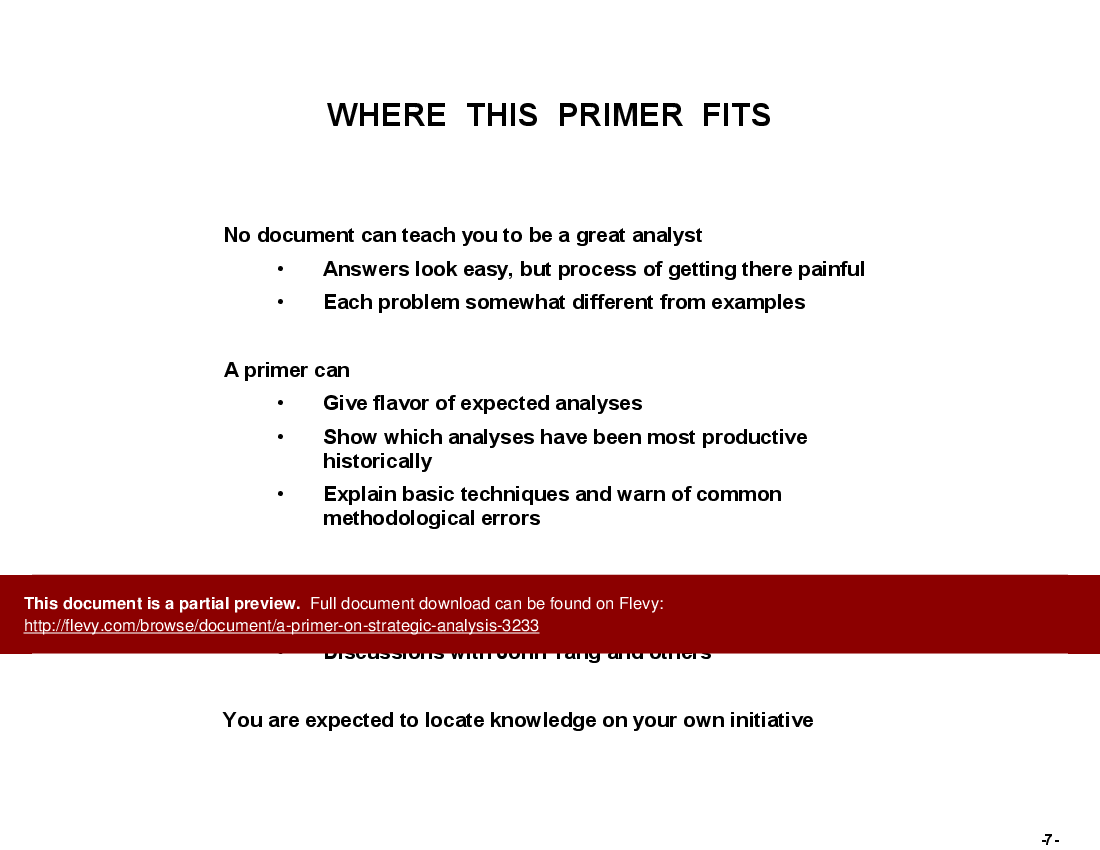


This deck is a strategy training deck prepared by a top-tier consulting firm. The contents include: General analytical techniques, Supply side analysis, Demand side analysis. This deck can give flavor of expected analyses, show which analyses have been most productive historically and explain basic techniques and warn of common methodological errors
It is an ideal reference document for MBA students, corporate managers, business/financial analysts and management consultants.
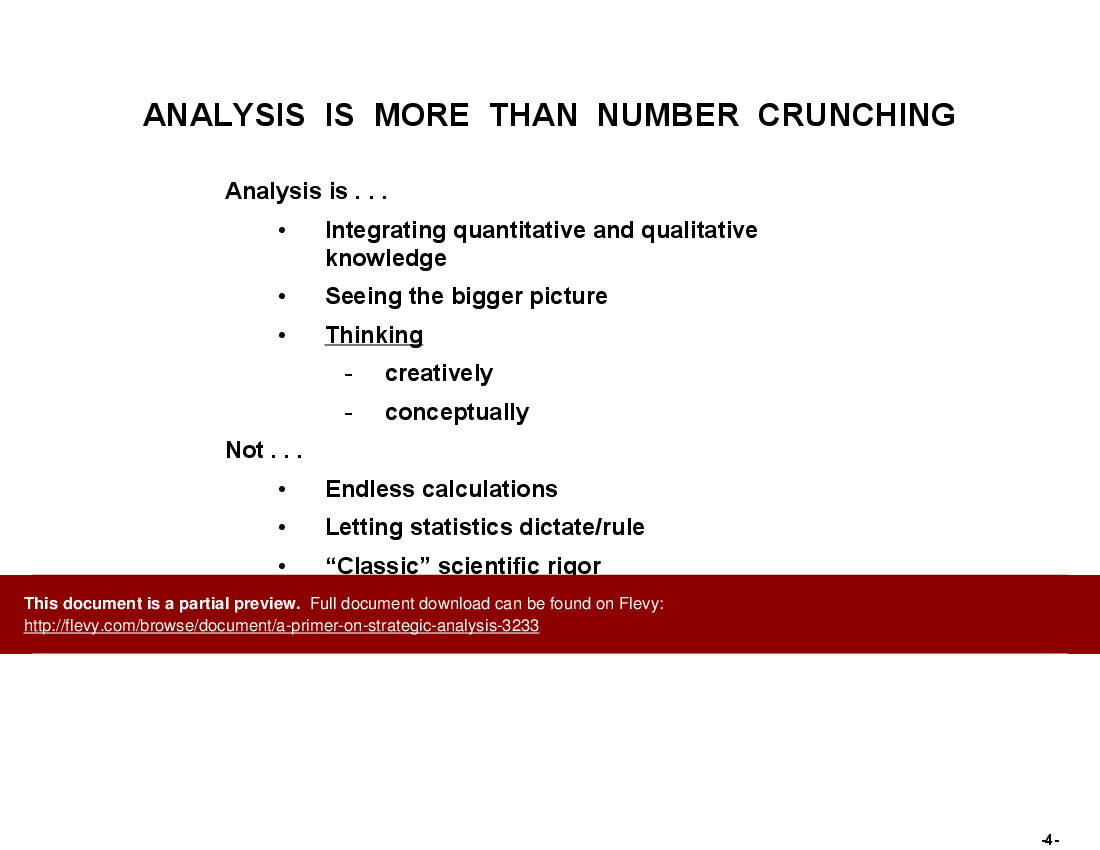
This Strategic Analysis Primer goes beyond traditional number-crunching. It emphasizes integrating both quantitative and qualitative insights, encouraging creative and conceptual thinking. This approach helps you see the bigger picture and avoid common pitfalls like endless calculations and over-reliance on statistics. The primer is designed to enhance your analytical skills by providing a comprehensive understanding of various analytical techniques.
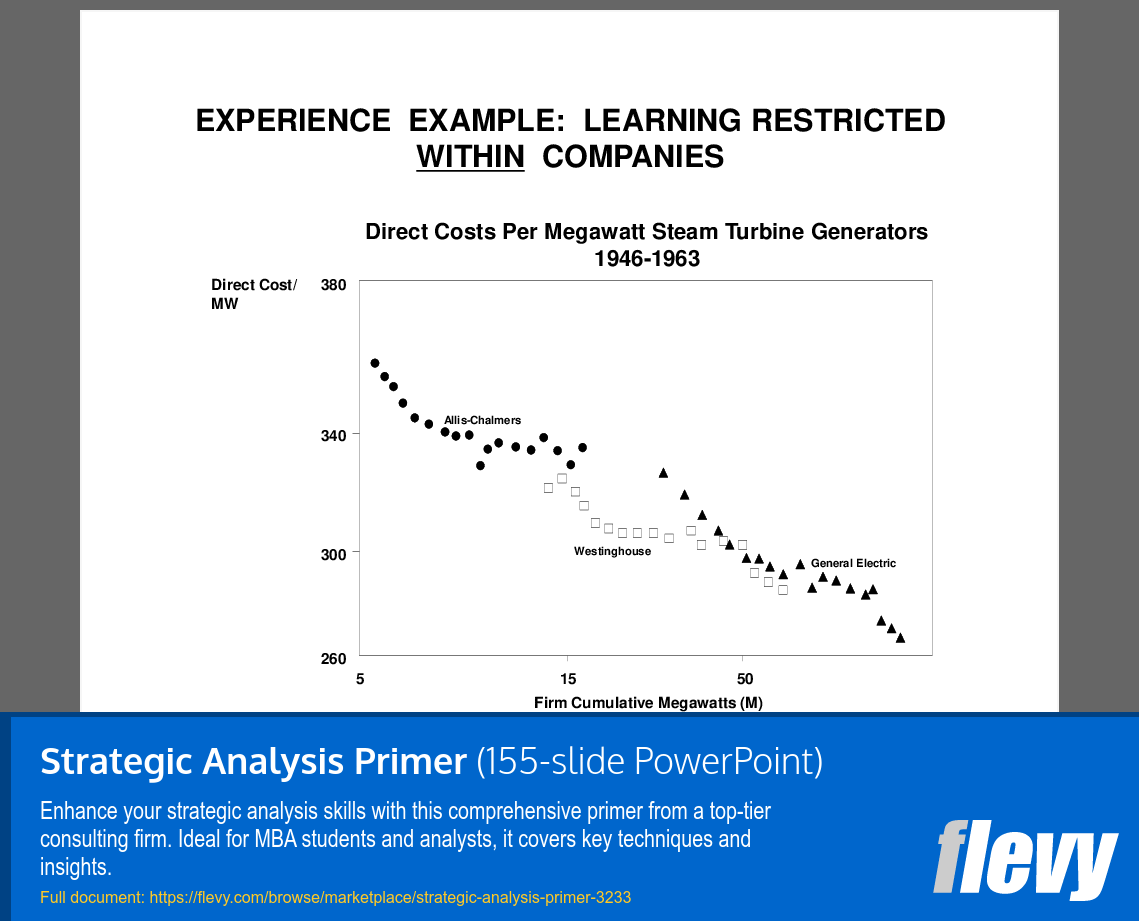
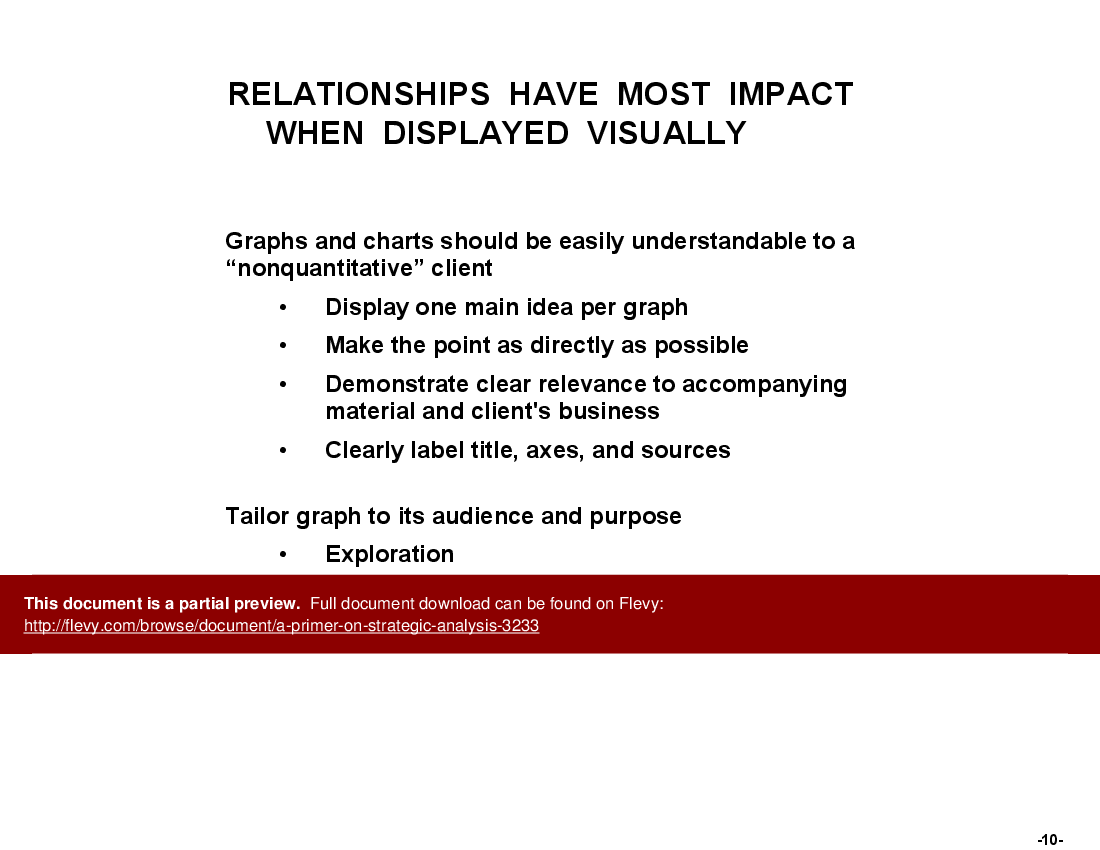
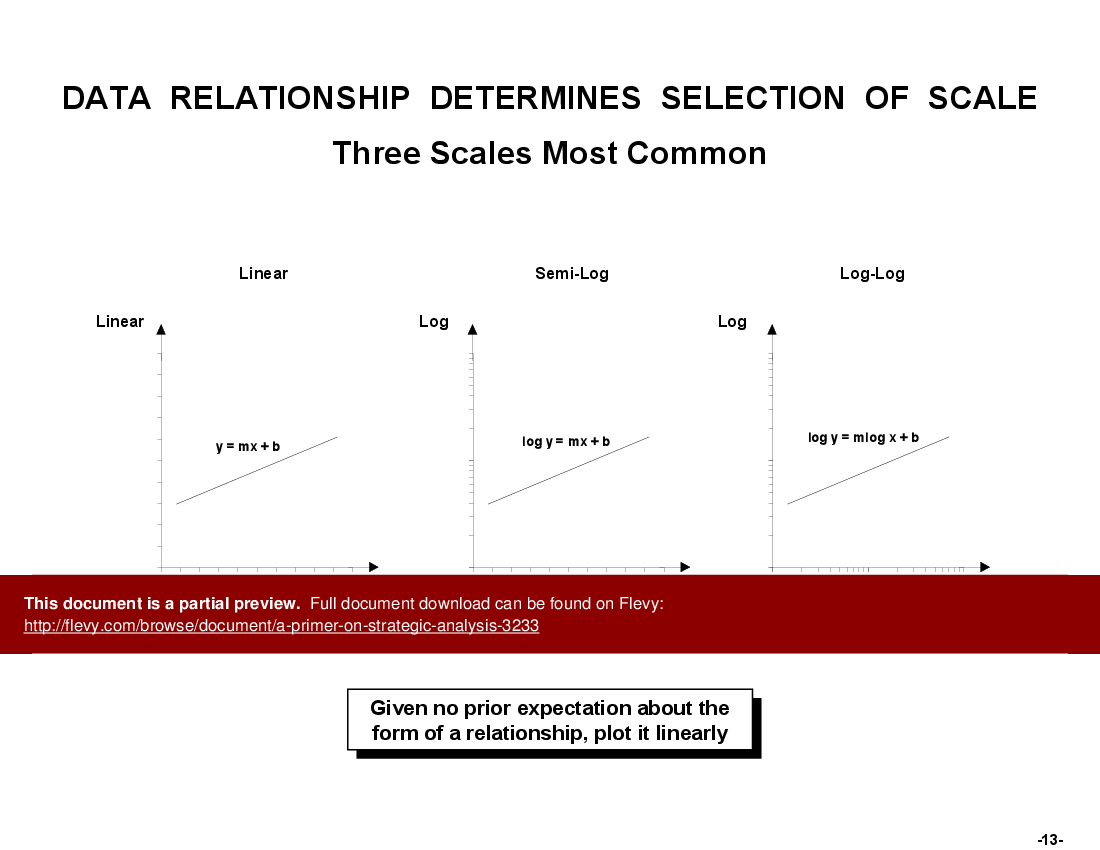
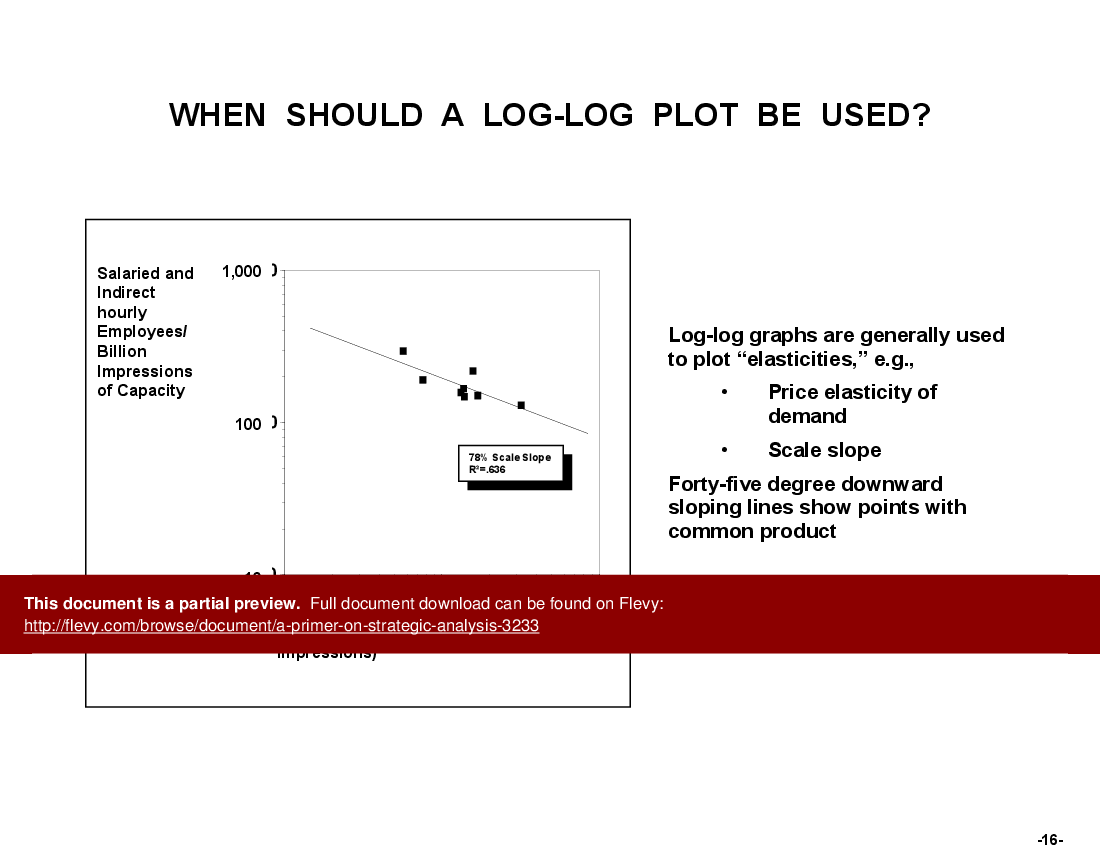
The document also delves into the importance of visual representation in analysis. Graphs and charts should be tailored to the audience, ensuring they are easily understandable and directly relevant to the client's business. This ensures that the data presented is not just informative, but also impactful. The primer guides you on how to effectively use different types of scales, such as linear, semi-log, and log-log, to best represent data relationships.
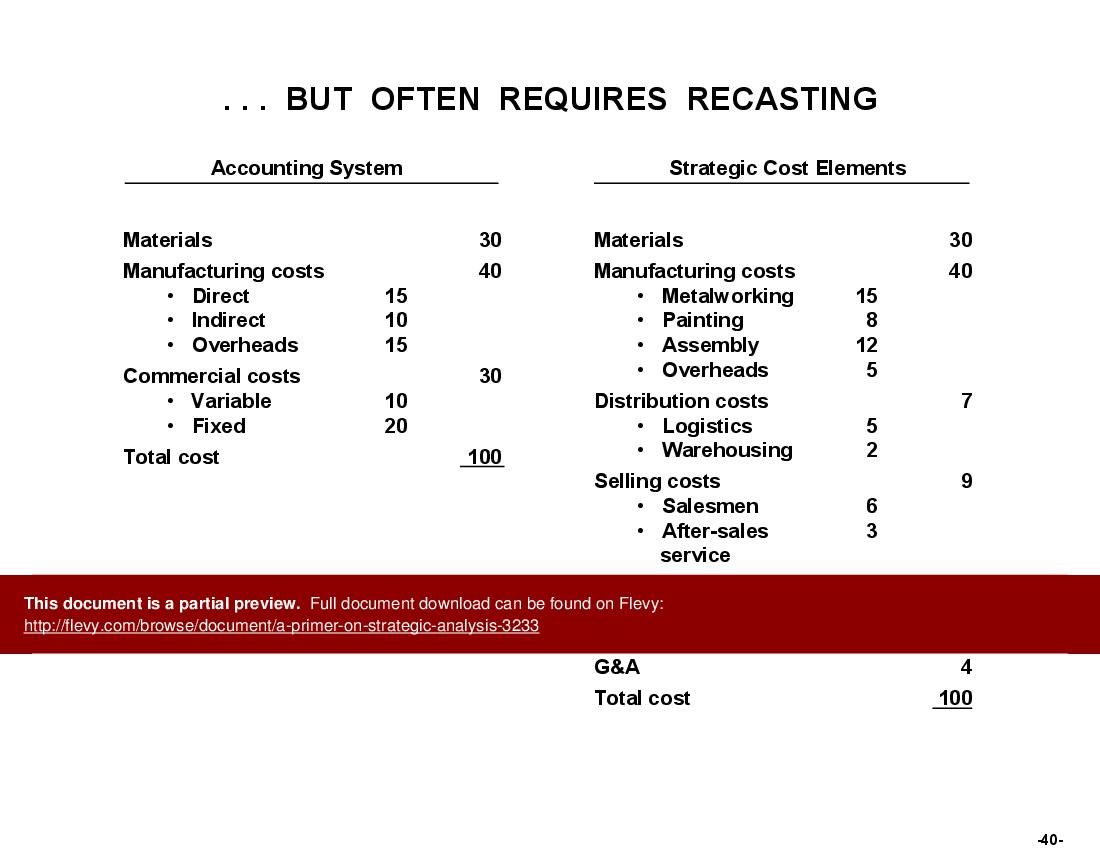
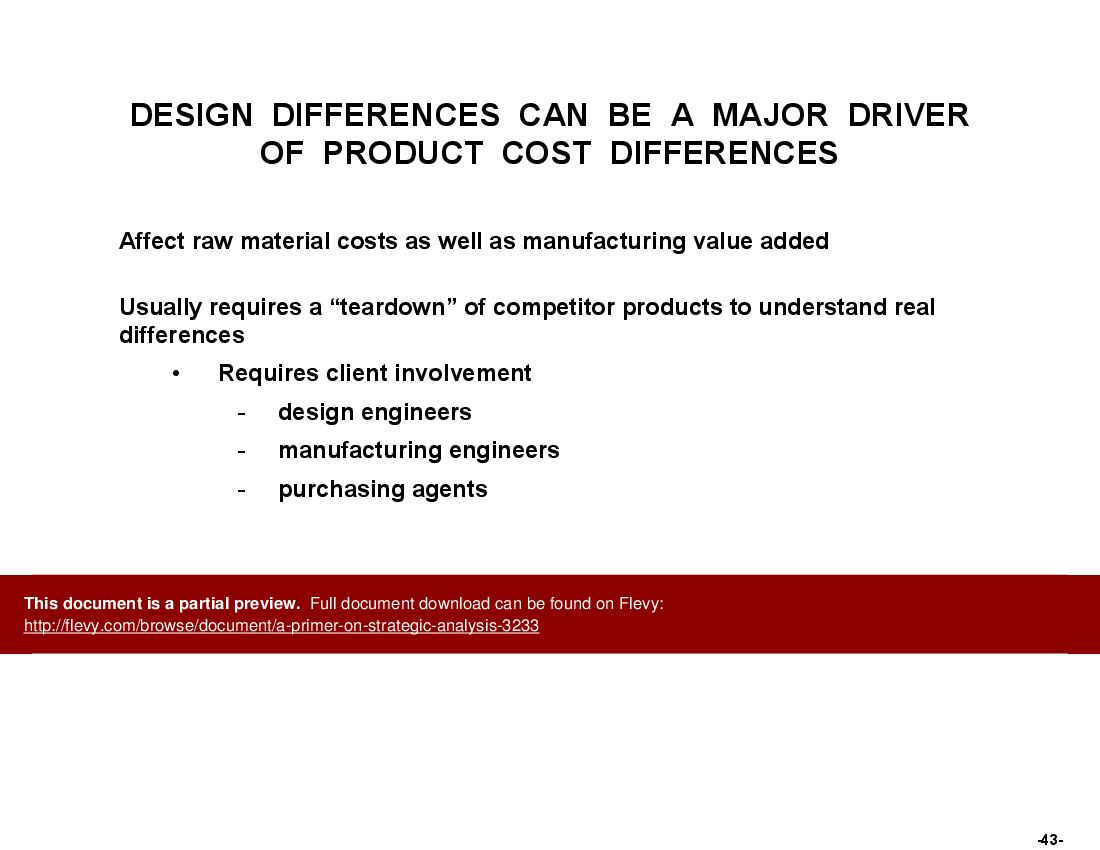
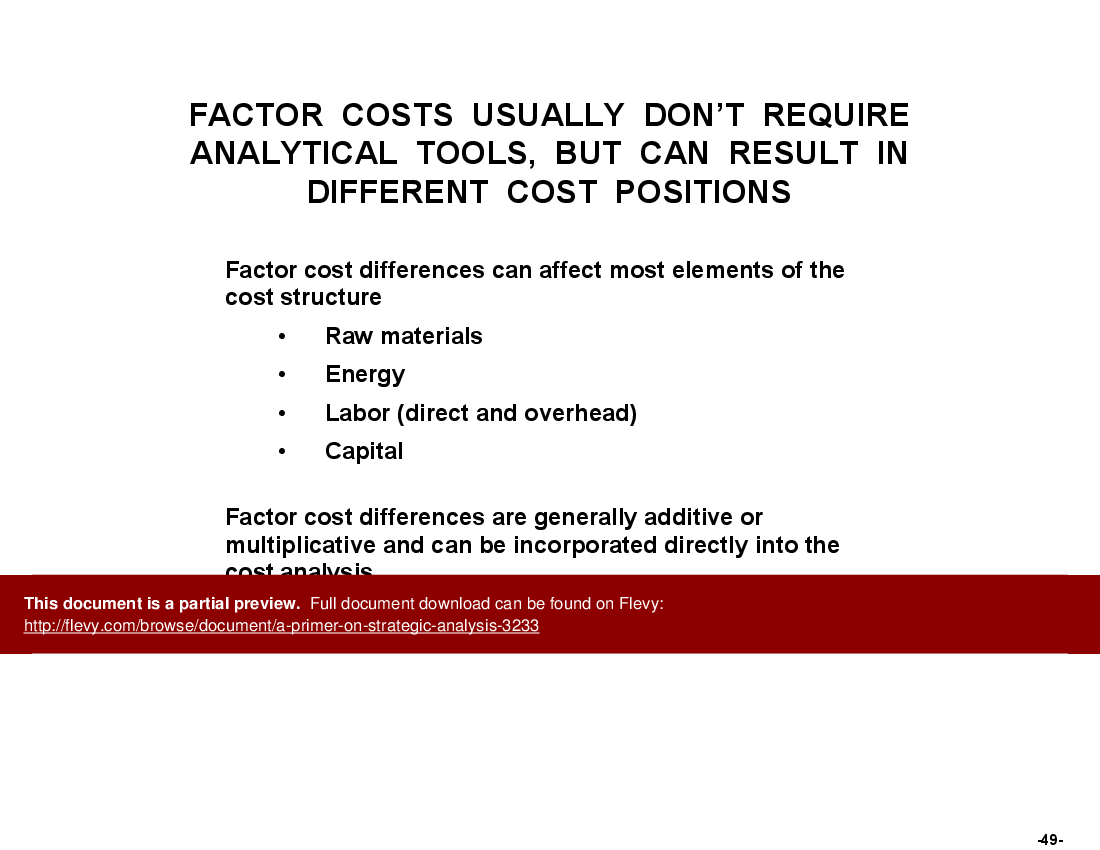
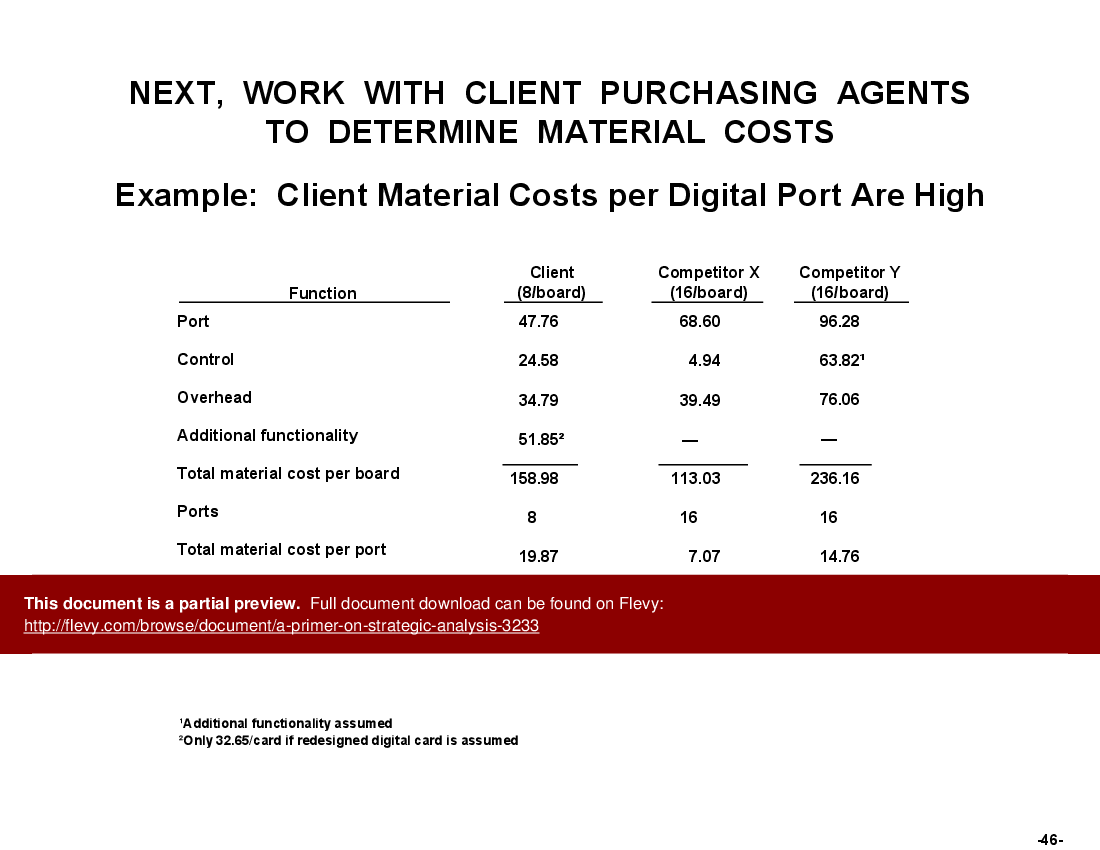
Moreover, the primer covers the nuances of cost analysis, highlighting the significance of understanding cost structures, design differences, and factor costs. It explains how scale, experience, complexity, and utilization affect costs and provides practical examples to illustrate these concepts. This section is particularly useful for those involved in competitive cost analysis and strategic decision-making.
The primer addresses the importance of understanding customer needs through segmentation and conjoint analysis. It provides a framework for identifying the most attractive customer segments and developing targeted action plans. This customer-focused approach ensures that your strategies are aligned with market demands, ultimately driving growth and profitability.
Got a question about the product? Email us at support@flevy.com or ask the author directly by using the "Ask the Author a Question" form. If you cannot view the preview above this document description, go here to view the large preview instead.
Executive Summary
This Strategic Analysis Primer is designed to enhance analytical skills essential for effective strategy development, embodying the rigor and clarity you would expect from a McKinsey, Bain, or BCG-quality presentation (consulting-grade; not affiliated). It serves as a foundational resource for understanding complex business dynamics, integrating both qualitative and quantitative insights. Users will learn to apply various analytical techniques to evaluate competitive environments, customer behaviors, and market trends, ultimately enabling informed decision-making and strategic planning.
Who This Is For and When to Use
• MBA students seeking to deepen their analytical capabilities
• Business analysts focused on strategic insights and market assessments
• Corporate executives aiming to refine their strategic frameworks
• Consultants involved in competitive analysis and client advisory roles
Best-fit moments to use this deck:
• During strategic planning sessions to inform decision-making
• When conducting market assessments to identify growth opportunities
• For training sessions aimed at enhancing analytical skills within teams
Learning Objectives
• Define key analytical techniques for strategic analysis
• Build comprehensive supply and demand models to evaluate market dynamics
• Establish effective methods for customer segmentation and understanding
• Analyze cost structures and their impact on competitive positioning
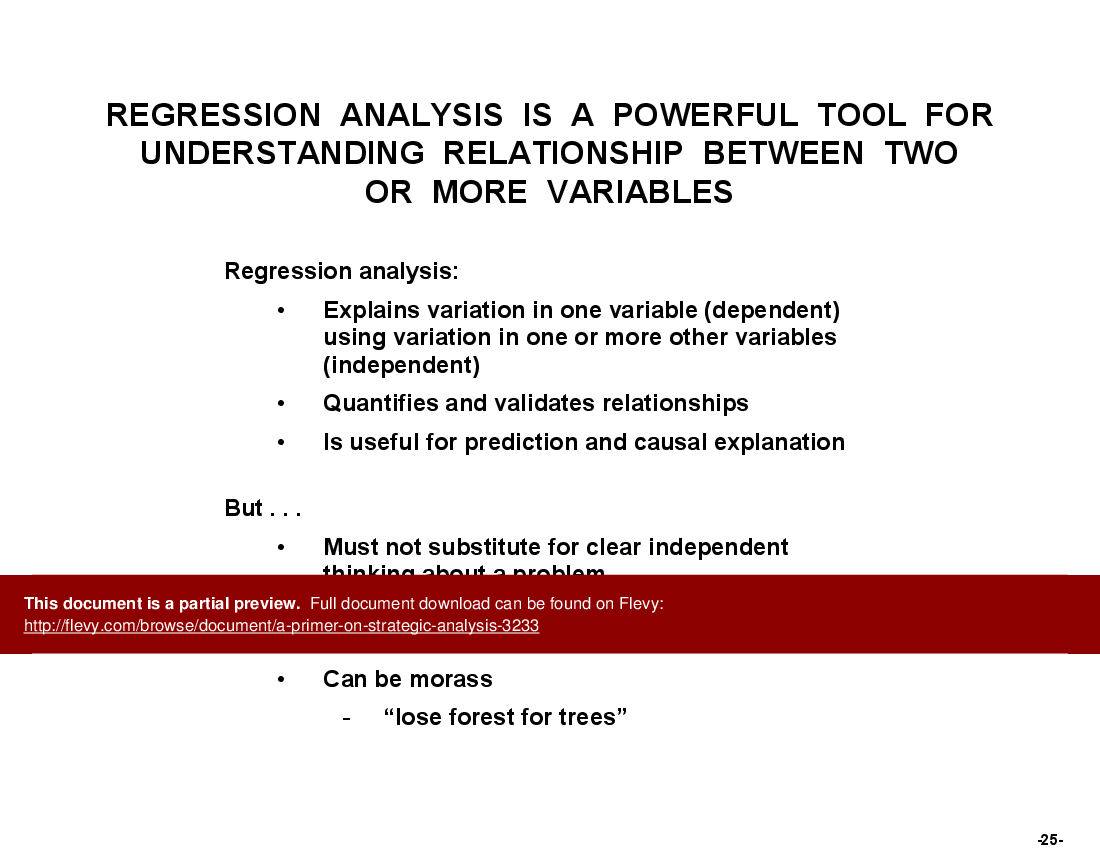
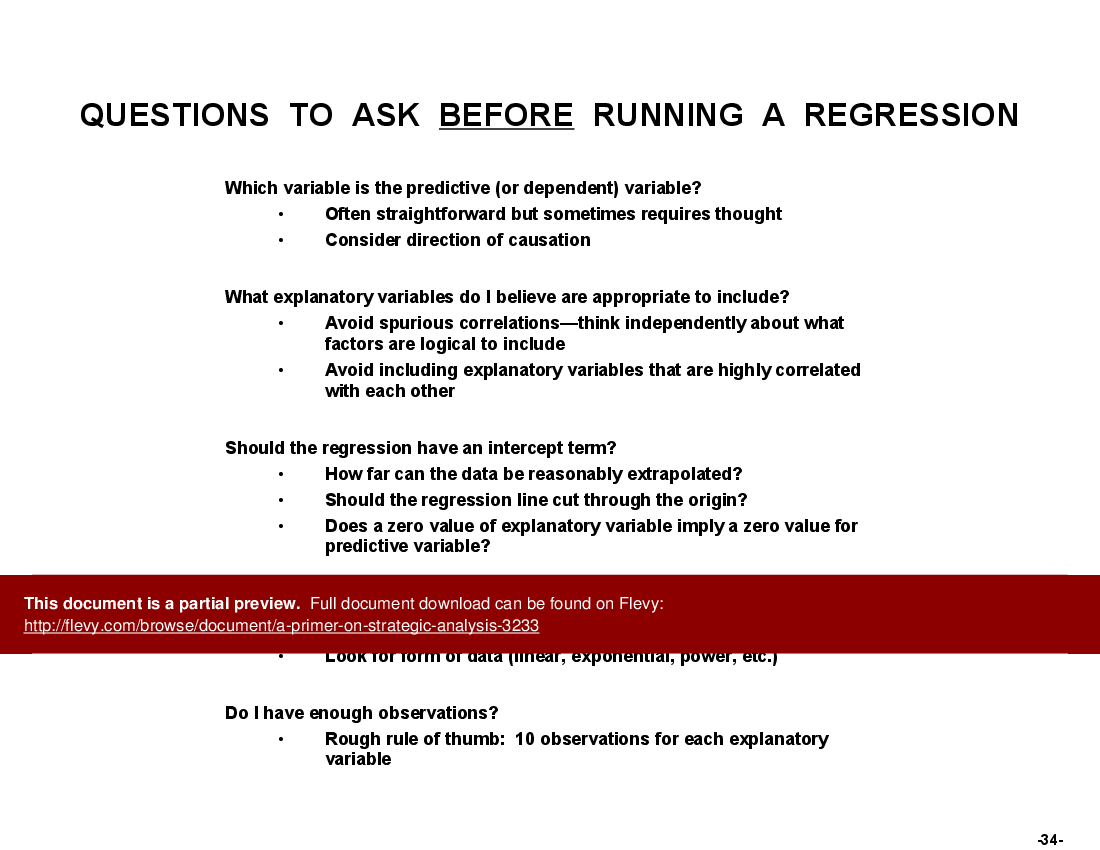
• Apply regression analysis to quantify relationships between variables
• Develop skills in visual data representation for clear communication
Table of Contents
• Introduction (page 1)
• General Analytical Techniques (page 2)
• Supply Side Analysis (page 10)
• Demand Side Analysis (page 19)
• Wrap-Up (page 49)
Primary Topics Covered
• General Analytical Techniques - This section introduces foundational analytical methods, including graphs, deflators, and regression analysis, essential for strategic evaluation.
• Supply Side Analysis - Focuses on understanding cost structures, design differences, and factors affecting supply, enabling a comprehensive view of operational efficiency.
• Demand Side Analysis - Covers customer understanding through segmentation, conjoint analysis, and demand forecasting, crucial for aligning offerings with market needs.
• Price-Volume Curves and Elasticity - Discusses the relationship between pricing strategies and demand elasticity, providing insights into optimizing revenue.
• Technology/Substitution Curves - Explores how technological advancements impact market dynamics and consumer preferences, essential for forecasting trends.
Deliverables, Templates, and Tools
• Analytical framework templates for supply and demand analysis
• Regression analysis models for quantifying relationships
• Customer segmentation matrices for targeted marketing strategies
• Visual data representation tools for effective communication of findings
• Cost structure analysis templates for competitive benchmarking
Slide Highlights
• Overview of general analytical techniques with visual examples
• Graphical representation of supply and demand curves
• Case studies illustrating the application of regression analysis
• Visual aids for understanding elasticity and pricing strategies
• Examples of effective customer segmentation methodologies
Potential Workshop Agenda
Introduction to Strategic Analysis Techniques (60 minutes)
• Overview of analytical frameworks and their applications
• Discussion on the importance of data-driven decision-making
Hands-On Regression Analysis Workshop (90 minutes)
• Interactive session on building and interpreting regression models
• Group exercises on analyzing real-world data sets
Customer Segmentation and Demand Forecasting (60 minutes)
• Techniques for effective customer segmentation
• Practical applications of demand forecasting models
Customization Guidance
• Adapt the analytical frameworks to align with specific industry contexts
• Modify customer segmentation criteria based on unique market characteristics
• Tailor regression models to reflect relevant variables in client scenarios
Secondary Topics Covered
• The importance of visual data representation in analysis
• Common pitfalls in analytical methodologies and how to avoid them
• The role of qualitative insights in quantitative analysis
• Best practices for conducting effective market research
FAQ
What analytical techniques are covered in this primer?
The primer covers various techniques, including regression analysis, supply and demand modeling, and customer segmentation, essential for strategic evaluation.
How can I apply these techniques in my organization?
Utilize the frameworks and templates provided in the primer to conduct market assessments, enhance decision-making, and refine strategic initiatives.
Is this primer suitable for beginners in strategic analysis?
Yes, the primer is designed to provide foundational knowledge while also offering advanced insights for experienced analysts.
Can I customize the templates for my specific industry?
Absolutely, the templates are designed to be adaptable to various industries and contexts.
What resources are included for further learning?
The primer includes references to additional readings and resources for deepening your understanding of strategic analysis techniques.
How does regression analysis enhance strategic decision-making?
Regression analysis quantifies relationships between variables, allowing for data-driven insights that inform strategic choices and predictions.
What is the significance of customer segmentation?
Customer segmentation helps identify distinct groups within the market, enabling tailored marketing strategies and improved customer engagement.
How can I visualize complex data effectively?
The primer provides guidelines on creating clear and impactful visual representations of data, enhancing communication of insights.
Glossary
• Regression Analysis - A statistical method for examining the relationship between variables.
• Elasticity - A measure of how much demand changes in response to price changes.
• Customer Segmentation - The process of dividing a market into distinct groups of buyers.
• Supply Curve - A graphical representation of the relationship between price and quantity supplied.
• Demand Curve - A graphical representation of the relationship between price and quantity demanded.
• Conjoint Analysis - A market research technique used to determine consumer preferences for product attributes.
• Multi-Dimensional Scaling (MDS) - A statistical technique for visualizing the similarities or dissimilarities of data points.
• Cost Structure - The various costs incurred by a business in its operations.
• Deflator - An index used to convert nominal values into real values by adjusting for inflation.
• Price-Volume Curve - A graphical representation that illustrates the relationship between price and quantity sold.
• Technology Substitution Curve - A model that describes the rate at which one technology is adopted in place of another.
• Market Research - The process of gathering, analyzing, and interpreting information about a market.
• Qualitative Analysis - An analysis that focuses on understanding underlying reasons and motivations.
• Quantitative Analysis - An analysis that focuses on numerical data and statistical methods.
• Competitive Positioning - The process of establishing a brand or product in relation to competitors.
• Opportunity Cost - The potential benefits lost when choosing one alternative over another.
• Market Dynamics - The forces that impact the supply and demand of goods and services in a market.
• Cumulative Volume - The total amount of a product sold over a specific period.
• Strategic Planning - The process of defining an organization's direction and making decisions on allocating resources.
• Analytical Framework - A structured approach to analyzing data and drawing conclusions.
• Data Visualization - The graphical representation of information and data.
Source: Best Practices in Strategic Analysis PowerPoint Slides: Strategic Analysis Primer PowerPoint (PPT) Presentation Slide Deck, Documents & Files
|
Download our FREE Strategy & Transformation Framework Templates
Download our free compilation of 50+ Strategy & Transformation slides and templates. Frameworks include McKinsey 7-S, Balanced Scorecard, Disruptive Innovation, BCG Curve, and many more. |