
Developed by a Senior Executive and Operational Excellence Coach with experience at organizations including NOKIA, MICROVENTION, and MAGELLAN, this presentation provides a detailed Introduction to Process Capability Studies using Minitab.

Explore this comprehensive Six Sigma Process Capability Study, crafted by an ex-NOKIA executive. Master statistical tools for data-driven decision-making. Six Sigma - Process Capability Study is a 103-slide PPT PowerPoint presentation slide deck (PPTX) with a supplemental Excel document available for immediate download upon purchase.
The Six Sigma – Process Capability Study Training Module includes:
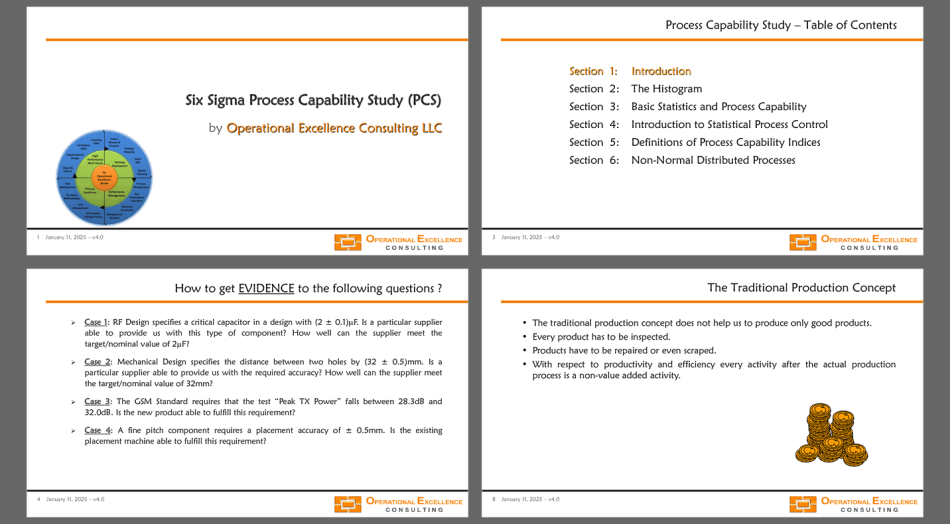
1. MS PowerPoint Presentation including 101 slides covering
• Introduction to Six Sigma,
• Creating and analyzing a Histogram,
• Basic Statistics & Product Capability,
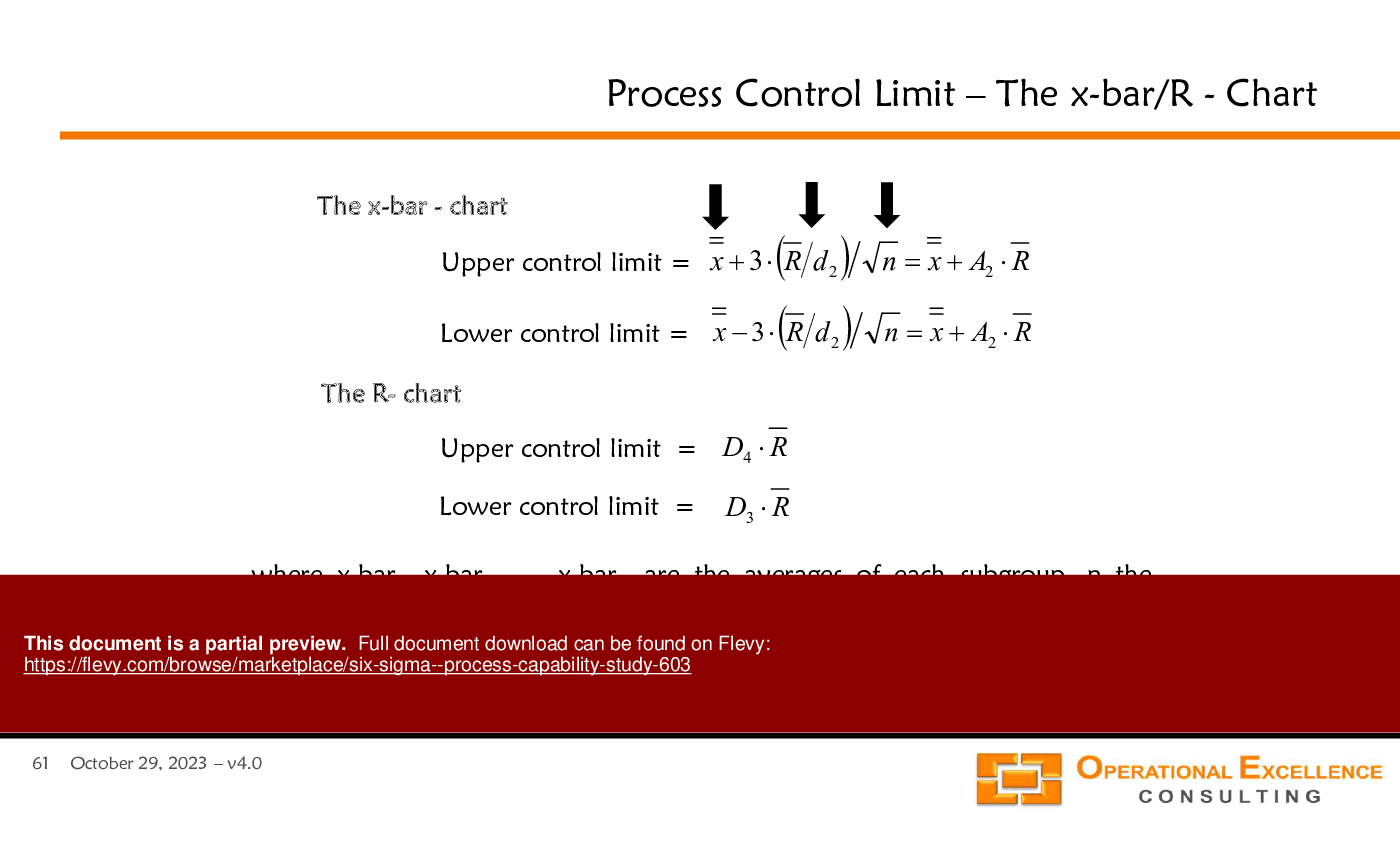
• Statistical Process Control for Variable Data,
• Definitions of Process Capability Indices,
• Confidence Interval Analysis for Capability Indices,
• Capability Study for Non-Normal Distributed Processes,
• and several Exercises.
2. MS Excel Confidence Interval Analysis Calculator making it really easy to calculate Confidence Intervals for Capability Indices and other Statistics.
"After you have downloaded the training material, you can change any part of the training material and remove all logos and references to Operational Excellence Consulting. You can share the material with your colleagues and clients, and re-use it as you need. The only restriction is that you cannot publicly re-distribute, sell, rent or license the material as though it is your own. Thank you."
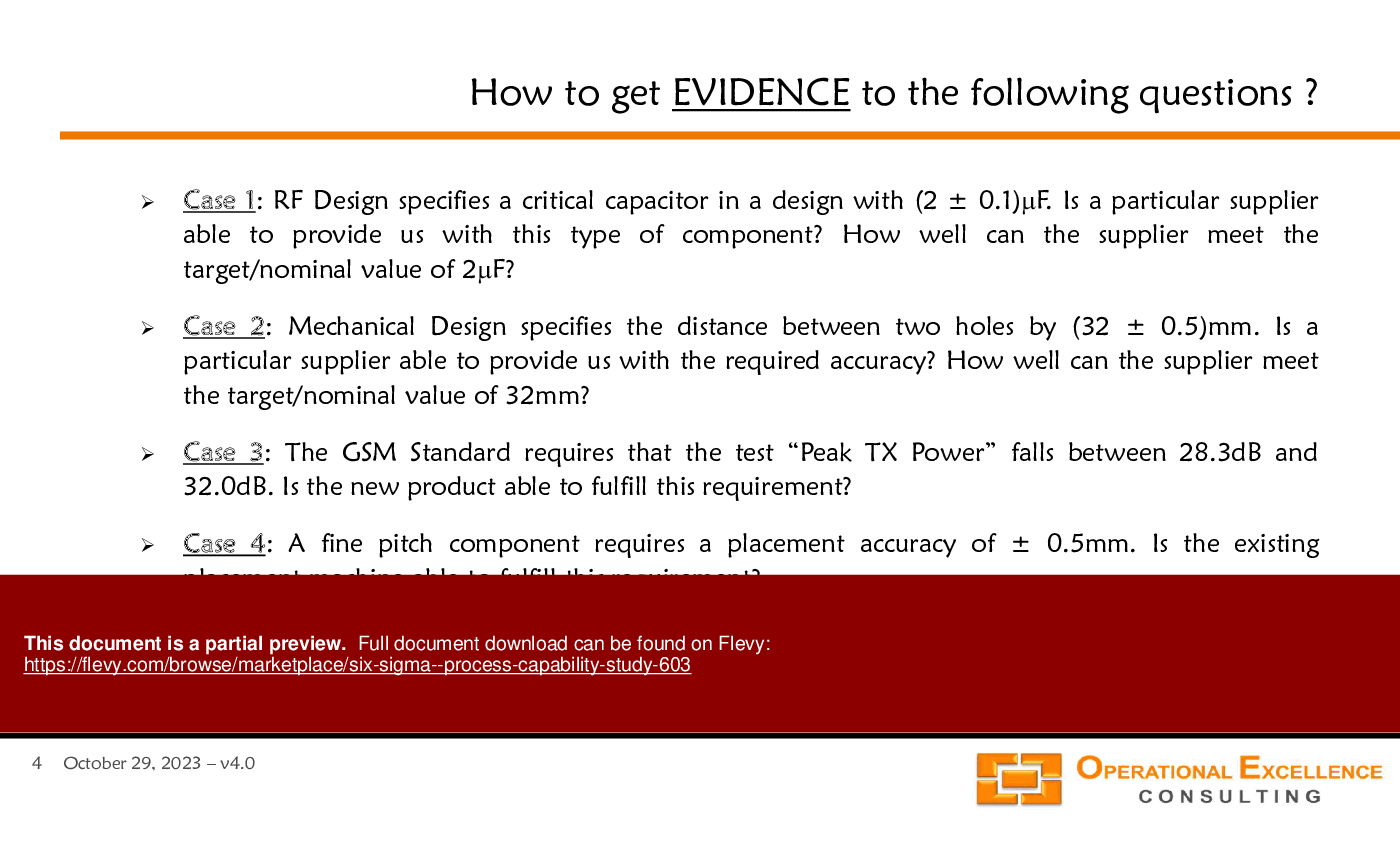
This training module delves into real-world scenarios, providing case studies that challenge you to determine supplier capabilities and compliance with stringent design specifications. It equips you with the tools to gather evidence and make data-driven decisions, ensuring your processes meet exacting standards.
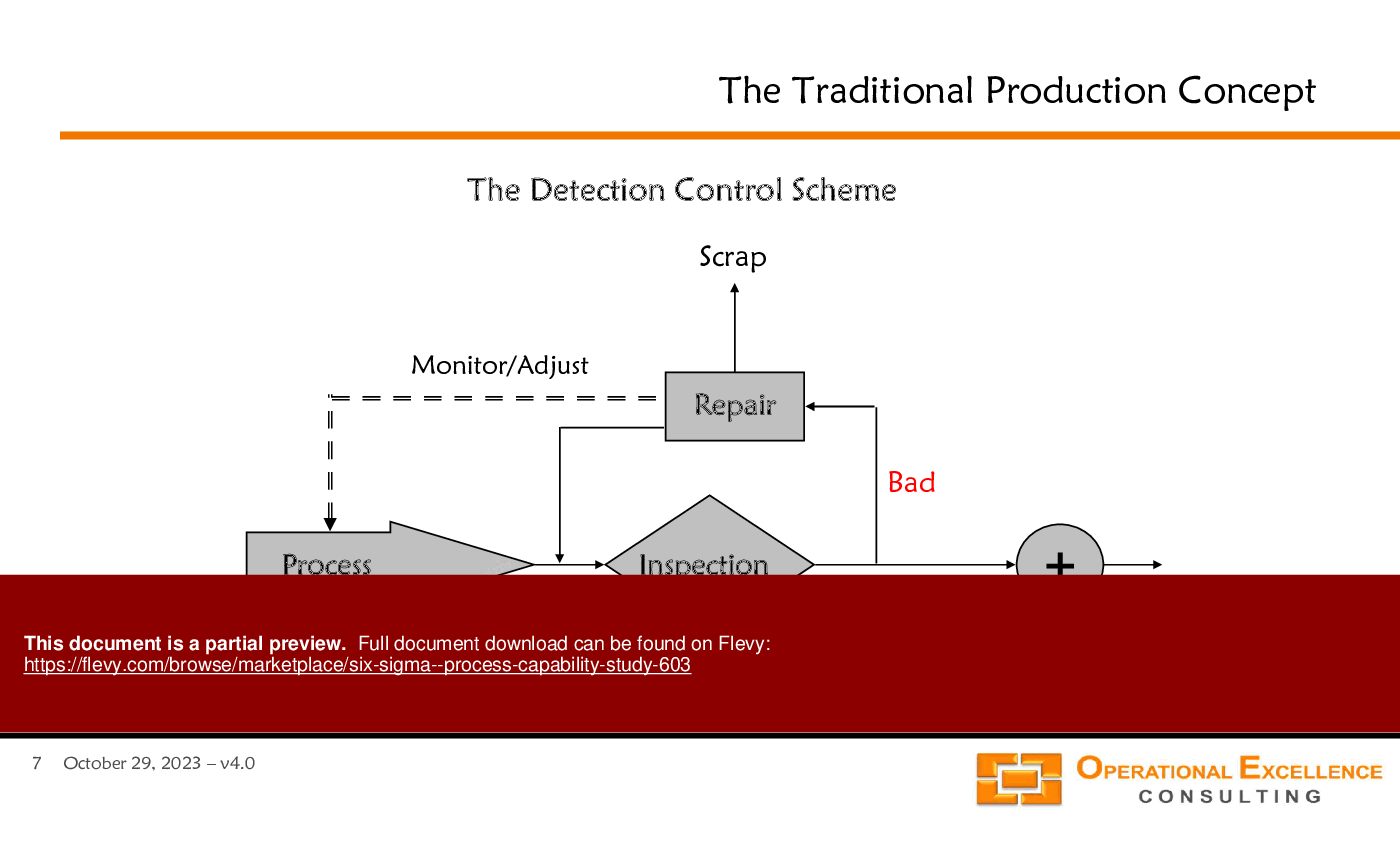
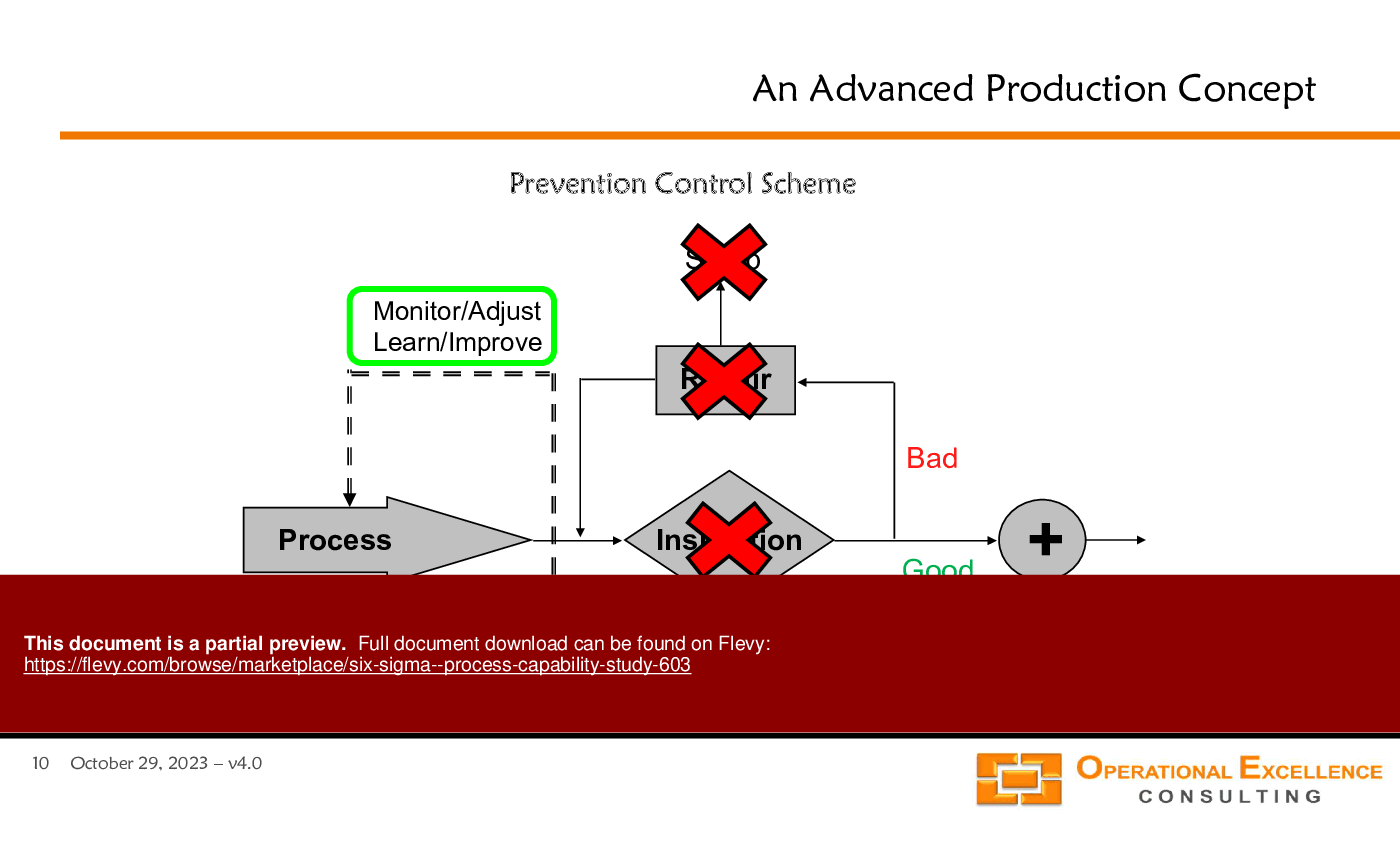
The module contrasts traditional production concepts with advanced Six Sigma methodologies, highlighting the shift from detection to prevention control schemes. This approach minimizes defects and optimizes process performance, aligning with the Six Sigma philosophy of continuous improvement and operational excellence.
Got a question about the product? Email us at support@flevy.com or ask the author directly by using the "Ask the Author a Question" form. If you cannot view the preview above this document description, go here to view the large preview instead.
MARCUS OVERVIEW
This synopsis was written by Marcus [?] based on the analysis of the full 103-slide presentation.
Executive Summary
The Six Sigma Process Capability Study (PCS) presentation is an essential resource for professionals seeking to enhance their understanding of process capability using statistical methods. Developed by Operational Excellence Consulting LLC, this deck provides a thorough exploration of process capability concepts, statistical tools, and methodologies, particularly utilizing Minitab. Users will gain insights into measuring process performance, identifying defects, and implementing continuous improvement strategies, ultimately leading to enhanced operational efficiency and quality control.
Who This Is For and When to Use
• Quality Assurance Managers focused on process improvement and defect reduction
• Operations Managers seeking to optimize production processes
• Data Analysts tasked with interpreting process data and generating reports
• Six Sigma Practitioners aiming to apply statistical methods in real-world scenarios
Best-fit moments to use this deck:
• During training sessions for new team members on process capability concepts
• In workshops aimed at improving quality control measures
• When conducting process capability assessments for ongoing projects
Learning Objectives
• Define key concepts related to process capability and statistical process control
• Build histograms to visually represent data distributions and variations
• Establish process capability indices (Cp, Cpk) to evaluate process performance
• Identify and analyze patterns of variation in processes
• Implement statistical tools for continuous process improvement
• Understand the implications of non-normal distributions on process capability
Table of Contents
• Introduction (page 1)
• The Histogram (page 2)
• Basic Statistics and Process Capability (page 3)
• Introduction to Statistical Process Control (page 4)
• Definitions of Process Capability Indices (page 5)
• Non-Normal Distributed Processes (page 6)
Primary Topics Covered
• Introduction - Overview of process capability and its significance in quality management.
• Histogram - Techniques for creating histograms to visualize data distributions.
• Basic Statistics - Fundamental statistical concepts relevant to process capability analysis.
• Statistical Process Control - Introduction to control charts and their applications in monitoring processes.
• Process Capability Indices - Definitions and calculations of Cp and Cpk to assess process performance.
• Non-Normal Distributions - Strategies for handling non-normal data in process capability studies.
Deliverables, Templates, and Tools
• Histogram creation template for visualizing process data
• Control chart templates for monitoring process stability
• Process capability index calculation sheets for Cp and Cpk
• Guidelines for analyzing non-normal data distributions
• Case studies demonstrating application of statistical methods in real-world scenarios
Slide Highlights
• Visual representation of the histogram and its significance in data analysis
• Examples of control charts illustrating process performance over time
• Definitions and calculations of key process capability indices
• Case studies showcasing the impact of statistical process control on operational efficiency
• Insights into handling non-normal distributions and their implications for process capability
Potential Workshop Agenda
Introduction to Process Capability (60 minutes)
• Overview of process capability concepts
• Discussion of the importance of statistical methods in quality management
Histogram Creation Workshop (90 minutes)
• Hands-on session for creating histograms
• Analyzing data distributions and identifying patterns
Process Capability Indices Analysis (60 minutes)
• Calculation of Cp and Cpk
• Discussion on interpreting results and implications for process improvement
Customization Guidance
• Tailor the histogram examples to reflect specific industry data
• Modify case studies to align with organizational processes and challenges
• Update control chart templates to incorporate company-specific metrics
Secondary Topics Covered
• Historical context of statistical process control
• Comparison of traditional vs. advanced production concepts
• Overview of common causes and special causes of variation
• Techniques for continuous improvement in operational processes
FAQ What is the purpose of a process capability study?
A process capability study evaluates how well a process can produce output within specified limits, helping identify areas for improvement.
How do I create a histogram?
Collect data points, organize them, determine the number of bars, and calculate the frequency of data points within each range.
What are Cp and Cpk?
Cp measures the potential capability of a process, while Cpk assesses how well the process is centered within specification limits.
What should I do if my data is not normally distributed?
Use statistical techniques to transform the data or apply specific methods designed for non-normal distributions.
How can I implement continuous improvement in my processes?
Utilize the insights gained from process capability studies to identify defects and implement strategies for reducing variation.
What tools can I use for statistical process control?
Minitab and other statistical software can be used to create control charts and analyze process data effectively.
How do I interpret control charts?
Control charts display process data over time, allowing you to identify trends, shifts, or out-of-control conditions.
What are common causes of variation in processes?
Common causes are inherent to the process design and affect all outcomes, while special causes arise from specific circumstances.
Glossary
• Process Capability - The ability of a process to produce output within specified limits.
• Histogram - A graphical representation of data distribution.
• Cp - Capability index indicating potential process performance.
• Cpk - Capability index considering actual process performance.
• Control Chart - A tool for monitoring process stability over time.
• Variation - The degree of deviation in process outcomes.
• Non-Normal Distribution - A data distribution that does not follow a normal curve.
• Common Cause - A source of variation inherent to the process.
• Special Cause - A source of variation due to specific circumstances.
• Statistical Process Control (SPC) - A method for monitoring and controlling processes using statistical techniques.
• Defect - Any variation that prevents a product from meeting specifications.
• Continuous Improvement - Ongoing efforts to enhance products, services, or processes.
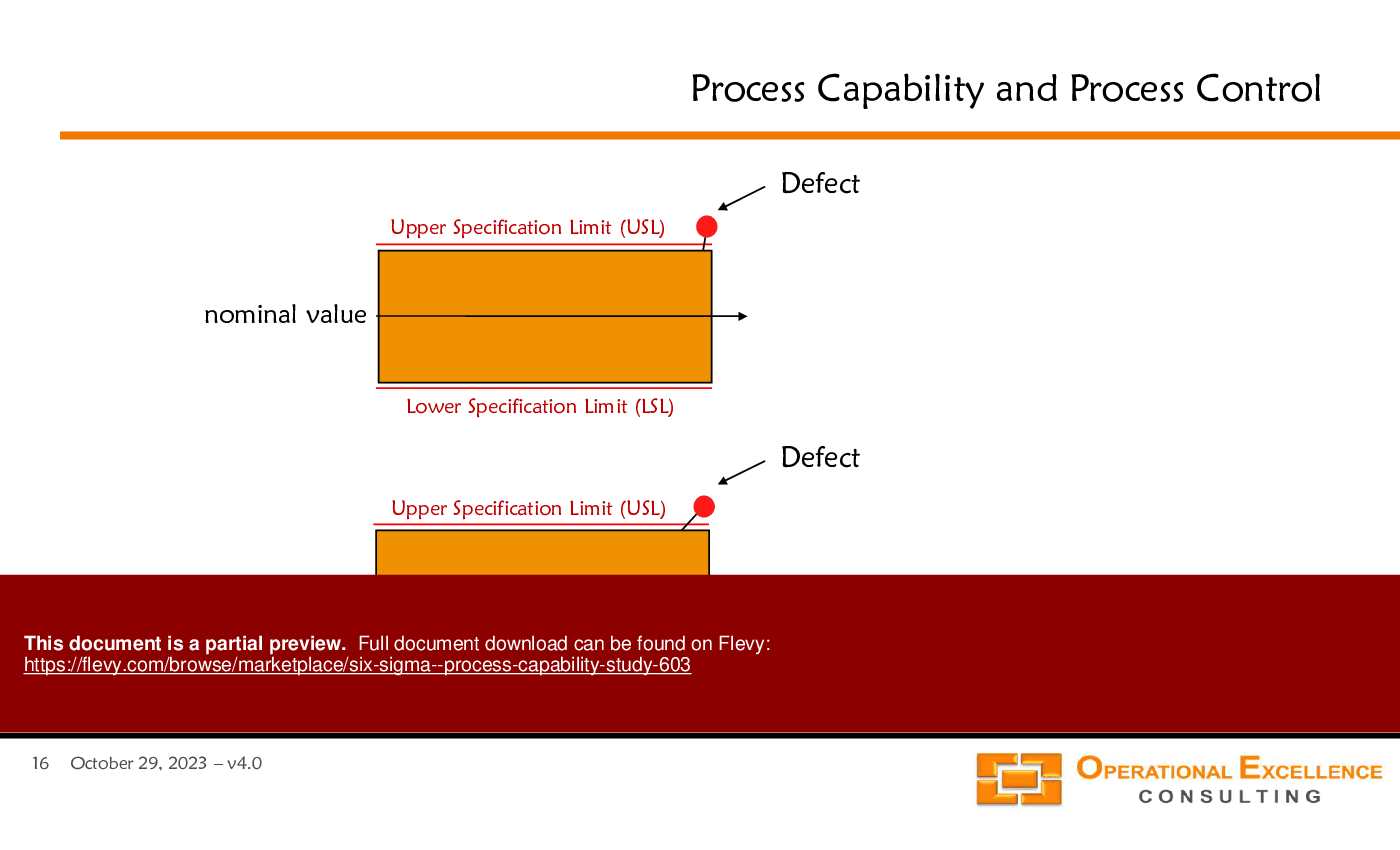
This PPT slide illustrates the concept of tolerance in product and process specifications, highlighting the nominal value as the required characteristic. Tolerance defines the acceptable variation range around this nominal value, with 2 key limits: Lower Specification Limit (LSL) and Upper Specification Limit (USL). These limits establish the boundaries for acceptable product performance, with the space between them designated as tolerance, essential for quality control. Clear specifications minimize defects and enhance efficiency, impacting product quality and customer satisfaction. This foundational concept is critical in quality management and process improvement initiatives, guiding informed decisions regarding process adjustments and quality assurance practices.
This PPT slide provides an overview of confidence intervals for process capability indices Cp and Cpk, based on a sample size of 46 observations. The Cp value is 1.56, with a PPM (parts per million) figure of 103,835 indicating significant defects. Confidence intervals are presented at 90%, 95%, and 99% confidence levels. For Cp, the lower limit decreases from 1.29 to 1.14, while the upper limit increases from 1.83 to 1.98, indicating a narrowing uncertainty range. For Cpk, the lower limit starts at 0.31 and rises to 0.25, with upper limits progressing from 0.53 to 0.59. The consistent Cpk value of 0.42 suggests stable process capability, while lower limits indicate areas for improvement. Monitoring these indices is essential for quality control and operational efficiency.
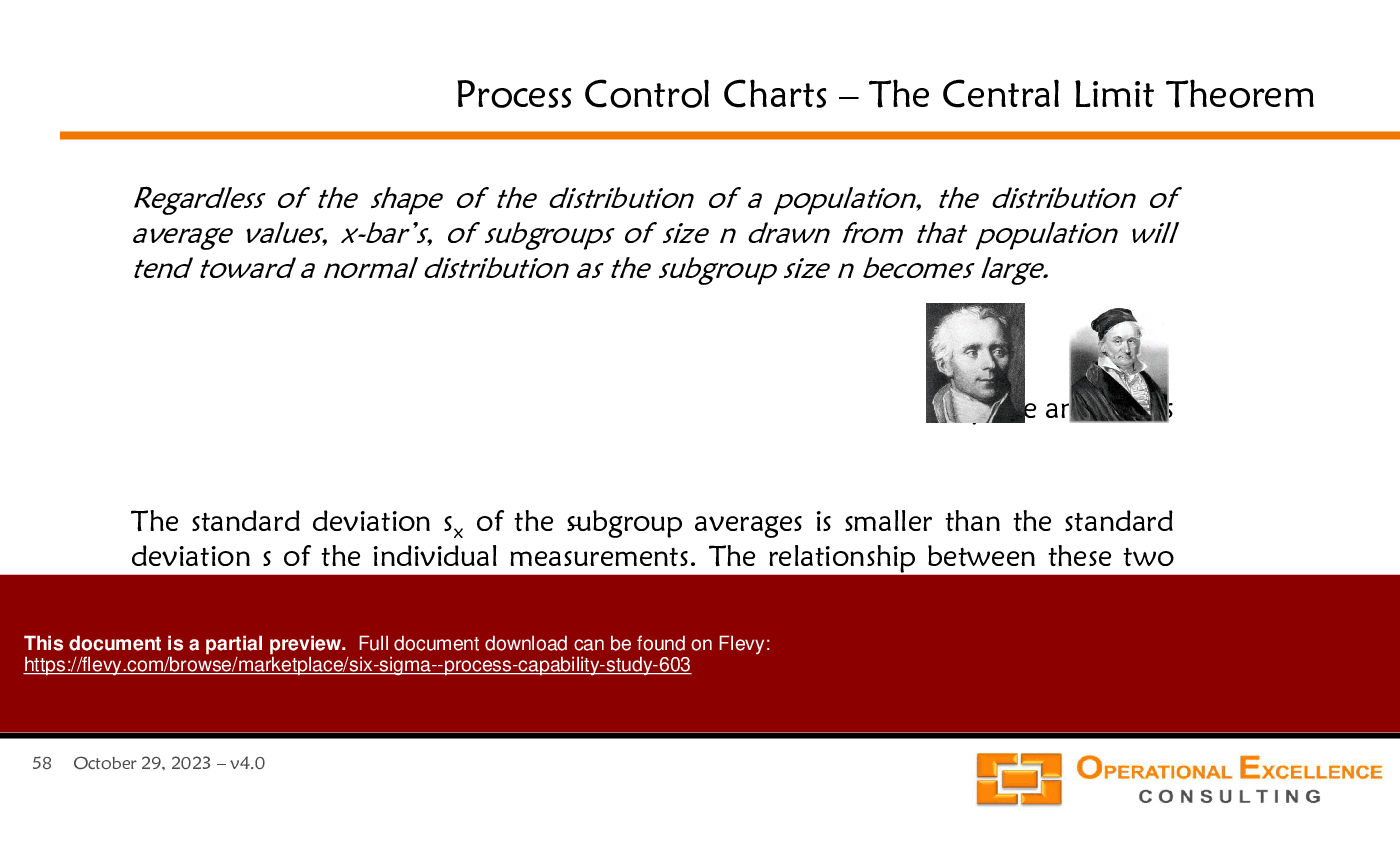
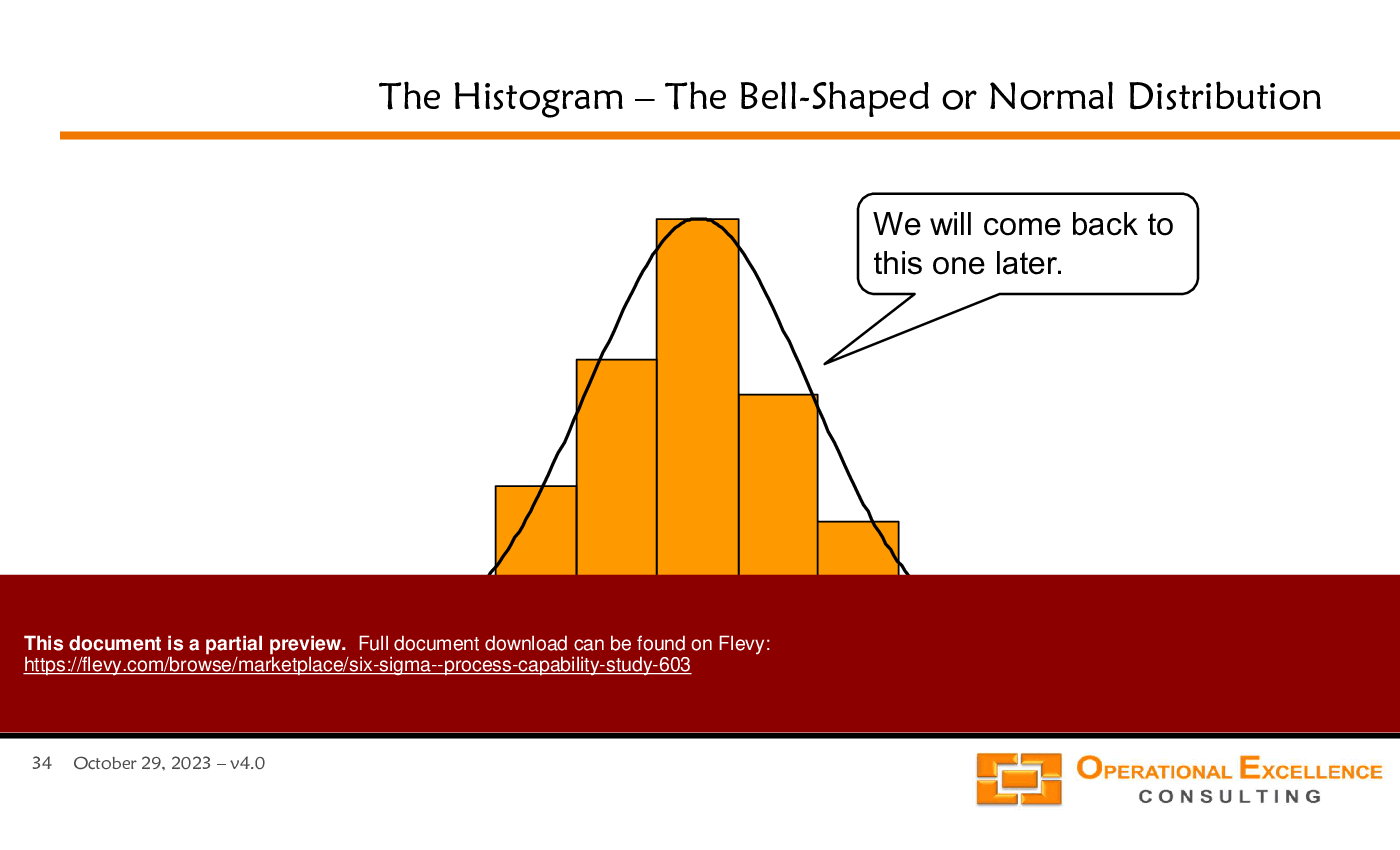
This PPT slide visualizes the normal distribution, focusing on process variability and control limits essential for process capability. The lower and upper control limits indicate acceptable variability thresholds. It details that 34.13% of data points fall within one standard deviation (sigma) from the average, with only 2.14% beyond 3 standard deviations, highlighting the rarity of extreme variations. If a process is under control, over 99.74% of data points will remain within the average plus and minus 3 standard deviations, providing a benchmark for evaluating process performance. This distribution is crucial for identifying improvement areas and supports Six Sigma methodologies by quantifying variability in processes.
This PPT slide focuses on a statistical process control (SPC) criterion that highlights the significance of observing nine consecutive points on one side of the average in an I-MR (Individuals and Moving Range) chart. This criterion is essential for detecting shifts in process performance. The upper control limit (UCL) and lower control limit (LCL) define the acceptable variation range. The chart displays individual values over time and the moving range, with the average line (X?) serving as a benchmark. Nine consecutive points can indicate a significant process change, necessitating further investigation. Adhering to this SPC criterion enables organizations to maintain quality, identify trends, and proactively address issues, enhancing operational efficiency and effectiveness. Continuous monitoring and analysis are crucial in process management to leverage statistical tools for informed decision-making. Ignoring these signals can lead to suboptimal performance and increased costs, impacting operational excellence.
This PPT slide outlines the process of creating a histogram, a key tool for data analysis. It emphasizes collecting 50 to 100 data points for optimal results. The first step is gathering actual measurements, organized into 2 tables: one for actual measurements of hole sizes and another for sorted measurements. Sorting is essential for calculating statistical metrics. The actual measurements table lists ten parts with corresponding hole sizes, crucial for understanding data distribution. The sorted measurements table arranges data from smallest to largest, preparing it for histogram creation. The slide also details the calculation of the range, defined as the difference between maximum (3.1) and minimum (2.1) values, resulting in a range of 1.0, which is critical for assessing variability and consistency in the dataset.
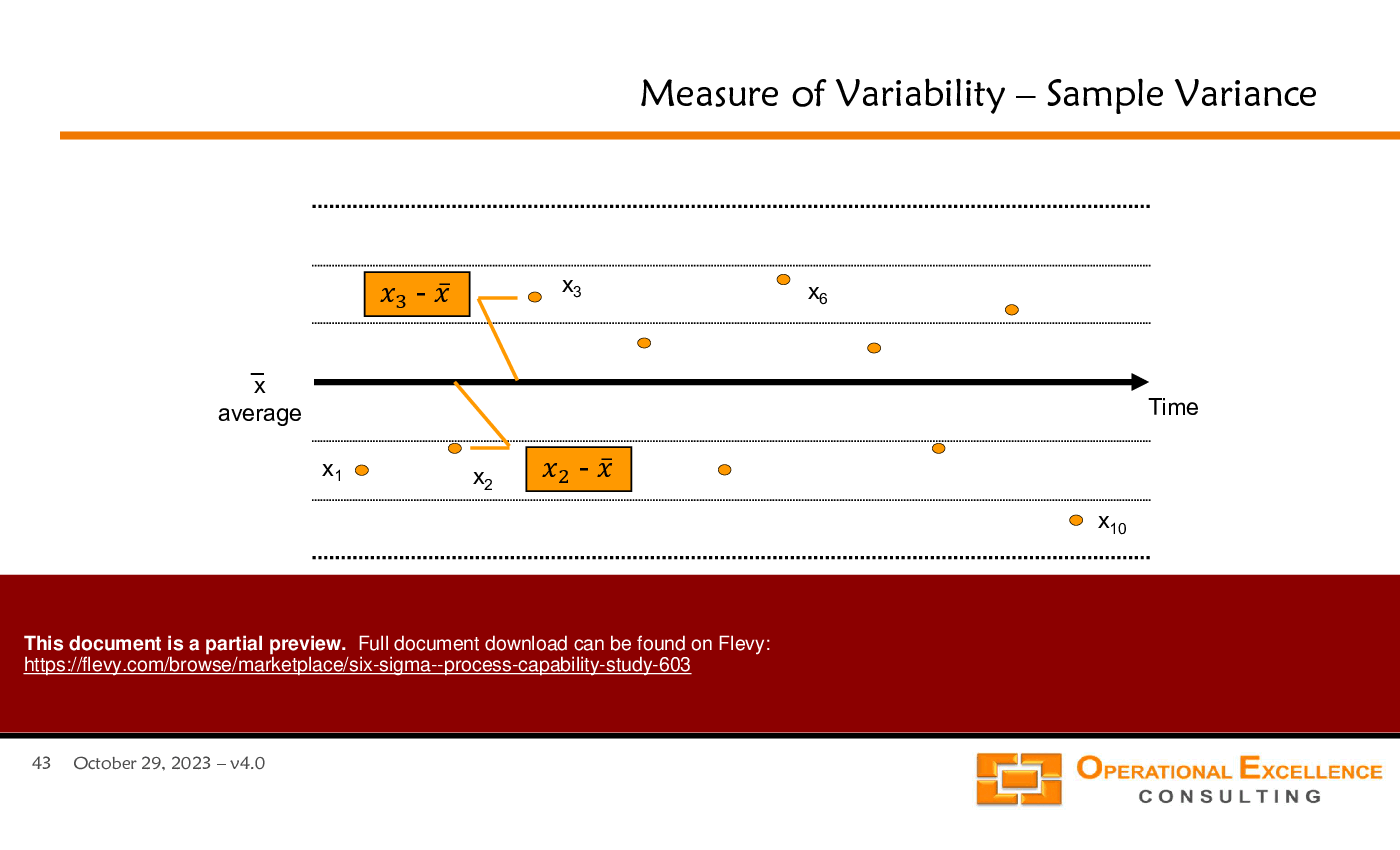
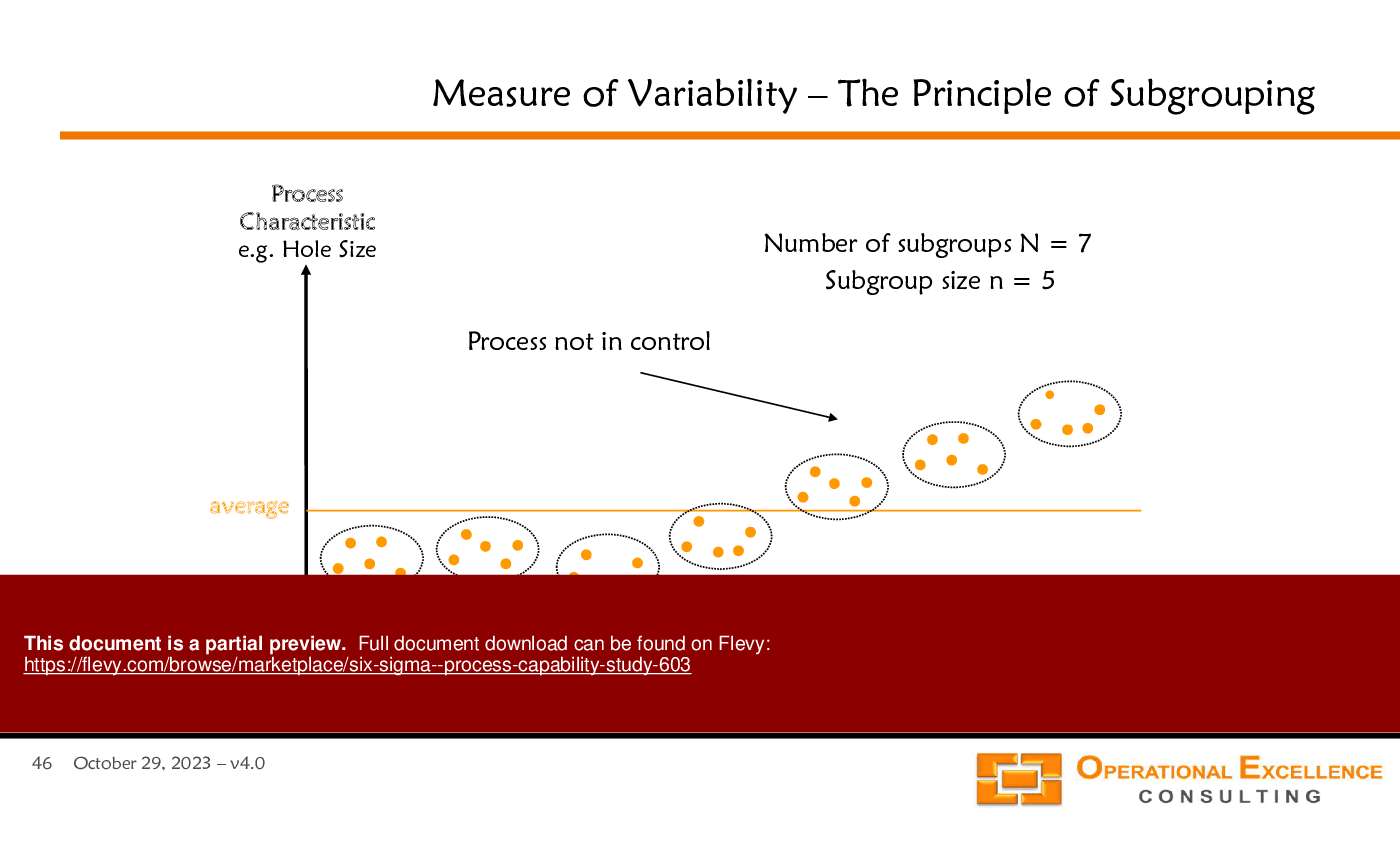
This PPT slide illustrates the measure of variability in process control within Six Sigma methodologies, emphasizing subgrouping's role in analyzing process variability, such as hole size. It presents 7 subgroups with 5 observations each, highlighting that short-term variability (sST) remains constant even when a process is out of control. In contrast, long-term variability (sLT) increases over time, indicating performance deterioration. When the process is in control, sST and sLT are identical, reflecting stability. Monitoring both short-term and long-term variability is essential for organizations to enhance operational efficiency, identify necessary interventions, and improve quality while reducing waste.
This PPT slide categorizes process control charts based on data types: Attribute Data and Variable Data. Attribute Data includes Count and Yes/No Data, with Count further divided into Fixed and Variable opportunities. The c-chart is used for fixed opportunities, while the u-chart is for variable opportunities. Variable Data pertains to measurements and is categorized by subgroup size: size of 1, fixed subgroup size, and variable subgroup size. Corresponding control charts include the x-chart, x-bar R chart, and x-bar s chart. This structured overview aids organizations in selecting appropriate control charts for effective process monitoring and improvement.
This PPT slide outlines Walter Shewhart's out-of-control criteria, utilized in Minitab for process analysis. The criteria identify deviations from expected performance, signaling potential issues. "Criteria 1: Outlier" detects data points that significantly deviate from the norm, while "Criteria 3: Process Trend" examines patterns over time for underlying problems. Specific tests evaluate these criteria, with a designated value, K, indicating when a process is out of control. For instance, if one point exceeds K standard deviations from the center line, it signals a potential issue. Other criteria assess sequences of points and consistent trends. This structured approach enables organizations to systematically evaluate processes, enhancing process capability and maintaining operational excellence.
The Variation Management Approach identifies 4 key elements influencing a process: Machines, Environment, Men, and Material. Variations in these components affect overall performance and contribute to output variability, impacting customer satisfaction levels. Analyzing these elements enables organizations to identify sources of variability and implement improvements, essential for achieving consistent outcomes that meet customer expectations. The ultimate goal of managing variation is to enhance the customer experience, making it crucial for organizations to consider how each element contributes to variability in their processes.
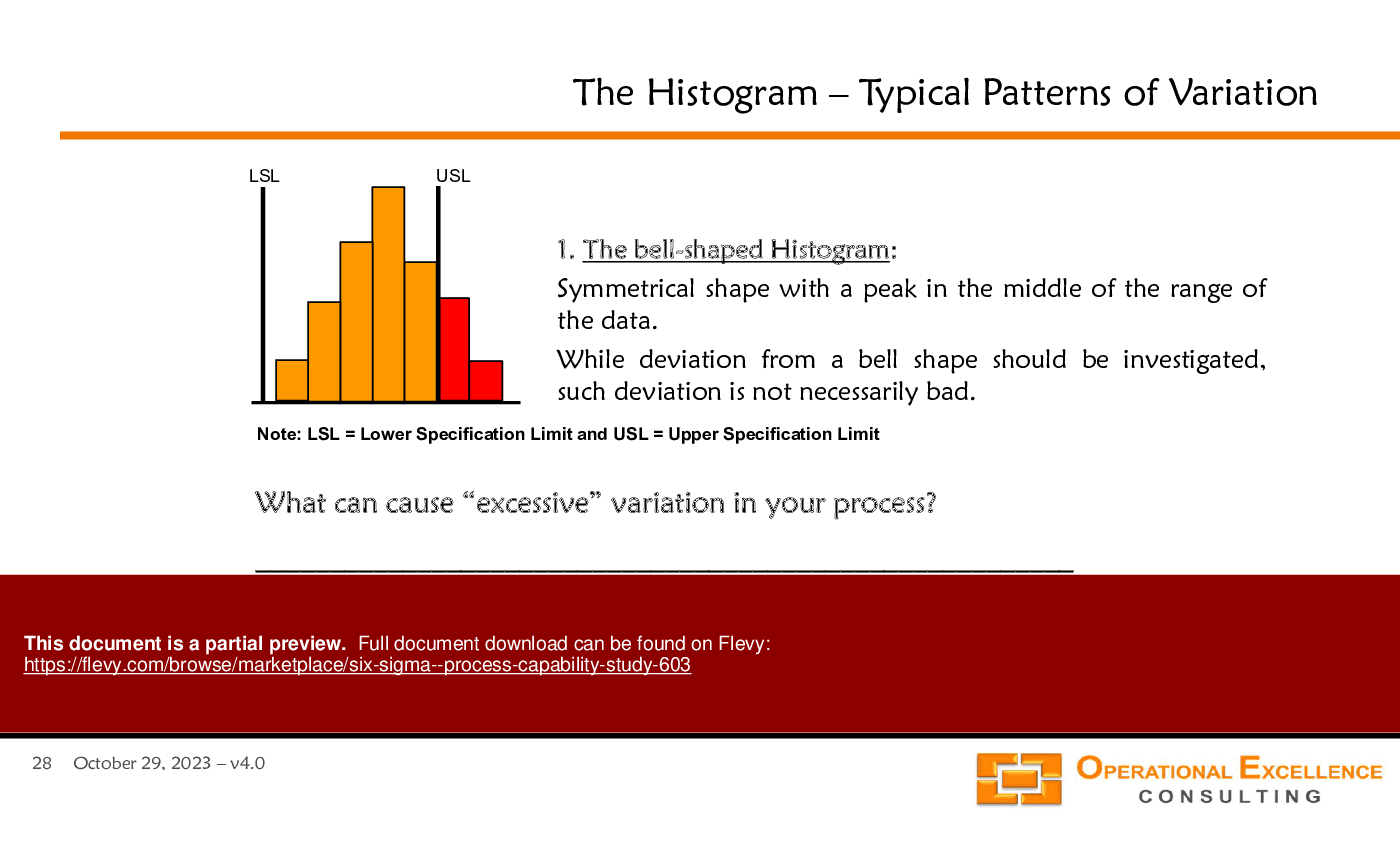
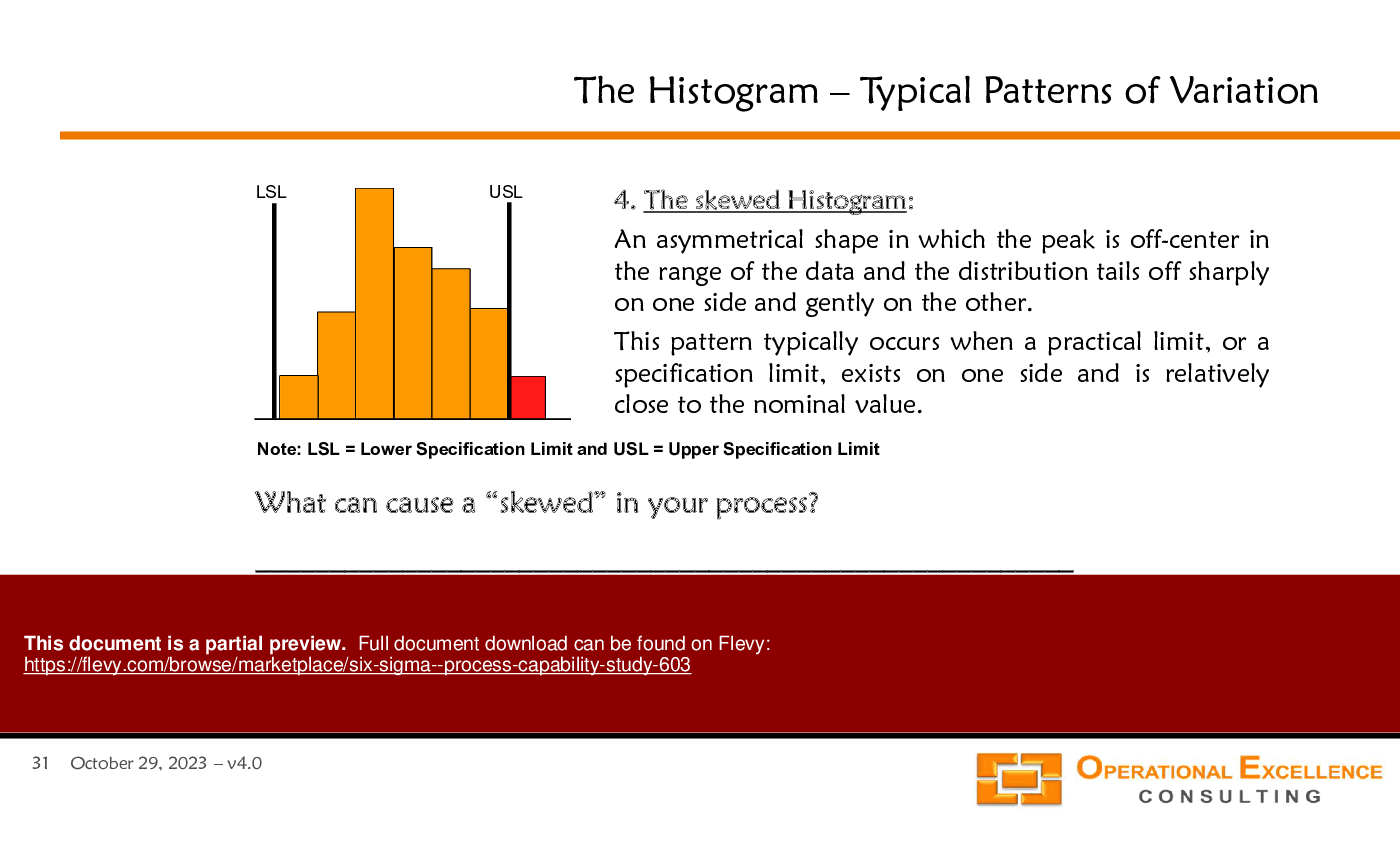
This PPT slide illustrates a double-peaked histogram, indicating potential issues in operational consistency due to 2 separate processes. The distinct valley between the peaks suggests the presence of 2 bell-shaped distributions, influenced by variations in machinery, operators, methods, or materials. Key metrics include the Lower Specification Limit (LSL) and Upper Specification Limit (USL), which define the acceptable range of variation. The slide poses the question: “What can cause 2 or more ‘peaks’ in your process?” This encourages reflection on operational challenges and the need to identify distinct processes to improve performance and quality. Insights from this analysis can inform decision-making and enhance operational efficiency.
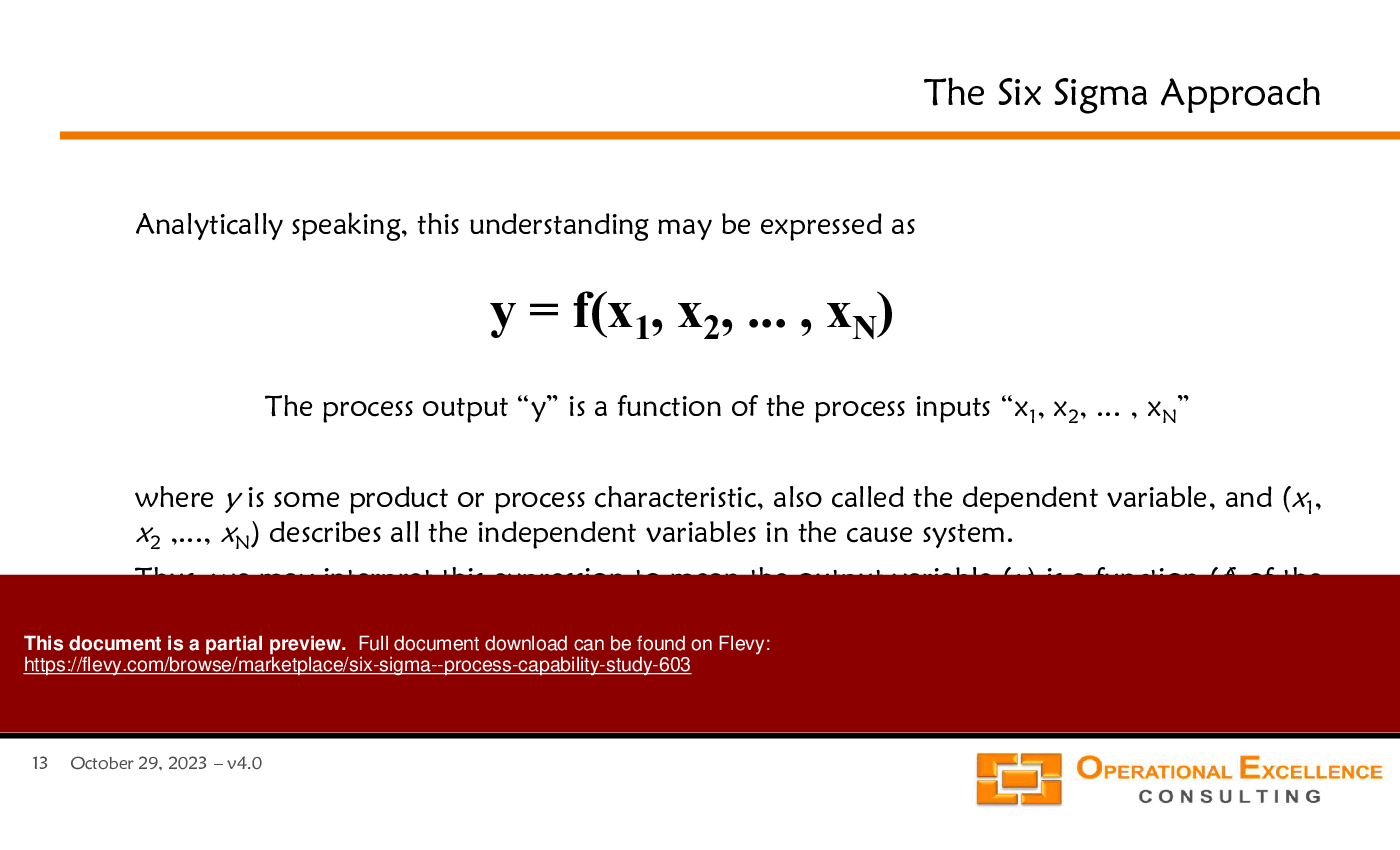
This PPT slide provides an overview of the Capability Index (cp), essential for assessing process performance against specified tolerances. The Capability Index is calculated using the formula cp = (USL - LSL) / (6 * sST), where USL is the Upper Specification Limit, LSL is the Lower Specification Limit, and sST is the standard deviation of the process. The slide illustrates the relationship between specification width and process capability, highlighting the importance of Upper Control Limit (UCL) and Lower Control Limit (LCL). The Capability Index serves as a benchmark for identifying areas for improvement in operational efficiency, linking tolerance and process capability to drive quality and reduce variability.
This PPT slide analyzes process capability, focusing on non-normality and skewness in a dataset. An Xbar and R chart tracks average and range measurements, indicating process stability or variability. A histogram and normal probability plot visually assess data distribution, revealing significant skewness and non-conformity to normal distribution, critical for capability analysis. The capability plot illustrates performance against specified limits, highlighting key metrics such as Cp, Cpk, and PPM. A PPM value near 100,000 parts per million below the lower specification limit indicates underperformance, necessitating immediate investigation and corrective action. Understanding non-normality is essential for accurate process capability assessments, as traditional metrics may lead to misleading conclusions. Organizations should adopt robust statistical methods to enhance quality and efficiency, optimizing operational performance and ensuring compliance with quality standards.
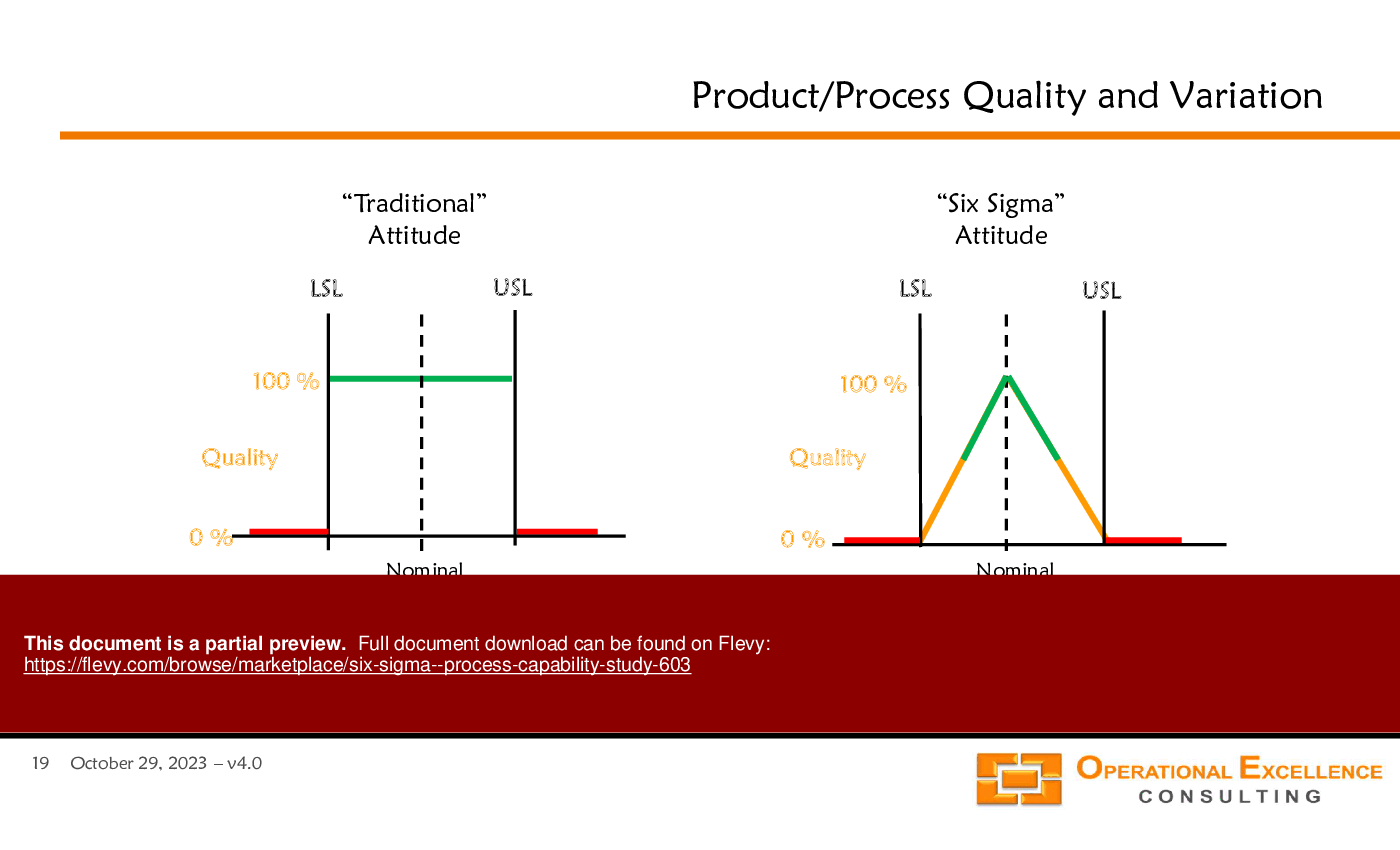
This PPT slide compares 2 attitudes towards quality: the "Traditional" approach and the "Six Sigma" approach. The Traditional model measures quality as binary, focusing on meeting lower specification limits (LSL) or upper specification limits (USL), leading to a reactive problem-solving culture and inefficiencies. In contrast, the Six Sigma approach emphasizes process capability and control, promoting proactive improvements and managing variations to maintain quality closer to the nominal value. The use of green, yellow, and red indicators illustrates a spectrum of quality performance, enabling continuous monitoring. This shift from a reactive to a proactive culture enhances operational efficiency and customer satisfaction, making the Six Sigma framework advantageous for long-term success.
Source: Best Practices in Process Improvement, Six Sigma Project PowerPoint Slides: Six Sigma - Process Capability Study PowerPoint (PPTX) Presentation Slide Deck, Operational Excellence Consulting LLC
Developed by a Senior Executive and Operational Excellence Coach with experience at organizations including NOKIA, MICROVENTION, and MAGELLAN, this presentation provides a detailed Introduction to Process Capability Studies using Minitab.
Operational Excellence Consulting LLC provides assessments, training solutions, kaizen event facilitation, and implementation support to enable our clients to achieve superior performance through Operational Excellence - Strategy Deployment & Hoshin Planning, Performance Management & Balanced Scorecards, Process Excellence & Lean Six Sigma, and High
... [read more] Performance Work Teams.
Frank Adler co-founded OEC LLC in 2009 to follow his passion for Operational Excellence and to be able to work with individuals and organizations that share this passion.
He is an accomplished and recognized Operational Excellence, Lean Management, and Six Sigma coach, with over 20 years of domestic and international executive leadership experience in General Management, multi-site Operations & Supply Chain Management, and Quality & Customer Support Management.
Frank is a certified and experienced Lean Six Sigma Master Black Belt with a proven track record of implementing these methods, concepts, and tools in various organizations and industries.
He holds a Master of Science in Mathematics & Physics from the Freie University of Berlin (Germany) and a Doctor of Philosophy in Applied Mathematics & Industrial Economics from the Helsinki University of Technology (Finland).
Since 2012, we have provided business templates to over 10,000 businesses and organizations of all sizes, from startups and small businesses to the Fortune 100, in over 130 countries.
"Flevy is now a part of my business routine. I visit Flevy at least 3 times each month.
Flevy has become my preferred learning source, because what it provides is practical, current, and useful in this era where the business world is being rewritten.
many challenges and there is the need to make the right decisions in a short time, with so much scattered information, we are fortunate to have Flevy. Flevy investigates, selects, and puts at our disposal the best of the best to help us be successful in our work.
"
– Omar Hernán Montes Parra, CEO at Quantum SFE
"The wide selection of frameworks is very useful to me as an independent consultant. In fact, it rivals what I had at my disposal at Big 4 Consulting firms in terms of efficacy and organization."
– Julia T., Consulting Firm Owner (Former Manager at Deloitte and Capgemini)
"I have used Flevy services for a number of years and have never, ever been disappointed. As a matter of fact, David and his team continue, time after time, to impress me with their willingness to assist and in the real sense of the word. I have concluded in fact
that it is not at all just a repository of documents/resources but, in the way that David and his team manage the firm, it is like dealing with consultants always ready to assist, advise and direct you to what you really need, and they always get it right.
I am an international hospitality accomplished senior executive who has worked and lived during the past 35 years in 23 countries in 5 continents and I can humbly say that I know what customer service is, trust me.
Aside from the great and professional service that Flevy's team provide, their wide variety of material is of utmost great quality, professionally put together and most current.
Well done Flevy, keep up the great work and I look forward to continue working with you in the future and to recommend you to a variety of colleagues around the world.
"
– Roberto Pelliccia, Senior Executive in International Hospitality
"One of the great discoveries that I have made for my business is the Flevy library of training materials.
As a Lean Transformation Expert, I am always making presentations to clients on a variety of topics: Training, Transformation, Total Productive Maintenance, Culture, Coaching, Tools, Leadership Behavior, etc. Flevy
It is well worth the money to purchase these presentations. Sure, I have the knowledge and information to make my point. It is another thing to create a presentation that captures what I want to say. Flevy has saved me countless hours of preparation time that is much better spent with implementation that will actually save money for my clients.
"
– Ed Kemmerling, Senior Lean Transformation Expert at PMG
"FlevyPro has been a brilliant resource for me, as an independent growth consultant, to access a vast knowledge bank of presentations to support my work with clients. In terms of RoI, the value I received from the very first presentation I downloaded paid for my subscription many times over! The
quality of the decks available allows me to punch way above my weight – it's like having the resources of a Big 4 consultancy at your fingertips at a microscopic fraction of the overhead.
"
– Roderick Cameron, Founding Partner at SGFE Ltd
"If you are looking for great resources to save time with your business presentations, Flevy is truly a value-added resource. Flevy has done all the work for you and we will continue to utilize Flevy as a source to extract up-to-date information and data for our virtual and onsite presentations!"
– Debbi Saffo, President at The NiKhar Group
"As an Independent Management Consultant, I find Flevy to add great value as a source of best practices, templates and information on new trends. Flevy has matured and the quality and quantity of the library is excellent. Lastly the price charged is reasonable, creating a win-win value for
the customer, Flevy and the various authors. This is truly a service that benefits the consulting industry and associated clients. Thanks for providing this service.
"
– Jim Schoen, Principal at FRC Group
"Flevy.com has proven to be an invaluable resource library to our Independent Management Consultancy, supporting and enabling us to better serve our enterprise clients.
The value derived from our [FlevyPro] subscription in terms of the business it has helped to gain far exceeds the investment made, making a subscription a no-brainer for any growing consultancy – or in-house strategy team."
– Dean Carlton, Chief Transformation Officer, Global Village Transformations Pty Ltd.
Save with Bundles
This document is available as part of the following discounted bundle(s):
Receive our FREE presentation on Operational Excellence
This 50-slide presentation provides a high-level introduction to the 4 Building Blocks of Operational Excellence. Achieving OpEx requires the implementation of a Business Execution System that integrates these 4 building blocks.