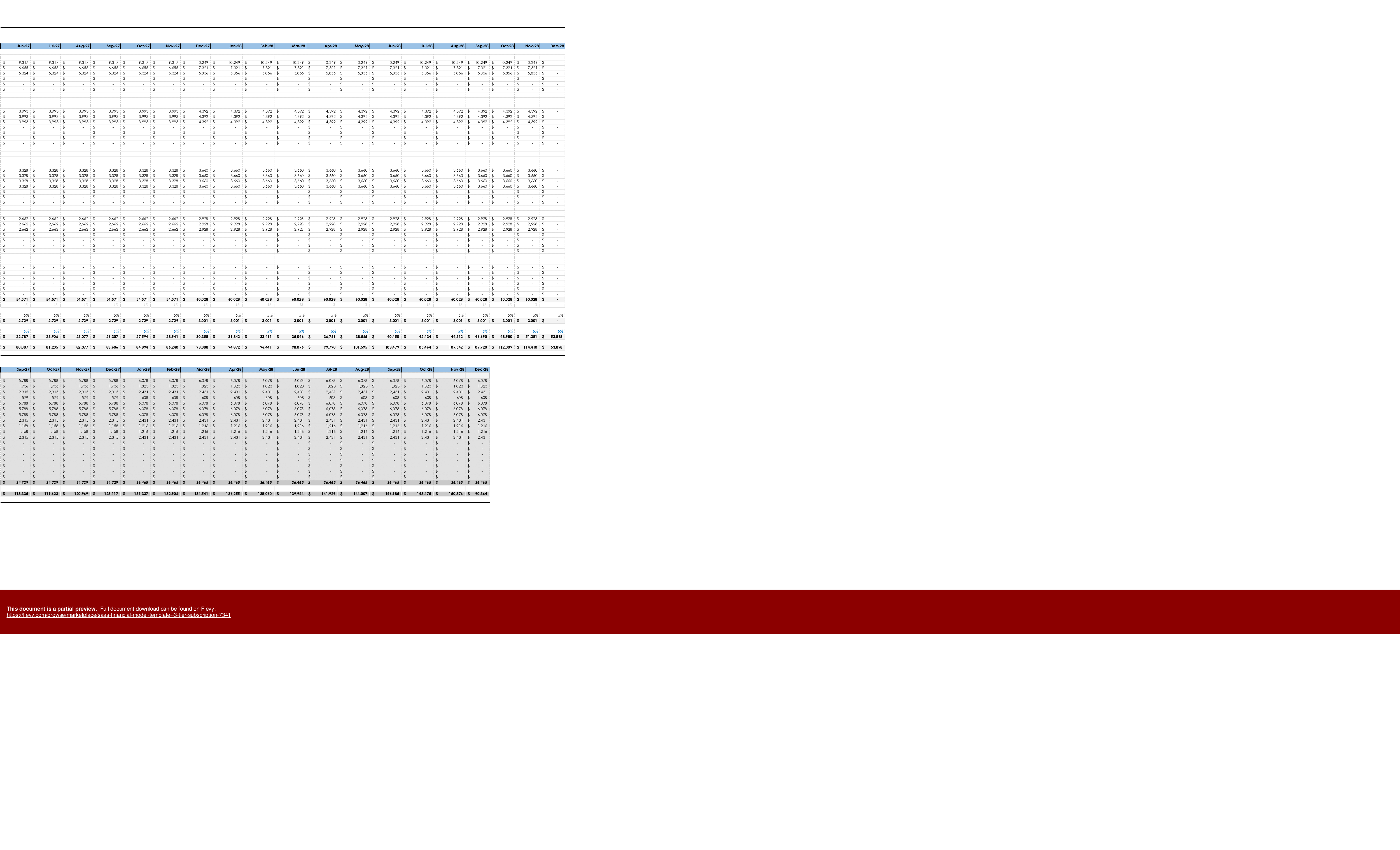
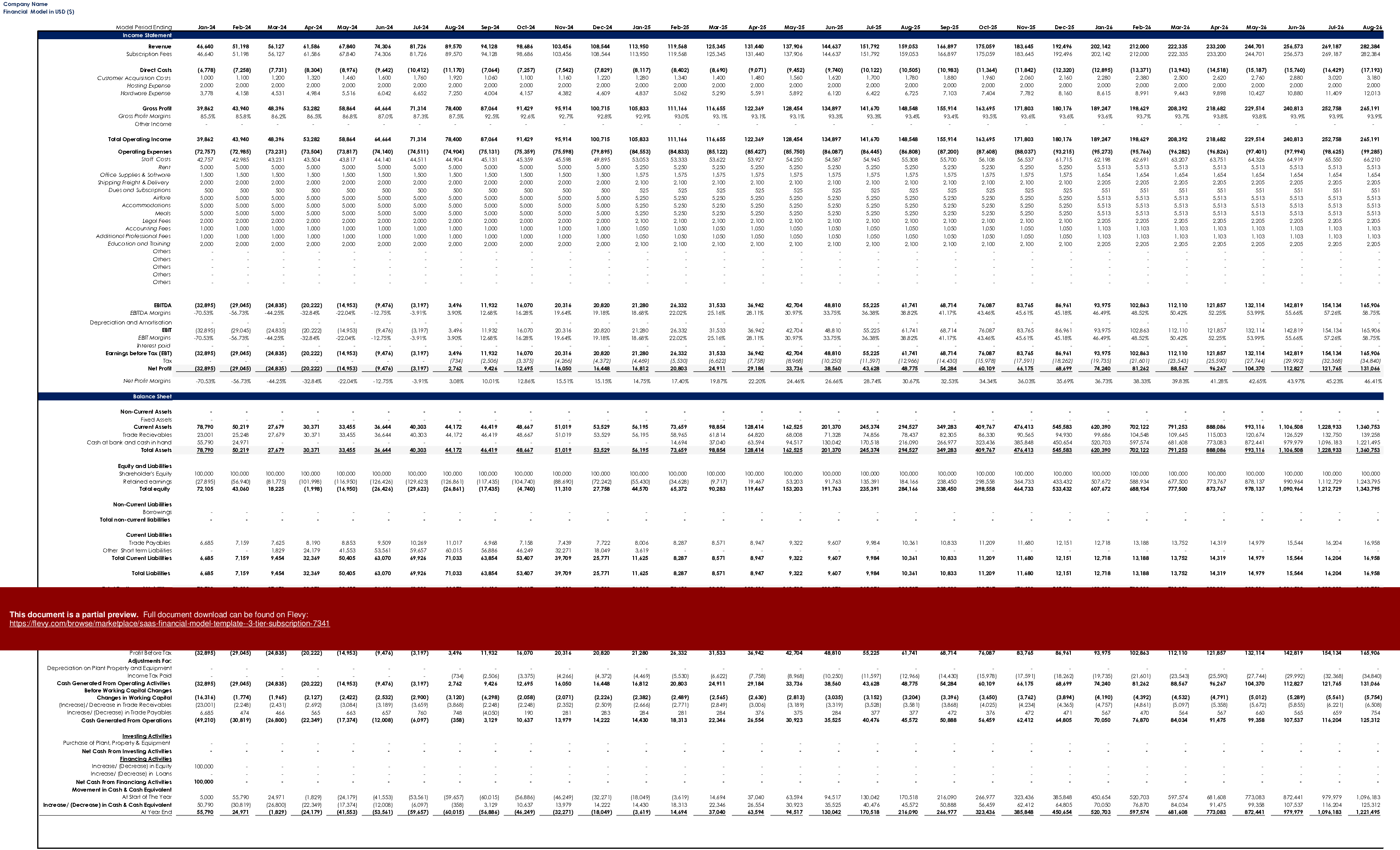
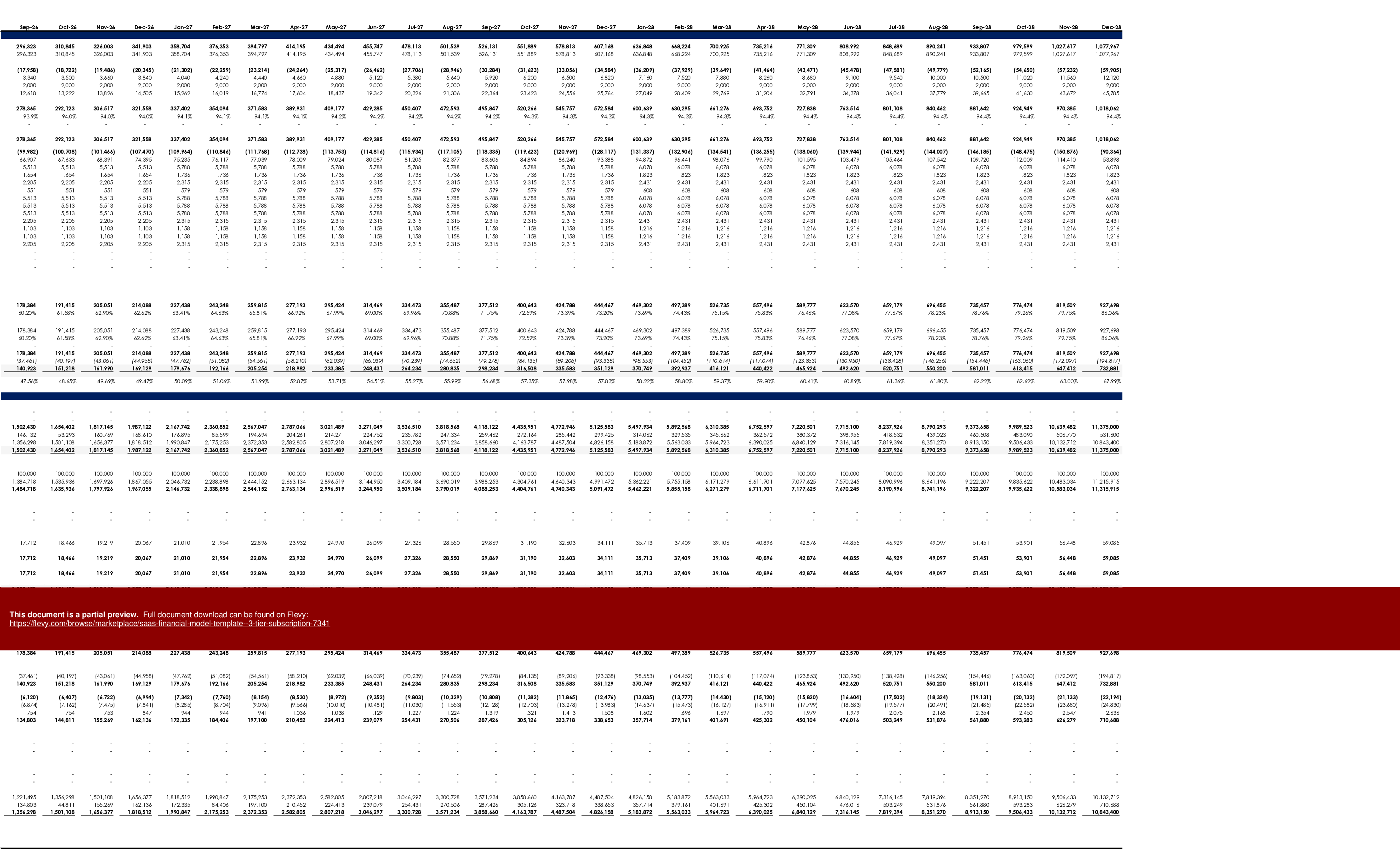
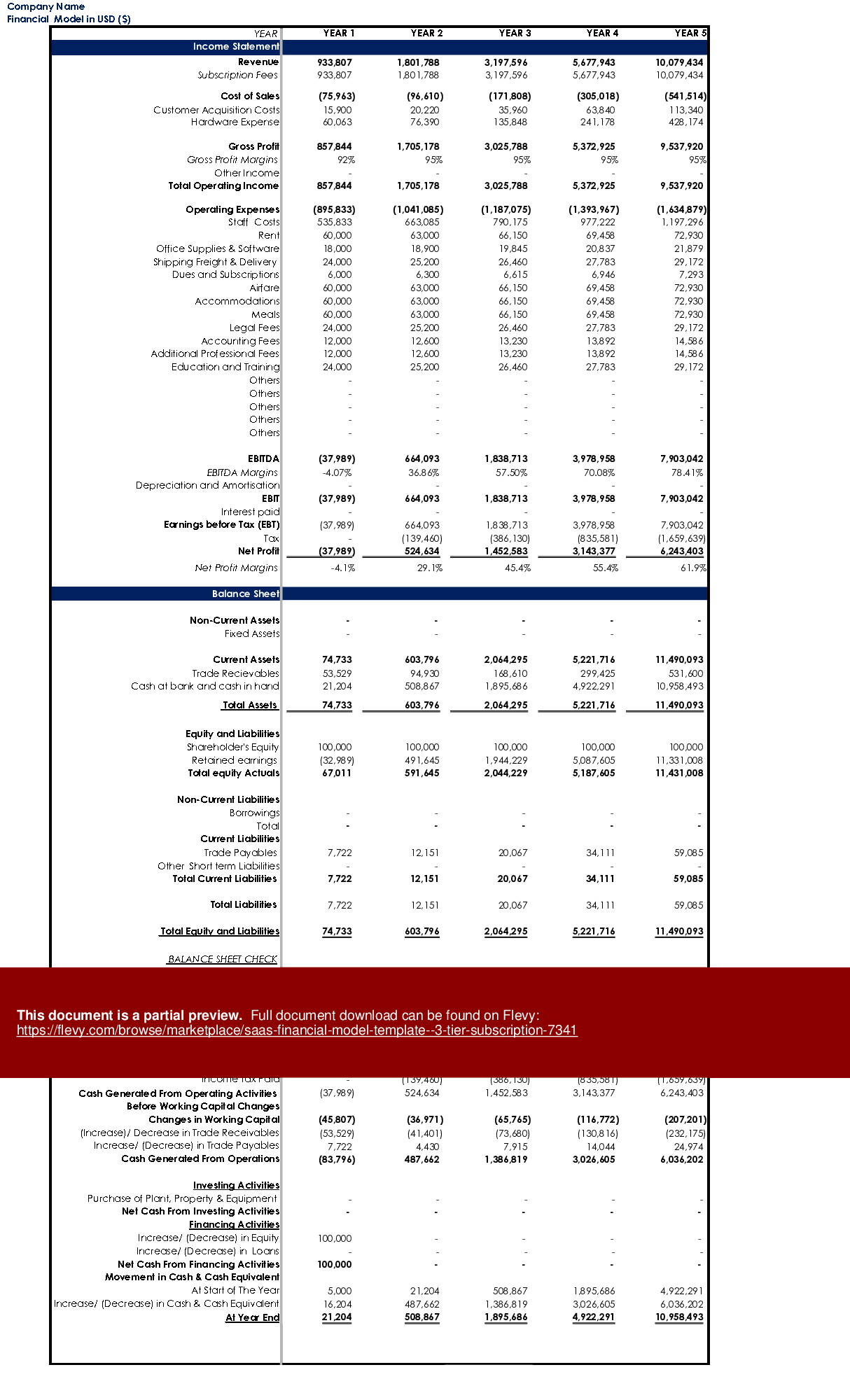

 Click main image to view in full screen. Unlock all 9 preview images:
SaaS Financial Model Template – 3 Tier Subscription – Excel XLSX
Excel (XLSX)


BENEFITS OF THIS DOWNLOADABLE EXCEL DOCUMENT
- Business Planning and Forecasting
- Valuation and Fundraising
SAAS EXCEL DESCRIPTION
Introducing a comprehensive financial model template tailored for SaaS businesses employing a 3-tier subscription pricing strategy. Designed to assess financial feasibility, growth potential, and investor readiness, this template features a structured customer buildout schedule that accounts for churn, ensuring accurate projections of active subscribers. The 3-tier pricing model—comprising basic, standard, and premium plans—is a widely adopted framework across SaaS, media, and digital services industries, offering scalable value propositions at varying price points.
Key Features of the Financial Model:
Subscription Model
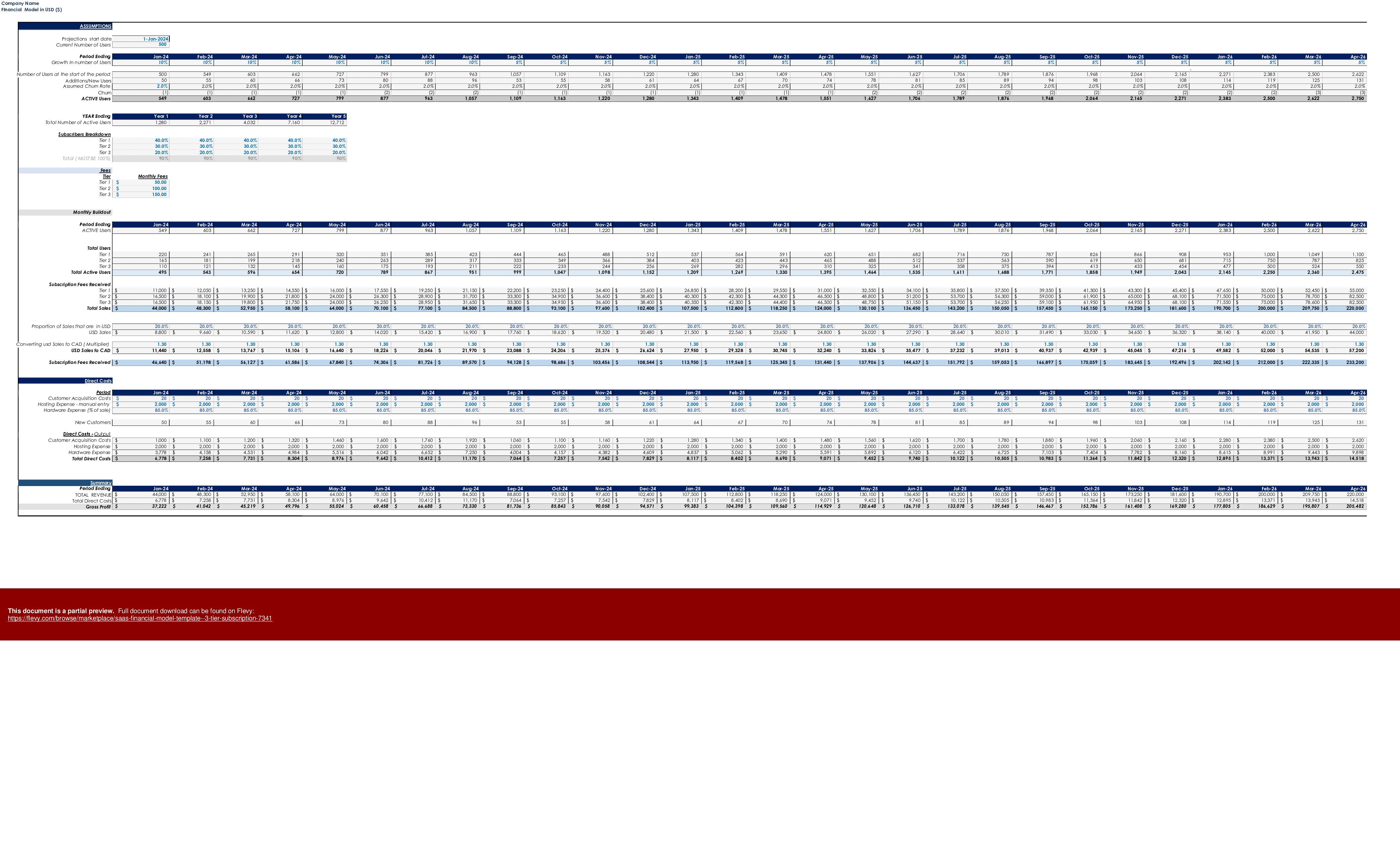
Built around the classic 3-tier structure, the model enables dynamic pricing and feature differentiation across entry-level, mid-tier, and premium offerings, with full control over pricing, conversion rates, and customer mix.
2. Dynamic and User-Friendly Inputs
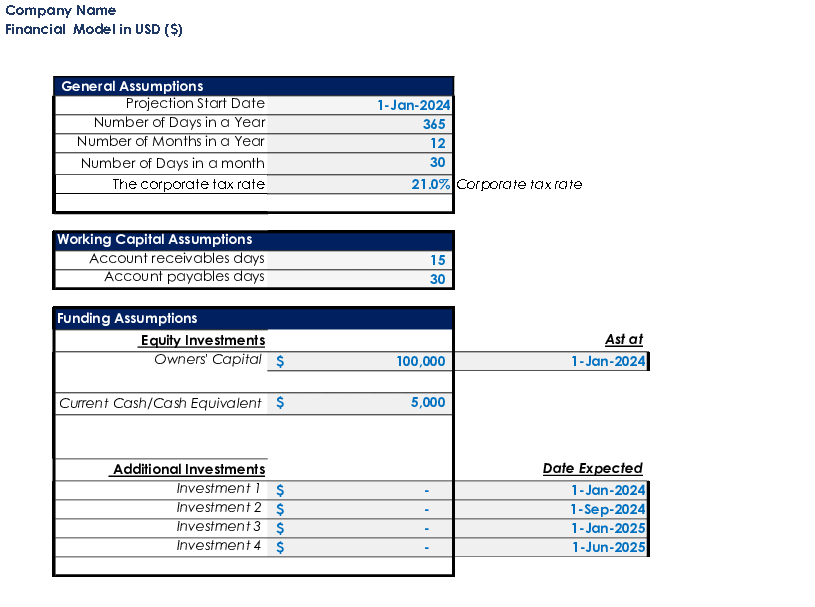
All assumptions are clearly marked in blue, allowing easy customization without disrupting the model logic. Whether adjusting churn rates, growth assumptions, or pricing, users can confidently test various scenarios.
3. Full Financial Statement Suite
Includes automated monthly and annual Income Statement, Balance Sheet, and Cash Flow Statement. The model captures recurring revenue metrics like CAC and churn-adjusted subscriber growth.
4. Investor-Ready Outputs and Valuation
Equipped with DCF valuation, break-even analysis, and investor return metrics (IRR, MOIC), the model helps assess the investment potential and pitch readiness of your SaaS business.
5. Comprehensive Supporting Schedules
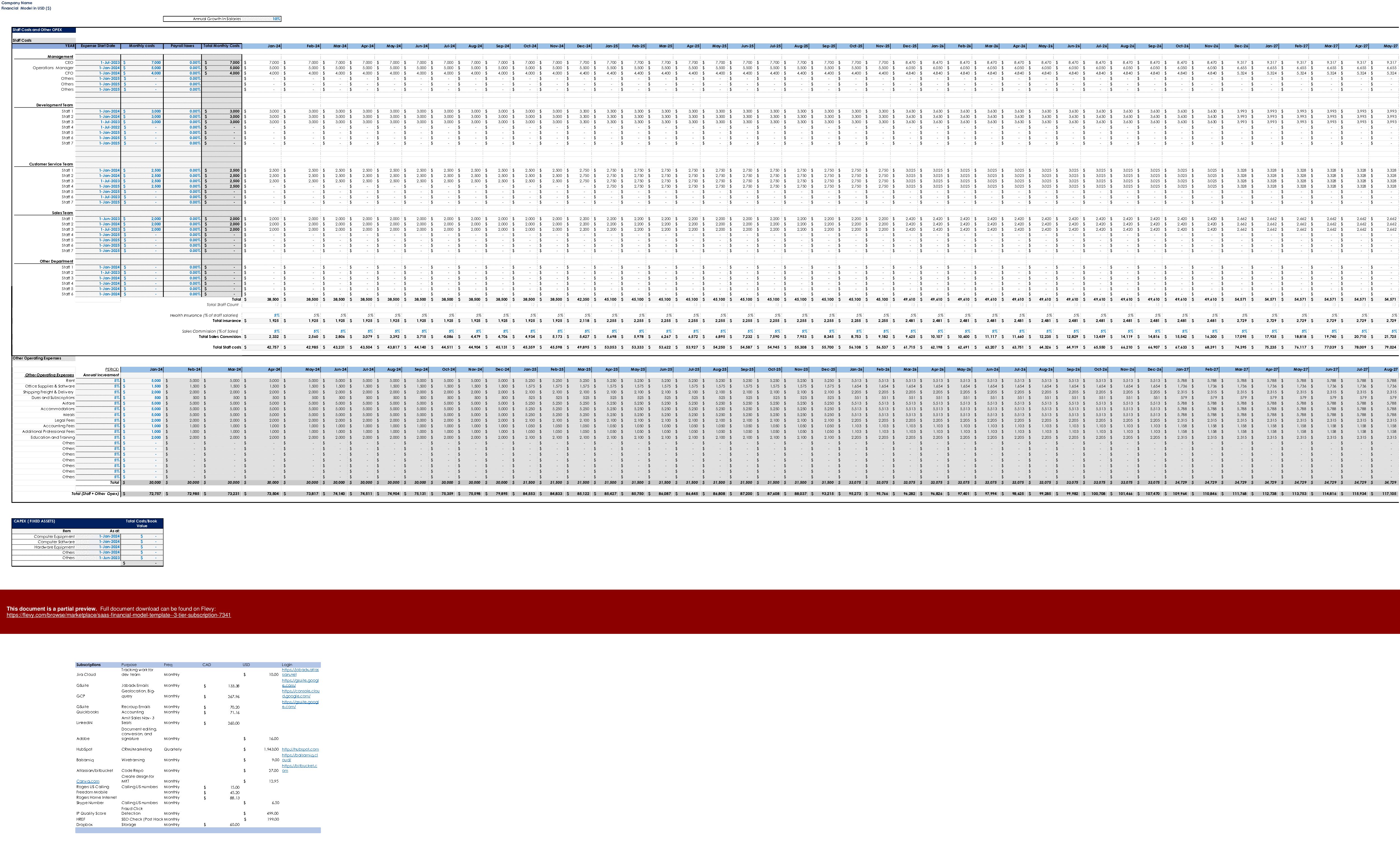
Includes detailed HR planning, marketing, and acquisition cost breakdown, funding sources and uses, SaaS KPIs, and visual dashboards to support strategic decisions.
This template is ideal for founders, financial analysts, and investors evaluating SaaS startups or scale-ups operating under a multi-tier subscription model. Use it to build credibility, optimize pricing strategy, and raise capital with confidence.
Got a question about the product? Email us at support@flevy.com or ask the author directly by using the "Ask the Author a Question" form. If you cannot view the preview above this document description, go here to view the large preview instead.
TOPIC FAQ
What financial statements should a SaaS model produce for investor review?
A SaaS financial model intended for investor review should generate automated monthly and annual financial statements, specifically an Income Statement, Balance Sheet, and Cash Flow Statement. The SaaS Financial Model Template – 3 Tier Subscription includes these 3 core statements in automated form.How should I model churn-adjusted subscriber growth in a three-tier subscription business?
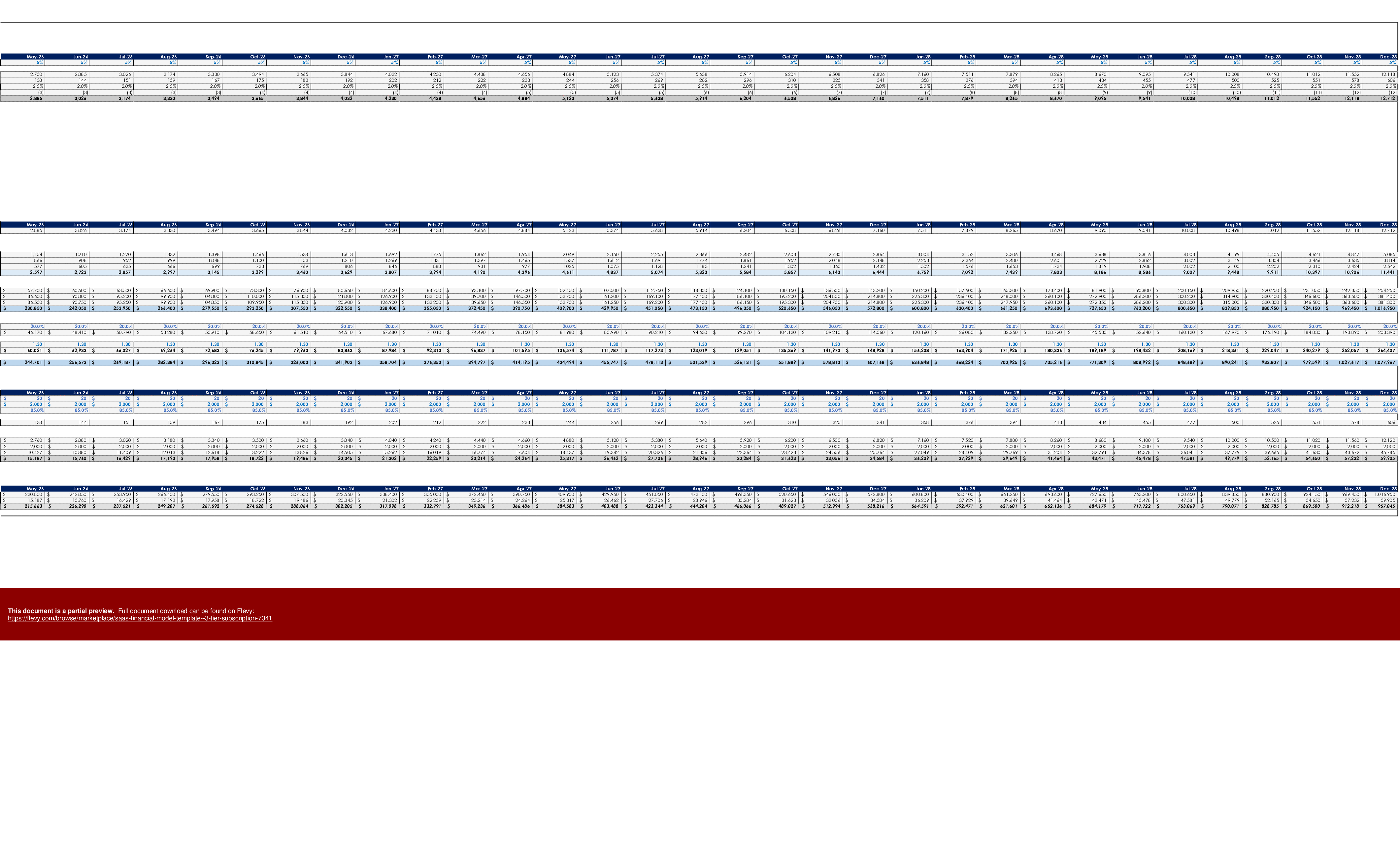
Model churn-adjusted subscriber growth with a structured customer buildout schedule that tracks new sign-ups, conversions across basic/standard/premium, and attrition, then projects active subscribers over time. The referenced template uses a churn-adjusted customer buildout schedule and dynamic inputs to perform this projection.Which valuation and investor-return metrics are commonly used for SaaS fundraising?
Common investor-return and valuation metrics for SaaS include discounted cash flow (DCF) valuation, break-even analysis, internal rate of return (IRR), and multiple on invested capital (MOIC). The SaaS Financial Model Template – 3 Tier Subscription provides DCF valuation, break-even analysis, IRR, and MOIC outputs.What should I look for when choosing a SaaS financial model template?
Prioritize templates with clearly marked, editable assumptions; automated monthly and annual financial statements; investor-ready outputs (DCF, IRR, MOIC); and supporting schedules for HR, marketing, and funding sources. The presence of dynamic blue-coded inputs and dashboards is also a key practical feature.How can a template help set multi-tier pricing and customer mix assumptions?
A template built around a three-tier structure lets you define prices, conversion rates, and the customer mix across entry-level, mid-tier, and premium offerings, then propagate those assumptions into revenue and unit-economics forecasts. This template explicitly supports dynamic pricing, conversion rates, and customer-mix controls.Is a DCF appropriate for SaaS businesses and how is it used in templates?
A DCF is commonly used in SaaS financial models to assess investment potential and pitch readiness by discounting forecasted cash flows and comparing returns. The SaaS Financial Model Template – 3 Tier Subscription includes a DCF valuation module for that purpose.I need to prepare a pitch deck for investors quickly; which model outputs should I include?
For a pitch deck, include unit-economics and investor-return outputs such as CAC and churn-adjusted subscriber forecasts, break-even analysis, DCF valuation, IRR and MOIC, plus a funding sources-and-uses schedule and KPI dashboards to summarize performance. These are provided by the referenced template.How does a model typically handle operating costs like HR and marketing in forecasts?
A robust template includes detailed supporting schedules for HR planning, marketing, and acquisition costs so operating expense assumptions feed into the financial statements and cash-flow forecasts. The SaaS Financial Model Template – 3 Tier Subscription contains HR planning and marketing/acquisition cost breakdown schedules.Source: Best Practices in SaaS, Integrated Financial Model Excel: SaaS Financial Model Template – 3 Tier Subscription Excel (XLSX) Spreadsheet, DynamicHub Consultants
ABOUT THE AUTHOR

DynamicHub Consultants is a specialized financial modeling consultancy providing tailored solutions to startups, SMEs, corporates, and non-profits across diverse industries. With a strong focus on data-driven decision-making, we build robust, flexible, and investor-ready financial models that support fundraising, budgeting, valuation, scenario analysis, and strategic planning.
Our models are
... [read more]
Ask the Author a Question
You must be logged in to contact the author.




























