
Identify. Eliminate. Prevent.

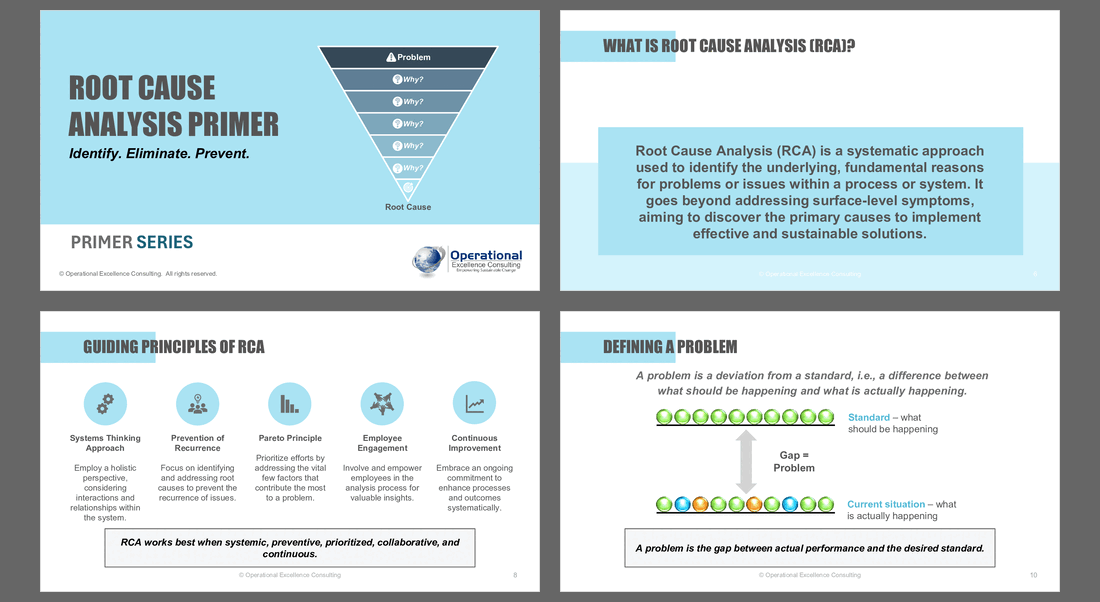
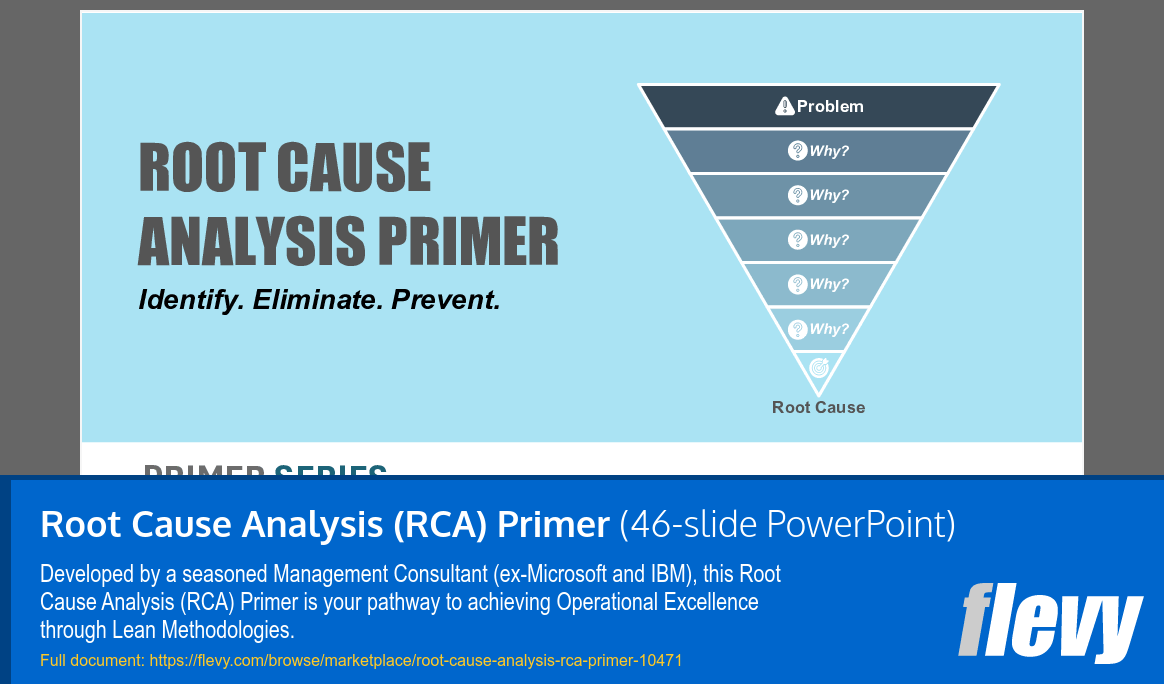
This practitioner‑built training deck equips organizations with the essential tools and methods of Root Cause Analysis (RCA). It provides a structured pathway from problem definition to corrective action, ensuring teams can uncover true causes, prioritize effectively, and sustain improvements. With clear explanations, real‑world examples, and facilitation‑ready group activities, the Root Cause Analysis Primer PPT is designed for trainers, consultants, and leaders who want to build problem‑solving capability across their workforce.
LEARNING OBJECTIVES
By the end of this primer, learners will be able to:
1. Explain the role of RCA in systematic problem‑solving
2. Apply the 5 Whys technique to uncover root causes
3. Construct and interpret Cause & Effect (Fishbone) diagrams
4. Use Pareto Charts to prioritize improvement efforts
5. Recognize pitfalls and adopt effective RCA practices for sustainable outcomes
CONTENTS
1. Foundations – What is RCA • Why RCA Matters • Guiding Principles
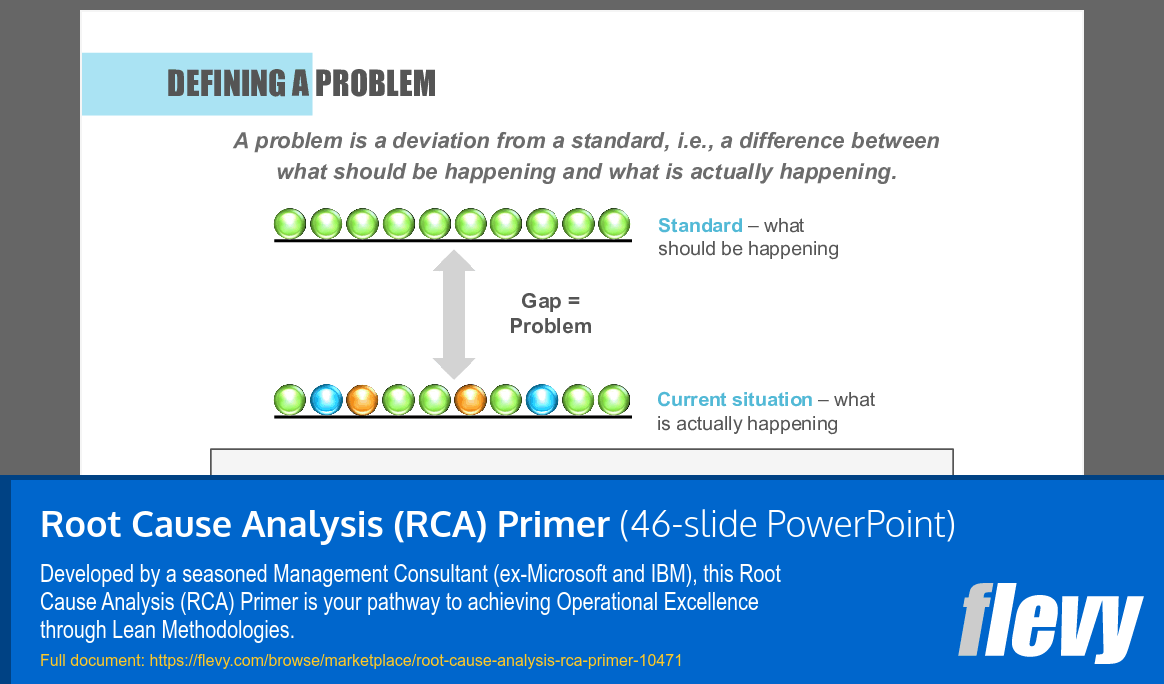
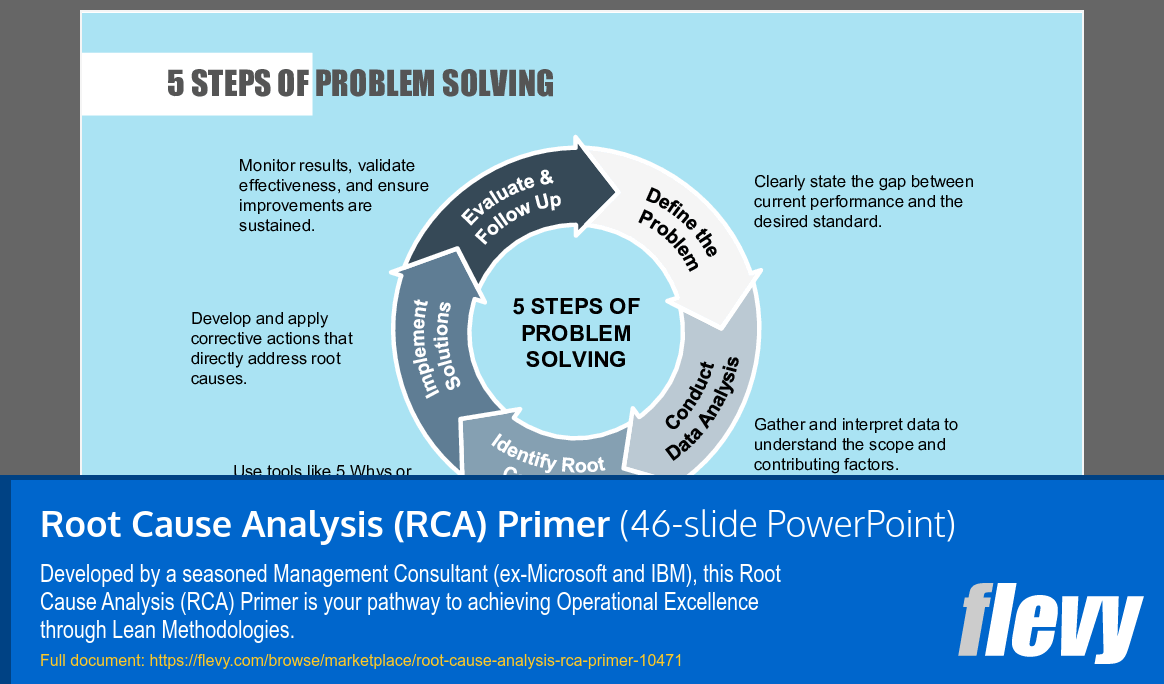
2. Introduction – Defining a Problem • Problem Solving Funnel • Five Steps of Problem Solving
3. Process & Tools – 5 Whys Overview • Examples • Conducting 5 Whys • Pitfalls & Best Practices • 4M Framework • Fishbone Overview • Examples • Constructing Diagram • Pitfalls & Best Practices • Integrating 5 Whys & Fishbone
4. Applications & Activities – Where RCA is Applied • Corrective Actions • Activity 1: 5 Whys Analysis • Activity 2: Fishbone Analysis
5. Prioritization – Pareto Overview • Principle Insights • Pareto Example • Conducting Pareto Analysis • Pitfalls & Best Practices
6. Pitfalls & Success Factors – Consolidated Pitfalls & Best Practices • Effective RCA Practices
About the OEC Primer Series
Developed by Operational Excellence Consulting, each Primer is designed to be facilitation‑ready, practical, and credible. Unlike generic training materials, our Primer Series is built by practitioners with decades of transformation experience, ensuring every deck combines clear frameworks, proven tools, and interactive activities. This consistency across topics (5S, Kaizen, Lean, Problem Solving, Design Thinking, and more) makes the series a trusted resource for consultants, trainers, and organizations seeking structured, high‑impact learning.
Got a question about the product? Email us at support@flevy.com or ask the author directly by using the "Ask the Author a Question" form. If you cannot view the preview above this document description, go here to view the large preview instead.
Executive Summary
The Root Cause Analysis (RCA) Primer is a comprehensive training resource designed to empower organizations in identifying, eliminating, and preventing problems through systematic analysis. Developed by a seasoned Certified Lean Six Sigma Black Belt, this presentation provides a structured approach to problem-solving, utilizing techniques such as the 5 Whys, Cause & Effect diagrams, and Pareto analysis. By mastering these tools, teams can uncover the underlying causes of issues, prioritize improvement efforts, and implement sustainable solutions that drive operational excellence.
Who This Is For and When to Use
• Quality Assurance teams focused on continuous improvement
• Operations managers seeking to enhance process efficiency
• Project managers addressing delays and quality issues
• HR professionals investigating workplace incidents or employee concerns
Best-fit moments to use this deck:
• During training sessions aimed at building problem-solving capabilities
• When addressing recurring issues that impact performance
• In workshops focused on process improvement initiatives
Learning Objectives
• Explain the role of RCA in systematic problem-solving
• Apply the 5 Whys technique to uncover root causes
• Construct and interpret Cause & Effect (Fishbone) diagrams
• Use Pareto Charts to prioritize improvement efforts
• Recognize pitfalls and adopt effective RCA practices for sustainable outcomes
Table of Contents
• Foundations (page 6)
• Introduction (page 10)
• Process & Tools (page 12)
• Applications & Activities (page 27)
• Prioritization (page 32)
• Pitfalls & Success Factors (page 38)
Primary Topics Covered
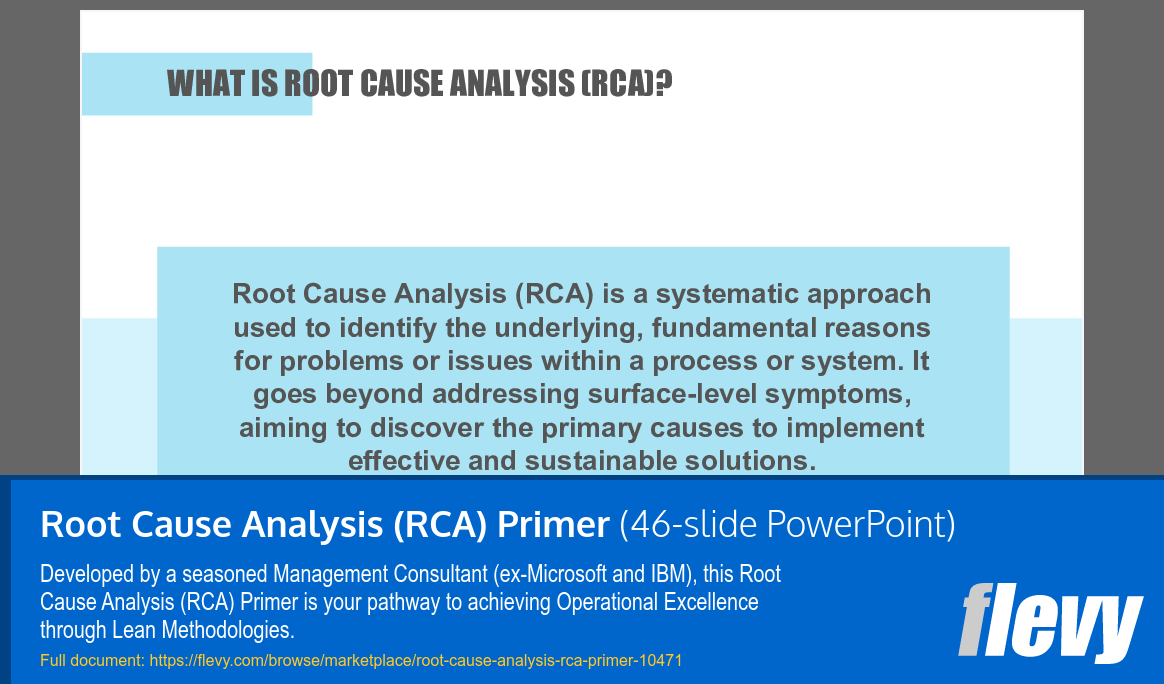
• Root Cause Analysis (RCA) - A systematic approach to identify the fundamental reasons for problems, focusing on underlying causes rather than symptoms.
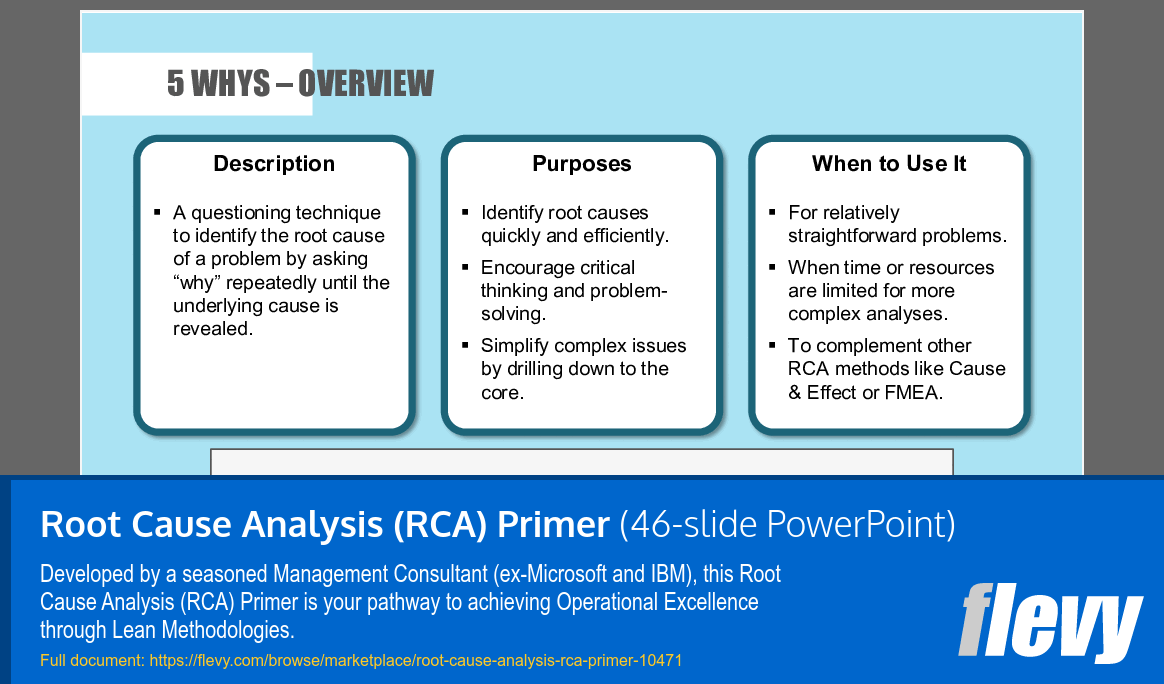
• 5 Whys Technique - A questioning method that drills down to the root cause by repeatedly asking "why" until the underlying issue is revealed.
• Cause & Effect Diagram - A visual tool that organizes potential causes of a problem into categories, facilitating collaborative problem-solving.
• Pareto Analysis - A prioritization technique that identifies the most significant factors contributing to a problem, based on the 80/20 principle.
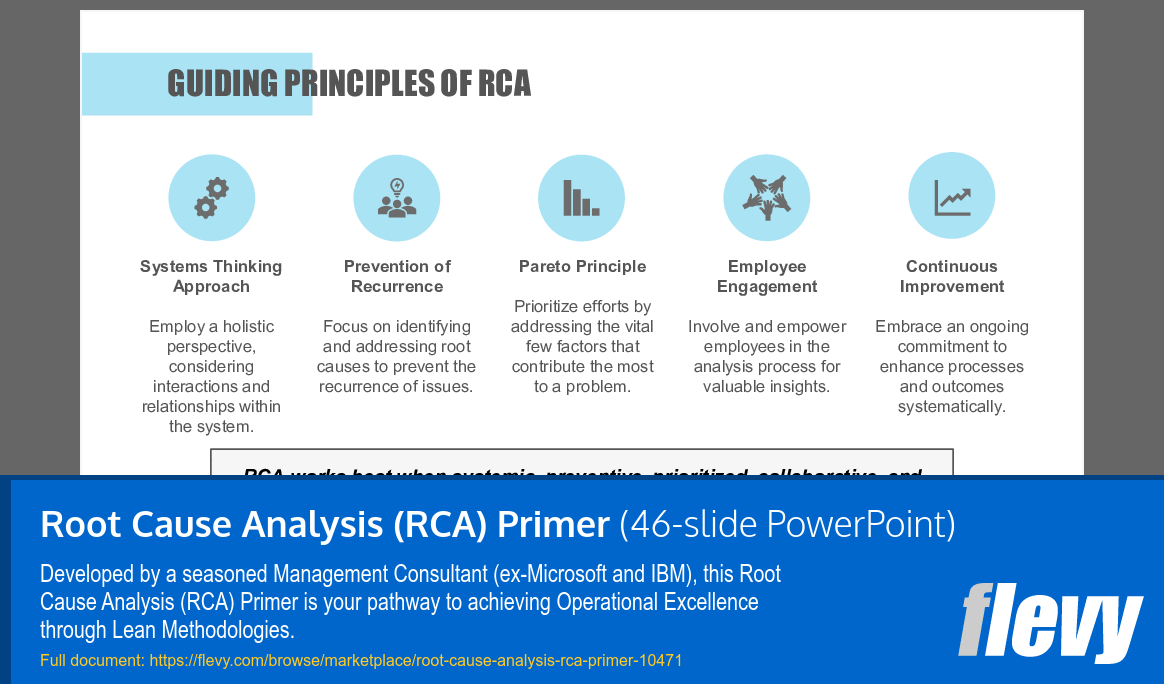
• Guiding Principles of RCA - Key principles such as systems thinking, prevention of recurrence, and employee engagement that enhance the effectiveness of RCA.
• Applications of RCA - Real-world scenarios where RCA can be applied, including customer complaints, manufacturing defects, and project delays.
Deliverables, Templates, and Tools
• 5 Whys analysis template for structured questioning
• Cause & Effect diagram template for visualizing relationships between causes and effects
• Pareto chart for prioritizing issues based on frequency and impact
• Documentation guidelines for corrective actions and monitoring
• Training materials for conducting RCA workshops
• Case studies illustrating successful RCA applications
Slide Highlights
• Overview of RCA and its importance in problem-solving
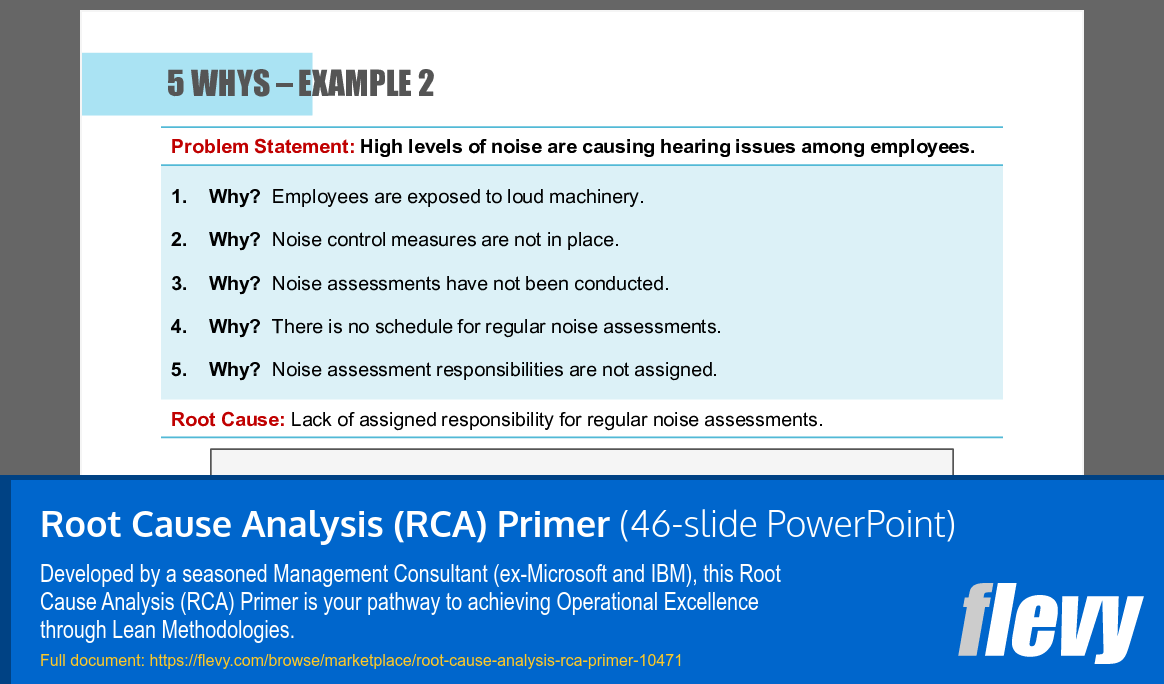
• Step-by-step guide on conducting a 5 Whys analysis
• Example Cause & Effect diagram illustrating key drivers of defects
• Visual representation of Pareto analysis highlighting critical contributors
• Consolidated pitfalls and best practices for effective RCA
Potential Workshop Agenda
Introduction to RCA (30 minutes)
• Overview of RCA principles and methodologies
• Discussion on the importance of identifying root causes
5 Whys Analysis Workshop (45 minutes)
• Group activity to practice the 5 Whys technique
• Presentation of findings and root causes
Cause & Effect Diagram Creation (45 minutes)
• Collaborative brainstorming session to construct diagrams
• Review and validation of identified causes
Prioritization Techniques (30 minutes)
• Introduction to Pareto analysis and its application
• Group exercise to prioritize identified issues
Customization Guidance
• Tailor the RCA templates to reflect specific organizational terminology and processes
• Adjust the workshop agenda to fit the time constraints and focus areas of your team
• Incorporate case studies relevant to your industry for practical application
Secondary Topics Covered
• Systems thinking approach in RCA
• Employee engagement in problem-solving
• Common pitfalls in RCA and how to avoid them
• Continuous improvement principles in RCA
FAQ
What is Root Cause Analysis (RCA)?
RCA is a systematic approach used to identify the underlying reasons for problems within a process or system, aiming to implement effective and sustainable solutions.
How does the 5 Whys technique work?
The 5 Whys technique involves asking "why" repeatedly to drill down to the root cause of a problem, helping to uncover underlying issues quickly.
When should I use a Cause & Effect diagram?
Use a Cause & Effect diagram when the causes of a problem are unclear or multifaceted, as it helps organize potential causes into logical categories.
What is the purpose of Pareto analysis?
Pareto analysis focuses resources on the most impactful issues by identifying the vital few factors that contribute significantly to a problem, based on the 80/20 principle.
What are common pitfalls in RCA?
Common pitfalls include stopping too early at symptoms, relying on assumptions instead of evidence, and inconsistent results across teams.
How can I ensure effective RCA practices?
Effective RCA requires disciplined use of tools, evidence-based validation, and collaborative systems thinking to achieve sustainable improvements.
Glossary
• Root Cause Analysis (RCA) - A systematic method for identifying the fundamental reasons for problems.
• 5 Whys - A questioning technique to uncover root causes by asking "why" repeatedly.
• Cause & Effect Diagram - A visual tool for organizing potential causes of a problem.
• Pareto Analysis - A prioritization technique based on the 80/20 principle.
• Systems Thinking - A holistic approach that considers interactions within a system.
• Continuous Improvement - An ongoing effort to enhance processes and outcomes.
• Employee Engagement - Involving employees in the problem-solving process for valuable insights.
• Pitfalls - Common mistakes that can hinder effective RCA practices.
• Corrective Actions - Steps taken to address identified root causes.
• Data Validation - The process of ensuring that data used in analysis is accurate and reliable.
• Collaborative Problem-Solving - Working together as a team to identify and solve issues.
• Documentation - Recording findings and actions taken during the RCA process.
Source: Best Practices in RCA PowerPoint Slides: Root Cause Analysis (RCA) Primer PowerPoint (PPTX) Presentation Slide Deck, Operational Excellence Consulting
|
Receive our FREE presentation on Operational Excellence
This 50-slide presentation provides a high-level introduction to the 4 Building Blocks of Operational Excellence. Achieving OpEx requires the implementation of a Business Execution System that integrates these 4 building blocks. |