
 Click main image to view in full screen. Unlock all 9 preview images:


RETAIL STRATEGY EXCEL DESCRIPTION
Starting your own Retail Store sounds exciting but it can be very messy. But with the help of this tool, "Retail Store Financial Model," your journey becomes smoother. This tool helps entrepreneurs, startups, and investors gain a clear financial roadmap for their retail business. Doesn't matter if you are interested in General Merchandise Stores, Specialty Retail, Grocery & Food Retail or any other option this model provides detailed projections, cost analysis, and profitability insights to support sustainable growth.
Key Features of the Model
1. Revenue Projections
1. Sales Forecasting: Estimate your future revenue based on customer counts, monthly growth rate, new customers & recurring ones.
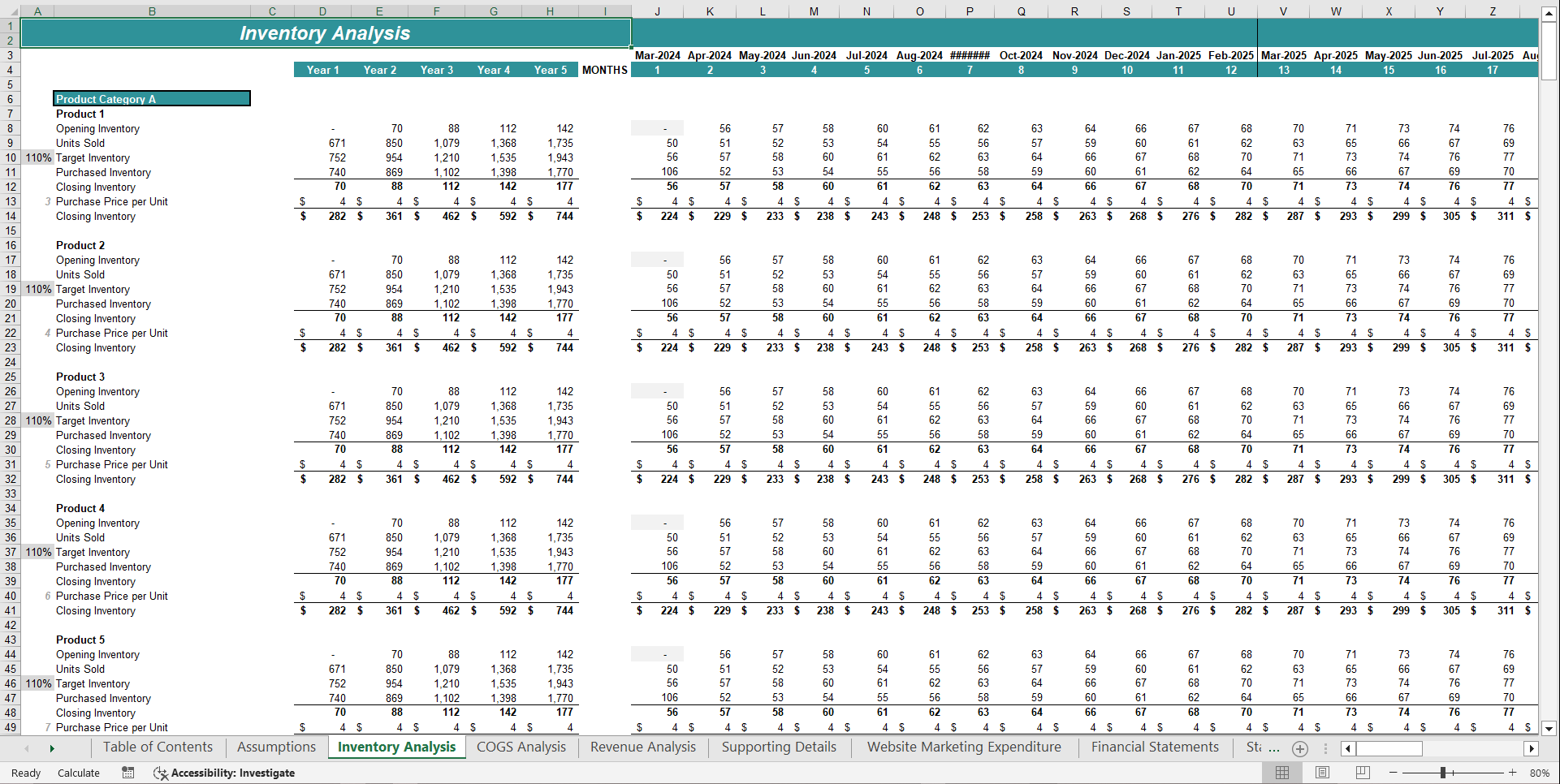
2. Revenue by Service Type: Estimate your future revenue based on types of products sold from inventory such as Snacks, Clothing, Electronics etc.
3. Competitive Advantages: Identify what sets your retail store apart in the competitive retail industry.
2. Cost Structure
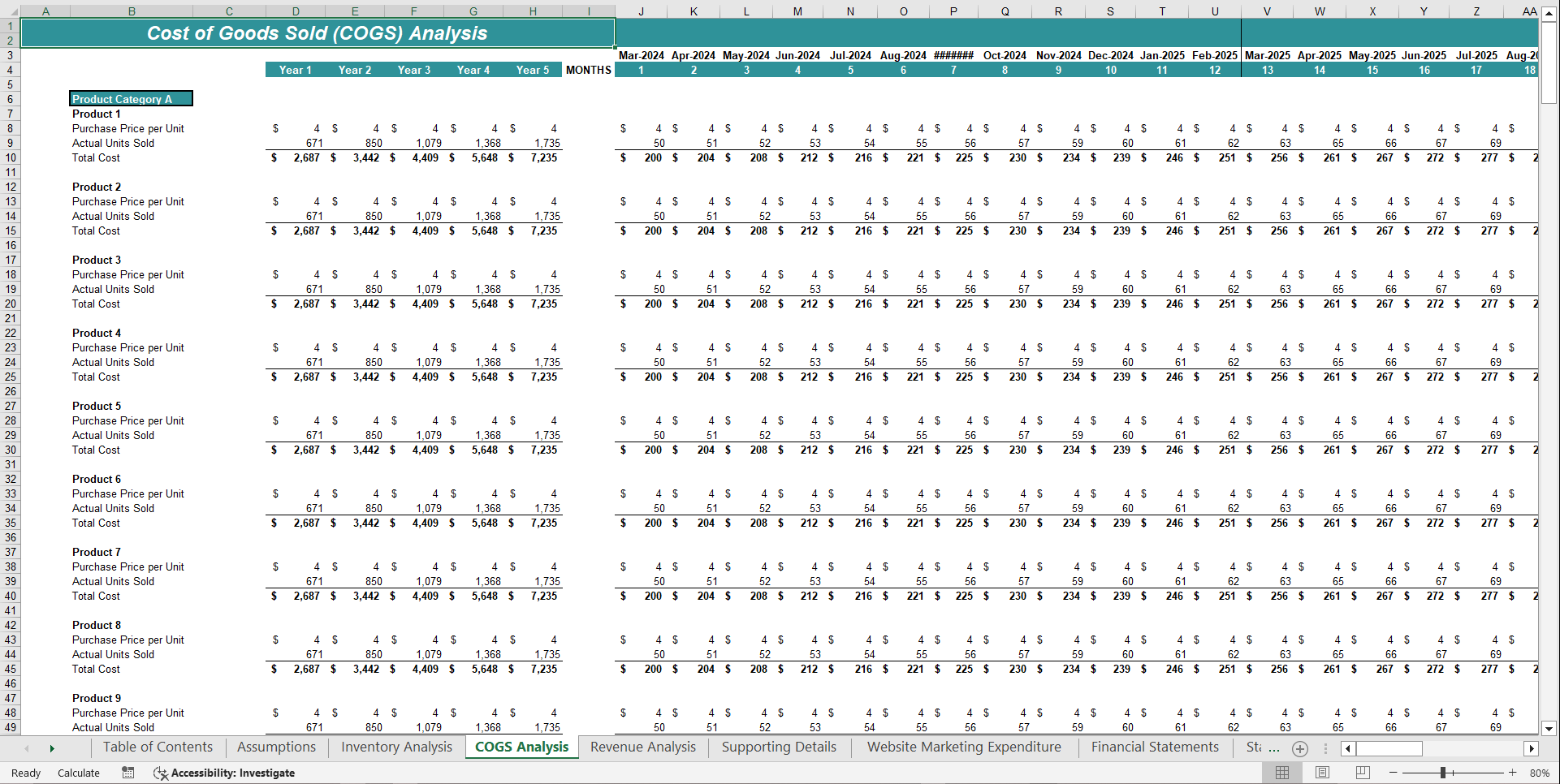
1. Direct Costs: Adjust the direct cost such as Sourcing costs as percentage of your revenue to see where your gross margin lies.
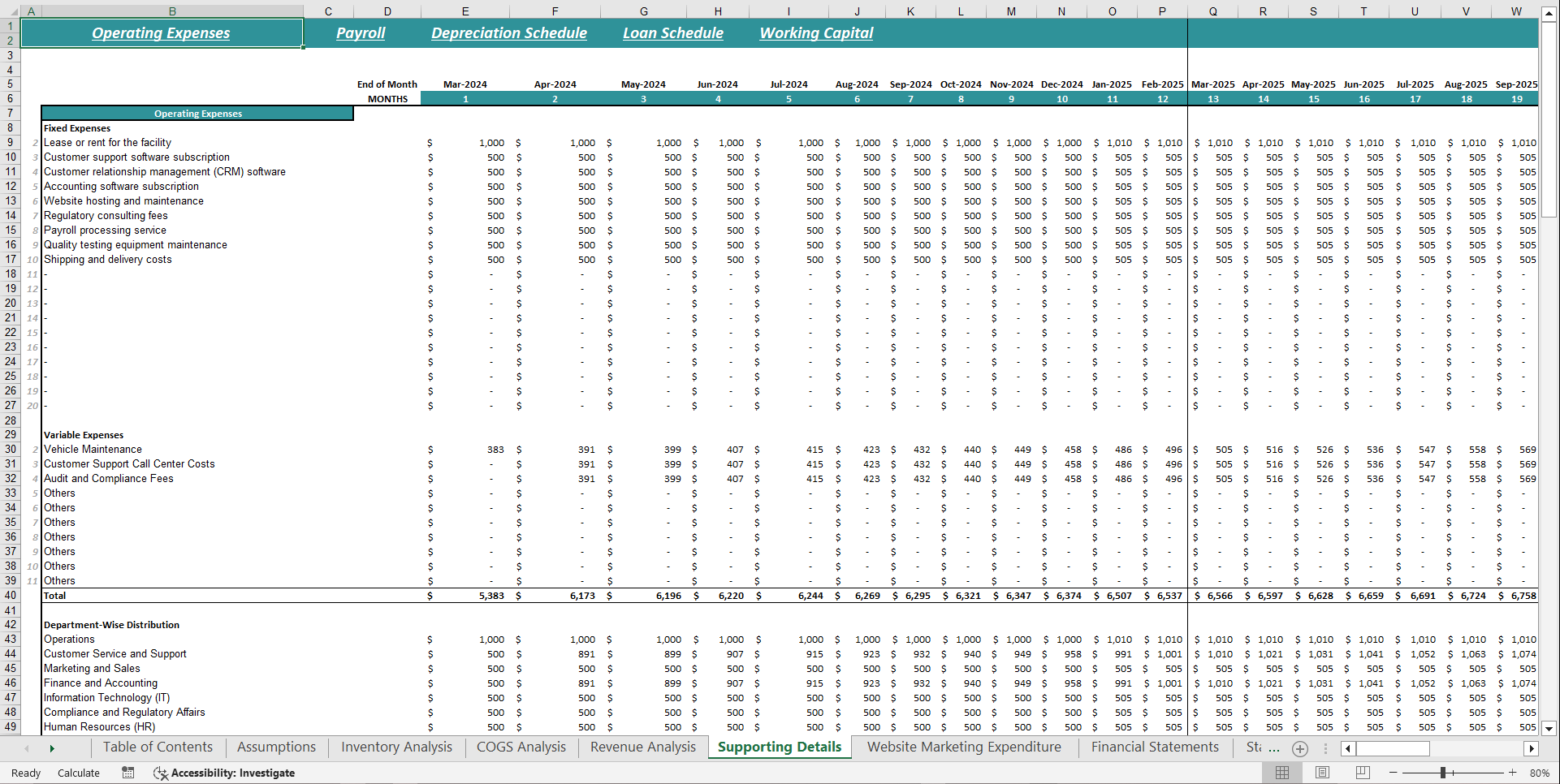
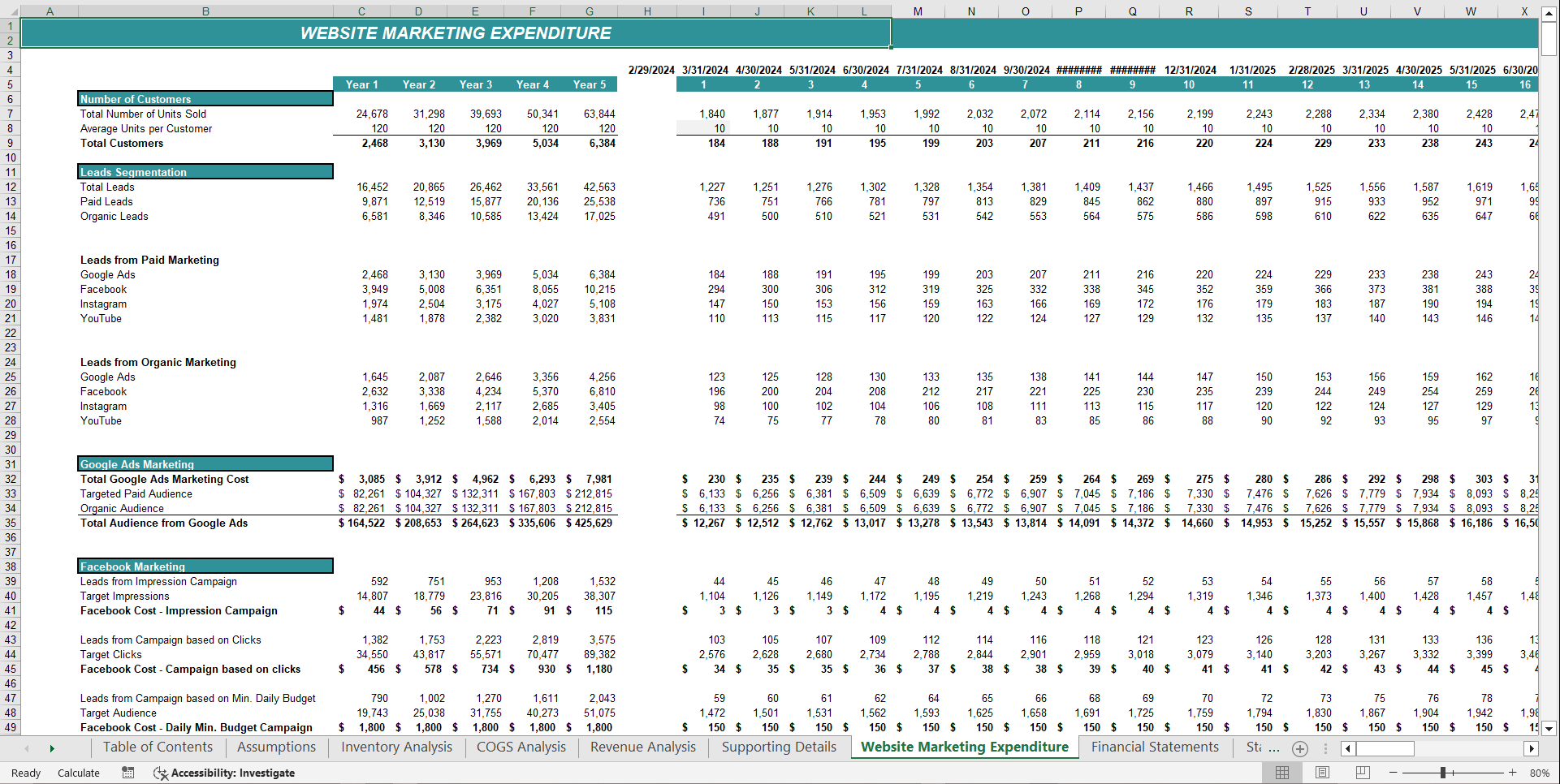
2. Administrative Expenses: Account for fixed costs like rental cost, utilities, software, marketing and employee salaries etc.
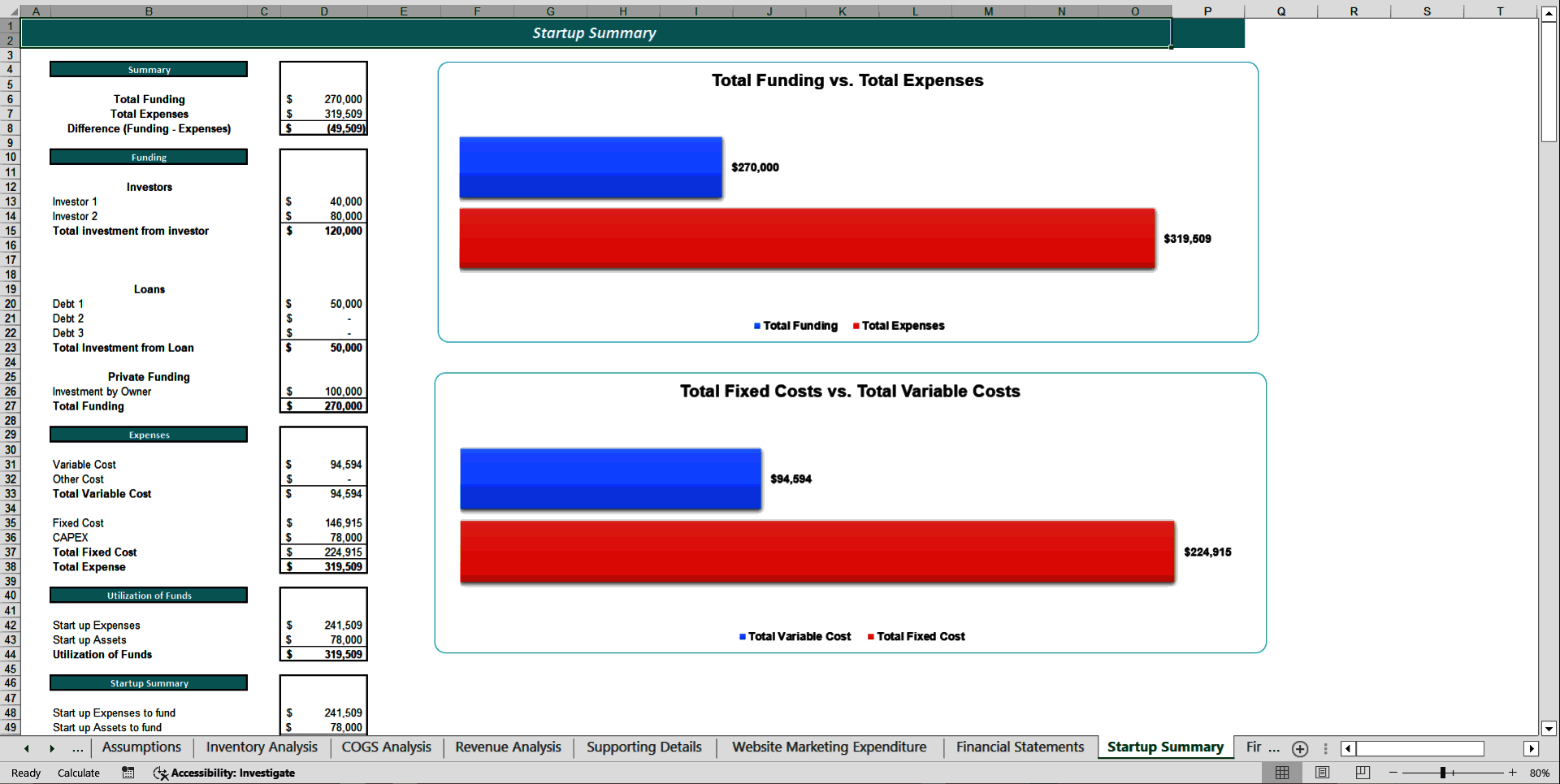
3. Business Expenses: Include financial obligations such as financing expenses and business loans.
3. Profitability Analysis
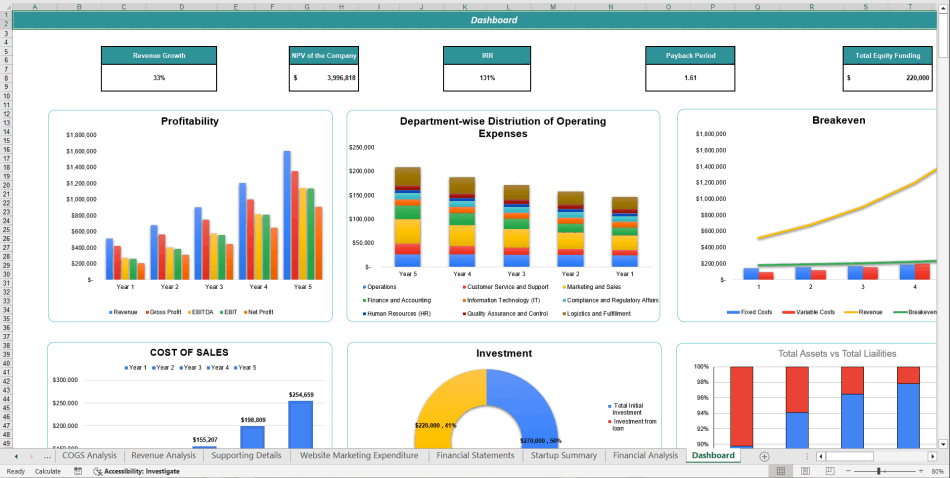
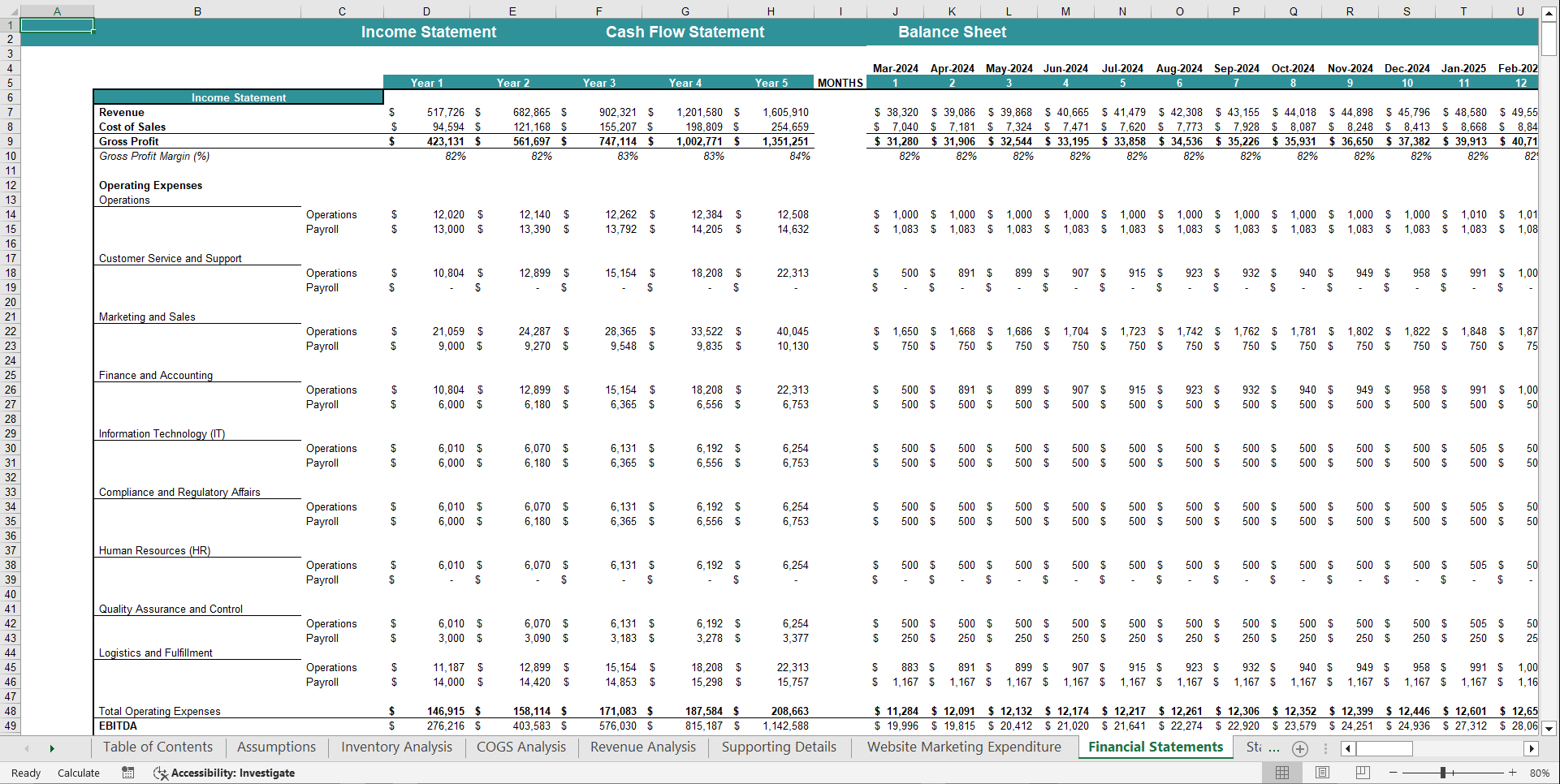
1. Profit and Loss Statement: Track income, expenses, and profit over 5 years.
2. Gross Margin & Net Profit: Get to know what is the performance of the Retail Store based on gross and net profit.
3. Break-Even Analysis: Determine the number of customers needed to cover costs and achieve profitability.
4. Cash Flow Management
1. Cash Flow Statement: Track money flowing in and out of your business.
2. Financial Position: Ensure adequate working capital for seamless operations.
3. Investment Scheduling: Plan accordingly the cashflow to make your investment decisions for a smoother flow of operations.
5. Financial Forecasting & Scenario Analysis
1. 5-Year Financial Plan: Develop long term projections for revenue, expenses, and profitability.
2. Market Conditions & Retail Trends: Adjust financial forecasts based on industry changes and trends such as Black Friday Sale.
3. Best-Case, Base-Case, and Worst-Case Scenarios: Evaluate different financial outcomes and prepare accordingly.
6. Key Performance Indicators (KPIs)
1. Customer Types & Volume: Track customer trends across different retail product categories.
2. Customer Retention & Growth Potential: Measure repeated customer and market expansion opportunities.
3. Financial Statements: Access financial modeling spreadsheets for an in-depth financial breakdown.
7. Investor Readiness & Business Strategy
1. Attract Potential Investors: Present a professional financial plan to secure funding.
2. Strategic Planning: Align business objectives with financial projections for long term success.
3. Cost Analysis & Optimization: Better understand which costs can be minimized and which one have to most impact on profitability.
Key Benefits of Using This Model
1. Better Financial Planning: Gain a clear understanding of your business's financial feasibility.
2. Optimized Operations: Enhance cost analysis and resource allocation.
3. Risk Mitigation: Plan ahead for financial uncertainties and avoid cash shortages.
4. Customizable Tool: Adapt the model to fit different retail business needs.
5. Scalability: Suitable for both small startups and established businesses.
Who Should Use This Model?
1. Entrepreneurs & Startups: Establish a solid financial base for a Retail Store business model.
2. Existing Retail Businesses: Improve financial planning to make profitability better.
3. Investors & Analysts: Evaluate the financial viability of Retail Store Business.
4. Consultants & Advisors: Offer expert financial insights to clients.
Guide to This Model
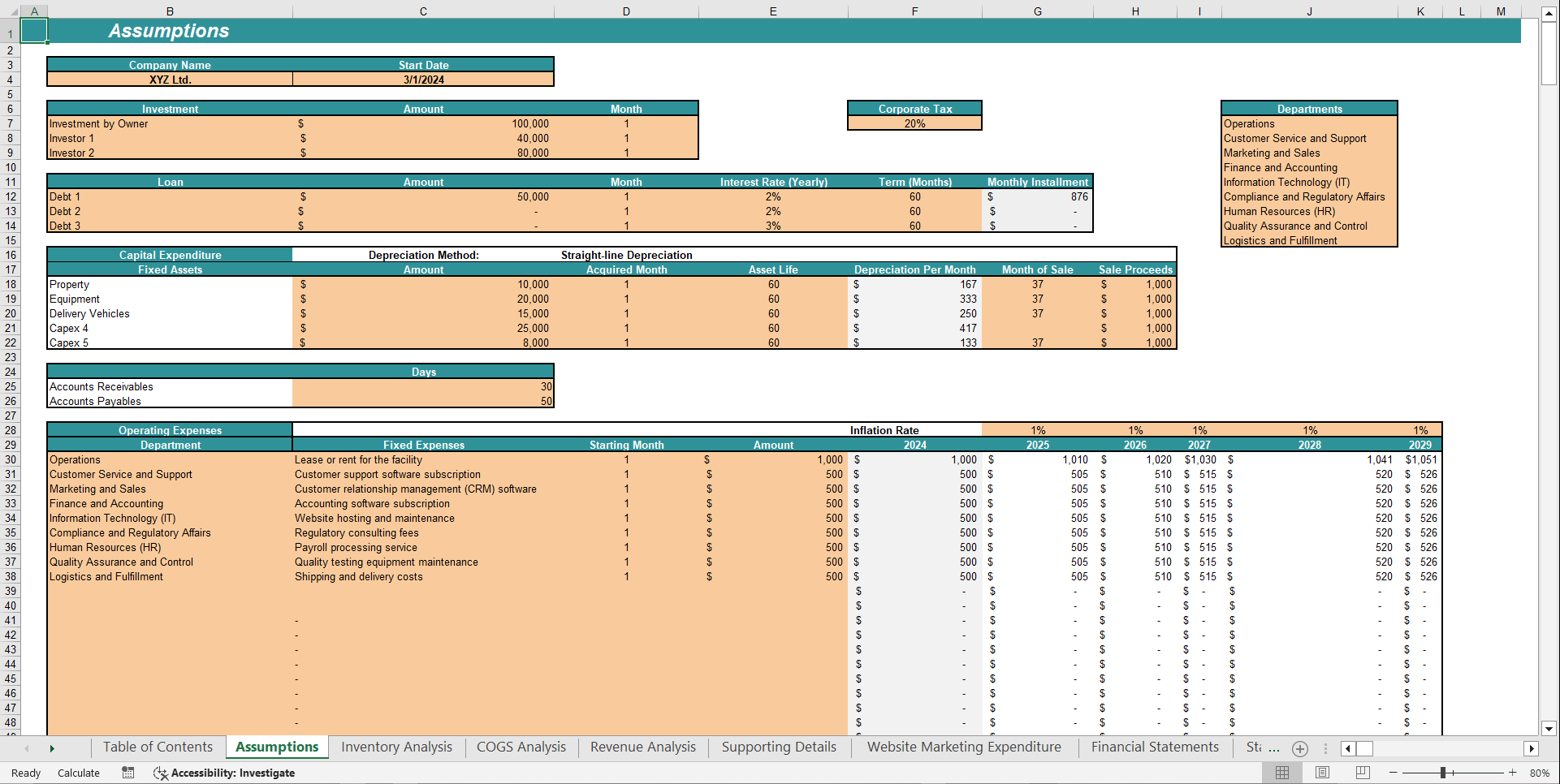
1. Enter Assumptions: Input customer volume, product prices, and business operation costs.
2. Analyze Financial Statements: Review the 3 main financial statements to assess the financial performance.
3. Adjust Scenarios: Test multiple scenarios based on best and worst case to judge business stability.
4. Make Informed Decisions: Use data-driven insights to refine marketing, pricing, and investment strategies.
FAQs
1. Do I need Excel skills to use this calculator?
No, it just needs you to add basic data.
2. Can I update customer data and revenue easily?
Yes, the model allows easy updates for customer volumes, products , and revenue streams.
3. Can I track my Retail Store's costs like equipment, staff, and supplies?
Yes, the model tracks various expenses, including Store equipment, staffing, and operational costs.
4. Does the model help with long-term financial planning for the store?
Yes, it includes financial forecasts and scenarios for up to 5 years to support long-term planning.
5. Can I make changes to the formulas in this template?
No, the formulas are locked to prevent accidental changes, ensuring accurate calculations.
Got a question about the product? Email us at support@flevy.com or ask the author directly by using the "Ask the Author a Question" form. If you cannot view the preview above this document description, go here to view the large preview instead.
Source: Best Practices in Retail Strategy, Integrated Financial Model Excel: Retail Store Financial Model Template Excel (XLSX) Spreadsheet, Oak Business Consultant




























