
 Click main image to view in full screen. Unlock all 20 preview images:
Retail Open-to-Buy & Omnichannel Financial Model – Excel XLSX
Excel (XLSX) + supplemental PDF


BENEFITS OF THIS DOWNLOADABLE EXCEL DOCUMENT
- Connect retail demand, markdowns, returns, shrink and open-to-buy purchasing to inventory, profitability and cash flow in one integrated model.
- Compare store and e-commerce economics with scenario and sensitivity analysis before committing inventory, expansion capital or financing.
- Produce five-year three-statement forecasts, liquidity analysis, KPI dashboards and valuation outputs for planning, lender and investor decisions.
RETAIL INDUSTRY EXCEL DESCRIPTION
Retail Open-to-Buy & Omnichannel Financial Model
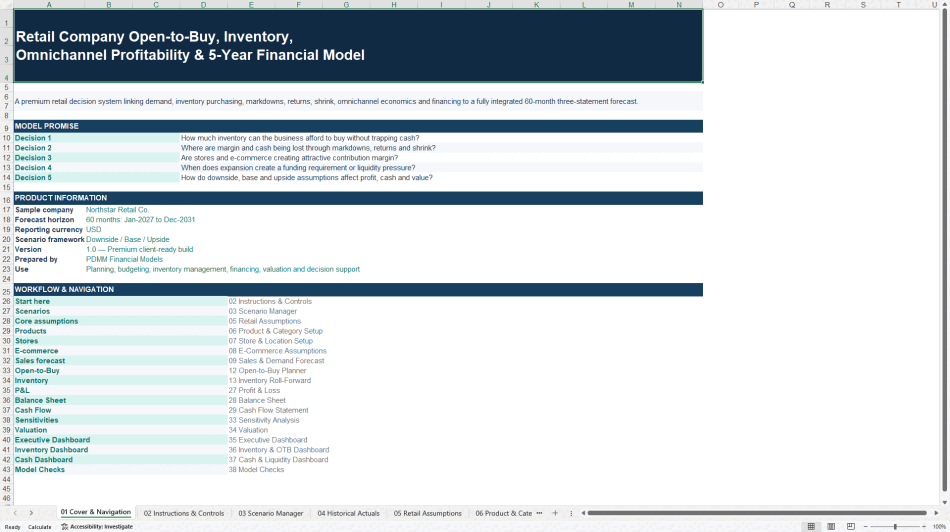
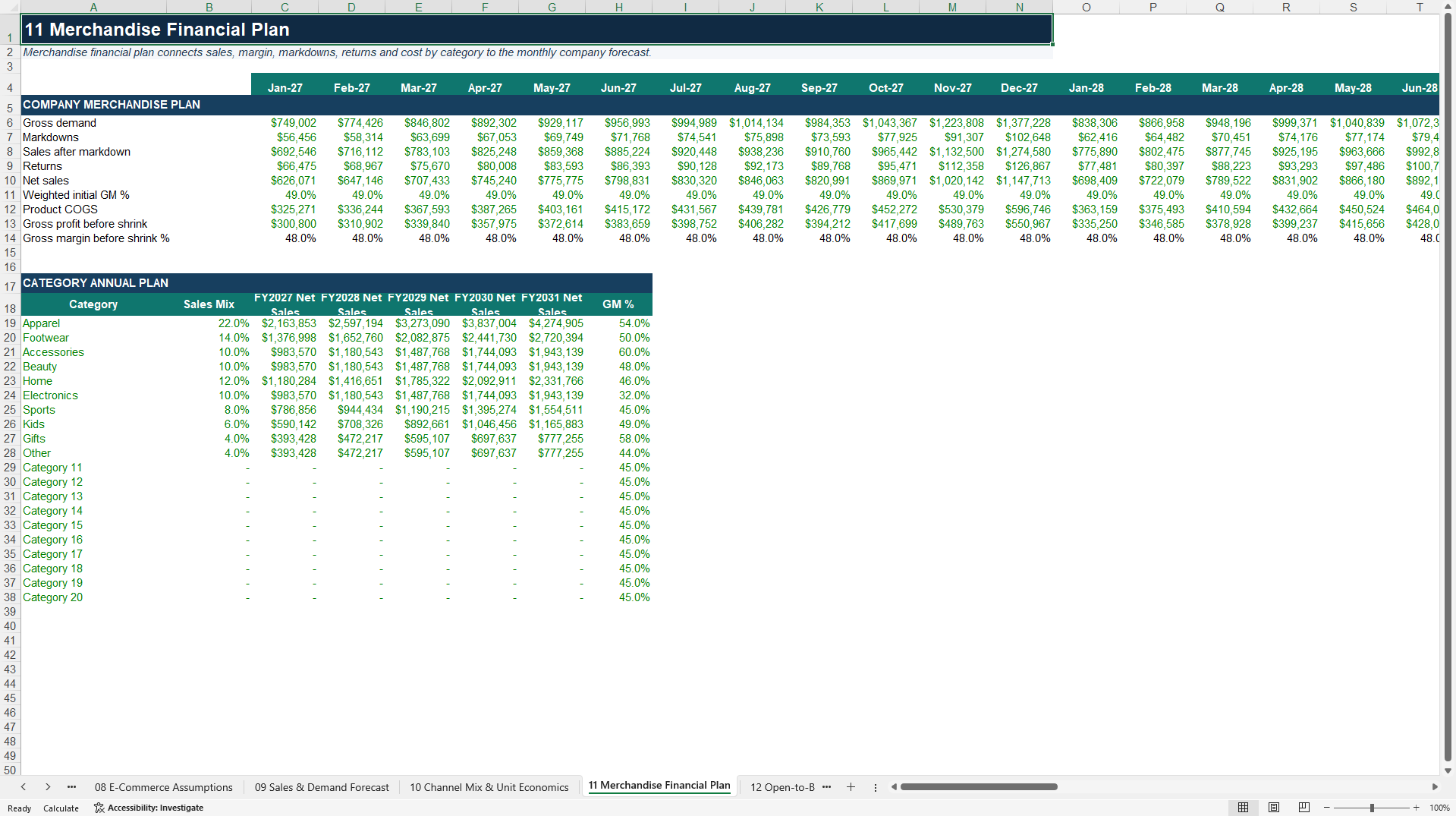
This Excel model is a five-year retail planning, operating and financial decision system for retailers that need to connect merchandise decisions with profitability and cash. It combines a 60-month forecast with product-category planning, physical-store demand, e-commerce demand, open-to-buy purchasing, inventory roll-forwards, markdowns, returns, shrink, store contribution, working capital, financing, three financial statements and valuation.
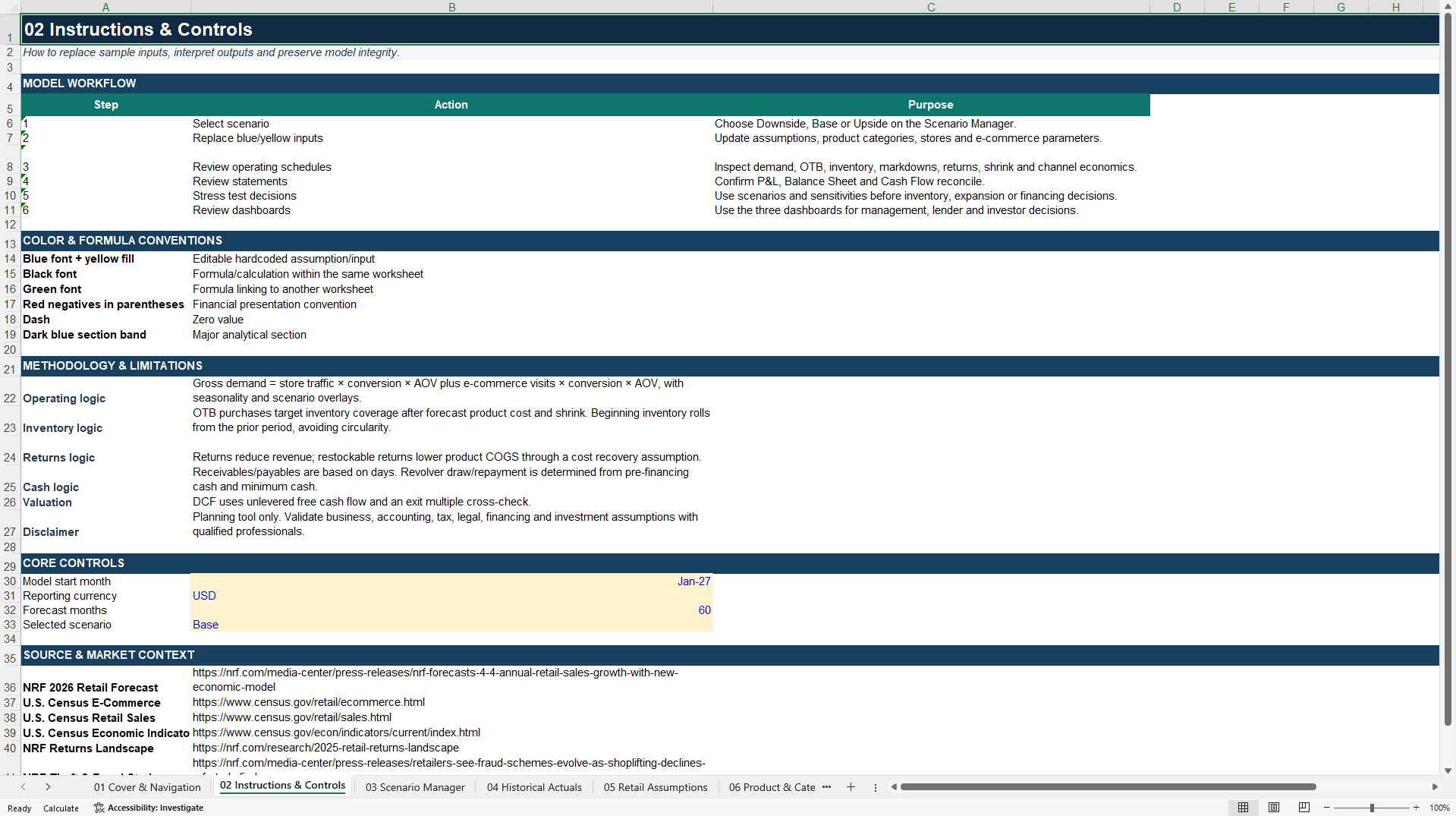
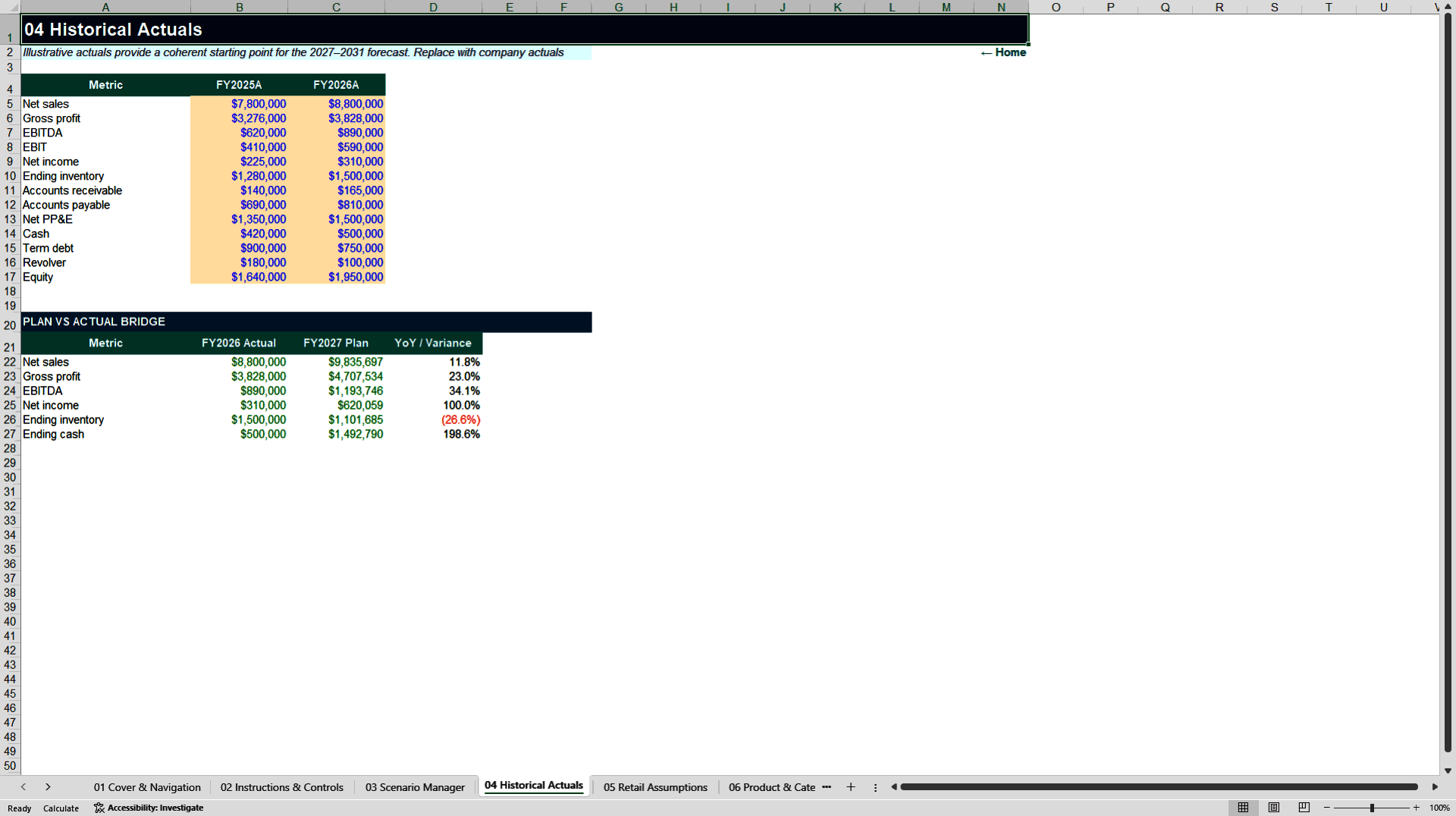
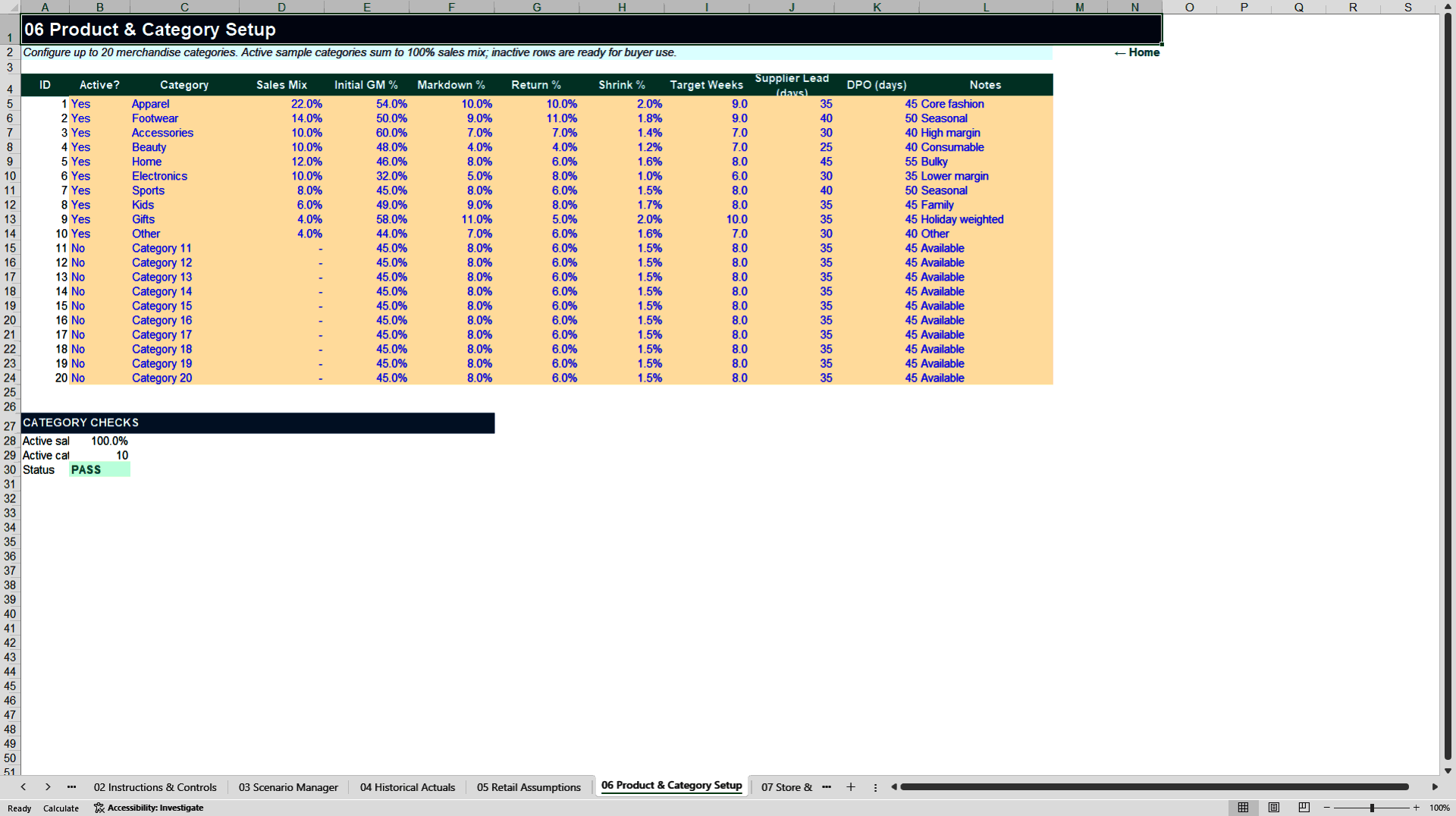
The workbook opens with coherent sample data so the full workflow can be reviewed immediately. Buyers can replace the centralized assumptions with their own company information, growth rates, return rates, markdown levels, shrink, inventory coverage, gross margin, working-capital terms, financing assumptions and valuation inputs. Product setup supports up to 20 merchandise categories with sales mix, margin, markdown, return, shrink, target weeks, supplier lead time and payable-day assumptions. Store setup includes existing and planned locations with opening or closing dates, square footage, traffic, conversion, average order value, rent, staffing and opening capex. E-commerce assumptions cover visits, conversion, AOV, growth, returns, payment processing, fulfillment, shipping subsidy, returns processing, marketing and markdowns.
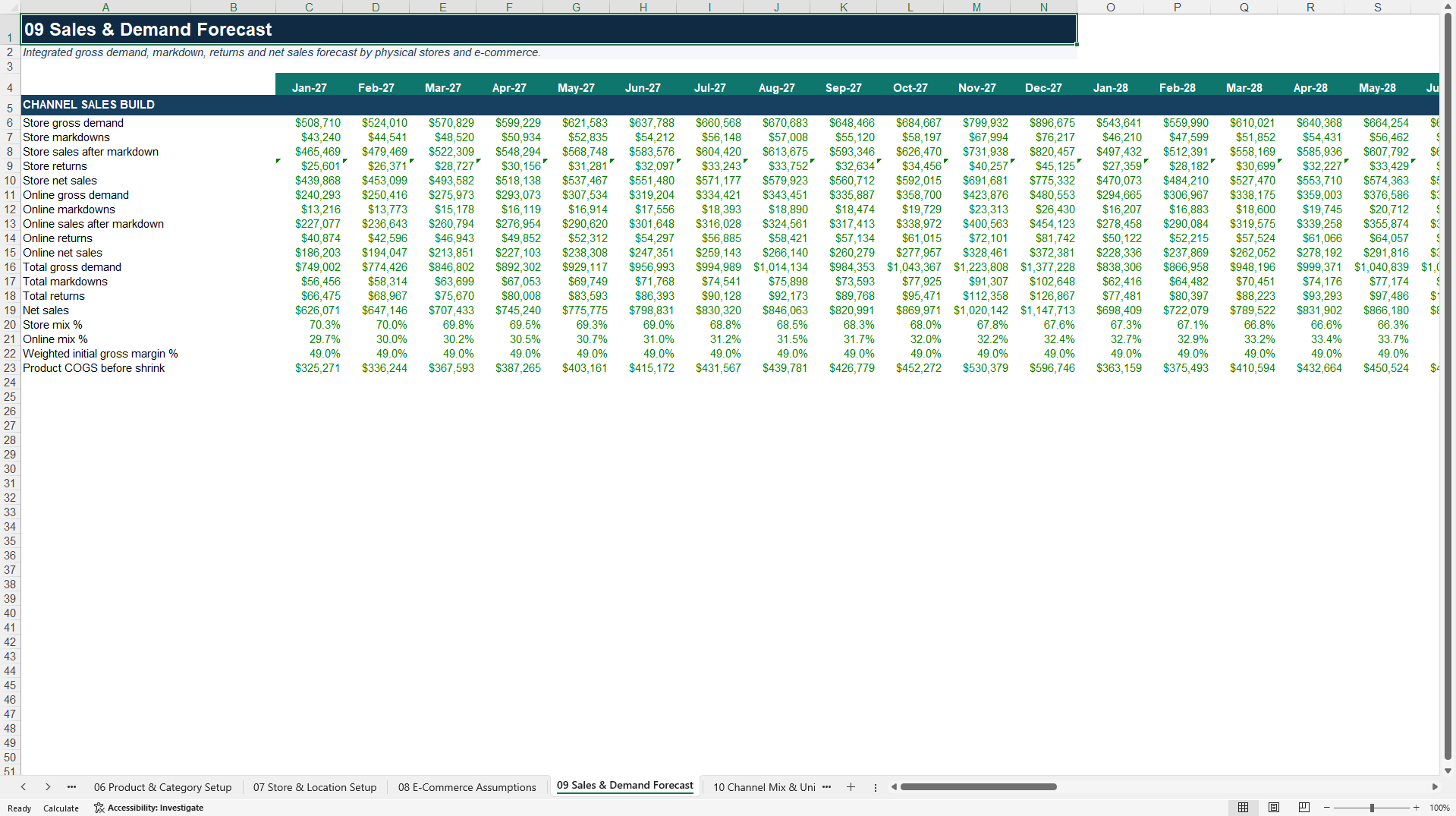
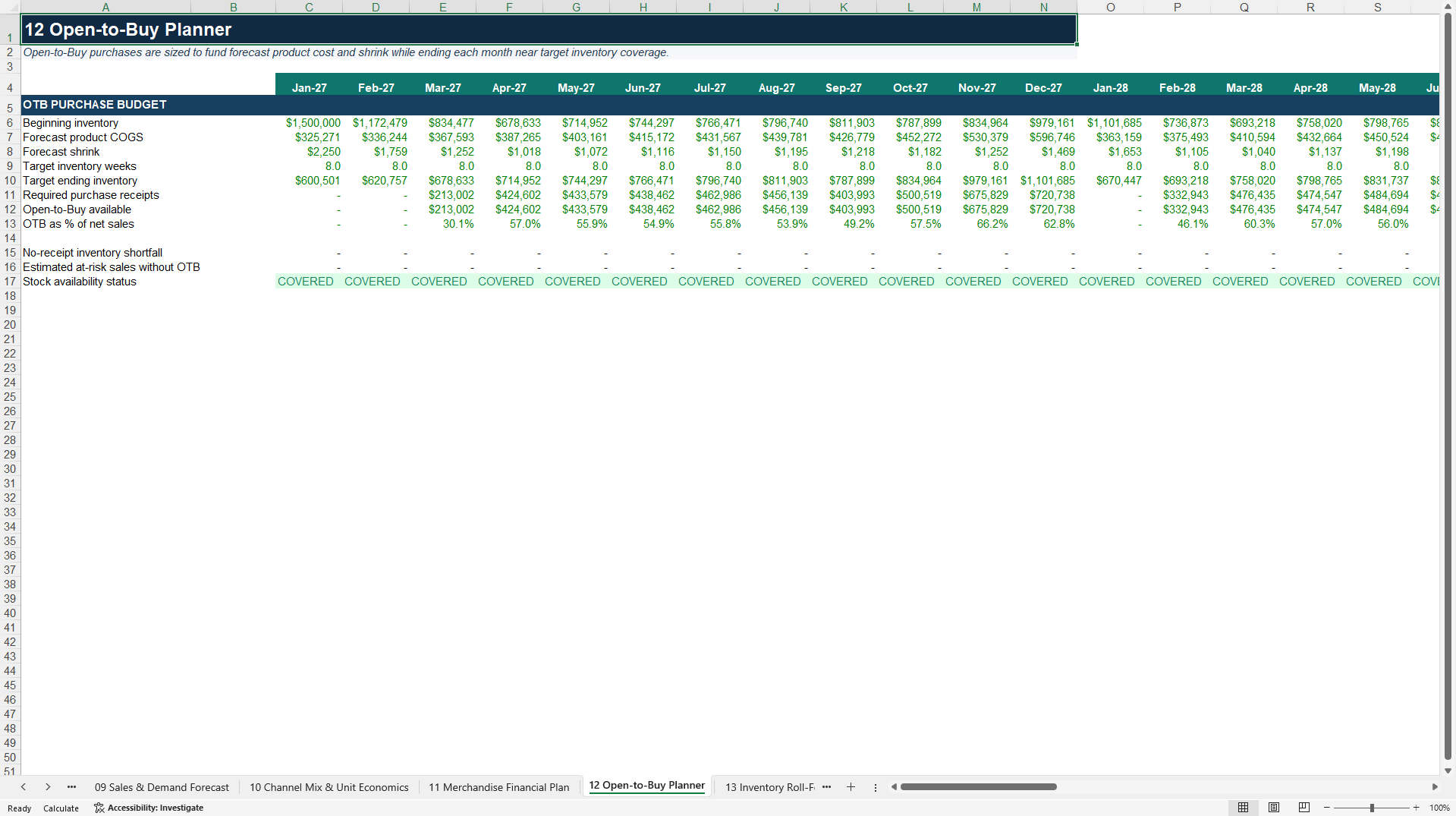
The operating engine forecasts store and online gross demand, applies markdowns and returns, and calculates net sales. Merchandise schedules then connect product cost and shrink with open-to-buy purchasing, inventory receipts and ending inventory. The model calculates inventory turns, weeks of supply and purchase requirements while working-capital schedules translate retail operating decisions into accounts receivable, accounts payable and cash effects.
Store economics and e-commerce contribution views allow channel profitability to be reviewed separately. Payroll, occupancy, marketing, fulfillment, processing, shipping, operating expenses, capex, depreciation, taxes, term debt and revolver logic feed the integrated Profit & Loss, Balance Sheet and Cash Flow Statement.
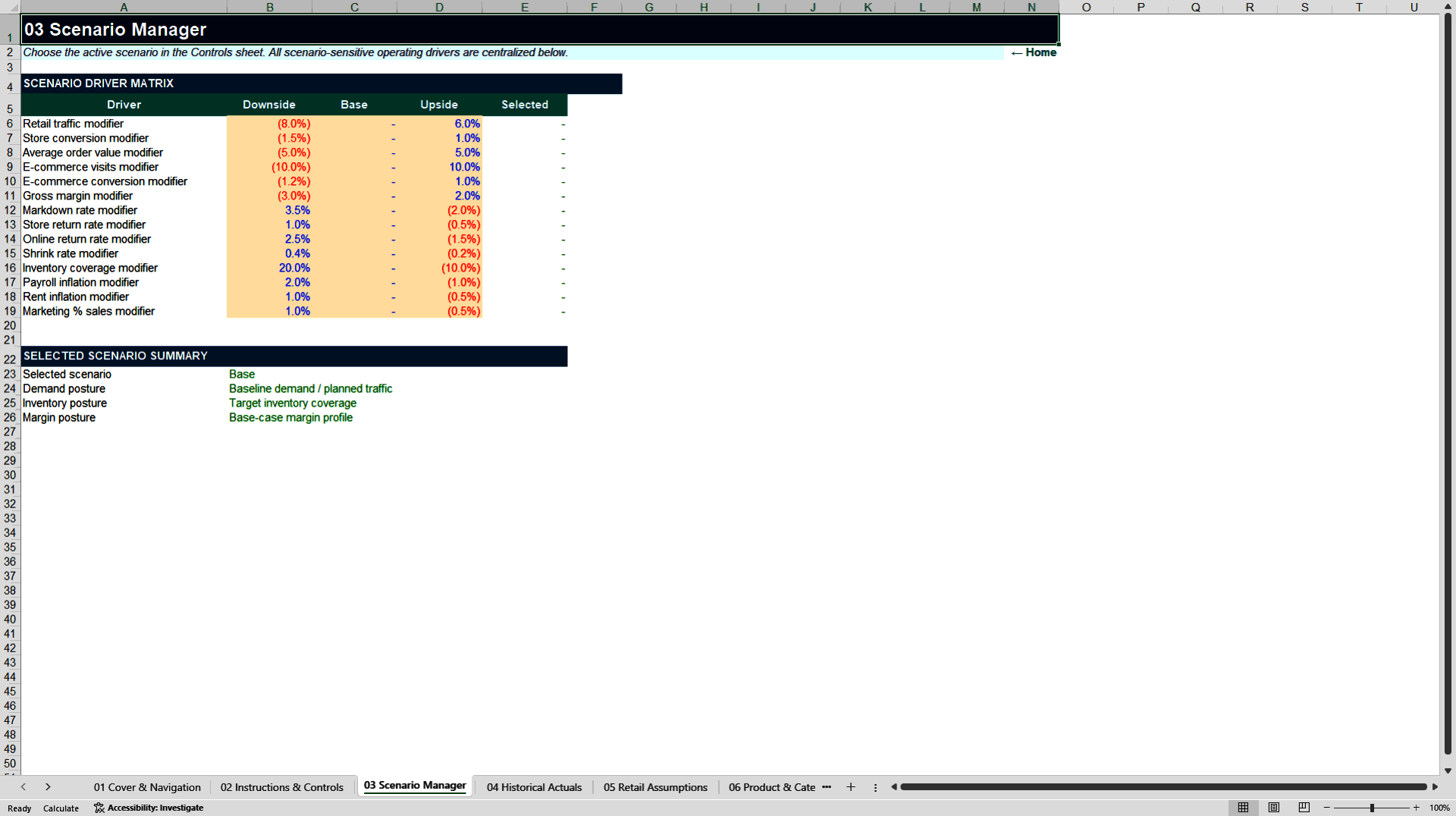
Decision analysis includes Downside, Base and Upside scenarios and six sensitivity blocks covering sales versus gross margin, inventory weeks versus markdowns, online mix versus returns, conversion versus AOV, shrink versus gross margin, and store productivity versus occupancy. The valuation section calculates unlevered DCF enterprise and equity value and provides an exit-EBITDA-multiple cross-check.
Three management dashboards summarize executive performance, inventory and open-to-buy decisions, and cash and liquidity. KPI analysis includes sales growth, gross margin, EBITDA, net income, free cash flow, cash, net debt, open stores, online mix, inventory turns, weeks of supply, markdowns, returns, shrink, sales per store, sales per square foot, break-even sales and margin of safety. An independent model-check sheet tests statement balance, cash reconciliation, inventory roll-forward, category sales mix, liquidity bounds, operating-rate bounds, debt balances and DCF terminal-value mechanics.
The model is suitable for retail owners, finance managers, CFOs, accountants, consultants, lenders and investors who need a transparent Excel framework for budgeting, inventory planning, omnichannel profitability, cash-flow management, expansion review and valuation. It is provided as a fully editable Excel workbook with a full-sheet preview for review before purchase.
Got a question about the product? Email us at support@flevy.com or ask the author directly by using the "Ask the Author a Question" form. If you cannot view the preview above this document description, go here to view the large preview instead.
Source: Best Practices in Retail Industry, Integrated Financial Model Excel: Retail Open-to-Buy & Omnichannel Financial Model Excel (XLSX) Spreadsheet, PDMM Financial Models
ABOUT THE AUTHOR

PDMM Financial Models develops professional, decision-ready Excel models for business owners, entrepreneurs, investors, consultants, analysts, and finance teams. Our objective is to transform complex business assumptions into clear, structured analysis that supports better planning and investment decisions.
Our models cover business planning, forecasting, budgeting, feasibility analysis,
... [read more]
Ask the Author a Question
You must be logged in to contact the author.




























