 Click main image to view in full screen.
Replacement Economy Architecture™ – PowerPoint PPTX Template
PowerPoint (PPTX) + supplemental PDF 16 Slides


BENEFITS OF THIS DOWNLOADABLE POWERPOINT DOCUMENT
- Provides a structured framework for identifying where replacement economics can be converted into recurring lifecycle revenue and broader value capture.
- Helps executives diagnose replacement dependency, identify lifecycle monetization opportunities, and prioritize service, repair, upgrade, refurbishment, and remanufacturing strategies.
- Connects product lifecycle economics with technology, regulation, aftermarket ownership, and circular value creation to support more resilient long-term business models.
BUSINESS MODEL INNOVATION PPT TEMPLATE DESCRIPTION
The Replacement Economy Architecture™ is a comprehensive executive intelligence playbook that examines how product lifecycles can evolve from one-time replacement economics into multi-stage revenue systems.
For decades, companies have largely viewed the product sale and eventual replacement as the dominant economic cycle. Yet modern products increasingly generate value across a much longer lifecycle involving service, maintenance, repair, software support, upgrades, refurbishment, remanufacturing, asset recapture, and eventual replacement. This creates a strategic question that extends beyond product durability or planned obsolescence: how much economic value can a company capture throughout the entire life of an asset?
Designed for corporate strategy, operations, innovation, product, aftermarket, sustainability, and executive leadership teams, this intelligence provides a structured methodology for understanding the mechanisms that determine when and why products are replaced – and how companies can strategically influence, monetize, or participate in those lifecycle events.
Inside, you will find:
• Product Lifetime Stack™ – distinguish physical, functional, repair, support, compatibility, economic, and customer-value life, including the eventual replacement point.
• Obsolescence Spectrum™ – analyze physical, functional, technological, software, ecosystem, economic, and psychological drivers of product replacement.
• Replacement Trigger Matrix™ – identify the events that accelerate replacement, from component failure and software support termination to regulatory requirements and economic irrationality.
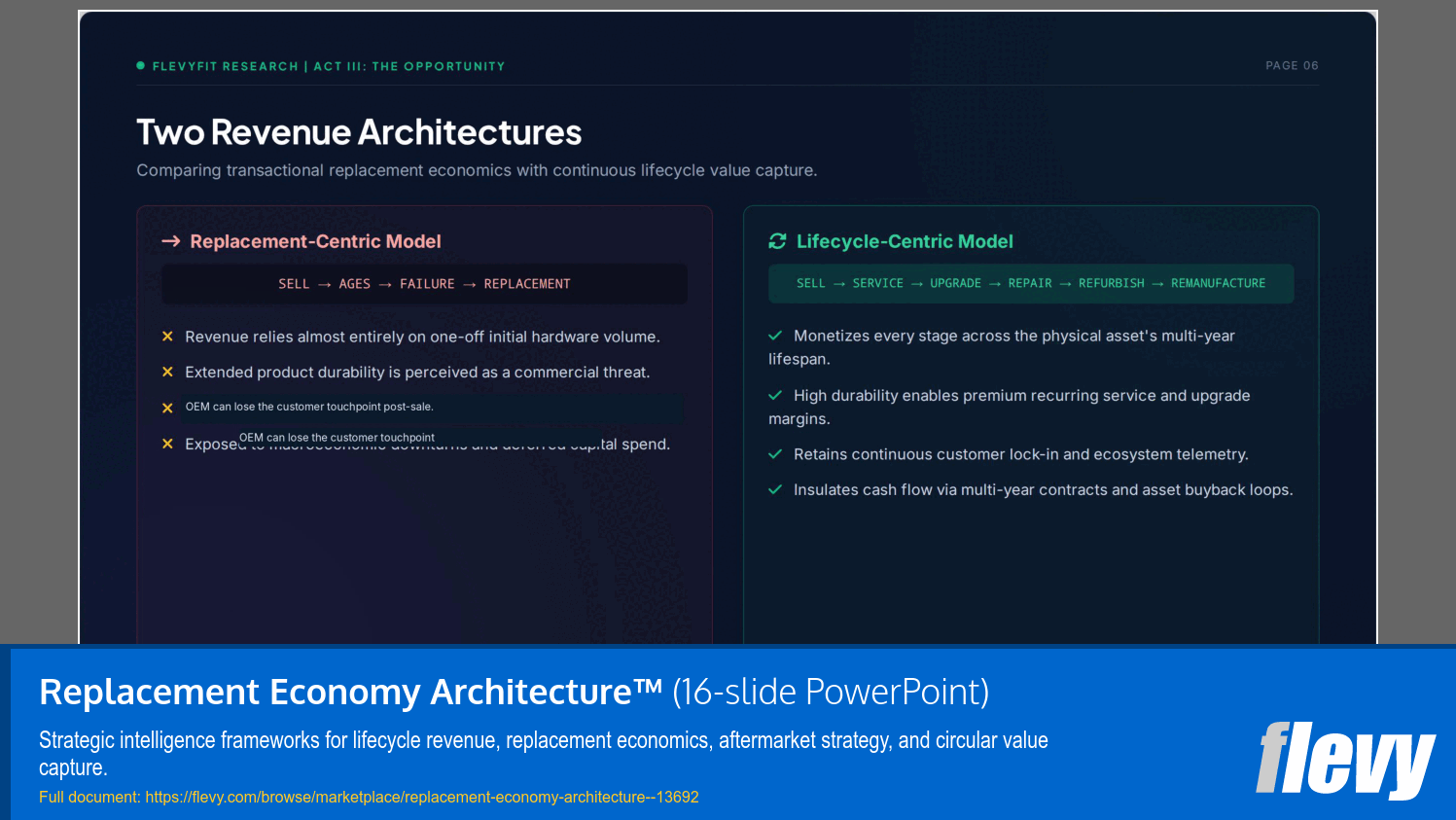
• Two Revenue Architectures – compare replacement-centric economics with lifecycle-centric value capture.
• Lifecycle Value Capture Ladder™ – map revenue opportunities across service, upgrades, repair, refurbishment, remanufacturing, and asset recapture.
• Replacement Dependency Matrix™ – assess whether an organization remains dependent on new-product replacement or is transitioning toward broader lifecycle economics.
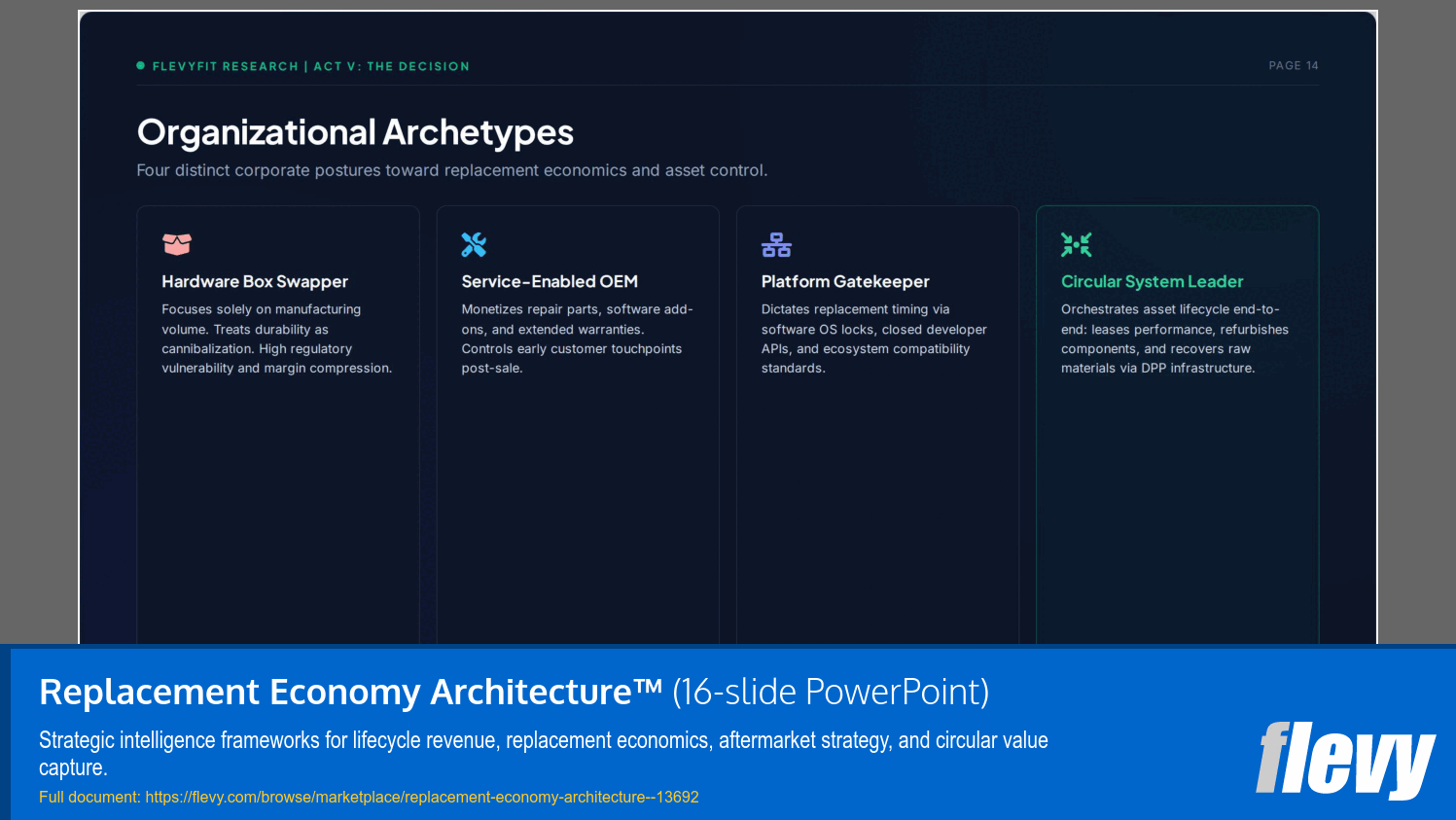
• Organizational Archetypes – benchmark the progression from Hardware Box Swapper to Service-Enabled OEM, Platform Gatekeeper, and Circular System Leader.
• Lifecycle Readiness Scorecard™ – evaluate Trigger Control, Lifecycle Monetization, Aftermarket Ownership, Asset Recapture, and Regulatory Readiness.
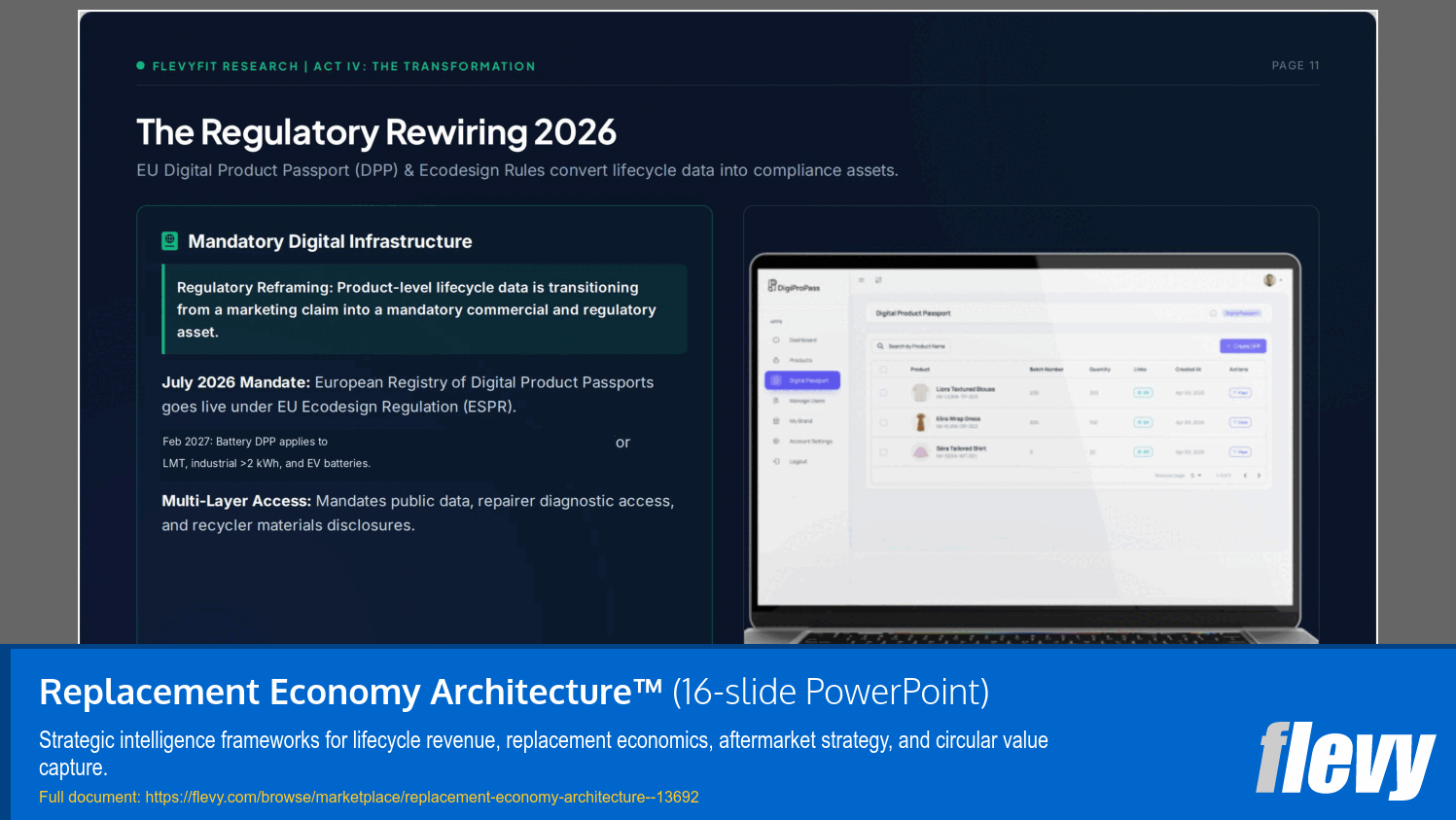
The playbook also examines the strategic implications of evolving repair regulation, digital product information, software-driven obsolescence, aftermarket ownership, remanufacturing, and emerging differences between physical and economic product life.
Rather than treating replacement as simply the end of a customer relationship, The Replacement Economy Architecture™ reframes the product lifecycle as a strategic value system.
The ultimate objective is to help executives move from:
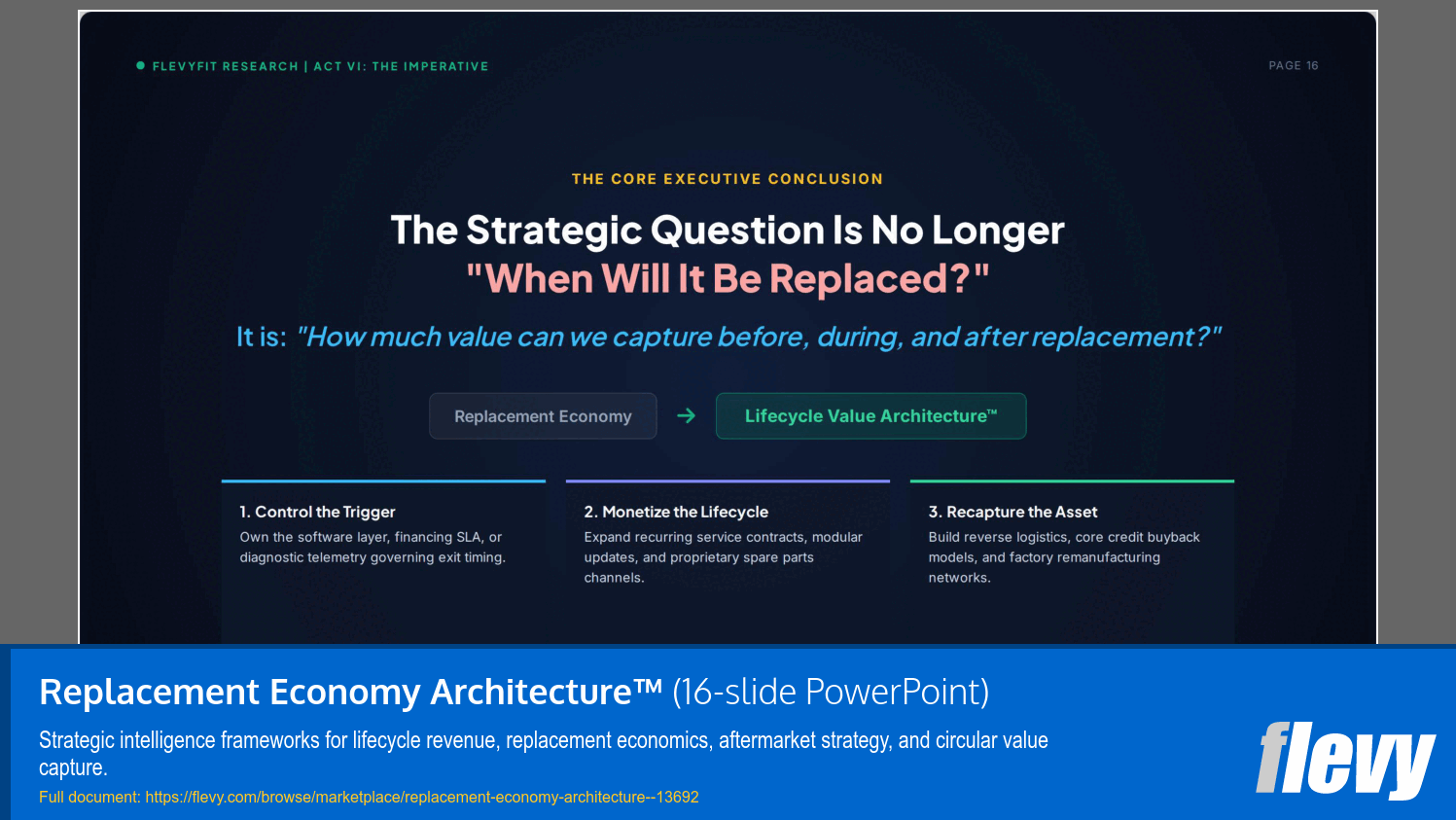
Replacement Economy → Lifecycle Value Architecture™
by answering three strategic questions:
1. Control the Trigger.
2. Monetize the Lifecycle.
3. Recapture the Asset.
This intelligence is designed as a reusable strategic decision asset for organizations evaluating product lifecycle economics, aftermarket growth, circular business models, product strategy, and long-term value capture.
Got a question about the product? Email us at support@flevy.com or ask the author directly by using the "Ask the Author a Question" form. If you cannot view the preview above this document description, go here to view the large preview instead.
Source: Best Practices in Business Model Innovation, Circular Economy PowerPoint Slides: Replacement Economy Architecture™ PowerPoint (PPTX) Presentation Slide Deck, Wisnu Pandega Wardana
ABOUT THE AUTHOR

I am an independent Industrial Intelligence and Strategic Innovation Publisher focused on developing structured business intelligence, innovation frameworks, and opportunity-oriented research for decision-makers.
My work focuses on translating emerging technologies, industrial transformation, sustainability, resource efficiency, and market shifts into structured intelligence assets that
... [read more]
Ask the Author a Question
You must be logged in to contact the author.




























