 Click main image to view in full screen.
Regional Haze Accountability Shift – PDF
PDF document 9 Pages


BENEFITS OF THIS DOWNLOADABLE PDF DOCUMENT
- Provides a structured framework for assessing how recurring transboundary haze can evolve from an environmental issue into a regional accountability and governance risk.
- Clarifies the strategic gap between monitoring, attribution, responsibility, remedy, and enforceability across national and ASEAN-level mechanisms.
- Helps decision-makers identify the institutional developments, regulatory signals, and cross-border risk indicators that could reshape regional haze governance.
ESG PDF DESCRIPTION
The Regional Haze Accountability Shift™ is an executive intelligence playbook examining the emerging pressure on ASEAN to move beyond traditional transboundary haze cooperation toward more credible mechanisms for transparency, attribution, responsibility, remedy, and enforcement.
Recurring transboundary haze has traditionally been addressed primarily through regional cooperation, information sharing, monitoring, coordination, and national implementation. Yet repeated haze episodes continue to generate cross-border health, environmental, economic, and diplomatic costs. The 2026 haze episode provides a live governance test: as affected ASEAN states again turn to regional mechanisms, the unresolved question is whether cooperation alone remains sufficient when domestic environmental events create consequences beyond national borders.
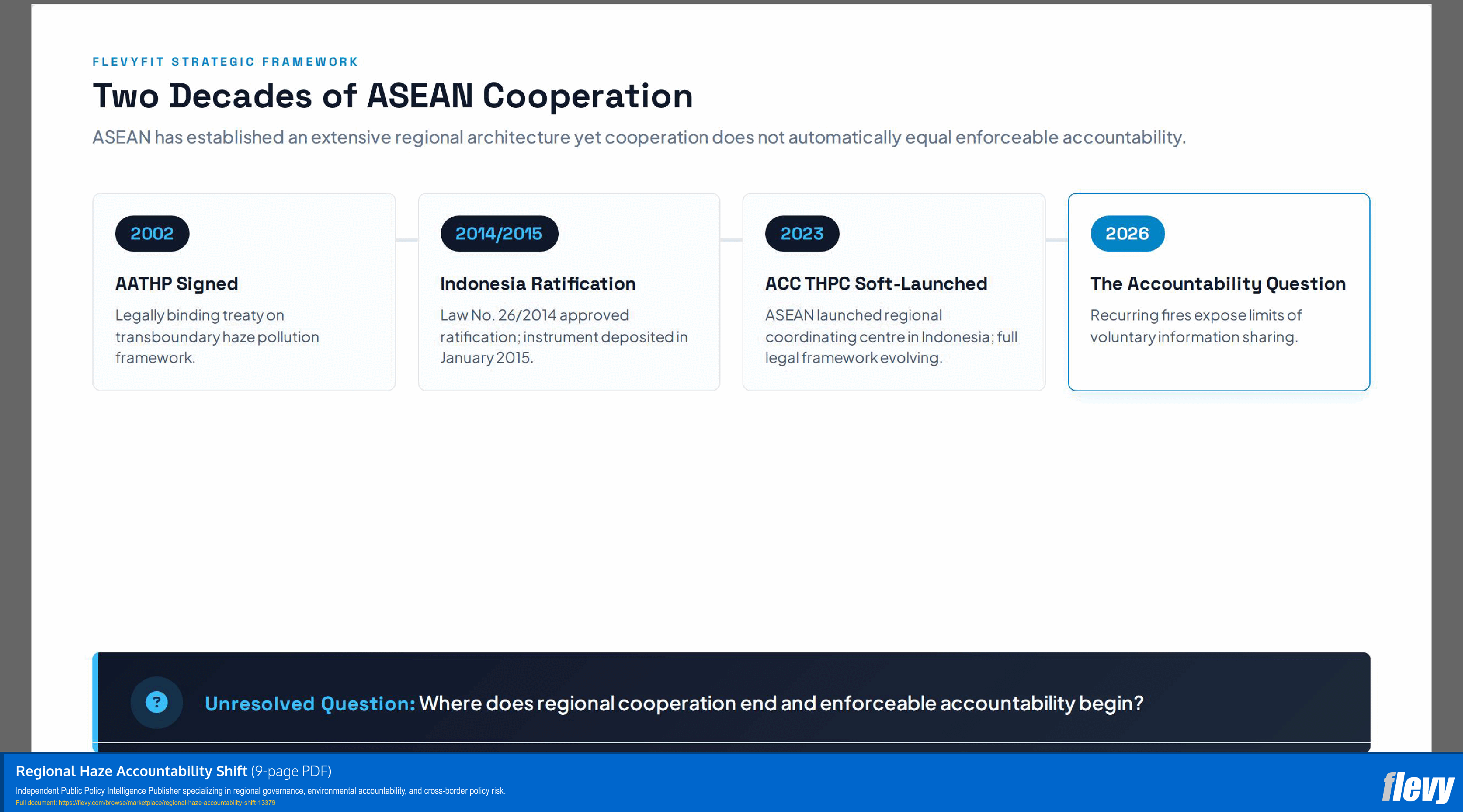
This playbook examines that question through a tightly focused regional lens. It traces the evolution of ASEAN's haze architecture from the 2002 ASEAN Agreement on Transboundary Haze Pollution through Indonesia's ratification, the development of the ASEAN Coordinating Centre for Transboundary Haze Pollution Control, and the renewed regional response in 2026.
The analysis also uses Singapore's Transboundary Haze Pollution Act as an important national-level test case. Singapore demonstrates that domestic statutory authority can extend beyond national territory, while also illustrating the practical challenges of converting national legal capability into effective cross-border accountability.
Inside, you will find:
• The 2026 Governance Trigger – why renewed regional haze pressure matters beyond another recurring pollution episode.
• The ASEAN Cooperation Architecture – what two decades of regional mechanisms were designed to achieve and where cooperation encounters institutional limits.
• The Singapore Test – what a decade of extraterritorial legislation reveals about the distance between domestic legal authority and cross-border enforcement.
• The Accountability Gap – a four-stage analytical lens covering Attribution, Responsibility, Remedy, and Enforcement.
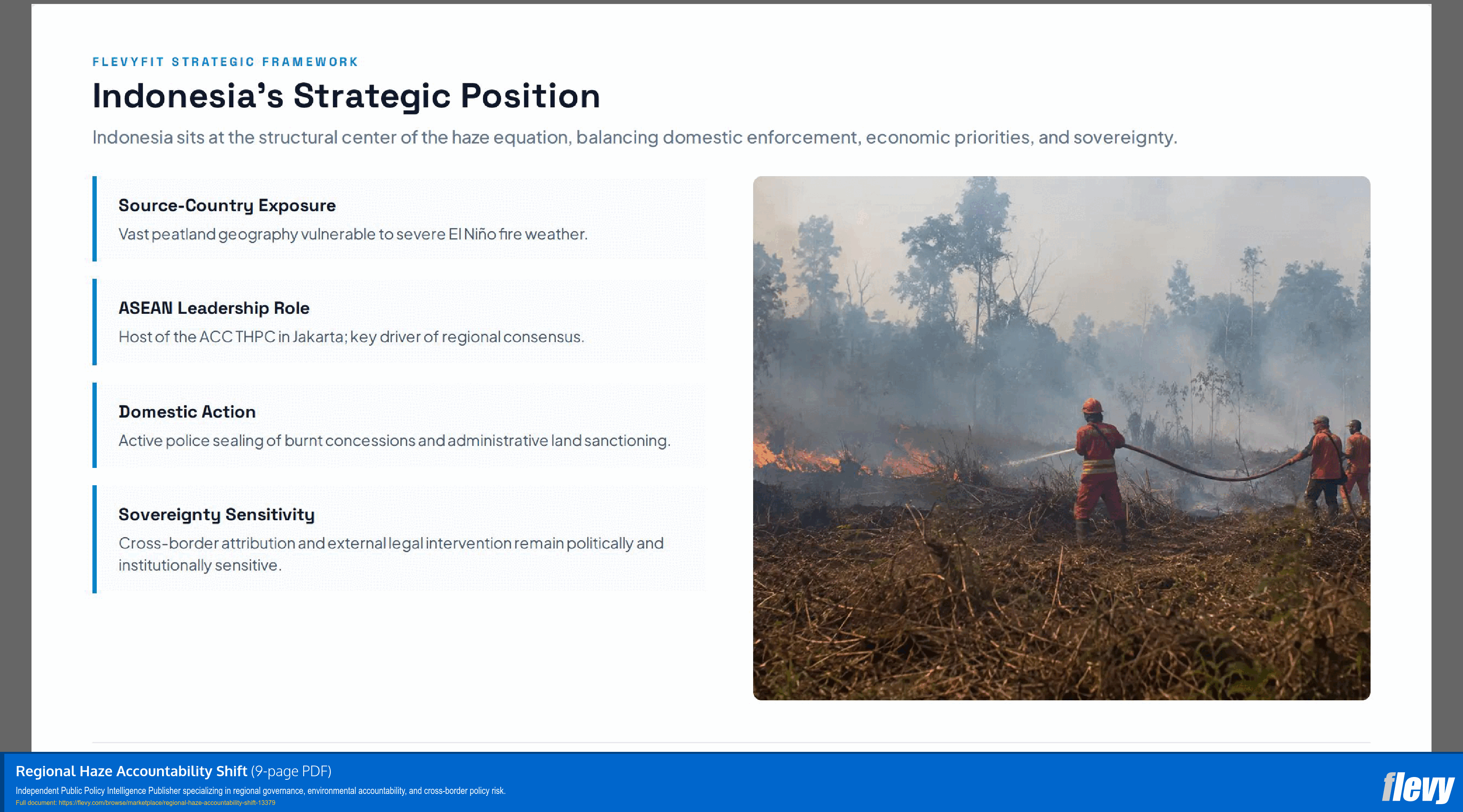
• Indonesia's Strategic Position – how source-country exposure, domestic enforcement, ASEAN leadership, economic priorities, and sovereignty sensitivities intersect.
• ASEAN's Strategic Choice – the implications of maintaining the status quo, deepening transparency and attribution, or moving toward stronger regional accountability mechanisms.
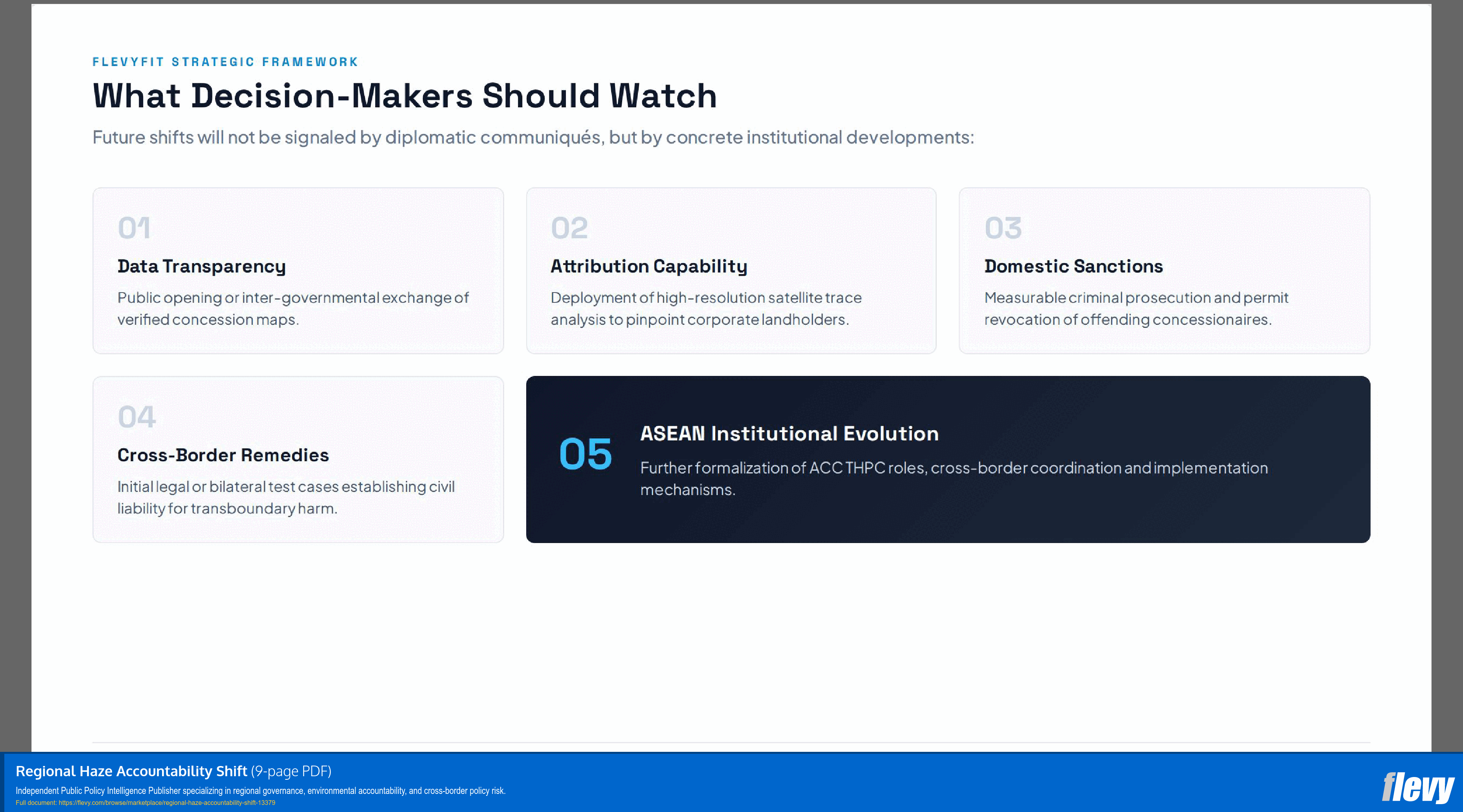
• Forward-Looking Indicators – five developments decision-makers should monitor to determine whether regional haze governance is actually evolving.
Designed for policymakers, government and ASEAN stakeholders, corporate risk leaders, investors, insurers, and executives exposed to Southeast Asian environmental and supply-chain risk, this playbook provides a structured way to assess an emerging regional governance issue before institutional change becomes fully established.
The central question is not whether ASEAN can cooperate on haze. It is whether cooperation can evolve into credible accountability when cross-border costs persist.
Got a question about the product? Email us at support@flevy.com or ask the author directly by using the "Ask the Author a Question" form. If you cannot view the preview above this document description, go here to view the large preview instead.
Source: Best Practices in ESG PDF: Regional Haze Accountability Shift PDF (PDF) Document, Wisnu Pandega Wardana
ABOUT THE AUTHOR

I am an independent Industrial Intelligence and Strategic Innovation Publisher focused on developing structured business intelligence, innovation frameworks, and opportunity-oriented research for decision-makers.
My work focuses on translating emerging technologies, industrial transformation, sustainability, resource efficiency, and market shifts into structured intelligence assets that
... [read more]
Ask the Author a Question
You must be logged in to contact the author.




























