

 Click main image to view in full screen. Unlock all 35 preview images:
ESG Risk, Opportunity, and Reporting – PDF
PDF document 148 Pages


BENEFITS OF THIS DOWNLOADABLE PDF DOCUMENT
- ESG Risks: This section discusses the potential environmental, social, and governance risks that organizations may face, such as regulatory penalties, reputational damage, operational disruptions, and financial losses.
- ESG Opportunities: This section highlights the potential opportunities that organizations can seize by adopting and promoting ESG principles.
- ESG Reporting: This section outlines the best practices for transparent, consistent, and effective ESG reporting, which is crucial for stakeholder communication and regulatory compliance.
ESG PDF DESCRIPTION
"All what you need to know about ESG in this document – 148 Slides."
Introduction
In the evolving landscape of business and finance, Environmental, Social, and Governance (ESG) factors have surged to the forefront, playing a significant role in the decision-making process of investors, stakeholders, and consumers. It is no longer enough for companies to merely be profitable; they must also demonstrate a commitment to broader societal and environmental concerns.
As climate change and social inequities continue to escalate, businesses globally are coming under increasing pressure to incorporate sustainable practices, demonstrate social responsibility, and ensure good governance. This expectation is not only coming from regulatory bodies but also from informed customers, shareholders, and investors who are keen to align their investments with their values and ethics.
Document Overview: ESG Risk, Opportunity, and Reporting
This document, titled "ESG Risk, Opportunity, and Reporting," include 148 slides, serves as an essential guide for organizations to understand, evaluate, and strategically respond to ESG-related risks and opportunities. It provides a comprehensive framework for implementing sustainable practices, managing associated risks, and maximizing opportunities arising from ESG initiatives.
The content of this document is organized into three main sections:
1. ESG Risks: This section discusses the potential environmental, social, and governance risks that organizations may face, such as regulatory penalties, reputational damage, operational disruptions, and financial losses. It provides a robust framework to identify, assess, and manage these risks effectively.
2. ESG Opportunities: This section highlights the potential opportunities that organizations can seize by adopting and promoting ESG principles. This includes brand enhancement, investor appeal, operational efficiency, and innovation.
3. ESG Reporting: This section outlines the best practices for transparent, consistent, and effective ESG reporting, which is crucial for stakeholder communication and regulatory compliance. It includes guidance on various ESG reporting standards and frameworks.
Why You Should Have This Document
In today's business climate, understanding ESG risks and opportunities is not a luxury; it is a necessity. Companies that fail to address ESG issues could face significant financial and reputational damage, while those that effectively manage these factors stand to gain a competitive advantage. This document serves as a roadmap to navigate the complex ESG landscape, enabling organizations to operate responsibly, sustainably, and successfully in a rapidly changing world.
The importance of this document lies in its ability to provide organizations with the insights and tools to manage ESG risks proactively, leverage ESG opportunities strategically, and report ESG performance accurately. With this guide, organizations can not only enhance their corporate responsibility but also increase their long-term resilience, value creation, and overall business success.
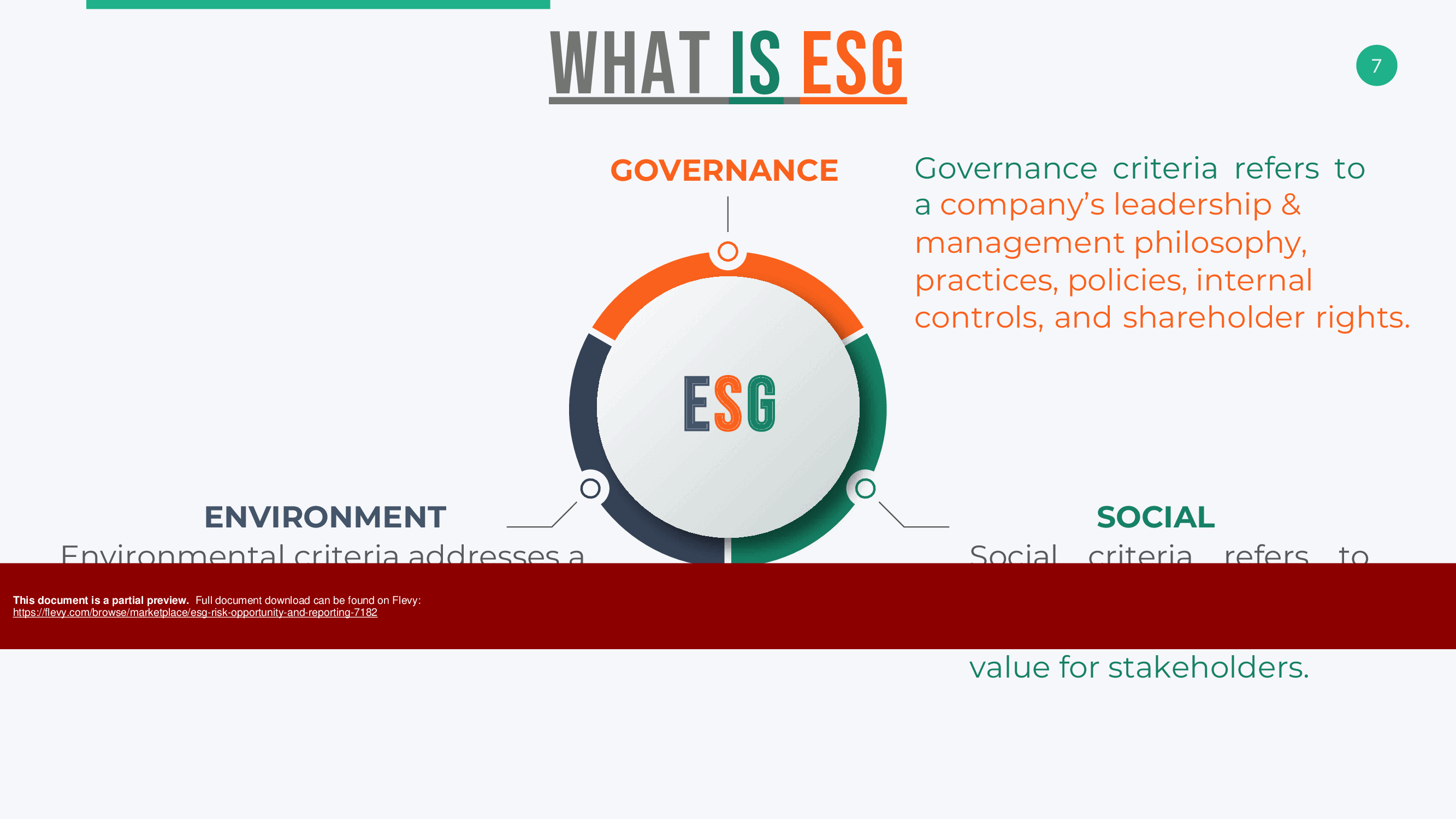
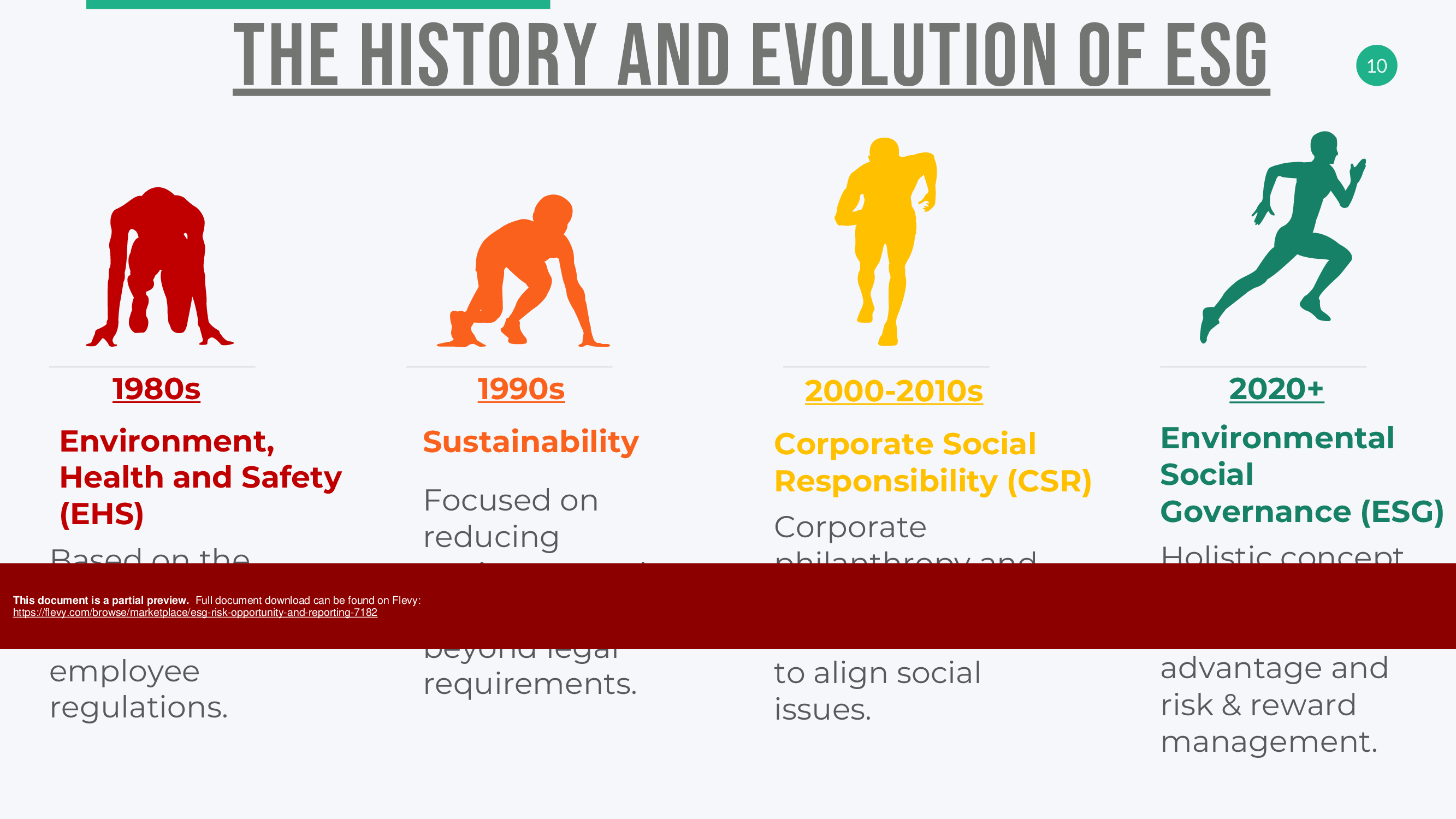
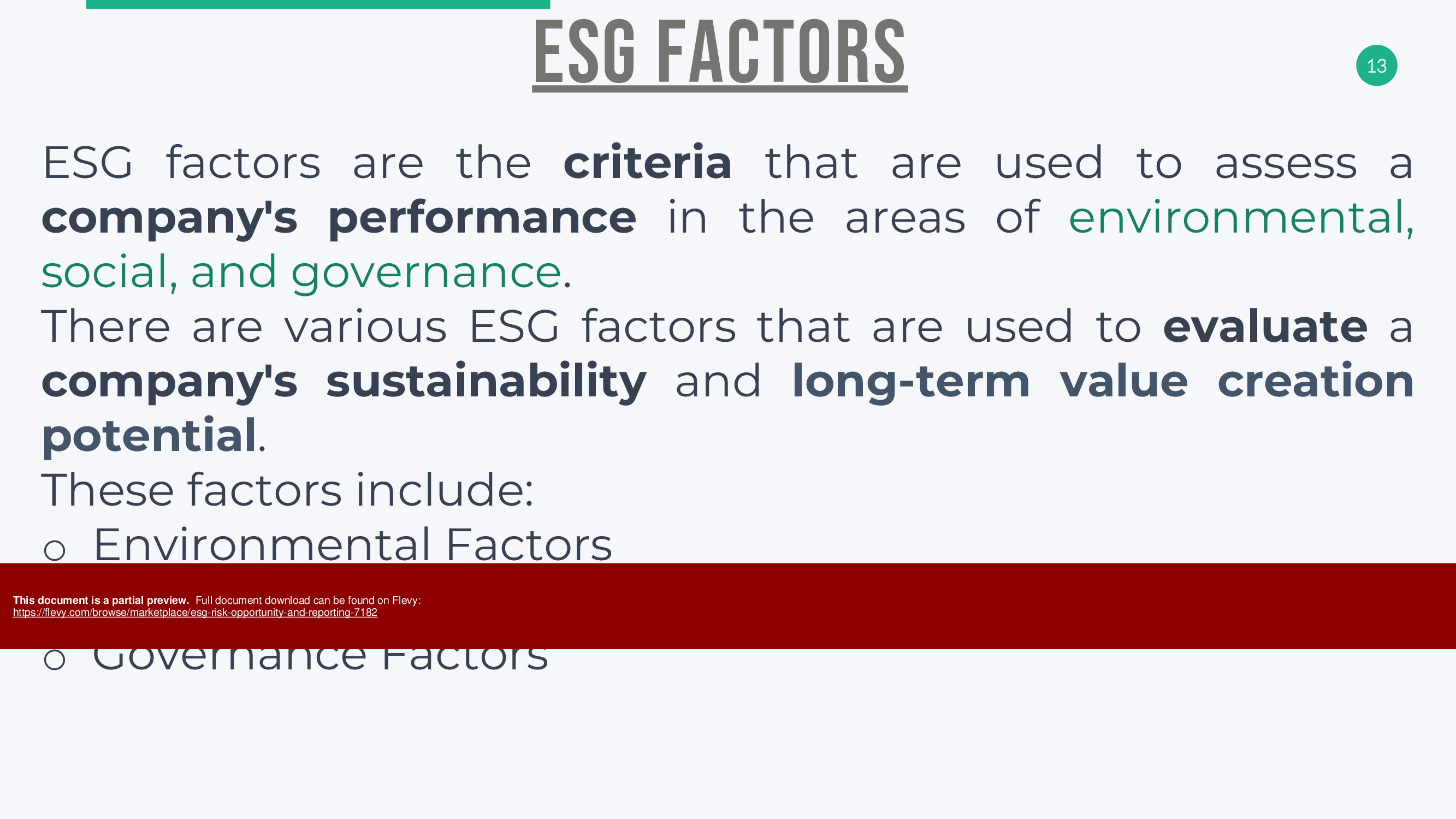
The PDF also delves into the historical evolution of ESG, tracing its roots from the 1980s to the present day. It provides detailed insights into environmental, social, and governance factors, helping organizations to understand their impact and opportunities.
Got a question about the product? Email us at support@flevy.com or ask the author directly by using the "Ask the Author a Question" form. If you cannot view the preview above this document description, go here to view the large preview instead.
TOPIC FAQ
What are the main ESG risks companies should evaluate?
Companies commonly face regulatory penalties, reputational damage, operational disruptions, and potential financial losses related to ESG issues. Effective evaluation starts with identifying material environmental, social, and governance exposures and assessing likelihood and impact; these risk types are outlined in the ESG Risks section across 148 slides.How can an organization identify and assess ESG opportunities?
Identifying ESG opportunities involves mapping potential brand, investor appeal, operational efficiency, and innovation gains against strategic priorities. Organizations prioritize opportunities by alignment with business objectives and stakeholder expectations; opportunity assessment and examples are covered in the ESG Opportunities section of the 148-slide document.What should effective ESG reporting include for stakeholders?
Effective ESG reporting should be transparent, consistent, and aligned with recognized reporting standards and frameworks to support stakeholder communication and regulatory compliance. Reports typically cover material risks, performance metrics, and governance arrangements; guidance on selecting and applying reporting standards is provided in the ESG Reporting section.How has ESG evolved historically and why does that matter for companies now?
ESG has developed from roots in the 1980s into a mainstream factor influencing investor, regulator, and consumer decisions. This historical evolution explains why companies are now pressured to integrate sustainability and governance into decision-making; the document traces that evolution and its implications across 148 slides.What should I look for when choosing an ESG reporting template or guide?
Look for guidance that links material risk and opportunity assessment to disclosure practices, references recognized reporting standards, and explains governance requirements. A useful guide will cover risk, opportunity, and reporting interconnections; this document provides such integrated guidance across its 3 main sections and 148 slides.How can I start preparing investor-facing ESG disclosures?
Begin by identifying material ESG issues, quantifying impacts where possible, and mapping disclosures to an appropriate reporting framework to ensure consistency and comparability. Use a structured reporting approach that documents risks, opportunities, and governance, as described in the ESG Reporting section of the 148-slide document.My company faces a reputation issue tied to an environmental incident — what framework should I use first?
Immediate steps include diagnosing the incident’s operational and reputational impacts, assessing regulatory exposure, and initiating mitigation and communication plans. A structured risk-identification and management approach helps prioritize actions; the ESG Risks section outlines these risk categories and management considerations across 148 slides.What is the typical content balance between risks, opportunities, and reporting in ESG guidance?
Comprehensive ESG guidance addresses risk identification and management, opportunity identification for brand and operational gains, and reporting practices for stakeholder transparency. The document explicitly separates these into 3 main sections—ESG Risks, ESG Opportunities, and ESG Reporting—within a 148-slide format.Source: Best Practices in ESG PDF: ESG Risk, Opportunity, and Reporting PDF (PDF) Document, Amer Morgan
ABOUT THE AUTHOR

Amer Morgan is the founder of Business Excellence, Audit Consultant and Governance Advisor with over 30 years of practice in internal audit, enterprise risk management, and corporate governance across Qatar, Egypt, the UAE, and the USA. He currently leads the internal audit function for a sovereign-wealth-fund-owned food security group in Doha, with responsibility for board-level assurance across ... [read more]
Ask the Author a Question
You must be logged in to contact the author.




























