
Product-Led Growth (PLG) Framework   167-slide PPT PowerPoint presentation slide deck (PPTX)
$89.00

Product-Led Growth (PLG) Framework (167-slide PPT PowerPoint presentation slide deck (PPTX)) Preview Image
Log in to unlock full preview.
Product-Led Growth (PLG) Framework (167-slide PPT PowerPoint presentation slide deck (PPTX)) Preview Image
Arrow   Click main image to view in full screen.

Product-Led Growth (PLG) Framework (PowerPoint PPTX Slide Deck)

PowerPoint (PPTX) 167 Slides

#1 in Product Strategy $89.00
Developed by a seasoned Management Consultant (ex-Microsoft and IBM), this presentation is a comprehensive guide to unlocking the transformative power of Product-Led Growth (PLG).
Add to Cart


Immediate download
Fully editable PowerPoint
Free lifetime updates

BENEFITS OF THIS POWERPOINT DOCUMENT

  1. Proven PLG Strategy: Learn a structured approach to align product growth with customer success.
  2. Targeted to Growth-Driven Leaders: Designed for business leaders and product teams focused on sustainable growth.
  3. Real-World Insights: Gain practical steps and best practices inspired by top PLG companies.

GROWTH STRATEGY PPT DESCRIPTION

Editor Summary Product-Led Growth (PLG) Framework is a 167-slide PowerPoint (PPTX) developed by Operational Excellence Consulting and a seasoned management consultant (ex-Microsoft and IBM) that guides organizations on shifting from sales-led to product-centric growth. Read more

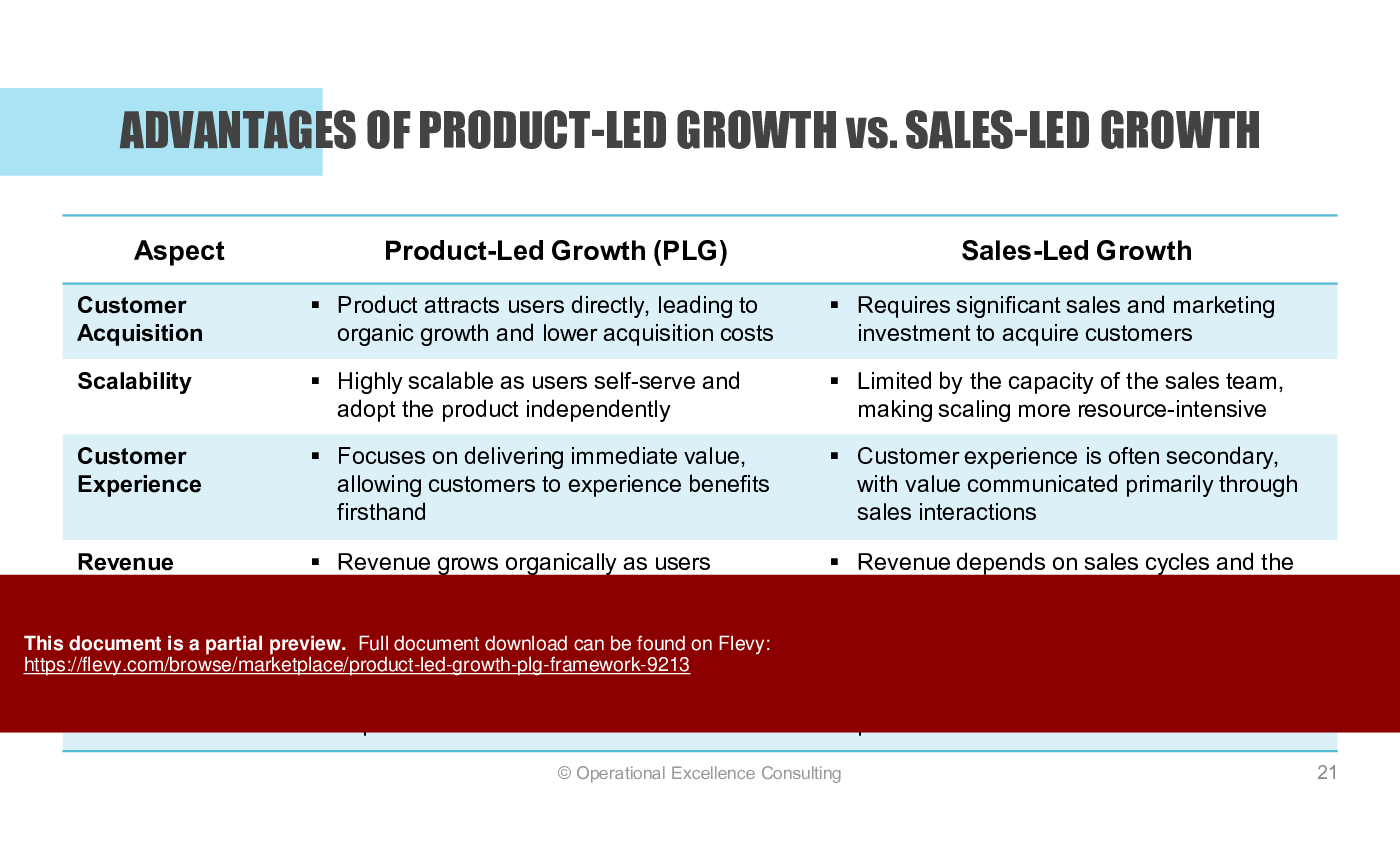
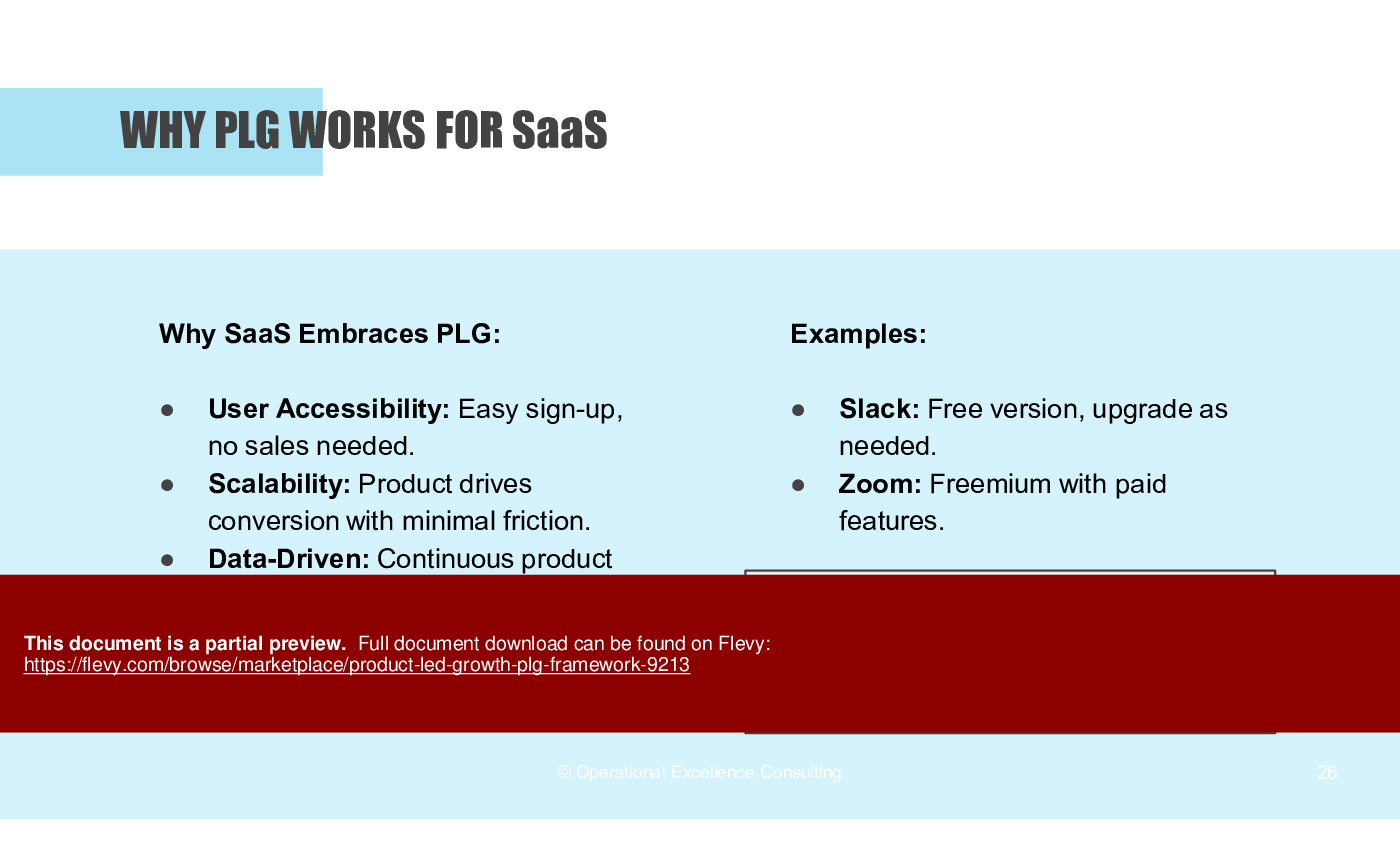
This slide deck is a comprehensive guide to mastering the transformative power of Product-Led Growth (PLG). Popularized by industry experts like Wes Bush, PLG leverages the product itself to drive user acquisition, engagement, and retention, minimizing reliance on traditional sales and marketing approaches. By adopting PLG, companies like Dropbox, Slack, HubSpot and Zoom have revolutionized how they grow and engage with customers, achieving rapid, scalable success.

In this deck, you'll explore frameworks, processes and tools essential to executing PLG effectively. The content includes detailed insights on key frameworks such as Growth Strategies, MOAT Framework, UCD Framework, Triple A Sprint, and the Bowling Alley Framework. Each section breaks down strategic foundations and provides practical steps for activating a PLG growth engine, avoiding common pitfalls, and aligning your product's unique value with real-world market needs.

Whether you're a business strategist, product manager, or growth leader, this deck is designed to guide you in applying PLG principles for sustainable, product-led growth that resonates with today's customer-centric market.

LEARNING OBJECTIVES

1. Define PLG and Recognize Its Importance: Gain an understanding of why PLG is a crucial strategy for modern businesses, focusing on the growing emphasis on customer experience and self-serve models in today's market.

2. Grasp Key PLG Frameworks: Explore essential PLG models, tools, and processes that simplify scaling and growth for businesses seeking to transition toward product-led strategies.

3. Identify PLG Pitfalls and Best Practices: Learn to spot potential challenges and adopt best practices to avoid common pitfalls in implementing PLG.

4. Practical Application: Discover how to apply PLG principles in real-world settings, enabling you to drive customer success and optimize growth potential for your organization.

CONTENTS

1. Why PLG? Concepts and Core Principles
•  This section introduces the core principles behind PLG, explaining why it's become a dominant force in today's customer-driven marketplace.

2. Strategic Foundations for PLG
•  Explore the strategic pillars necessary for successful PLG adoption, including customer-centricity and efficient, scalable sales cycles.

3. Laying the PLG Groundwork
•  Understand the essential infrastructure and mindset required for a smooth transition to PLG, ensuring your team is aligned around the product as the primary growth engine.

4. Activating the PLG Growth Engine
•  Learn how to implement PLG tactics by optimizing product usage and empowering customers to drive their own journey—from onboarding to advocacy.

5. PLG Summary and Next Steps
•  Recap the core takeaways from the workshop, and focus on actionable steps to get started with PLG in your own organization.

By adopting PLG, companies like Dropbox, Slack, and Zoom have revolutionized how they engage with customers, using their products to drive growth from the inside out. This slide deck will guide you through the strategies that can help your organization achieve similar success and scale sustainably.

Got a question about the product? Email us at support@flevy.com or ask the author directly by using the "Ask the Author a Question" form. If you cannot view the preview above this document description, go here to view the large preview instead.

MARCUS OVERVIEW

This synopsis was written by Marcus [?] based on the analysis of the full 167-slide presentation.


Executive Summary
The Product-Led Growth (PLG) Framework presentation is a strategic guide designed to empower organizations to leverage their products as primary drivers of growth. Developed by Operational Excellence Consulting, this comprehensive resource outlines how to transition from traditional sales-led models to a product-centric approach. By implementing PLG principles, organizations can enhance user experience, reduce customer acquisition costs, and foster organic growth through user engagement. This presentation equips corporate executives and consultants with actionable insights to effectively implement PLG strategies, ensuring sustainable and scalable growth.

Who This Is For and When to Use
•  Product Managers seeking to enhance product adoption and user engagement.
•  Marketing Teams aiming to align strategies with user-centric growth models.
•  Executives focused on reducing customer acquisition costs and improving retention.
•  Consultants advising organizations on modern growth strategies and frameworks.

Best-fit moments to use this deck:
•  During strategic planning sessions focused on growth initiatives.
•  When launching new products or features that require user feedback.
•  In workshops aimed at aligning cross-functional teams around PLG principles.
•  For training sessions on modern customer engagement strategies.

Learning Objectives
•  Define Product-Led Growth (PLG) and articulate its significance in today’s market.
•  Identify common pitfalls in PLG implementation and learn best practices.
•  Grasp key frameworks that simplify PLG strategies and enhance growth.
•  Apply PLG principles in real-world scenarios to drive user engagement and retention.

Table of Contents
•  Why PLG? Concepts and Core Principles (page 5)
•  Strategic Foundations for PLG (page 27)
•  Laying the PLG Groundwork (page 53)
•  Activating the PLG Growth Engine (page 106)
•  PLG Summary and Next Steps (page 153)

Primary Topics Covered
•  Concepts and Core Principles - Understanding the foundational ideas driving PLG, including user-centric design and value delivery.
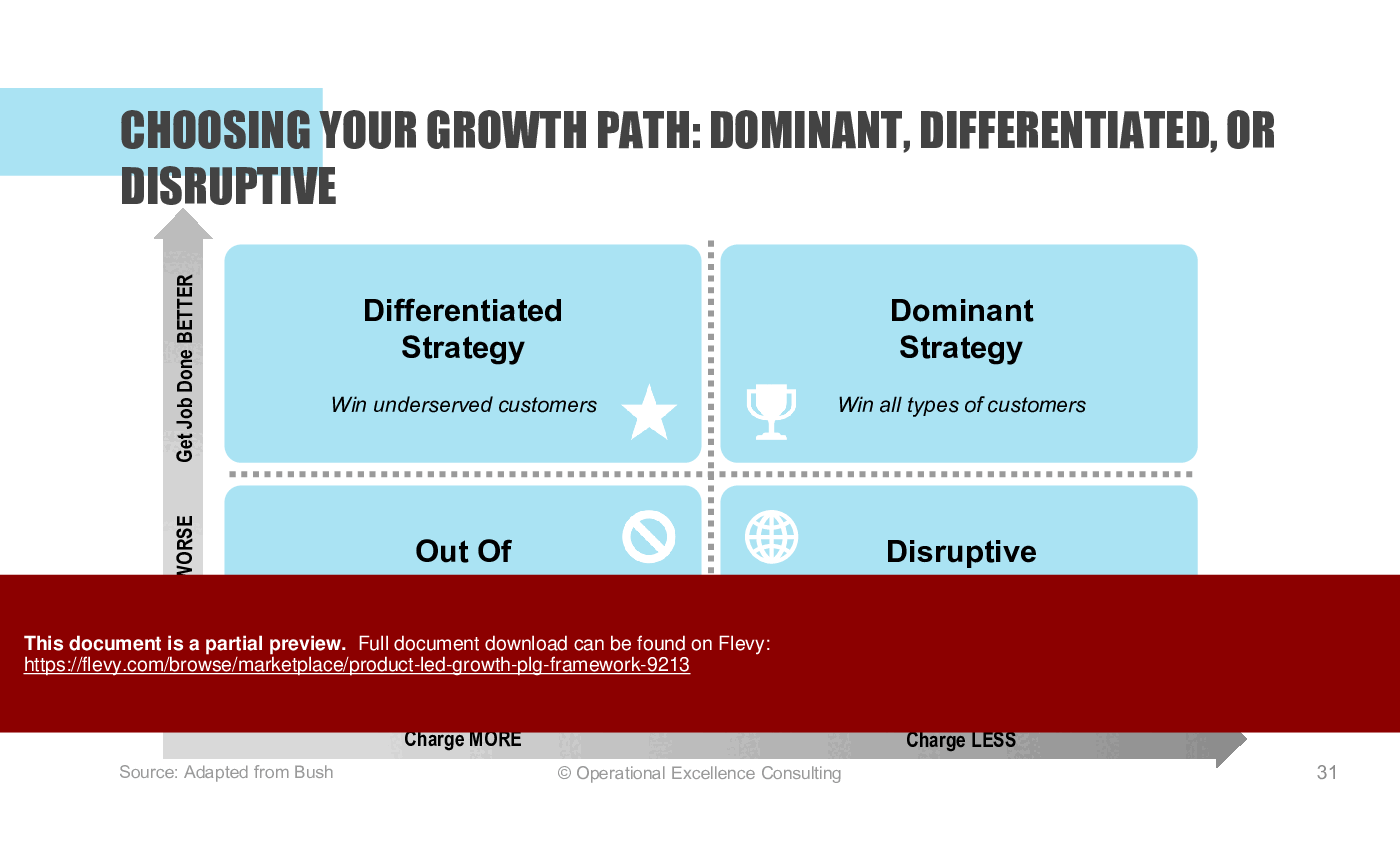
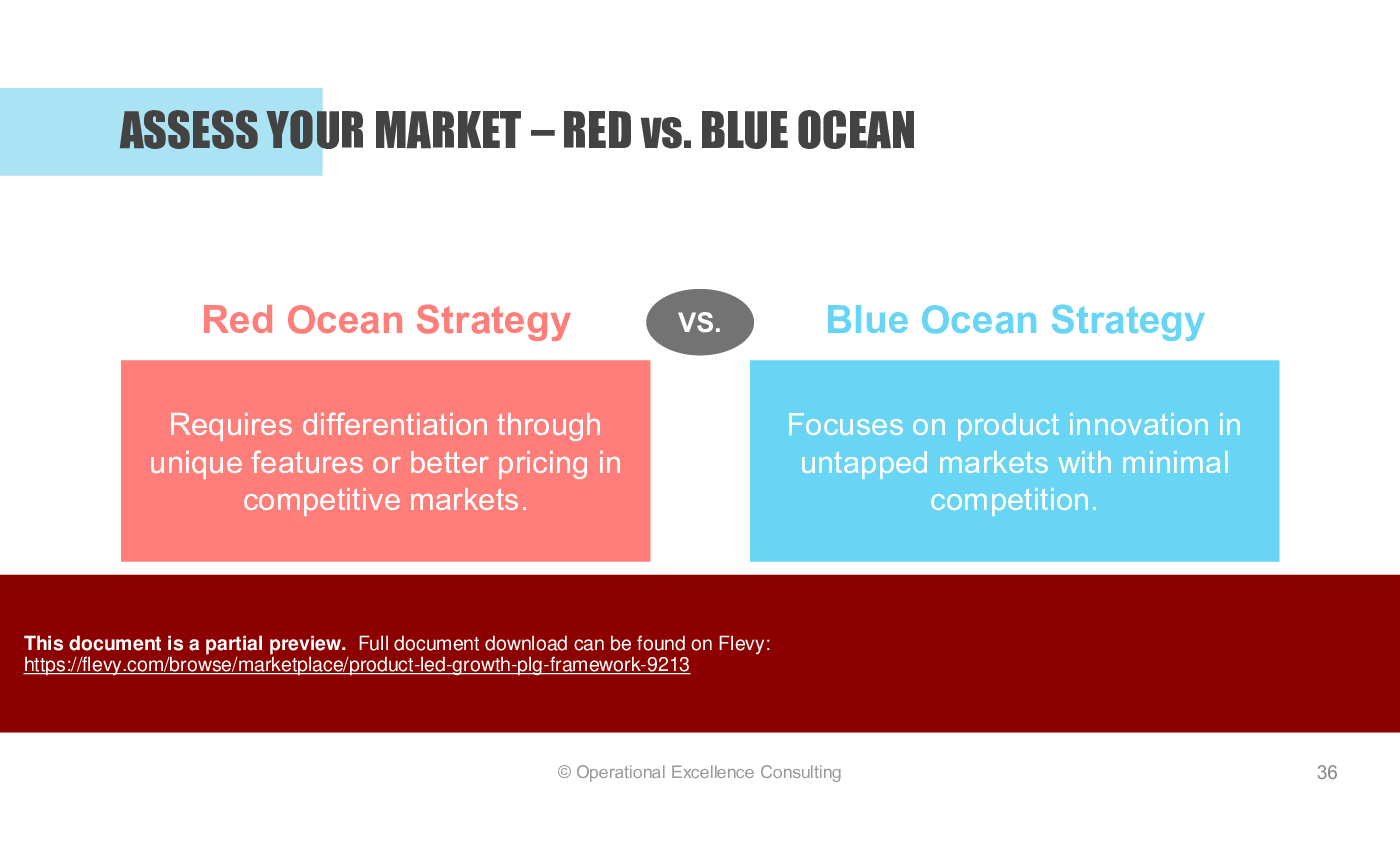
•  Strategic Foundations - Exploring the strategic elements necessary for implementing PLG, including market differentiation and audience targeting.
•  UCD Framework - A structured approach to understanding, communicating, and delivering value to users.
•  Triple A Sprint - A continuous cycle of growth focusing on analysis, asking the right questions, and taking action.
•  Bowling Alley Framework - A structured onboarding strategy to guide users toward achieving their goals.
•  Increasing ARPU - Strategies to enhance average revenue per user through effective pricing and upselling techniques.
•  Reducing Churn - Identifying and addressing factors that contribute to customer churn to ensure sustainable growth.

Deliverables, Templates, and Tools
•  UCD Framework template for understanding user value.
•  MOAT Framework for selecting PLG strategies.
•  Time-to-Value (TTV) Matrix for assessing customer value realization.
•  Triple A Sprint template for ongoing growth analysis.
•  Bowling Alley Framework for structured onboarding strategies.
•  Value metrics guide for optimizing revenue generation.

Slide Highlights
•  Overview of the shift from sales-led to product-led growth models.
•  Case studies of successful PLG implementations by companies like Slack and Dropbox.
•  Visual representations of the UCD Framework and its components.
•  Insights on common pitfalls to avoid in PLG processes.
•  Strategies for increasing ARPU and reducing churn effectively.

Potential Workshop Agenda
Introduction to PLG Concepts (30 minutes)
•  Overview of PLG and its importance in modern business.
•  Discussion on the shift from traditional models to PLG.

UCD Framework Deep Dive (60 minutes)
•  Explore the components of the UCD Framework.
•  Group activity: Identify user needs and pain points.

Triple A Sprint Workshop (90 minutes)
•  Analyze key metrics and identify growth levers.
•  Action planning for implementing impactful changes.

Bowling Alley Framework Session (60 minutes)
•  Develop a structured onboarding strategy for new users.
•  Identify product bumpers to guide users toward success.

Customization Guidance
•  Tailor the UCD Framework to reflect specific user needs and expectations relevant to your organization.
•  Adjust the Triple A Sprint metrics and goals based on your product's unique growth levers.
•  Modify case studies and examples to align with your industry context and audience.

Secondary Topics Covered
•  User onboarding best practices for enhancing customer experience.
•  The role of cross-functional collaboration in PLG success.
•  Strategies for leveraging user feedback in product development.
•  Insights on pricing strategies that align with user value.

Topic FAQ

What is Product-Led Growth and how does it differ from a traditional sales-led model?

Product-Led Growth (PLG) is a strategy where the product itself drives user acquisition, retention, and expansion, reducing reliance on traditional sales and marketing motions. PLG emphasizes self-serve experiences, user-centric design, and measurable product value delivery, which contrasts with outbound sales-first approaches focused on human-led conversion. Product-Led Growth (PLG).

Which core frameworks should I consider when planning a PLG transition?

Key frameworks for PLG planning focus on understanding user value, selecting defensible strategies, and designing activation. The Product-Led Growth (PLG) Framework slide deck includes the UCD Framework for user value, the MOAT Framework for strategy selection, the Triple A Sprint for iterative growth, and the Bowling Alley Framework for onboarding. UCD Framework, MOAT Framework, Triple A Sprint, and Bowling Alley Framework.

What metrics commonly indicate PLG success and how are they organized?

PLG success is typically tracked via user engagement rates, churn rate, average revenue per user (ARPU), customer satisfaction, and how quickly users realize value. Time-to-value measurement is emphasized to assess adoption speed. The deck highlights ARPU, churn, engagement, and a Time-to-Value measurement approach using a TTV Matrix. Time-to-Value (TTV) Matrix.

How should onboarding be designed to reduce churn in a PLG model?

Effective PLG onboarding is structured to guide users to meaningful outcomes quickly, remove ability debt, and include product bumpers that steer behavior. The Bowling Alley Framework in the deck outlines staged onboarding paths and outcome milestones to reduce friction and improve retention, focusing on outcome-first activation. Bowling Alley Framework.

I have a limited budget and small team—what should I look for in a PLG toolkit?

For constrained resources, prioritize ready-to-use templates and practical tools that speed execution: a UCD template for mapping user value, a Time-to-Value Matrix to prioritize quick wins, a Triple A Sprint template for iterative testing, and onboarding patterns like the Bowling Alley to reduce churn. UCD Framework template.

Can PLG frameworks be adapted for enterprise or niche industry products?

Yes; PLG principles—user-centric design, clear time-to-value, and structured onboarding—are adaptable across contexts. The slide deck explicitly notes that case studies and examples can be modified to fit industry specifics, and recommends tailoring the UCD and onboarding patterns to the target audience and market. case studies like Slack and Dropbox.

How do iterative sprints such as the Triple A Sprint support ongoing product growth?

Iterative sprints formalize a cycle of analysis, asking targeted questions, and taking prioritized action to surface growth levers and validate hypotheses. The deck provides a Triple A Sprint template to run recurring analyses, adjust metrics and experiments, and operationalize continuous improvement in product-led growth. Triple A Sprint template.

How long should a PLG workshop take using these materials and what does a sample agenda look like?

A practical workshop can fit within a half-day to full-day format; the deck includes a sample agenda with timings: 30-minute PLG introduction, 60-minute UCD deep dive, 90-minute Triple A Sprint session, and a 60-minute Bowling Alley onboarding workshop—totaling about 4 hours. 90-minute Triple A Sprint workshop.

Document FAQ
These are questions addressed within this presentation.

What is Product-Led Growth (PLG)?
PLG is a growth strategy where the product itself drives user acquisition, retention, and expansion, minimizing reliance on traditional sales methods.

How can PLG benefit my organization?
Implementing PLG can reduce customer acquisition costs, enhance user engagement, and foster organic growth through improved product experiences.

What frameworks are included in the presentation?
The presentation includes the UCD Framework, MOAT Framework, Triple A Sprint, and Bowling Alley Framework, each designed to facilitate effective PLG implementation.

How do I measure the success of PLG initiatives?
Success can be measured through key metrics such as user engagement rates, churn rates, average revenue per user (ARPU), and customer satisfaction scores.

Can the presentation be customized for different industries?
Yes, the presentation can be tailored to fit the specific needs and contexts of various industries, ensuring relevance and applicability.

What are common pitfalls in implementing PLG?
Common pitfalls include failing to understand user needs, misaligning product value with customer expectations, and neglecting to act on user feedback.

How do I get started with PLG?
Begin by assessing your current product strategy, identifying user needs, and exploring the frameworks provided in the presentation to guide your transition to a product-led approach.

What role does user feedback play in PLG?
User feedback is crucial in PLG as it informs product development, enhances user experience, and helps align the product with customer needs.

How can I reduce churn in a PLG model?
Focus on effective onboarding, continuous engagement, and addressing user pain points to enhance satisfaction and retention.

What is the significance of the Bowling Alley Framework?
The Bowling Alley Framework provides a structured onboarding strategy that helps users navigate the product effectively, ensuring they achieve meaningful outcomes quickly.

Glossary
•  Product-Led Growth (PLG) - A business strategy where the product drives user acquisition and retention.
•  User-Centric Design (UCD) - A framework focused on understanding and delivering value to users.
•  Average Revenue Per User (ARPU) - A metric indicating the average revenue generated per user.
•  Churn Rate - The percentage of customers who discontinue using a service within a given time frame.
•  Time-to-Value (TTV) - The time it takes for a user to realize the value of a product after initial engagement.
•  Freemium Model - A pricing strategy offering basic services for free while charging for advanced features.
•  Bowling Alley Framework - A structured onboarding approach that guides users toward achieving their goals.
•  Triple A Sprint - A continuous cycle of growth focusing on analysis, asking the right questions, and taking action.
•  MOAT Framework - A strategic tool for selecting growth strategies based on market conditions and audience needs.
•  Value Metrics - Metrics that align pricing with customer usage or outcomes.
•  Customer Success - Proactive efforts to ensure users achieve their desired outcomes with a product.
•  Ability Debt - Frustration experienced by users when they cannot achieve core tasks due to friction or complexity.

Source: Best Practices in Growth Strategy, Product Strategy PowerPoint Slides: Product-Led Growth (PLG) Framework PowerPoint (PPTX) Presentation Slide Deck, Operational Excellence Consulting


$89.00
Developed by a seasoned Management Consultant (ex-Microsoft and IBM), this presentation is a comprehensive guide to unlocking the transformative power of Product-Led Growth (PLG).
Add to Cart
  

ABOUT THE AUTHOR

Author image
Additional documents from author: 257
Terms of usage (for all documents from this author)

Operational Excellence Consulting, founded in 2009 by Allan Ung, draws from extensive experience at Microsoft, IBM, and Underwriters Laboratories (UL). We specialize in strategy deployment, customer experience design, and operational excellence, applying Design Thinking, Lean, and Systems Thinking to maximize customer value and minimize waste.

Our ... [read more]

Ask the Author a Question

You must be logged in to contact the author.

Click here to log in Click here register

Did you know?
The average daily rate of a McKinsey consultant is $6,625 (not including expenses). The average price of a Flevy document is $65.


Trusted by over 10,000+ Client Organizations
Since 2012, we have provided business templates to over 10,000 businesses and organizations of all sizes, from startups and small businesses to the Fortune 100, in over 130 countries.
AT&T GE Cisco Intel IBM Coke Dell Toyota HP Nike Samsung Microsoft Astrazeneca JP Morgan KPMG Walgreens Walmart 3M Kaiser Oracle SAP Google E&Y Volvo Bosch Merck Fedex Shell Amgen Eli Lilly Roche AIG Abbott Amazon PwC T-Mobile Broadcom Bayer Pearson Titleist ConEd Pfizer NTT Data Schwab


Read Customer Testimonials

 
"I have used FlevyPro for several business applications. It is a great complement to working with expensive consultants. The quality and effectiveness of the tools are of the highest standards."

– Moritz Bernhoerster, Global Sourcing Director at Fortune 500
 
"As an Independent Management Consultant, I find Flevy to add great value as a source of best practices, templates and information on new trends. Flevy has matured and the quality and quantity of the library is excellent. Lastly the price charged is reasonable, creating a win-win value for "

– Jim Schoen, Principal at FRC Group
 
"FlevyPro provides business frameworks from many of the global giants in management consulting that allow you to provide best in class solutions for your clients."

– David Harris, Managing Director at Futures Strategy
 
"As a niche strategic consulting firm, Flevy and FlevyPro frameworks and documents are an on-going reference to help us structure our findings and recommendations to our clients as well as improve their clarity, strength, and visual power. For us, it is an invaluable resource to increase our impact and value."

– David Coloma, Consulting Area Manager at Cynertia Consulting
 
"Flevy is now a part of my business routine. I visit Flevy at least 3 times each month.

Flevy has become my preferred learning source, because what it provides is practical, current, and useful in this era where the business world is being rewritten.

In today's environment where there are so "

– Omar Hernán Montes Parra, CEO at Quantum SFE
 
"Last Sunday morning, I was diligently working on an important presentation for a client and found myself in need of additional content and suitable templates for various types of graphics. Flevy.com proved to be a treasure trove for both content and design at a reasonable price, considering the time I "

– M. E., Chief Commercial Officer, International Logistics Service Provider
 
"As a small business owner, the resource material available from FlevyPro has proven to be invaluable. The ability to search for material on demand based our project events and client requirements was great for me and proved very beneficial to my clients. Importantly, being able to easily edit and tailor "

– Michael Duff, Managing Director at Change Strategy (UK)
 
"As a young consulting firm, requests for input from clients vary and it's sometimes impossible to provide expert solutions across a broad spectrum of requirements. That was before I discovered Flevy.com.

Through subscription to this invaluable site of a plethora of topics that are key and crucial to consulting, I "

– Nishi Singh, Strategist and MD at NSP Consultants


Customers Also Like These Documents

Explore Templates on Related Management Topics


Your Recently Viewed Documents
Download our FREE Strategy & Transformation Framework Templates

Download our free compilation of 50+ Strategy & Transformation slides and templates. Frameworks include McKinsey 7-S, Balanced Scorecard, Disruptive Innovation, BCG Curve, and many more.