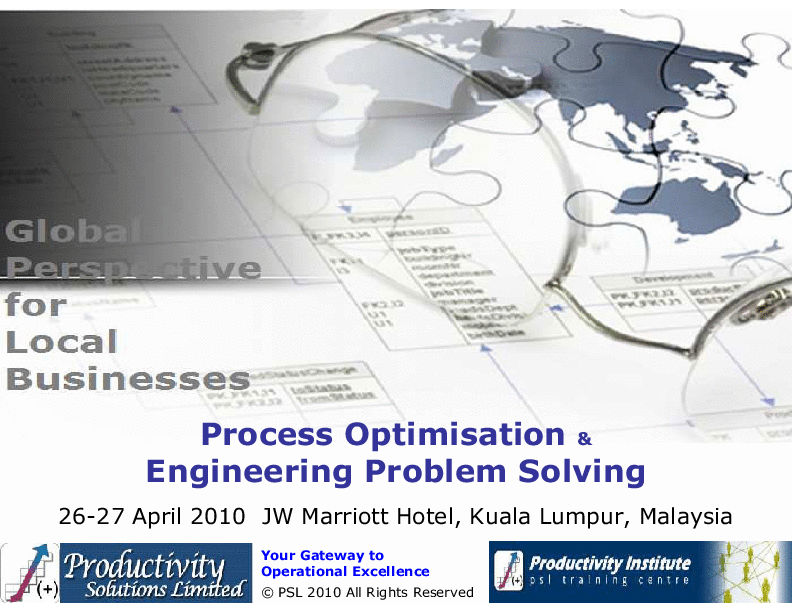
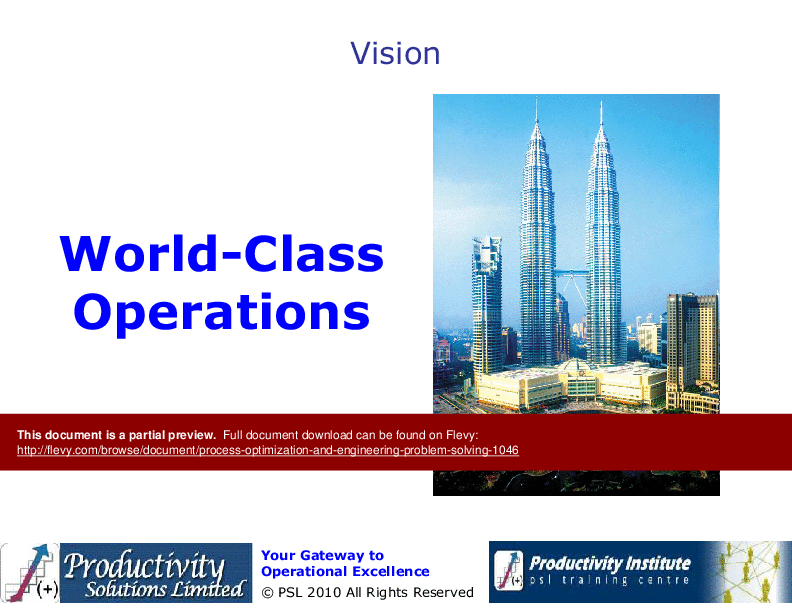
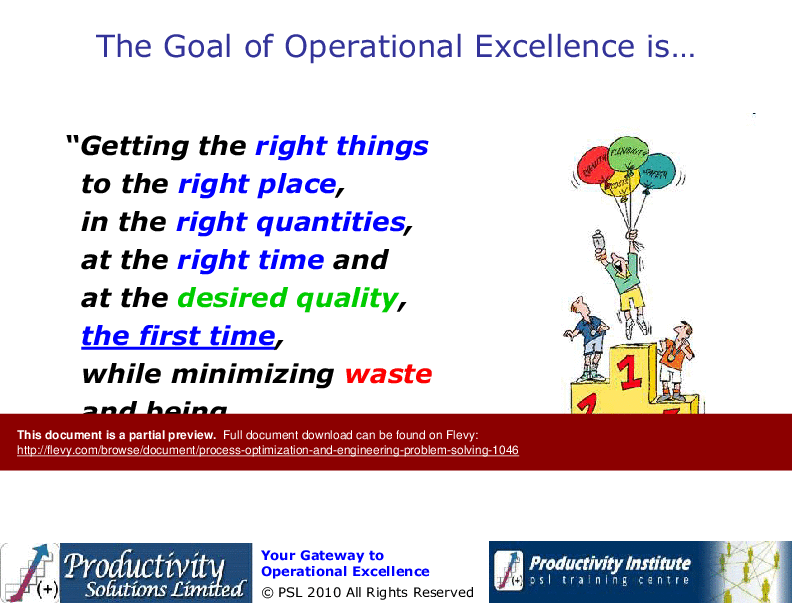

This 2-day workshop was delivered in Malaysia and has over 200 slides and consisted of some self assessments and 3 rounds of flow simulation activity apart from some videos.

Session 1 : Defining World-Class Operations and Creating a Vision
Session 2 : Understanding Process Optimization
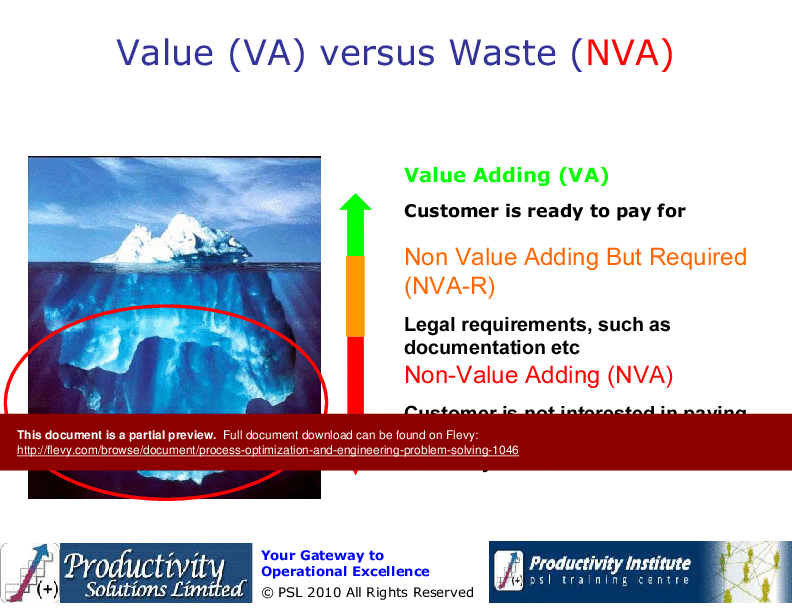
Session 3 : Value versus Waste
Session 4 : Value Stream Mapping – Identifying Opportunities for Improvement
Session 5 : Workplace Organisation and Visual Management to Improve Productivity
Session 5a: Just-in-Time
Session 6 : Total Productive Maintenance for Equipment Optimization
Session 7 : Quality and Reliability for TQM
Session 8 : Road map to Achieving World-Class
Also included with this document is a bonus zip of 41 Lean documents (includes templates, case studies, articles, posters, charts, and more).
Got a question about the product? Email us at support@flevy.com or ask the author directly by using the "Ask the Author a Question" form. If you cannot view the preview above this document description, go here to view the large preview instead.
Executive Summary
The Process Optimization & Engineering Problem Solving presentation is designed to equip corporate executives, integration leaders, and consultants with essential tools and methodologies for achieving operational excellence. Developed by a Lean pioneer and certified LSS Master Black Belt, this comprehensive slide deck offers insights into Lean principles, Value Stream Mapping, Total Productive Maintenance, Just-in-Time, and Total Quality Management. By leveraging these frameworks, users will learn to minimize waste, enhance productivity, and drive continuous improvement across their organizations.
Who This Is For and When to Use
• Senior executives and directors focused on operational efficiency
• Process improvement teams aiming to implement Lean methodologies
• Quality assurance professionals seeking to enhance product reliability
• Engineering teams involved in process design and optimization
Best-fit moments to use this deck:
• During strategic planning sessions for operational improvements
• In workshops aimed at training staff on Lean and Six Sigma principles
• When initiating process audits to identify areas for waste reduction
• At team meetings focused on enhancing productivity and quality
Learning Objectives
• Define operational excellence and its importance in business processes
• Build a comprehensive Value Stream Map to identify waste and improvement opportunities
• Establish effective Total Productive Maintenance practices to optimize equipment use
• Implement Just-in-Time methodologies to enhance production efficiency
• Create a culture of continuous improvement through Lean and Six Sigma tools
• Analyze and reduce non-value-adding activities in business processes
Table of Contents
• Defining World-Class Operations (page 3)
• Understanding Process Optimization (page 10)
• Value versus Waste (page 20)
• Value Stream Mapping – Identifying Opportunities for Improvement (page 30)
• Workplace Organisation and Visual Management (page 40)
• Total Productive Maintenance for Equipment Optimization (page 50)
• Quality and Reliability for TQM (page 60)
• Roadmap to Achieving World-Class (page 70)
Primary Topics Covered
• World-Class Operations - Characteristics of organizations that excel in flexibility, innovation, price, quality, delivery, and service.
• Process Optimization - Techniques for adjusting processes to maximize efficiency while minimizing costs and waste.
• Value Stream Mapping - A visual tool for identifying waste and enhancing process flow.
• Workplace Organisation (5S) - A systematic approach to creating an efficient and safe workspace.
• Total Productive Maintenance (TPM) - Strategies for maximizing equipment effectiveness through proactive maintenance.
• Just-in-Time (JIT) - A methodology for producing only what is needed, when it is needed, to reduce inventory costs.
Deliverables, Templates, and Tools
• Value Stream Mapping templates for visualizing process flows
• 5S implementation checklists for workplace organization
• Total Productive Maintenance schedules for equipment upkeep
• Just-in-Time production planning templates
• Quality assurance frameworks for ensuring product reliability
• Continuous improvement action plans for ongoing operational enhancements
Slide Highlights
• Overview of World-Class Operations and their defining characteristics
• Visual representation of Value Stream Mapping for process improvement
• Case studies showcasing successful implementations of Lean methodologies
• Key metrics for measuring operational excellence and productivity gains
• Practical examples of 5S and workplace organization techniques
Potential Workshop Agenda
Introduction to Operational Excellence (60 minutes)
• Define operational excellence and its significance
• Discuss the goals of the workshop and expected outcomes
• Overview of Lean principles and methodologies
Value Stream Mapping Workshop (90 minutes)
• Hands-on session to create current and future state maps
• Identify waste and improvement opportunities in existing processes
• Develop action plans for implementing changes
Total Productive Maintenance Session (60 minutes)
• Discuss the importance of equipment optimization
• Create TPM schedules and maintenance checklists
• Explore case studies of successful TPM implementations
Customization Guidance
• Tailor the Value Stream Mapping templates to reflect specific organizational processes
• Adjust the 5S checklists to align with workplace requirements and safety standards
• Modify TPM schedules based on equipment types and operational needs
• Incorporate specific metrics relevant to the organization's performance goals
Secondary Topics Covered
• Lean principles and their application in various industries
• The role of leadership in fostering a culture of continuous improvement
• Techniques for effective team collaboration and communication
• Strategies for managing change during process optimization initiatives
Topic FAQ
Document FAQ
These are questions addressed within this presentation.
What is operational excellence?
Operational excellence is the goal of conducting business in a way that improves quality, increases yields, and reduces waste, ultimately enhancing profitability.
How can I implement Lean methodologies in my organization?
Start by assessing current processes, training staff on Lean principles, and gradually applying tools like Value Stream Mapping and 5S to identify and eliminate waste.
What are the benefits of Total Productive Maintenance?
TPM increases equipment safety, extends the life of machinery, and minimizes downtime, leading to higher productivity and quality output.
What is Value Stream Mapping?
Value Stream Mapping is a visual tool used to analyze and improve the flow of materials and information in a process, helping to identify waste and opportunities for enhancement.
How does Just-in-Time production work?
Just-in-Time production focuses on producing only what is needed, when it is needed, which helps to minimize inventory costs and reduce waste.
What is the significance of 5S in workplace organization?
5S is a methodology that promotes a clean and organized workspace, which enhances efficiency, safety, and productivity.
How can I measure the success of process optimization initiatives?
Use key performance indicators (KPIs) such as lead time, defect rates, and productivity metrics to assess the impact of process improvements.
What role does leadership play in achieving operational excellence?
Leadership is crucial in setting the vision, fostering a culture of continuous improvement, and ensuring that all employees are engaged in the optimization process.
Glossary
• Operational Excellence - The state of conducting business in a manner that maximizes quality and efficiency.
• Lean - A methodology focused on minimizing waste while maximizing value.
• Value Stream Mapping - A visual representation of the flow of materials and information in a process.
• Total Productive Maintenance (TPM) - A proactive maintenance strategy aimed at maximizing equipment effectiveness.
• Just-in-Time (JIT) - A production strategy that aligns inventory levels with production schedules.
• 5S - A workplace organization method that stands for Sort, Set in Order, Shine, Standardize, and Sustain.
• Continuous Improvement - Ongoing efforts to enhance products, services, or processes.
• Kaizen - A Japanese term meaning "change for better," often used to describe continuous improvement activities.
• Defects - Any instance where a product fails to meet quality standards.
• Waste - Any activity that consumes resources without adding value to the product or service.
• Process Optimization - The discipline of adjusting a process to maximize efficiency and minimize costs.
• Quality Assurance - The systematic process of ensuring that products meet specified quality standards.
• Root Cause Analysis (RCA) - A method for identifying the underlying causes of problems or defects.
Source: Best Practices in Process Improvement PowerPoint Slides: Process Optimization & Engineering Problem Solving PowerPoint (PPT) Presentation Slide Deck, OpEx Academy NZ
|
Receive our FREE presentation on Operational Excellence
This 50-slide presentation provides a high-level introduction to the 4 Building Blocks of Operational Excellence. Achieving OpEx requires the implementation of a Business Execution System that integrates these 4 building blocks. |