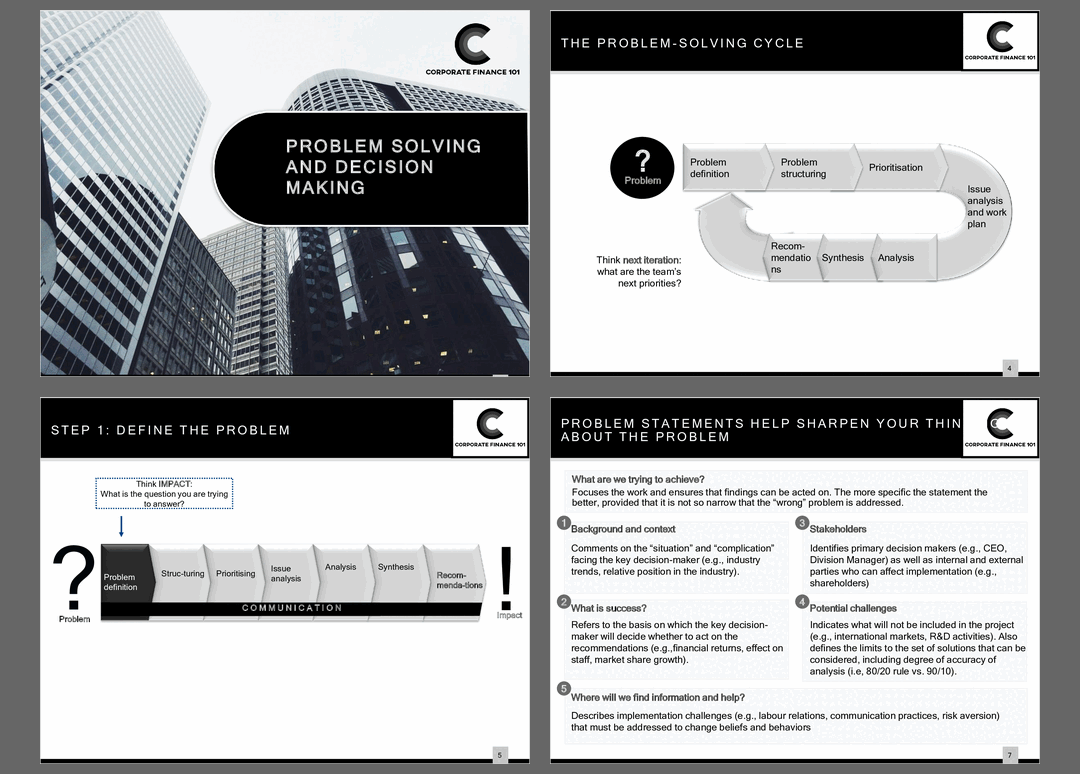

Problem Solving and Decision Making   32-slide PPT PowerPoint presentation slide deck (PPT)
$20.00

Problem Solving and Decision Making (32-slide PPT PowerPoint presentation slide deck (PPT)) Preview Image
Log in to unlock full preview.
Problem Solving and Decision Making (32-slide PPT PowerPoint presentation slide deck (PPT)) Preview Image
Arrow   Click main image to view in full screen.

Problem Solving and Decision Making (PowerPoint PPT Slide Deck)

PowerPoint (PPT) 32 Slides

Top 500 Best Practice $20.00
This problem structured problem solving tool includes the problem statement method (page 8) used while working with McKinsey.
Add to Cart


Immediate download
Free lifetime updates

BENEFITS OF THIS POWERPOINT DOCUMENT

  1. Framework that has been tested at a top tier consulting firm
  2. Examples to help understand key concepts
  3. Simple and pragmatic problem solving process

PROBLEM SOLVING PPT DESCRIPTION

Editor Summary Problem Solving and Decision Making is a 32-slide PowerPoint toolkit by Corporate Finance 101 presenting a 7-step problem-solving cycle used by ex-McKinsey consultants, with the problem statement method shown on page 8. Read more

According to McKinsey, structured problem solving can be used to address almost any complex challenge in business or public policy. Consulting deliverables typically take the form of PowerPoint presentations.

AIM:

1. This document explains how to identify, define and solve problems in a structured manner and communicate findings effectively to the client. It has a strong focus on hypothesis generation techniques utilized by the world's leading consulting firm.
2. It introduces tools that consultants can add to their toolkit of skills and use for many types of problem-solving and is suitable for anyone who is looking for a robust methodology to solve complex problems.

CONTENTS
The Problem Solving and Decision Making deck outlines the following topic:
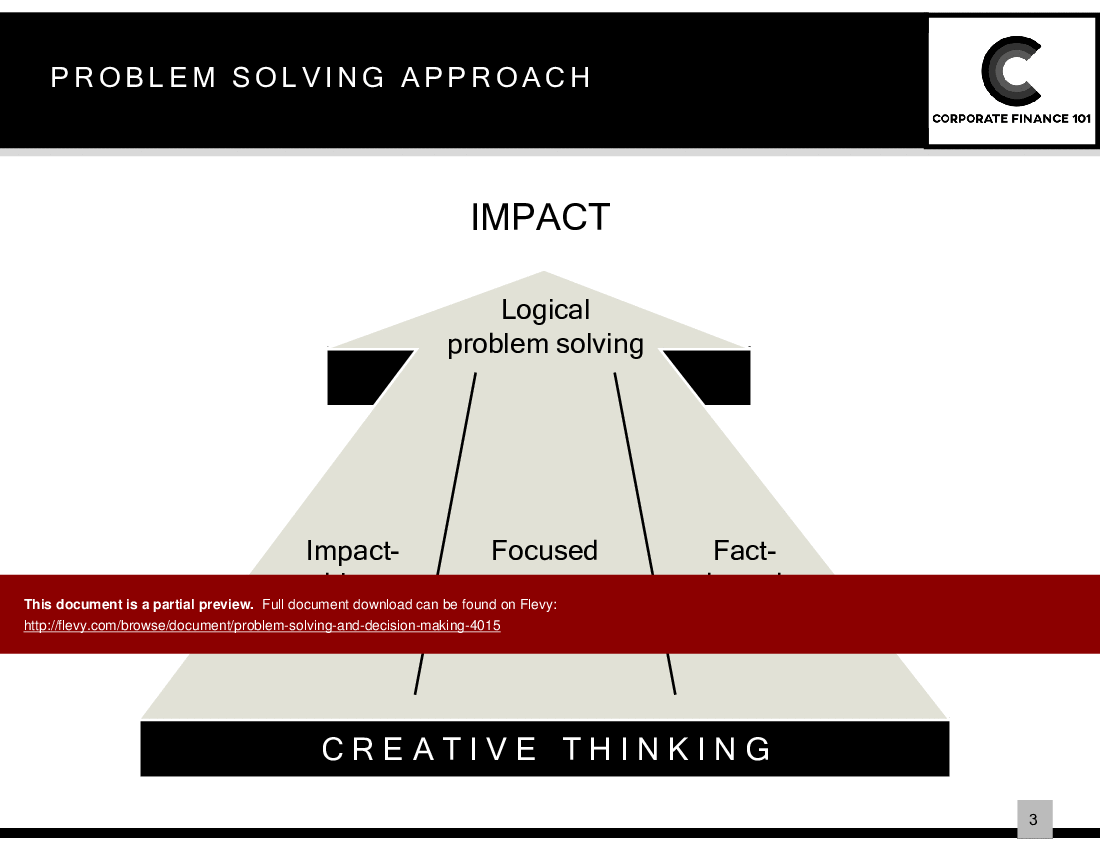
1. The key principles of the logical problem-solving approach – Impact driven, focused and fact-based
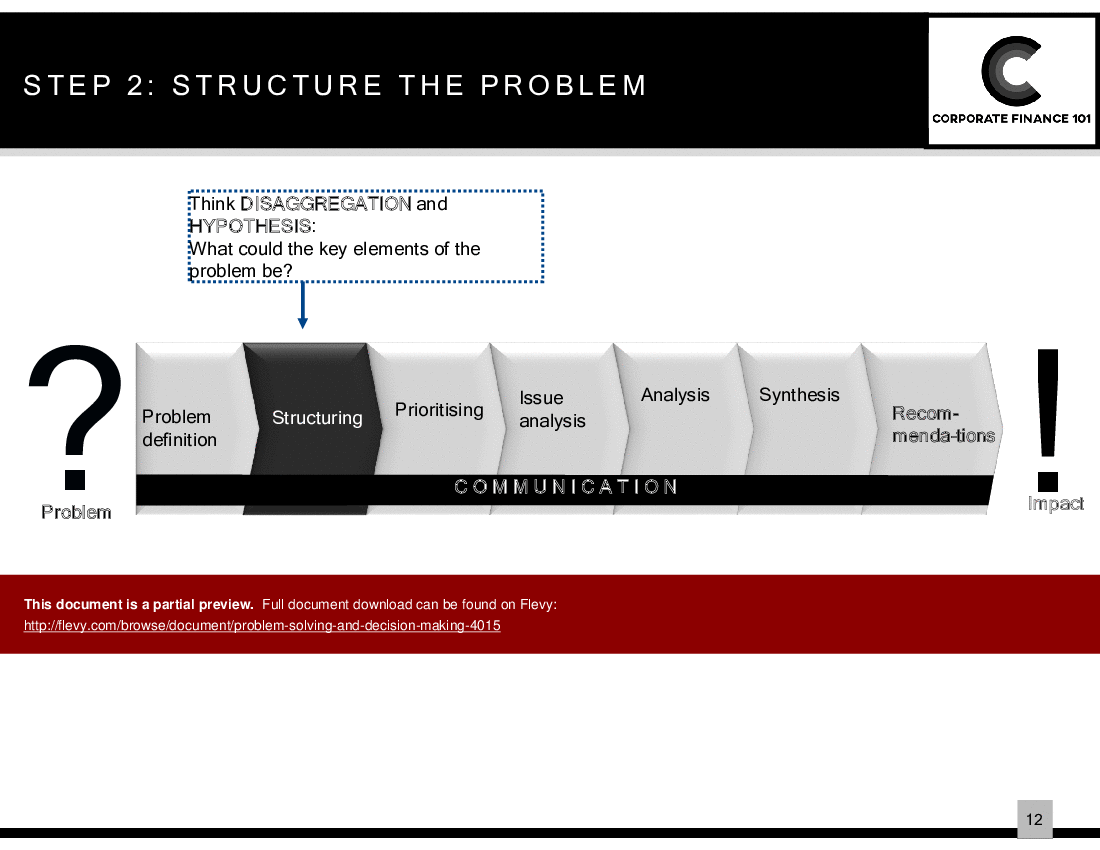
2. The problem-solving cycle – problem definition, problem structuring, prioritization, issue analysis and work plan, analysis, synthesis, and recommendations
3. Problem statement "framework"
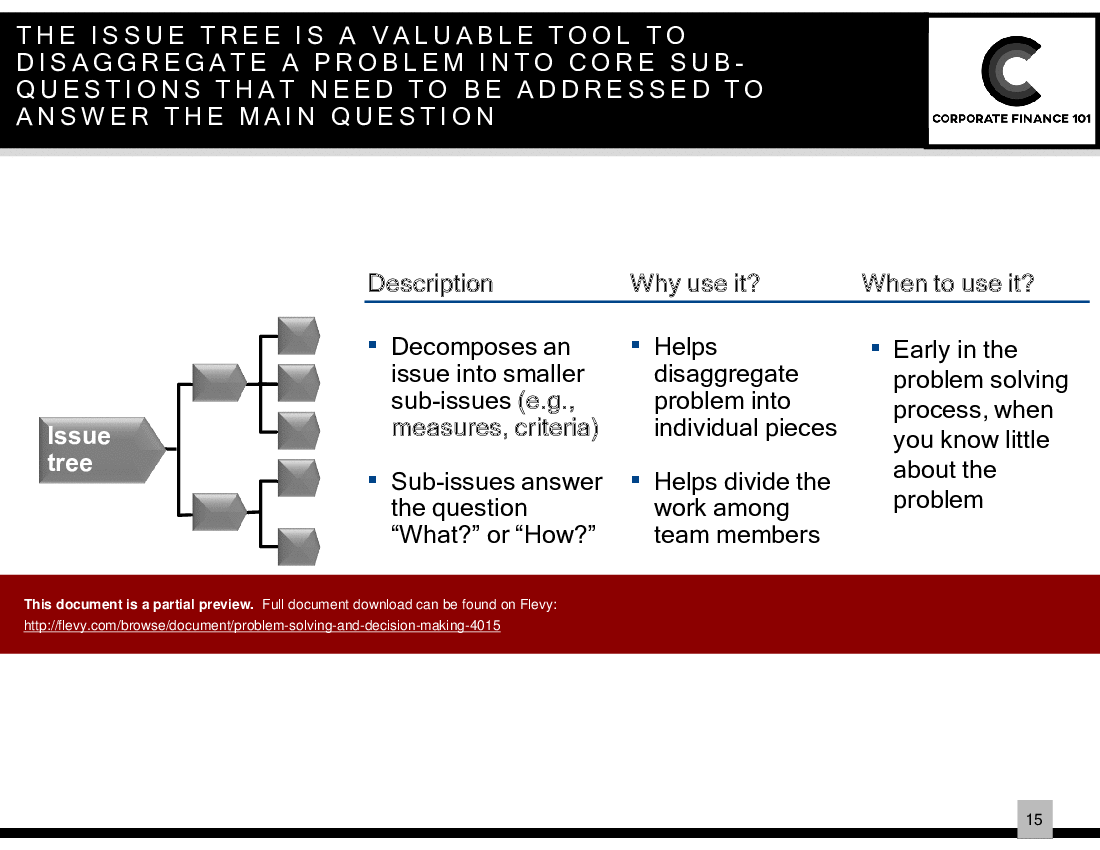
4. What is an issue tree and why is it important?
5. Prioritization and methods for prioritizing
6. Synthesis and it's objective

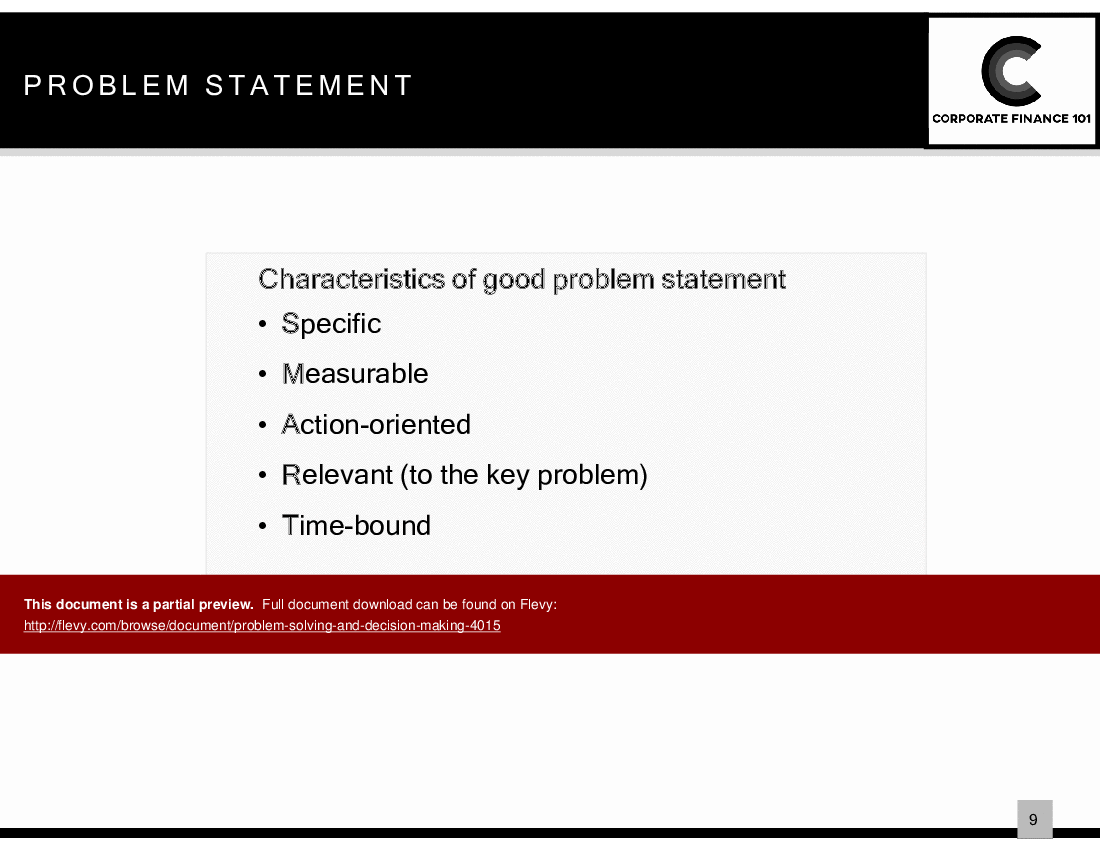
This deck emphasizes the importance of a well-defined problem statement, highlighting characteristics such as specificity, measurability, action orientation, relevance, and time-bound criteria. It guides you through the process of structuring the problem, encouraging disaggregation and hypothesis generation to identify key elements. The issue tree is presented as a crucial tool for breaking down complex problems into manageable sub-issues, facilitating efficient analysis and team collaboration.

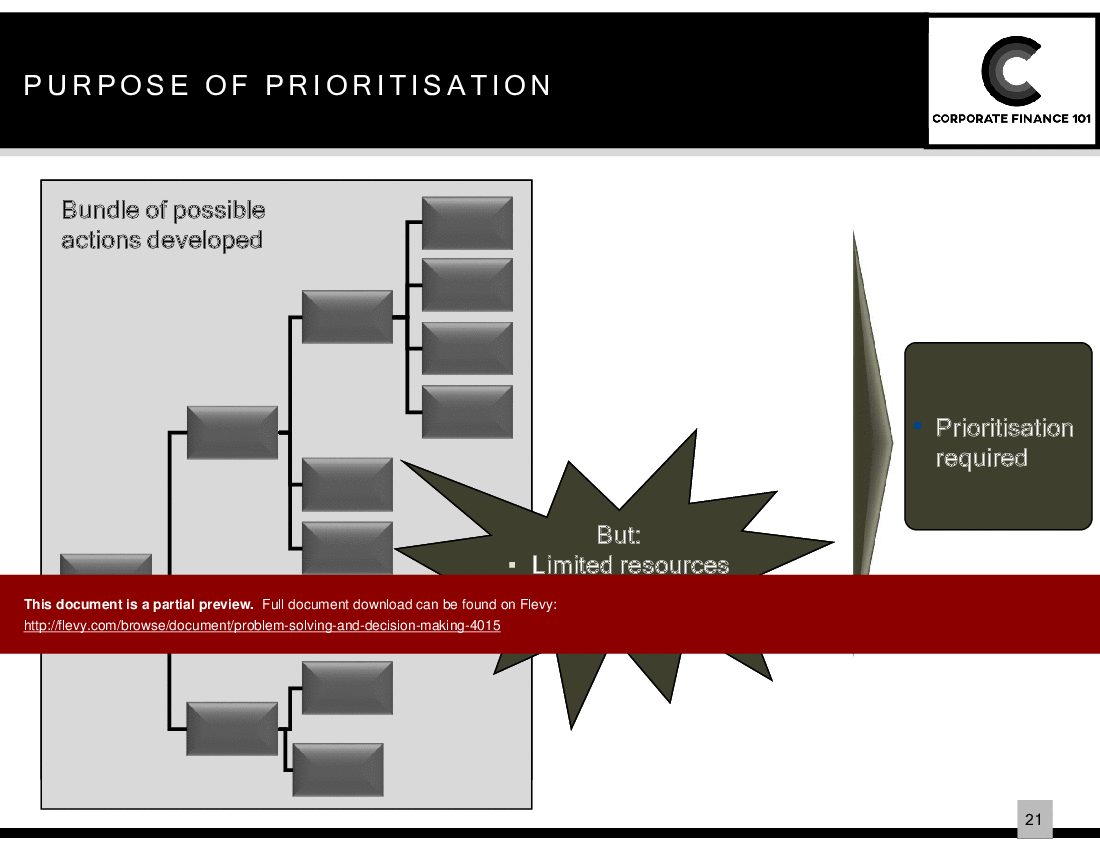
The PPT also delves into prioritization, stressing the need to focus on high-impact actions given limited resources. It covers the entire problem-solving cycle, from problem definition to developing actionable recommendations. The distinction between summary and synthesis is clarified, ensuring that your conclusions are not just a collection of facts, but a coherent, actionable strategy. This resource is designed to equip you with a comprehensive framework for tackling intricate business challenges.

Got a question about the product? Email us at support@flevy.com or ask the author directly by using the "Ask the Author a Question" form. If you cannot view the preview above this document description, go here to view the large preview instead.

MARCUS OVERVIEW

This synopsis was written by Marcus [?] based on the analysis of the full 32-slide presentation.


Executive Summary
This presentation on Problem Solving and Decision Making offers a structured approach to enhance problem-solving capabilities, utilizing methodologies developed by ex-McKinsey consultants. It emphasizes the importance of defining problems clearly, structuring them effectively, and prioritizing issues to facilitate efficient decision-making. By employing these techniques, corporate executives and consultants can achieve faster answers, optimize resource usage, and significantly impact their business outcomes.

Who This Is For and When to Use
•  Corporate executives seeking to improve decision-making processes
•  Consultants aiming to enhance their problem-solving frameworks
•  Project managers responsible for strategic initiatives
•  Business analysts focused on data-driven insights

Best-fit moments to use this deck:
•  During strategic planning sessions to define and structure complex problems
•  In workshops aimed at enhancing team problem-solving skills
•  When preparing for critical decision-making meetings

Learning Objectives
•  Define the core problem using clear and actionable statements
•  Structure complex problems into manageable components
•  Prioritize issues effectively to allocate resources efficiently
•  Analyze data to support decision-making processes
•  Synthesize findings into actionable recommendations
•  Communicate insights and recommendations clearly to stakeholders

Table of Contents
•  Importance of Good Problem-Solving and Decision-Making (page 2)
•  Objectives and Approach (page 3)
•  Problem-Solving Approach (page 4)
•  The Problem-Solving Cycle (page 5)
•  Step 1: Define the Problem (page 6)
•  Step 2: Structure the Problem (page 12)
•  Step 3: Prioritization (page 21)
•  Step 4: Issue Analysis and Work Plan (page 24)
•  Step 5: Analysis (page 25)
•  Step 6: Synthesize Findings (page 26)
•  Step 7: Develop Recommendations (page 30)

Primary Topics Covered
•  Importance of Good Problem-Solving - Effective problem-solving leads to faster answers, better resource utilization, and increased business impact.
•  Problem-Solving Cycle - A structured process that includes defining, structuring, prioritizing, analyzing, synthesizing, and recommending actions.
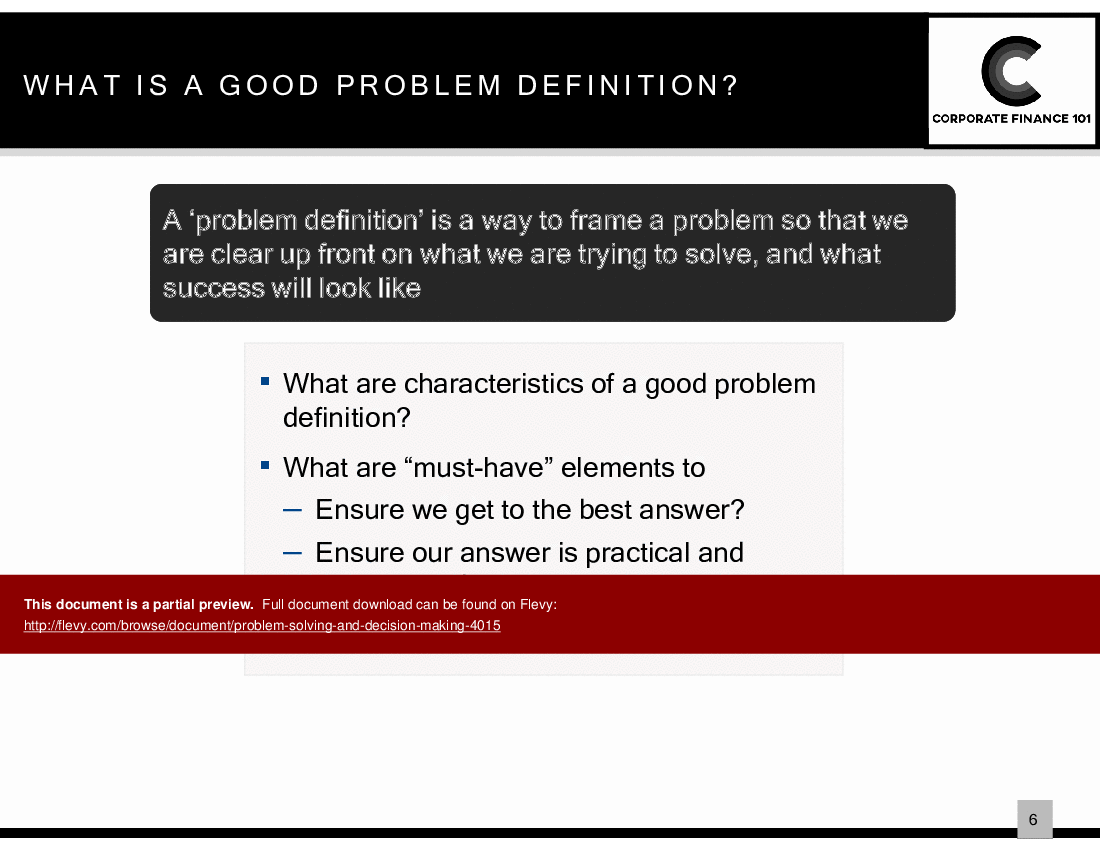
•  Defining the Problem - Establishing a clear problem statement that is specific, measurable, action-oriented, relevant, and time-bound.
•  Structuring the Problem - Breaking down complex issues into manageable components using tools like issue trees.
•  Prioritization - Techniques for determining which issues to address first based on impact and feasibility.
•  Synthesis of Findings - Drawing conclusions from analysis to inform decision-making and recommendations.

Deliverables, Templates, and Tools
•  Problem statement template for clear definition
•  Issue tree model for structuring complex problems
•  Prioritization matrix for assessing issues
•  Analysis framework for data evaluation
•  Synthesis guide for summarizing findings
•  Recommendation format for presenting actionable insights

Slide Highlights
•  Overview of the problem-solving cycle illustrating each step in the process
•  Examples of effective problem statements and their characteristics
•  Visual representation of an issue tree to aid in problem structuring
•  Prioritization techniques and methods for efficient resource allocation
•  Synthesis strategies for developing a powerful main message

Potential Workshop Agenda
Introduction to Problem Solving (30 minutes)
•  Overview of the importance of problem-solving
•  Discussion of common challenges in decision-making

Defining and Structuring Problems (60 minutes)
•  Interactive session on crafting effective problem statements
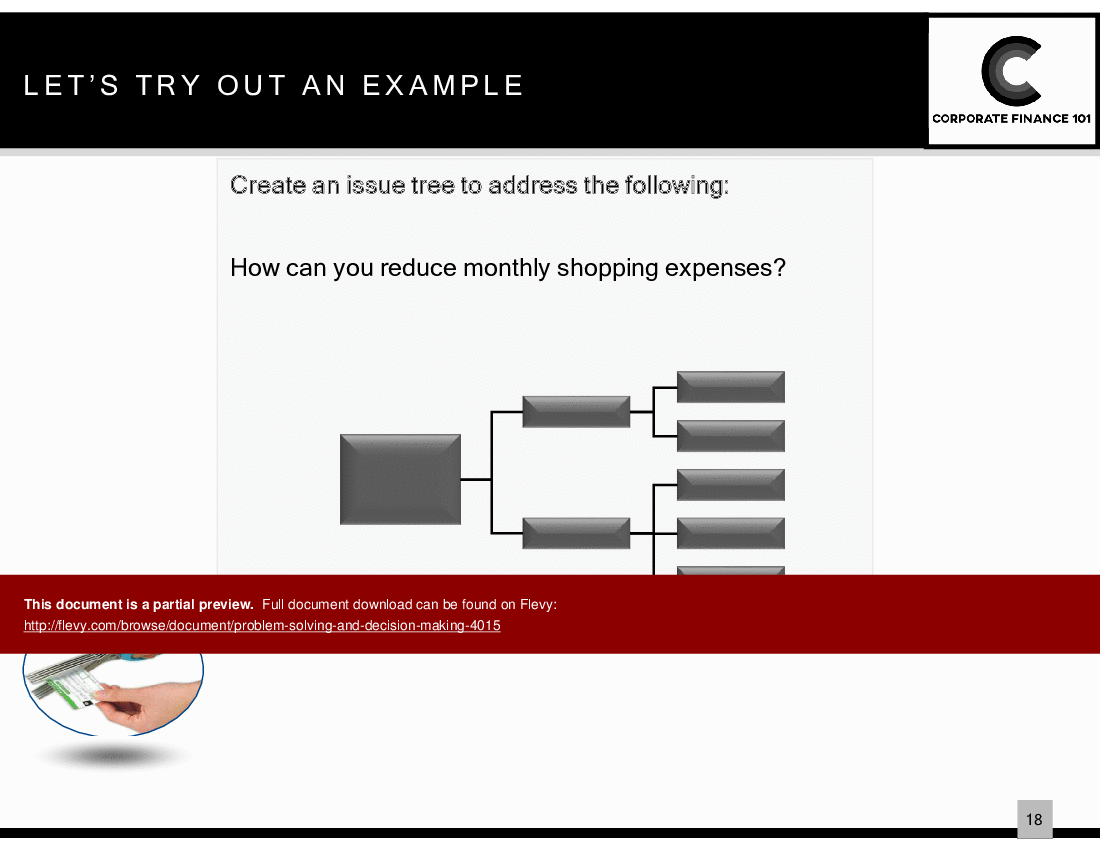
•  Group activity to create issue trees for complex scenarios

Prioritization Techniques (45 minutes)
•  Presentation on methods for prioritizing issues
•  Practical exercise to apply prioritization techniques

Synthesis and Recommendations (45 minutes)
•  Workshop on synthesizing findings and developing actionable recommendations
•  Group presentations of synthesized insights

Customization Guidance
•  Adapt problem statement templates to fit specific organizational contexts
•  Modify issue tree structures based on industry-specific challenges
•  Tailor prioritization methods to align with team dynamics and resources
•  Incorporate company-specific data and metrics into analysis frameworks

Secondary Topics Covered
•  Creative thinking in problem-solving
•  Logical problem-solving methodologies
•  Impact-driven decision-making frameworks
•  Communication strategies for presenting findings

Topic FAQ

What are the typical phases of a structured problem-solving process used by consulting teams?

Structured problem solving follows a sequence of defining the problem, structuring it, prioritizing issues, planning issue analysis, performing analysis, synthesizing findings, and developing recommendations. This product organizes those steps into a 7-step problem-solving cycle and presents them across the deck's slides.

How should I write a clear problem statement that teams can act on?

A clear problem statement is specific, measurable, action-oriented, relevant, and time-bound (SMART). The deck explains these characteristics and includes a problem statement template and examples to guide drafting precise statements, with the method illustrated on page 8.

What is an issue tree and how does it help with complex problems?

An issue tree is a visual decomposition of a complex problem into mutually exclusive, collectively exhaustive sub-issues to guide analysis and hypothesis testing. The deck illustrates an issue tree model and shows how to disaggregate problems to manageable components using that model.

What practical prioritization approaches should I use to decide what to analyze first?

Prioritization approaches include estimating impact and feasibility, back-of-the-envelope calculations, and qualitative team input to rank issues. The product provides a prioritization matrix and guidance for focusing on high-impact, feasible issues during resource-constrained analysis.

What features should I evaluate when buying a problem-solving PowerPoint toolkit for consulting work?

Look for a clearly articulated problem-solving cycle, templates for problem statements and issue trees, prioritization tools, analysis and synthesis guides, slide examples, and workshop agendas that can be adapted. Useful artifacts include a problem statement template and issue tree examples.

How do I assess the cost versus value of purchasing a problem-solving template deck?

Value derives from faster framing, repeatable templates, and reduced prep time for workshops and client slides; compare expected time savings against price. An example purchasable resource is a 32-slide PowerPoint deck that bundles templates like an issue tree and prioritization matrix.

I need to restructure a department after a merger — which framework components should I use first?

Begin by defining a SMART problem statement to set scope, then build an issue tree to break down integration challenges, use prioritization to select quick wins versus long-term changes, and run targeted analyses before synthesizing recommendations with a recommendation format.

How can I run a compact workshop to improve my team's problem-solving skills using available materials?

Use a modular agenda: 30-minute introduction to principles, 60-minute defining and structuring session with hands-on issue-tree work, 45-minute prioritization exercises, and 45-minute synthesis and recommendation practice — a three-hour workshop format with timed sessions.

Document FAQ
These are questions addressed within this presentation.

What is the significance of a well-defined problem statement?
A well-defined problem statement clarifies what needs to be solved and sets the foundation for actionable insights.

How can I structure complex problems effectively?
Using tools like issue trees allows you to break down complex problems into manageable components for better analysis.

What prioritization methods are recommended?
Methods include back-of-the-envelope calculations, qualitative input from team discussions, and assessing potential impact.

How do I synthesize findings into actionable recommendations?
Focus on the implications of your analysis and present clear, targeted recommendations that align with business objectives.

What is the role of communication in problem-solving?
Effective communication ensures that insights and recommendations are understood and actionable by stakeholders.

How can I involve my team in the problem-solving process?
Encourage team participation through workshops and collaborative exercises to foster a shared understanding of challenges.

What are common pitfalls in problem-solving?
Common pitfalls include vague problem definitions, lack of prioritization, and insufficient data analysis.

How can I ensure my recommendations are practical and implementable?
Base recommendations on thorough analysis and align them with organizational capabilities and resources.

Glossary
•  Problem Statement - A clear articulation of the issue to be addressed.
•  Issue Tree - A visual tool for breaking down complex problems into smaller components.
•  Prioritization Matrix - A framework for assessing the importance and urgency of issues.
•  Synthesis - The process of combining findings to draw actionable conclusions.
•  Recommendation - A proposed course of action based on analysis and synthesis.
•  Impact-Driven - A focus on achieving significant outcomes through effective problem-solving.
•  Creative Thinking - The ability to generate innovative solutions to complex problems.
•  Logical Problem Solving - A structured approach to analyzing and resolving issues.
•  Communication Strategy - A plan for effectively conveying insights and recommendations to stakeholders.
•  Data Analysis - The process of evaluating data to support decision-making.
•  Stakeholders - Individuals or groups with an interest in the outcome of a decision.
•  Collaboration - Working together to achieve common goals in problem-solving.
•  Implementation Challenges - Obstacles that may arise during the execution of recommendations.
•  SMART Criteria - A framework for setting specific, measurable, achievable, relevant, and time-bound objectives.
•  Efficiency - The ability to achieve maximum productivity with minimum wasted effort or expense.
•  Evidence-Based - Making decisions based on data and factual information.
•  Decision-Making Framework - A structured approach to making informed choices.
•  Action Plan - A detailed outline of steps to be taken to achieve specific goals.
•  Team Dynamics - The interactions and relationships between team members during problem-solving.
•  Business Impact - The effect of decisions on organizational performance and outcomes.
•  Resource Allocation - The process of distributing available resources to various tasks or projects.

PROBLEM SOLVING PPT SLIDES

Integrating MECE Framework with 80/20 Efficiency Principles

Structured Approach to Problem Definition and Decision-Making

Strategic Problem Statement Analysis for Oilco Refinery

Structured Approach to Effective Problem-Solving

Source: Best Practices in Problem Solving, Decision Making, Bain PowerPoint PowerPoint Slides: Problem Solving and Decision Making PowerPoint (PPT) Presentation Slide Deck, Corporate Finance 101


$20.00
This problem structured problem solving tool includes the problem statement method (page 8) used while working with McKinsey.
Add to Cart
  

ABOUT THE AUTHOR

Additional documents from author: 37

Corporate Finance 101 consists of ex EY and Grant Thornton consultants who have experience helping professionals across disciplines, with a focus on strategy consulting and transaction advisory.

These documents are prepared to help you increase the impact of your business communication and save you valuable time.

The documents are based upon techniques learned while working at ... [read more]

Ask the Author a Question

You must be logged in to contact the author.

Click here to log in Click here register

Did you know?
The average daily rate of a McKinsey consultant is $6,625 (not including expenses). The average price of a Flevy document is $65.


Trusted by over 10,000+ Client Organizations
Since 2012, we have provided business templates to over 10,000 businesses and organizations of all sizes, from startups and small businesses to the Fortune 100, in over 130 countries.
AT&T GE Cisco Intel IBM Coke Dell Toyota HP Nike Samsung Microsoft Astrazeneca JP Morgan KPMG Walgreens Walmart 3M Kaiser Oracle SAP Google E&Y Volvo Bosch Merck Fedex Shell Amgen Eli Lilly Roche AIG Abbott Amazon PwC T-Mobile Broadcom Bayer Pearson Titleist ConEd Pfizer NTT Data Schwab


Read Customer Testimonials

 
"I have found Flevy to be an amazing resource and library of useful presentations for lean sigma, change management and so many other topics. This has reduced the time I need to spend on preparing for my performance consultation. The library is easily accessible and updates are regularly provided. A wealth of great information."

– Cynthia Howard RN, PhD, Executive Coach at Ei Leadership
 
"I am extremely grateful for the proactiveness and eagerness to help and I would gladly recommend the Flevy team if you are looking for data and toolkits to help you work through business solutions."

– Trevor Booth, Partner, Fast Forward Consulting
 
"As a small business owner, the resource material available from FlevyPro has proven to be invaluable. The ability to search for material on demand based our project events and client requirements was great for me and proved very beneficial to my clients. Importantly, being able to easily edit and tailor "

– Michael Duff, Managing Director at Change Strategy (UK)
 
"Last Sunday morning, I was diligently working on an important presentation for a client and found myself in need of additional content and suitable templates for various types of graphics. Flevy.com proved to be a treasure trove for both content and design at a reasonable price, considering the time I "

– M. E., Chief Commercial Officer, International Logistics Service Provider
 
"If you are looking for great resources to save time with your business presentations, Flevy is truly a value-added resource. Flevy has done all the work for you and we will continue to utilize Flevy as a source to extract up-to-date information and data for our virtual and onsite presentations!"

– Debbi Saffo, President at The NiKhar Group
 
"I have used FlevyPro for several business applications. It is a great complement to working with expensive consultants. The quality and effectiveness of the tools are of the highest standards."

– Moritz Bernhoerster, Global Sourcing Director at Fortune 500
 
"I have used Flevy services for a number of years and have never, ever been disappointed. As a matter of fact, David and his team continue, time after time, to impress me with their willingness to assist and in the real sense of the word. I have concluded in fact "

– Roberto Pelliccia, Senior Executive in International Hospitality
 
"My FlevyPro subscription provides me with the most popular frameworks and decks in demand in today’s market. They not only augment my existing consulting and coaching offerings and delivery, but also keep me abreast of the latest trends, inspire new products and service offerings for my practice, and educate me "

– Bill Branson, Founder at Strategic Business Architects


Customers Also Bought These Documents


Customers Also Like These Documents

Explore Templates on Related Management Topics


Your Recently Viewed Documents
Receive our FREE whitepaper on the Top 101 Consulting Frameworks

Download our 200+ page guide summarizing the Top 101 Management Consulting Frameworks. Each framework provides a structured approach to analyzing and solving a common business problem.










