



 Click main image to view in full screen. Unlock all 14 preview images:
Poverty Intelligence Architecture™ – PDF
PDF document 38 Pages


BENEFITS OF THIS DOWNLOADABLE PDF DOCUMENT
- Provides a proprietary framework for diagnosing where poverty measurement, classification, targeting, and resource allocation systems lose policy value.
- Translates complex poverty methodologies and cross-country evidence into practical diagnostic tools for policy design, targeting, and social-protection decisions.
- Enables decision-makers to identify inclusion and exclusion risks, strengthen measurement architecture, and build more adaptive poverty-intelligence systems.
ANALYTICS PDF DESCRIPTION
Poverty Intelligence Architecture™ is a strategic intelligence framework for governments, development institutions, consultants, social-impact organizations, and businesses seeking to understand how poverty measurement systems translate economic reality into policy targeting and resource allocation.
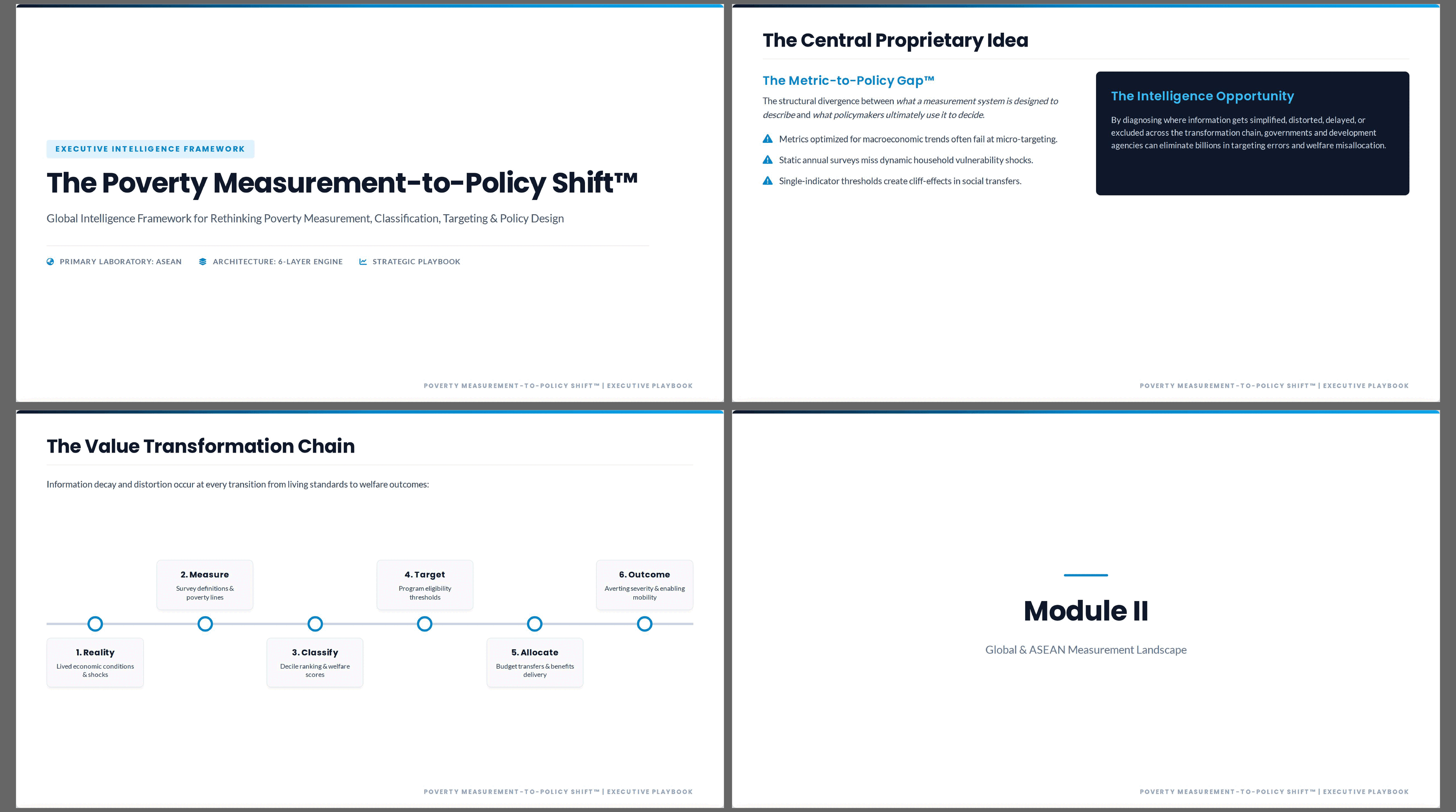
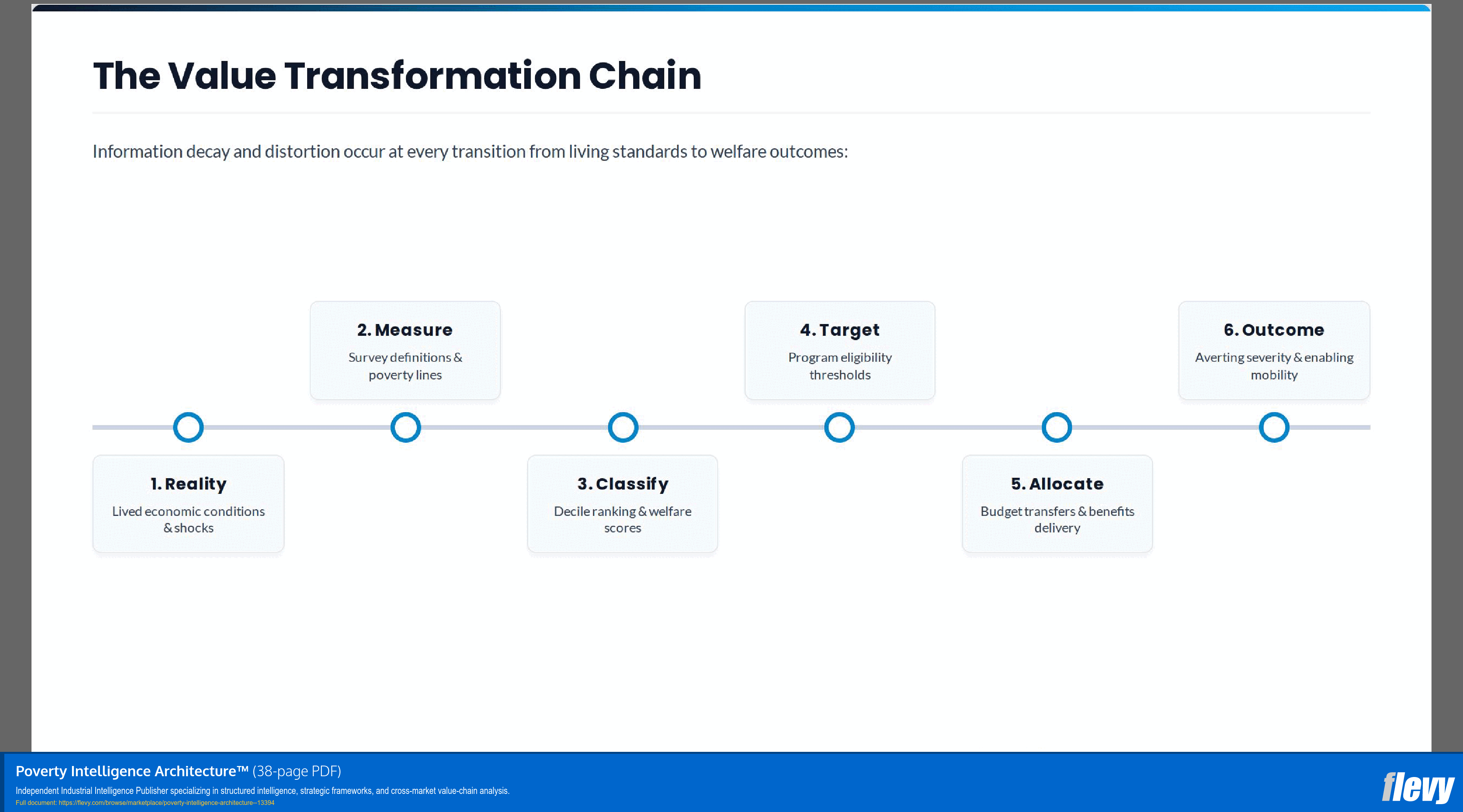
The playbook addresses a fundamental problem: poverty is not simply a number produced by a statistical agency. It is the output of a chain that begins with real household conditions and passes through measurement, classification, targeting, allocation, and ultimately policy outcomes. Weaknesses or distortions at any point in this chain can create significant inclusion errors, exclusion errors, resource misallocation, and blind spots in social-policy decision making.
Rather than focusing on one country's methodology, the framework uses Southeast Asia as a comparative laboratory, examining different approaches across Indonesia, Malaysia, Thailand, the Philippines, Vietnam, and Cambodia. This regional lens demonstrates how countries with different statistical systems, welfare architectures, income structures, and administrative capabilities face different versions of the same measurement-to-policy challenge.
Inside, you will find:
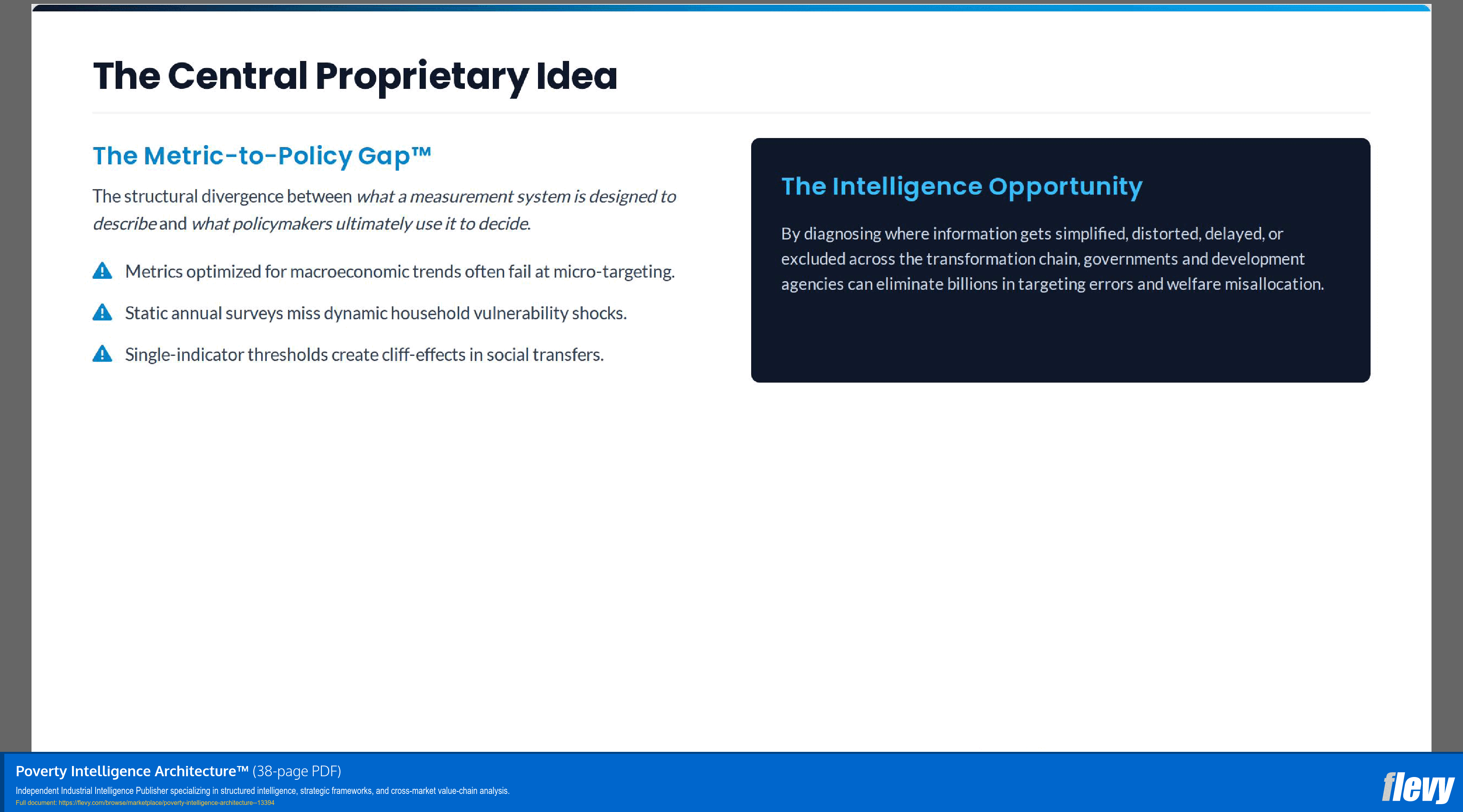
• The Metric-to-Policy Gap™ – a framework for understanding how measurement choices influence downstream policy decisions.
• The Poverty Measurement Landscape – a structured comparison of absolute, relative, multidimensional, and hybrid approaches.
• ASEAN Comparative Intelligence – six-country analysis identifying common patterns, structural differences, and transferable lessons.
• Poverty Intelligence Architecture™ – the core six-layer framework connecting Reality, Measurement, Classification, Targeting, Allocation, and Outcomes.
• Poverty Policy Gap Map™ – a diagnostic tool for identifying where information is lost, distorted, or insufficiently translated into policy action.
• Targeting System Diagnostic – a practical framework for assessing data quality, ranking mechanisms, eligibility thresholds, validation, appeals, and inclusion/exclusion risks.
• P₀–P₁–P₂ poverty analysis – moving beyond simple poverty headcounts toward poverty depth and severity.
• Next-Generation Poverty Intelligence – a future-state architecture incorporating multidimensional deprivation, vulnerability, dynamic data, and continuous recalibration.
• Executive Implementation Roadmap – a practical sequence for diagnosing, separating, layering, validating, recalibrating, and evaluating poverty-policy systems.
The objective is not to prescribe one universal poverty methodology. It is to provide decision-makers with a structured way to diagnose whether an existing system accurately captures economic reality, converts information into appropriate targeting decisions, and ultimately directs limited resources toward the people and outcomes that matter most.
The framework is designed to be adaptable beyond Southeast Asia and can be applied as a comparative diagnostic for other national poverty-measurement, social-protection, subsidy-targeting, and public-resource allocation systems.
Got a question about the product? Email us at support@flevy.com or ask the author directly by using the "Ask the Author a Question" form. If you cannot view the preview above this document description, go here to view the large preview instead.
Source: Best Practices in Analytics, Government PDF: Poverty Intelligence Architecture™ PDF (PDF) Document, Wisnu Pandega Wardana
ABOUT THE AUTHOR

I am an independent Industrial Intelligence and Strategic Innovation Publisher focused on developing structured business intelligence, innovation frameworks, and opportunity-oriented research for decision-makers.
My work focuses on translating emerging technologies, industrial transformation, sustainability, resource efficiency, and market shifts into structured intelligence assets that
... [read more]
Ask the Author a Question
You must be logged in to contact the author.




























