



 Click main image to view in full screen. Unlock all 17 preview images:
Middle-Class Rebuilding Shift™ – PDF
PDF document 46 Pages


BENEFITS OF THIS DOWNLOADABLE PDF DOCUMENT
- Provides a proprietary system architecture for diagnosing where economic growth fails to translate into quality employment, rising real incomes, and durable household prosperity.
- Compares six Southeast Asian development trajectories to reveal how growth composition, labor-market structure, productivity, and value-chain depth shape middle-class outcomes.
- Translates macroeconomic evidence into practical strategic lenses for governments, investors, and corporate leaders evaluating growth quality, economic resilience, and household demand.
ANALYTICS PDF DESCRIPTION
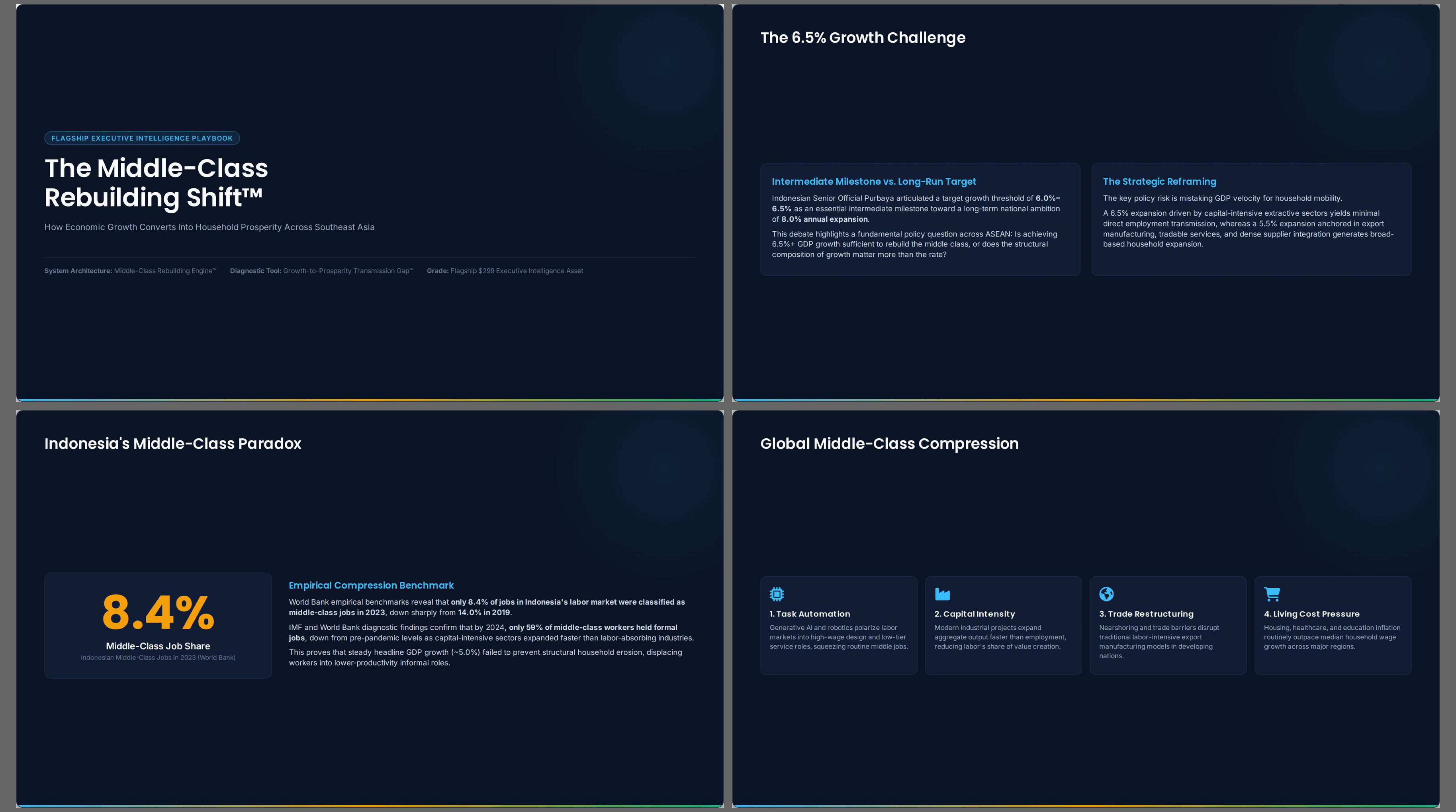
The Middle-Class Rebuilding Shift™ is an executive intelligence playbook for leaders who need to understand why economic growth does not automatically translate into broader household prosperity—and how to redesign the transmission mechanism.
The central thesis is simple: the next development race is not only about raising GDP growth, but about converting productive investment and economic expansion into quality formal employment, rising real household income, and durable economic security.
The playbook introduces the Middle-Class Rebuilding Engine™, a six-stage system architecture that traces the path from Economic Growth & Capital Flow through Productive Investment, Firm Productivity & Expansion, Quality Formal Employment, Real Household Income, and Economic Security & Asset Security. It then applies the Growth-to-Prosperity Transmission Gap™ as a diagnostic lens to identify where the transmission breaks down.
Inside, you will find:
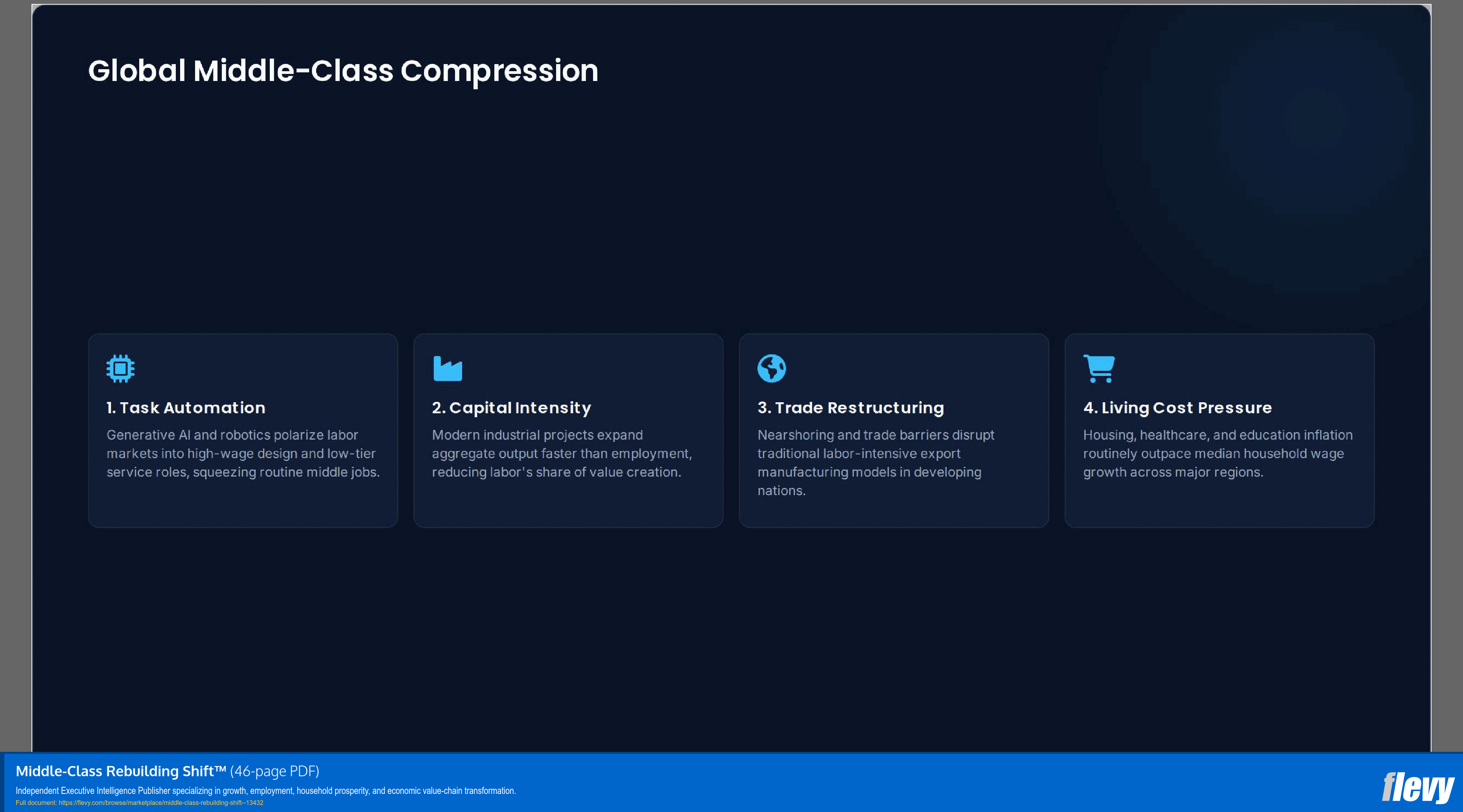
• A diagnostic of the global middle-class compression problem, including capital intensity, automation, trade restructuring, informality, and living-cost pressure.
• A four-part Transmission Gap™ Diagnostic covering employment, wages, affordability, and resilience.
• A comparative ASEAN laboratory covering Indonesia, Vietnam, the Philippines, Malaysia, Thailand, and Singapore.
• A structured distinction between middle-income country status and actual middle-class prosperity.
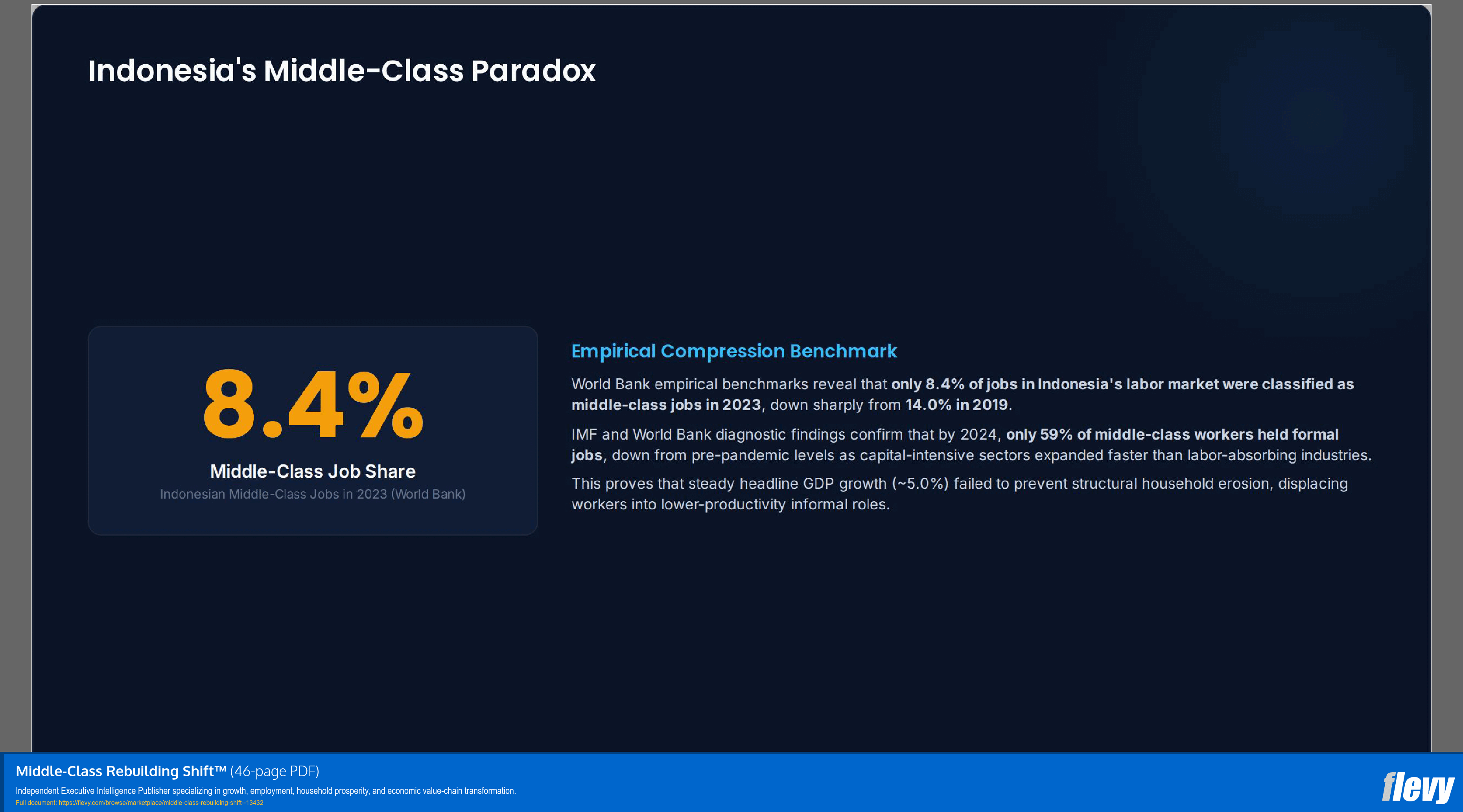
• An evidence-based examination of Indonesia's middle-class pressure, including the relationship between formal employment, real income, labor-market structure, productivity, and growth composition.
• Comparative case analyses showing how manufacturing, export integration, services, technology, productivity, and demographic structure shape different household-prosperity trajectories.
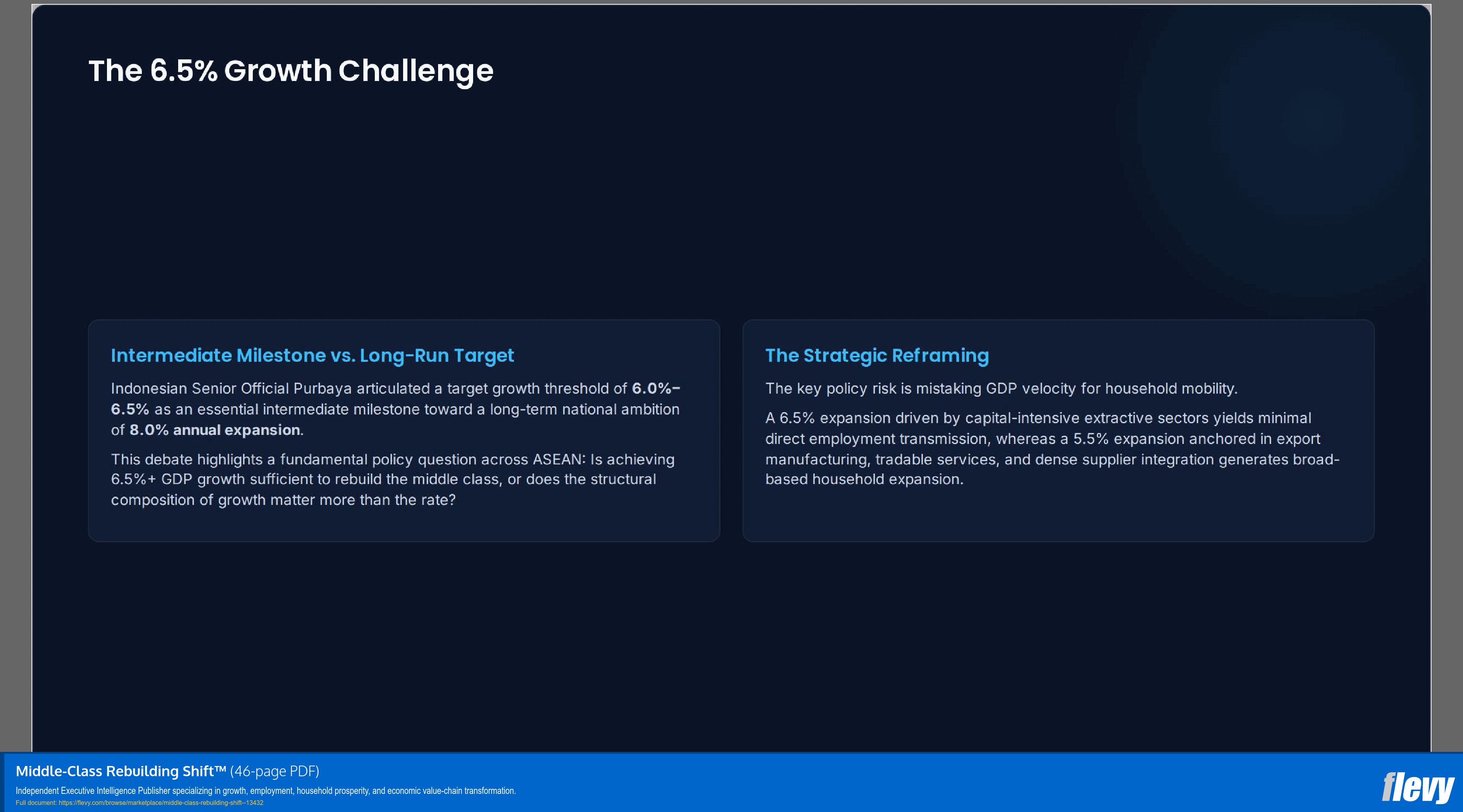
• A strategic test of the 6.5% growth question: why higher growth may be necessary, but why growth composition and employment transmission determine whether it becomes broad-based prosperity.
• Three growth-composition scenarios—Capital, Balanced, and High-Quality—to illustrate how similar headline growth can produce very different household outcomes.
• A Productivity–Employment Matrix and an institutional intervention stack covering supplier linkages, formalization, skills alignment, portable safety nets, affordability anchors, and macro performance metrics.
• Government and investor/corporate playbooks for translating the intelligence into strategic decisions.
The analysis is supported by a structured research architecture drawing on World Bank, IMF, ILO, ADB/OECD, and national statistical and policy sources.
This is not a conventional economic outlook or a generic growth framework. It is designed as a decision-oriented intelligence asset for executives, policymakers, investors, economic strategists, and development leaders seeking to understand the mechanism between growth and household prosperity—and identify where that mechanism can be rebuilt.
Got a question about the product? Email us at support@flevy.com or ask the author directly by using the "Ask the Author a Question" form. If you cannot view the preview above this document description, go here to view the large preview instead.
Source: Best Practices in Analytics, Government PDF: Middle-Class Rebuilding Shift™ PDF (PDF) Document, Wisnu Pandega Wardana
ABOUT THE AUTHOR

I am an independent Industrial Intelligence and Strategic Innovation Publisher focused on developing structured business intelligence, innovation frameworks, and opportunity-oriented research for decision-makers.
My work focuses on translating emerging technologies, industrial transformation, sustainability, resource efficiency, and market shifts into structured intelligence assets that
... [read more]
Ask the Author a Question
You must be logged in to contact the author.




























