
This presentation is created by former McKinsey, BCG, Deloitte, EY, and Capgemini consultants. It teaches a practical consulting framework actively used by tier-1 consulting firms.
Editor Summary
Porter's Five Forces is a 26-slide PowerPoint presentation that teaches Michael Porter’s industry-attractiveness framework and includes a framework diagram template, metrics and scoring template, insight-generation tools, a scoring system, and an actionable insights report.
Read moreDeveloped by former McKinsey, BCG, Deloitte, EY, and Capgemini consultants, it targets corporate strategists, business analysts, consultants, marketing professionals, and executive teams for industry assessments, market-entry, and M&A analysis; sold as a digital download on Flevy with immediate digital delivery.
Use this presentation when an organization needs to evaluate industry attractiveness, identify competitive threats, or prepare market-entry or M&A decision materials.
Corporate strategists conducting an industry assessment by scoring supplier and buyer power using the provided metrics and scoring template.
Consultants preparing market-entry recommendations by mapping barriers to entry and substitute threats with the framework diagram.
Executive teams evaluating M&A targets by quantifying rivalry and market dynamics for due diligence.
Marketing professionals analyzing buyer and supplier dynamics to inform positioning and pricing decisions.
The structured analysis of supplier/buyer power, entrant threats, substitutes, and rivalry mirrors the framework-driven analytical approach used at McKinsey and BCG.
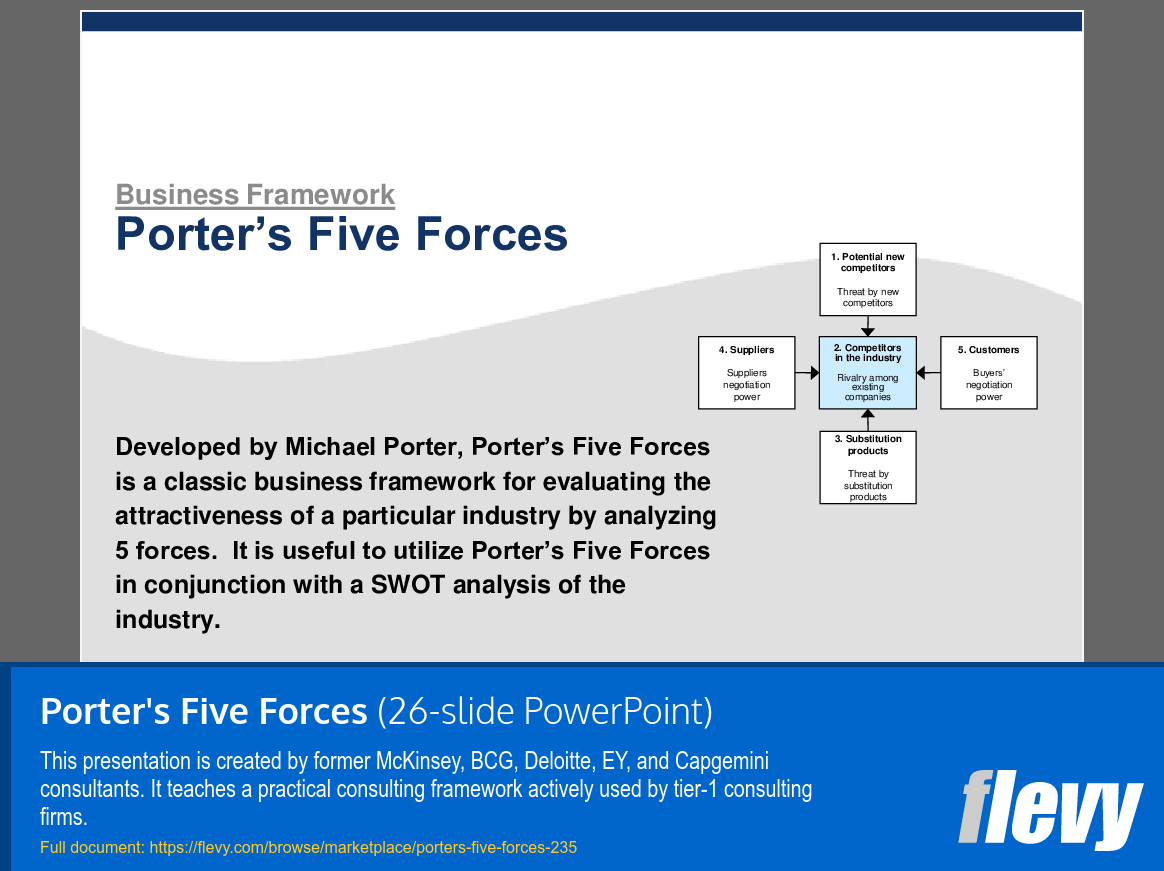
Developed by Michael Porter, Porter's Five Forces is a classic business framework for evaluating the attractiveness of a particular industry by analyzing 5 forces. It is useful to utilize Porter's Five Forces in conjunction with a SWOT analysis of the industry.
This presentation provides a comprehensive analysis of the competitive dynamics within various industries, utilizing Porter's Five Forces framework. The insights are backed by detailed metrics and scoring templates, enabling executives to gauge industry attractiveness both currently and in the future. The document also includes specific examples from the PC and publishing industries, illustrating how market share shifts and supply chain pressures impact competitive forces.
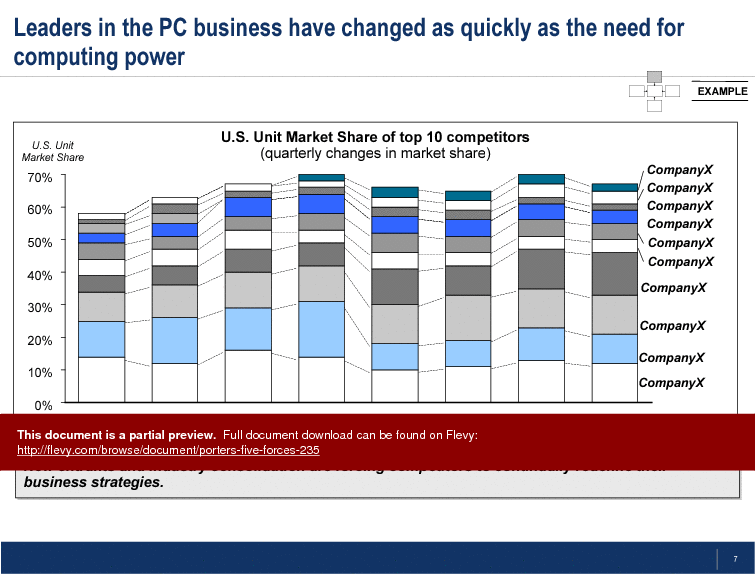
The section on the PC industry highlights the rapid changes in market leadership and the critical need for companies to adapt their strategies to maintain competitiveness. Detailed charts show the market share of top competitors and the factors driving these shifts. This data is essential for understanding the intensity of rivalry and the bargaining power of buyers and suppliers in the tech sector.

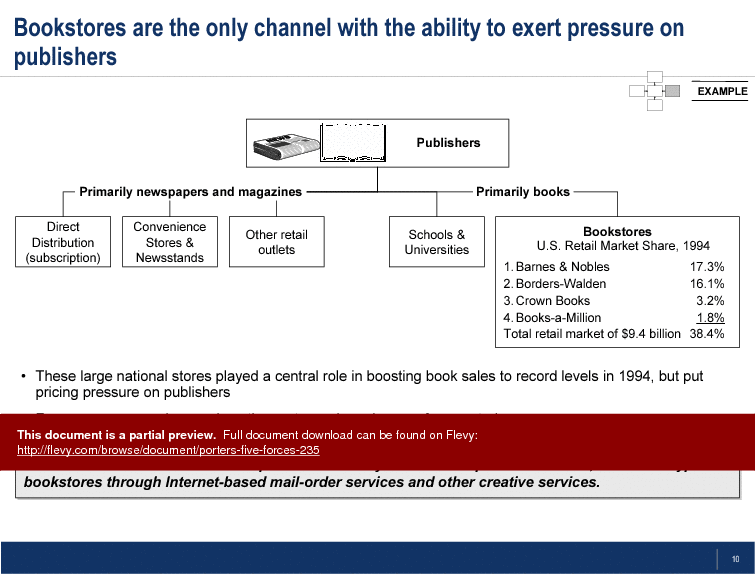
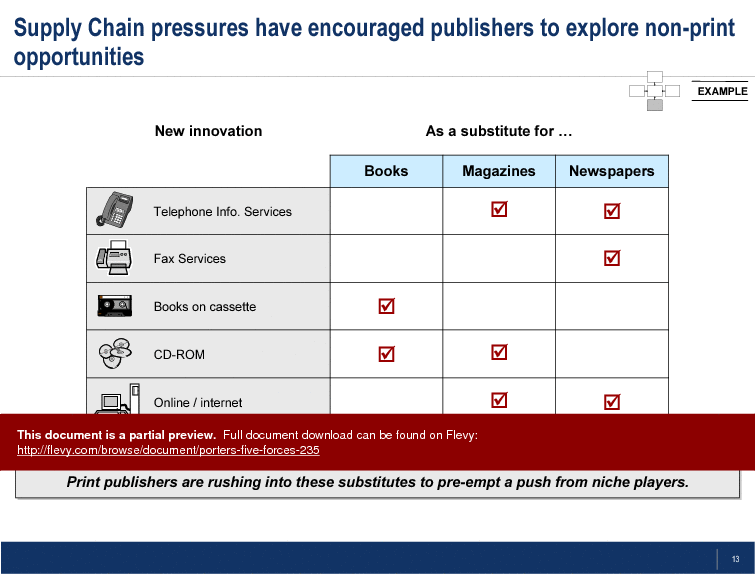
In the publishing industry, the document examines how large bookstores exert pressure on publishers and how supply chain innovations are pushing publishers to explore non-print opportunities. The analysis includes market share data and explores the impact of new distribution channels on traditional business models. This section is particularly valuable for stakeholders looking to understand the evolving landscape of media and publishing.
Got a question about the product? Email us at support@flevy.com or ask the author directly by using the "Ask the Author a Question" form. If you cannot view the preview above this document description, go here to view the large preview instead.
MARCUS OVERVIEW
This synopsis was written by Marcus [?] based on the analysis of the full 26-slide presentation.
Executive Summary
Porter's Five Forces presentation provides a robust framework for evaluating industry attractiveness through the analysis of 5 competitive forces. Developed by Michael Porter, this consulting-grade presentation is crafted by former consultants from McKinsey, BCG, Deloitte, EY, and Capgemini. It enables corporate executives and consultants to assess competition, identify opportunities, and understand market dynamics effectively. By utilizing this framework, users can enhance strategic planning and decision-making processes, ultimately leading to improved profitability and market positioning.
Who This Is For and When to Use
• Corporate strategists and business analysts focused on industry assessments
• Consultants advising clients on market entry or competitive strategy
• Executive teams evaluating potential mergers, acquisitions, or partnerships
• Marketing professionals analyzing customer and supplier dynamics
• Business development teams identifying growth opportunities
Best-fit moments to use this deck:
• During strategic planning sessions to evaluate industry landscapes
• When conducting SWOT analyses in conjunction with competitive assessments
• In workshops aimed at identifying market entry strategies
• For presentations to stakeholders on competitive positioning
Learning Objectives
• Define the 5 competitive forces that shape industry structure
• Analyze the bargaining power of suppliers and buyers
• Assess the threat of new entrants and substitute products
• Evaluate the intensity of rivalry among existing competitors
• Develop actionable insights to enhance competitive strategy
• Identify opportunities and threats within the industry landscape
Table of Contents
• Introduction to Porter’s Five Forces (page 2)
• Framework Diagram (page 3)
• Potential Insights and Outputs (page 4)
• Strengths and Limitations (page 4)
• Metrics and Scoring (page 19)
• Analysis Approach (page 18)
• Top Tips for Effective Use (page 17)
Primary Topics Covered
• Competitive Forces Overview - An introduction to the 5 forces that determine industry competition and profitability.
• Bargaining Power of Suppliers - Analysis of factors that increase supplier power and their impact on industry dynamics.
• Bargaining Power of Buyers - Examination of buyer power and conditions that enhance their negotiation leverage.
• Threat of New Entrants - Identification of barriers to entry that protect existing firms from new competition.
• Threat of Substitutes - Insights into how substitute products can limit pricing power and market share.
• Rivalry Among Existing Competitors - Assessment of competitive intensity and its implications for market strategies.
Deliverables, Templates, and Tools
• Framework diagram template for visualizing the 5 forces
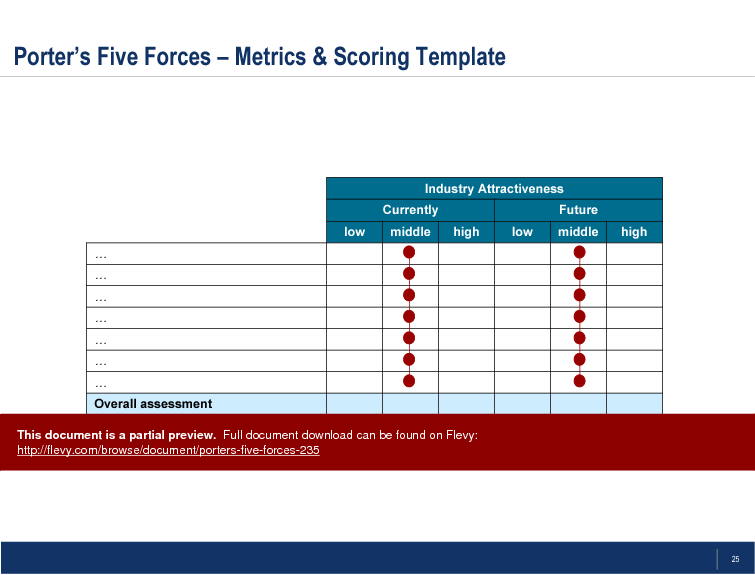
• Metrics and scoring template to evaluate industry attractiveness
• Insight generation tools for analyzing competitive dynamics
• Scoring system for assessing supplier and buyer power
• Actionable insights report based on competitive analysis
• Presentation slides for stakeholder engagement on industry assessments
Slide Highlights
• Comprehensive overview of the 5 forces and their interrelationships
• Visual representation of the competitive landscape using the framework diagram
• Key insights on the bargaining power of suppliers and buyers
• Metrics and scoring system to quantify industry attractiveness
• Practical tips for applying the framework in real-world scenarios
Potential Workshop Agenda
Introduction to Porter’s Five Forces (30 minutes)
• Overview of the framework and its importance
• Discussion on the 5 competitive forces
Interactive Analysis Session (60 minutes)
• Breakout groups to analyze specific industries
• Presentation of findings and insights
Strategic Implications Discussion (30 minutes)
• Identifying opportunities and threats
• Developing actionable strategies based on analysis
Customization Guidance
• Tailor the framework diagram to reflect specific industry characteristics
• Adjust metrics and scoring criteria to align with organizational goals
• Incorporate case studies relevant to the industry being analyzed
• Update examples and insights based on current market trends
Secondary Topics Covered
• Industry trends and their impact on competitive forces
• Case studies illustrating successful application of the framework
• Comparative analysis of different industries using the 5 forces
• Integration of SWOT analysis with Porter’s Five Forces
Topic FAQ
What are the 5 forces in Porter's Five Forces framework?
Porter's Five Forces consist of the bargaining power of suppliers, bargaining power of buyers, threat of new entrants, threat of substitute products, and rivalry among existing competitors. These 5 dynamics together shape industry structure and profitability, and are explicitly covered in the framework diagram within the deck.
How can I quantify the findings from a Five Forces analysis?
Quantification is done by defining metrics for each force, scoring observed indicators, and aggregating results to assess industry attractiveness. The Porter's Five Forces presentation includes a metrics and scoring template and a scoring system designed to convert qualitative judgments into quantified findings.
What limitations should I be aware of when using Porter's Five Forces?
A common limitation is that Five Forces analyses are often qualitative and may miss dynamic or emergent market factors without supporting data. The deck recommends complementary analysis and provides guidance on integrating Five Forces with a SWOT analysis to address those limitations and context gaps.
What should I look for when choosing a Five Forces presentation template for executives?
Select a template that offers a clear framework diagram, quantification tools (metrics and scoring), insight-generation prompts, and stakeholder-ready slides. The Porter's Five Forces PowerPoint specifically lists a framework diagram template, metrics and scoring template, insight tools, and presentation slides for stakeholder engagement.
How much time and facilitation is typical for a Five Forces workshop?
The provided workshop agenda in the presentation outlines a 30-minute introduction, 60-minute interactive analysis with breakout groups, and a 30-minute strategic implications discussion, totaling 120 minutes for a standard workshop format.
I need to evaluate industry attractiveness for an M&A target — how can Five Forces help?
Five Forces helps identify competitive pressures that affect future profitability — supplier/buyer leverage, entry barriers, substitutes, and rivalry — and supports due diligence by quantifying those pressures. The Porter's Five Forces deck supplies metrics and a scoring template to gauge industry attractiveness during M&A assessment.
Can Porter's Five Forces be applied to fast-changing tech sectors like the PC industry?
Yes; the author description includes a PC industry analysis illustrating rapid shifts in market leadership, market share charts, and how supply-chain pressures affect rivalry and bargaining power, showing the framework’s applicability to tech-sector dynamics with PC industry case studies and charts.
Are the templates in this category customizable for specific industry characteristics and organizational goals?
The presentation advises tailoring the framework diagram, adjusting metrics and scoring criteria, incorporating relevant case studies, and updating examples to reflect current trends, enabling customization of the framework diagram and metrics and scoring criteria.
Document FAQ
These are questions addressed within this presentation.
What is Porter’s Five Forces framework?
Porter’s Five Forces framework is a tool for analyzing the competitive forces that shape an industry’s structure and profitability.
How can this framework help in strategic planning?
It provides insights into market dynamics, enabling organizations to identify opportunities and threats while formulating effective strategies.
Can this framework be used in conjunction with other analyses?
Yes, it is often used alongside SWOT analysis to provide a comprehensive view of the industry landscape.
What are the limitations of the Five Forces framework?
While comprehensive, it is often used qualitatively and may not capture all nuances of competitive dynamics.
How do I quantify the findings from this analysis?
Utilize the metrics and scoring template provided to assess the strength of each competitive force quantitatively.
Is this presentation suitable for all industries?
Yes, the framework is applicable across various industries, though specific insights may vary.
Can I customize the templates provided in the presentation?
Absolutely, the templates are designed for easy customization to fit your specific needs.
What data sources are recommended for analysis?
Industry reports, analysts’ reports, and database searches are excellent sources for gathering relevant data.
Glossary
• Competitive Forces - The 5 dynamics that shape competition in an industry.
• Bargaining Power of Suppliers - The ability of suppliers to influence the price and terms of supply.
• Bargaining Power of Buyers - The influence customers have on the price and quality of products.
• Threat of New Entrants - The potential for new competitors to enter the market and disrupt existing firms.
• Threat of Substitutes - The risk posed by alternative products that can fulfill the same need.
• Rivalry Among Existing Competitors - The intensity of competition among current players in the market.
• Market Dynamics - The forces that impact the behavior of buyers and sellers in a market.
• SWOT Analysis - A strategic planning tool used to identify strengths, weaknesses, opportunities, and threats.
• Industry Attractiveness - A measure of the potential profitability and competitive landscape of an industry.
• Entry Barriers - Obstacles that make it difficult for new firms to enter an industry.
• Exit Barriers - Challenges that prevent companies from leaving an industry easily.
• Market Share - The portion of a market controlled by a particular company or product.
• Competitive Advantage - A condition that allows a company to produce goods or services better or more cheaply than its rivals.
• Cost Leadership - A strategy aimed at becoming the low-cost producer in an industry.
• Differentiation - A strategy that focuses on making a product or service unique.
• Market Segmentation - The process of dividing a market into distinct groups of buyers.
• Value Proposition - The promise of value to be delivered to customers.
• Consumer Behavior - The study of how individuals make decisions to spend their resources.
• Strategic Planning - The process of defining a business's direction and making decisions on allocating resources.
• Industry Trends - Patterns and shifts in the market that can impact business strategies.
• Competitive Strategy - The long-term plan of action to gain a competitive advantage.
This PPT slide outlines distinct distribution channels for business and home users, categorized into value-added and mainstream channels. Value-added channels include Direct Sales, System Integrators, Value-Added Resellers (VAR), and Dealers. Direct Sales involve transactions through a manufacturer's sales force, while System Integrators provide tailored solutions. VARs offer unique off-the-shelf solutions, and Dealers support traditional computer channels without unique offerings. Mainstream channels consist of Computer Superstores, Mass Merchants, Consumer Electronic Stores, Office Stores, Mail Order, and Direct Response. Computer Superstores generate significant revenue from computer sales, while Mass Merchants and Consumer Electronic Stores offer a variety of products. The rise in home PC usage has strengthened mainstream channels, highlighting the importance of effective distribution strategies to reach target customers.
This PPT slide analyzes gross margins in the PC industry, highlighting a significant decline as the market matures into a commodity phase. A bar chart details average revenue spending of PC makers, totaling $1.00, with expenses categorized as: cost of goods at $0.76, R&D at $0.04, marketing and distribution at $0.13, SG&A at $0.02, and operating profit at $0.05. The line graph shows gross margins of top PC makers from 1989 to 1994, illustrating a steady decline due to increasing competition and price pressure. As PCs standardize, differentiation diminishes, leading to lower margins. Taiwanese manufacturers like Acer thrive as low-cost suppliers, emphasizing the importance of cost leadership for survival in a commoditized market. Companies must reevaluate cost structures and explore efficiencies to maintain profitability.
This PPT slide analyzes emerging substitute devices competing with personal computers (PCs) for internet hardware revenue. The substitutes are categorized into 4 types: Personal Digital Assistants (PDAs), Interactive Televisions, Screen Phones, and Internet Appliances. PDAs offer portability, but are hindered by high costs and slow interfaces, limiting their usability for remote internet access. Interactive Televisions transform traditional TV into interactive devices, but face readability issues for productivity tasks, focusing more on entertainment. Screen Phones are low-cost, but limited to mail, messaging, and basic commerce applications. Internet Appliances are user-friendly and low-cost, but lack support for complex internet applications. Despite these substitutes, there remains a strong demand for multifunctional PCs, highlighting investment opportunities in internet hardware technologies.
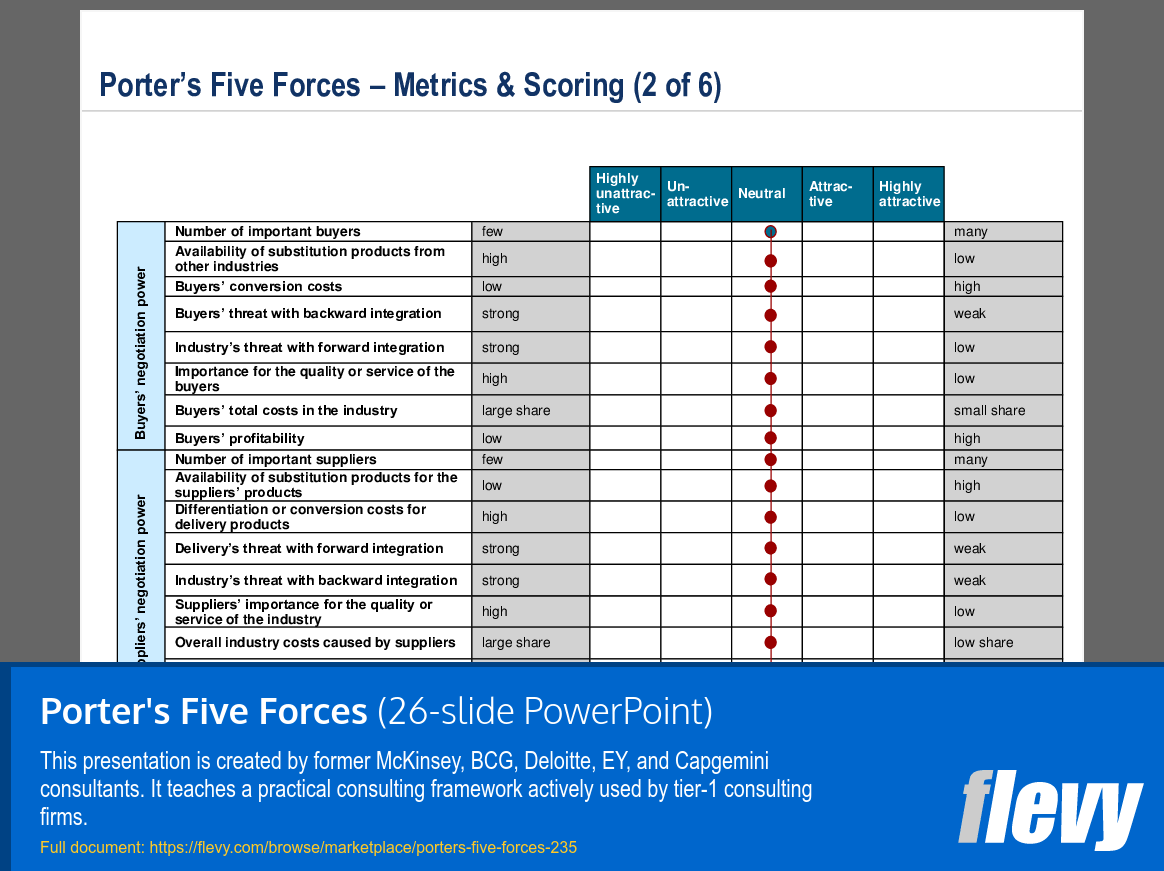
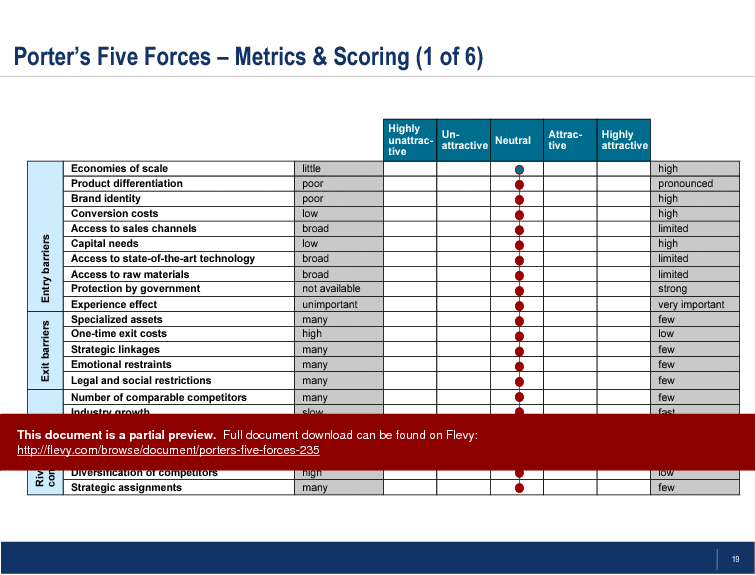
This PPT slide analyzes Porter's Five Forces framework, focusing on buyer and supplier negotiation power. A limited number of important buyers indicates a concentrated market. High availability of substitutes increases buyer power, while low conversion costs allow easy switching between suppliers. Strong threats of backward and forward integration enhance buyer control over supply chains. Buyers prioritize quality and service,, but low profitability may restrict their negotiation leverage. Conversely, few important suppliers create a power imbalance. Low substitute availability strengthens supplier positions, while high differentiation and conversion costs reinforce their power. Strong integration threats from suppliers significantly influence market dynamics. Overall, suppliers play a critical role in the value chain, impacting industry costs and quality.

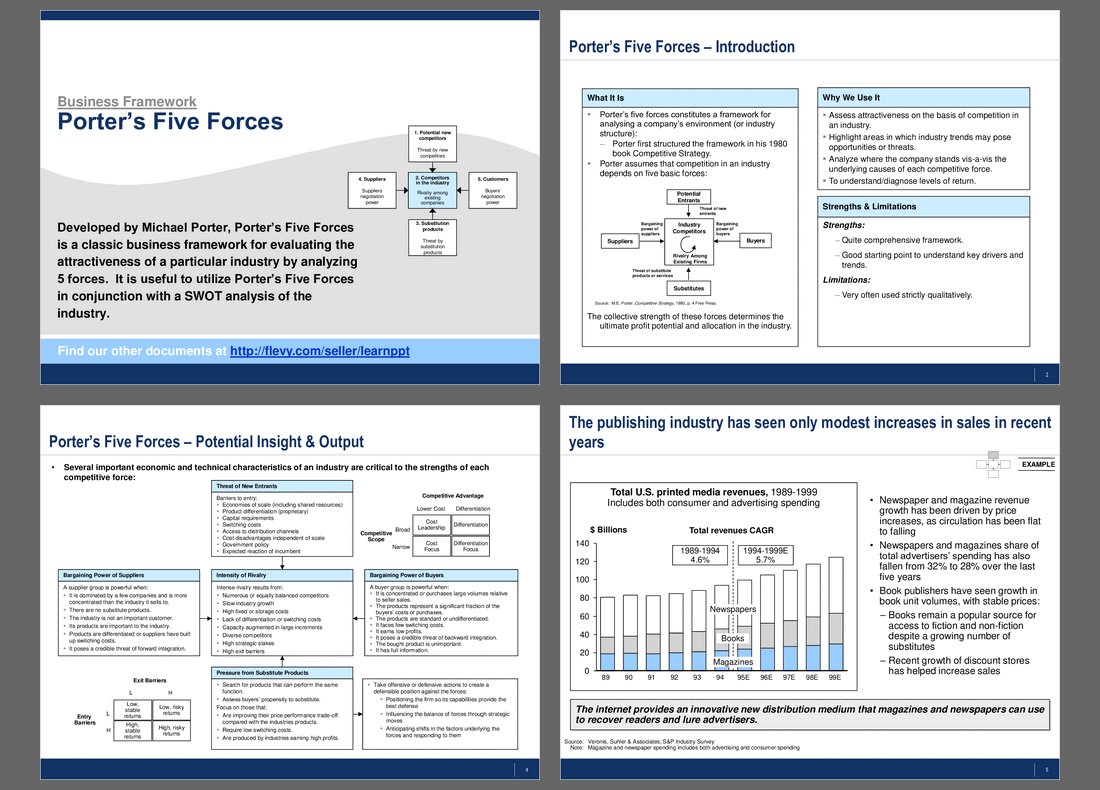
This PPT slide provides an overview of Porter’s Five Forces framework, introduced by Michael E. Porter in "Competitive Strategy" (1980), for analyzing industry competitiveness. The 5 forces are: threat of new entrants, bargaining power of suppliers, bargaining power of buyers, rivalry among existing firms, and threat of substitutes. The framework assesses industry attractiveness based on competitive pressures, helping executives identify opportunities and threats. Its strengths include comprehensiveness and utility in understanding key industry drivers, while a limitation is its qualitative application, which may overlook complex competitive interactions. The framework offers a structured approach for evaluating industry dynamics, informing strategic planning and operational adjustments.
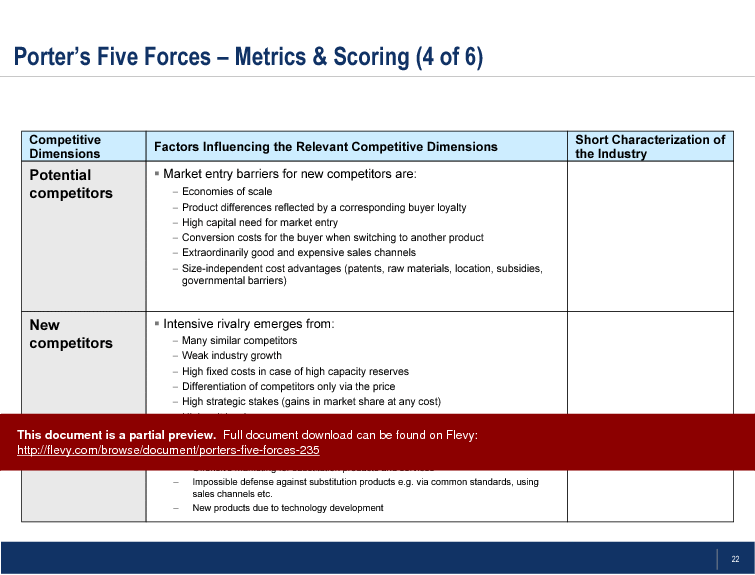
This PPT slide provides an overview of Porter's Five Forces framework, detailing the economic and technical characteristics influencing competitive forces in an industry. The 5 forces are: Threat of New Entrants, Bargaining Power of Suppliers, Intensity of Rivalry, Bargaining Power of Buyers, and Pressure from Substitute Products.
The Threat of New Entrants is shaped by barriers such as economies of scale, product differentiation, capital requirements, and distribution access. The Bargaining Power of Suppliers increases when they are concentrated or offer unique products, impacting pricing and availability. Intensity of Rivalry arises from numerous competitors, slow growth, and high fixed costs, potentially leading to price wars. Buyers gain power through large purchases or undifferentiated products, compelling companies to lower prices or enhance services. Finally, Pressure from Substitute Products necessitates continuous assessment of alternatives to maintain market position.
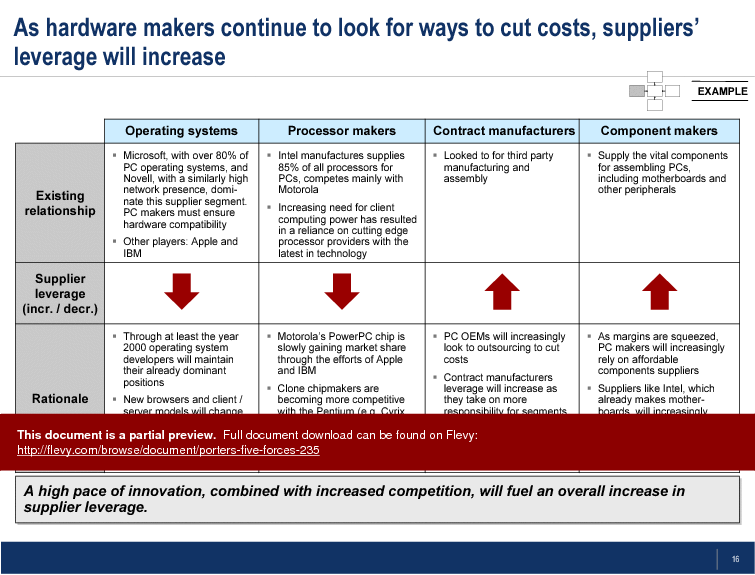
This PPT slide analyzes the dynamics between hardware makers and suppliers, categorizing suppliers into 4 segments: operating systems, processor makers, contract manufacturers, and component makers. The operating systems segment highlights Microsoft's 80% market share and the importance of hardware compatibility for PC makers. In processor makers, Intel supplies 85% of processors, with competition from companies like Motorola. The demand for advanced computing power drives reliance on cutting-edge technology. The contract manufacturers' segment shows a shift towards outsourcing, increasing their leverage in the value chain. Component makers provide essential parts for PC assembly, emphasizing the need for affordable suppliers as margins tighten. Overall, dominant players face emerging competitors and technological advancements, leading to increased supplier leverage in a rapidly evolving market.
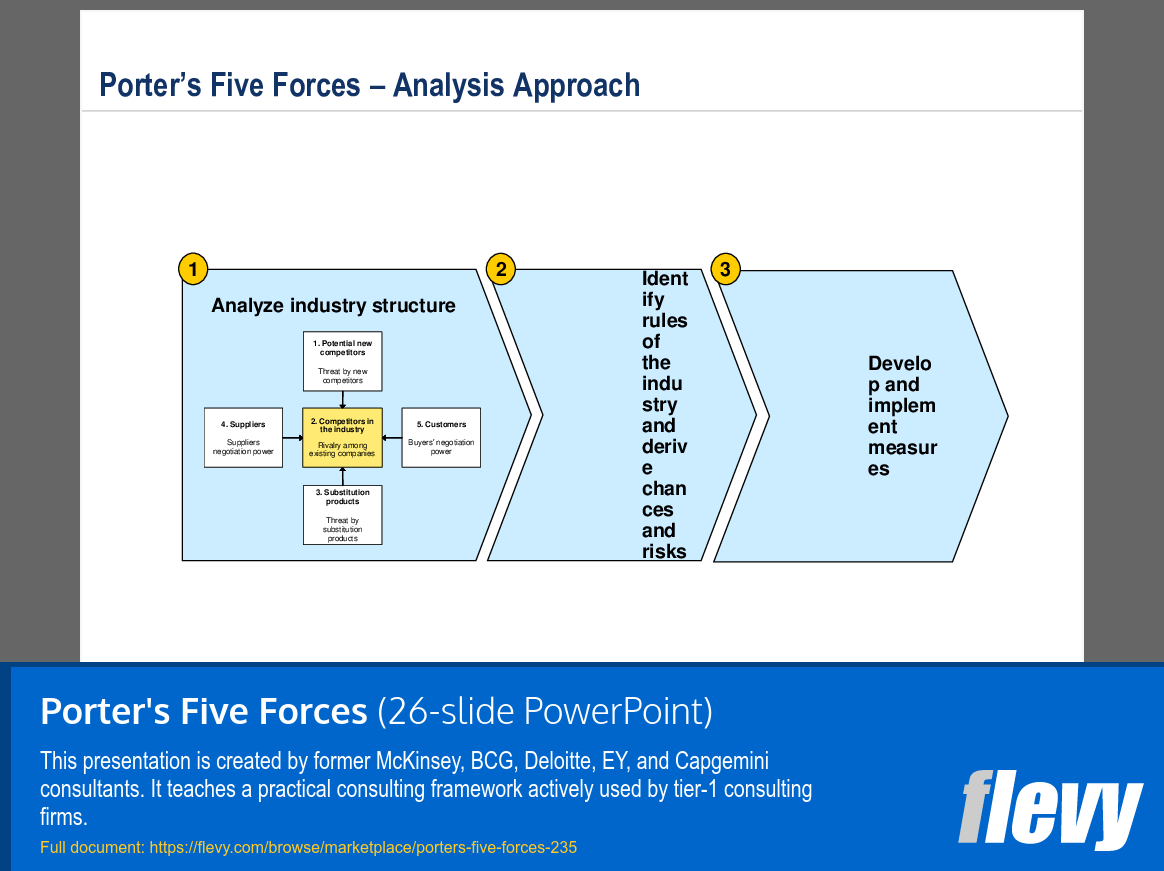
This PPT slide outlines a structured approach to analyzing industry dynamics using Porter's Five Forces framework. It includes 3 critical phases: analyzing industry structure, identifying governing rules, and developing strategic measures. The first phase examines 5 components: potential new competitors, existing competitors, suppliers, customers, and substitute products, each influencing the competitive environment. The second phase derives insights from these forces to reveal underlying market dynamics, uncovering opportunities and threats. The final phase focuses on implementing strategic initiatives based on these insights to leverage opportunities and mitigate risks. This structured approach aids executives in navigating complex industry landscapes for informed decision-making.
This PPT slide provides an overview of U.S. printed media revenues from 1989 to 1999, highlighting growth trends in the publishing industry. Total revenues are segmented by newspapers, books, and magazines, with compound annual growth rates (CAGR) of 4.6% from 1989-1994 and 5.7% from 1994-1999, indicating a gradual upward trend. Revenue growth for newspapers and magazines has primarily resulted from price increases, as circulation has stagnated or declined, posing sustainability risks. The share of total advertising spending for newspapers and magazines decreased from 32% to 28% over 5 years. In contrast, the book publishing sector shows stable prices and growth in unit volumes, aided by discount stores. The internet serves as an innovative distribution channel, offering magazines and newspapers opportunities to regain readership and attract advertisers.
Source: Best Practices in Growth Strategy, Industry Analysis, Environmental Analysis, Porter's Five Forces PowerPoint Slides: Porter's Five Forces PowerPoint (PPT) Presentation Slide Deck, LearnPPT Consulting
This presentation is created by former McKinsey, BCG, Deloitte, EY, and Capgemini consultants. It teaches a practical consulting framework actively used by tier-1 consulting firms.
We are a team of management consultants trained by top tier global consulting firms (including McKinsey, BCG, Deloitte, EY, Capgemini) with a collective experience of several decades. We specialize in business frameworks based on real-life consulting engagements.
We have served 100s of clients that range from Fortune 500 companies to tech startups to
... [read more] $1B+ private companies.
Utilize our consulting frameworks to apply structured thinking & analysis to address your business challenges, uncover strategic insights, and implement workable solutions. Our PowerPoint presentations follow traditional consulting slide design formats, starting with a clear slide headline. Easily customize and repurpose our slides for your own business presentations.
Beyond business frameworks & methodologies, we also offer PowerPoint templates and other business templates. Our templates are professionally designed and have been used in thousands of deliverables & work products across hundreds of clients.
Since 2012, we have provided business templates to over 10,000 businesses and organizations of all sizes, from startups and small businesses to the Fortune 100, in over 130 countries.
"As an Independent Management Consultant, I find Flevy to add great value as a source of best practices, templates and information on new trends. Flevy has matured and the quality and quantity of the library is excellent. Lastly the price charged is reasonable, creating a win-win value for
the customer, Flevy and the various authors. This is truly a service that benefits the consulting industry and associated clients. Thanks for providing this service.
"
– Jim Schoen, Principal at FRC Group
"As a small business owner, the resource material available from FlevyPro has proven to be invaluable. The ability to search for material on demand based our project events and client requirements was great for me and proved very beneficial to my clients. Importantly, being able to easily edit and tailor
the material for specific purposes helped us to make presentations, knowledge sharing, and toolkit development, which formed part of the overall program collateral. While FlevyPro contains resource material that any consultancy, project or delivery firm must have, it is an essential part of a small firm or independent consultant's toolbox.
"
– Michael Duff, Managing Director at Change Strategy (UK)
"[Flevy] produces some great work that has been/continues to be of immense help not only to myself, but as I seek to provide professional services to my clients, it gives me a large "tool box" of resources that are critical to provide them with the quality of service and outcomes they are expecting."
– Royston Knowles, Executive with 50+ Years of Board Level Experience
"I am extremely grateful for the proactiveness and eagerness to help and I would gladly recommend the Flevy team if you are looking for data and toolkits to help you work through business solutions."
– Trevor Booth, Partner, Fast Forward Consulting
"FlevyPro provides business frameworks from many of the global giants in management consulting that allow you to provide best in class solutions for your clients."
– David Harris, Managing Director at Futures Strategy
"I have found Flevy to be an amazing resource and library of useful presentations for lean sigma, change management and so many other topics. This has reduced the time I need to spend on preparing for my performance consultation. The library is easily accessible and updates are regularly provided. A wealth of great information."
– Cynthia Howard RN, PhD, Executive Coach at Ei Leadership
"Flevy is our 'go to' resource for management material, at an affordable cost. The Flevy library is comprehensive and the content deep, and typically provides a great foundation for us to further develop and tailor our own service offer."
– Chris McCann, Founder at Resilient.World
"Flevy is now a part of my business routine. I visit Flevy at least 3 times each month.
Flevy has become my preferred learning source, because what it provides is practical, current, and useful in this era where the business world is being rewritten.
many challenges and there is the need to make the right decisions in a short time, with so much scattered information, we are fortunate to have Flevy. Flevy investigates, selects, and puts at our disposal the best of the best to help us be successful in our work.
"
– Omar Hernán Montes Parra, CEO at Quantum SFE
Save with Bundles
This document is available as part of the following discounted bundle(s):
Download our free compilation of 50+ Strategy & Transformation slides and templates. Frameworks include McKinsey 7-S, Balanced Scorecard, Disruptive Innovation, BCG Curve, and many more.