
In the increasingly competitive business scenario, the end-to-end customer experience and delight has become a new area, which no one can afford to neglect. It is of paramount importance to deliver superior services with differentiated experience, while aligning with the ever-changing customer preferences and needs.
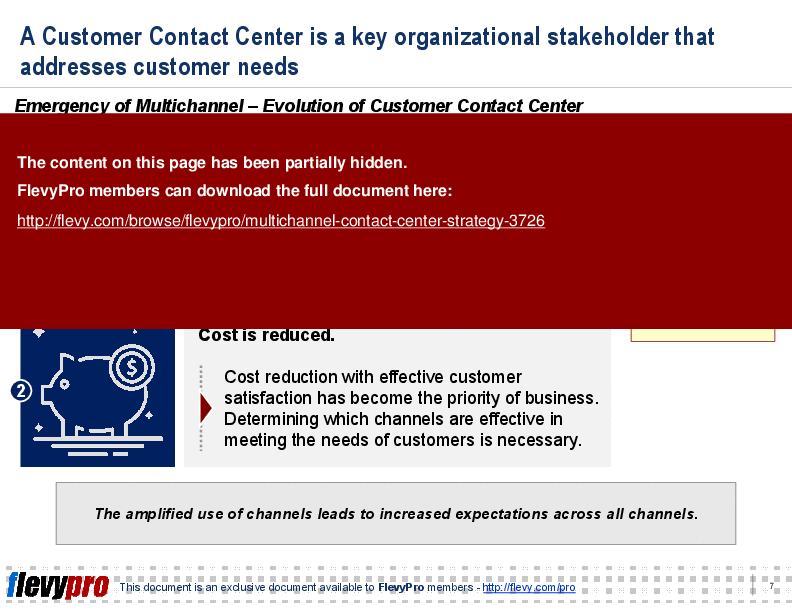
Likewise, technology has changed the way organizations manage relationships with customers. While companies may argue this new reality, we cannot refute the fact that consumers are increasingly in a position of power. Comparison shopping on a wider scale has become the norm.
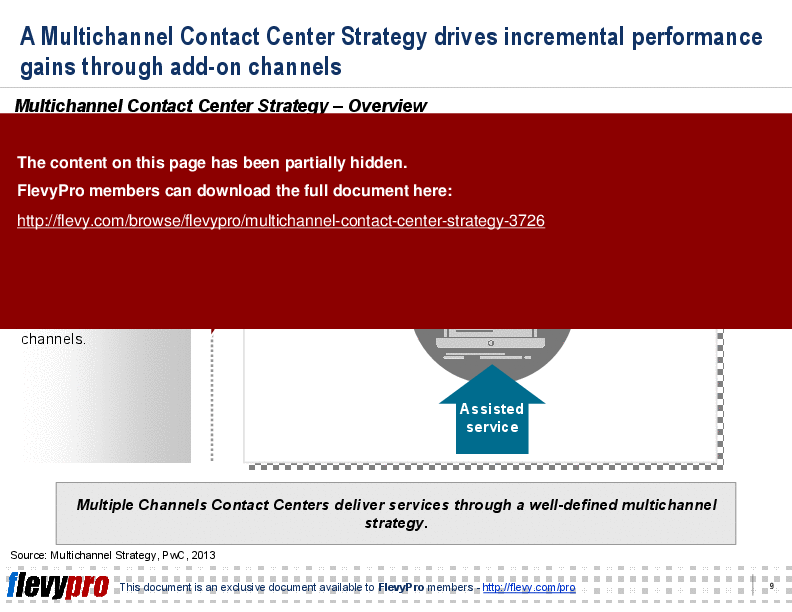
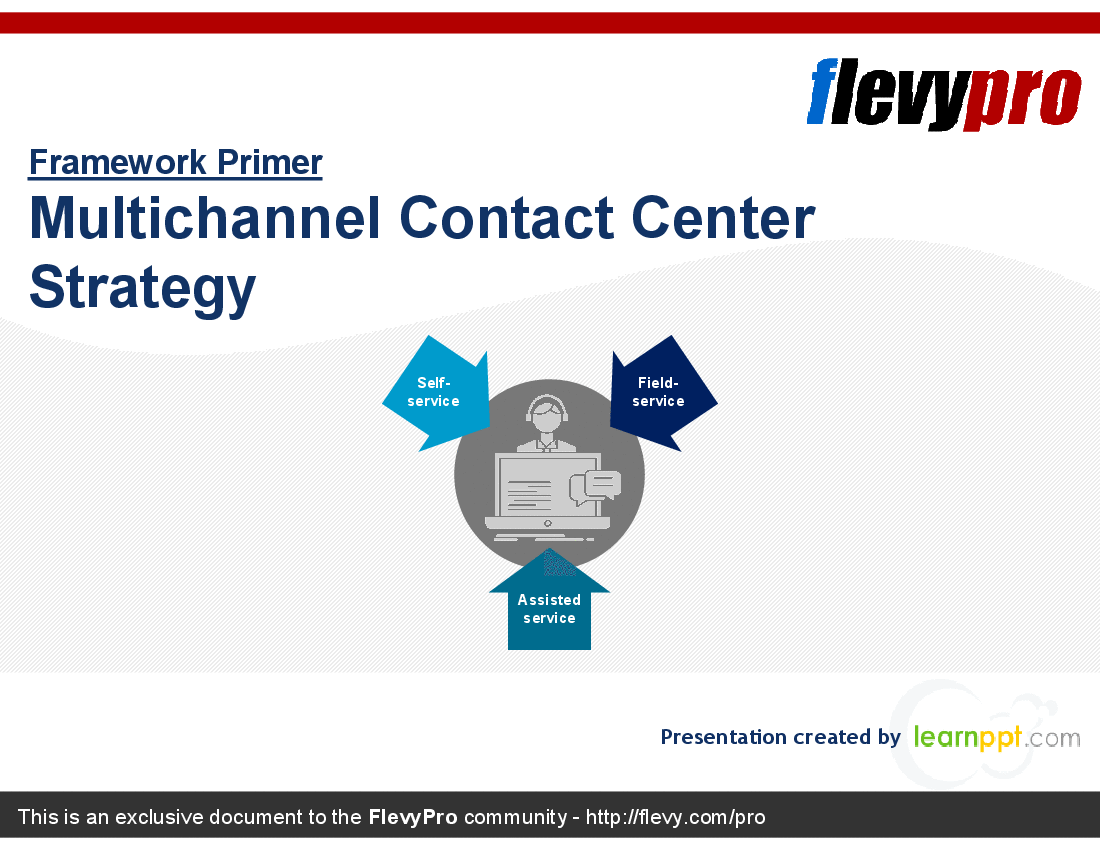
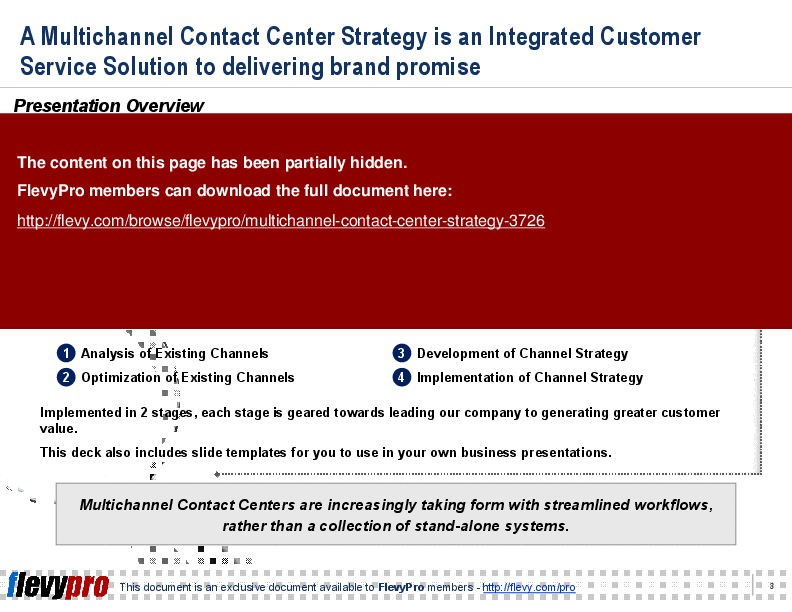
A strong relationship with the customer is of utmost importance, and the modern contact center can facilitate this. A right balance between customer experience and contact center operation may be maintained. This is when Multichannel Strategy comes into play. Multichannel Contact Centers are increasingly taking form with streamlined workflows, rather than a collection of stand-alone systems.
This presentation extensively discusses the Multichannel Contact Center Strategy, its decision parameters, key benefits, KPIs, and approaches. It also details a framework for Service Channel Mix Optimization:
1. Analysis of Existing Channels
2. Optimization of Existing Channels
3. Development of Channel Strategy
4. Implementation of Channel Strategy
Implemented in 2 stages, each stage is geared towards leading our company to generating greater customer value.
This deck also includes slide templates for you to use in your own business presentations.
The Multichannel Contact Center Strategy presentation provides a comprehensive guide to navigating the complexities of modern customer service environments. It covers the evolution of multichannel strategies, blending traditional and web-enabled services to enhance efficiency. The PPT delves into decision parameters for service types, optimizing channel mix, and leveraging self-service solutions to gain a competitive edge. This resource is essential for executives aiming to streamline operations and elevate customer satisfaction through a well-defined multichannel approach. The inclusion of detailed KPIs and benchmarks ensures that your organization can measure and achieve superior performance outcomes.
Got a question about this document? Email us at flevypro@flevy.com.
Executive Summary
The Multichannel Contact Center Strategy presentation provides a comprehensive framework for enhancing customer service through an integrated multichannel approach. It emphasizes the importance of delivering a superior customer experience while adapting to evolving consumer preferences. This strategy outlines key decision parameters, benefits, and performance indicators (KPIs) essential for optimizing service channels. By implementing this strategy, organizations can improve customer satisfaction, streamline operations, and foster stronger customer relationships.
Who This Is For and When to Use
• Customer Service Executives looking to enhance service delivery.
• Contact Center Managers aiming to optimize channel performance.
• Marketing Leaders focused on improving customer engagement strategies.
• Operations Managers tasked with integrating new service channels.
Best-fit moments to use this deck:
• During strategic planning sessions for customer service enhancements.
• When assessing current service channels and identifying areas for improvement.
• In workshops aimed at training staff on multichannel service delivery.
Learning Objectives
• Define the principles of a multichannel contact center strategy.
• Analyze existing service channels to identify optimization opportunities.
• Develop a comprehensive channel strategy tailored to customer needs.
• Implement effective service channel mix optimization techniques.
• Establish KPIs to measure the success of multichannel initiatives.
• Enhance customer satisfaction through improved service delivery mechanisms.
Table of Contents
• Overview (page 3)
• Emergence of Multichannel (page 5)
• Multichannel Contact Center Strategy (page 9)
• Service Channel Mix Optimization (page 16)
• Templates (page 21)
Primary Topics Covered
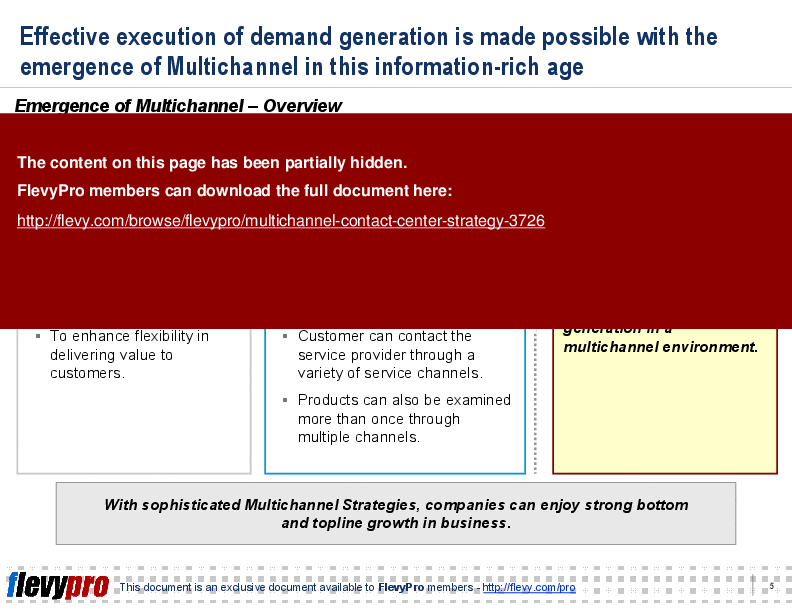
• Emergence of Multichannel - The shift towards multichannel strategies reflects changing customer expectations and the need for businesses to adapt to new service delivery methods.
• Multichannel Contact Center Strategy - A structured approach to integrating various service channels to enhance customer interactions and satisfaction.
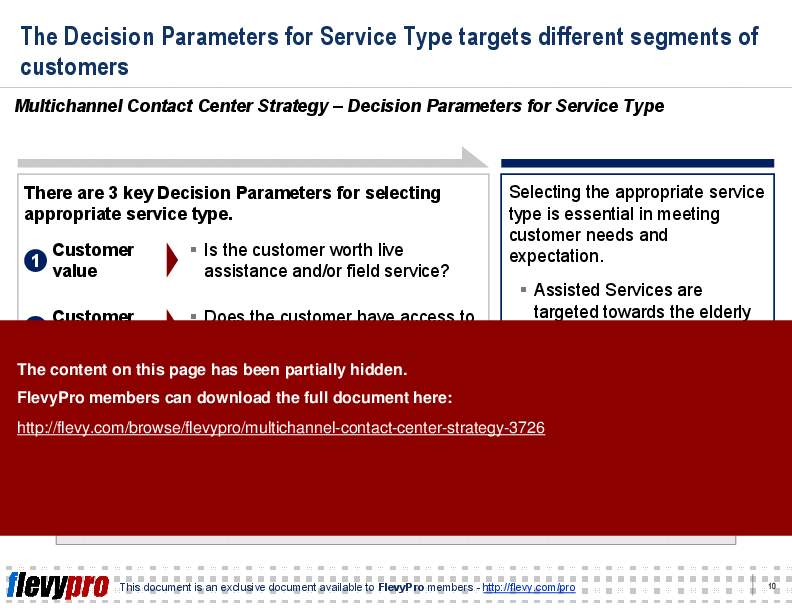
• Decision Parameters for Service Type - Key factors influencing the selection of service types, including customer value, capabilities, and service complexity.
• Channel Mix Optimization - Strategies for analyzing and optimizing the mix of service channels to maximize efficiency and customer satisfaction.
• Self-Service Solutions - The role of self-service in reducing operational costs and enhancing customer engagement through accessible online platforms.
• Key Performance Indicators (KPIs) - Metrics used to evaluate the effectiveness of self-service channels and overall customer service performance.
Deliverables, Templates, and Tools
• Service channel analysis template for assessing current operations.
• Customer segmentation framework to tailor service delivery.
• KPI dashboard for tracking multichannel performance metrics.
• Implementation roadmap for channel strategy development.
• Training materials for staff on multichannel service practices.
• Customer feedback collection template to enhance service quality.
Slide Highlights
• Overview of the multichannel contact center strategy and its significance.
• Visual representation of the decision parameters for service type selection.
• Framework for optimizing service channel mix through a structured approach.
• Key benefits of self-service solutions illustrated with performance metrics.
• KPIs for evaluating the effectiveness of multichannel strategies.
Potential Workshop Agenda
Channel Strategy Development Session (90 minutes)
• Review current service channels and performance metrics.
• Discuss customer segmentation and preferences.
• Identify opportunities for channel optimization.
KPI Setting Workshop (60 minutes)
• Define key performance indicators for multichannel success.
• Establish benchmarks for measuring customer satisfaction.
• Develop a tracking plan for ongoing performance evaluation.
Customization Guidance
• Tailor the service channel analysis template to reflect specific organizational needs.
• Adjust customer segmentation criteria based on demographic data relevant to your market.
• Update KPI benchmarks to align with industry standards and organizational goals.
Secondary Topics Covered
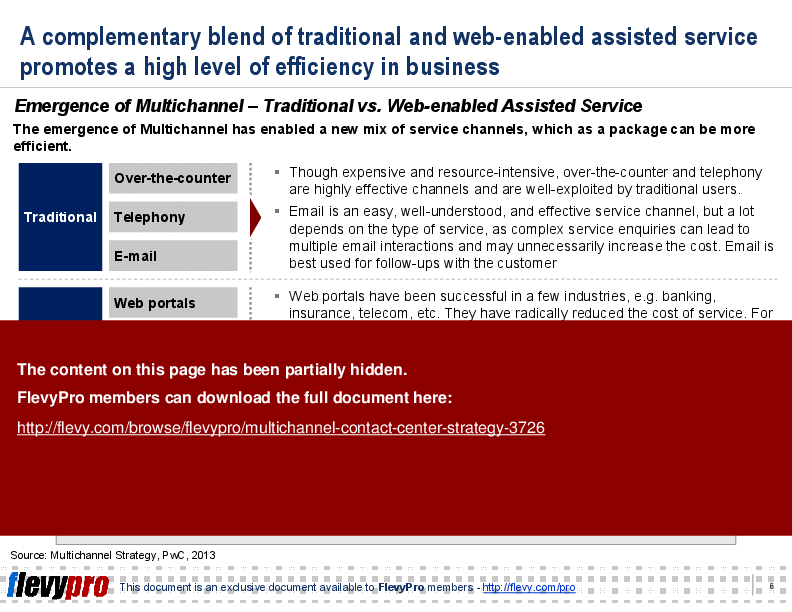
• Integration of traditional and digital service channels.
• The impact of customer empowerment on service delivery.
• Best practices for managing customer interactions across multiple channels.
• Strategies for enhancing customer loyalty through effective service.
Topic FAQ
Document FAQ
These are questions addressed within this presentation.
What is a multichannel contact center strategy?
A multichannel contact center strategy integrates various service channels to enhance customer interactions and improve overall satisfaction.
How can I optimize existing service channels?
Conduct a thorough analysis of current channels, assess customer preferences, and implement changes based on performance metrics.
What are the key benefits of self-service solutions?
Self-service solutions reduce operational costs, enhance customer engagement, and provide 24/7 access to information and services.
What KPIs should I track for multichannel performance?
Key KPIs include self-service rate, customer satisfaction scores, and the percentage of positive responses to service inquiries.
How can I ensure consistency across service channels?
Implement standardized processes and training for staff to maintain service quality across all channels.
What role does technology play in multichannel strategies?
Technology facilitates the integration of various service channels, enabling seamless customer interactions and data sharing.
How do I measure the success of my multichannel strategy?
Use established KPIs to evaluate performance, gather customer feedback, and adjust strategies based on results.
What challenges might I face when implementing a multichannel strategy?
Common challenges include integrating disparate systems, managing customer expectations, and ensuring staff are adequately trained.
Glossary
• Multichannel Contact Center - A customer service center that utilizes multiple channels for customer interaction.
• Self-Service - A service model allowing customers to perform tasks independently via digital platforms.
• KPI (Key Performance Indicator) - A measurable value that demonstrates how effectively a company is achieving key business objectives.
• Channel Optimization - The process of improving service delivery across various channels to enhance customer experience.
• Customer Segmentation - The practice of dividing customers into groups based on shared characteristics for targeted service delivery.
• Service Complexity - The degree of difficulty associated with resolving customer inquiries or issues.
• Customer Empowerment - The process by which customers gain more control over their interactions with businesses through various channels.
• Feedback Loop - A system for collecting and analyzing customer feedback to improve service delivery.
• CRM (Customer Relationship Management) - A technology for managing a company’s relationships and interactions with potential and current customers.
• IVR (Interactive Voice Response) - An automated telephony system that interacts with callers, gathers information, and routes calls to the appropriate recipients.
• CTI (Computer Telephony Integration) - Technology that allows computers to interact with telephone systems.
• WFM (Workforce Management) - A process that ensures the right number of staff are in the right place at the right time to meet customer demand.
• QM (Quality Management) - A system for ensuring that an organization’s products and services are consistent and meet customer expectations.
• FCR (First Call Resolution) - A metric that measures the percentage of customer inquiries resolved on the first contact.
• Channel Suitability - The appropriateness of a service channel for a specific customer segment or service type.
• Customer Experience - The overall perception of a customer’s interaction with a brand or organization.
• Service Channel Mix - The combination of different service channels used to interact with customers.
• Customer Feedback - Information provided by customers regarding their experience with a product or service.
• Sentiment Analysis - The use of natural language processing to analyze customer feedback and gauge sentiment.
• Customer Satisfaction - A measure of how products and services meet or exceed customer expectations.
Source: Best Practices in Customer Service, Contact Center PowerPoint Slides: Multichannel Contact Center Strategy PowerPoint (PPT) Presentation Slide Deck, LearnPPT Consulting
Did you need more documents?
Consider a FlevyPro subscription from $39/month. View plans here.
For $10.00 more, you can download this document plus 2 more FlevyPro documents. That's just $13 each.
|
Receive our FREE presentation on Operational Excellence
This 50-slide presentation provides a high-level introduction to the 4 Building Blocks of Operational Excellence. Achieving OpEx requires the implementation of a Business Execution System that integrates these 4 building blocks. |