
This framework is developed by a team of former McKinsey and Big 4 consultants. The presentation follows the headline-body-bumper slide format used by global consulting firms.
Powerpoint metadata & metadata management PPT: Learn key concepts, tools, and classification best practices. Download this expert Metadata Management presentation now. Metadata Management is a 24-slide PPT PowerPoint presentation template (PPTX) available for immediate download upon purchase.
Every passing day leads to creation of enormous amounts of data by organizations across the globe. These huge data lakes often go unused, as not many organization undertaken detailed analysis of this data to assist in informed decision making.
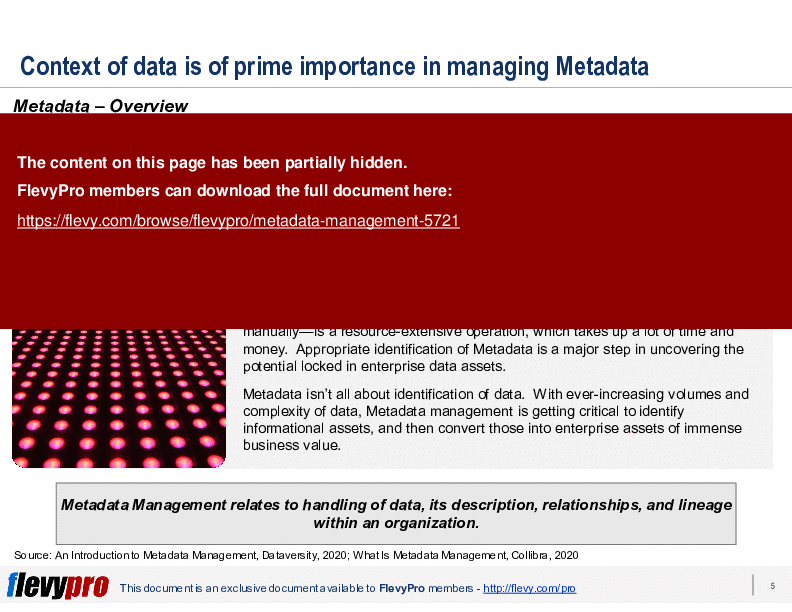
Multiple data types generated by discrete systems are often inconsistent and unintegrated. This results in inaccurate analysis and flawed insights. Rules and processes stipulated to govern access to data and its Metadata (information about the attributes of data elements) are decisive in ensuring its confidentiality and reliability. Metadata Management relates to handling of data, its description, relationships, and lineage within an organization.
Data discovery, cleansing, categorization, retrieval, and analysis—when done manually—is a resource-extensive operation, which takes up a lot of time and money. Appropriate identification of Metadata is a major step in uncovering the potential locked in enterprise data assets.
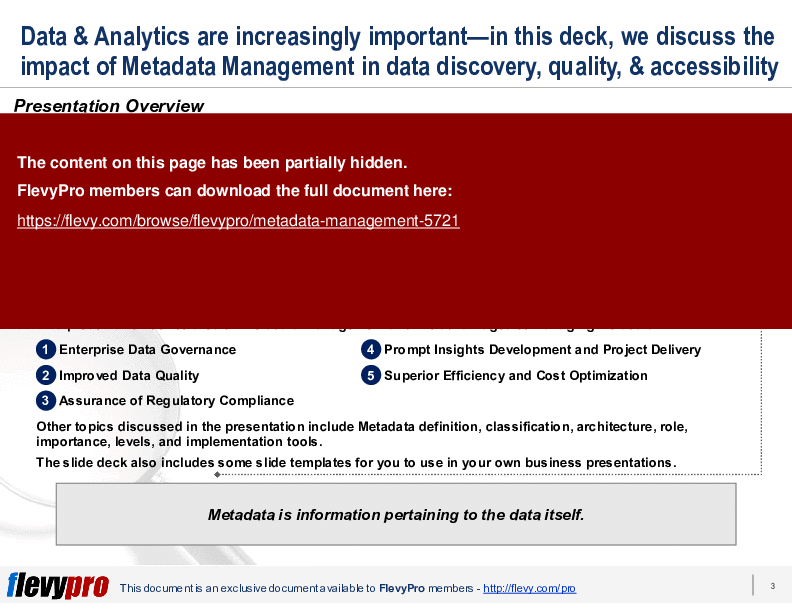
This presentation deliberates on Metadata management and the advantages of managing Metadata:
1. Enterprise Data Governance
2. Improved Data Quality
3. Assurance of Regulatory Compliance
4. Prompt Insights Development and Project Delivery
5. Superior Efficiency and Cost Optimization
Other topics discussed in the presentation include Metadata definition, classification, architecture, role, importance, levels, and implementation tools.
The slide deck also includes some slide templates for you to use in your own business presentations.
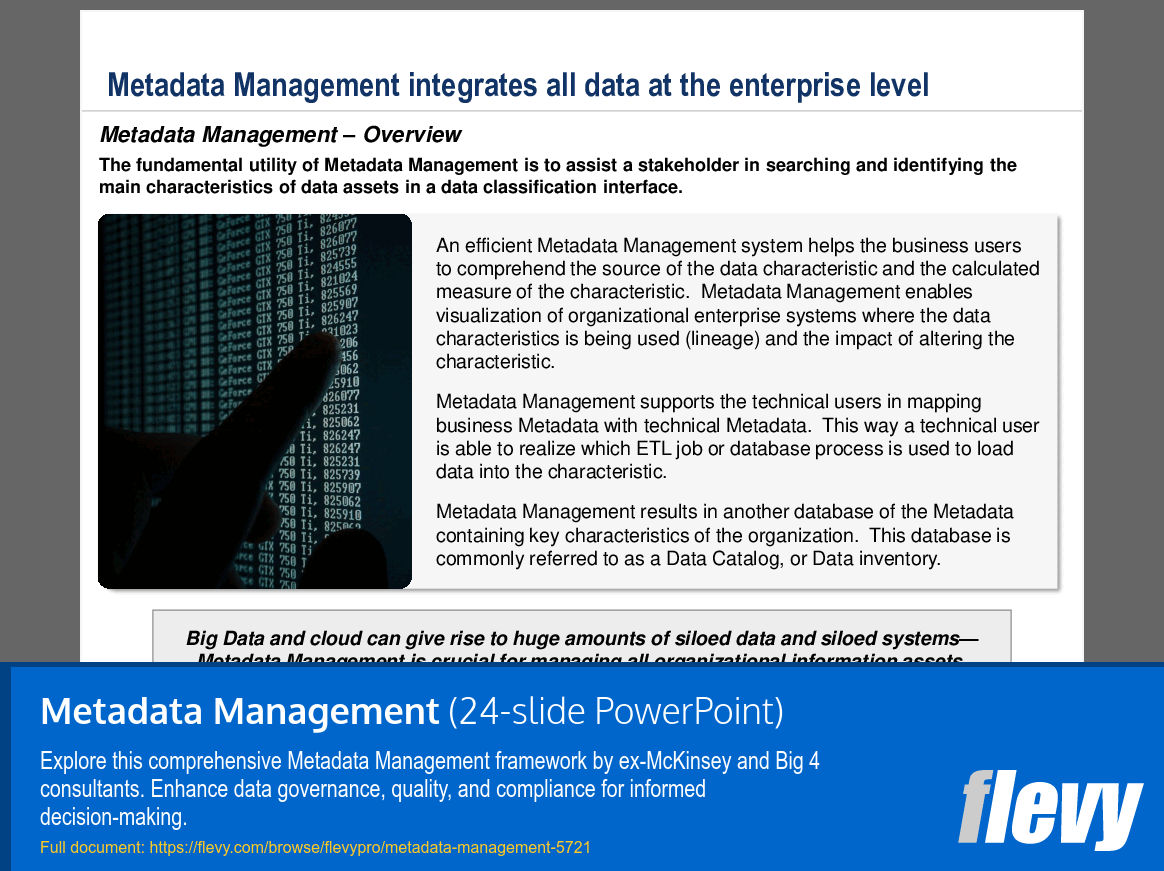
This comprehensive presentation delves into the critical aspects of Metadata Management, including its architecture, classification, and the pivotal role it plays within an organization. It highlights how Metadata Management integrates data across various systems, providing a holistic view that enhances data governance and standardization. The PPT also discusses the importance of setting up robust policies for efficient information management and maintenance. By leveraging advanced Metadata Management tools, organizations can achieve intelligent optimization, data discovery, and use-case analysis, thus driving strategic objectives and fostering collaboration.
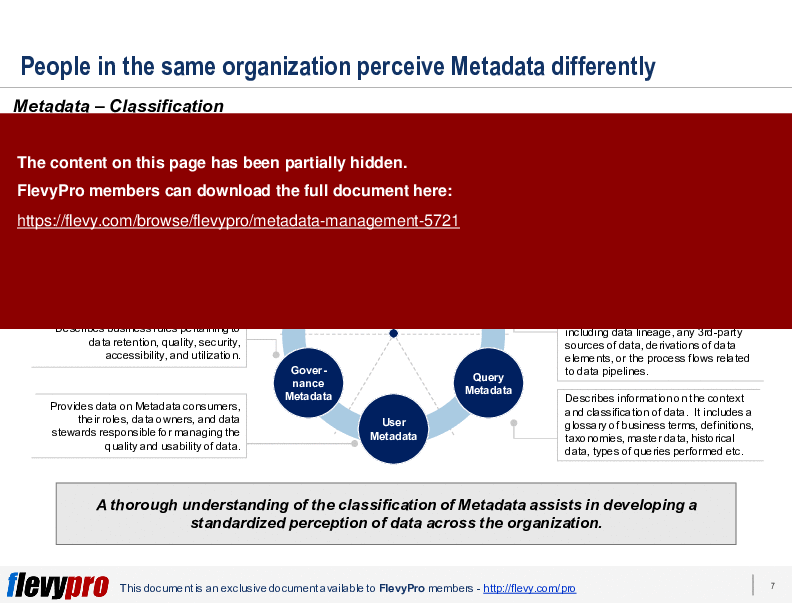
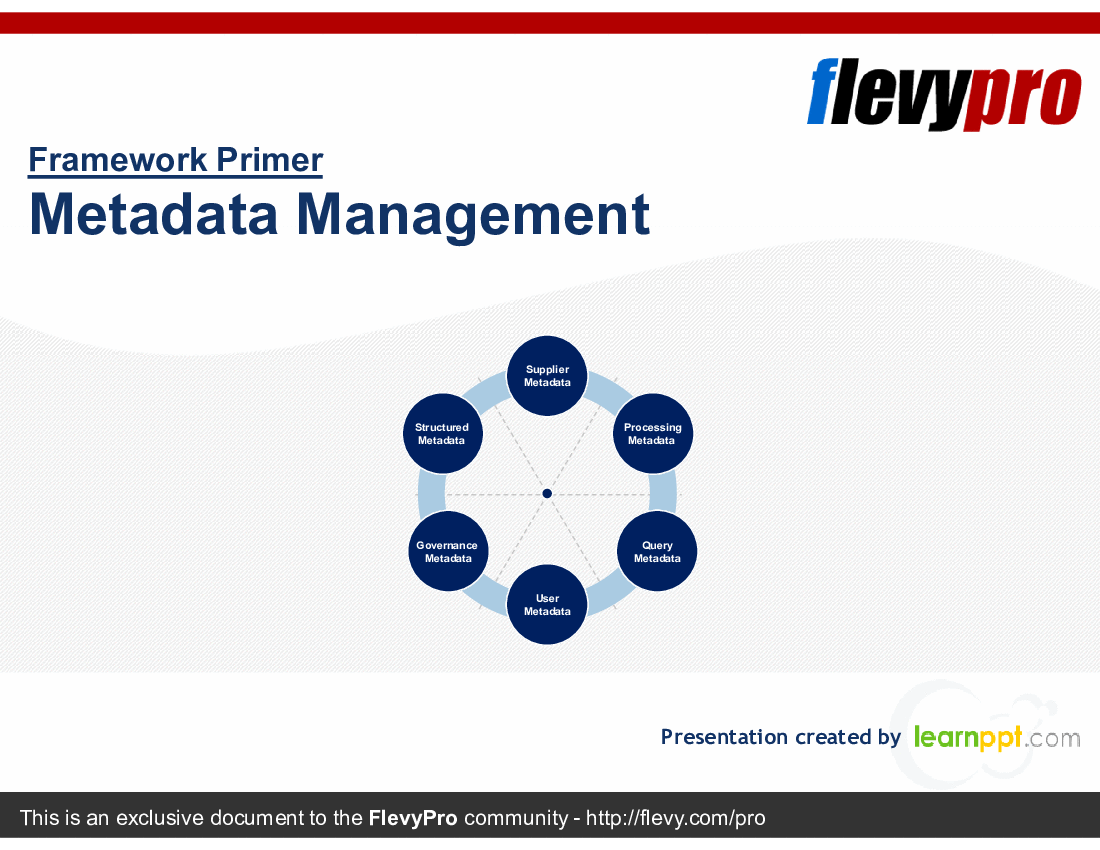
This PPT slide template presents a framework for understanding metadata types within organizations, highlighting discrepancies in metadata identification that affect data visibility and access. It categorizes metadata into 6 types: Structured Metadata, Governance Metadata, User Metadata, Supplier Metadata, Processing Metadata, and Query Metadata. Structured Metadata focuses on data format and structure, Governance Metadata addresses data quality and security policies, User Metadata pertains to individual roles interacting with data, and Supplier Metadata relates to data origins and ownership. Recognizing these metadata types enhances data governance strategies, ensuring stakeholders have appropriate access to necessary information and improving overall data management practices.
Automated Metadata Management offers advantages in regulatory compliance, project delivery, and cost optimization. It addresses regulations like GDPR, CCPA, HIPAA, and BCBS, ensuring the identification and classification of sensitive data to avoid faulty audits. Metadata Management streamlines data harvesting from disparate sources, improving integration and accelerating project delivery while enhancing data accuracy. Additionally, it reduces operational costs and simplifies processes such as data gathering, migration, and utilization, driven by technological advancements. This positions Automated Metadata Management as essential for organizations seeking to improve data governance and operational efficiency.
Metadata Management is essential for establishing policies for effective information management. It is structured around 6 key questions: Who, What, Where, Why, When, and How. The "Who" section identifies stakeholders such as creators, stewards, users, and regulators, crucial for accountability and governance. The "What" section defines data elements, business rules, security levels, and naming conventions, vital for data integrity and compliance. "Where" addresses data storage locations and sharing practices, important for tracking data flow and access controls. The "Why" explores the rationale behind data usage and business drivers, aligning data management with organizational goals. "When" covers the data lifecycle, including creation, updates, and retention policies, ensuring relevance and regulatory compliance. Finally, "How" examines data formatting and storage across databases, highlighting the need for standardization for interoperability. This framework enhances an organization's ability to manage its data assets effectively.
Metadata Management is critical for enhancing data quality and accessibility across organizational systems. It provides a true representation of corporate metadata, addressing challenges in data utility and accessibility. Integrating data from multiple sources is essential for maintaining data versioning, maintenance, association, and lineage. Key competencies for real-time data storage include Reference Data Management, which enables the use of shared reference data domains, and data profiling for evaluating data quality and authentication. Maintaining data integrity is crucial for data reliability. Data lineage analyzes the impact of data changes, while data cataloging captures object metadata associated with data assets. The ability to discover and utilize data across various sources supports a comprehensive approach to data management, facilitating digital transformation and improving data governance and quality.
This framework is developed by a team of former McKinsey and Big 4 consultants. The presentation follows the headline-body-bumper slide format used by global consulting firms.
For $10.00 more, you can download this document plus 2 more FlevyPro documents. That's just $13 each.
ABOUT FLEVYPRO
This document is part of the FlevyPro Library, a curated knowledge base of documents for our FlevyPro subscribers.

FlevyPro is a subscription service for on-demand business frameworks and analysis tools. FlevyPro subscribers receive access to an exclusive library of curated business documents—business framework primers, presentation templates, Lean Six Sigma tools, and more—among other exclusive benefits.
The average daily rate of a McKinsey consultant is $6,625 (not including expenses). The average price of a Flevy document is $65.
Trusted by over 10,000+ Client Organizations
Since 2012, we have provided business templates to over 10,000 businesses and organizations of all sizes, from startups and small businesses to the Fortune 100, in over 130 countries.
"I have used FlevyPro for several business applications. It is a great complement to working with expensive consultants. The quality and effectiveness of the tools are of the highest standards."
– Moritz Bernhoerster, Global Sourcing Director at Fortune 500
"As an Independent Management Consultant, I find Flevy to add great value as a source of best practices, templates and information on new trends. Flevy has matured and the quality and quantity of the library is excellent. Lastly the price charged is reasonable, creating a win-win value for
the customer, Flevy and the various authors. This is truly a service that benefits the consulting industry and associated clients. Thanks for providing this service.
"
– Jim Schoen, Principal at FRC Group
"The wide selection of frameworks is very useful to me as an independent consultant. In fact, it rivals what I had at my disposal at Big 4 Consulting firms in terms of efficacy and organization."
– Julia T., Consulting Firm Owner (Former Manager at Deloitte and Capgemini)
"FlevyPro has been a brilliant resource for me, as an independent growth consultant, to access a vast knowledge bank of presentations to support my work with clients. In terms of RoI, the value I received from the very first presentation I downloaded paid for my subscription many times over! The
quality of the decks available allows me to punch way above my weight – it's like having the resources of a Big 4 consultancy at your fingertips at a microscopic fraction of the overhead.
"
– Roderick Cameron, Founding Partner at SGFE Ltd
"As a consultant requiring up to date and professional material that will be of value and use to my clients, I find Flevy a very reliable resource.
The variety and quality of material available through Flevy offers a very useful and commanding source for information. Using Flevy saves me time, enhances my expertise and ends up being a good decision."
– Dennis Gershowitz, Principal at DG Associates
"Flevy is our 'go to' resource for management material, at an affordable cost. The Flevy library is comprehensive and the content deep, and typically provides a great foundation for us to further develop and tailor our own service offer."
– Chris McCann, Founder at Resilient.World
"As a niche strategic consulting firm, Flevy and FlevyPro frameworks and documents are an on-going reference to help us structure our findings and recommendations to our clients as well as improve their clarity, strength, and visual power. For us, it is an invaluable resource to increase our impact and value."
– David Coloma, Consulting Area Manager at Cynertia Consulting
"FlevyPro provides business frameworks from many of the global giants in management consulting that allow you to provide best in class solutions for your clients."
– David Harris, Managing Director at Futures Strategy
Download our FREE Digital Transformation Templates
Download our free compilation of 50+ Digital Transformation slides and templates. DX concepts covered include Digital Leadership, Digital Maturity, Digital Value Chain, Customer Experience, Customer Journey, RPA, etc.