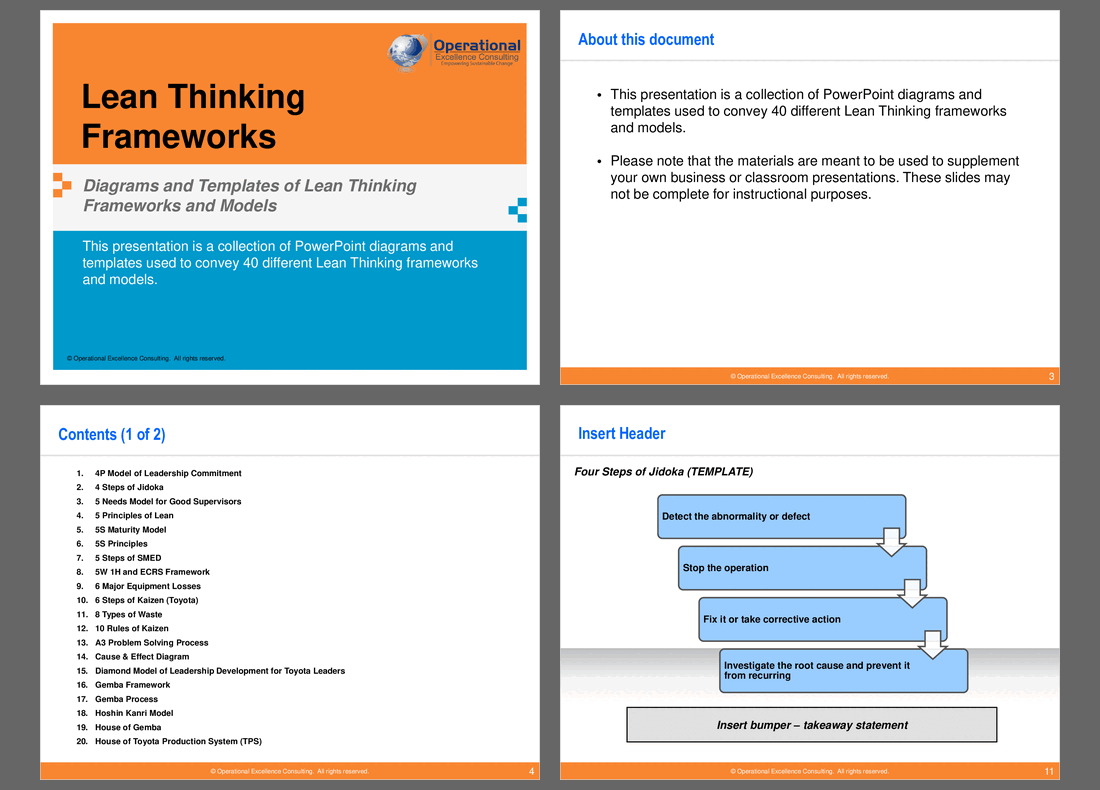

This presentation is a collection of PowerPoint diagrams and templates used to convey 40 different Lean Thinking (a.k.a. Toyota Production System) frameworks and models. (Please note that these are diagrams and charts that are to be used in your own business or classroom presentations. These are not instructional slides.)
INCLUDED MODELS/FRAMEWORKS:
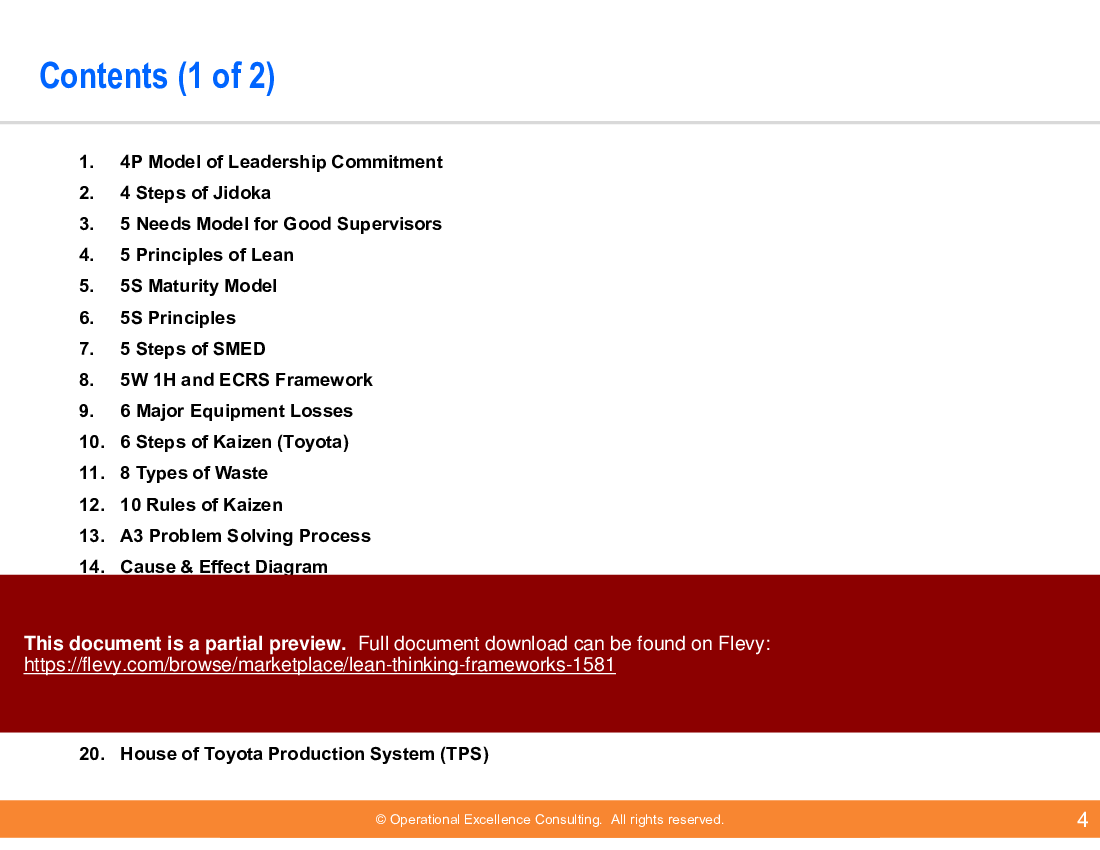
4P Model of Leadership Commitment
4 Steps of Jidoka
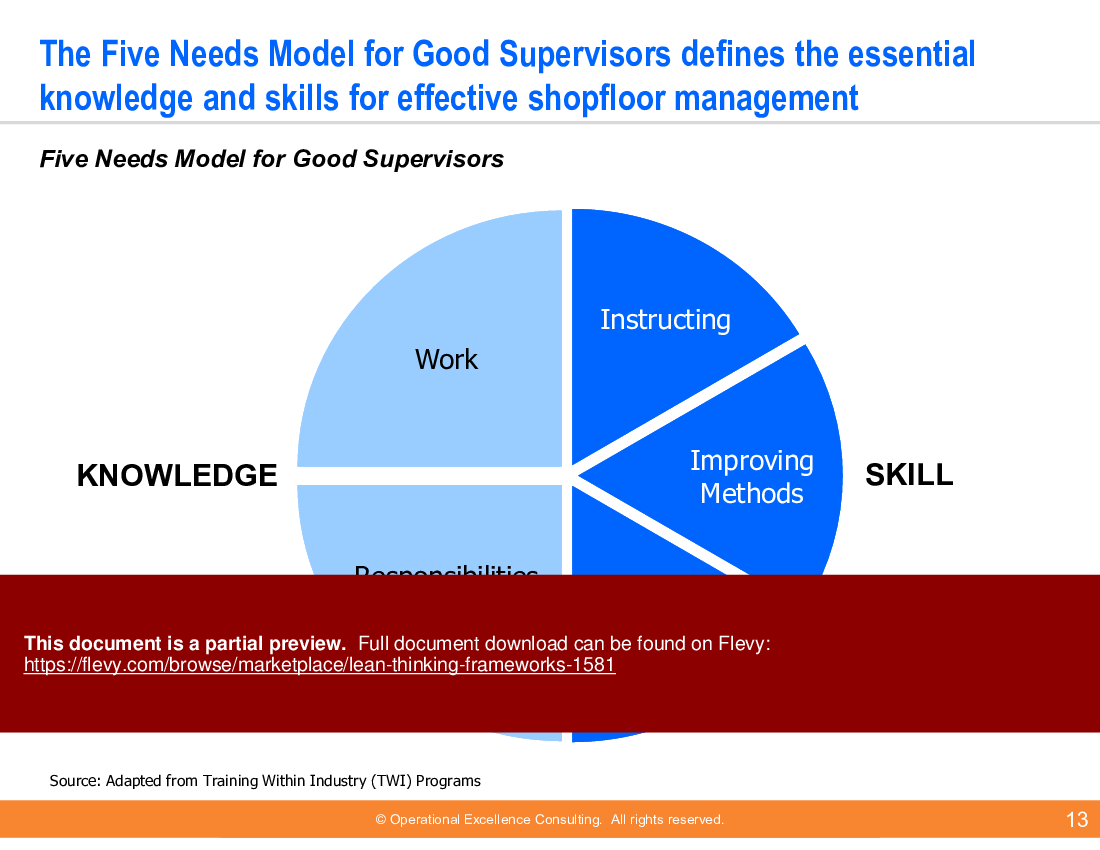
5 Needs Model for Good Supervisors
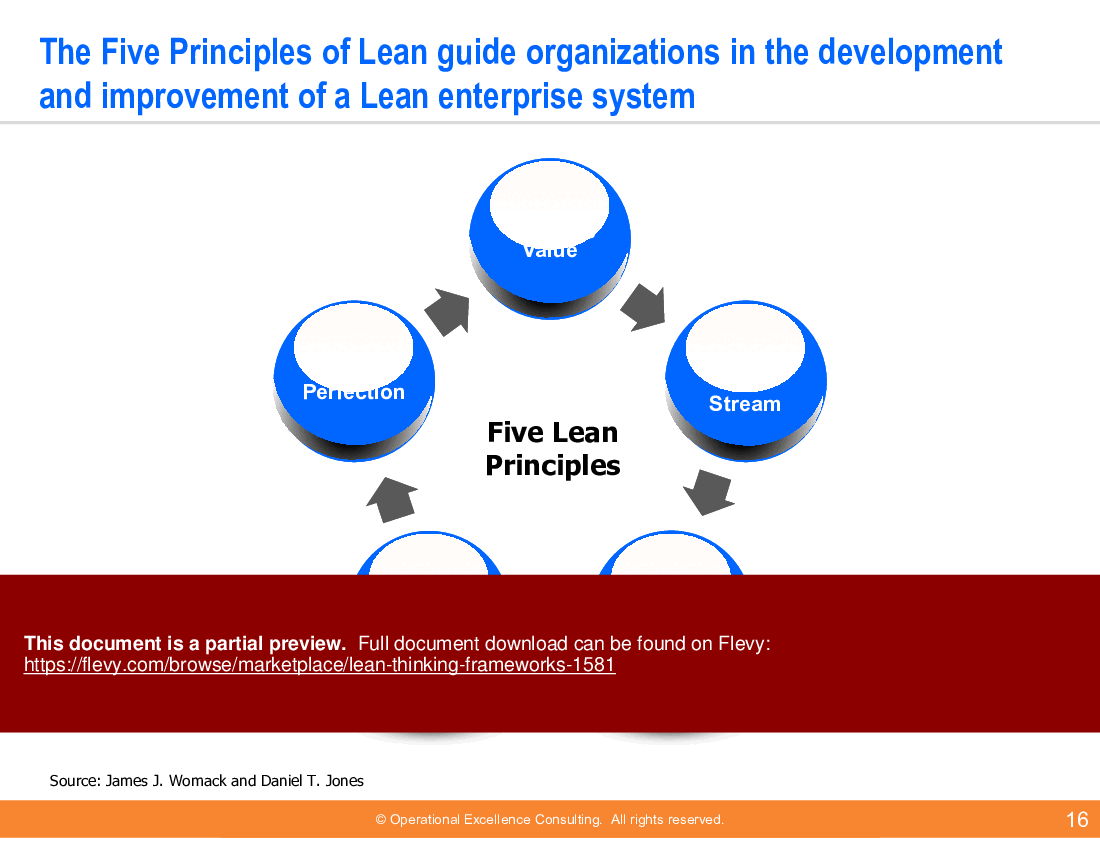
5 Principles of Lean
5S Maturity Model
5S Principles
5 Steps of SMED
5W 1H and ECRS Framework
6 Major Equipment Losses
6 Steps of Kaizen (Toyota)
8 Types of Waste
10 Rules of Kaizen
A3 Problem Solving Process
Cause & Effect Diagram
Diamond Model of Leadership Development for Toyota Leaders
Gemba Framework
Gemba Process
Hoshin Kanri Model
House of Gemba
House of Toyota Production System (TPS)
Kaizen Event Process
Leader Standard Work
Lean Leadership & Kaizen Model
Lean Levers for Waste Elimination
Lean Management System (for effective Lean leadership)
Lean Maturity Model
Methods to Increase Productivity
Mistake Proofing Process
PDCA Cycle
PDCA Problem Solving Process
Primary Performance Measures Framework
Role Structure in the Change Process
Shingo Model for Operational Excellence
Standardization Framework
Theory of Constraints
Total Productive Maintenance (TPM)
Training Within Industry (TWI)
Value Stream Mapping
Visual Standards
Waste Elimination Model
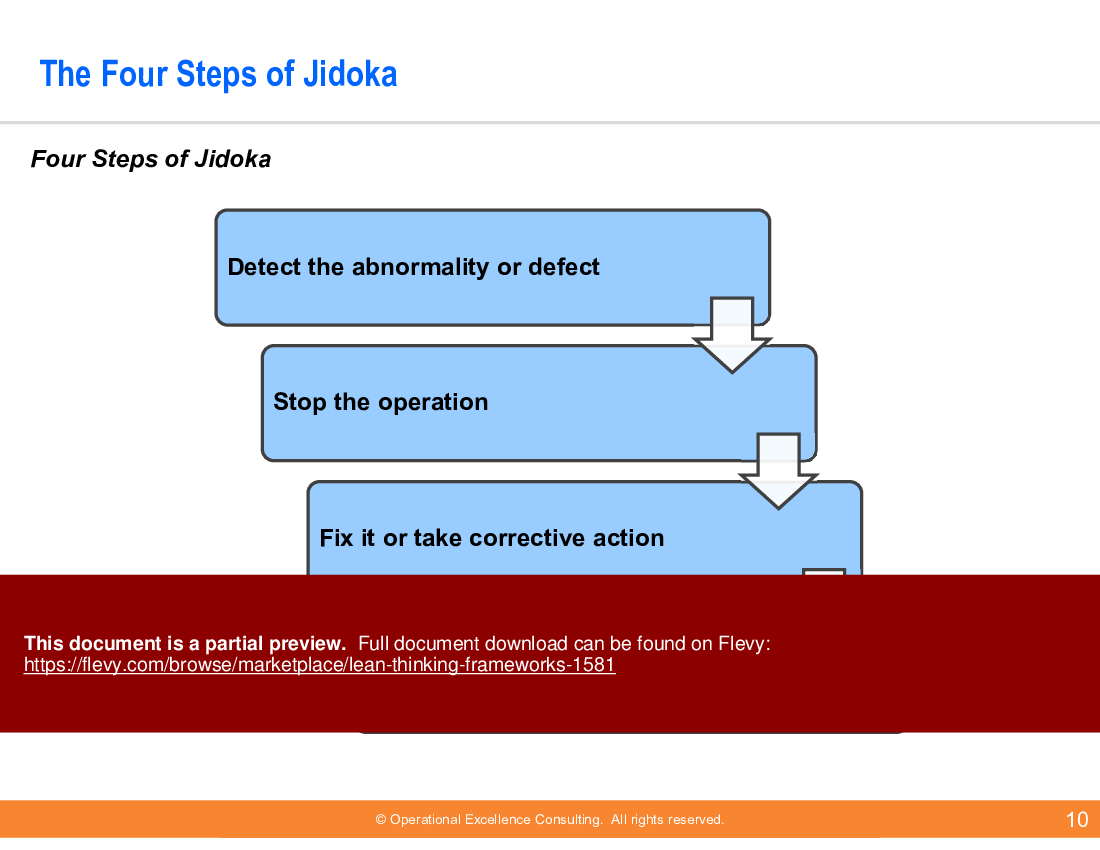
Lean Thinking Frameworks offers a robust suite of tools essential for any organization aiming to streamline operations and eliminate waste. The 4P Model of Leadership Commitment, for instance, emphasizes continuous improvement and respect for people. The Four Steps of Jidoka provide a clear pathway for detecting and correcting abnormalities in real-time. The Five Needs Model for Good Supervisors highlights the critical skills and knowledge required for effective shop floor management. The Five Principles of Lean guide organizations in creating value and achieving perfection. Each framework is meticulously designed to support your lean transformation initiatives.
Got a question about the product? Email us at support@flevy.com or ask the author directly by using the "Ask the Author a Question" form. If you cannot view the preview above this document description, go here to view the large preview instead.
Executive Summary
The Lean Thinking Frameworks presentation is a robust collection of PowerPoint diagrams and templates designed to convey 40 different Lean Thinking frameworks and models. Developed by Operational Excellence Consulting, this resource serves as a vital tool for organizations aiming to enhance operational efficiency and eliminate waste. The frameworks included, such as the 5S Maturity Model, Kaizen Event Process, and the Theory of Constraints, provide actionable insights and methodologies that empower teams to implement Lean principles effectively. This presentation is ideal for corporate executives, integration leaders, and consultants focused on achieving operational excellence through structured Lean methodologies.
Who This Is For and When to Use
• Corporate executives seeking to drive operational efficiency within their organizations
• Lean practitioners and consultants looking for structured frameworks to implement Lean methodologies
• Training and development teams aiming to educate staff on Lean principles
• Project managers overseeing process improvement initiatives
Best-fit moments to use this deck:
• During Lean training sessions to illustrate key frameworks and models
• In workshops focused on process improvement and waste elimination
• When developing strategic plans for operational excellence initiatives
• As a reference for implementing Lean practices across various departments
Learning Objectives
• Define key Lean principles and frameworks to enhance operational performance
• Identify and eliminate waste using Lean methodologies
• Develop a structured approach to continuous improvement through Kaizen
• Implement the 5S methodology to organize and standardize workspaces
• Utilize the PDCA cycle for effective problem-solving and process improvement
• Apply the Theory of Constraints to optimize workflow and productivity
Table of Contents
• 4P Model of Leadership Commitment (page 4)
• 4 Steps of Jidoka (page 10)
• 5 Needs Model for Good Supervisors (page 13)
• 5 Principles of Lean (page 16)
• 5S Maturity Model (page 20)
• 5S Principles (page 23)
• 5 Steps of SMED (page 27)
• 5W 1H and ECRS Framework (page 31)
• 6 Major Equipment Losses (page 34)
• 6 Steps of Kaizen (Toyota) (page 38)
• 8 Types of Waste (page 43)
• 10 Rules of Kaizen (page 46)
• A3 Problem Solving Process (page 49)
• Cause & Effect Diagram (page 52)
• Diamond Model of Leadership Development for Toyota Leaders (page 57)
• Gemba Framework (page 61)
• Gemba Process (page 64)
• Hoshin Kanri Model (page 67)
• House of Gemba (page 72)
• House of Toyota Production System (TPS) (page 75)
Primary Topics Covered
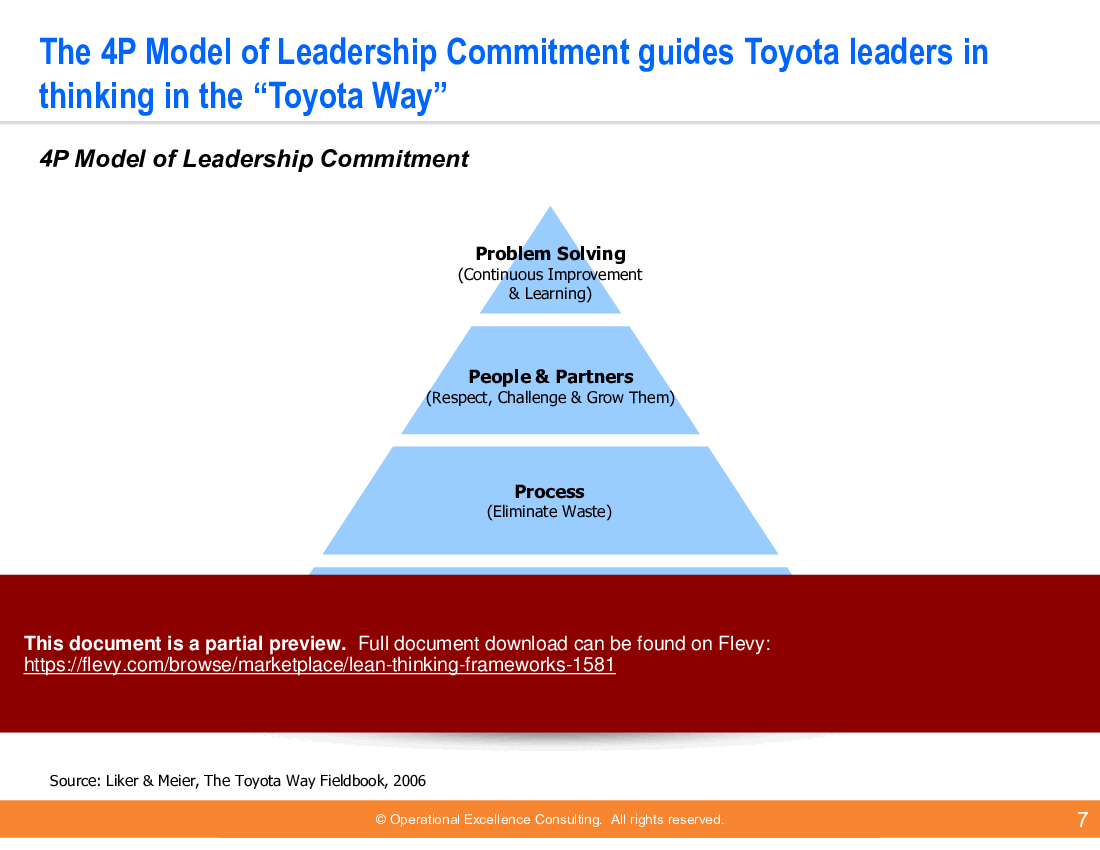
• 4P Model of Leadership Commitment - This model guides leaders in adopting the Toyota Way through a focus on problem-solving, people, processes, and long-term philosophy.
• 5S Principles - A framework for workplace organization that emphasizes sorting, setting in order, shining, standardizing, and sustaining.
• Kaizen Event Process - A structured approach to rapid improvement that involves understanding the current situation, developing future state designs, and implementing changes.
• Theory of Constraints - A methodology that identifies and addresses bottlenecks in processes to enhance overall system performance.
• Value Stream Mapping - A visual tool that illustrates the flow of materials and information, helping to identify waste and streamline processes.
• PDCA Cycle - A systematic approach to continuous improvement that involves planning, doing, checking, and acting on processes.
Deliverables, Templates, and Tools
• Framework diagrams for the 4P Model of Leadership Commitment
• Templates for the 5S Maturity Model and 5S Principles
• Structured guides for conducting Kaizen Events
• Visual aids for the Theory of Constraints and Value Stream Mapping
• Problem-solving templates based on the A3 process
• Job Instruction and Job Methods cards from the Training Within Industry (TWI) framework
Slide Highlights
• The 4P Model of Leadership Commitment slide, illustrating the foundational elements of Lean leadership.
• The 5S Maturity Model slide, detailing stages of workplace organization.
• The Kaizen Event Process slide, outlining steps for effective team-based improvements.
• The Theory of Constraints slide, highlighting the 5 focusing steps for optimizing processes.
• Value Stream Mapping visuals that depict the flow of materials and information.
Potential Workshop Agenda
Introduction to Lean Principles (60 minutes)
• Overview of Lean methodologies and their importance
• Discussion on the 4P Model of Leadership Commitment
5S Implementation Workshop (90 minutes)
• Interactive session on the 5S principles
• Group activity to develop a 5S plan for a specific area
Kaizen Event Planning (120 minutes)
• Step-by-step guide on conducting a Kaizen event
• Team brainstorming session to identify improvement opportunities
Theory of Constraints Overview (60 minutes)
• Presentation on identifying and addressing constraints
• Case study discussion on successful implementations
Customization Guidance
• Tailor the frameworks to align with specific organizational goals and processes.
• Adjust the templates to incorporate company-specific terminology and metrics.
• Use the diagrams to create customized training materials for staff development.
Secondary Topics Covered
• Lean Leadership & Kaizen Model
• Lean Management System
• Mistake Proofing Process
• Total Productive Maintenance (TPM)
• Training Within Industry (TWI)
FAQ
What is the purpose of the Lean Thinking Frameworks presentation?
This presentation serves as a comprehensive resource for understanding and implementing Lean methodologies to drive operational excellence.
Who developed the Lean Thinking Frameworks?
The frameworks were developed by Operational Excellence Consulting, focusing on practical applications of Lean principles.
Can the materials be customized for specific organizational needs?
Yes, the diagrams and templates can be tailored to fit the unique requirements and terminology of your organization.
Is this presentation suitable for training purposes?
Absolutely, it is designed to supplement training sessions on Lean principles and practices.
What are the key frameworks included in the presentation?
Key frameworks include the 5S Maturity Model, Kaizen Event Process, Theory of Constraints, and Value Stream Mapping.
How can I implement the frameworks in my organization?
Utilize the templates and diagrams provided to guide your teams through the implementation process, ensuring alignment with organizational goals.
Are there any prerequisites for using this presentation?
Familiarity with basic Lean concepts is beneficial, but not required; the presentation serves as a foundational resource.
What types of organizations can benefit from this presentation?
Any organization looking to improve operational efficiency and eliminate waste can benefit, including manufacturing, healthcare, and service industries.
Glossary
• 5S - A Lean methodology focused on workplace organization and standardization.
• Kaizen - A continuous improvement philosophy that encourages incremental changes.
• Value Stream Mapping - A visual tool for analyzing the flow of materials and information.
• PDCA Cycle - A systematic approach to problem-solving and process improvement.
• Theory of Constraints - A methodology for identifying and addressing bottlenecks in processes.
• Lean Management System - A framework for sustaining Lean practices and culture.
• Total Productive Maintenance (TPM) - A proactive approach to maintaining equipment effectiveness.
• Training Within Industry (TWI) - A program designed to enhance supervisory skills in Lean environments.
• Gemba - The place where value is created; often refers to the shop floor in manufacturing.
• Standard Work - Documented procedures that define the best practices for performing tasks.
• A3 Problem Solving - A structured approach to problem-solving using a single sheet of paper.
• Mistake Proofing - Techniques used to prevent errors in processes.

• Lean Culture - An organizational culture that embraces Lean principles and continuous improvement.
• Visual Management - The use of visual cues to enhance communication and efficiency in the workplace.
• Waste - Any activity that does not add value to the customer.
• Continuous Improvement - Ongoing efforts to improve products, services, or processes.
• Operational Excellence - The execution of the business strategy more consistently and reliably than the competition.
• Leadership Commitment - The dedication of leaders to fostering a culture of continuous improvement.
• Customer Value - The perceived benefit that a customer receives from a product or service.
Source: Best Practices in Business Framework PowerPoint Diagrams, Lean PowerPoint Slides: Lean Thinking Frameworks PowerPoint (PPTX) Presentation Slide Deck, Operational Excellence Consulting
|
Download our FREE Strategy & Transformation Framework Templates
Download our free compilation of 50+ Strategy & Transformation slides and templates. Frameworks include McKinsey 7-S, Balanced Scorecard, Disruptive Innovation, BCG Curve, and many more. |