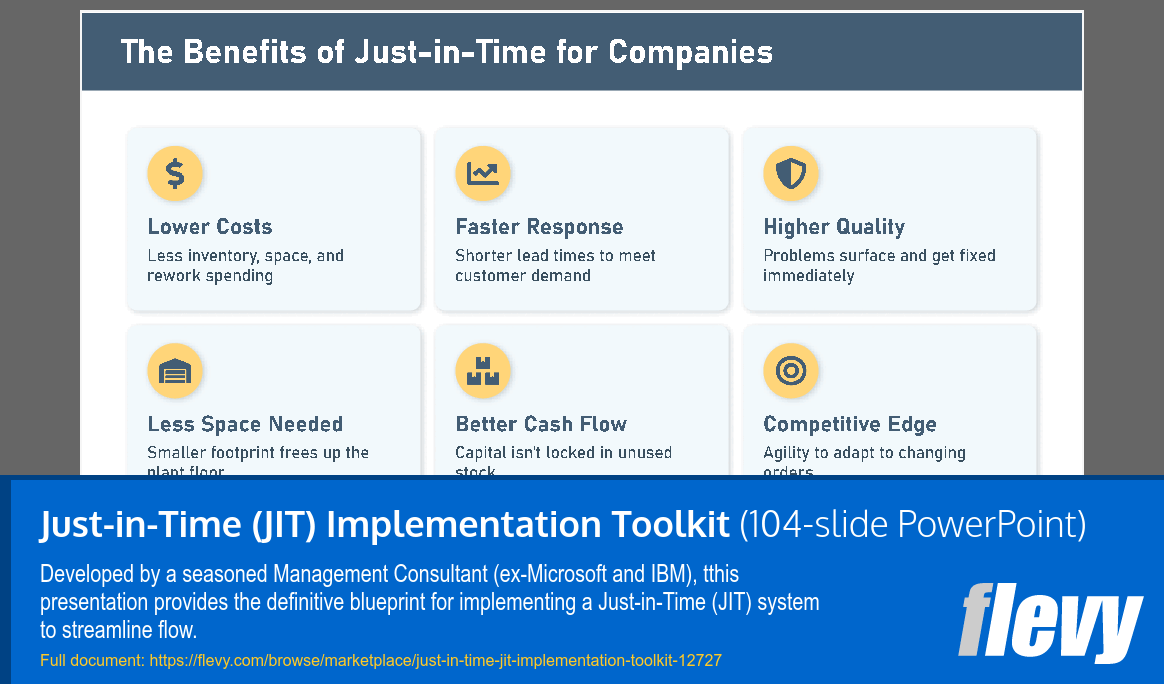

 Click main image to view in full screen. Unlock all 32 preview images:
Just-in-Time (JIT) Implementation Toolkit – PowerPoint PPTX Template
PowerPoint (PPTX) 104 Slides


BENEFITS OF THIS DOWNLOADABLE POWERPOINT DOCUMENT
- Drastically Reduce Lead Times: Transform production cycles from weeks into hours by transitioning from a push to a pull system.
- Optimize Cash Flow: Free up capital locked in stagnant work-in-progress (WIP) and finished goods inventory.
- Surface and Fix Quality Issues: Implement Autonomation (Jidoka) and Poka-Yoke to ensure defects are caught and corrected at the source.
JIT PPT TEMPLATE DESCRIPTION
JUST-IN-TIME MASTERY: THE ULTIMATE IMPLEMENTATION TOOLKIT
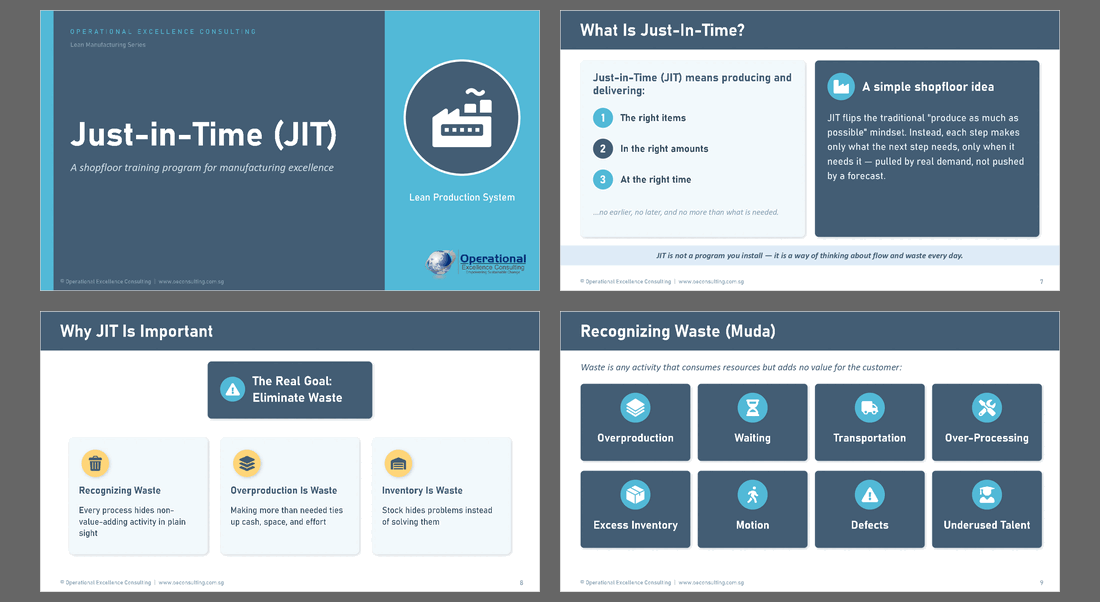
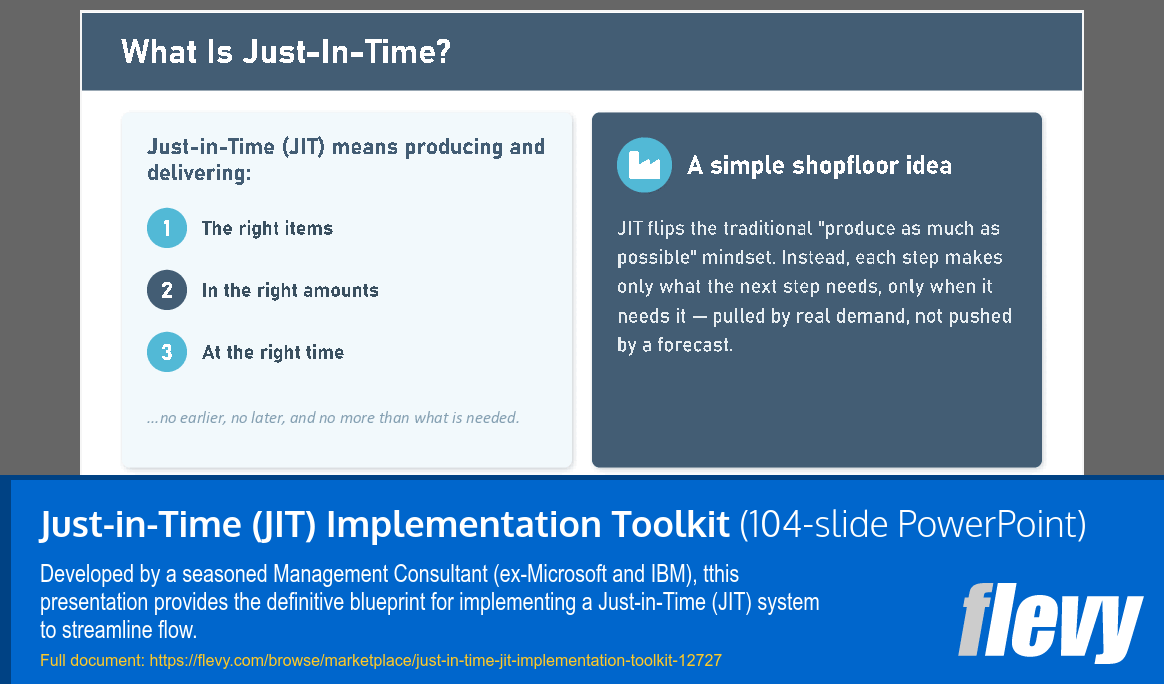
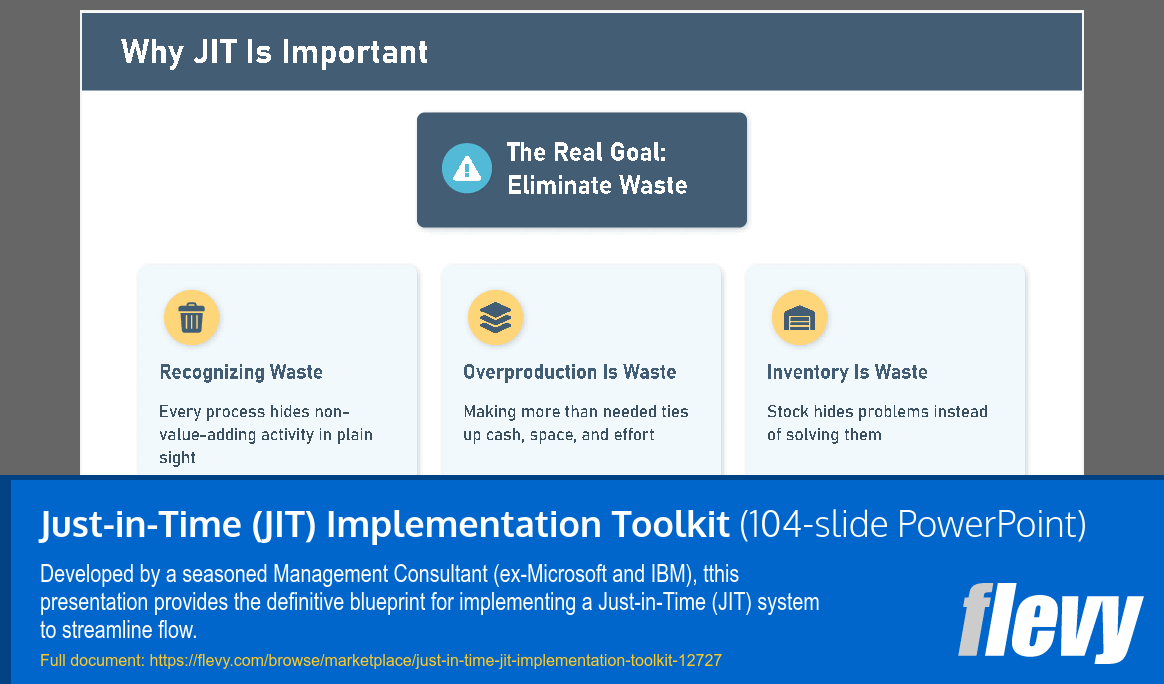
"Just-in-Time is not a software installation—it is a daily commitment to uncovering waste and establishing true operational flow." In today's competitive industrial landscape, excess stock is no longer a reliable cushion; it merely conceals underlying process inefficiencies. This professional toolkit offers a complete framework for deploying a Just-in-Time (JIT) architecture that aligns manufacturing outputs with actual customer demand, turning your plant floor into a high-performance value stream.
EXECUTIVE SUMMARY
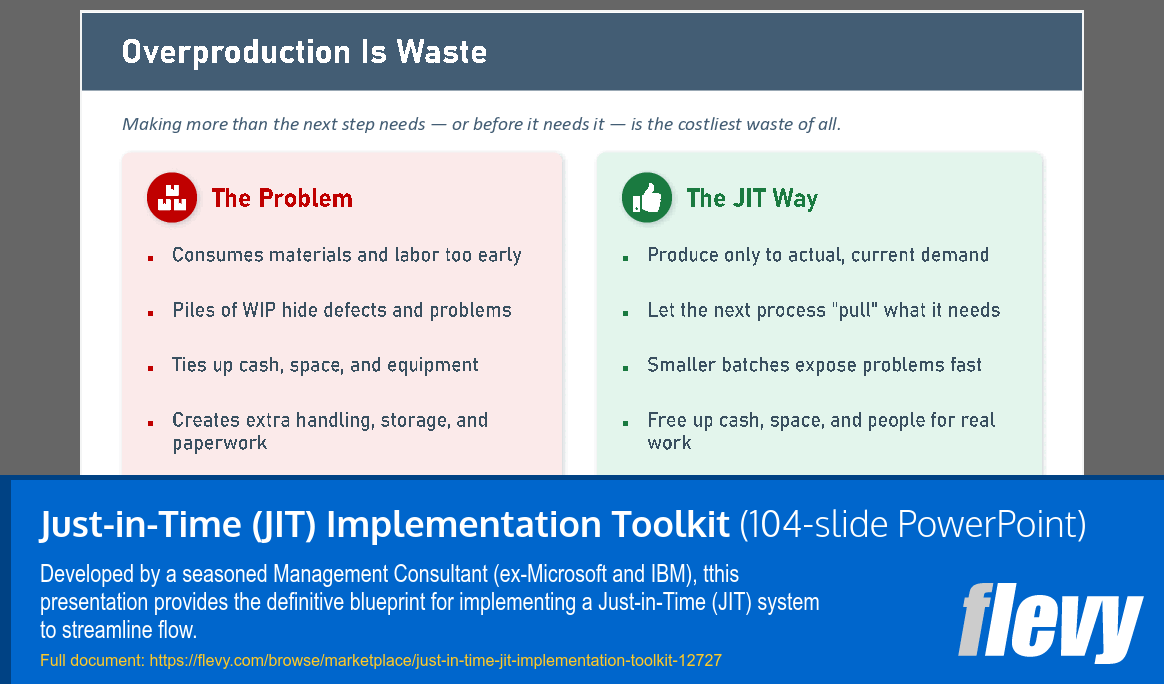
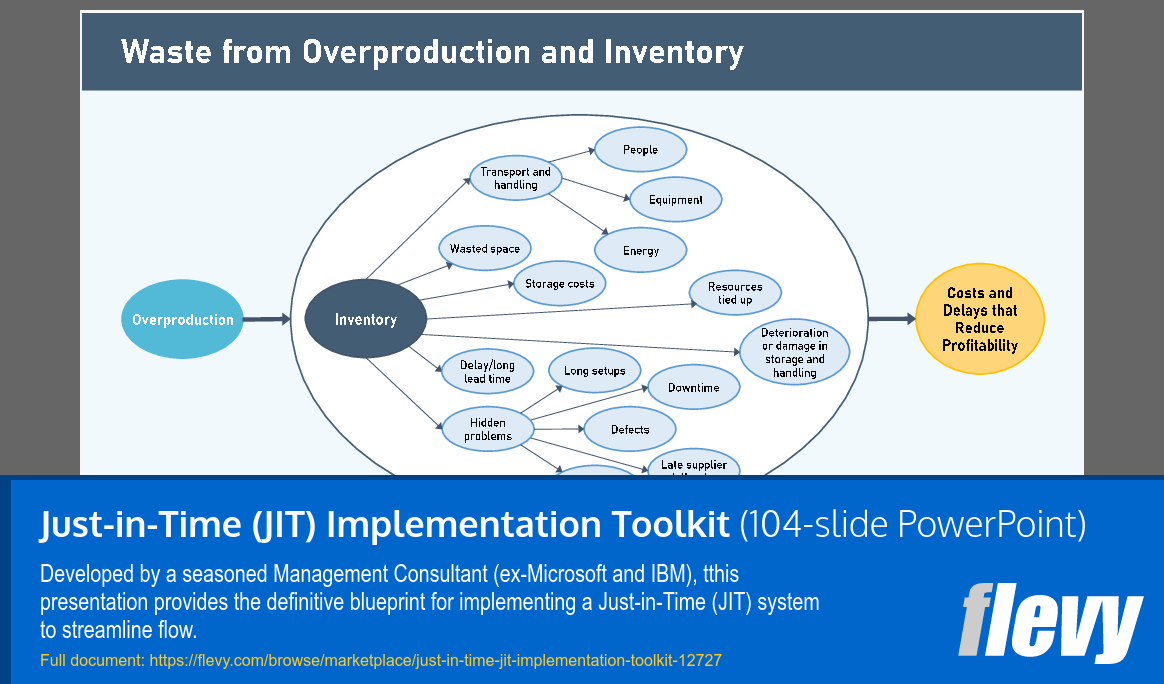
Just-in-Time (JIT) serves as a foundational pillar of modern Lean manufacturing, focusing on building and supplying exact quantities at the precise moment they are needed. This expert-authored resource delivers an in-depth exploration of core JIT principles—such as Heijunka (Production Leveling), Takt Time, and Kanban control loops—to eradicate manufacturing's most damaging wastes: overproduction and excessive inventory. Built specifically to drive shopfloor performance, this collection provides standardized assets designed to secure rapid lead-time reduction and consistent throughput.
KEY BENEFITS
★ Accelerate Production Velocity: Shift operations from traditional forecasting to a demand-driven "pull" model, shrinking lead times from weeks down to hours.
★ Unlock Working Capital: Free up cash previously tied up in excess work-in-progress (WIP) and finished product stock.
★ Detect and Resolve Defects Early: Deploy Jidoka (Autonomation) and Poka-Yoke error-proofing to isolate and fix quality problems at the point of origin.
★ Improve Plant Safety: Implement 5S organization standards and Visual Management to eliminate workspace clutter and reduce handling hazards.
★ Cross-Functional Workforce Flexibility: Expand operator capabilities via multi-process handling and cross-training to quickly respond to shifting market needs.
TARGET AUDIENCE
• Plant & Operations Managers: Looking to drive facility-wide efficiency, agility, and cost reduction.
• Lean & Six Sigma Professionals: Needing a structured roadmap for practical plant-floor execution.
• Supervisors & Team Leaders: Tasked with maintaining daily pull signals and standard operating routines.
• Shopfloor Operators: Seeking an active role in continuous improvement and workspace problem-solving.
WHAT IS INCLUDED IN THE PACKAGE?
★ The Core JIT Master Deck (PPTX): A professionally designed, modular presentation comprising over 100 editable slides that eliminate preparation time while ensuring high-impact delivery.
★ Kanban Toolkit: Detailed templates and instructions for managing production, withdrawal, and signal kanban loops.
★ Standard Work Documentation: Ready-to-use worksheets for Process Capacity Tables, Standard Work Combination sheets, and baseline operational sequences.
★ SMED Setup Reduction Guide: A systematic, three-phase framework designed to slash changeover times and support small-batch manufacturing.
★ Interactive Team Exercises: Four turnkey group activities, including hands-on waste identification and error-proofing design challenges.
★ 30-Day Implementation Plan: A practical capstone template to guide participants through early execution steps following the workshop.
KEY LEARNING OBJECTIVES
Upon completing this masterclass, participants will be equipped to:
• Explain the core JIT philosophy and its significance for both business performance and shopfloor operators.
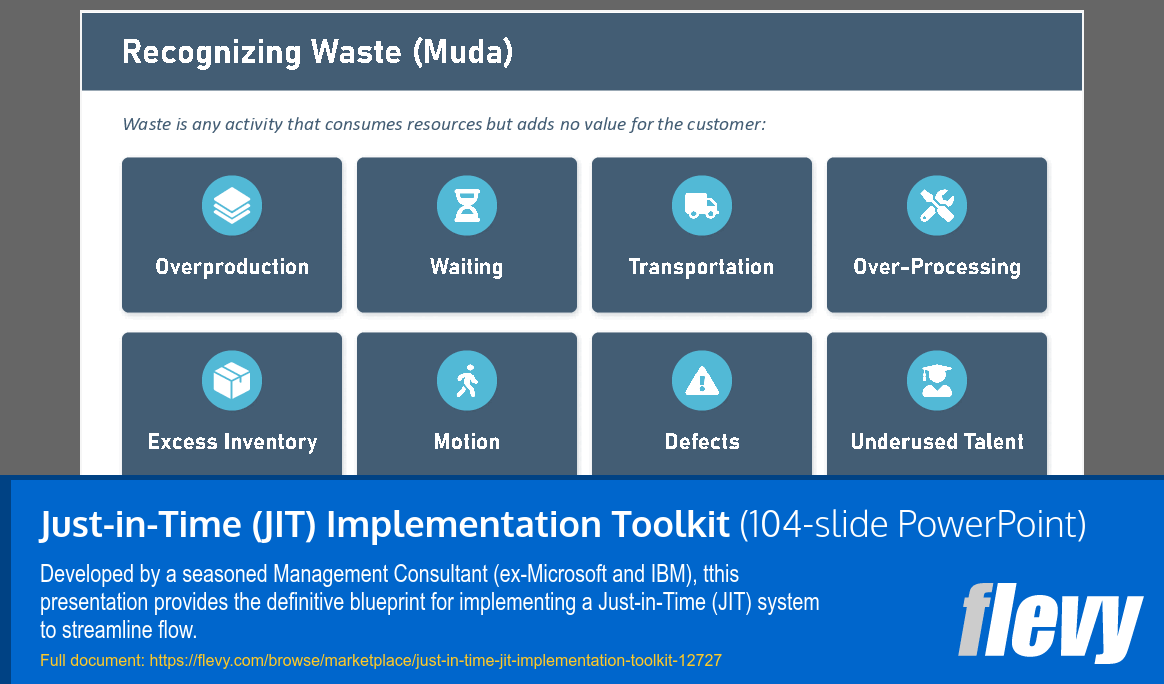
• Recognize and eliminate the primary wastes of overproduction and surplus inventory.
• Calculate Takt Time and configure Heijunka leveling schedules to align with real demand patterns.
• Establish and manage physical Kanban systems to regulate material movement.
• Apply cellular layout principles and process-flow thinking to minimize transport waste.
• Utilize 5S, visual controls, and mistake-proofing as everyday operational tools.
TRAINING CONTENTS
• Module 1: Foundations of Just-in-Time: Core concepts, historical context, and the central objective of waste removal.
• Module 2: Essential JIT Mechanics: Comprehensive review of production leveling (Heijunka), takt timing, and push versus pull dynamics.
• Module 3: Process Standardization and Flow: Facility layout optimization, U-shaped cells, multi-machine allocation, and standard work foundations.
• Module 4: Operational Support Systems: 5S workplace habits, visual communication boards, SMED quick changeovers, and autonomous equipment care.
• Module 5: Summary and Next Steps: Review of key concepts and creation of individual 30-day action plans.
PROPOSED 1-DAY WORKSHOP SCHEDULE
• 09:00 – 10:30 Foundations: Core philosophy, process vs. operation mindset, and tracking the Eight Wastes.
• 10:45 – 12:30 Pacing Production: Calculating Takt Time and planning leveled build sequences.
• 13:30 – 15:00 Cellular Flow: Designing U-shaped work cells and setting baseline standards.
• 15:15 – 16:30 The JIT Toolbox: Setting up manual Kanban systems, error-proofing, and 5S routines.
• 16:30 – 17:00 Action Planning: Finalizing and committing to the 30-Day Implementation Plan.
KEY JIT TERMINOLOGY
• Heijunka: Production leveling—smoothing out manufacturing volumes and product mixes to mirror average daily demand.
• Kanban: A physical or digital instruction signal that authorizes the creation or movement of material.
• Takt Time: The specific operational heartbeat rate required to meet customer demand criteria.
• Jidoka: Autonomation—equipment engineered with the ability to detect defects and halt automatically.
• Poka-Yoke: Mistake-proofing mechanisms designed to prevent human errors from turning into defects.
• SMED: Single-Minute Exchange of Die—methodology focused on drastically reducing machine setup durations.
FREQUENTLY ASKED QUESTIONS (FAQ)
Is JIT solely focused on cutting inventory levels? No. While lower inventory is a natural outcome, JIT focuses holistically on maximizing the flow of value across the entire chain.
Does this system function in low-volume manufacturing? Yes. Through leveling techniques and SMED changeovers, JIT is highly adaptable to high-mix, low-volume environments.
Are specialized software applications required? No. The framework emphasizes practical, low-cost visual management tools and physical kanban systems.
Can the presentation files be modified? Yes, the materials are supplied as fully editable PowerPoint files suitable for internal corporate customization.
What is the distinction between a process and an operation? A process represents the entire end-to-end value stream, whereas an operation refers to the work performed at an individual workstation. JIT targets improvements in both areas.
Got a question about the product? Email us at support@flevy.com or ask the author directly by using the "Ask the Author a Question" form. If you cannot view the preview above this document description, go here to view the large preview instead.
Source: Best Practices in JIT PowerPoint Slides: Just-in-Time (JIT) Implementation Toolkit PowerPoint (PPTX) Presentation Slide Deck, Operational Excellence Consulting
ABOUT THE AUTHOR

Operational Excellence Consulting, founded in 2009 by Allan Ung, draws from extensive experience at Microsoft, IBM, and Underwriters Laboratories (UL). We specialize in strategy deployment, customer experience design, and operational excellence, applying Design Thinking, Lean, and Systems Thinking to maximize customer value and minimize waste.
Our
... [read more]
Ask the Author a Question
You must be logged in to contact the author.