
Embracing the Power of Services:
The World Trade Organization highlights services as the driving force behind both developed and developing economies. Services are the lifeblood of value creation for organizations and their customers. In today's digital era, almost all services are IT-enabled, making IT service management a critical capability for organizations.
The Velocity of Technological Innovation:
Technology's relentless march forward is reshaping industries at an unprecedented pace. Innovations like cloud computing, infrastructure as a service (IaaS), machine learning, and blockchain present boundless opportunities for value creation. IT has transformed from a support function to a potent business driver and a wellspring of competitive advantage. This evolution underscores the strategic importance of IT service management.
Unlocking Transformation in the Digital Age:
In response to this digital revolution, organizations are embarking on transformational journeys. While often dubbed 'digital,' these transformations transcend technology alone. They signify a fundamental shift in how organizations operate, adapt, and thrive in a rapidly changing landscape. Striking the right balance between stability and agility is paramount. Silos are crumbling, cross-functional teams are rising, and technology is seamlessly woven into the fabric of organizations. Service management adapts to empower these shifts and harness the potential of new technologies and ways of working.
The Beacon of ITIL:
Enter ITIL, the Information Technology Infrastructure Library, a framework encompassing best practices for efficient IT support services. ITIL is the cornerstone of IT Service Management (ITSM) worldwide, guiding organizations to realize business benefits efficiently through well-defined processes and enabling technology.
Charting the Path to ITIL 4:
This presentation is your guide to ITIL 4 Foundation training. It equips organizations with the insights they need to navigate contemporary service management challenges and harness the potential of modern technology. ITIL 4 ensures the governance and management of IT-enabled services are flexible, coordinated, and integrated for maximum effectiveness.
This PPT delves into the core principles of ITIL 4, emphasizing the importance of value co-creation and stakeholder collaboration. It provides actionable insights on optimizing service management practices to align with modern technological advancements.
Got a question about the product? Email us at support@flevy.com or ask the author directly by using the "Ask the Author a Question" form. If you cannot view the preview above this document description, go here to view the large preview instead.
Executive Summary
The ITIL Foundation - ITIL 4 Edition PowerPoint presentation is a comprehensive resource designed to equip organizations with the foundational knowledge of IT service management (ITSM). Developed by experts from leading consulting firms, this presentation outlines key concepts, practices, and frameworks essential for effective IT service delivery. It emphasizes the importance of aligning IT services with business goals, enhancing customer experience, and fostering a culture of continual improvement. By leveraging this presentation, organizations can better navigate the complexities of modern IT environments and drive value creation through effective service management.
Who This Is For and When to Use
• IT Service Managers and ITSM practitioners looking to enhance their understanding of ITIL 4.
• Business leaders aiming to align IT services with organizational objectives.
• Project managers involved in IT service delivery and improvement initiatives.
• Consultants seeking to implement ITIL best practices in client organizations.
Best-fit moments to use this deck:
• During ITIL training sessions for new team members or stakeholders.
• As a reference during IT service strategy development workshops.
• When conducting assessments of current IT service management practices.
• For guiding discussions on digital transformation initiatives within organizations.
Learning Objectives
• Define the core concepts of IT service management as outlined in ITIL 4.
• Identify the components of the ITIL Service Value System (SVS) and their interconnections.
• Describe the 4 dimensions of service management and their relevance to ITIL practices.
• Explain the significance of value co-creation in service relationships.
• Develop a foundational understanding of ITIL practices and their application in real-world scenarios.
• Establish a framework for continual improvement in IT service delivery.
Table of Contents
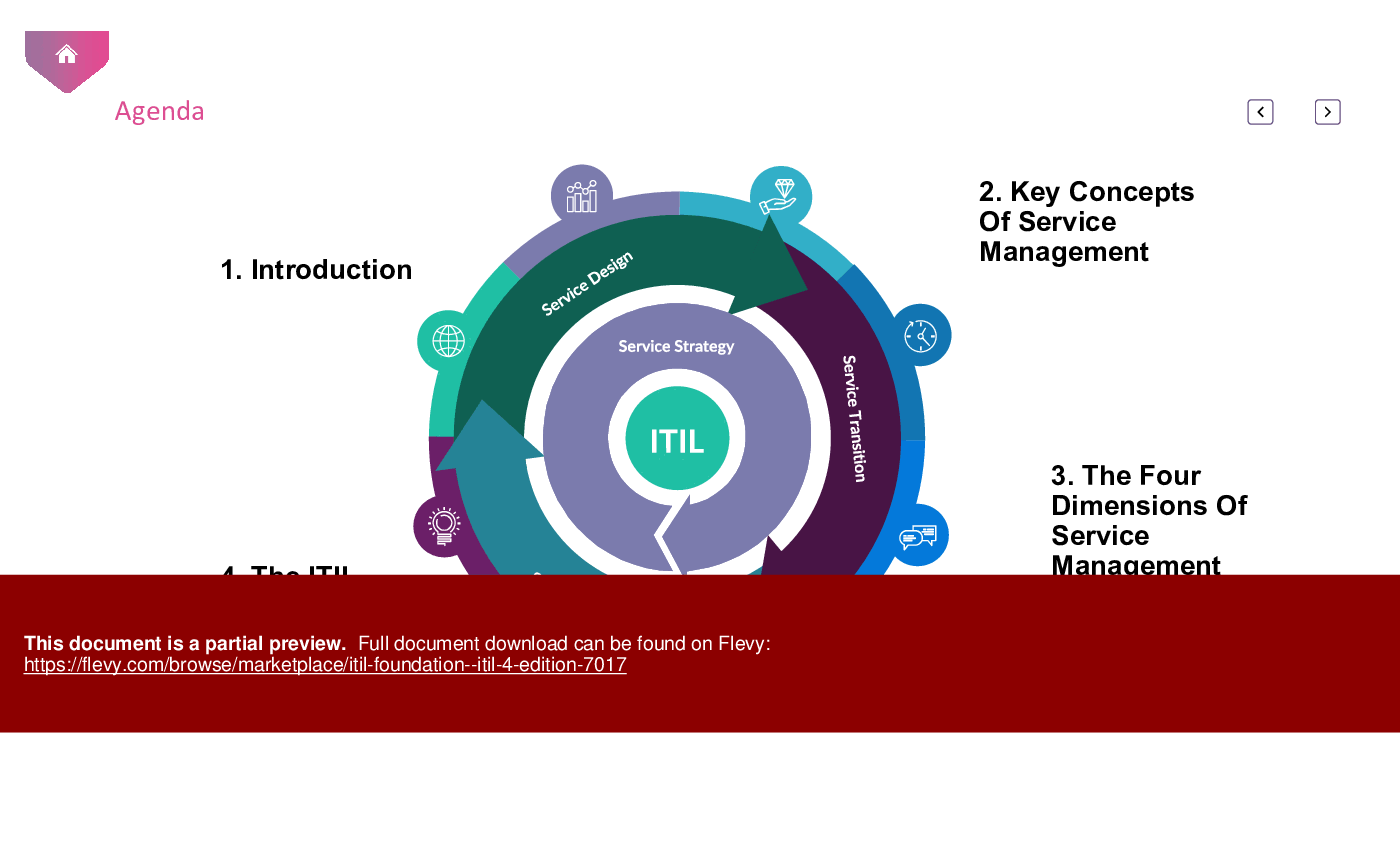
• Introduction (page 1)
• Key Concepts of Service Management (page 2)
• The Four Dimensions of Service Management (page 3)
• The ITIL Service Value System (page 4)
• ITIL Practices (page 5)
• Continual Improvement (page 6)
Primary Topics Covered
• ITIL Framework Overview - ITIL is a framework of best practices for delivering efficient IT support services, enabling organizations to realize business benefits faster.
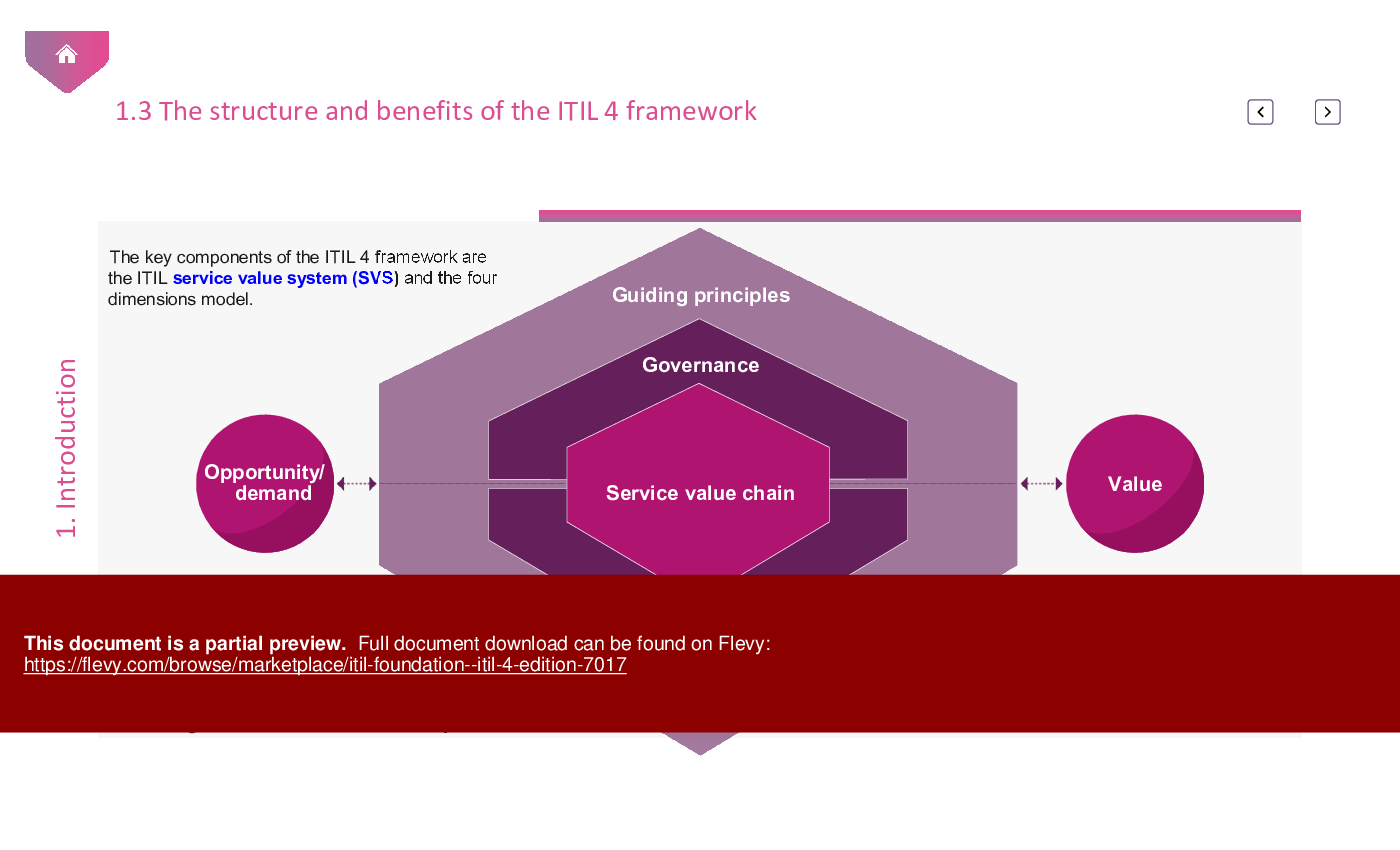
• Service Value System (SVS) - The SVS integrates various components and activities to facilitate value creation through IT-enabled services.
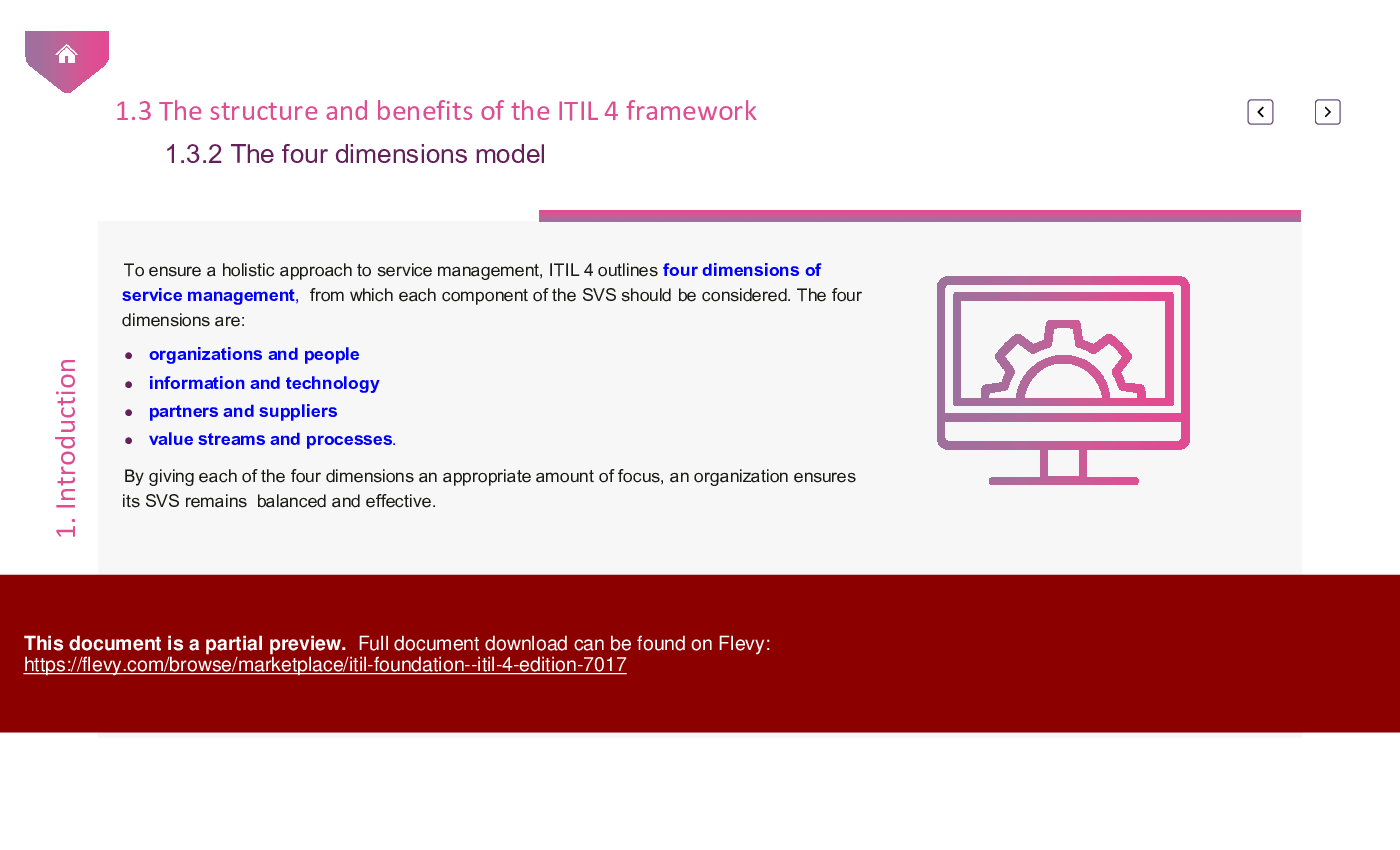
• Four Dimensions of Service Management - These dimensions include organizations and people, information and technology, partners and suppliers, and value streams and processes.
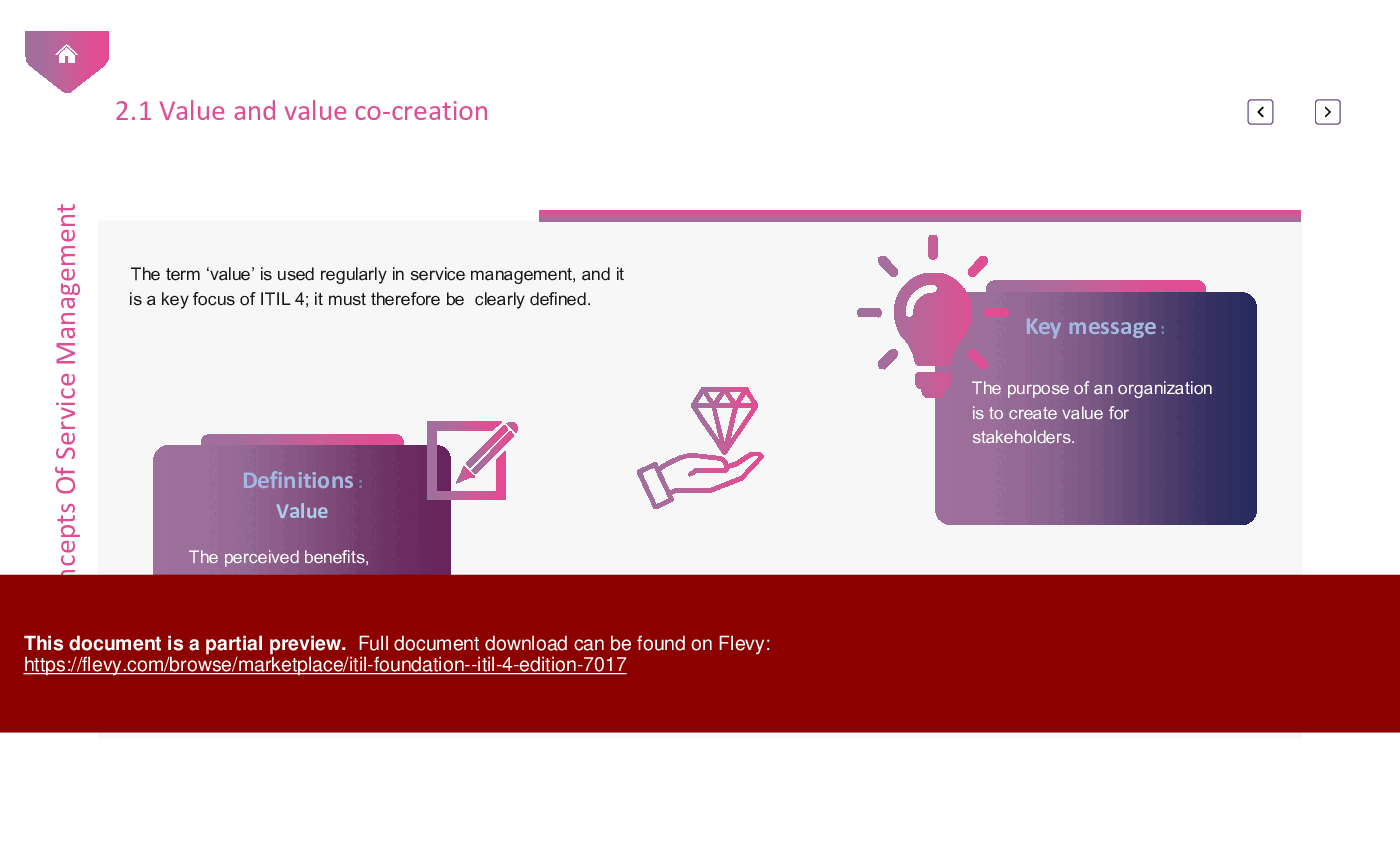
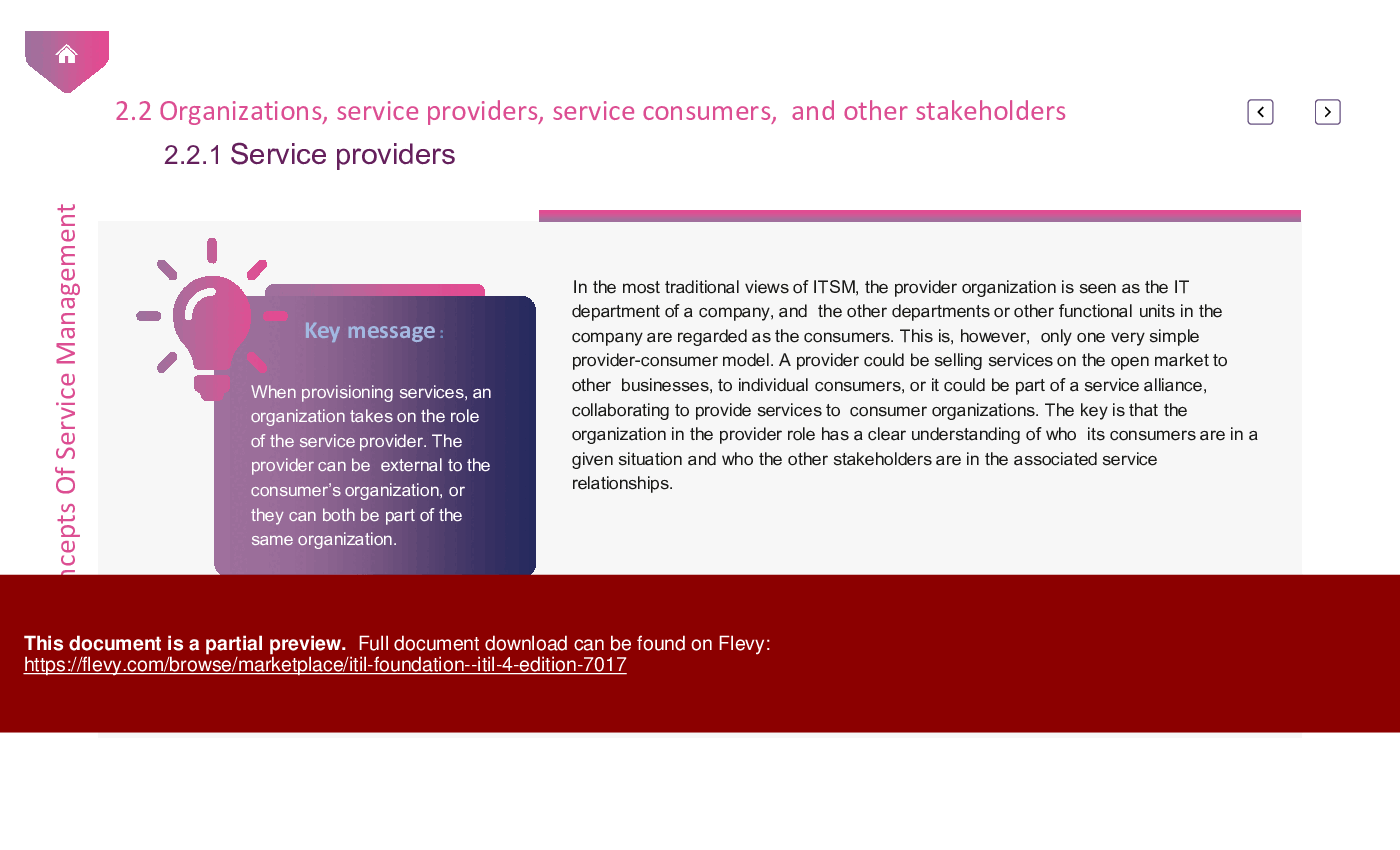
• Value Co-Creation - Emphasizes the collaborative nature of service relationships between providers and consumers.
• ITIL Practices - Sets of organizational resources designed to perform work or accomplish objectives within the ITIL framework.
• Continual Improvement - A structured approach to enhancing services, processes, and practices across the organization.
Deliverables, Templates, and Tools
• ITIL 4 framework overview presentation template.
• Service value chain activity mapping tool.
• Continual improvement model guide.
• Stakeholder engagement and feedback collection templates.
• Value stream mapping resources.
• ITIL practice implementation checklists.
Slide Highlights
• Overview of the ITIL framework and its evolution to ITIL 4.
• Visual representation of the Service Value System and its components.
• Detailed explanation of the 4 dimensions of service management.
• Case studies illustrating value co-creation in service relationships.
• Practical examples of ITIL practices in action.
• Step-by-step guide to the continual improvement model.
Potential Workshop Agenda
Introduction to ITIL 4 (60 minutes)
• Overview of the ITIL framework and its significance.
• Discussion on the evolution of IT service management practices.
Understanding the Service Value System (90 minutes)
• Detailed exploration of the SVS components.
• Group activity to map current practices to the SVS.
Four Dimensions of Service Management (60 minutes)
• Interactive session on the 4 dimensions and their interdependencies.
• Case studies on successful implementation of the dimensions.
Continual Improvement Workshop (90 minutes)
• Hands-on session to develop improvement initiatives based on the continual improvement model.
• Sharing of best practices and lessons learned among participants.
Customization Guidance
• Tailor the presentation to reflect specific organizational goals and objectives.
• Adjust case studies and examples to align with industry-specific challenges.
• Incorporate internal metrics and KPIs relevant to the organization’s IT service management practices.
• Modify workshop agendas to suit the audience's expertise and familiarity with ITIL concepts.
Secondary Topics Covered
• The role of governance in IT service management.
• The impact of emerging technologies on ITIL practices.
• Strategies for effective stakeholder engagement.
• Best practices for aligning IT services with business strategies.
• Challenges and solutions in implementing ITIL frameworks.
FAQ
What is ITIL?
ITIL, or Information Technology Infrastructure Library, is a framework of best practices for IT service management, aimed at aligning IT services with business needs.
How does ITIL 4 differ from previous versions?
ITIL 4 updates previous practices by incorporating modern concepts such as customer experience, value streams, and digital transformation, while embracing methodologies like Lean, Agile, and DevOps.
What are the 4 dimensions of service management?
The 4 dimensions are organizations and people, information and technology, partners and suppliers, and value streams and processes, all of which are essential for effective service management.
How can organizations implement ITIL practices?
Organizations can implement ITIL practices by assessing their current service management processes, defining improvement initiatives, and utilizing the ITIL framework to guide their efforts.
What is the significance of the Service Value System?
The Service Value System provides a holistic approach to service management, ensuring that all components work together to create value for stakeholders.
How does continual improvement fit into ITIL?
Continual improvement is a core component of ITIL, promoting ongoing enhancements to services, processes, and practices to meet stakeholder expectations.
What resources are available for ITIL training?
Numerous resources, including official ITIL publications, training courses, and certification programs, are available to support organizations in their ITIL journey.
How can organizations measure the effectiveness of ITIL implementation?
Organizations can measure effectiveness through key performance indicators (KPIs), stakeholder feedback, and performance metrics related to service delivery and improvement initiatives.
Glossary
• ITIL - Information Technology Infrastructure Library, a framework for IT service management.
• Service Value System (SVS) - A model that describes how various components work together to create value through IT-enabled services.
• Value Stream - A series of steps an organization takes to create and deliver products and services to consumers.
• Continual Improvement - A recurring organizational activity aimed at enhancing services and processes.
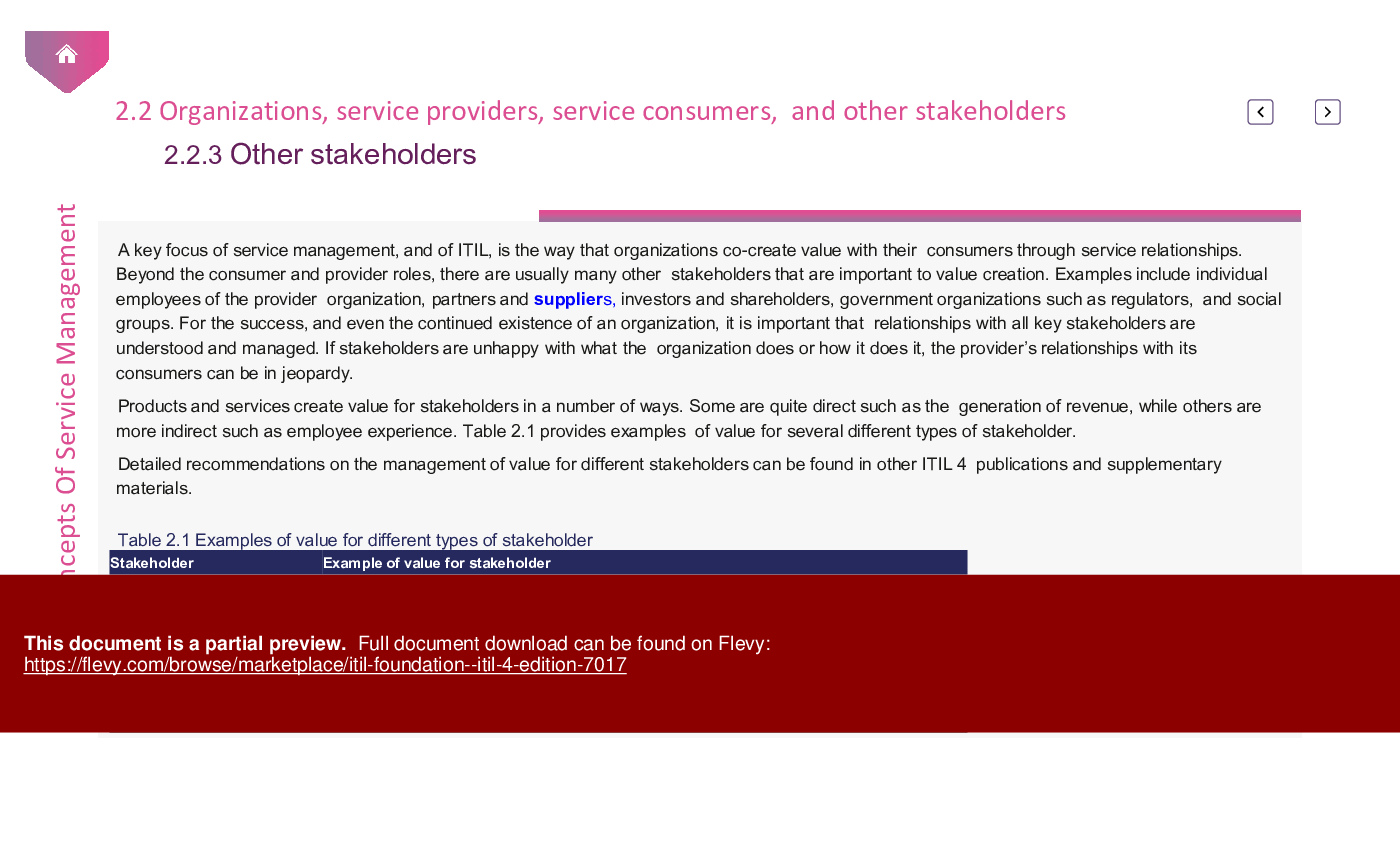
• Stakeholder - Any individual or group with an interest in the organization's activities and outcomes.
• Governance - The means by which an organization is directed and controlled.
• Service Relationship - A cooperation between a service provider and service consumer to co-create value.
• Utility - The functionality offered by a service to meet specific needs.
• Warranty - Assurance that a service will meet agreed requirements.
• Agile - A methodology focused on iterative development and responsiveness to change.
• Lean - A methodology aimed at maximizing value by minimizing waste.
• DevOps - A practice that emphasizes collaboration between software development and IT operations.
• Key Performance Indicator (KPI) - A measurable value that demonstrates how effectively an organization is achieving key business objectives.
Source: Best Practices in ITIL PowerPoint Slides: ITIL Foundation - ITIL 4 Edition (1) PowerPoint (PPTX) Presentation Slide Deck, RadVector Consulting
This document is available as part of the following discounted bundle(s):

Save %!
ITIL Foundation - ITIL 4 Edition
This bundle contains 3 total documents. See all the documents to the right.
|
Download our FREE Digital Transformation Templates
Download our free compilation of 50+ Digital Transformation slides and templates. DX concepts covered include Digital Leadership, Digital Maturity, Digital Value Chain, Customer Experience, Customer Journey, RPA, etc. |









