
ISO 41001:2018 is the world's first Facility Management (FM) international standard. FM is an organizational function which integrates people, place and process within the built environment with the purpose of improving the quality of life of people and productivity of the core business.

ISO 41001 provides the basis for a common interpretation and understanding of FM and the ways in which it can benefit organizations of all kinds. The standard enables an organization to demonstrate that it has a robust process through which to design, manage and improve its integrated FM system.
This presentation can be used to brief your employees, new hires and potential auditees so as to create awareness of the ISO 41001:2018 standard. Alternatively, the presentation may be used to supplement your materials for the training of FM professionals and internal auditors.
It covers the what and why of ISO 41001, the FM system clause structure, and also offers practical tips on how to handle an audit session. When you are done teaching this material to your employees, they will be much more informed and comfortable with ISO 41001.
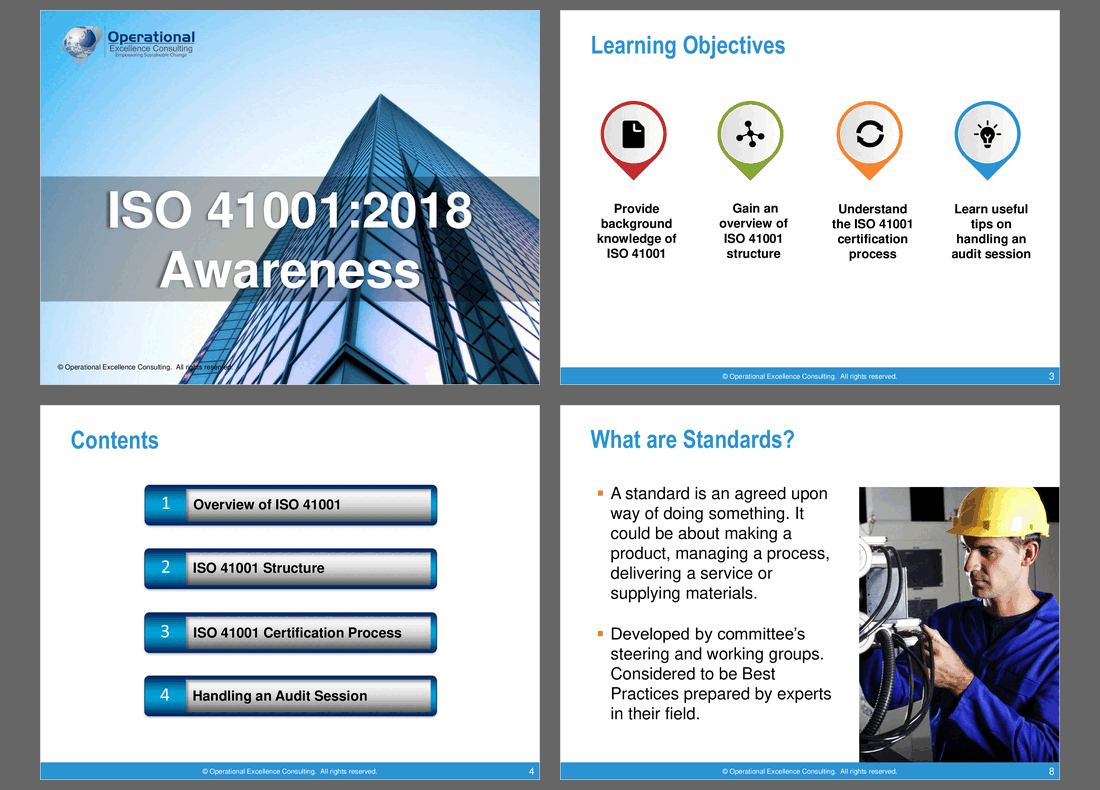
LEARNING OBJECTIVES
1. Provide background knowledge on ISO 41001.
2. Gain an overview of ISO 41001 structure.
3. Understand the ISO 41001 certification process.
4. Gather useful tips on handling the audit session.
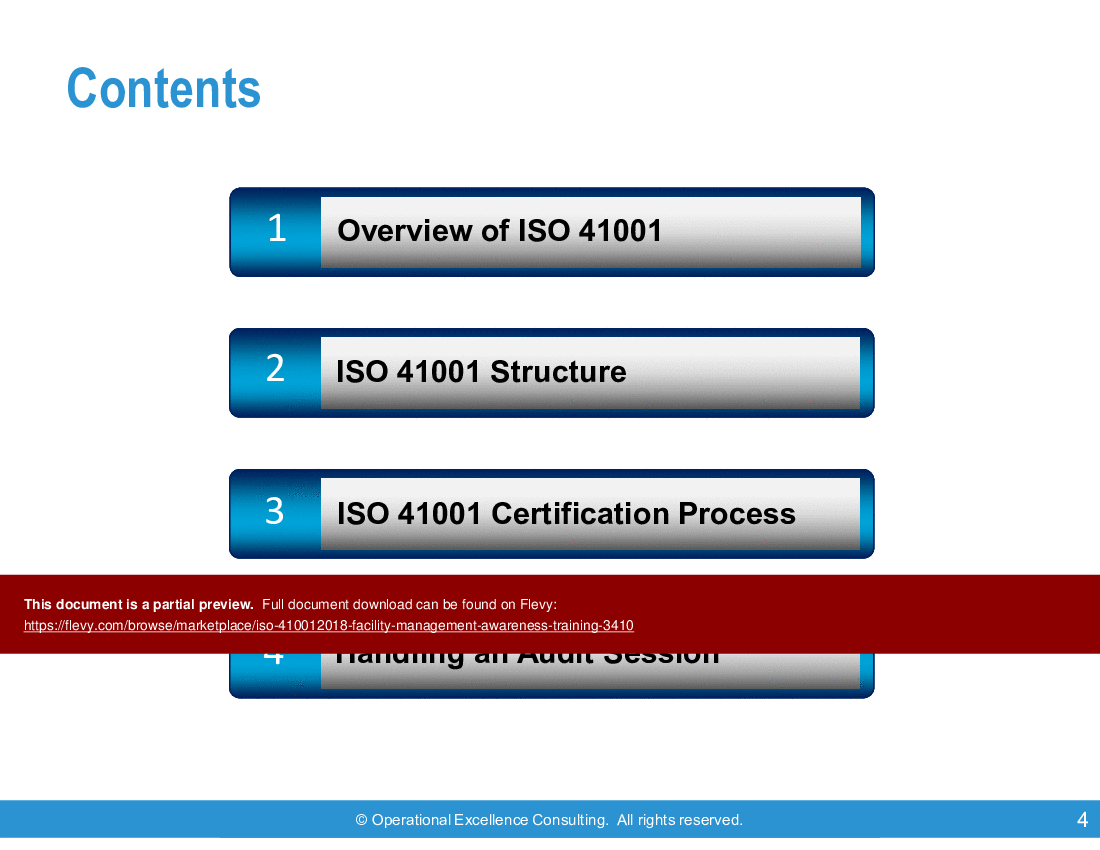
CONTENTS
1. Overview of ISO 41001
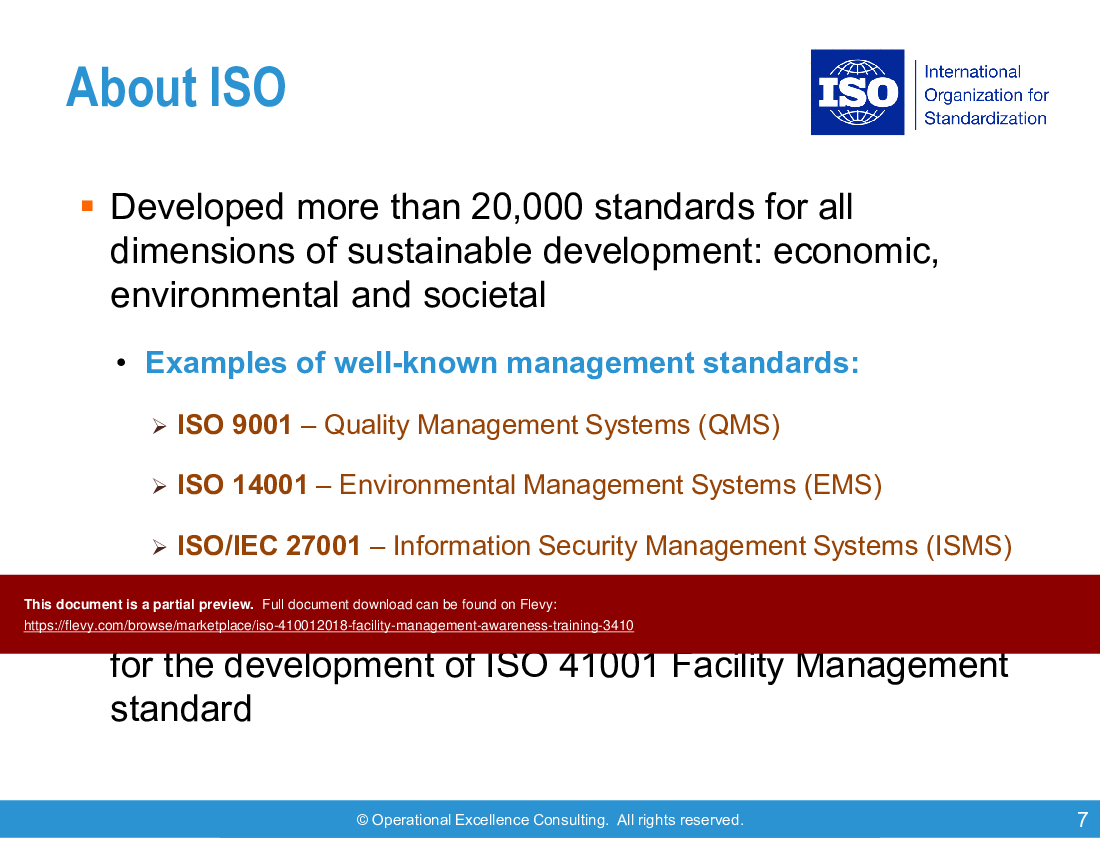
• About ISO
• What are Standards?
• What Standards are Not
• Introduction to Facility Management
• International Standards that Incorporate Facility Management
• What is ISO 41001?
• Who Can Use the ISO 41001 Standard?
• Objectives of the ISO 41001 FM System
• How Does ISO 41001 Work?
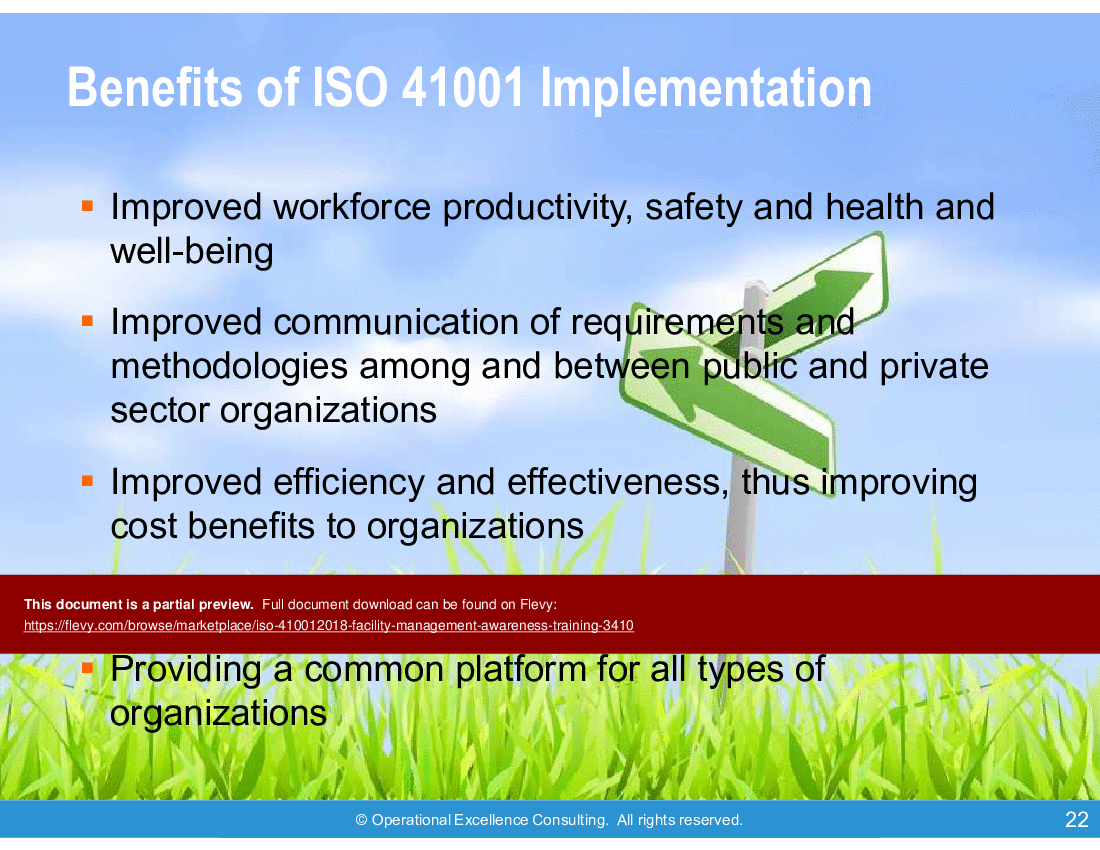
• Benefits of ISO 41001 Implementation
• Advantages of Certification
2. ISO 41001 Structure
• Annex L – Implications
• Overview of Annex L
• The ISO 41001 Structure is Aligned to the Common Structure for MSS
• The Plan-Do-Check-Act (PDCA) Process Model
• ISO 41001 Approach is Based on the PDCA Cycle
• Process Approach Methodology in Facility Management
• PDCA and ISO 41001 Clause Structure
• ISO 41001 Key Clause Structure (4-10)
• Context of the Organization
• Leadership
• Planning
• Support
• Operation
• Performance Evaluation
• Improvement
3. ISO 41001 Certification
• Becoming ISO 41001 Registered
• The ISO 41001 Certification Process
• Audit Findings
4. Handling an Audit Session
• Rights of Auditee
• Rights of Auditor
• How to Handle the Audit Session
• Auditee's Conduct
• Do's
• Don'ts
Gain insights into the core processes and criteria essential for an effective FM system. Understand the implications of Annex L and how it aligns with the latest ISO management system standards.
Got a question about the product? Email us at support@flevy.com or ask the author directly by using the "Ask the Author a Question" form. If you cannot view the preview above this document description, go here to view the large preview instead.
Executive Summary
The ISO 41001:2018 Facility Management Awareness Training presentation equips organizations with essential knowledge to implement and maintain an integrated Facility Management (FM) system. Developed by an experienced ISO Management System Lead Auditor, this training focuses on the ISO 41001 standard, enabling participants to understand its structure, certification process, and effective audit handling. This resource is designed to enhance workforce productivity, safety, and operational efficiency, ultimately driving business excellence.
Who This Is For and When to Use
• Facility Managers and Coordinators seeking to improve FM practices
• Quality Assurance Teams responsible for compliance and standards
• Executives and Decision Makers overseeing facility operations
• Internal Auditors preparing for ISO 41001 certification
• Training and Development Professionals focused on employee education
Best-fit moments to use this deck:
• During onboarding sessions for new facility management staff
• As part of ongoing professional development for existing employees
• Prior to internal audits or external certification assessments
• In workshops aimed at improving organizational compliance with ISO standards
Learning Objectives
• Provide background knowledge of ISO 41001
• Gain an overview of ISO 41001 structure
• Understand the ISO 41001 certification process
• Learn useful tips on handling an audit session
• Identify benefits of implementing ISO 41001
• Recognize the importance of effective facility management
Table of Contents
• Overview of ISO 41001 (page 5)
• ISO 41001 Structure (page 24)
• ISO 41001 Certification Process (page 35)
• Handling an Audit Session (page 42)
Primary Topics Covered
• Overview of ISO 41001 - This section introduces the ISO 41001 standard, detailing its purpose and significance in establishing an integrated FM system.
• ISO 41001 Structure - This part outlines the high-level structure of ISO 41001, including key clauses and their implications for effective facility management.
• ISO 41001 Certification Process - This section describes the steps necessary for achieving ISO 41001 certification, including internal audits and selection of certification bodies.
• Handling an Audit Session - This topic provides guidance on preparing for and conducting audits, emphasizing the rights of both auditees and auditors.
• Benefits of ISO 41001 Implementation - This section highlights the advantages of adopting ISO 41001, such as improved productivity and safety.
• Advantages of Certification - This topic discusses the voluntary nature of certification and its potential impact on organizational reputation and competitive advantage.
Deliverables, Templates, and Tools
• ISO 41001 implementation checklist for organizations
• Internal audit report template to track compliance
• Audit preparation guide outlining key steps and considerations
• FM system documentation framework for standardization
• Training materials for staff on ISO 41001 principles
• Communication plan template for internal stakeholders
Slide Highlights
• Overview slide detailing the significance of ISO 41001 in facility management
• Structure slide illustrating the high-level framework of ISO 41001
• Certification process flowchart outlining the steps to achieve certification
• Audit session handling tips emphasizing best practices for auditees
• Benefits slide summarizing the key advantages of ISO 41001 implementation
Potential Workshop Agenda
ISO 41001 Overview Session (60 minutes)
• Introduce the ISO 41001 standard and its relevance
• Discuss the structure and key components of the standard
• Review the benefits of implementing ISO 41001
ISO 41001 Certification Process Workshop (90 minutes)
• Outline the steps for achieving ISO 41001 certification
• Conduct a mock internal audit to practice skills
• Discuss common challenges and solutions in the certification process
Handling Audit Sessions Training (60 minutes)
• Review rights and responsibilities of auditees and auditors
• Role-play scenarios to practice effective audit interactions
• Discuss strategies for addressing non-conformities
Customization Guidance
• Tailor the presentation to reflect specific organizational policies and procedures
• Update examples and case studies to align with industry-specific contexts
• Modify the audit preparation guide to include internal documentation requirements
• Adjust the training materials to incorporate company branding and terminology
Secondary Topics Covered
• Overview of international standards related to facility management
• Importance of continuous improvement in FM practices
• Roles and responsibilities within the FM system
• Integration of facility management with core business strategies
• Trends and challenges in the global facility management market
FAQ
What is ISO 41001?
ISO 41001 is a standard for Facility Management that helps organizations establish, implement, maintain, and improve an integrated FM compliance program.
Who can use the ISO 41001 standard?
The ISO 41001 requirements are applicable to all organizations, regardless of size, type, or sector, including both public and private entities.
What are the benefits of implementing ISO 41001?
Benefits include improved workforce productivity, enhanced safety and health, better communication among organizations, and increased operational efficiency.
What is the certification process for ISO 41001?
The certification process involves implementing the FM system, conducting internal audits, selecting a certification body, and undergoing a compliance audit.
What are the rights of the auditee during an audit?
Auditees can adjust the audit schedule, produce evidence later, and confirm findings at the end of each session.
What should I do if I don’t understand a question during an audit?
Ask the auditor to clarify the question to ensure you provide accurate and complete responses.
How can I prepare for an audit session?
Review internal documentation, understand the FM system, and practice responses to common audit questions.
What is the significance of the PDCA model in ISO 41001?
The PDCA (Plan-Do-Check-Act) model is a framework used in ISO 41001 to ensure continuous improvement within the FM system.
Glossary
• Facility Management (FM) - An organizational function integrating people, place, and process within the built environment.
• ISO - International Organization for Standardization, responsible for developing international standards.
• Certification - A formal verification that an organization meets the requirements of a specific standard.
• Audit - A systematic examination of a facility management system to ensure compliance with standards.
• Non-conformity - A failure to meet a requirement of the standard or internal processes.
• Internal Audit - An evaluation conducted by an organization to assess its own compliance with standards.
• Continuous Improvement - Ongoing efforts to enhance products, services, or processes.
• Stakeholders - Individuals or groups with an interest in the performance and outcomes of an organization.
• Compliance - Adherence to laws, regulations, and standards.
• Risk Management - The process of identifying, assessing, and mitigating risks.
• Performance Evaluation - The assessment of an organization's processes and outcomes against set standards.
• Leadership - The act of guiding and directing an organization towards achieving its goals.
• Documentation - Recorded information that provides evidence of compliance and operational processes.
• Operational Efficiency - The ability to deliver services effectively while minimizing waste and costs.
• Quality of Life - The general well-being of individuals and communities, influenced by facility management.
• Core Business - The primary activities and services that define an organization's purpose.
• Annex L - The framework for all new and revised ISO standards, providing a high-level structure.
• Stakeholder Engagement - The process of involving individuals or groups in decision-making and operations.
• Service Integration - The coordination of various services within the facility management system.
• Benchmarking - Comparing performance metrics to industry standards or best practices.
• Strategic Objectives - Long-term goals that guide an organization’s direction and decision-making.
Source: Best Practices in Facility Management PowerPoint Slides: ISO 41001:2018 (Facility Management) Awareness Training PowerPoint (PPTX) Presentation Slide Deck, Operational Excellence Consulting
|
Receive our FREE presentation on Operational Excellence
This 50-slide presentation provides a high-level introduction to the 4 Building Blocks of Operational Excellence. Achieving OpEx requires the implementation of a Business Execution System that integrates these 4 building blocks. |