
 Click main image to view in full screen. Unlock all 32 preview images:
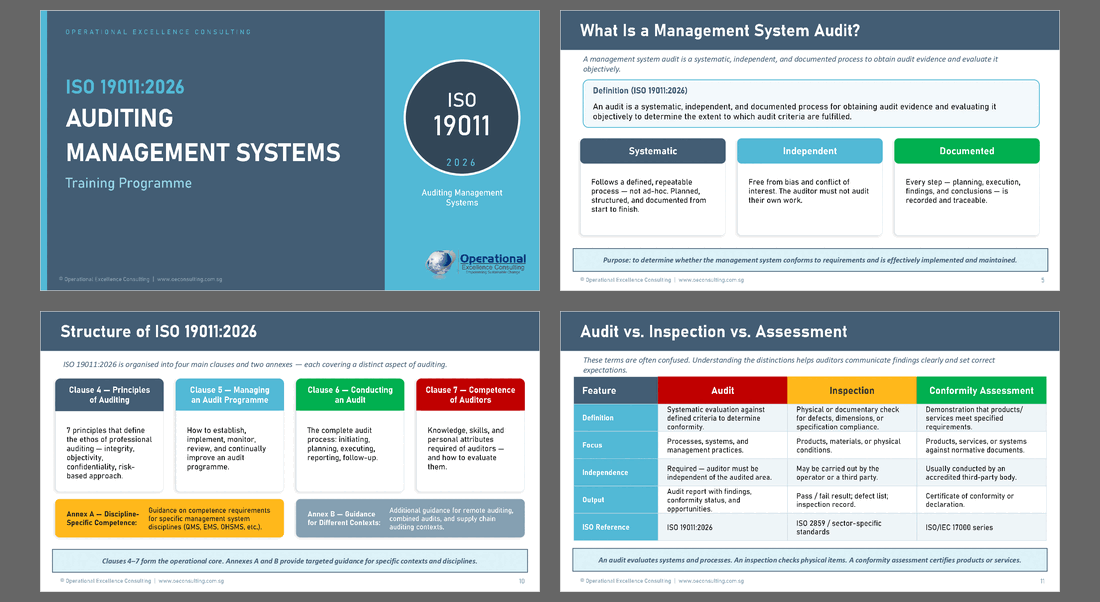
ISO 19011:2026 Management Systems Auditing – PowerPoint PPTX Template
PowerPoint (PPTX) 119 Slides


BENEFITS OF THIS DOWNLOADABLE POWERPOINT DOCUMENT
- Drive Continual Improvement -- Transition from "ticking boxes" to identifying systemic gaps and risks before they become compliance failures.
- Master Modern Audit Methods -- Gain explicit guidance on conducting remote audits and utilizing data analytics as a recognized audit method.
- Enhanced Audit Efficiency -- Learn to plan and execute combined or integrated audits across multiple standards (e.g., ISO 9001 and ISO 14001) to reduce operational disruption.
ISO 19011 PPT TEMPLATE DESCRIPTION
An internal audit should never be treated as a passive, tick-the-box compliance exercise that drains corporate resources without adding value. Our ISO 19011:2026 Management Systems Auditing Training Presentation is a premium, facilitation-ready implementation toolkit designed to transform your internal audit program from a bureaucratic hurdle into a high-yield engine for risk mitigation, digital governance, and continuous organizational improvement. Updated to address the modern realities of distributed networks, this complete practitioner-led system equips your team to confidently establish, manage, and execute remote, hybrid, and risk-based management systems audits that safeguard operational integrity and prevent regulatory backsliding.
EXECUTIVE SUMMARY
This training toolkit serves as a comprehensive guide for mastering the ISO 19011:2026 guidelines, moving beyond traditional "fault-finding" to transform auditing into a strategic engine for organizational improvement. Authored by an experienced practitioner, the material is structured into eight modules that cover the entire audit lifecycle, emphasizing a risk-based approach and the integration of modern digital methods such as remote auditing and data analytics. By utilizing the Plan-Do-Check-Act (PDCA) cycle, the program equips internal and lead auditors with the tools to verify compliance while identifying critical opportunities for operational excellence. Ultimately, the material provides a professional framework for evaluating auditor competence and executing integrated audits that foster trust and accountability across diverse management systems.
TARGET AUDIENCE
• Internal and Lead Auditors: For mastering the latest 2026 guidelines and strengthening audit techniques.
• Management System Coordinators (QMS, EMS, OH&S): For establishing and managing risk-based audit programmes that align with strategic objectives.
• Top Management & Process Owners: For understanding their role as auditees and leveraging audit findings for decision-making.
• New Auditors: For building a professional foundation in audit principles, ethics, and execution.
WHAT'S IN THE BOX?
• The Masterclass (110+ Slides): A deep-dive presentation organized into eight strategic modules covering the full ISO 19011:2026 guideline.
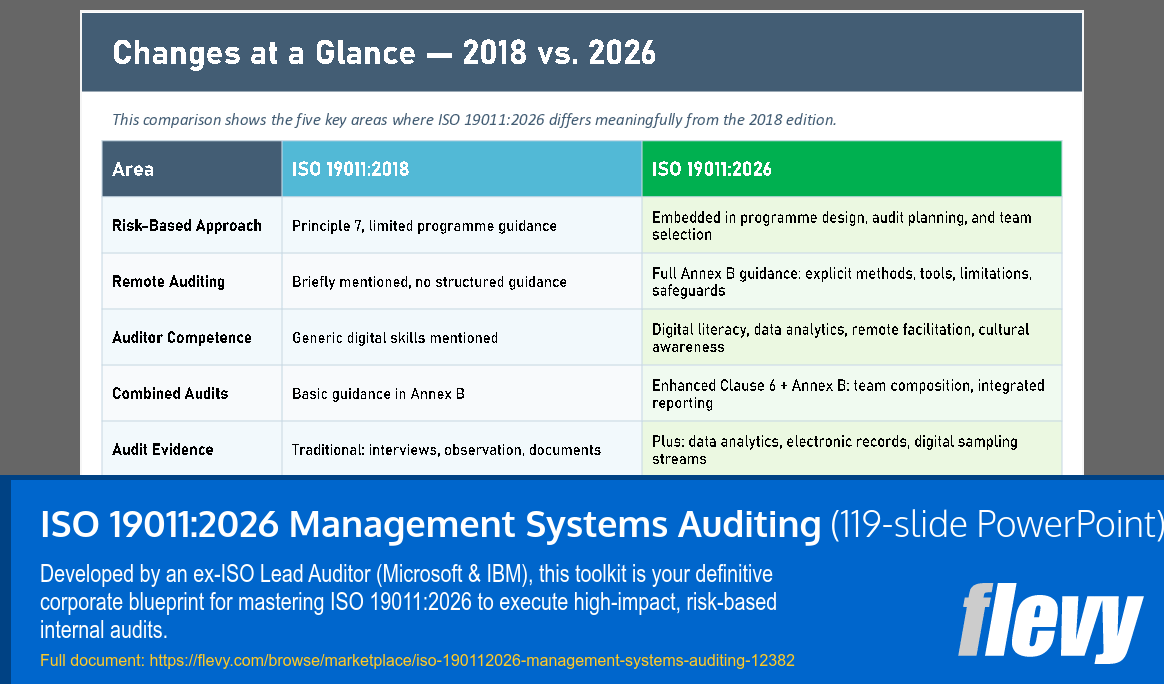
• Key Change Roadmap: A detailed comparison of the 2018 vs. 2026 versions, highlighting digital auditing and data-driven evidence.
• Practical Audit Tools: Professional templates and guidance for audit plans, checklists, nonconformity (NC) statements, and reporting.
• Competence Evaluation Framework: Tools for assessing and developing auditor knowledge, skills, and personal attributes.
LEARNING OBJECTIVES
By the end of this ISO 19011:2026 training programme, participants will be able to:
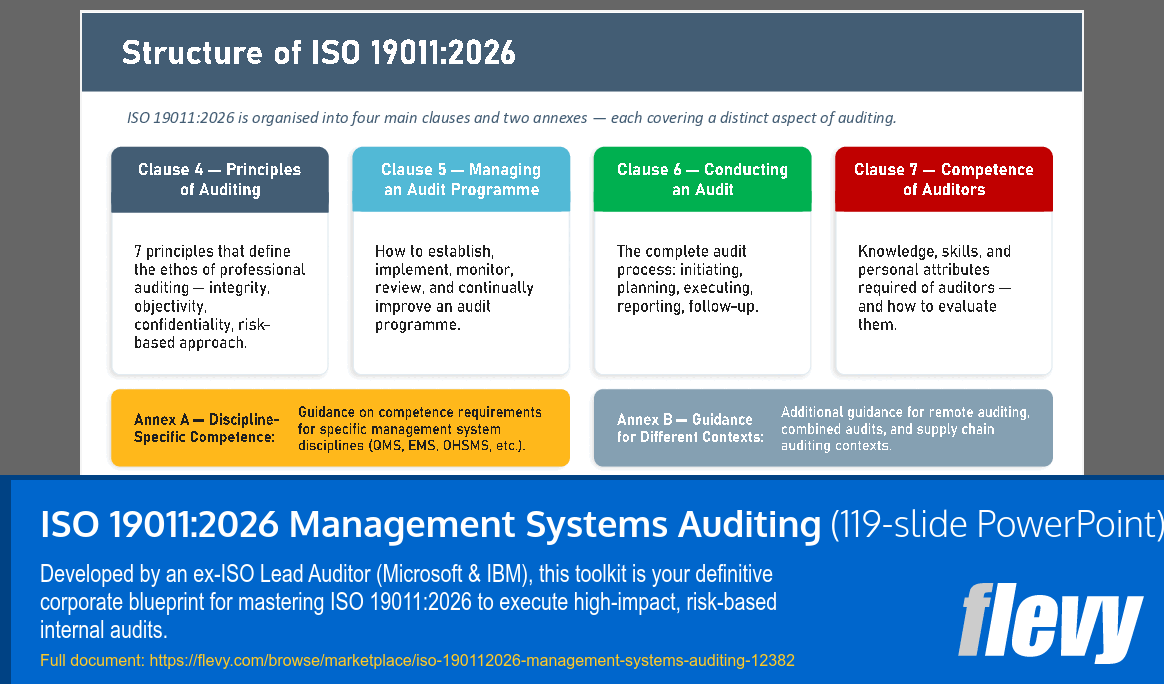
• Interpret and Apply the seven principles of professional auditing.
• Establish and Manage a risk-based audit programme tailored to the organization's context.
• Plan and Execute audits systematically, including the use of remote tools and technology.
• Generate and Classify findings accurately using objective, verifiable evidence.
• Evaluate Auditor Competence and design professional development pathways.
TRAINING CONTENTS
This practitioner toolkit is organized into eight strategic modules:
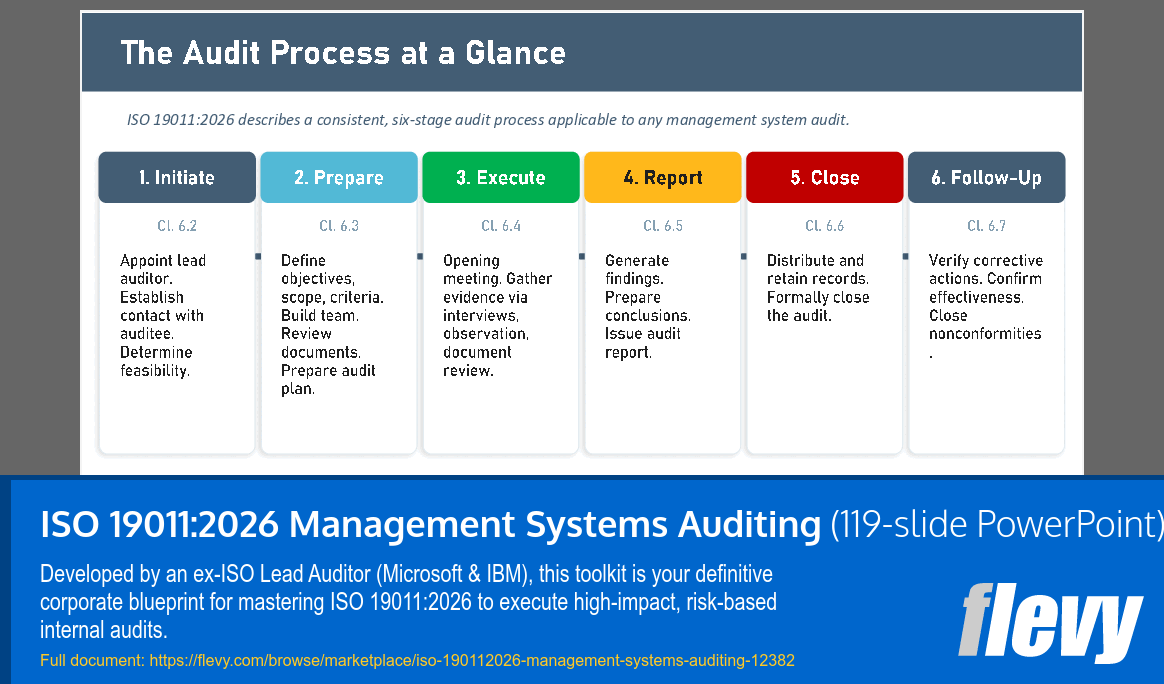
• Module 1: Introduction & Audit Fundamentals: Purpose of auditing, types of audits, and the ISO 19011 journey.
• Module 2: Key Changes in ISO 19011:2026: Deep dive into risk-based approach, remote auditing, and data-driven evidence.
• Module 3: Audit Principles & Programme Management: Applying the seven principles and managing the programme lifecycle (PDCA).
• Module 4: Planning & Preparation: Defining objectives, scope, and criteria; building checklists and audit plans.
• Module 5: Execution & Reporting: Interview techniques, evidence gathering, writing NC statements, and closing audits.
• Module 6: Auditor Competence & Evaluation: Knowledge, skills, and personal attributes; achieving and maintaining qualification.
• Module 7: IMS Context & Special Situations: Combined/integrated audits, remote auditing protocols, and handling difficult situations.
• Module 8: Your Role & Next Steps: Auditor/auditee responsibilities and a 30-day personal action plan.
PROPOSED TRAINING AGENDA
This toolkit supports a high-impact, comprehensive training schedule:
• Session 1: Audit Fundamentals, Key Changes (2018 vs 2026), and Audit Principles.
• Session 2: Managing the Audit Programme and Planning for Results.
• Session 3: Execution Excellence: Evidence gathering, interviews, and finding classification.
• Session 4: Reporting, Competence, Integrated Audits (IMS), and Remote Protocols
GLOSSARY OF KEY TERMS
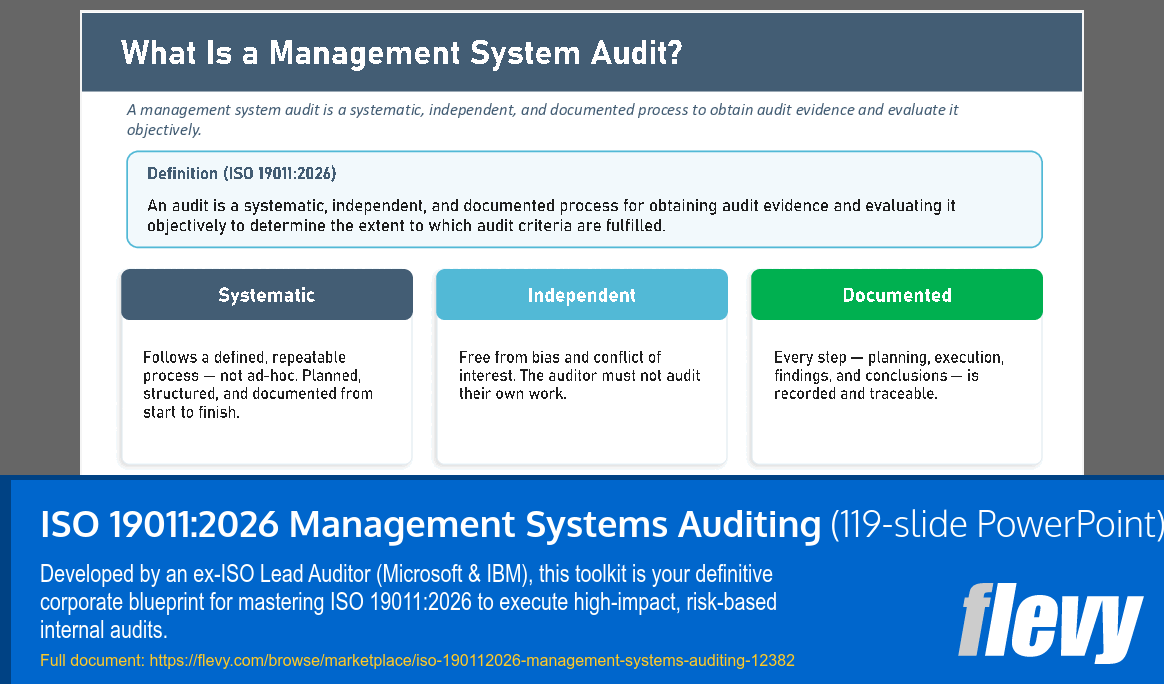
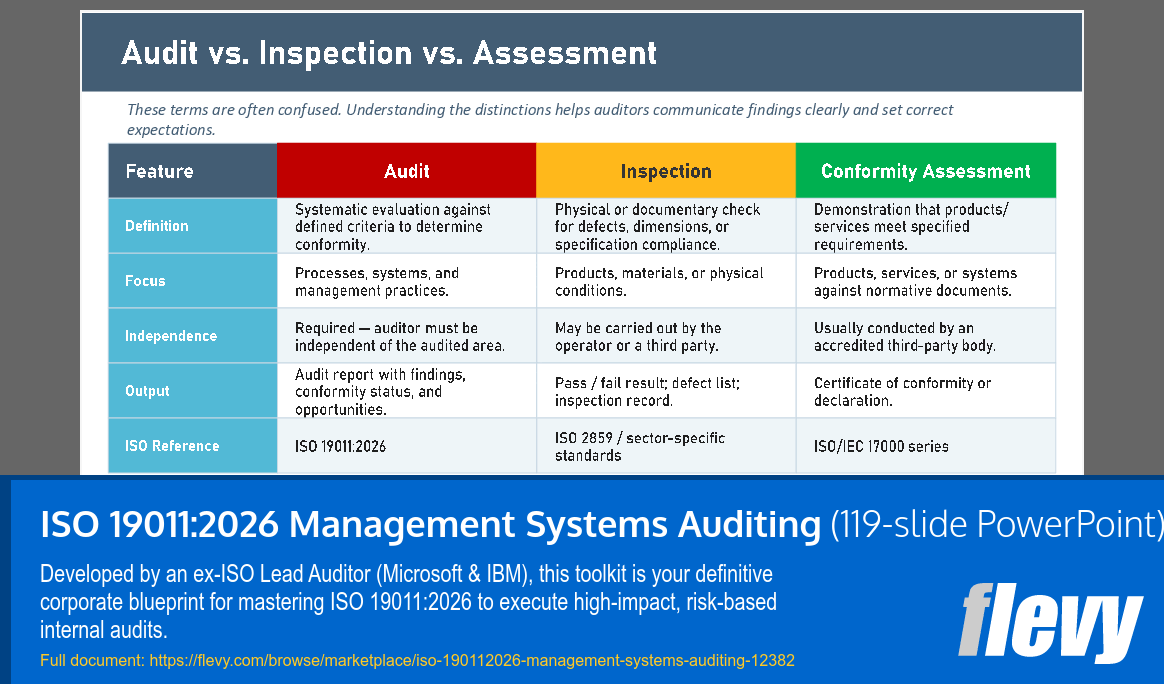
• Audit: A systematic, independent, and documented process for obtaining objective evidence and evaluating it objectively to determine the extent to which the audit criteria are fulfilled.
• Remote Auditing: The use of information and communication technologies (ICT) to gather, verify, and evaluate audit evidence when physical presence is not practical or necessary.
• Objective Evidence: Data supporting the existence or verity of something, typically gathered through observation, measurement, test, or interviewing.
• Audit Findings: Results of the evaluation of the collected objective evidence against audit criteria.
• Audit Programme: Arrangements for a set of one or more audits planned for a specific time frame and directed towards a specific purpose.
• Digital Evidence: Information of probative value that is stored or transmitted in binary form, including electronic records, automated system outputs, and video logs. Non-conformity: The non-fulfillment of a specified requirement or standard clause.
• Risk-based Auditing: An approach to auditing that concentrates on areas of the management system that represent the highest operational and compliance risks.
FREQUENTLY ASKED QUESTIONS
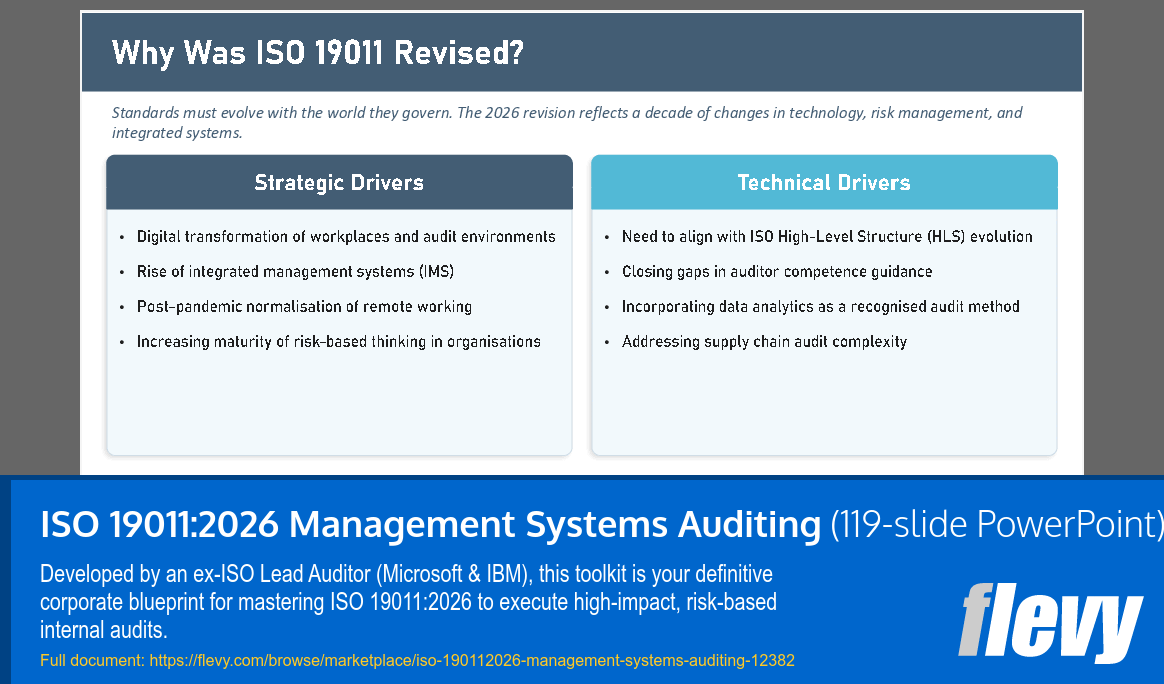
What is ISO 19011:2026? It is the current international standard providing guidance on auditing management systems, replacing the old 2018 edition to address remote work and digital transformation.
Is this presentation fully customizable? Yes, the entire toolkit is delivered in standard Microsoft PowerPoint format, allowing you to modify colors, insert company logos, and adapt the text freely.
Can this be used for integrated management systems? Yes, because ISO 19011:2026 provides universal guidelines, this presentation perfectly supports integrated audits covering ISO 9001, ISO 14001, and ISO 45001 simultaneously.
Does the standard require a transition period? No, unlike requirement standards, ISO 19011:2026 is a guidance document, meaning organizations should update their internal audit programs immediately to match current best practices.
What file format is the bonus poster in? The ISO Certification Audit Poster is provided in high-resolution PDF format, optimized for printing up to A3 size.
Who should facilitate this training program? It is best facilitated by a Lead Auditor, Quality Manager, or an experienced Operational Excellence practitioner.
Does this presentation cover auditor competence? Yes, an entire module is dedicated to establishing, evaluating, and maintaining the strict competence criteria for internal auditors, including digital literacy.
How long does it take to deploy this training material? The system is completely facilitation-ready, meaning you can download it and host a professional internal workshop on the same day.
Got a question about the product? Email us at support@flevy.com or ask the author directly by using the "Ask the Author a Question" form. If you cannot view the preview above this document description, go here to view the large preview instead.
Source: Best Practices in ISO 19011 PowerPoint Slides: ISO 19011:2026 Management Systems Auditing PowerPoint (PPTX) Presentation Slide Deck, Operational Excellence Consulting
ABOUT THE AUTHOR

Operational Excellence Consulting, founded in 2009 by Allan Ung, draws from extensive experience at Microsoft, IBM, and Underwriters Laboratories (UL). We specialize in strategy deployment, customer experience design, and operational excellence, applying Design Thinking, Lean, and Systems Thinking to maximize customer value and minimize waste.
Our
... [read more]
Ask the Author a Question
You must be logged in to contact the author.




























