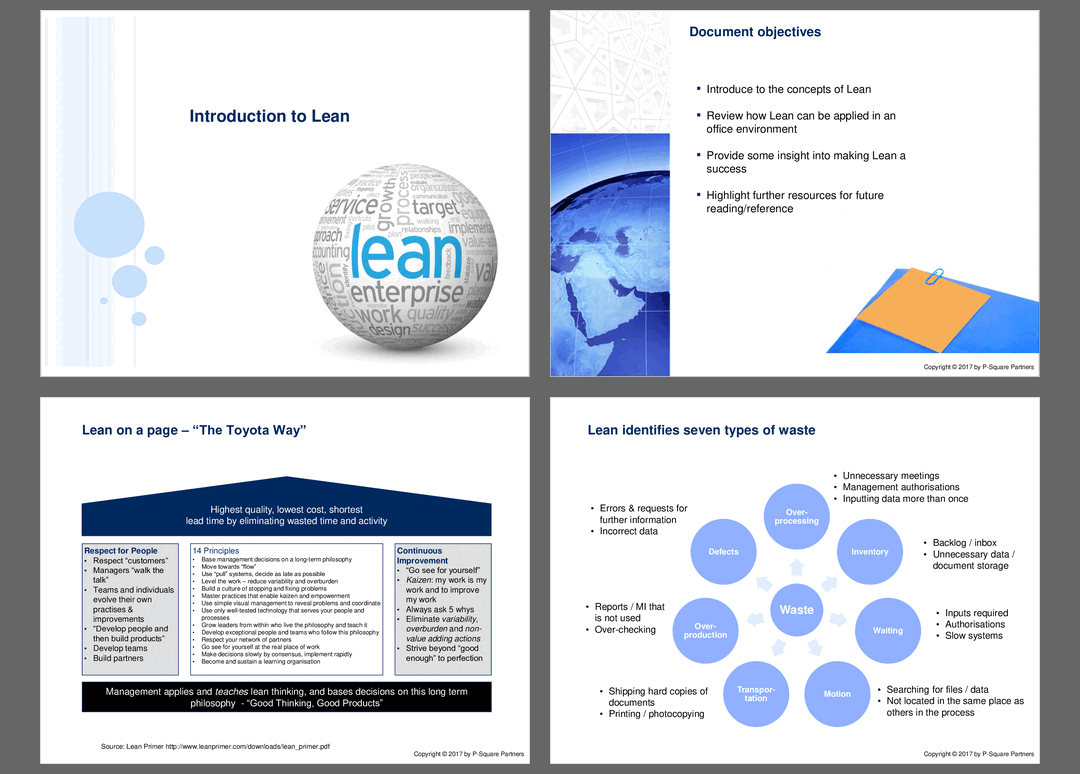
The objectives of this document are:
• Introduce to the concepts of Lean
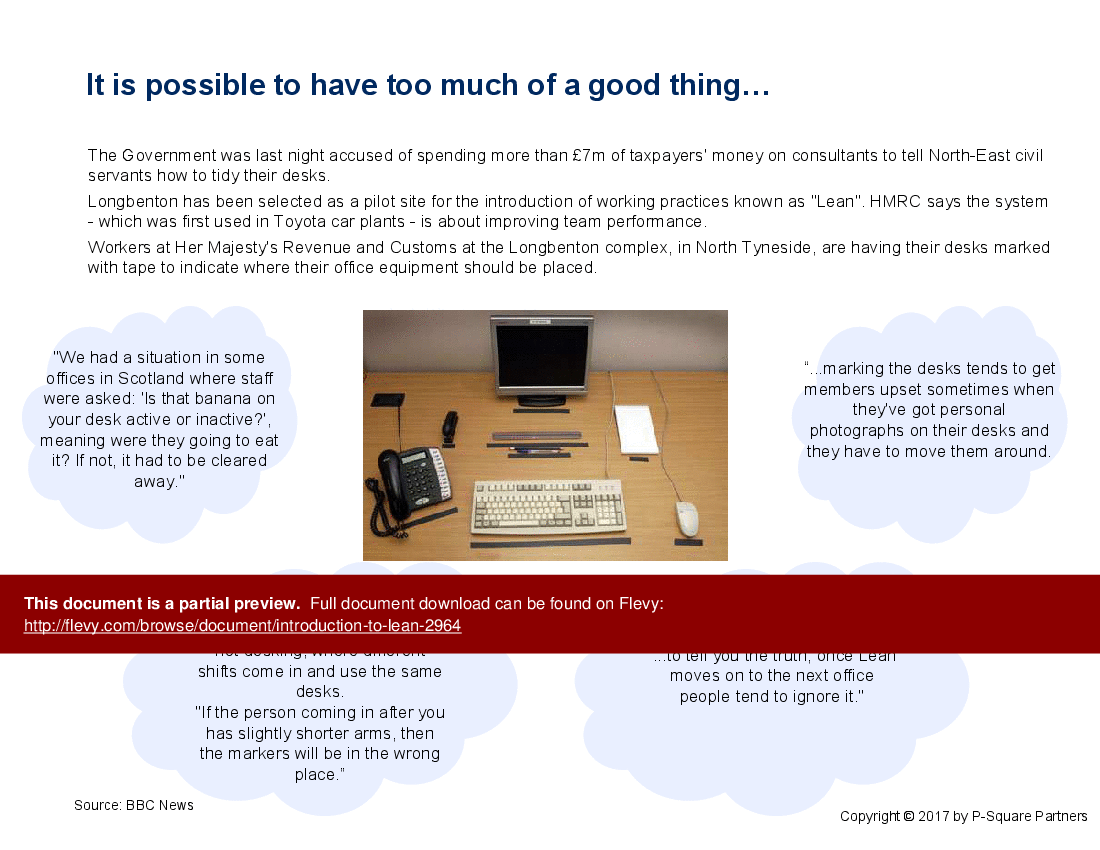
• Review how Lean can be applied in an office environment
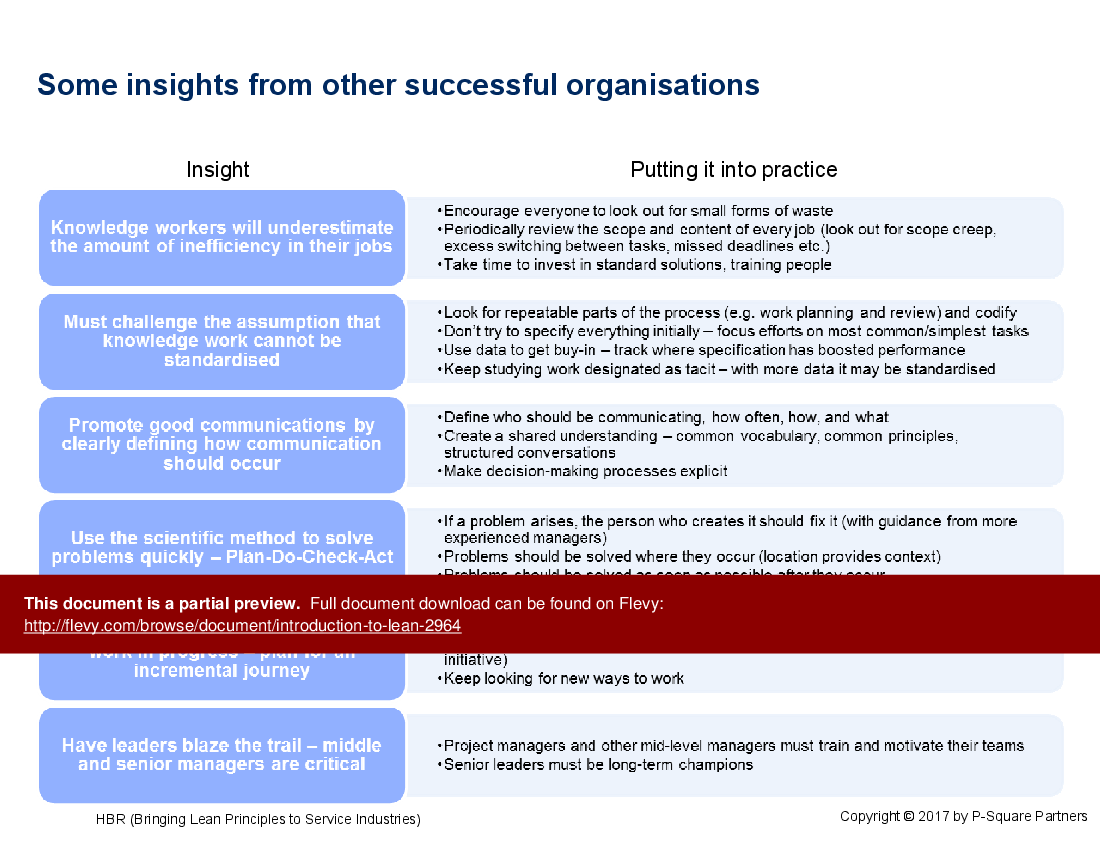
• Provide some insight into making Lean a success
• Highlight further resources for future reading/reference
Got a question about the product? Email us at support@flevy.com or ask the author directly by using the "Ask the Author a Question" form. If you cannot view the preview above this document description, go here to view the large preview instead.
Executive Summary
This presentation titled "Introduction to Lean" is crafted to provide a comprehensive overview of Lean principles, emphasizing their application in office environments. Designed with the rigor of McKinsey, Bain, or BCG-quality insights (consulting-grade; not affiliated), this deck equips corporate executives and integration leaders with the knowledge to enhance operational efficiency. Users will learn how to identify and eliminate waste, improve workflow, and foster a culture of continuous improvement, ultimately leading to increased productivity and quality in their organizations.
Who This Is For and When to Use
• Corporate executives seeking to implement Lean methodologies in their organizations
• Operations managers focused on improving process efficiency and reducing waste
• Team leaders responsible for fostering a culture of continuous improvement
• Consultants advising clients on operational excellence and process optimization
Best-fit moments to use this deck:
• During strategic planning sessions to introduce Lean principles
• When launching initiatives aimed at process improvement and waste reduction
• As a training resource for teams transitioning to Lean methodologies
• To facilitate discussions on operational excellence in workshops or meetings
Learning Objectives
• Define Lean principles and their significance in operational contexts
• Identify types of waste and strategies for elimination
• Analyze current processes to measure performance and identify gaps
• Develop a culture of continuous improvement through Lean practices
• Implement Lean tools such as Value Stream Mapping and the DMADV cycle
• Foster team engagement and empowerment in Lean initiatives
Table of Contents
• Introduction to Lean Concepts (page 2)
• Historical Context of Lean (page 3)
• Lean Principles and Philosophy (page 5)
• Types of Waste in Lean (page 7)
• Lean in Office Environments (page 10)
• Tools and Techniques for Lean Implementation (page 12)
• Case Studies and Success Stories (page 15)
• Challenges and Considerations (page 18)
• Resources for Further Reading (page 20)
Primary Topics Covered
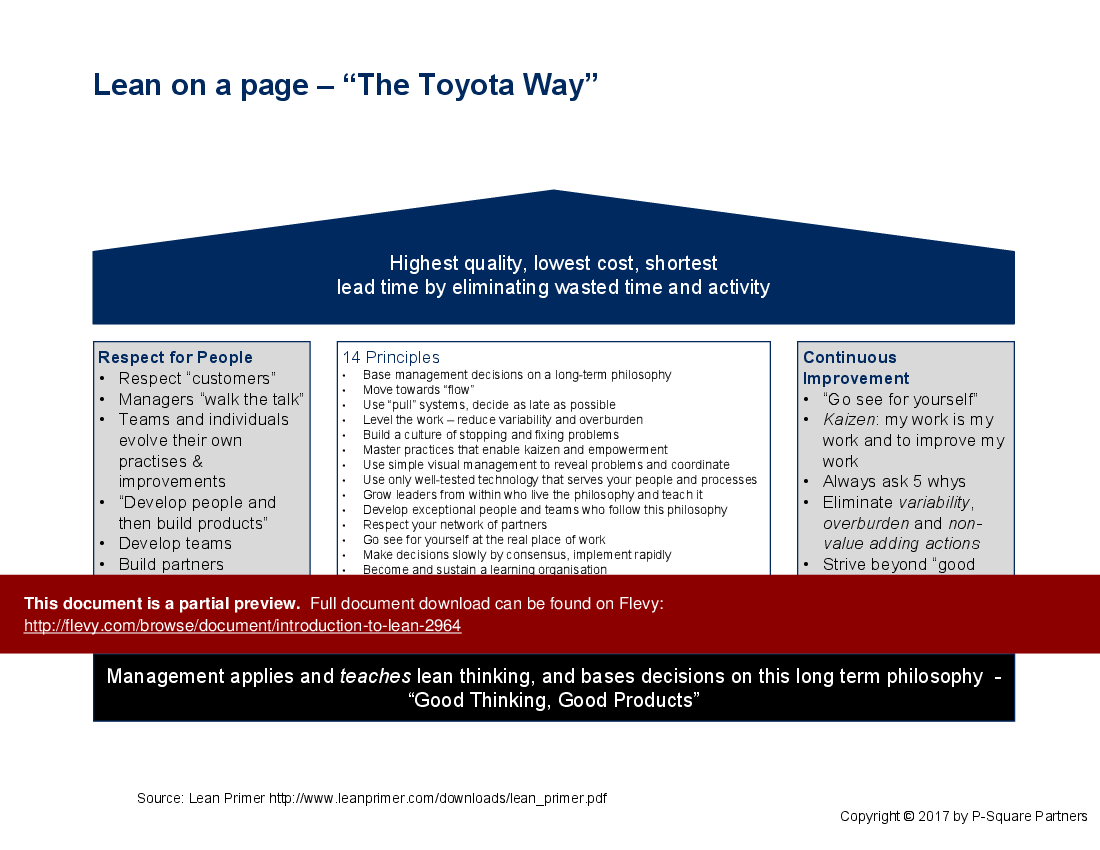
• Lean Principles - Lean focuses on maximizing customer value while minimizing waste, emphasizing continuous improvement and respect for people.
• Types of Waste - Lean identifies 7 types of waste, including overproduction, waiting, and defects, which organizations must address to enhance efficiency.
• Value Stream Mapping - A critical tool for visualizing processes, identifying waste, and improving workflow in both manufacturing and service environments.
• DMADV Cycle - A structured approach (Define, Measure, Analyze, Design, Verify) used in Lean and Six Sigma to develop and implement effective solutions.
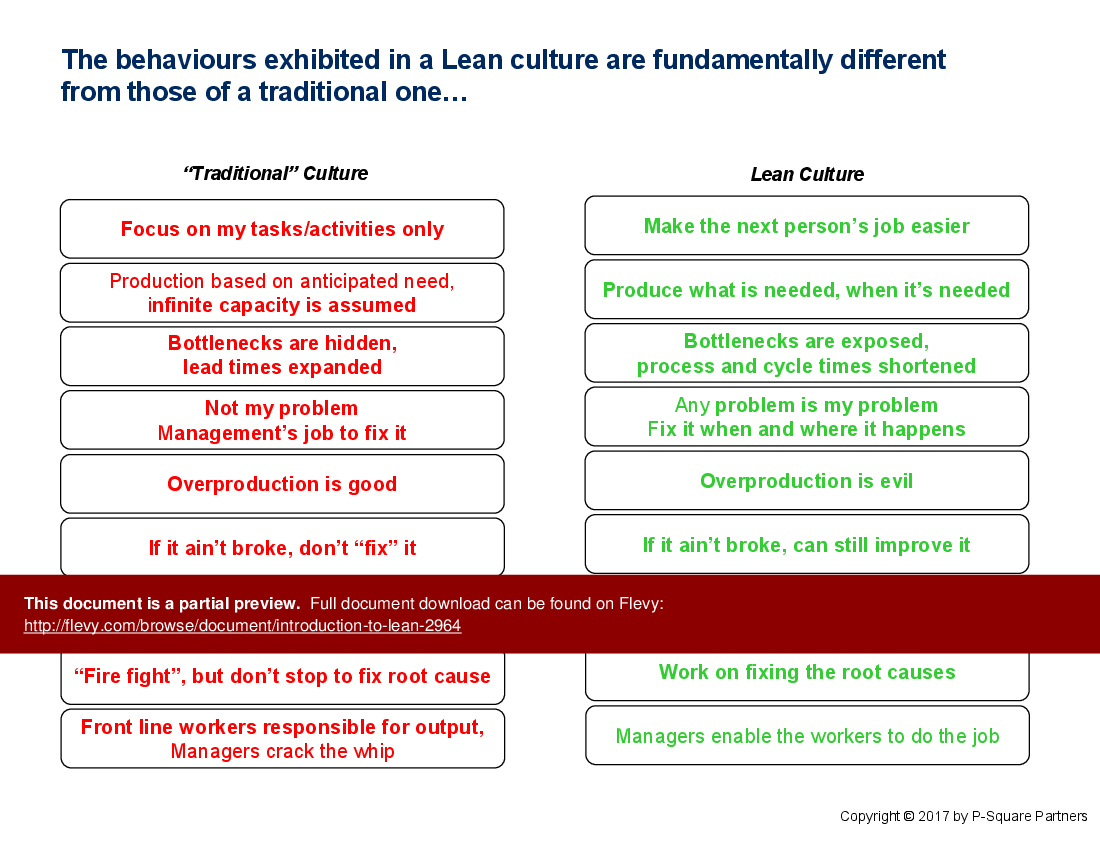
• Lean Culture - Transitioning to a Lean culture requires a shift in mindset, emphasizing teamwork, problem-solving, and continuous improvement.
• Application in Knowledge Work - Lean principles can be adapted to service and knowledge work environments, addressing unique challenges such as customer interaction and service delivery.
Deliverables, Templates, and Tools
• Value Stream Mapping template for visualizing processes and identifying waste
• DMADV cycle framework for structured problem-solving and solution development
• Standard Operating Procedures (SOPs) template to ensure consistent implementation of Lean practices
• Kaizen event planning guide for facilitating continuous improvement workshops
• Metrics dashboard for tracking Lean initiative performance and progress
• Communication plan template to engage stakeholders in Lean transformations
Slide Highlights
• Overview of Lean principles and their historical evolution from craft production to Lean services
• Visual representation of the 7 types of waste and their impact on efficiency
• Case study examples showcasing successful Lean implementations in service industries
• Comparison of traditional vs. Lean culture, highlighting key behavioral shifts
• Insights on overcoming challenges in adopting Lean methodologies in knowledge work environments
Potential Workshop Agenda
Introduction to Lean Principles (60 minutes)
• Overview of Lean concepts and historical context
• Discussion on the significance of Lean in modern organizations
• Interactive Q&A session to clarify Lean principles
Value Stream Mapping Workshop (90 minutes)
• Hands-on session to create Value Stream Maps for current processes
• Identification of waste and discussion on improvement opportunities
• Group presentations of findings and proposed solutions
Implementing Lean in Your Organization (60 minutes)
• Strategies for fostering a Lean culture within teams
• Discussion on tools and techniques for effective Lean implementation
• Action planning for next steps in Lean adoption
Customization Guidance
• Tailor the Value Stream Mapping process to reflect specific organizational workflows and challenges
• Modify case study examples to align with industry-specific contexts and experiences
• Adjust communication plans to fit the organizational culture and stakeholder needs
Secondary Topics Covered
• The role of leadership in driving Lean initiatives
• Challenges faced during Lean implementation and strategies to overcome them
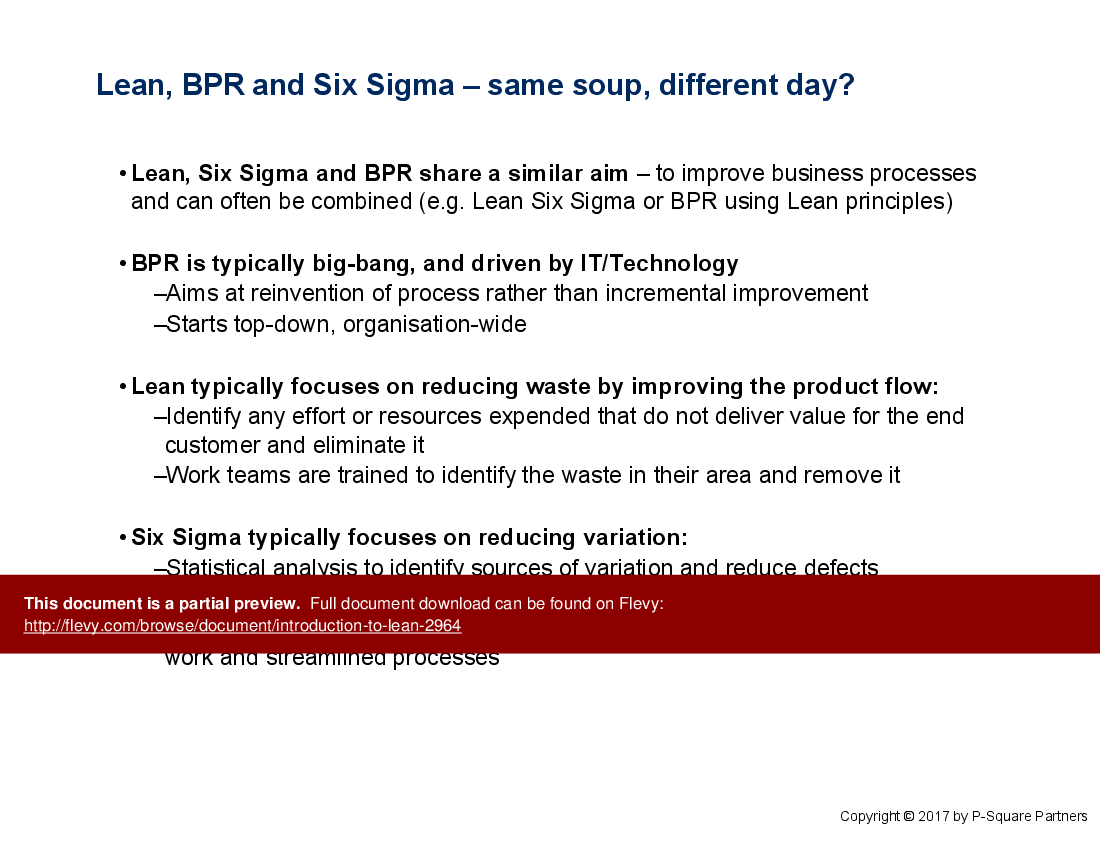
• The relationship between Lean, Six Sigma, and Business Process Reengineering (BPR)
• Techniques for measuring success and sustaining Lean improvements
FAQ
What is Lean?
Lean is a management philosophy focused on maximizing customer value while minimizing waste, emphasizing continuous improvement and respect for people.
How can Lean be applied in office environments?
Lean can be implemented in office settings by streamlining processes, reducing waste, and fostering a culture of continuous improvement among teams.
What are the 7 types of waste identified in Lean?
The 7 types of waste include overproduction, waiting, defects, overprocessing, inventory, motion, and transportation.
What is Value Stream Mapping?
Value Stream Mapping is a Lean tool used to visualize processes, identify waste, and improve workflow by mapping out the steps involved in delivering a product or service.
What is the DMADV cycle?
The DMADV cycle stands for Define, Measure, Analyze, Design, and Verify, and is a structured approach used in Lean and Six Sigma for developing effective solutions.
How do I foster a Lean culture in my organization?
Fostering a Lean culture involves engaging teams in continuous improvement, encouraging problem-solving at all levels, and promoting transparency and communication.
What challenges might I face when implementing Lean?
Common challenges include resistance to change, lack of understanding of Lean principles, and difficulty in measuring success.
How can I measure the success of Lean initiatives?
Success can be measured through key performance indicators (KPIs) such as cycle time reduction, error rates, and employee engagement levels.
Glossary
• Lean - A management philosophy focused on maximizing customer value while minimizing waste.
• Value Stream Mapping - A tool for visualizing and analyzing the flow of materials and information in a process.
• DMADV - A structured problem-solving approach used in Lean and Six Sigma.
• Waste - Activities that do not add value to the customer and can be eliminated.
• Continuous Improvement - An ongoing effort to enhance products, services, or processes.
• Kaizen - A Japanese term meaning "continuous improvement" through small, incremental changes.
• Six Sigma - A set of techniques and tools for process improvement, often used in conjunction with Lean.
• Failure Demand - Customer demand that arises from failures in the process, leading to additional work.
• SOPs - Standard Operating Procedures that ensure consistency in processes.
• Culture of Lean - The mindset and behaviors that support Lean principles within an organization.
• Process Mapping - A visual representation of the steps involved in a process to identify inefficiencies.
• Metrics Dashboard - A tool for tracking performance indicators related to Lean initiatives.

Source: Best Practices in Lean PowerPoint Slides: Introduction to Lean PowerPoint (PPT) Presentation Slide Deck, P-Square Partners
|
Receive our FREE presentation on Operational Excellence
This 50-slide presentation provides a high-level introduction to the 4 Building Blocks of Operational Excellence. Achieving OpEx requires the implementation of a Business Execution System that integrates these 4 building blocks. |









