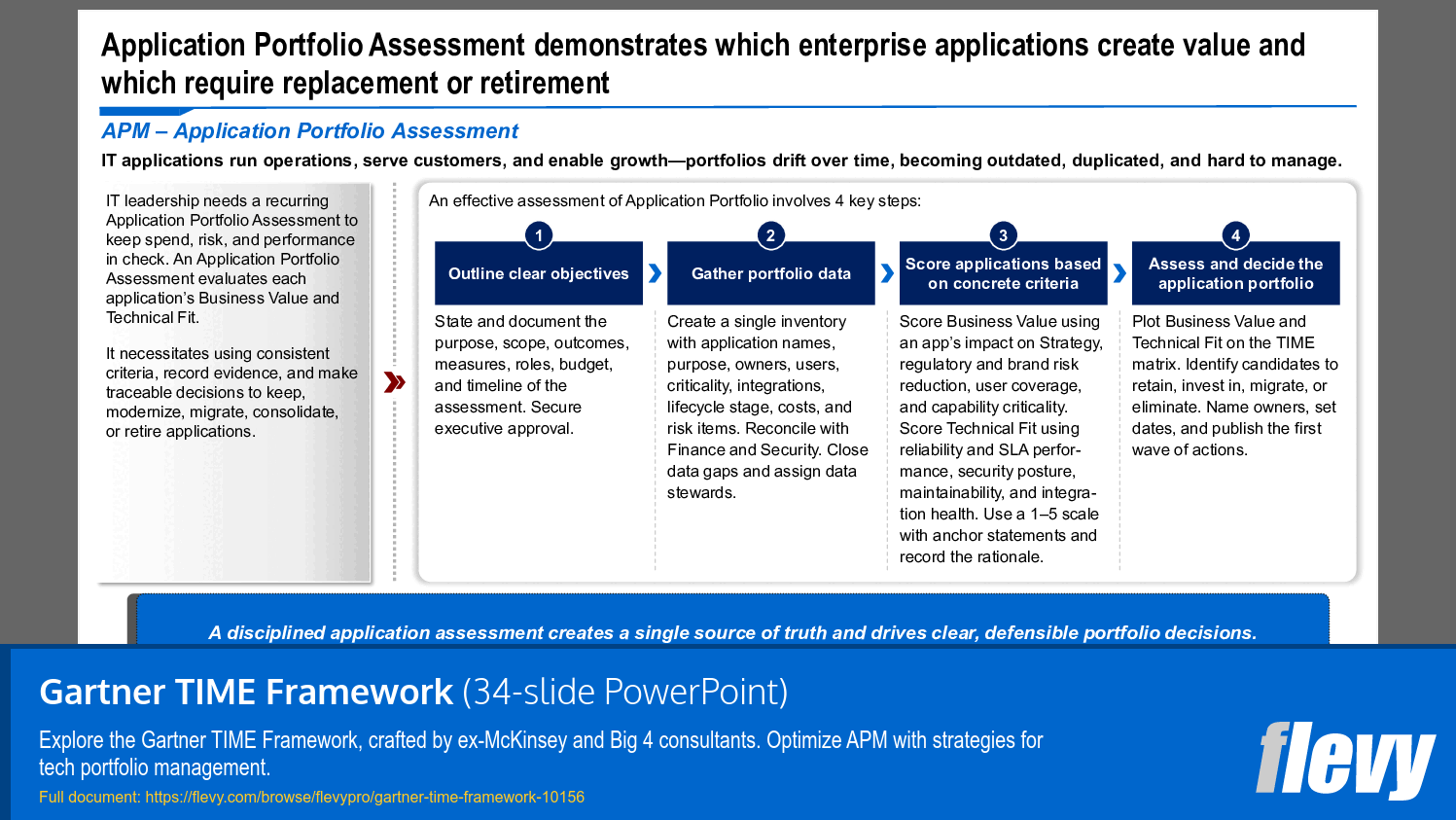
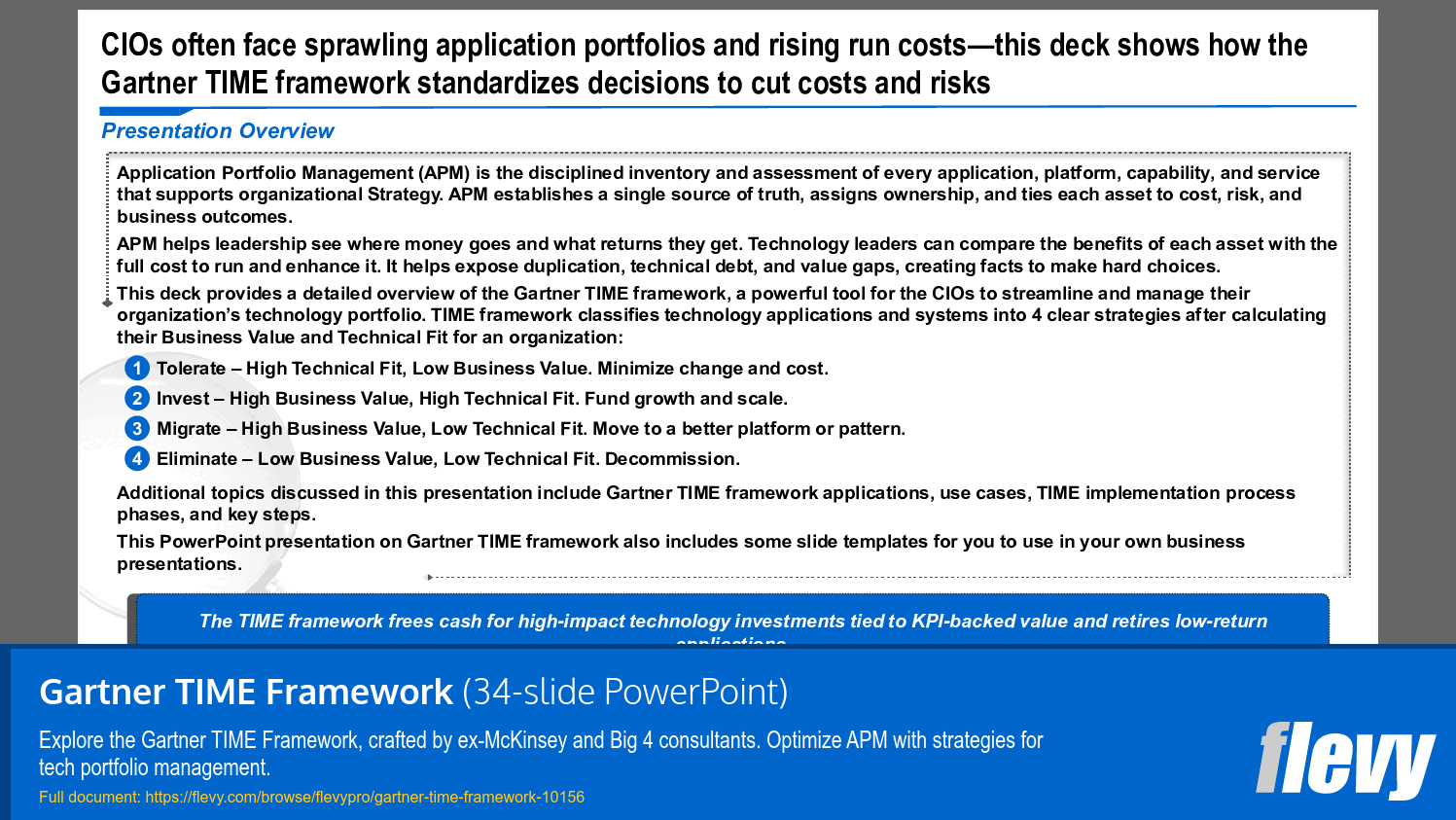

Application Portfolio Management (APM) is the disciplined inventory and assessment of every application, platform, capability, and service that supports organizational Strategy. APM establishes a single source of truth, assigns ownership, and ties each asset to cost, risk, and business outcomes.
APM helps leadership see where money goes and what returns they get. Technology leaders can compare the benefits of each asset with the full cost to run and enhance it. It helps expose duplication, technical debt, and value gaps, creating facts to make hard choices.
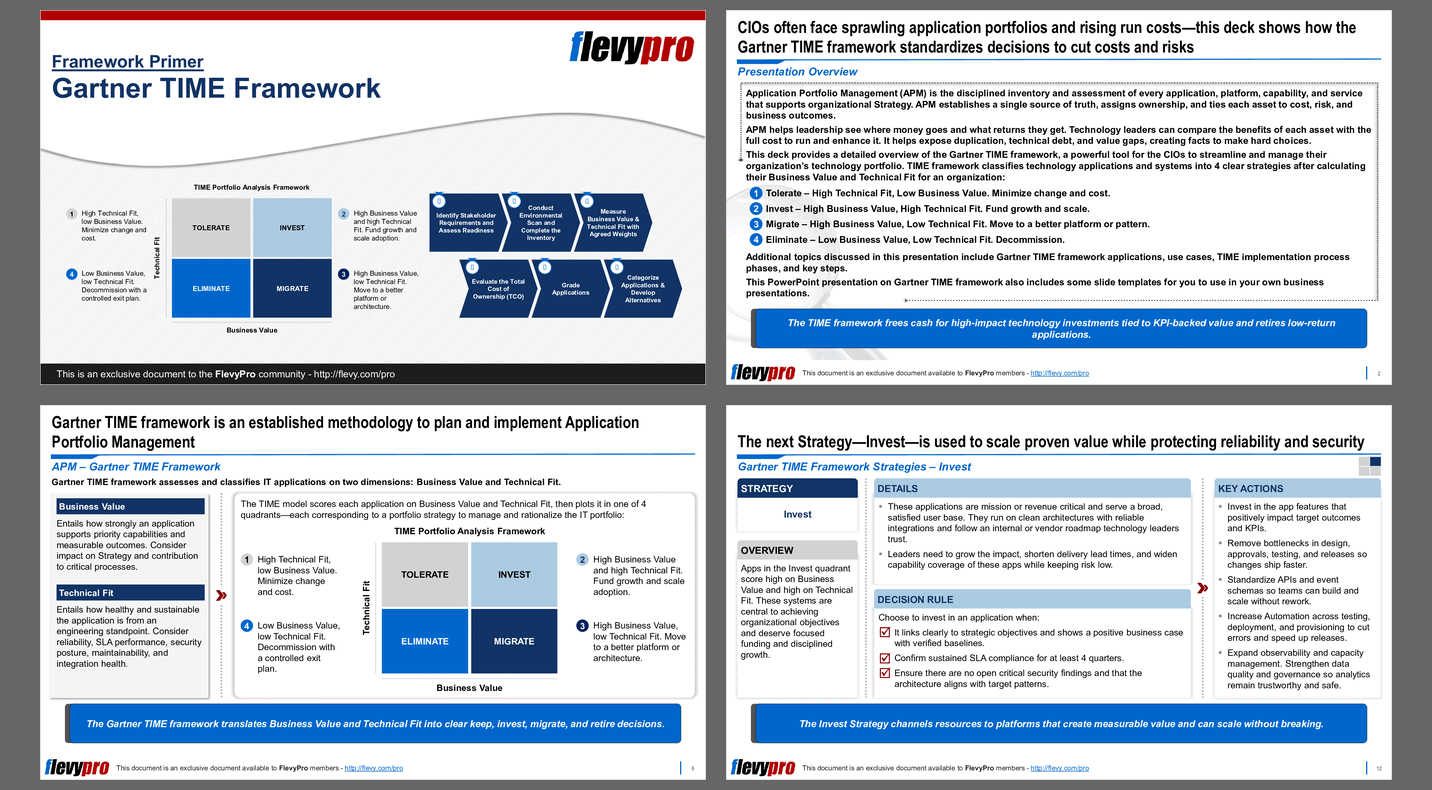
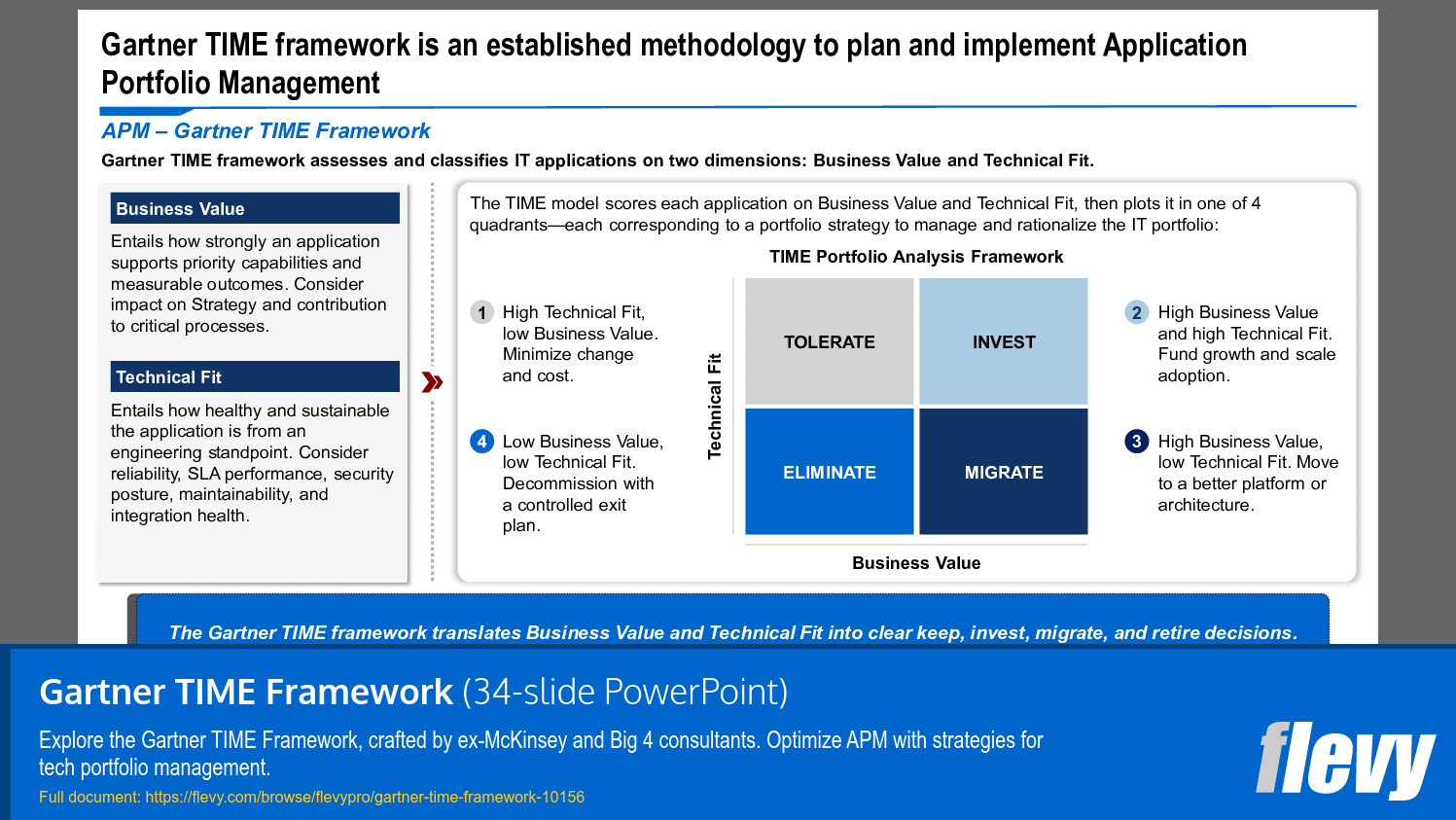
This PPT presentation provides a detailed overview of the Gartner TIME framework, a powerful tool for the CIOs to streamline and manage their organization's technology portfolio. TIME framework classifies technology applications and systems into 4 clear strategies after calculating their Business Value and Technical Fit for an organization:
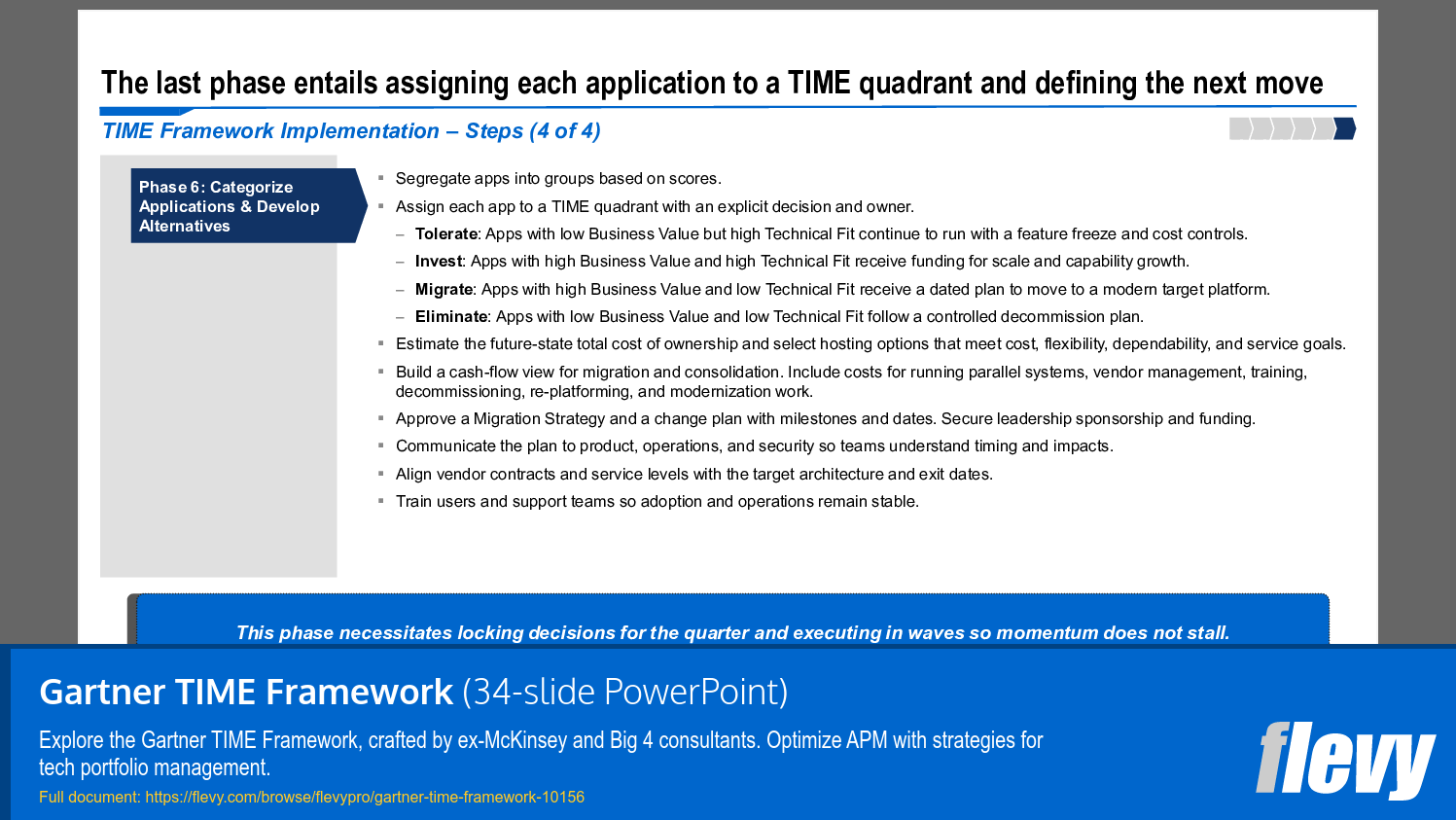
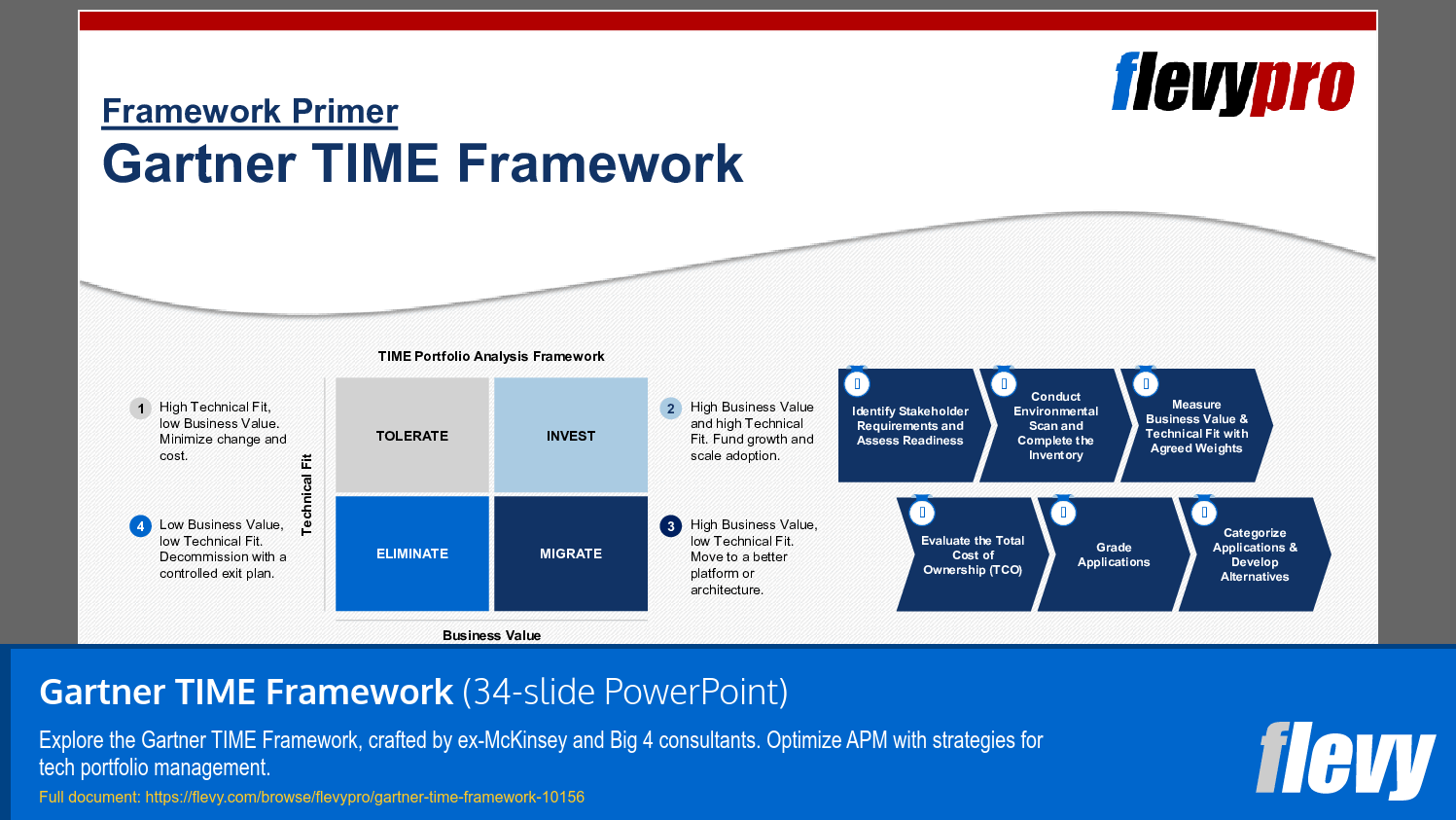
1. Tolerate – High Technical Fit, Low Business Value. Minimize change and cost.
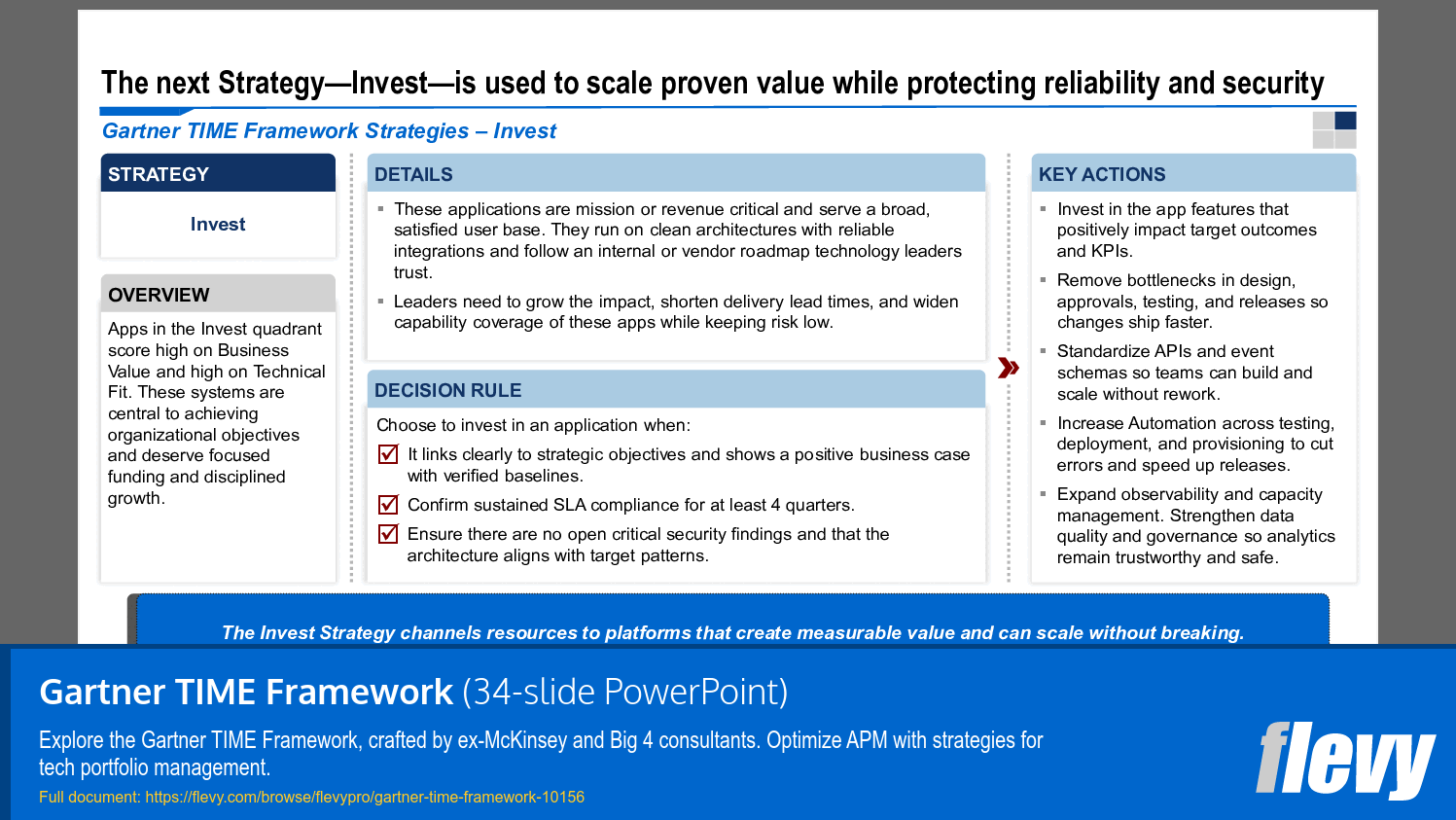
2. Invest – High Business Value, High Technical Fit. Fund growth and scale.
3. Migrate – High Business Value, Low Technical Fit. Move to a better platform or pattern.
4. Eliminate – Low Business Value, Low Technical Fit. Decommission.
Each of these strategies is discussed in depth. The TIME framework frees cash for high-impact technology investments tied to KPI-backed value and retires low-return applications.
Additional topics discussed in this presentation include Gartner TIME framework applications, use cases, TIME implementation process phases, and key steps.
This PowerPoint presentation on Gartner TIME framework also includes some slide templates for you to use in your own business presentations.
Got a question about this document? Email us at flevypro@flevy.com.
Executive Summary
The Gartner TIME Framework presentation provides a structured approach to Application Portfolio Management (APM), designed to help CIOs and technology leaders optimize their application portfolios. This framework categorizes applications based on their Business Value and Technical Fit, enabling organizations to make informed decisions about which applications to tolerate, invest in, migrate, or eliminate. By implementing the TIME framework, organizations can streamline their technology investments, reduce costs, and enhance operational efficiency.
Who This Is For and When to Use
• CIOs and technology leaders seeking to optimize application portfolios
• Application portfolio managers responsible for assessing and managing application value
• IT governance teams focused on reducing costs and risks associated with application management
• Business leaders looking to align technology investments with organizational strategy
Best-fit moments to use this deck:
• During application portfolio assessments to categorize applications effectively
• When planning technology investments to ensure alignment with business objectives
• In discussions about application rationalization and modernization strategies
Learning Objectives
• Define the Gartner TIME Framework and its relevance to APM
• Categorize applications based on Business Value and Technical Fit
• Develop strategies for managing applications in the Tolerate, Invest, Migrate, and Eliminate quadrants
• Implement a disciplined approach to assess and optimize the application portfolio
• Evaluate the Total Cost of Ownership (TCO) for applications
• Establish governance structures to support ongoing application management
Table of Contents
• Overview (page 1)
• Application Portfolio Management (APM) (page 3)
• Gartner TIME Framework (page 7)
• Gartner TIME Framework Strategies (page 11)
• TIME Framework Implementation (page 16)
• Slide Design Structure & Templates (page 22)
Primary Topics Covered
• Application Portfolio Management (APM) - A disciplined approach to inventory and assess applications, aligning them with organizational strategy and reducing risks.
• Gartner TIME Framework - A model that categorizes applications based on their Business Value and Technical Fit, guiding decisions on retention, investment, migration, or elimination.
• TIME Framework Strategies - Four strategies (Tolerate, Invest, Migrate, Eliminate) that provide actionable insights for managing applications effectively.
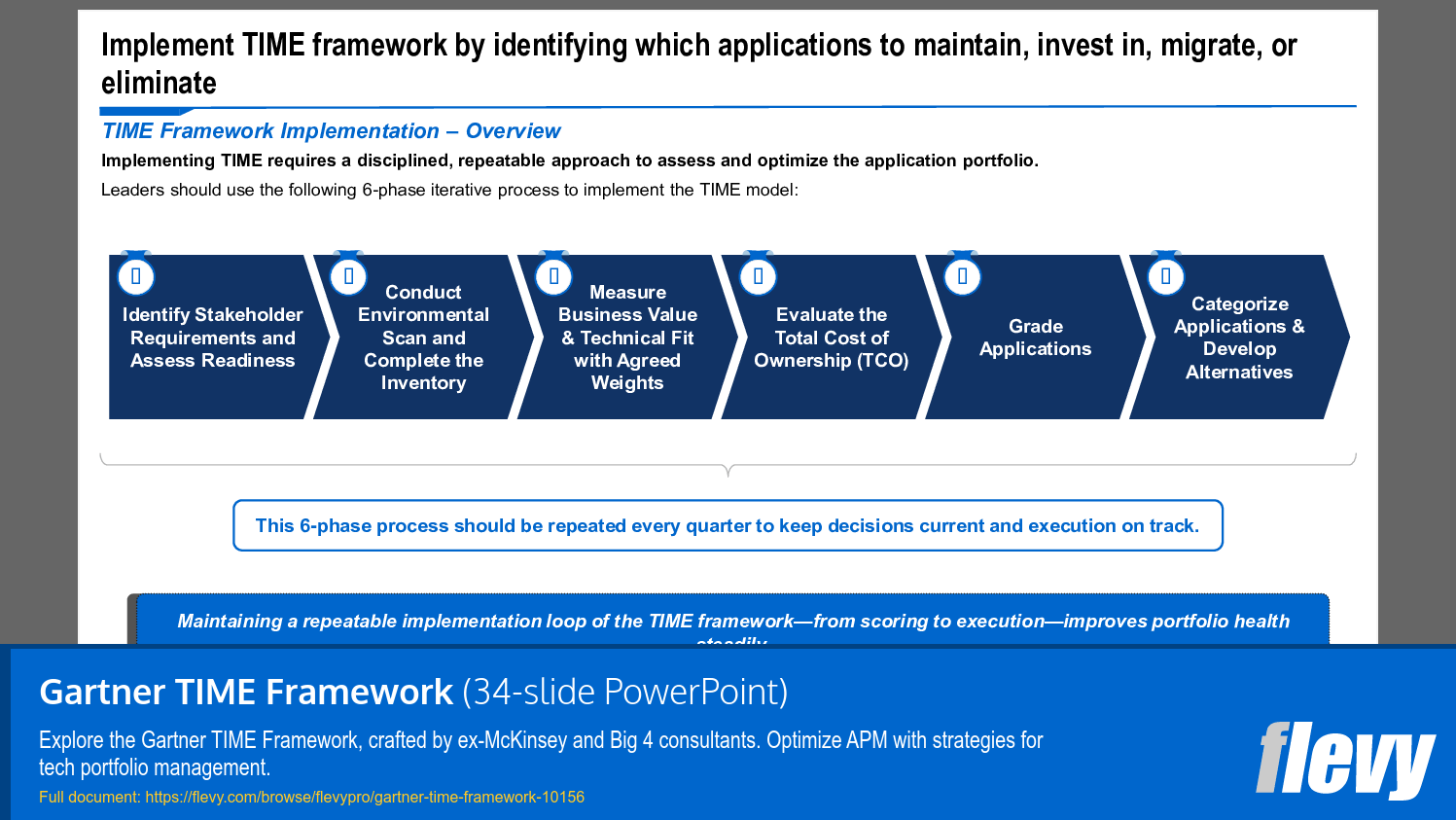
• Implementation Process - A structured six-phase approach to implementing the TIME framework, ensuring ongoing assessment and optimization of the application portfolio.
• Governance and Ownership - Establishing roles and responsibilities for application management to ensure accountability and alignment with business goals.
• Total Cost of Ownership (TCO) - Evaluating the full cost associated with applications, including operational and maintenance expenses.
Deliverables, Templates, and Tools
• Application inventory template for cataloging applications and their attributes
• Scoring model for evaluating Business Value and Technical Fit
• Governance framework for overseeing application management processes
• TCO evaluation template to assess the financial impact of applications
• Decision-making matrix for categorizing applications into TIME quadrants
• Slide templates for presenting the TIME framework and its strategies
Slide Highlights
• Overview of the Gartner TIME Framework, illustrating the 4 quadrants of application management
• Detailed breakdown of each strategy (Tolerate, Invest, Migrate, Eliminate) with key actions and decision rules
• Implementation roadmap outlining the 6 phases of the TIME framework
• Visual representation of the scoring model for Business Value and Technical Fit
• Governance structure for application management, highlighting roles and responsibilities
Potential Workshop Agenda
Introduction to the TIME Framework (30 minutes)
• Overview of APM and the importance of the TIME framework
• Discussion on current application management challenges
Application Assessment Workshop (90 minutes)
• Hands-on session to categorize applications using the TIME framework
• Group activity to evaluate Business Value and Technical Fit
Implementation Planning Session (60 minutes)
• Develop a roadmap for implementing the TIME framework in your organization
• Define roles and responsibilities for ongoing application management
Customization Guidance
• Tailor the application inventory template to reflect your organization's specific applications and metrics
• Adjust the scoring model weights based on organizational priorities and strategic objectives
• Modify governance structures to align with existing organizational frameworks and decision-making processes
Secondary Topics Covered
• Application rationalization techniques and best practices
• Risk management strategies for application portfolios
• Integration of cloud migration strategies within the TIME framework
• Vendor performance management in the context of application management
Topic FAQ
Document FAQ
These are questions addressed within this presentation.
What is the Gartner TIME Framework?
The Gartner TIME Framework is a methodology for categorizing applications based on their Business Value and Technical Fit, guiding decisions on whether to tolerate, invest in, migrate, or eliminate them.
How can I implement the TIME framework in my organization?
Implementing the TIME framework involves a six-phase process that includes assessing stakeholder requirements, conducting an environmental scan, measuring Business Value and Technical Fit, evaluating TCO, grading applications, and categorizing them into appropriate quadrants.
What are the key strategies in the TIME framework?
The 4 key strategies are Tolerate (low Business Value, high Technical Fit), Invest (high Business Value, high Technical Fit), Migrate (high Business Value, low Technical Fit), and Eliminate (low Business Value, low Technical Fit).
How do I evaluate the Total Cost of Ownership (TCO) for applications?
TCO evaluation involves capturing all costs associated with an application, including licenses, infrastructure, support, and any hidden costs, to provide a comprehensive view of its financial impact.
What roles are involved in the governance of application management?
Governance typically involves a dedicated portfolio manager, cross-functional teams, and decision-making bodies that oversee application assessments, investments, and strategic alignment.
How often should the TIME framework be revisited?
The framework should be revisited quarterly to ensure that application assessments remain current and that decisions reflect the latest organizational priorities and market conditions.
What tools can assist in the implementation of the TIME framework?
Tools include application inventory templates, scoring models, governance frameworks, and TCO evaluation templates that facilitate structured assessments and decision-making.
Can the TIME framework be integrated with other methodologies?
Yes, the TIME framework can complement other methodologies, such as Agile or DevOps, by providing a structured approach to application management within broader project management frameworks.
What are the benefits of using the TIME framework?
Benefits include improved visibility into application performance, informed decision-making regarding technology investments, reduced operational costs, and enhanced alignment with organizational strategy.
Glossary
• Application Portfolio Management (APM) - The process of cataloging and assessing applications to align them with business strategy.
• Business Value - The measure of how strongly an application supports organizational objectives and outcomes.
• Technical Fit - The assessment of an application's engineering health and sustainability.
• Total Cost of Ownership (TCO) - The comprehensive cost associated with owning and operating an application over its lifecycle.
• Governance - The framework of roles, responsibilities, and processes that guide application management decisions.
• Migration - The process of moving applications to more suitable platforms or architectures.
• Decommissioning - The planned retirement of applications that no longer provide value.
• Scoring Model - A method for evaluating applications based on defined criteria for Business Value and Technical Fit.
• Application Rationalization - The process of optimizing an application portfolio by eliminating redundancy and aligning with strategic goals.
• Stakeholder Requirements - The needs and expectations of individuals or groups involved in application management.
• Environmental Scan - An assessment of the external and internal factors affecting application performance and strategy.
• Integration Health - The state of an application's ability to interact effectively with other systems and applications.
Source: Best Practices in IT Strategy, Enterprise Architecture PowerPoint Slides: Gartner TIME Framework PowerPoint (PPTX) Presentation Slide Deck, LearnPPT Consulting
Did you need more documents?
Consider a FlevyPro subscription from $39/month. View plans here.
For $10.00 more, you can download this document plus 2 more FlevyPro documents. That's just $13 each.
|
Download our FREE Digital Transformation Templates
Download our free compilation of 50+ Digital Transformation slides and templates. DX concepts covered include Digital Leadership, Digital Maturity, Digital Value Chain, Customer Experience, Customer Journey, RPA, etc. |