ERP health check PPT: Assess your ERP program’s performance, identify risks, and improve implementation success. Download this ready-to-use presentation now. Health Check for an ERP program is a 19-slide PPT PowerPoint presentation template (PPTX) available for immediate download upon purchase.
In the realm of Enterprise Resource Planning (ERP) implementations, ensuring project success is a multifaceted challenge. Recognizing this complexity, global consultancy Affinity Consultants has identified ten critical success factors that significantly influence ERP project outcomes. This powerpoint deck provides a framework for the evaluation of ERP program health using the lens of Affinity Consultants' key success factors, offering insights into their application and benefits.
1. Clear Objectives and Scope Definition: A healthy ERP project aligns with organizational goals and has a precisely defined scope. This factor ensures project focus, preventing scope creep and enhancing overall effectiveness.
2. Top Management Support: Endorsement from senior management drives ERP success by allocating resources, advocating change, and fostering a culture of commitment.
3. Project Team Competency: A skilled and dedicated project team facilitates knowledge transfer, efficient communication, and adept problem-solving, ultimately influencing project health.
4. Adequate Resources Allocation: Sufficient resources in terms of time, budget, and personnel ensure smooth execution, reducing project risks and enhancing outcomes.
5. Change Management Strategy: Effective change management fosters user acceptance, mitigates resistance, and ensures seamless transition during ERP implementation.
6. Comprehensive Training Program: A well-structured training program empowers users to leverage the ERP system effectively, contributing to overall project success.
7. Effective Communication Plan: Transparent and consistent communication within the project team and stakeholders maintains alignment, minimizes misunderstandings, and drives progress.
8. Vendor Relationship Management: A collaborative relationship with the ERP vendor ensures timely issue resolution, updates, and alignment with the organization's evolving needs.
9. Data Migration and Quality Assurance: Accurate data migration and robust quality assurance processes safeguard the integrity of information and support informed decision-making.
10. Post-Implementation Support: A well-defined post-implementation support strategy ensures the continued smooth operation of the ERP system, addressing issues promptly and optimizing its utilization.
Affinity Consultants' framework provides a comprehensive approach to assess the health of ERP projects. This framework can be operationalized through a systematic evaluation process, involving key stakeholders, project documentation, and performance metrics. By assessing each success factor's presence, strength, and impact on the ERP program, organizations can identify strengths, weaknesses, and areas for improvement.
The ERP critical success factors framework allows organizations to proactively address challenges, enhance project outcomes, and contribute to the successful implementation and utilization of ERP systems. As ERP projects continue to be pivotal in modern business operations, leveraging this framework becomes paramount for sustained success.
This document is usuful for ERP program managers as well as consultants or executives assessing the risks to their program.
Got a question about the product? Email us at support@flevy.com or ask the author directly by using the "Ask the Author a Question" form. If you cannot view the preview above this document description, go here to view the large preview instead.
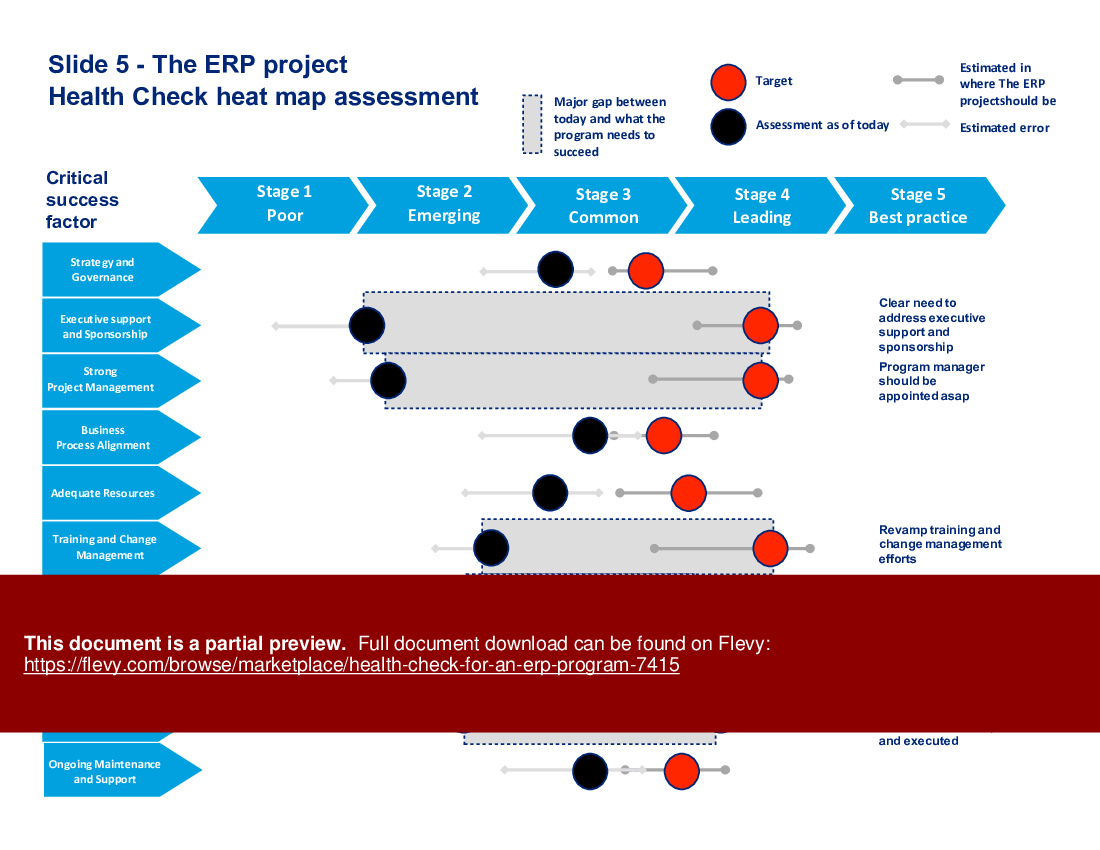
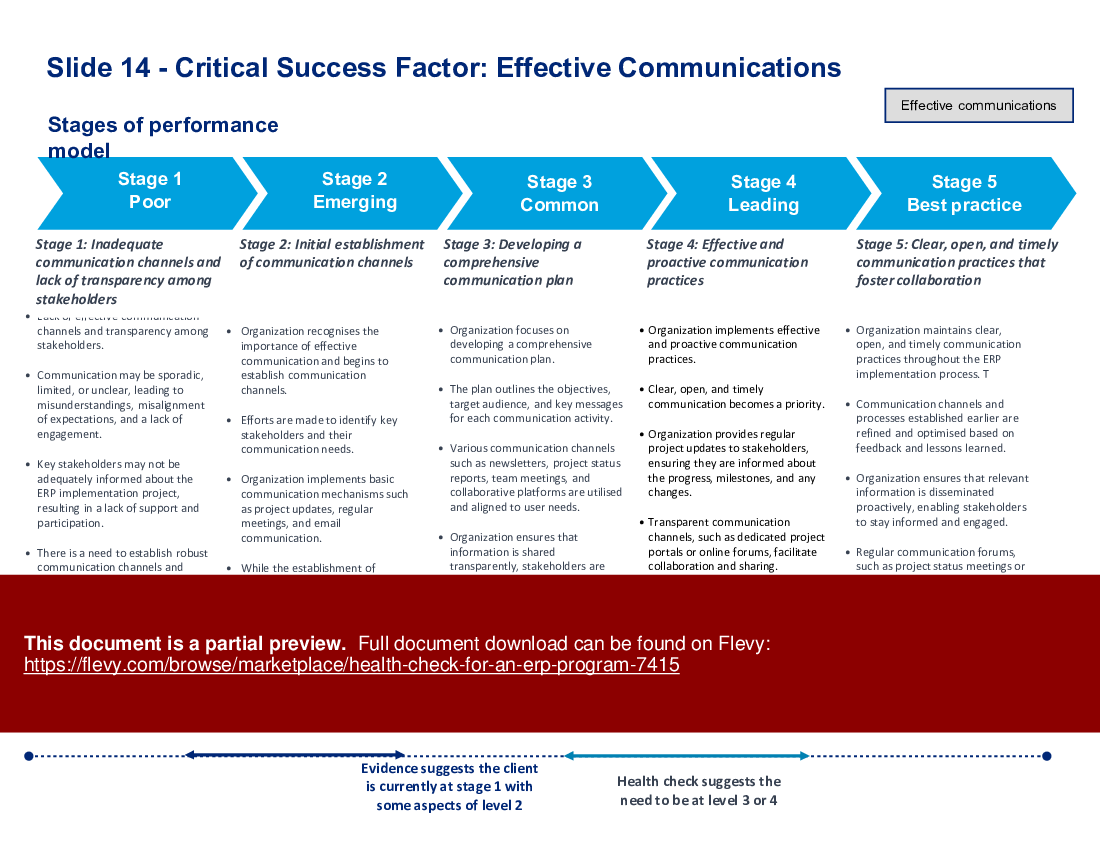
This PPT slide template presents a health check heat map assessment for an ERP project, categorizing critical success factors across 5 maturity stages: Poor, Emerging, Common, Leading, and Best Practice. Key factors include Strategy and Governance, Executive Support and Sponsorship, Strong Project Management, Business Process Alignment, Adequate Resources, Training and Change Management, Data Quality and Migration, Vendor Selection and Collaboration, and Effective Communication. Each factor is assessed from Poor to Best Practice, highlighting gaps between current status and target expectations. For example, Executive Support and Project Management are identified as needing improvement. The assessment serves as a diagnostic tool for stakeholders to prioritize actions that drive the ERP project towards its goals, facilitating strategic planning and resource allocation.
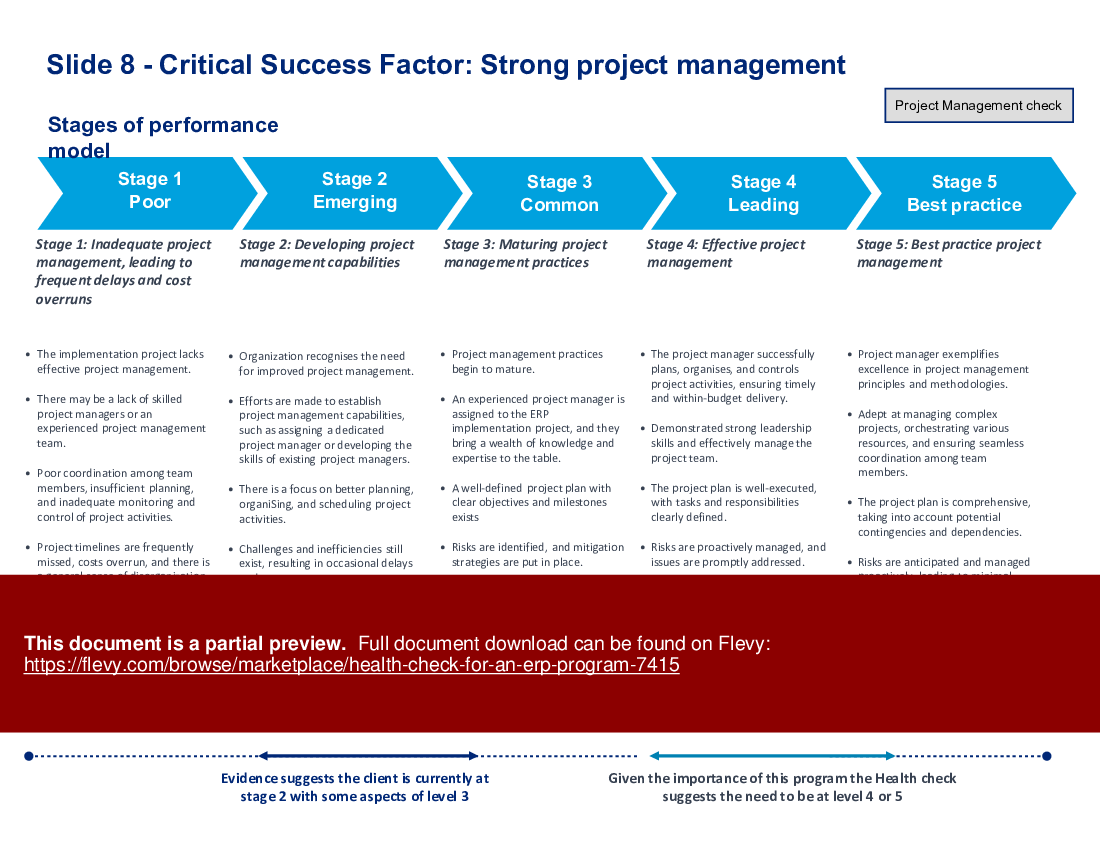
The performance model for project management categorizes practices into 5 maturity stages.
Stage 1, "Poor," indicates ineffective project management with inadequate planning, poor coordination, and frequent cost overruns, resulting in missed timelines and disorganization.
Stage 2, "Emerging," shows organizations recognizing the need for improvement, developing capabilities like assigning dedicated project managers, although challenges persist.
Stage 3, "Common," features mature practices with experienced project managers and well-defined plans, yet risks are managed reactively.
Stage 4, "Leading," signifies effective management with strong leadership, clear responsibilities, and proactive risk management.
Stage 5, "Best practice," exemplifies project management excellence, with adept handling of complex projects and proactive risk anticipation, ensuring successful delivery.
This progression highlights strong project management as a critical success factor in achieving project goals.
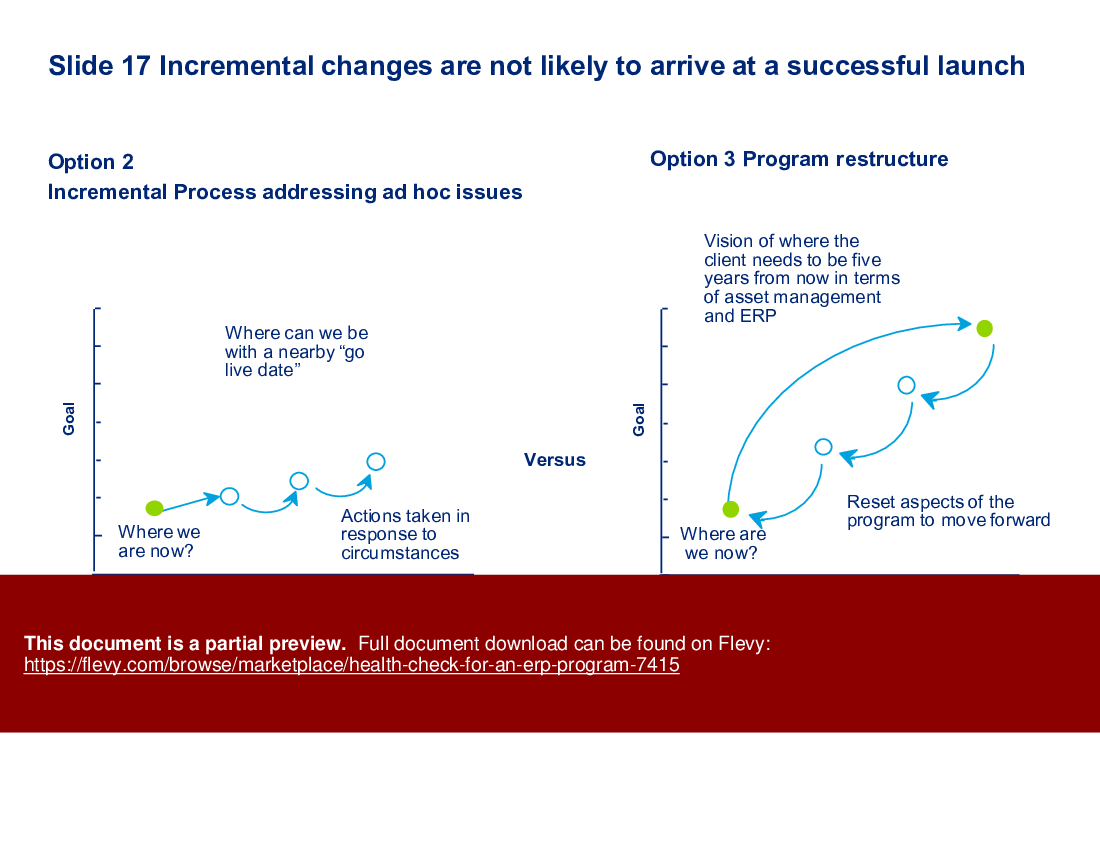
This PPT slide template compares 2 strategic options for managing an ERP program: incremental process and program restructure. "Option 2: Incremental Process" illustrates a reactive approach, addressing ad hoc issues that lead to stagnation, as indicated by a flat goal trajectory. In contrast, "Option 3: Program Restructure" presents a proactive strategy with a clear vision for asset management and ERP 5 years ahead. This option features a dynamic path toward goals, emphasizing deliberate resets for alignment with long-term objectives. The phrase "Reset aspects of the program to move forward" highlights the importance of adaptability in achieving sustainable results. The slide underscores the necessity of long-term planning and structured program management over incrementalism for successful ERP implementation.
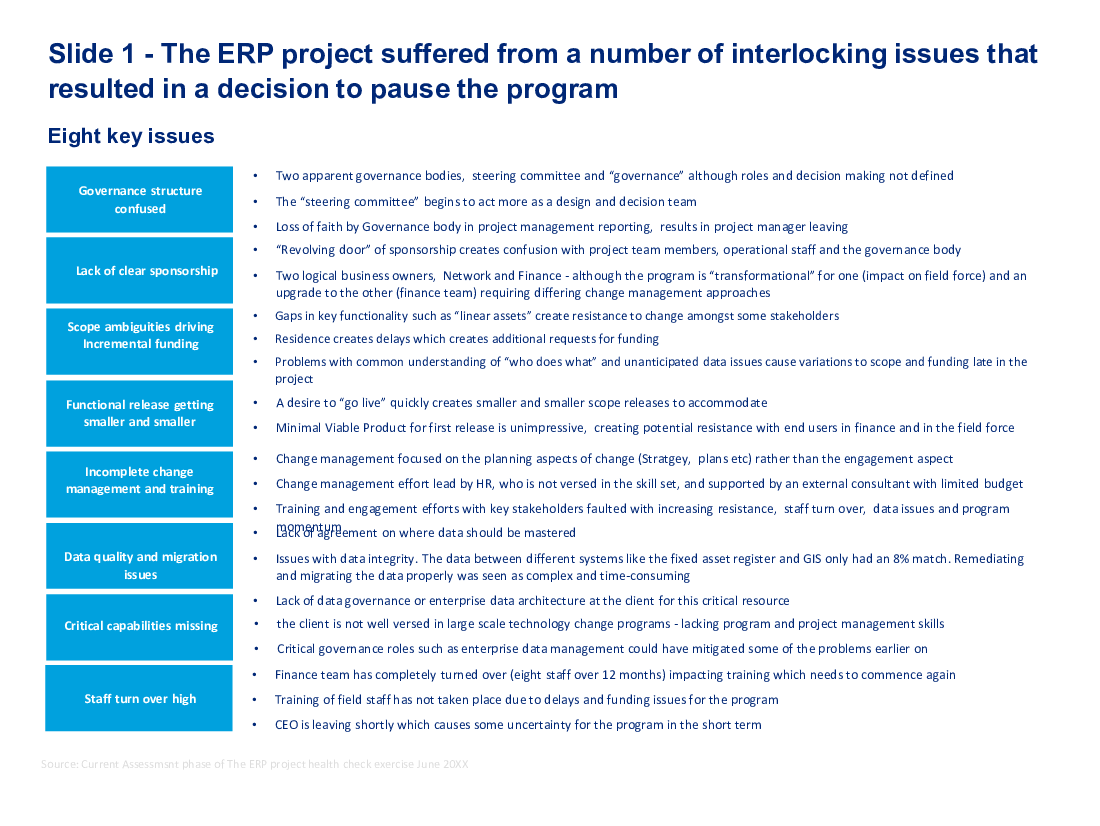
This PPT slide template identifies key causes of project stalls, centered around ineffective governance structures that hinder decision-making and clarity in roles. Data integrity and migration issues reveal gaps in data management practices, impacting project execution. Concerns over functional capabilities suggest a misalignment between project requirements and team competencies. High staff turnover disrupts continuity and knowledge retention, complicating progress. Resistance to change indicates stakeholder hesitance to adopt new processes or technologies, slowing implementation. Despite these challenges, stakeholders express a commitment to overcoming obstacles, highlighting the need for strategic interventions to enhance project success.
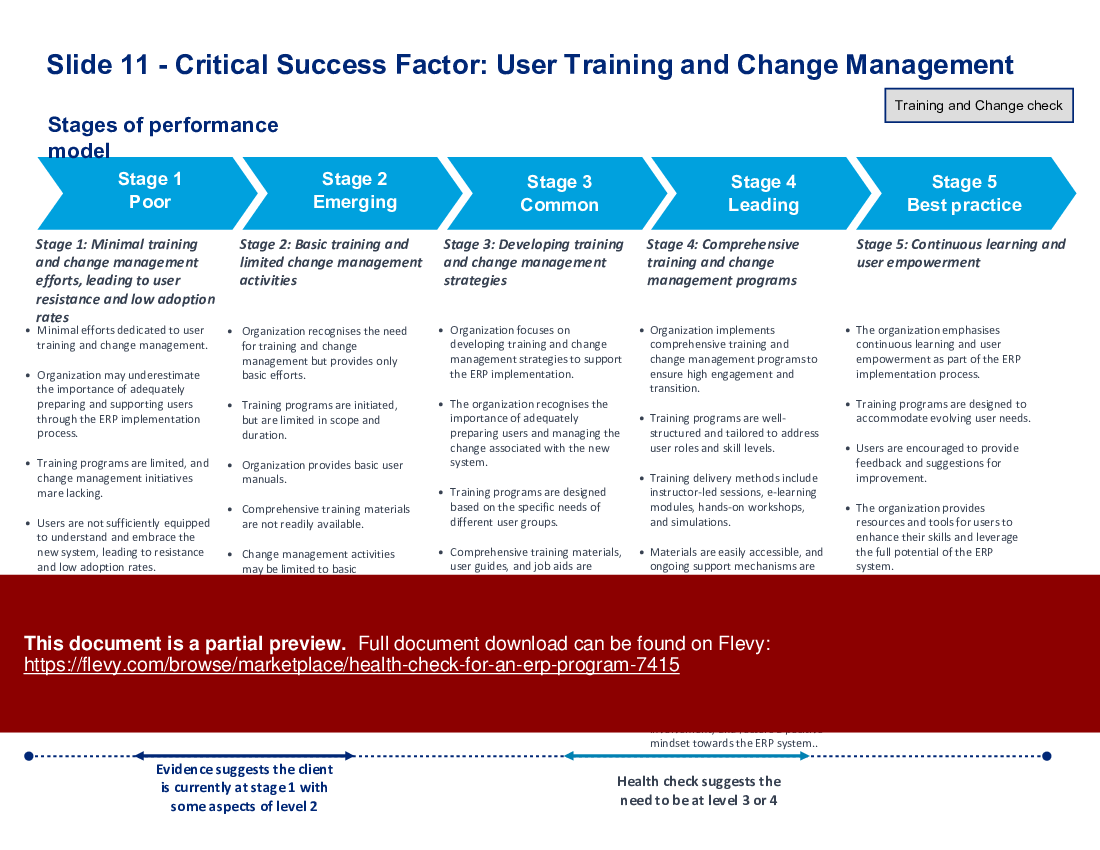
The performance model for user training and change management during ERP implementation consists of 5 stages.
Stage 1, "Poor," shows minimal training efforts, leading to user resistance and low adoption rates due to inadequate preparation.
Stage 2, "Emerging," indicates organizations beginning to recognize training needs,, but with limited scope and duration of programs.
Stage 3, "Common," reflects structured training and change management strategies, emphasizing user preparation and tailored training materials.
Stage 4, "Leading," signifies comprehensive training initiatives with various delivery methods and established support mechanisms for user inquiries.
Stage 5, "Best practice," focuses on continuous learning and user empowerment, integrating training and change management into ongoing operations to ensure sustained engagement and proficiency.
This structured approach underscores the importance of effective user training and change management in successful ERP implementation.
This PPT slide template presents a health check heat map assessment for an ERP project, categorizing critical success factors across 5 maturity stages: Poor, Emerging, Common, Leading, and Best Practice. Key factors include Strategy and Governance, Executive Support and Sponsorship, Strong Project Management, Business Process Alignment, Adequate Resources, Training and Change Management, Data Quality and Migration, Vendor Selection and Collaboration, and Effective Communication. Each factor is assessed from Poor to Best Practice, highlighting gaps between current status and target expectations. For example, Executive Support and Project Management are identified as needing improvement. The assessment serves as a diagnostic tool for stakeholders to prioritize actions that drive the ERP project towards its goals, facilitating strategic planning and resource allocation.
The performance model for project management categorizes practices into 5 maturity stages.
Stage 1, "Poor," indicates ineffective project management with inadequate planning, poor coordination, and frequent cost overruns, resulting in missed timelines and disorganization.
Stage 2, "Emerging," shows organizations recognizing the need for improvement, developing capabilities like assigning dedicated project managers, although challenges persist.
Stage 3, "Common," features mature practices with experienced project managers and well-defined plans, yet risks are managed reactively.
Stage 4, "Leading," signifies effective management with strong leadership, clear responsibilities, and proactive risk management.
Stage 5, "Best practice," exemplifies project management excellence, with adept handling of complex projects and proactive risk anticipation, ensuring successful delivery.
This progression highlights strong project management as a critical success factor in achieving project goals.
This PPT slide template compares 2 strategic options for managing an ERP program: incremental process and program restructure. "Option 2: Incremental Process" illustrates a reactive approach, addressing ad hoc issues that lead to stagnation, as indicated by a flat goal trajectory. In contrast, "Option 3: Program Restructure" presents a proactive strategy with a clear vision for asset management and ERP 5 years ahead. This option features a dynamic path toward goals, emphasizing deliberate resets for alignment with long-term objectives. The phrase "Reset aspects of the program to move forward" highlights the importance of adaptability in achieving sustainable results. The slide underscores the necessity of long-term planning and structured program management over incrementalism for successful ERP implementation.
This PPT slide template identifies key causes of project stalls, centered around ineffective governance structures that hinder decision-making and clarity in roles. Data integrity and migration issues reveal gaps in data management practices, impacting project execution. Concerns over functional capabilities suggest a misalignment between project requirements and team competencies. High staff turnover disrupts continuity and knowledge retention, complicating progress. Resistance to change indicates stakeholder hesitance to adopt new processes or technologies, slowing implementation. Despite these challenges, stakeholders express a commitment to overcoming obstacles, highlighting the need for strategic interventions to enhance project success.
The performance model for user training and change management during ERP implementation consists of 5 stages.
Stage 1, "Poor," shows minimal training efforts, leading to user resistance and low adoption rates due to inadequate preparation.
Stage 2, "Emerging," indicates organizations beginning to recognize training needs,, but with limited scope and duration of programs.
Stage 3, "Common," reflects structured training and change management strategies, emphasizing user preparation and tailored training materials.
Stage 4, "Leading," signifies comprehensive training initiatives with various delivery methods and established support mechanisms for user inquiries.
Stage 5, "Best practice," focuses on continuous learning and user empowerment, integrating training and change management into ongoing operations to ensure sustained engagement and proficiency.
This structured approach underscores the importance of effective user training and change management in successful ERP implementation.
Source: Best Practices in ERP PowerPoint Slides: Health Check for an ERP program PowerPoint (PPTX) Presentation Slide Deck, Affinity Consulting Partners
The Affinity Consulting Partnership is a global powerhouse of experienced consultants, specializing in technology and digital-driven change.
Our team is comprised of individuals across the globe who have extensive expertise and a proven track record in guiding large corporations across the globe through complex business transformations. Our partners were all at some stage senior consulting
... [read more] professionals at tier 1 global consulting firms over half our staff have been equity partners in the past at these firms.
With a combined experience of over 120 years, our partners bring a wealth of knowledge and insights to the table. Each member of our team has a distinguished background, having served as a top-level executive and trusted advisor to the C-suite of major corporations. Our partners have honed their skills and expertise through years of hands-on experience, leading successful consulting engagements across a wide range of industries, including finance, healthcare, retail, manufacturing, and more.
Our partners have a keen eye for identifying emerging trends and disruptions in the business landscape and are adept at developing innovative strategies to help our clients stay ahead of the curve.

As a team, we are dedicated to driving meaningful results for our clients, helping them navigate the complexities of technology and digital-driven change, and unlocking new opportunities for growth and success. Our partners are trusted advisors and thought leaders in the industry, and we are committed to providing exceptional service and creating lasting partnerships with our clients.

The average daily rate of a McKinsey consultant is $6,625 (not including expenses). The average price of a Flevy document is $65.
Trusted by over 10,000+ Client Organizations
Since 2012, we have provided business templates to over 10,000 businesses and organizations of all sizes, from startups and small businesses to the Fortune 100, in over 130 countries.
"My FlevyPro subscription provides me with the most popular frameworks and decks in demand in today’s market. They not only augment my existing consulting and coaching offerings and delivery, but also keep me abreast of the latest trends, inspire new products and service offerings for my practice, and educate me
in a fraction of the time and money of other solutions. I strongly recommend FlevyPro to any consultant serious about success.
"
– Bill Branson, Founder at Strategic Business Architects
"I have used Flevy services for a number of years and have never, ever been disappointed. As a matter of fact, David and his team continue, time after time, to impress me with their willingness to assist and in the real sense of the word. I have concluded in fact
that it is not at all just a repository of documents/resources but, in the way that David and his team manage the firm, it is like dealing with consultants always ready to assist, advise and direct you to what you really need, and they always get it right.
I am an international hospitality accomplished senior executive who has worked and lived during the past 35 years in 23 countries in 5 continents and I can humbly say that I know what customer service is, trust me.
Aside from the great and professional service that Flevy's team provide, their wide variety of material is of utmost great quality, professionally put together and most current.
Well done Flevy, keep up the great work and I look forward to continue working with you in the future and to recommend you to a variety of colleagues around the world.
"
– Roberto Pelliccia, Senior Executive in International Hospitality
"One of the great discoveries that I have made for my business is the Flevy library of training materials.
As a Lean Transformation Expert, I am always making presentations to clients on a variety of topics: Training, Transformation, Total Productive Maintenance, Culture, Coaching, Tools, Leadership Behavior, etc. Flevy
It is well worth the money to purchase these presentations. Sure, I have the knowledge and information to make my point. It is another thing to create a presentation that captures what I want to say. Flevy has saved me countless hours of preparation time that is much better spent with implementation that will actually save money for my clients.
"
– Ed Kemmerling, Senior Lean Transformation Expert at PMG
"As a small business owner, the resource material available from FlevyPro has proven to be invaluable. The ability to search for material on demand based our project events and client requirements was great for me and proved very beneficial to my clients. Importantly, being able to easily edit and tailor
the material for specific purposes helped us to make presentations, knowledge sharing, and toolkit development, which formed part of the overall program collateral. While FlevyPro contains resource material that any consultancy, project or delivery firm must have, it is an essential part of a small firm or independent consultant's toolbox.
"
– Michael Duff, Managing Director at Change Strategy (UK)
"Flevy.com has proven to be an invaluable resource library to our Independent Management Consultancy, supporting and enabling us to better serve our enterprise clients.
The value derived from our [FlevyPro] subscription in terms of the business it has helped to gain far exceeds the investment made, making a subscription a no-brainer for any growing consultancy – or in-house strategy team."
– Dean Carlton, Chief Transformation Officer, Global Village Transformations Pty Ltd.
"As an Independent Management Consultant, I find Flevy to add great value as a source of best practices, templates and information on new trends. Flevy has matured and the quality and quantity of the library is excellent. Lastly the price charged is reasonable, creating a win-win value for
the customer, Flevy and the various authors. This is truly a service that benefits the consulting industry and associated clients. Thanks for providing this service.
"
– Jim Schoen, Principal at FRC Group
"As a consultant requiring up to date and professional material that will be of value and use to my clients, I find Flevy a very reliable resource.
The variety and quality of material available through Flevy offers a very useful and commanding source for information. Using Flevy saves me time, enhances my expertise and ends up being a good decision."
– Dennis Gershowitz, Principal at DG Associates
"[Flevy] produces some great work that has been/continues to be of immense help not only to myself, but as I seek to provide professional services to my clients, it gives me a large "tool box" of resources that are critical to provide them with the quality of service and outcomes they are expecting."
– Royston Knowles, Executive with 50+ Years of Board Level Experience
Download our FREE Digital Transformation Templates
Download our free compilation of 50+ Digital Transformation slides and templates. DX concepts covered include Digital Leadership, Digital Maturity, Digital Value Chain, Customer Experience, Customer Journey, RPA, etc.








