 Click main image to view in full screen.
GRC Maturity Assessment Model with Scoring Rubric & Benchmarks – PowerPoint PPTX Template
PowerPoint (PPTX) 60 Slides


MATURITY MODEL PPT TEMPLATE DESCRIPTION
Chapter 1: The Foundation of GRC Maturity
What is GRC Maturity?
• Governance, Risk, and Compliance (GRC) maturity refers to the level of sophistication and effectiveness of an organization's integrated GRC program.
• It's a journey, not a destination, involving continuous improvement and adaptation.
Why Assess GRC Maturity?
• Identify Gaps: Pinpoint weaknesses in current GRC practices.
• Strategic Planning: Develop a roadmap for enhancing GRC capabilities.
• Benchmarking: Understand your position relative to industry peers.
• Drive Improvement: Foster a culture of continuous risk management and compliance.
The Cost of Immature GRC
• Fewer than 15% of organizations worldwide have mature GRC capabilities (Diligent).
• Immature GRC leads to increased risk of breaches, fines, and reputational damage.
• Reactive approaches are costly and inefficient compared to proactive strategies.
Chapter 2: The GRC Maturity Assessment Process
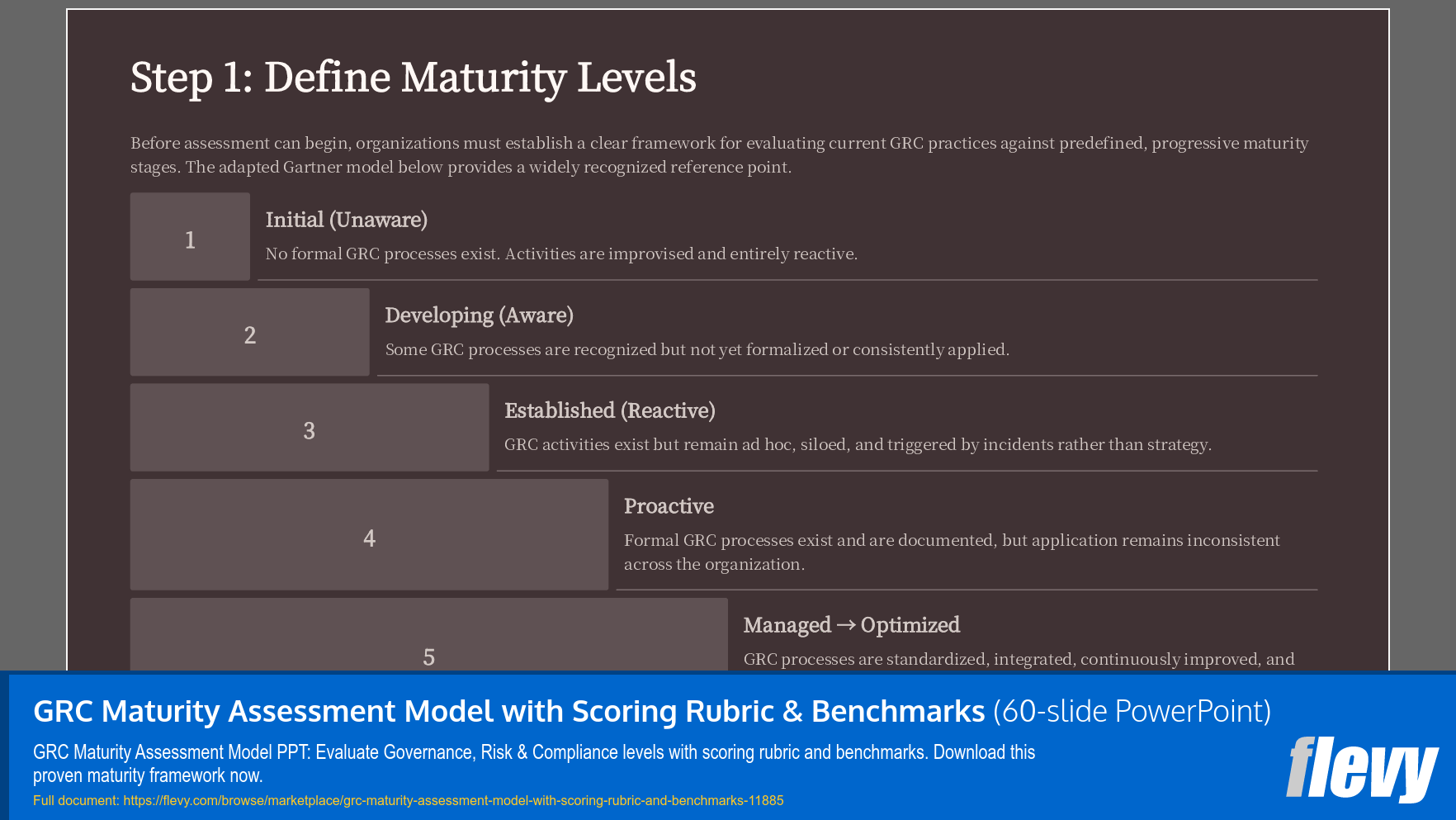
Step 1: Define Maturity Levels
• Establish a framework for evaluating current GRC practices against predefined stages.
• Gartner's Data Governance Maturity Model (Adapted for GRC):
• Initial (Unaware): No formal GRC processes.
• Developing (Aware): Some GRC processes recognized but not formalized.
• Established (Reactive): GRC activities are ad hoc and reactive.
• Proactive: Formal GRC processes exist but are inconsistently applied.
• Managed: GRC processes are standardized and integrated.
• Optimized: GRC is embedded, continuously improved, and aligned with business goals.
Step 2: Select a Maturity Model
• Choose a model that aligns with your organization's needs.
• OCEG's GRC Maturity Model (5 Levels):
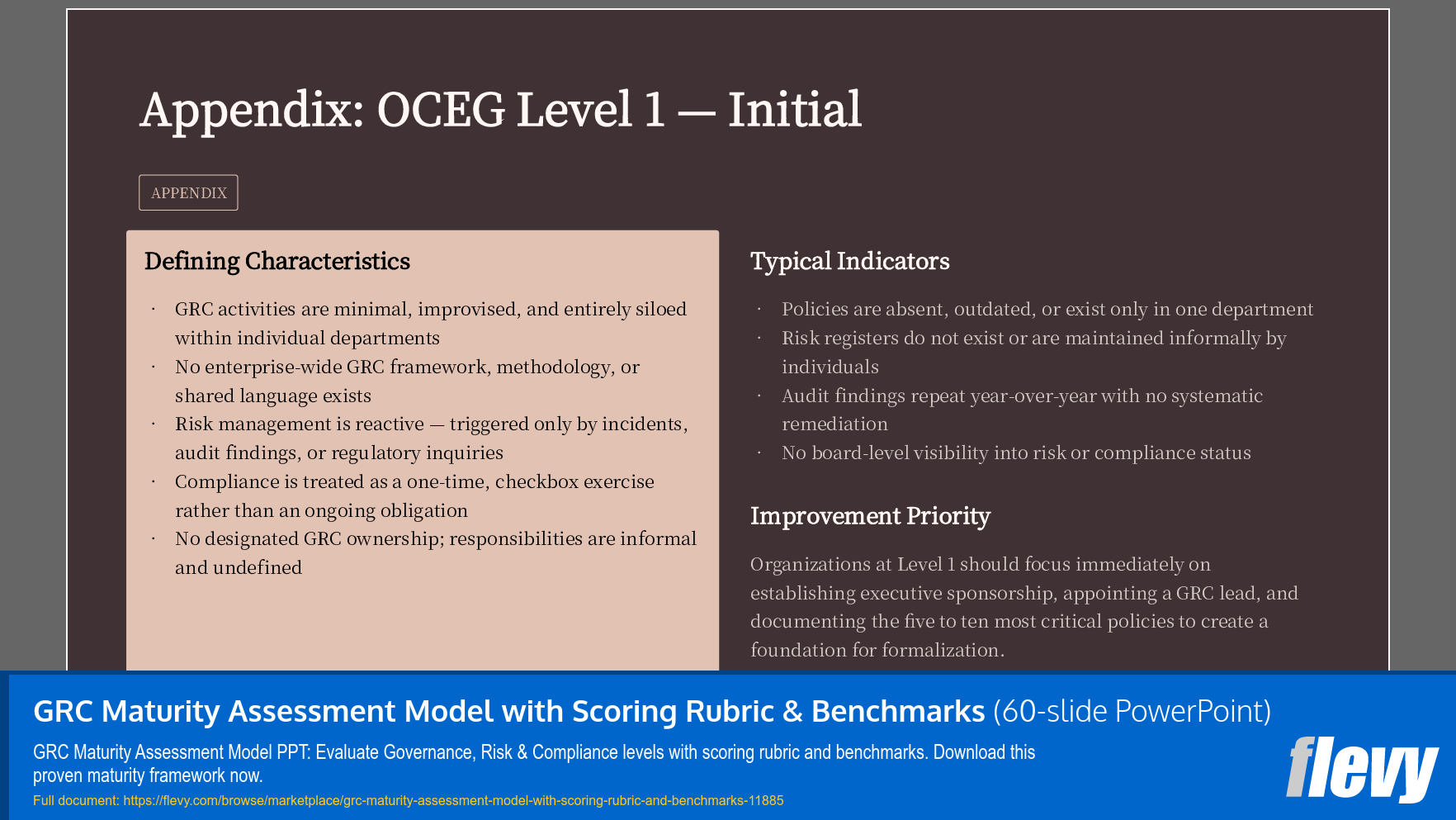
• Level 1: Initial: Minimal, improvised, siloed activities.
• Level 2: Managed: Defined, managed practices, often informal; inconsistent information sharing.
• Level 3: Consistent: Common framework, documented, consistently managed practices; breaking down silos.
• Level 4: Measured: Aligned with GRC strategy, data-driven decisions, automation introduced.
• Level 5: Optimizing: Continuous monitoring, risk-first decision-making, real-time risk management.
Step 3: Gather Data and Evidence
• Collect documentation, interview stakeholders, and observe processes.
• Evidence sources include policies, procedures, risk registers, audit reports, and system logs.
Step 4: Score Current State
• Evaluate each GRC domain against the chosen maturity model's criteria.
• Use a scoring rubric to assign a maturity level.
Step 5: Identify Gaps and Opportunities
• Compare the current state scores against desired future state or benchmarks.
• Highlight areas requiring immediate attention and long-term development.
Step 6: Develop a Roadmap
• Create actionable plans to address identified gaps.
• Prioritize initiatives based on risk, impact, and feasibility.
Step 7: Implement and Monitor
• Execute the roadmap and continuously track progress.
• Regularly reassess maturity to ensure ongoing improvement.
Chapter 3: The GRC Scoring Rubric & Benchmarks
Understanding Control Maturity Scoring
• Frameworks like HITRUST provide detailed rubrics for assessing control maturity.
• Key dimensions often include: Policy, Procedure, Implementation, Measurement, and Managed Risk Treatment.
HITRUST Control Maturity Scoring Rubric (Example)
• Policy Strength: % of evaluative elements addressed by policy.
• Tiers: No policy (NC), Undocumented (SC), Documented (PC, MC, FC).
• Procedure Strength: % of evaluative elements addressed by procedure.
• Tiers: No procedure (NC), Undocumented (SC), Documented (PC, MC, FC).
HITRUST Control Maturity Scoring Rubric (Example – Cont.)
• Implementation Strength: % of scope components implemented.
• Tiers: 0-10% (NC) to 90-100% (FC).
• Measurement Strength: % of evaluative elements addressed by measurement.
• Tiers: No measurements (NC) to measurements including independent metrics (FC).
HITRUST Control Maturity Scoring Rubric (Example – Cont.)
• Managed Risk Treatment: Frequency of applying risk treatment.
• Tiers: No process (NC) to documented with all criteria addressed (FC).
• Rating Range: Non-Compliant (0-10%) to Fully Compliant (90-100%).
Applying the Rubric: A Practical Example
• Scenario: Fire extinguisher maintenance procedure.
• DC1: Procedure scores as Mostly Compliant (75%).
• DC2: Procedure scores as Non-Compliant (0%).
• Average Score: (75% + 0%) / 2 = 37.5%.
• Computed Rating: Partially Compliant (falls within 33%-65% range).
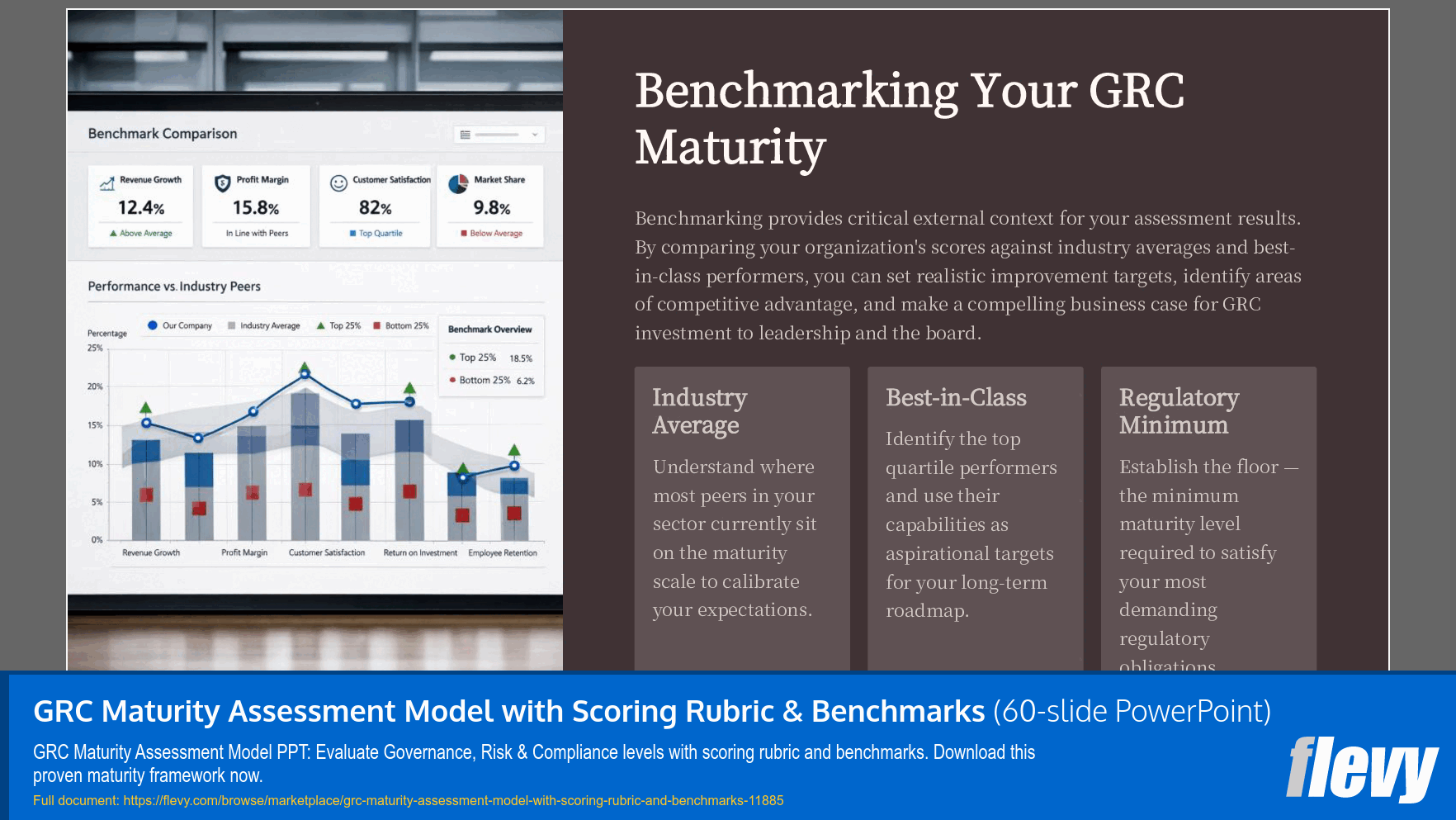
Benchmarking Your GRC Maturity
• Compare your organization's scores against industry averages or best-in-class performers.
• This helps set realistic targets and identify areas where you excel or lag.
Benchmarking Resources
• Industry reports and surveys from GRC solution providers (e.g., Diligent, Secureframe).
• Peer group analysis and industry best practices.
Chapter 4: Leveraging Maturity for Strategic Advantage
From Assessment to Action
• The assessment is only the first step. The real value lies in the implementation of improvements.
• Focus on actionable insights derived from the scoring and benchmarking.
Prioritizing GRC Initiatives
• Risk-Based Approach: Focus on high-risk areas identified in the assessment.
• Business Alignment: Ensure GRC initiatives support strategic business objectives.
• Resource Allocation: Allocate budget and personnel effectively.
The Role of Technology
• GRC platforms and tools can automate processes, improve data collection, and enhance reporting.
• Examples: Integrated GRC software, risk management tools, compliance management solutions.
Building a Culture of GRC Excellence
• Foster awareness and accountability across all levels of the organization.
• Encourage open communication about risks and compliance challenges.
• Integrate GRC into daily operations and decision-making.
Continuous Monitoring and Improvement
• GRC maturity is not static; it requires ongoing attention.
• Implement systems for continuous monitoring and regular reassessment.
• Adapt to evolving threats, regulations, and business needs.
[image] A visual representation of a GRC maturity curve, showing progression from "Initial" to "Optimizing" over time. Text overlay: "The Path to GRC Excellence"
Case Study: Enhancing GRC Maturity at [Fictional Company Name]
• Initial State: Level 1 (Initial) – Siloed, reactive GRC.
• Assessment Findings: Significant gaps in policy documentation and risk assessment.
• Roadmap Focus: Implementing a GRC platform, standardizing risk assessment, developing comprehensive policies.
Case Study: Enhancing GRC Maturity at [Fictional Company Name] (Cont.)
• Implementation: Rolled out GRC software, conducted cross-departmental training.
• Results: Achieved Level 3 (Consistent) within 18 months. Reduced audit findings by 40%. Improved stakeholder confidence.
Chapter 5: The Future of GRC Maturity
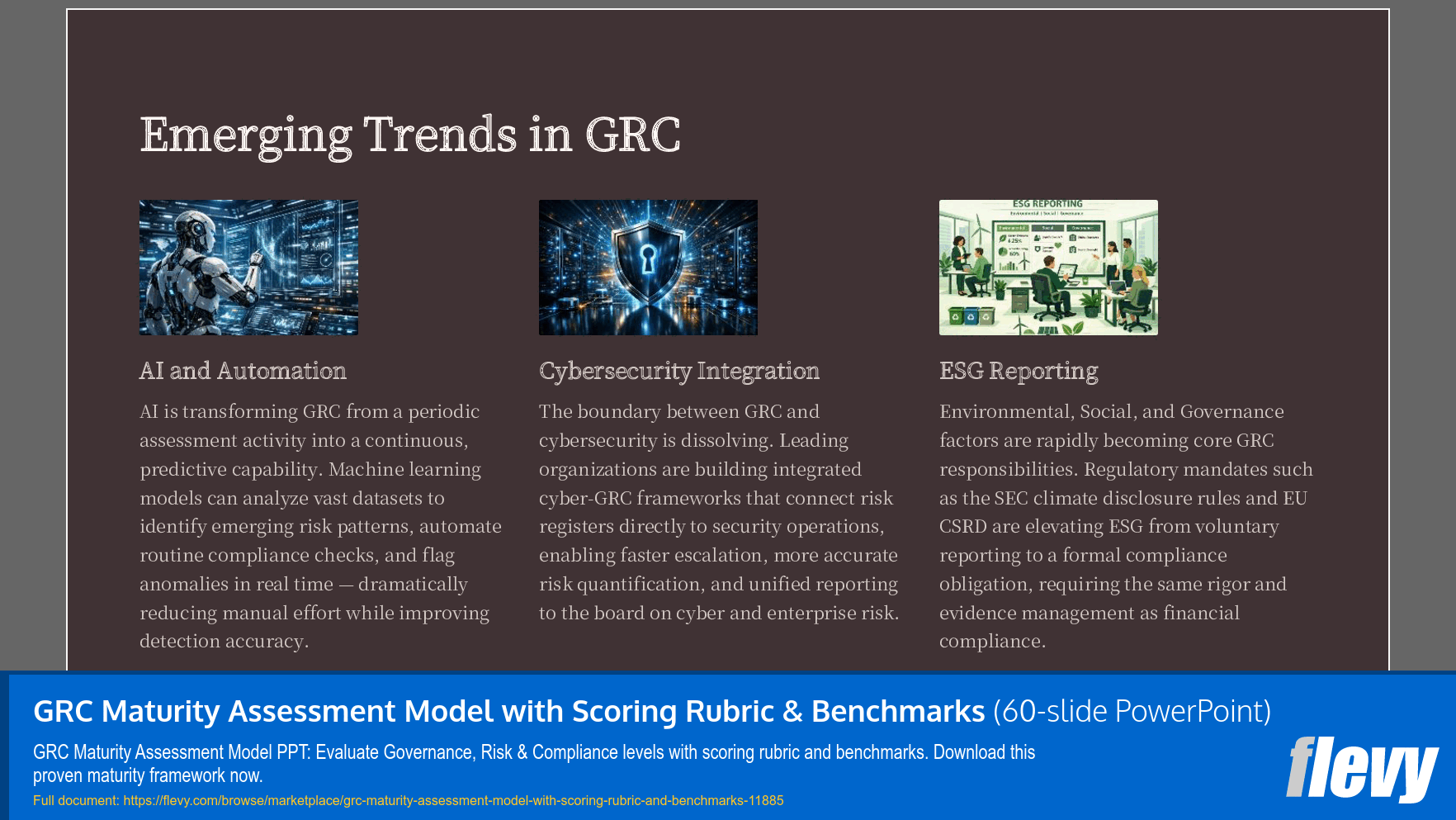
Emerging Trends in GRC
• AI and Automation: Leveraging AI for predictive risk analysis and automated compliance checks.
• Cybersecurity Integration: Deeper integration of GRC with cybersecurity operations.
• ESG Reporting: Growing importance of Environmental, Social, and Governance factors in GRC.
AI Governance Maturity Models
• Frameworks like the CSI AI Sovereignty Maturity Model (AISM) are emerging for AI-specific GRC.
• Focus on runtime enforcement, safety controls, and human-AI authority.
The Evolving Landscape of Compliance
• Regulations are constantly changing, requiring agile and adaptable GRC programs.
• Proactive GRC maturity is key to navigating this complex environment.
[image] A futuristic cityscape with interconnected digital networks, symbolizing advanced GRC. Text overlay: "Intelligent, Integrated, and Proactive GRC"
Conclusion: Your GRC Maturity Advantage
Key Takeaways
• GRC maturity is a critical driver of organizational resilience and competitive advantage.
• A structured assessment process, supported by robust scoring rubrics and benchmarks, is essential.
• Continuous improvement and adaptation are paramount in the evolving GRC landscape.
Your Next Steps
• Assess: Conduct a GRC maturity assessment for your organization.
• Plan: Develop a tailored roadmap for improvement.
• Implement: Leverage technology and foster a strong GRC culture.
• Monitor: Continuously track progress and adapt your strategy.
[image] A graphic showing a company logo transforming from a basic shape to a complex, robust structure. Text overlay: "Transform Your GRC: From Reactive to Strategic"
Q&A
Appendix: Detailed Maturity Level Descriptions (Example: OCEG Level 1)
Appendix: Detailed Maturity Level Descriptions (Example: OCEG Level 2)
Appendix: Detailed Maturity Level Descriptions (Example: OCEG Level 3)
Appendix: Detailed Maturity Level Descriptions (Example: OCEG Level 4)
Appendix: Detailed Maturity Level Descriptions (Example: OCEG Level 5)
Appendix: HITRUST Rubric – Policy Strength Tiers
Appendix: HITRUST Rubric – Procedure Strength Tiers
Appendix: HITRUST Rubric – Implementation Strength Tiers
Appendix: HITRUST Rubric – Measurement Strength Tiers
Appendix: HITRUST Rubric – Managed Risk Treatment Tiers
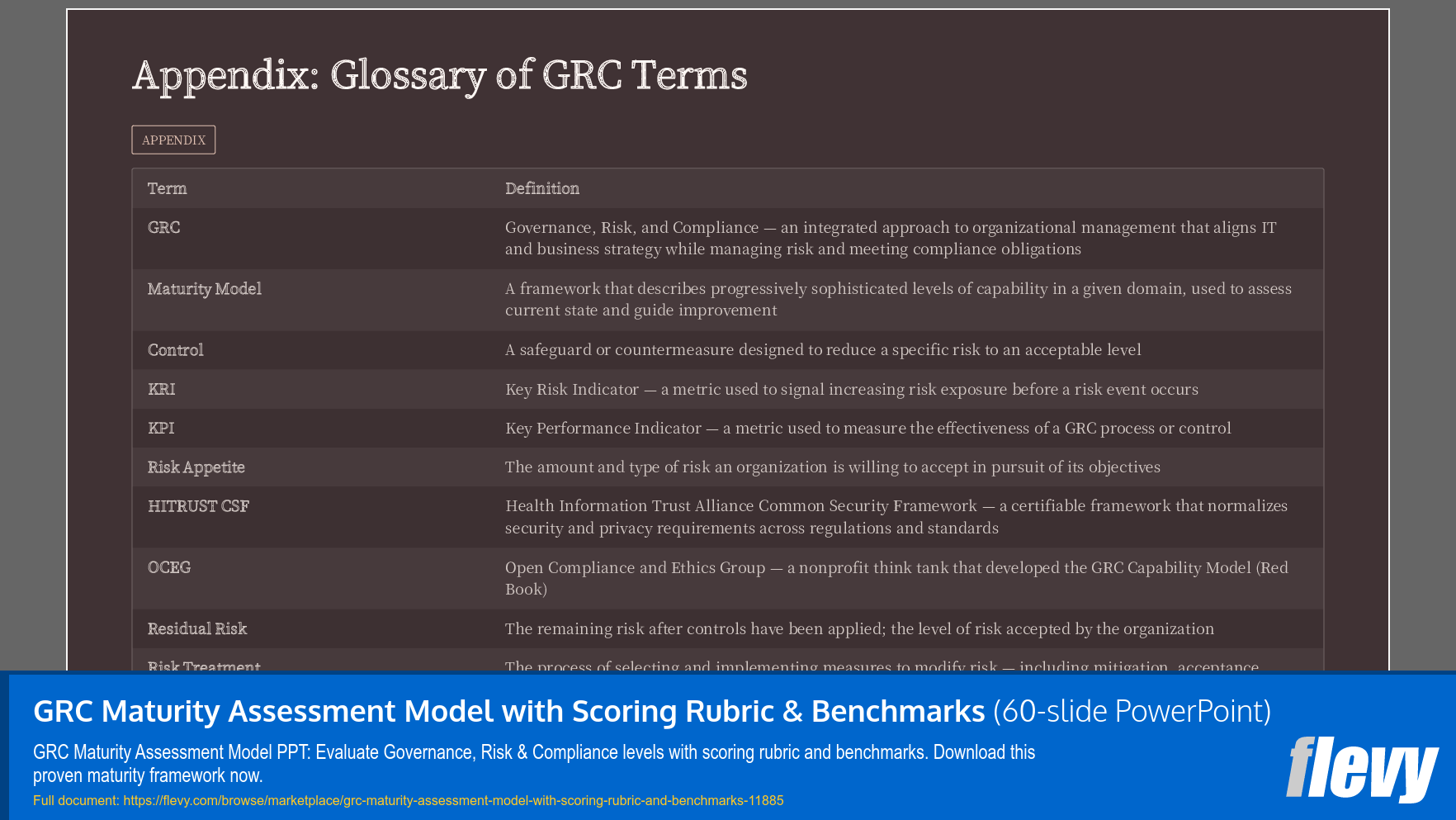
Appendix: Glossary of GRC Terms
Appendix: Recommended GRC Tools and Technologies
Appendix: Further Reading and Resources
Appendix: Common GRC Pitfalls to Avoid
Appendix: The Business Case for Mature GRC
Appendix: Regulatory Landscape Overview
Appendix: Stakeholder Roles in GRC Maturity
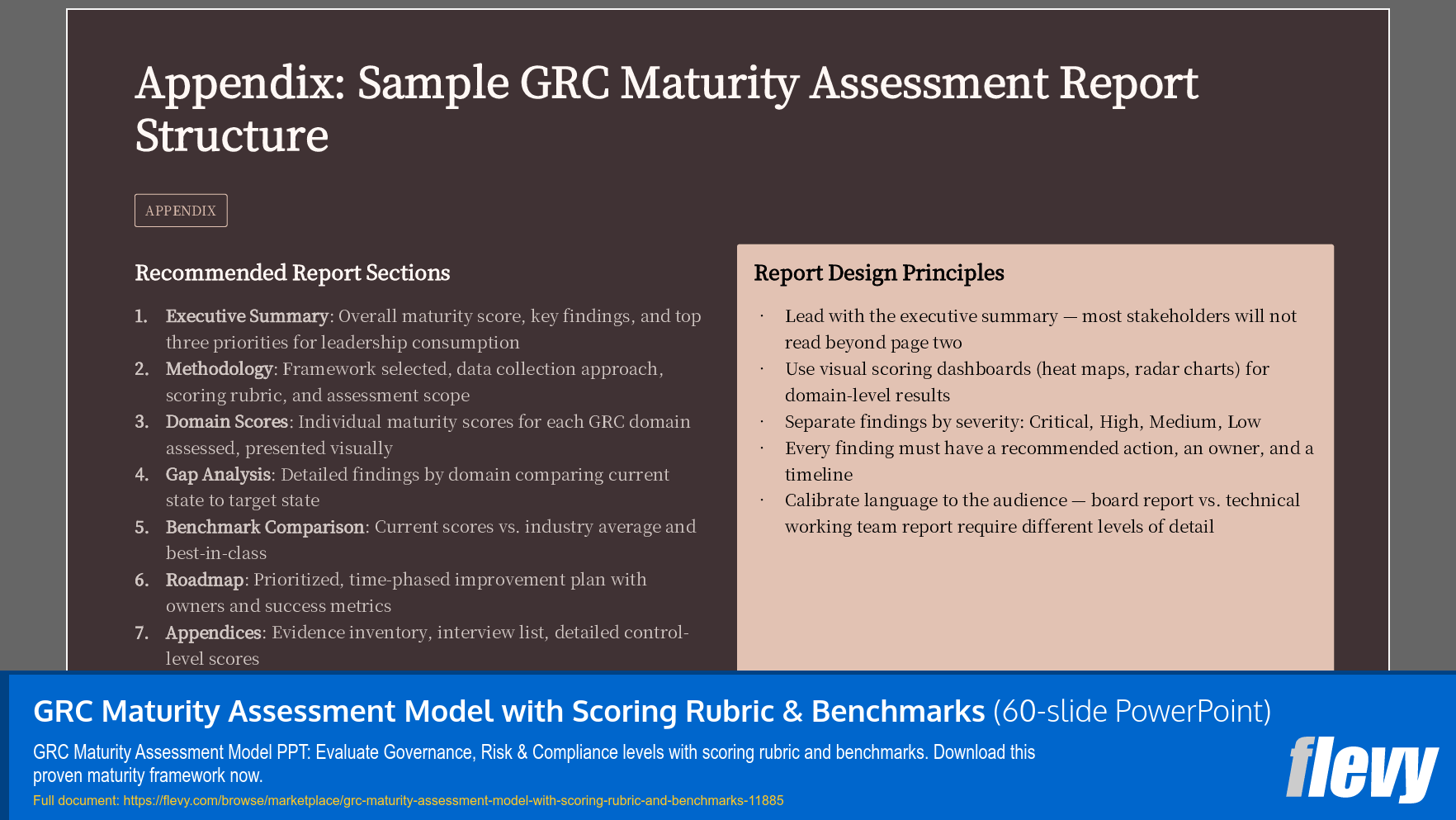
Appendix: Sample GRC Maturity Assessment Report Structure
Appendix: Advanced GRC Concepts (e.g., Integrated Risk Management)
Got a question about the product? Email us at support@flevy.com or ask the author directly by using the "Ask the Author a Question" form. If you cannot view the preview above this document description, go here to view the large preview instead.
Source: Best Practices in Maturity Model, Compliance PowerPoint Slides: GRC Maturity Assessment Model with Scoring Rubric & Benchmarks PowerPoint (PPTX) Presentation Slide Deck, Mohamed Alshamey
ABOUT THE AUTHOR

Senior Consultant in Cybersecurity GRC, Data Governance, Cybersecurity, Privacy, and Data Management, with over 20 years of experience in information technology, consulting, training, and technical capacity building. holds a PhD. In AI & Data Privacy, he has a master's degree in cybersecurity and is currently pursuing research focused on data privacy. possesses extensive expertise in ... [read more]
Ask the Author a Question
You must be logged in to contact the author.




























