

 Click main image to view in full screen. Unlock all 10 preview images:
Fundraising & Dilution Scenario Analysis Financial Model – Excel XLSX
Excel (XLSX) + Excel (XLSX)


VIDEO DEMO
BENEFITS OF THIS DOWNLOADABLE EXCEL DOCUMENT
- Plan fundraising rounds with clearer ownership outcomes
- Compare scenarios before making funding decisions
- Support investor, board and internal planning conversations
FINANCING EXCEL DESCRIPTION
MODEL OVERVIEW
Raising capital is one of the most important decisions a business can make. The timing, size, valuation, and structure of each funding round can have a significant impact on ownership, dilution, shareholder returns, and the long-term value created for founders and investors.
Our comprehensive Fundraising & Dilution Scenario Analysis Financial Model is designed to help founders, investors, advisors, and finance professionals project financial performance over 5 years and evaluate fundraising strategies and their impact on future ownership and shareholder value.
The model enables users to:
• Build Integrated 5-Year Financial Projections: Develop detailed financial forecasts that drive future valuation and funding requirements.
• Model Multiple Capitalisation Events: Analyse the impact of up to 8 capitalisation events, including equity investments, stock option issuances, and share transfers.
• Manage Complex Cap Tables: Track ownership changes across founders, employees, existing investors, and new investors throughout the fundraising lifecycle.
• Support Multiple Investor Classes: Model and compare the participation of up to 15 investors, including existing and prospective shareholders.
• Evaluate Valuations and Dilution: Assess pre-money and post-money valuations, investor ownership, founder dilution, and the impact of each fundraising round.
• Track Shareholder Returns: Analyse changes in ownership percentages, investment values, and shareholder outcomes (return and IRR) over projection period.
• Assess Funding Requirements: Determine capital requirements based on projected growth, operating performance, and cash flow needs.
• Perform Scenario Analysis: Compare impacts of different financial projection outcomes on pre and post money valuation and subsequent shareholding and voting right splits resulting from capitalisation events.
• Generate Detailed Capitalisation Tables: Automatically update shareholdings, issued share capital, ownership percentages, and dilution impacts following each capitalisation event.
This model follows financial modelling best practices and incorporates clear instructions, robust validation checks, and transparent calculations to ensure accuracy, flexibility, and ease of use for both fundraising planning and shareholder analysis.
KEY OUTPUTS
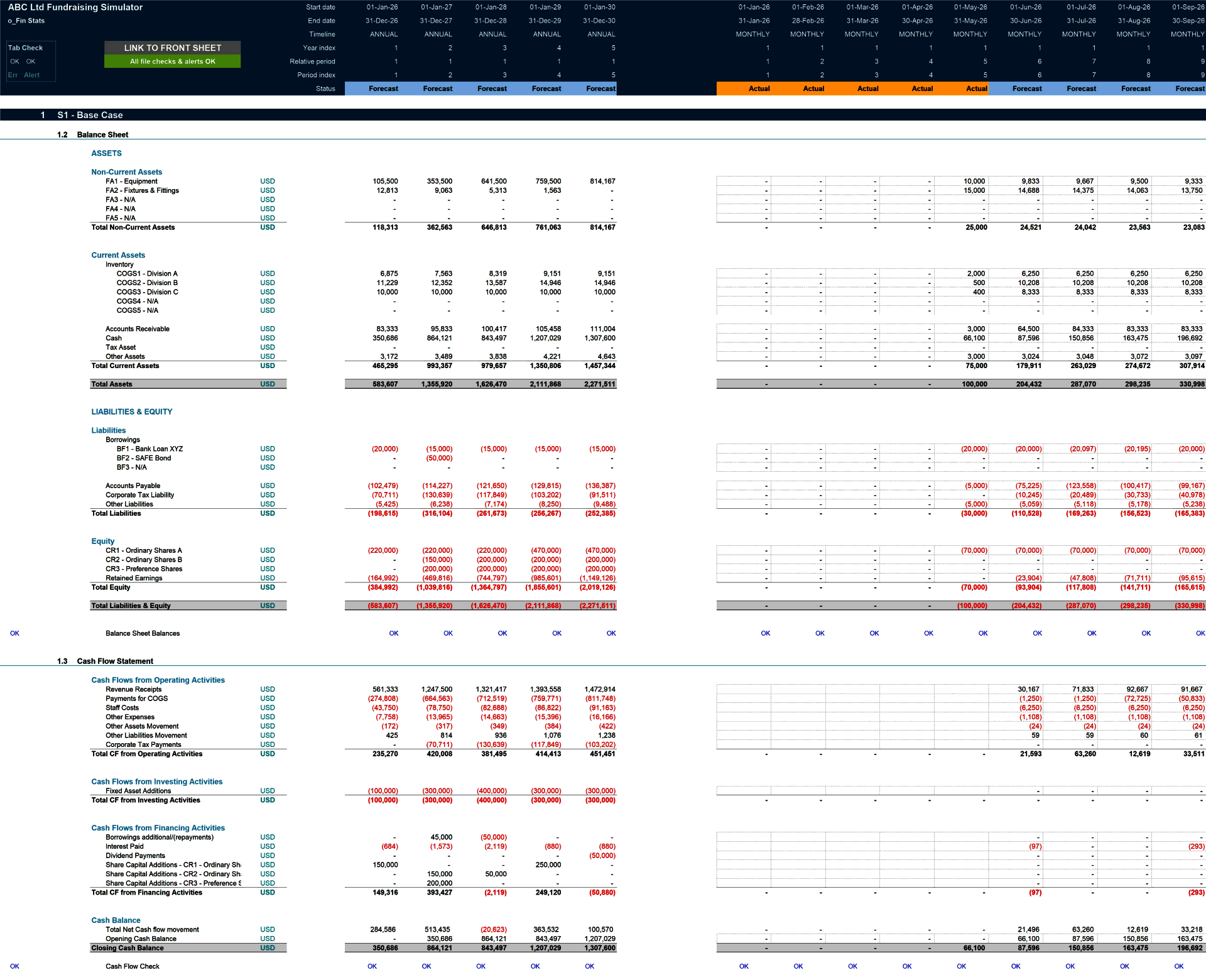
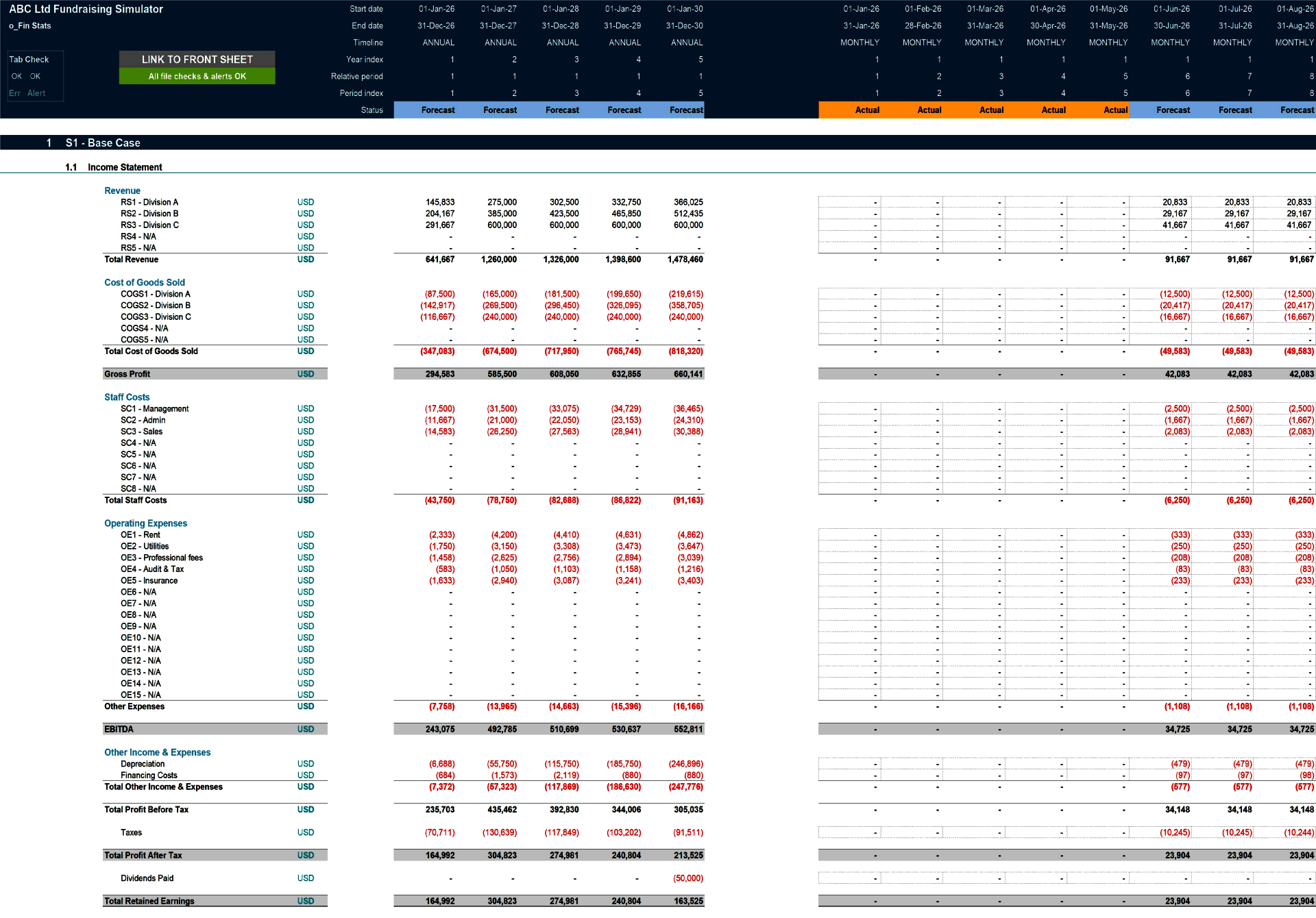
• Projected full financial statements (Income Statement, Balance Sheet and Cash flow Statement) for any of the 3 scenarios, presented on a monthly basis across up to 5 years and summarised on an annual basis.
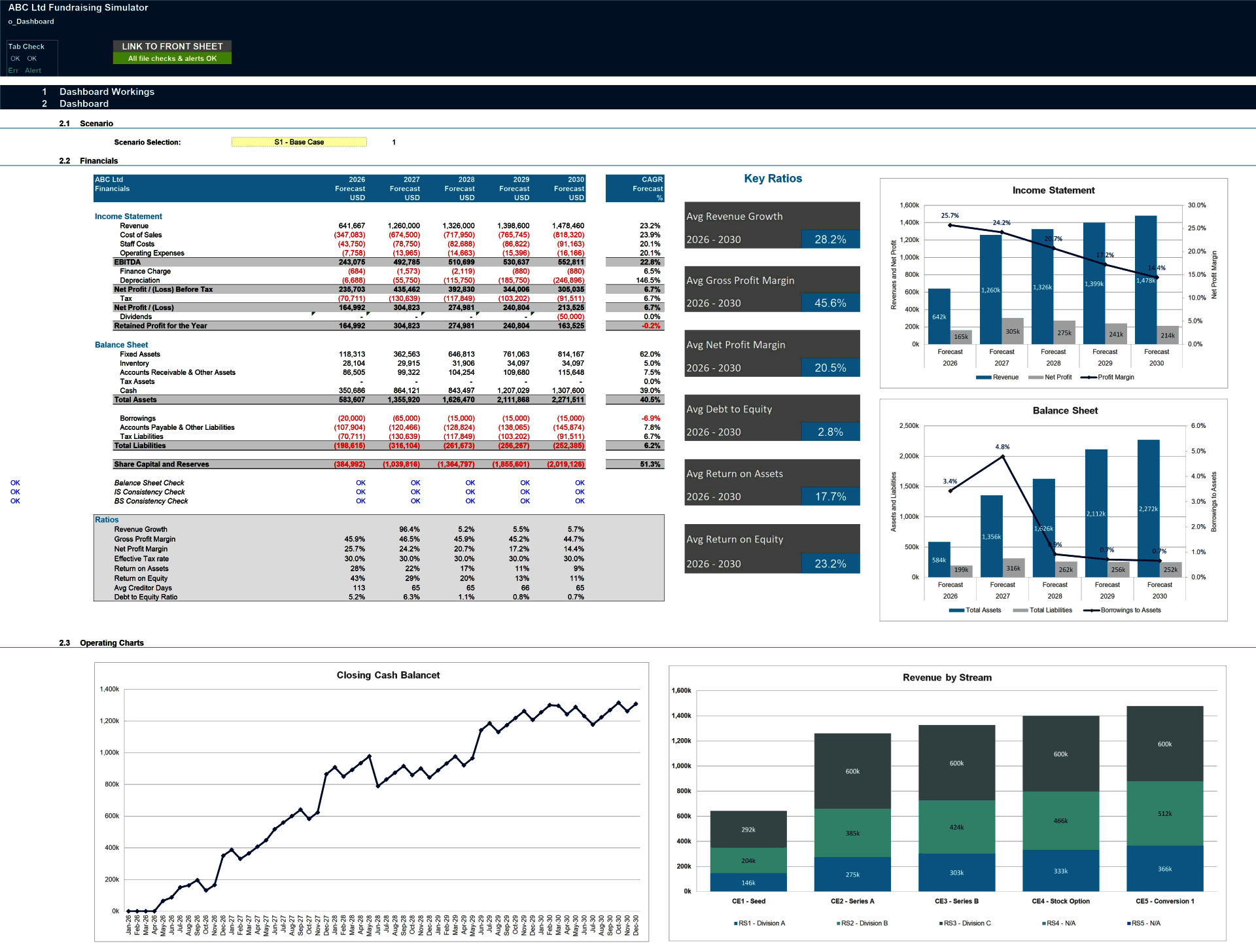
• Projection Dashboard with:
• Summarised projected Income Statement and Balance Sheet
• Compounded Annual Growth rate (CAGR) for each summarised income statement and Balance Sheet line item
• List of key ratios including Average revenue growth, Average profit margins, Average return on assets and equity and Average Debt to Equity ratio.
• Bar charts summarising income statement and Balance Sheet projections
• Other charts showing closing cash balance and revenue by stream
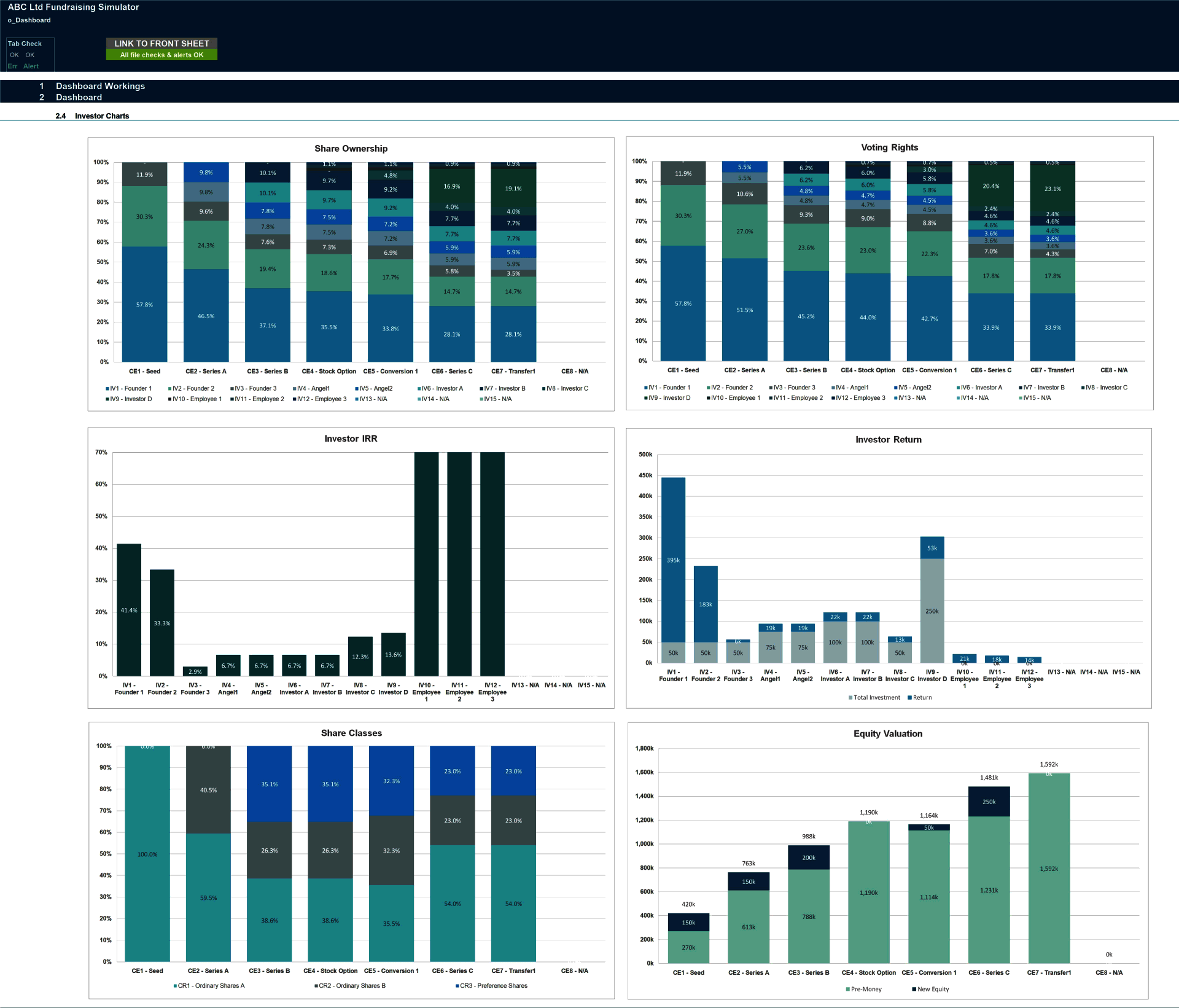
• Investor dashboard with:
• Breakdown of shareholding and voting rights by investor group
• Investment return and IRR by investor group
• Pre and Post-money equity valuations across capitalisation events
• Share class splits across capitalisation events
KEY INPUTS
Setup Inputs:
• Name of business;
• Currency;
• First projection year and month;
• Naming for scenarios, revenue streams, staff costs, other expenses, fixed assets, borrowings, capitalisation events, share capital classes, investors;
• Dates and types of capitalisation events;
• Nominal value and voting per share for each share capital class.
Actuals Inputs:
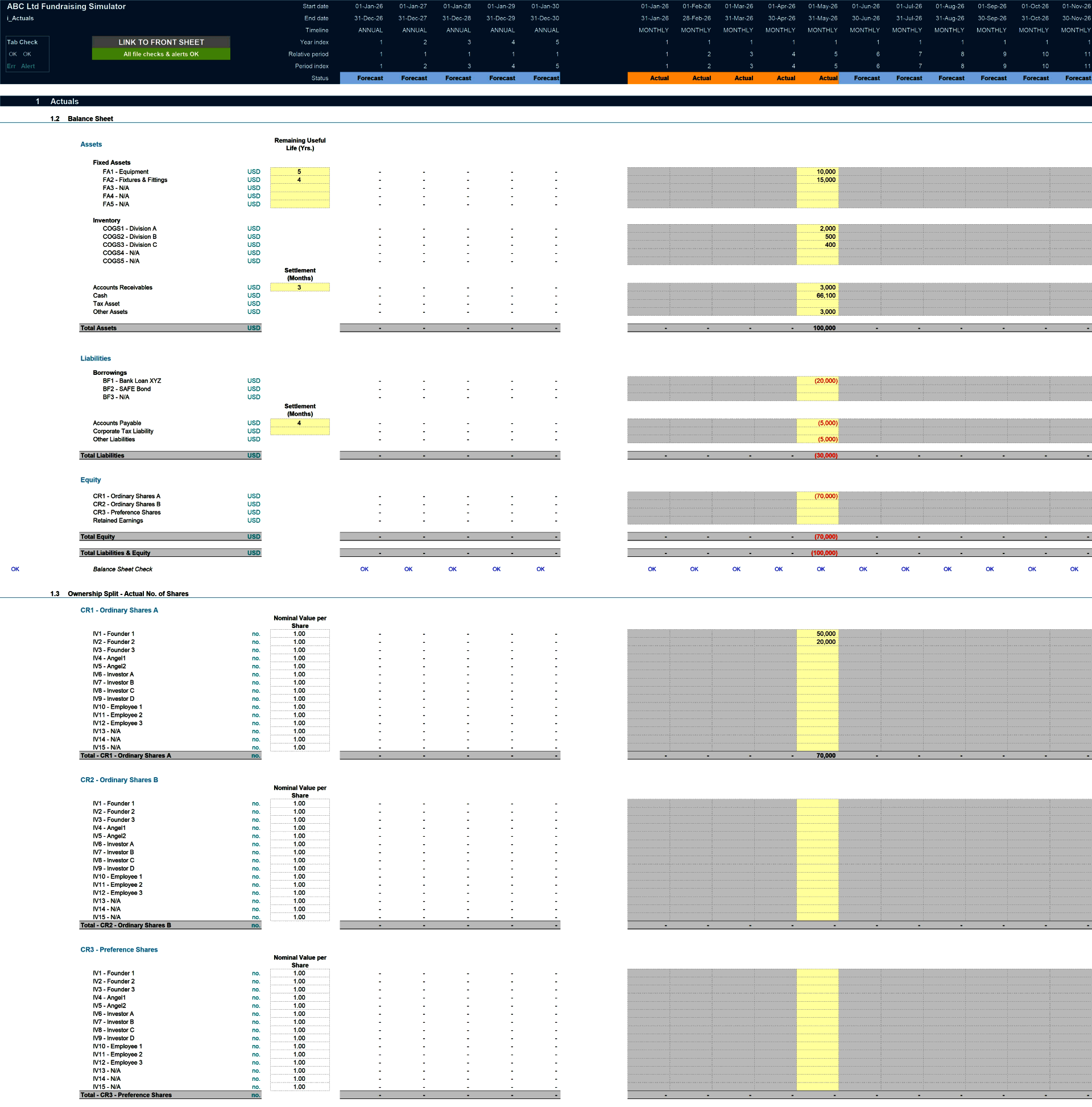
• Opening balance sheet (for existing businesses);
• Income Statement actuals (for trend analysis);
• Latest actual ownership splits.
Assumptions:
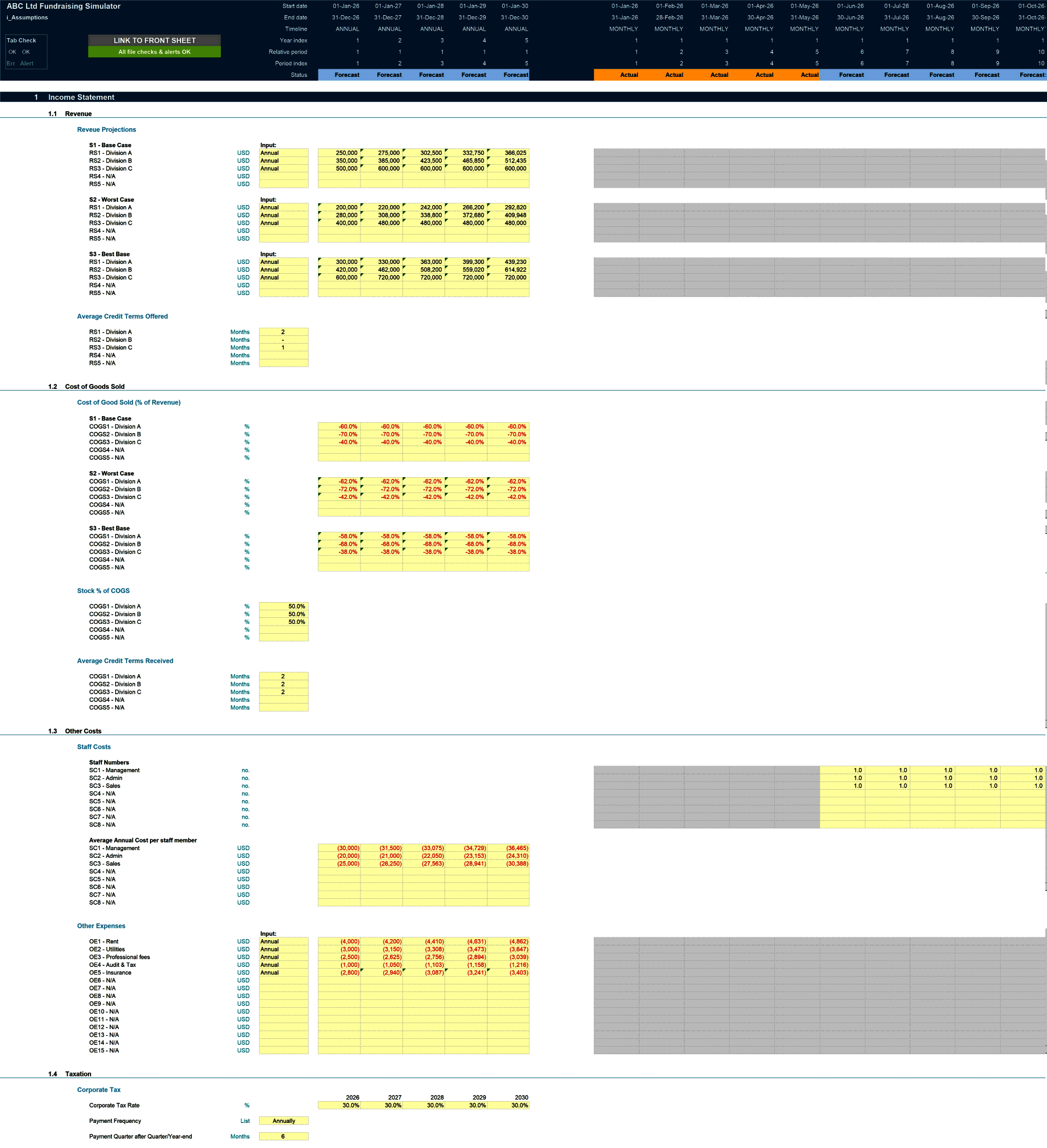
• Revenue inputs including amount per scenario and average credit terms offered;
• Cost of Goods percentage of revenue per scenario and average credit terms received;
• Other costs inputs including staff costs and operating expenses;
• corporate tax inputs including rate and payment periods;
• Dividend inputs on monthly basis or percentage of retained earnings;
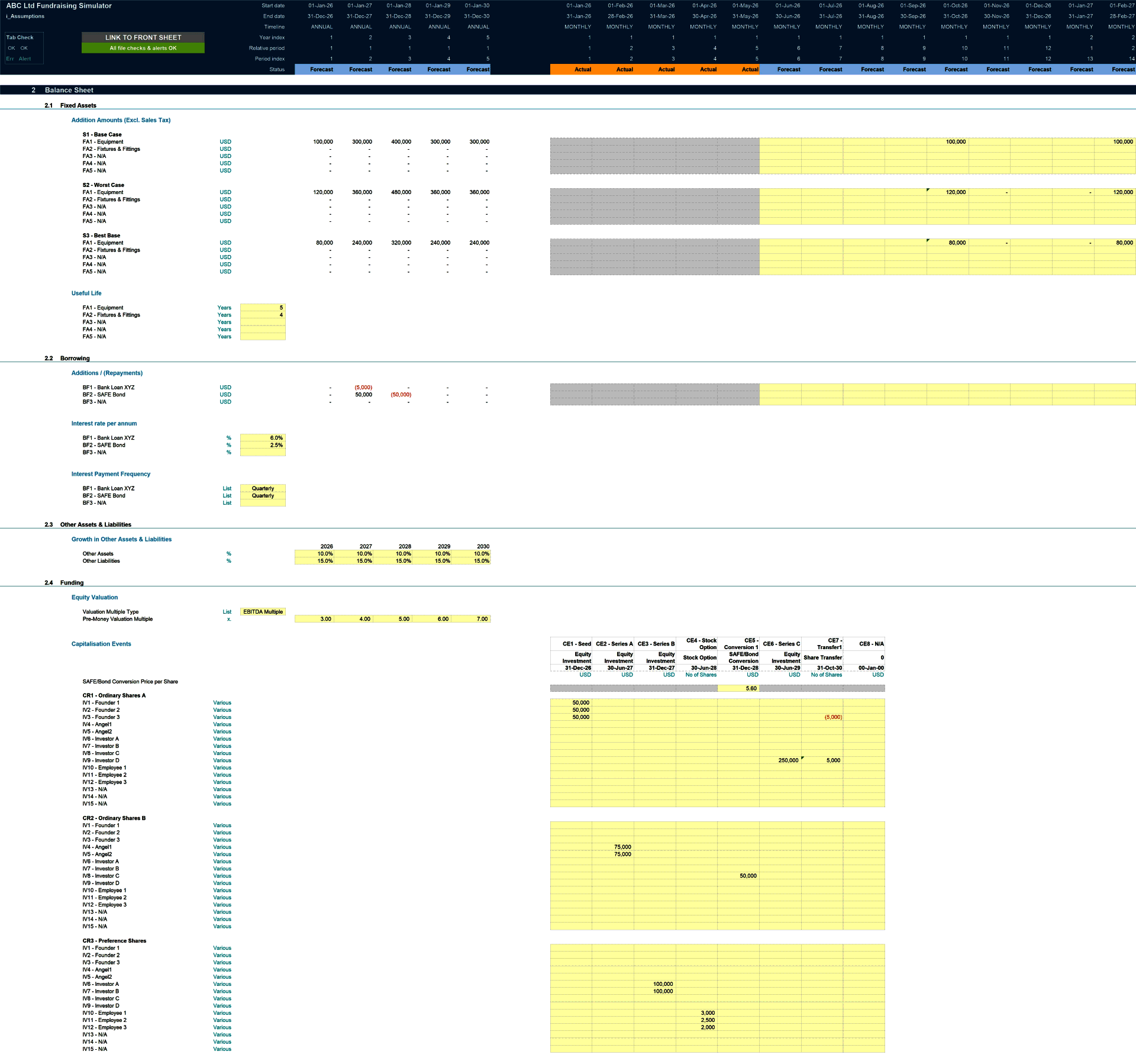
• Fixed Assets including addition amounts per scenario and useful life;
• Borrowings including addition amounts and interest rate;
• Other asset and liability movements;
• Equity valuation multiple (EBITDA, Revenue or Gross Profit)
• Capitalisation event amount or number of shares per share capital class.
MODEL STRUCTURE
The model comprises of 8 tabs split into input ('i_'), calculation ('c_'), output ('o_') and system tabs. The tabs to be populated by the user are the input tabs ('i_Setup', ‘i_Actuals' and 'i_Assumptions'). The calculation tab uses the user-defined inputs to calculate and produce the projection outputs which are presented in 'o_Fin Stats' and ‘o_Dashboard'.
KEY FEATURES
• The model follows good practice financial modelling guidelines and includes instructions, checks and input validations to help ensure input fields are populated accurately;
• The model enables the user to prepare projections across 5 years and valuations for the business on a pre and post capitalisation event;
• The model allows for the following number of underlying categories for each line item (these can be easily expanded if required):
• Scenarios – 3 scenarios;
• Revenue Streams – 5 streams;
• Staff costs – 8 categories;
• Operating Expenses – 15 categories;
• Fixed Assets – 5 categories;
• Borrowings – 3 facilities;
• Share capital classes – 3 classes;
• Capitalisation events – 8 events
• Investors – 15 investor groups
• The model includes the possibility to model 3 scenarios for key business assumptions including revenues, cost of sales and fixed asset investments.
• The model is not password protected and can be modified as required following download;
• Apart from projecting revenue and costs the model includes the possibility to model receivables and payables, fixed assets, borrowings, dividends and corporate tax;
• Business name, currency, timeline and capitalisation events are fully customisable;
• The model includes instructions, checks and input validations to help ensure input fields are populated accurately;
• The model includes a checks dashboard which summarises all the checks included in the various tabs making it easier to identify any errors.
SUPPORT / MODIFICATIONS
We are keen to ensure our customers are satisfied and find the models useful for their financial projection needs. Our models are developed with the user in mind and include instructions, line-item explanations, checks and input validations to ensure they are as user-friendly and easy to use as possible without requiring extensive knowledge of Microsoft Excel, finance or accounting. If any questions do arise, we are more than happy to assist. We are also happy to support with any be-spoke modifications you may require to the models to better suit your business needs. To get in touch, please send us a message through the website or contact us on:
We are also always keen to receive feedback so please do let us know what you think of our models by sending us a message or submitting a review.
ABOUT PROJECTIFY
We are financial modelling professionals with experience working in big 4 business modelling teams and strong experience supporting businesses with their financial modelling and decision support needs. Our aim is to provide robust and easy-to-use tools that follow good practice financial modelling guidelines and assist individuals and businesses with their financial projection and analysis requirements.
Got a question about the product? Email us at support@flevy.com or ask the author directly by using the "Ask the Author a Question" form. If you cannot view the preview above this document description, go here to view the large preview instead.
Source: Best Practices in Financing, Integrated Financial Model Excel: Fundraising & Dilution Scenario Analysis Financial Model Excel (XLSX) Spreadsheet, Projectify
ABOUT THE AUTHOR

We are financial modelling professionals, accountants and CFA charterholders with experience working within Deloitte supporting clients with their financial planning and decision support needs. Our aim is to provide robust and easy-to-use financial models that follow good practice financial modelling guidelines and assist individuals and businesses with key financial planning and analysis ... [read more]
Ask the Author a Question
You must be logged in to contact the author.




























