
 Click main image to view in full screen. Unlock all 11 preview images:
Fintech (Payments) Financial Model Excel Template – Excel XLSX
Excel (XLSX)


BENEFITS OF THIS DOWNLOADABLE EXCEL DOCUMENT
- Gain precise revenue, cost, and profitability projections with 100+ in-depth assumptions.
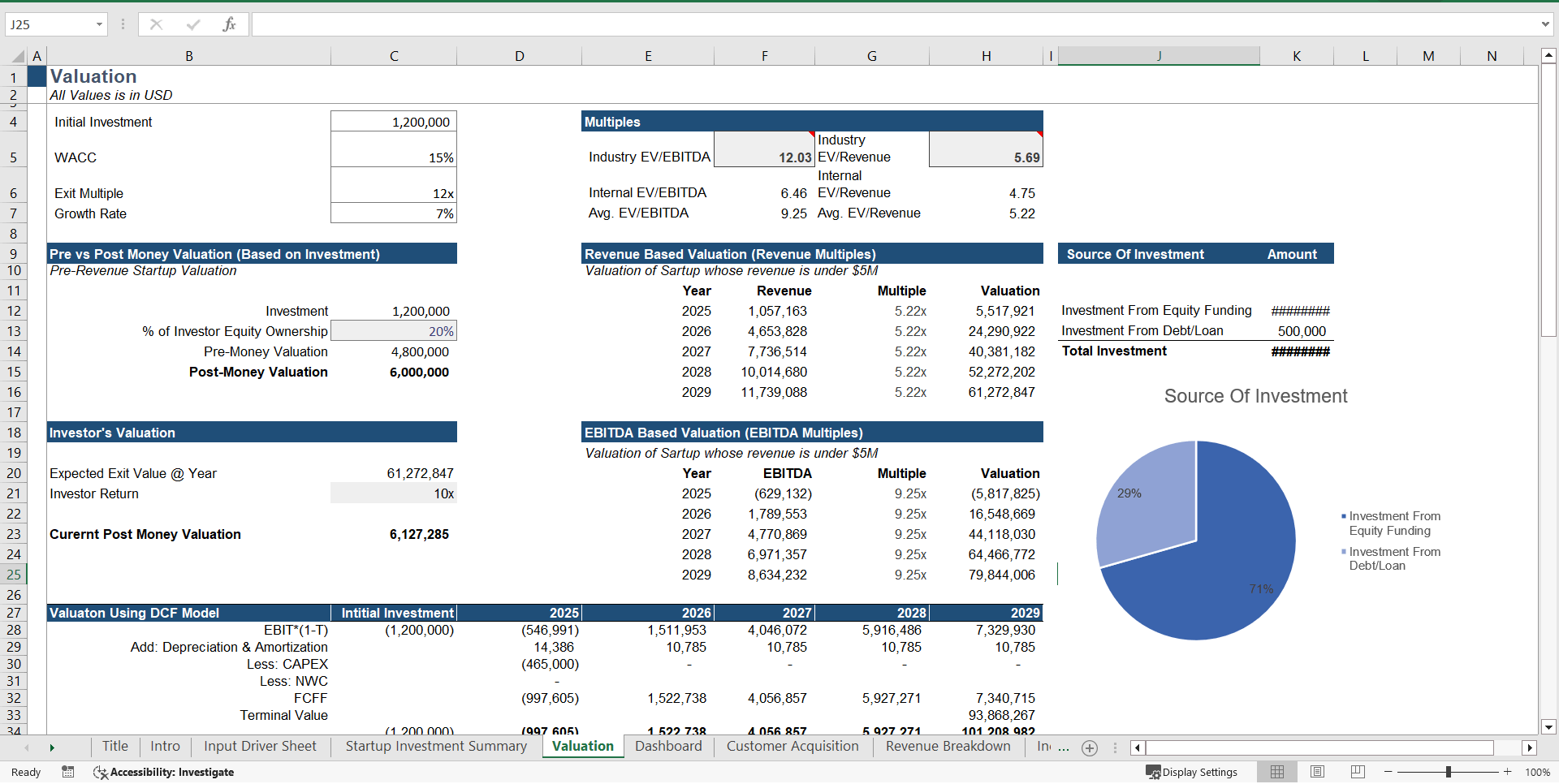
- Leverage advanced valuation methods (DCF, EBITDA & revenue multiples) to attract investors and secure funding.
- Fully editable model with free changes and modifications to fit your unique fintech business needs.
FINTECH EXCEL DESCRIPTION
Take control of your fintech payments business with our Fintech Payments Financial Model Excel Template—a comprehensive, user-friendly tool designed for fintech startups, financial analysts, and entrepreneurs. Whether you're launching a new payments platform or scaling an existing fintech venture, this model provides deep financial insights to help you accurately forecast revenues, manage costs, and enhance profitability with precision.
Key Features & Benefits:
✅ Comprehensive Revenue Forecasting:
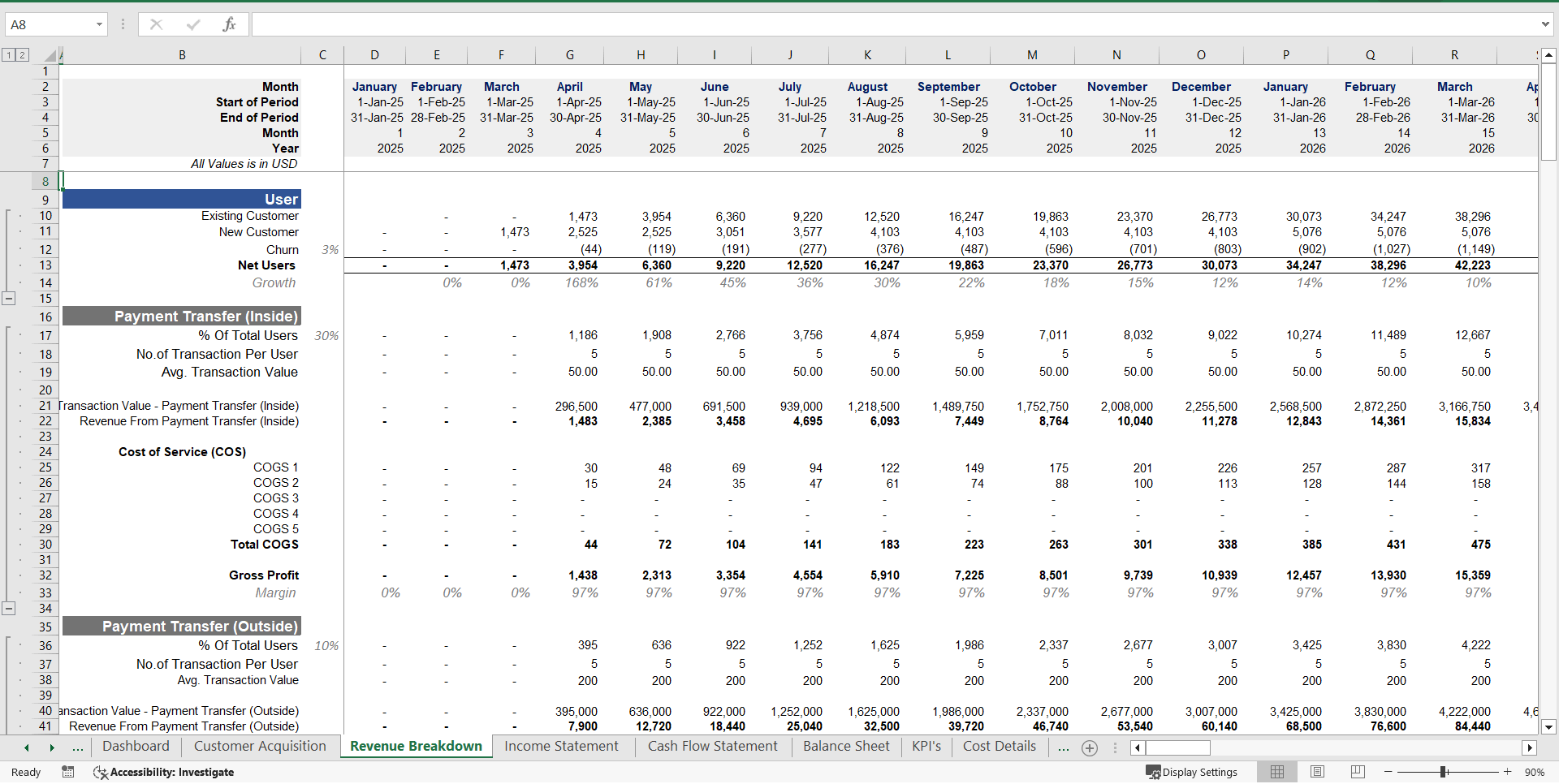
Effortlessly project revenues across four major streams:
Interchange Transactions: Fees earned from payment processing.
Forex Transactions: Foreign exchange fees on cross-border payments.
Virtual Cards: Revenue from digital card issuance and transactions.
Subscription Revenue: Monthly/annual fees for premium features and analytics.
✅ Detailed 5-Year Financial Projections:
Gain full visibility into your fintech's financial health through:
Profit & Loss Statement: Track revenue, costs, and profitability.
Cash Flow Statement: Monitor cash inflows and outflows to manage liquidity.
Balance Sheet: Complete snapshot of assets, liabilities, and equity.
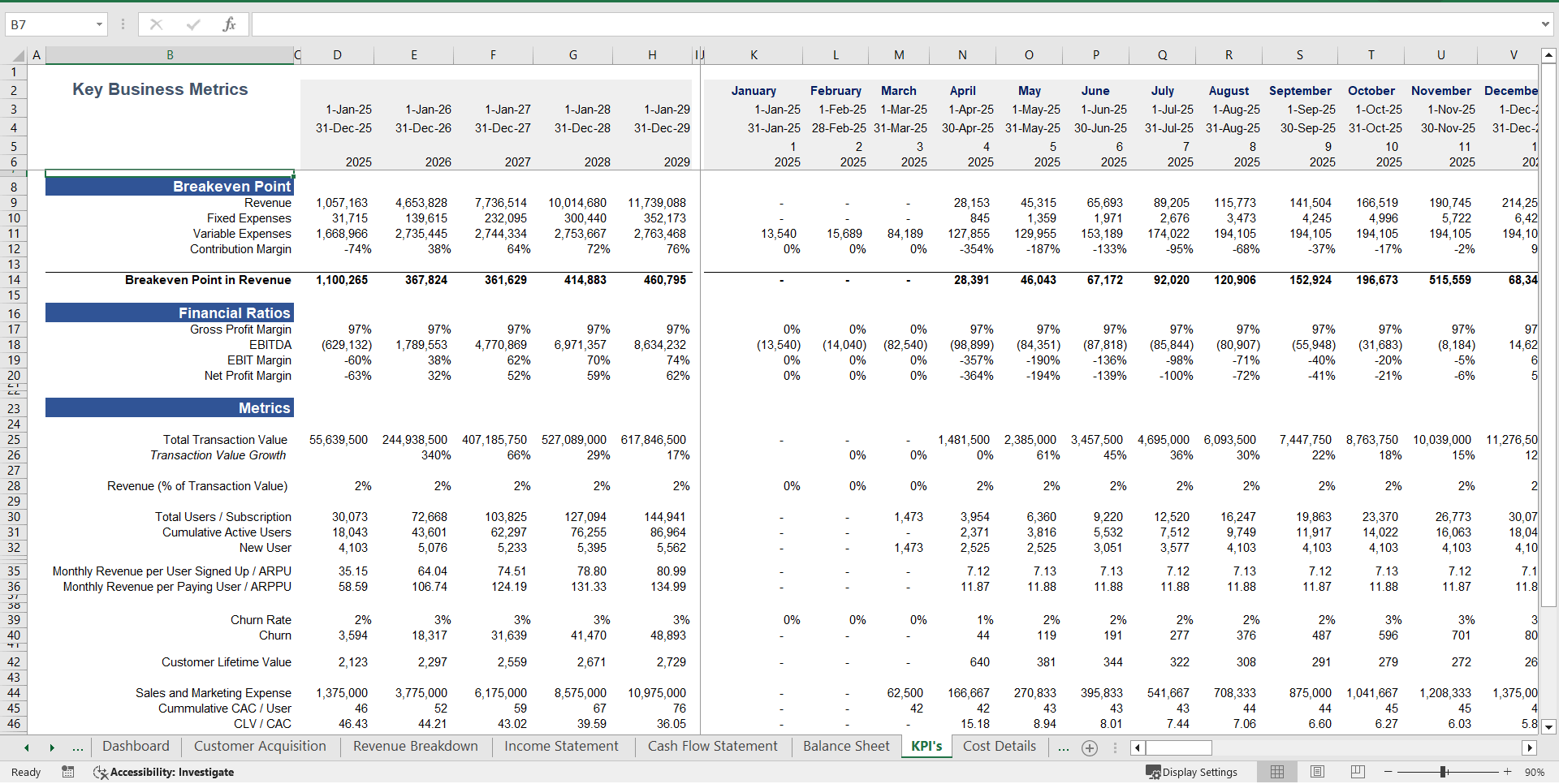
KPIs: Key metrics like Take Rate, Transaction Volume Growth, CAC, LTV, and more.
Sensitivity Analysis: Test scenarios to assess profitability impact.
✅ Advanced Valuation Methods:
Evaluate your fintech's potential with:
DCF Valuation, Revenue & EBITDA Multiples Valuation, Investor Valuation Methods.
✅ Burn Rate & Equity Giveaway Analysis:
Track cash burn rates and simulate funding rounds to understand equity dilution.
✅ 100+ In-Depth Financial Assumptions:
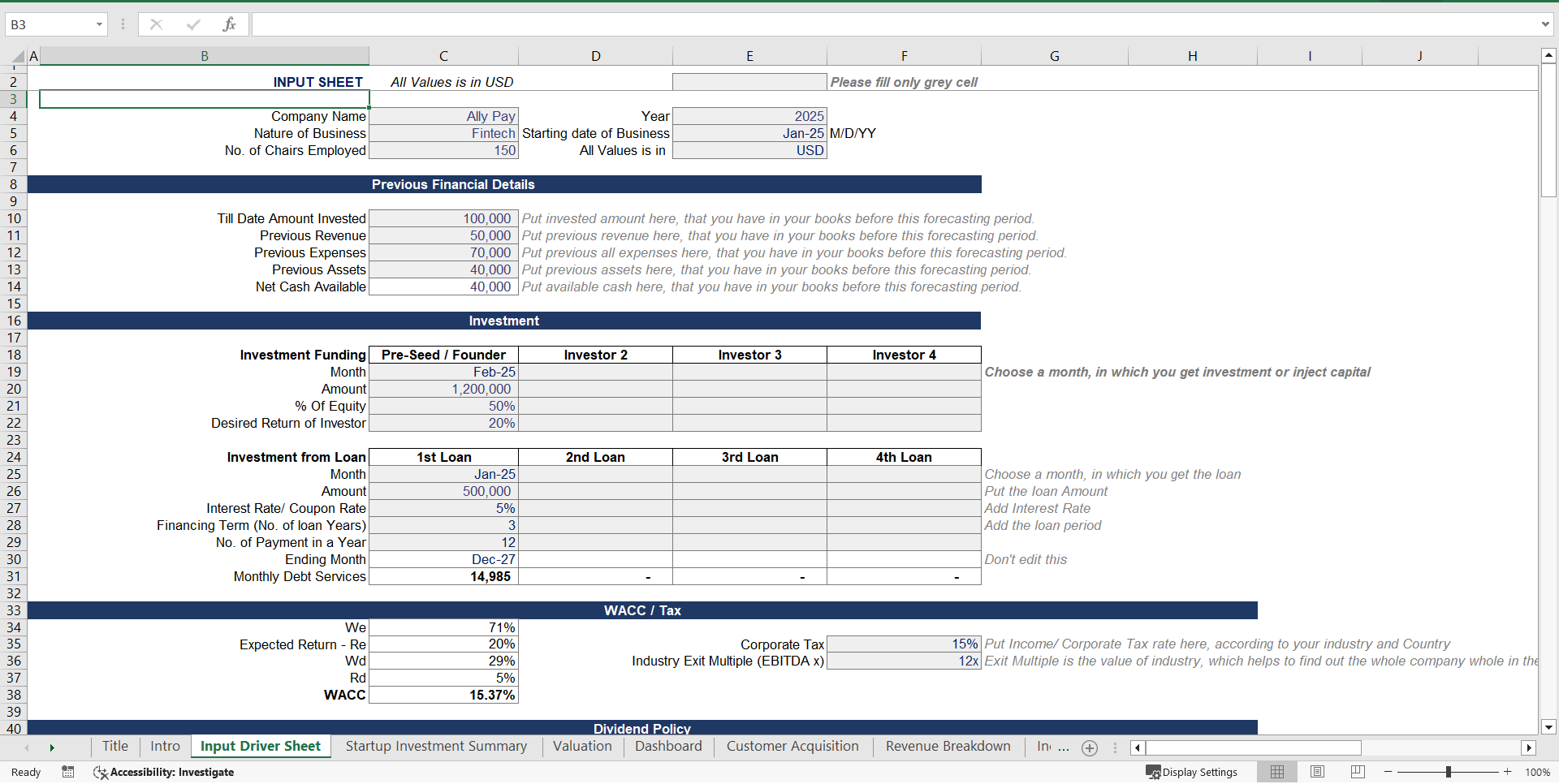
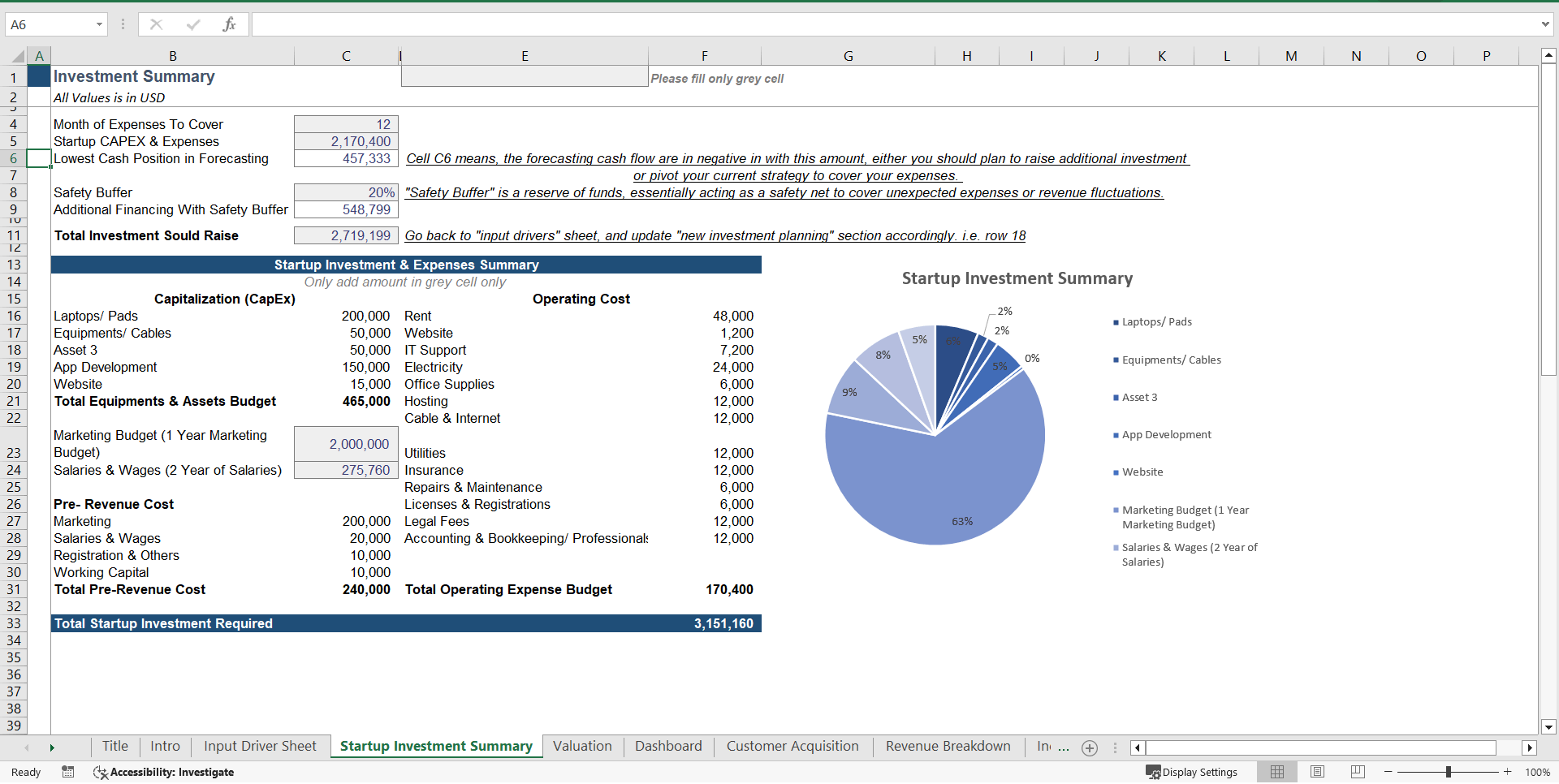
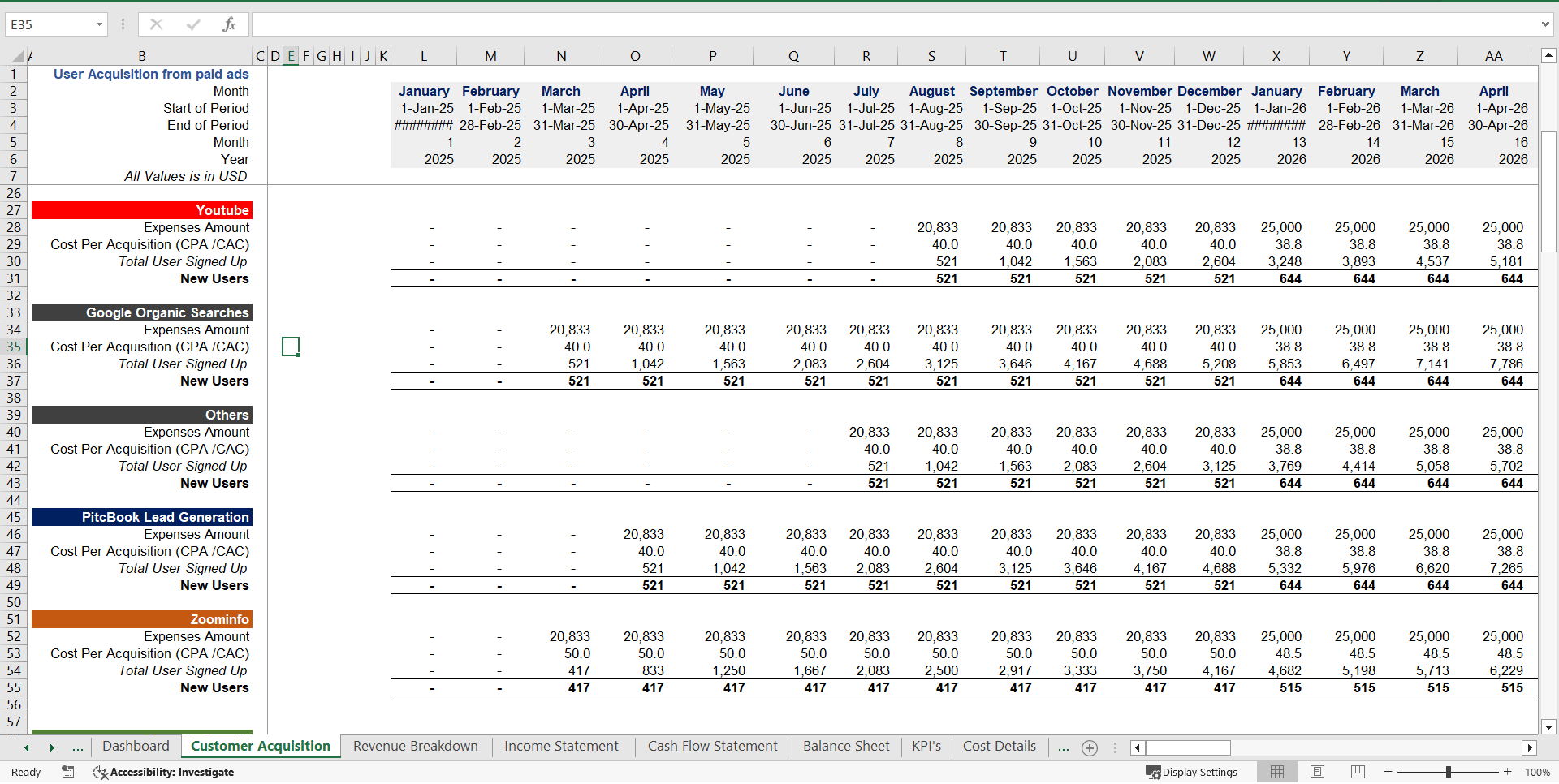
Includes revenue growth, churn rates, transaction fees, marketing spend, CAPEX, OPEX, etc.
✅ Interactive Dashboard:
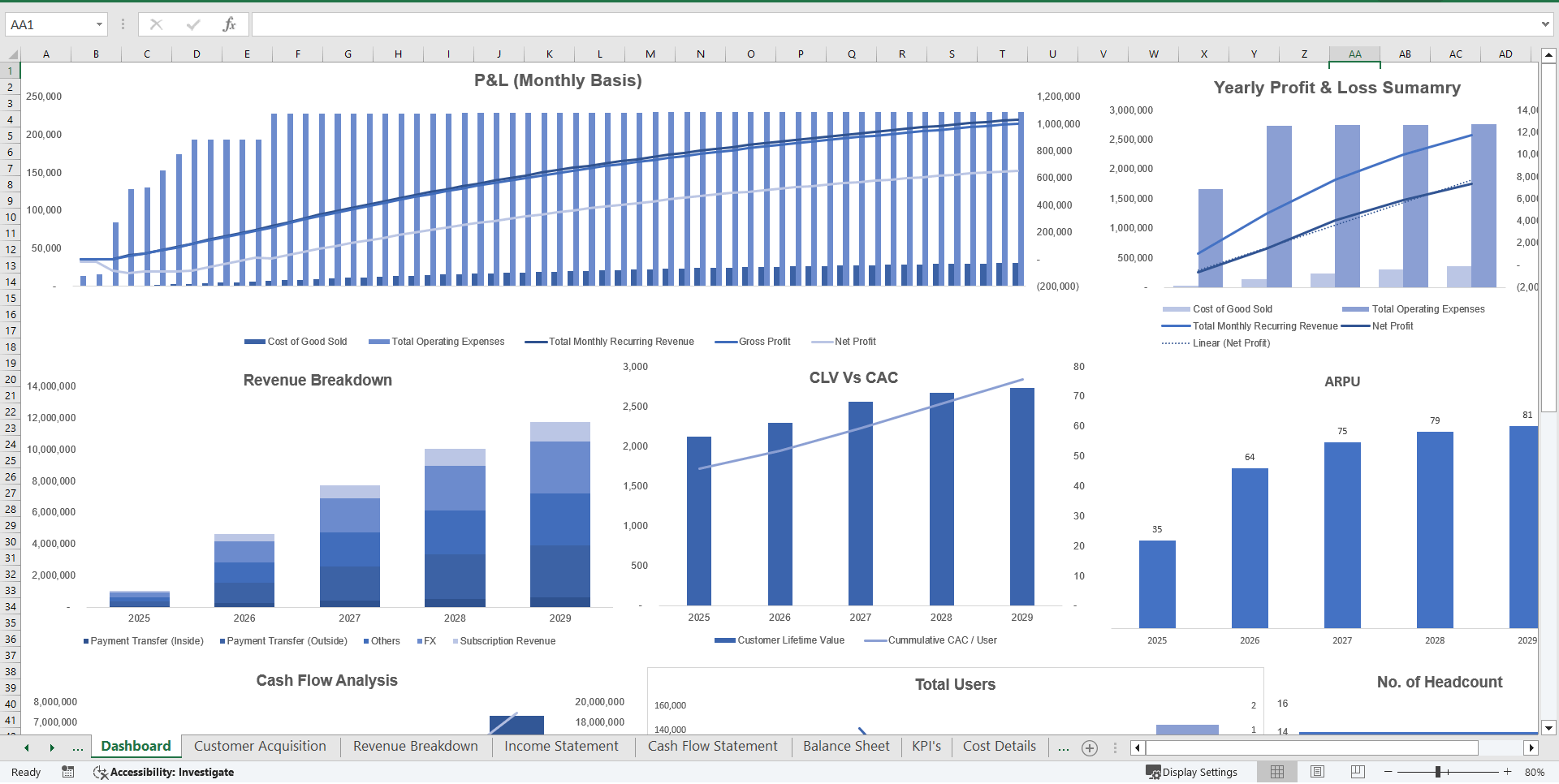
Present data visually with dynamic charts, graphs, and KPIs for investor presentations.
✅Why Choose This Model?
Trusted by fintech startups worldwide.
Fully customizable with free changes & support.
Developed by an FMVA Certified professional with experience in 350+ forecasting projects.
✅Free Customization & Error Corrections:
At Excel Business Resource, we are committed to ensuring the best experience for our clients. We offer free customizations and adjustments to fix any errors or update the model according to your specific requirements.
Got a question about the product? Email us at support@flevy.com or ask the author directly by using the "Ask the Author a Question" form. If you cannot view the preview above this document description, go here to view the large preview instead.
TOPIC FAQ
What revenue streams should I include when modeling a payments fintech business?
Payments fintech models typically separate core streams: interchange transaction fees, forex (cross-border) fees, virtual card issuance/transaction revenue, and subscription fees for premium services or analytics. Including these 4 major streams helps capture the primary drivers of payments revenue and aligns with the model's structure covering 4 major revenue streams.Which financial statements are essential in a 5-year fintech forecast?
A comprehensive 5-year forecast should include an integrated Profit & Loss statement, Cash Flow statement, and Balance Sheet to show profitability, liquidity, and financial position. Good models also surface KPIs (e.g., Take Rate, CAC, LTV) across the same 5-year horizon to link operational drivers to financial outcomes over 5 years.What valuation approaches are appropriate for valuing a payments startup?
Common valuation approaches for payments startups include Discounted Cash Flow (DCF) analysis, revenue multiples, and EBITDA multiples, plus investor-focused valuation methods that consider growth and market comparables. These methods are standard components in fintech valuation and are implemented in models that include DCF and revenue & EBITDA multiples.Which KPIs should I track for a payments platform to monitor unit economics?
Key payments KPIs include Take Rate (fee per transaction), Transaction Volume Growth, Customer Acquisition Cost (CAC), and Customer Lifetime Value (LTV). Tracking these provides insight into revenue per transaction, growth trajectory, and unit profitability, and should be reported alongside financial statements and sensitivity scenarios.How should I choose a financial model template for a fintech payments startup on a tight timeline?
Prioritize templates that are pre-built for payments revenue streams, include integrated P&L/Cash Flow/Balance Sheet, provide KPI tracking, and offer sensitivity and valuation modules to save time. A template that already includes 5-year projections and sensitivity analysis can shorten preparation time significantly, such as one with 5-year projections and scenario tools.What level of assumptions detail is typical for a payments financial model?
Payments models commonly require detailed assumptions covering revenue growth rates, transaction fees, churn, marketing spend, CAC, CAPEX, and OPEX. Templates designed for fintech often consolidate these into extensive assumption tabs; an example is a model that documents over 100 distinct financial assumptions.How can I model equity dilution across funding rounds for a payments startup?
Model monthly burn and runway from the Cash Flow, then simulate funding rounds by adding capital injections and applying pre/post-money ownership calculations to estimate equity given away. Tools that pair burn-rate tracking with equity giveaway analysis make it possible to simulate multiple rounds and dilution outcomes across scenarios.What financial outputs should I include in an investor pitch for a payments platform?
Investor-facing outputs should include a 5-year P&L, Cash Flow, Balance Sheet, key operational KPIs (Take Rate, Transaction Volume Growth, CAC, LTV), sensitivity scenarios, valuation outputs (DCF and multiples), and visual summaries like an interactive dashboard to present metrics and scenarios clearly.Source: Best Practices in Fintech, Integrated Financial Model Excel: Fintech (Payments) Financial Model Excel Template Excel (XLSX) Spreadsheet, Excel Business Resource
ABOUT THE AUTHOR

Excel Business Resource offers a leading-edge solution for streamlined financial modeling, budgeting, and reporting. Our customizable templates, curated by FP&A and FMVA experts, provide the foundation for precise, tailored financial analysis. From dynamic modeling to flexible budgeting and board-ready reports, our platform empowers informed decision-making for businesses of all sizes. ... [read more]
Ask the Author a Question
You must be logged in to contact the author.




























