
Enterprise Agile and Scaling Models - SAFe Case Study   79-slide PPT PowerPoint presentation slide deck (PPTX)
$55.00

Enterprise Agile and Scaling Models - SAFe Case Study (79-slide PPT PowerPoint presentation slide deck (PPTX)) Preview Image
Log in to unlock full preview.
Enterprise Agile and Scaling Models - SAFe Case Study (79-slide PPT PowerPoint presentation slide deck (PPTX)) Preview Image
Arrow   Click main image to view in full screen.

Enterprise Agile and Scaling Models - SAFe Case Study (PowerPoint PPTX Slide Deck)

PowerPoint (PPTX) 79 Slides

$55.00
Developed by a team of experts with global consulting experience at McKinsey, Deloitte, and Capgemini.
Add to Cart


Immediate download
Fully editable PowerPoint
Free lifetime updates

AGILE PPT DESCRIPTION

Editor Summary The Enterprise Agile and Scaling Models - SAFe Case Study is a 79-slide PowerPoint presentation that explains the Scaled Agile Framework (SAFe) and its implementation in large enterprises. Read more

A framework helps you avoid reinventing the wheel with regard to the structure, processes and the principles to follow for you to become AGILE.
But the real challenges in an AGILE transition are at a completely different level.
They have to do with the mindset and the culture you need to become truly agile.
That means:
decentralizing decisions.
creating transparency and alignment around strategic goals and how you organize work.
finding a balance between autonomous teams and cross-team dependencies.
changing virtually everything in the way you organize work.
delivering sooner and perfecting products "in the wild."
collaborating throughout your business and with your customers.
updating, replacing, and integrating your information systems to enable transparent information flow throughout your company.
SAFe® Framework provides guidance on three levels for product delivery in a scaled agile environment and adds guidance on extending agile across your enterprise with its fourth, portfolio level.
The last SAFe version extended that top level with a lot from Lean Portfolio Management.
Many agile practitioners consider SAFe overly prescriptive and complex.
This Powerpoint document can give you an effective way to understand the AGILE scaling concepts.
A generic SAFe® study case will give you step-by-step understanding of the framework implementation process.
The pptx document is easily customizable, content can be removed. Plenty of graphics are included in order to get the holistic vision.

Got a question about the product? Email us at support@flevy.com or ask the author directly by using the "Ask the Author a Question" form. If you cannot view the preview above this document description, go here to view the large preview instead.

MARCUS OVERVIEW

This synopsis was written by Marcus [?] based on the analysis of the full 79-slide presentation.


Executive Summary
The "Enterprise Agile and Scaling Models - SAFe Case Study" presentation provides a comprehensive overview of the Scaled Agile Framework (SAFe), detailing its implementation and operational strategies for large enterprises. Developed by a team with extensive consulting experience, this deck equips corporate executives and integration leaders with the tools to effectively adopt and scale Agile methodologies within their organizations. It emphasizes the importance of aligning teams, optimizing value streams, and fostering a culture of continuous improvement, ultimately enabling organizations to enhance their responsiveness to market demands and customer needs.

Who This Is For and When to Use
•  Corporate executives overseeing Agile transformations
•  Program and project managers implementing Agile methodologies
•  Agile coaches and trainers facilitating team development
•  IT leaders responsible for software delivery and integration

Best-fit moments to use this deck:
•  During initial Agile adoption discussions to outline frameworks and methodologies
•  In training sessions aimed at enhancing team fluency in Agile practices
•  For strategic planning meetings focused on scaling Agile across multiple teams

Learning Objectives
•  Define the core principles of the Scaled Agile Framework (SAFe)
•  Identify the roles and responsibilities within Agile teams
•  Establish a unified cadence for Agile Release Trains (ARTs)
•  Develop strategies for optimizing value streams and reducing waste
•  Implement metrics for measuring progress and value delivery
•  Foster a culture of continuous improvement and collaboration

Table of Contents
•  Agile Roots (page 3)
•  Agile Fluency Model (page 5)
•  Agile Methods Overview (page 7)
•  Scaling Agile Frameworks (page 9)
•  SAFe Overview (page 10)
•  Implementation Strategy (page 55)
•  Case Study Overview (page 58)
•  SAFe Solution and Implications (page 59)

Primary Topics Covered
•  Agile Roots - Explores the origins of Agile methodologies, including Lean and Six Sigma, and their evolution in software development.
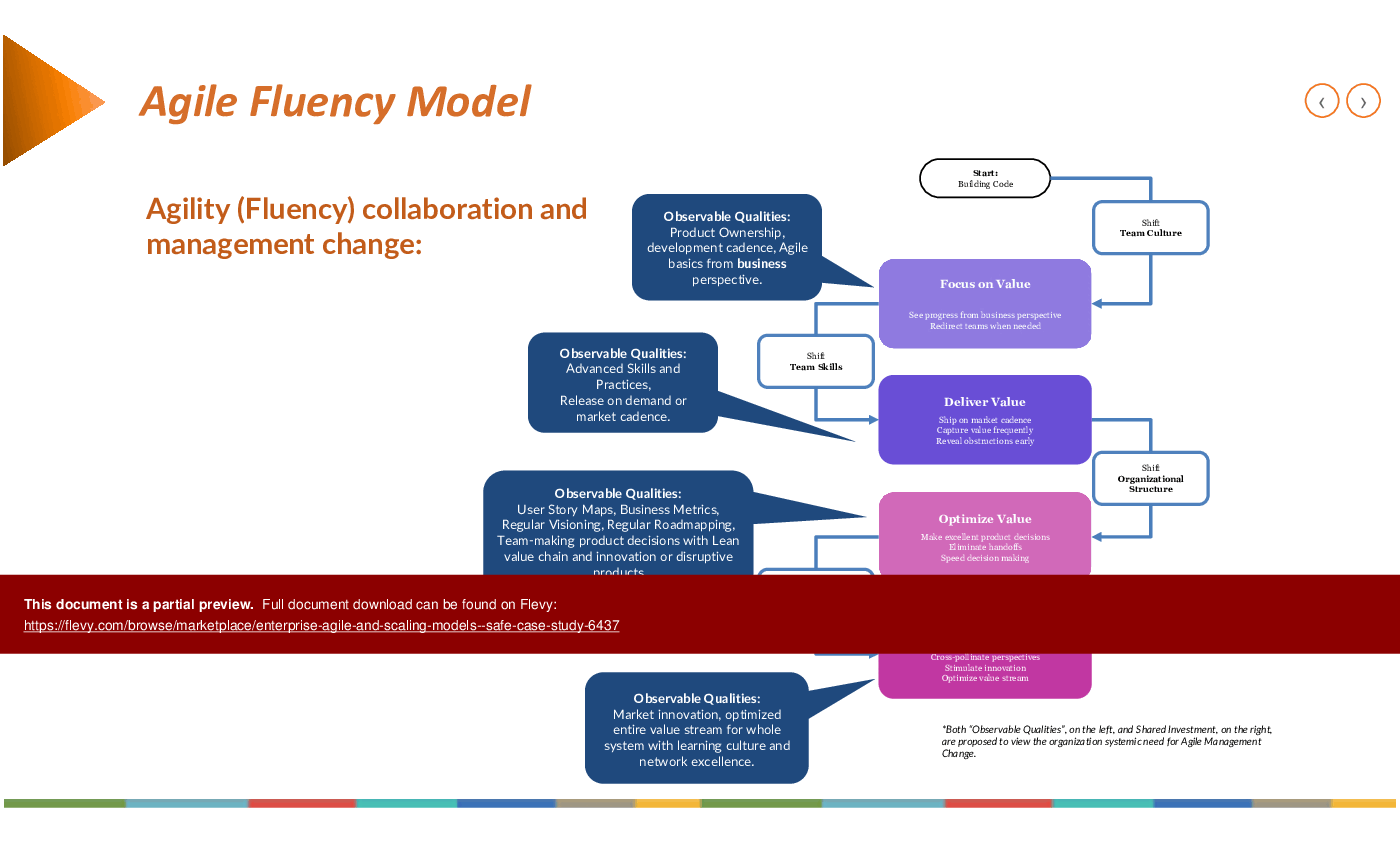
•  Agile Fluency Model - Describes how teams progress through stages of Agile fluency, focusing on value delivery and optimization.
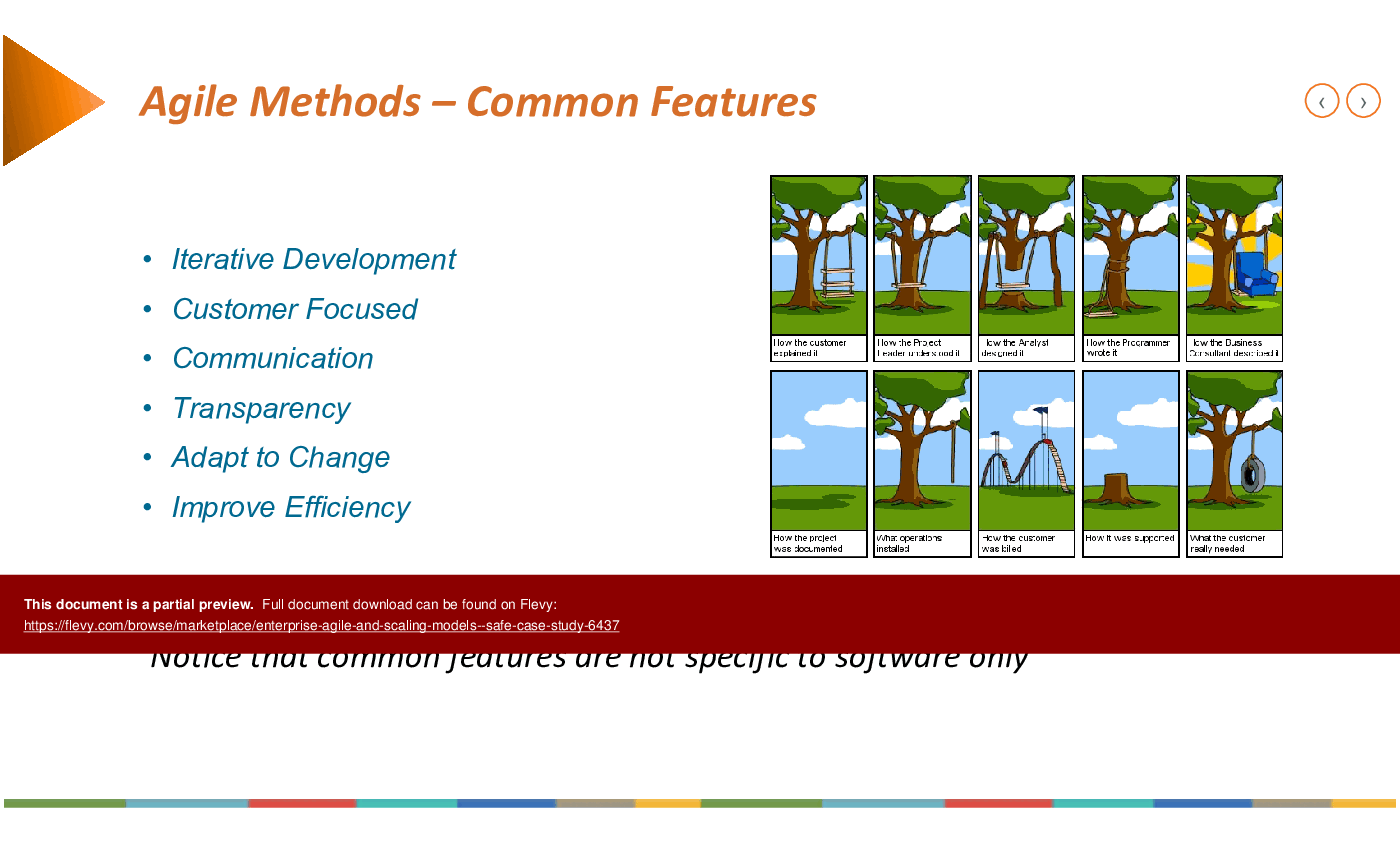
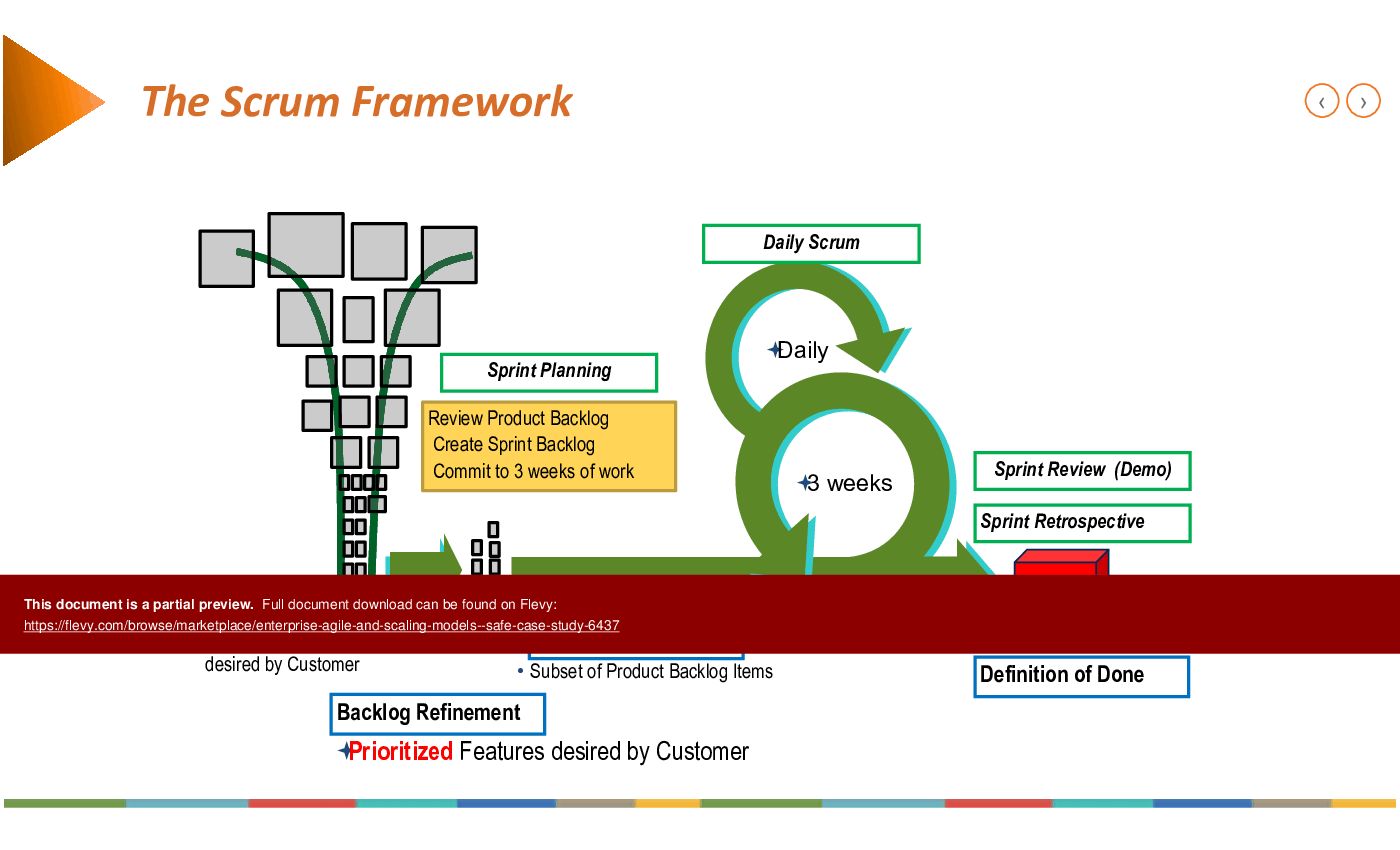
•  Agile Methods - Outlines various Agile frameworks such as Scrum, Kanban, and Extreme Programming (XP), highlighting their common features.
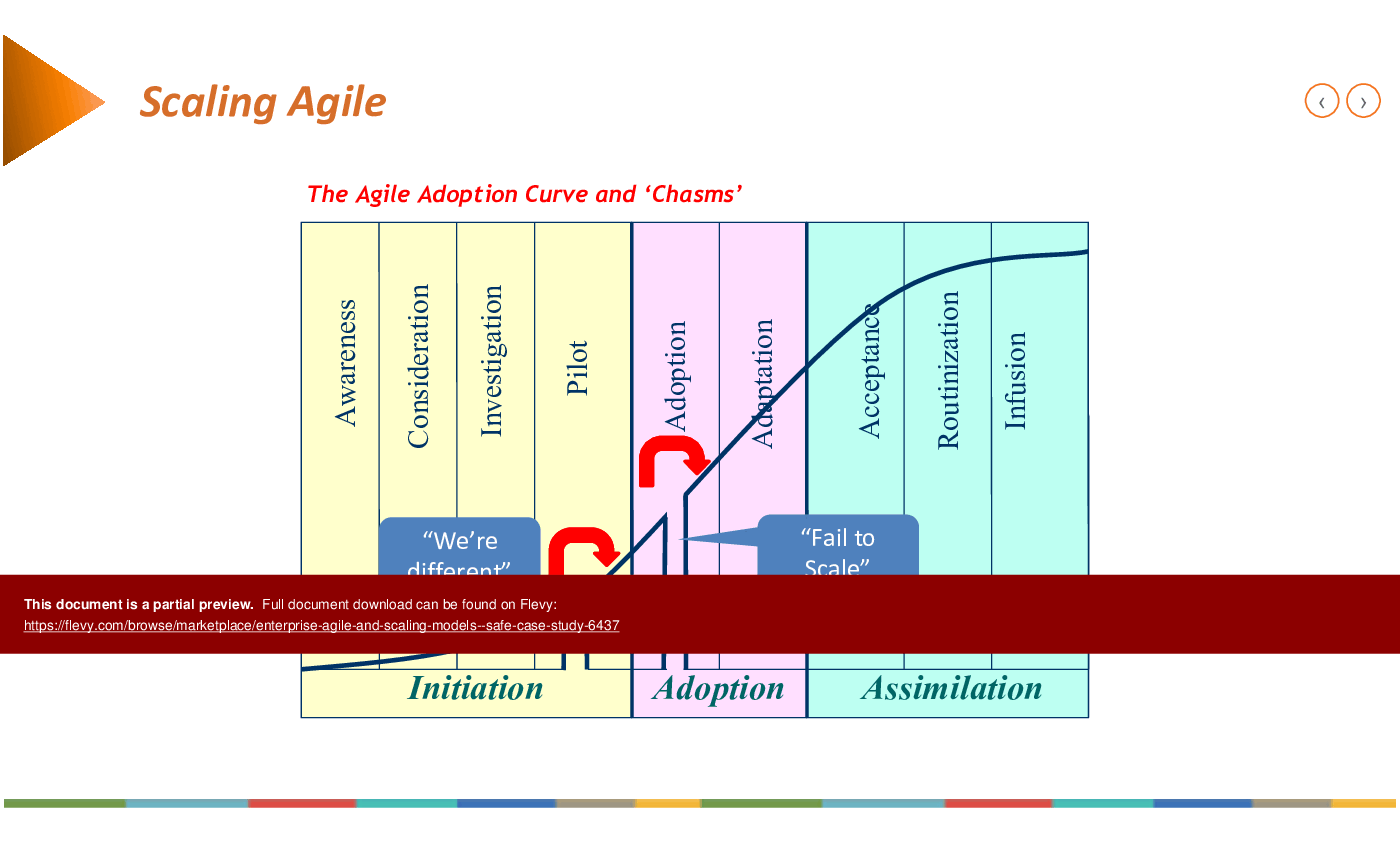
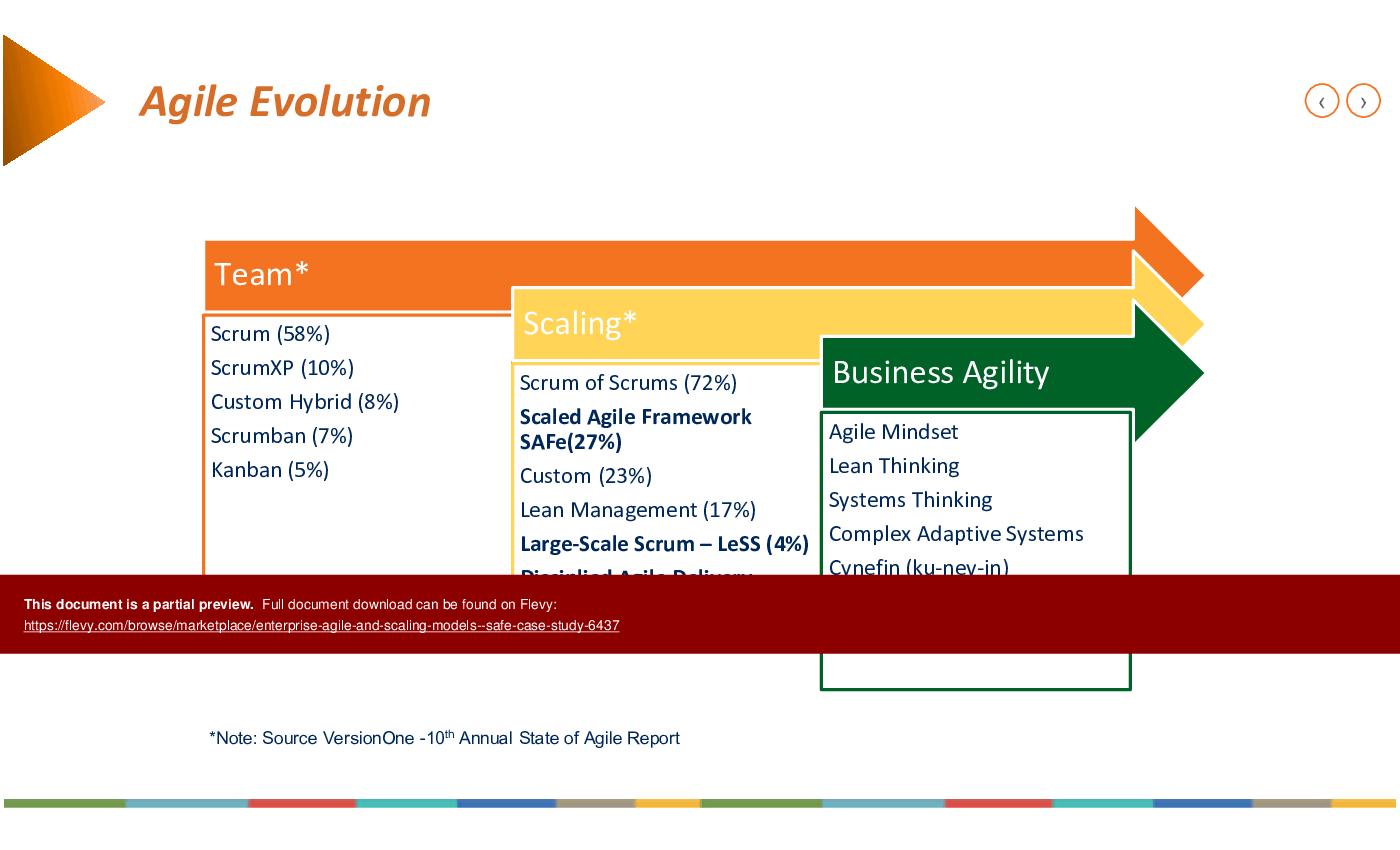
•  Scaling Agile - Discusses frameworks for scaling Agile, including SAFe, Scrum of Scrums, and Large Scale Scrum (LeSS).
•  SAFe Overview - Provides insights into the four-tier structure of SAFe and its application in large enterprises.
•  Implementation Strategy - Details the roadmap for implementing SAFe, emphasizing training and continuous improvement.

Deliverables, Templates, and Tools
•  Agile Release Train (ART) structure template
•  SAFe implementation roadmap
•  Metrics dashboard for tracking Agile performance
•  Team roles and responsibilities matrix
•  Value stream mapping tool
•  Continuous improvement checklist

Slide Highlights
•  Visual representation of the Agile Fluency Model illustrating team progression
•  Overview of SAFe's four-tier structure, emphasizing alignment across teams
•  Case study slide showcasing successful SAFe implementation in a corporate setting
•  Metrics tracking slide detailing key performance indicators for Agile teams
•  Agile methods comparison chart highlighting strengths and applications

Potential Workshop Agenda
SAFe Introduction and Overview (60 minutes)
•  Discuss the principles of SAFe and its relevance to enterprise agility
•  Review the Agile Fluency Model and its implications for team development

Implementation Strategy Session (90 minutes)
•  Outline the steps for implementing SAFe within the organization
•  Identify key roles and responsibilities in Agile teams

Metrics and Continuous Improvement Workshop (60 minutes)
•  Explore metrics for measuring Agile success
•  Develop a continuous improvement plan tailored to team needs

Customization Guidance
•  Tailor the implementation roadmap to fit specific organizational contexts and timelines
•  Adjust team roles and responsibilities based on existing structures and culture
•  Incorporate company-specific metrics for tracking Agile performance

Secondary Topics Covered
•  Lean principles and their application in Agile
•  The role of leadership in fostering an Agile culture
•  Techniques for effective backlog management
•  Best practices for cross-team collaboration and communication

Topic FAQ

What are the core principles of SAFe that large organizations should focus on?

SAFe emphasizes alignment across teams, optimizing value streams, and fostering continuous improvement to improve responsiveness and customer focus. Implementation guidance includes roles, a unified cadence for Agile Release Trains, and portfolio-level considerations such as Lean Portfolio Management, organized in a four-tier structure.

How does SAFe scale Agile across many teams compared to team-level Scrum approaches?

SAFe adds multi-level planning and coordination beyond team-level Scrum by organizing work into a four-tier structure and using Program Increments for synchronized delivery. The approach supports cross-team alignment through events like PI planning and is discussed in the deck alongside other scaling frameworks and the Program Increment timebox of 8–12 weeks in the Enterprise Agile and Scaling Models - SAFe Case Study.

Which roles does SAFe define and what are their primary responsibilities?

SAFe identifies roles including Product Owner, Scrum Master, and Release Train Engineer, each with specific responsibilities for facilitating delivery, backlog prioritization, and coordinating Agile Release Trains. The deck includes a team roles and responsibilities matrix that outlines those role definitions.

What metrics should organizations track to measure Agile success at scale?

Organizations typically track team velocity, customer satisfaction, frequency of value delivery, and other progress indicators to assess Agile effectiveness and value delivery. The presentation includes a metrics dashboard template for tracking these Agile performance indicators.

What should I look for when choosing a SAFe implementation slide deck or toolkit?

Prioritize decks that provide an implementation roadmap, ART structure templates, role matrices, value stream mapping tools, and metrics dashboards, plus customization guidance and workshop agendas. The Enterprise Agile and Scaling Models - SAFe Case Study lists an SAFe implementation roadmap and an ART template as core deliverables.

How much time does the slide deck suggest allocating to training and implementation workshops?

The deck includes a sample workshop agenda with timeboxes: a 60-minute SAFe introduction, a 90-minute implementation strategy session, and a 60-minute metrics and continuous improvement workshop, totaling 210 minutes across the 3 sessions in the Enterprise Agile and Scaling Models - SAFe Case Study.

After a merger, which scaling framework is appropriate for aligning teams and value streams?

Frameworks designed for large enterprises—such as SAFe, Scrum of Scrums, or LeSS—are appropriate for post-merger scaling where cross-team alignment and coordinated delivery are needed. The presentation provides a SAFe overview, implementation strategy, and a value stream mapping tool to support such efforts, including the four-tier SAFe structure.

How can I assess whether my teams are ready to adopt SAFe?

Use an Agile Fluency Model to evaluate team stages of proficiency, focusing on value delivery, role clarity, and cadence readiness. The deck includes a visual Agile Fluency Model and guidance on progressing teams toward value optimization as part of readiness assessment.

Document FAQ
These are questions addressed within this presentation.

What is the Scaled Agile Framework (SAFe)?
SAFe is a framework designed to help large organizations implement Agile practices at scale, focusing on alignment, collaboration, and delivery across multiple teams.

How does SAFe differ from other Agile methodologies?
SAFe provides a structured approach to scaling Agile across large enterprises, incorporating multiple levels of planning and coordination, unlike frameworks like Scrum that typically focus on individual teams.

What roles are defined within SAFe?
SAFe defines several key roles, including Product Owner, Scrum Master, and Release Train Engineer, each with specific responsibilities to ensure effective Agile delivery.

How can organizations measure the success of their Agile implementation?
Success can be measured through various metrics, including team velocity, customer satisfaction, and the frequency of value delivery, which help assess the effectiveness of Agile practices.

What is the Agile Fluency Model?
The Agile Fluency Model outlines the stages of team development in Agile practices, emphasizing the importance of value delivery and optimization as teams progress.

How can teams foster a culture of continuous improvement?
Teams can foster continuous improvement by regularly reflecting on their processes, incorporating feedback, and adapting practices based on lessons learned.

What are the key benefits of adopting SAFe?
Key benefits include improved alignment across teams, enhanced responsiveness to market changes, and increased efficiency in delivering value to customers.

How does SAFe support cross-team collaboration?
SAFe promotes cross-team collaboration through structured events like Program Increment (PI) planning, where multiple teams align on objectives and deliverables.

Glossary
•  Agile - A methodology focused on iterative development and customer collaboration.
•  Scrum - An Agile framework for managing complex projects with defined roles and ceremonies.
•  Kanban - A visual workflow management method that emphasizes continuous delivery.
•  SAFe - Scaled Agile Framework, designed for scaling Agile practices across large enterprises.
•  Release Train Engineer (RTE) - A servant leader responsible for facilitating Agile Release Trains.
•  Program Increment (PI) - A timebox for delivering value in SAFe, typically lasting 8-12 weeks.
•  Value Stream - The series of steps that an organization takes to deliver a product or service to customers.
•  Backlog - An ordered list of work items that need to be completed in Agile projects.
•  Continuous Improvement - Ongoing efforts to enhance products, services, or processes.
•  Agile Release Train (ART) - A team of Agile teams that work together to deliver value.
•  Lean - A methodology focused on eliminating waste and maximizing value.
•  Fluency - The level of proficiency a team has in Agile practices.
•  Metrics - Quantitative measures used to assess performance and progress.
•  Cross-Functional Team - A team composed of members with different expertise working towards a common goal.
•  Iteration - A timebox during which a team works to complete a set of deliverables.
•  Stakeholder - Any individual or group with an interest in the outcome of a project.
•  Customer Collaboration - Engaging customers in the development process to ensure their needs are met.
•  Feedback Loop - A process where outputs of a system are circled back as inputs to improve future performance.
•  Empowered Team - A team that has the authority and autonomy to make decisions regarding their work.
•  Self-Organizing Team - A team that organizes its own work without being directed by external authorities.
•  Scrum Master - A facilitator for an Agile team, ensuring that Scrum practices are followed.

Source: Best Practices in Agile PowerPoint Slides: Enterprise Agile and Scaling Models - SAFe Case Study PowerPoint (PPTX) Presentation Slide Deck, RadVector Consulting


$55.00
Developed by a team of experts with global consulting experience at McKinsey, Deloitte, and Capgemini.
Add to Cart
  

ABOUT THE AUTHOR

Additional documents from author: 183

We are a group of aviation experts & specialists (PhDs, Engineers, Pilots, Navigators, ...), leaders in helping organizations to transform their business performance using Methodologies and Principles of Lean, Agile, Six Sigma, and Innovation.

Ask the Author a Question

You must be logged in to contact the author.

Click here to log in Click here register

Did you know?
The average daily rate of a McKinsey consultant is $6,625 (not including expenses). The average price of a Flevy document is $65.


Trusted by over 10,000+ Client Organizations
Since 2012, we have provided business templates to over 10,000 businesses and organizations of all sizes, from startups and small businesses to the Fortune 100, in over 130 countries.
AT&T GE Cisco Intel IBM Coke Dell Toyota HP Nike Samsung Microsoft Astrazeneca JP Morgan KPMG Walgreens Walmart 3M Kaiser Oracle SAP Google E&Y Volvo Bosch Merck Fedex Shell Amgen Eli Lilly Roche AIG Abbott Amazon PwC T-Mobile Broadcom Bayer Pearson Titleist ConEd Pfizer NTT Data Schwab


Read Customer Testimonials

 
"I have found Flevy to be an amazing resource and library of useful presentations for lean sigma, change management and so many other topics. This has reduced the time I need to spend on preparing for my performance consultation. The library is easily accessible and updates are regularly provided. A wealth of great information."

– Cynthia Howard RN, PhD, Executive Coach at Ei Leadership
 
"Flevy.com has proven to be an invaluable resource library to our Independent Management Consultancy, supporting and enabling us to better serve our enterprise clients.

The value derived from our [FlevyPro] subscription in terms of the business it has helped to gain far exceeds the investment made, making a subscription a no-brainer for any growing consultancy – or in-house strategy team."

– Dean Carlton, Chief Transformation Officer, Global Village Transformations Pty Ltd.
 
"I have used FlevyPro for several business applications. It is a great complement to working with expensive consultants. The quality and effectiveness of the tools are of the highest standards."

– Moritz Bernhoerster, Global Sourcing Director at Fortune 500
 
"I have used Flevy services for a number of years and have never, ever been disappointed. As a matter of fact, David and his team continue, time after time, to impress me with their willingness to assist and in the real sense of the word. I have concluded in fact "

– Roberto Pelliccia, Senior Executive in International Hospitality
 
"Last Sunday morning, I was diligently working on an important presentation for a client and found myself in need of additional content and suitable templates for various types of graphics. Flevy.com proved to be a treasure trove for both content and design at a reasonable price, considering the time I "

– M. E., Chief Commercial Officer, International Logistics Service Provider
 
"As a consulting firm, we had been creating subject matter training materials for our people and found the excellent materials on Flevy, which saved us 100's of hours of re-creating what already exists on the Flevy materials we purchased."

– Michael Evans, Managing Director at Newport LLC

 
"As a consultant requiring up to date and professional material that will be of value and use to my clients, I find Flevy a very reliable resource.

The variety and quality of material available through Flevy offers a very useful and commanding source for information. Using Flevy saves me time, enhances my expertise and ends up being a good decision."

– Dennis Gershowitz, Principal at DG Associates
 
"Flevy is our 'go to' resource for management material, at an affordable cost. The Flevy library is comprehensive and the content deep, and typically provides a great foundation for us to further develop and tailor our own service offer."

– Chris McCann, Founder at Resilient.World


Customers Also Like These Documents

Explore Templates on Related Management Topics


Your Recently Viewed Documents
Download our FREE Digital Transformation Templates

Download our free compilation of 50+ Digital Transformation slides and templates. DX concepts covered include Digital Leadership, Digital Maturity, Digital Value Chain, Customer Experience, Customer Journey, RPA, etc.








