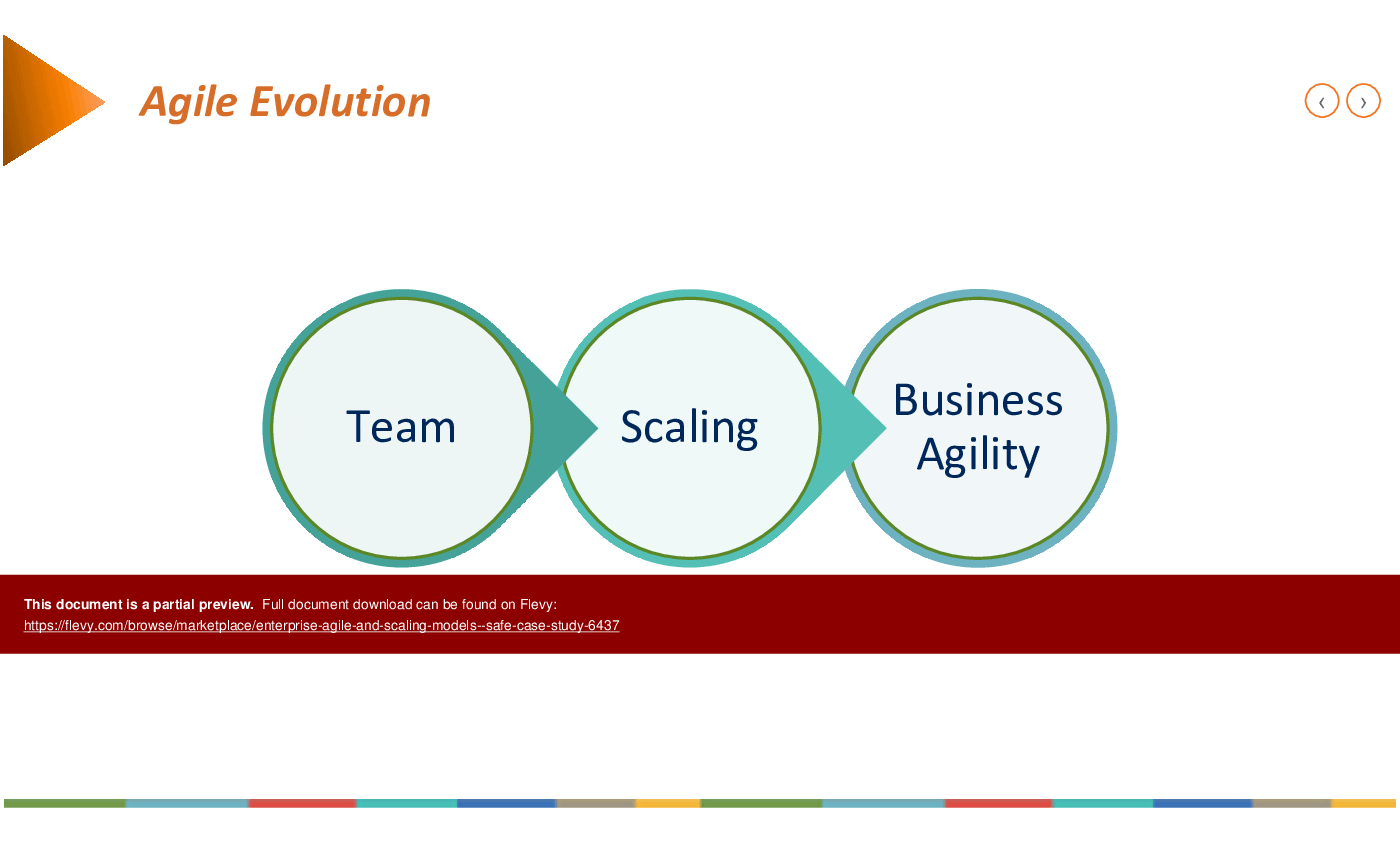
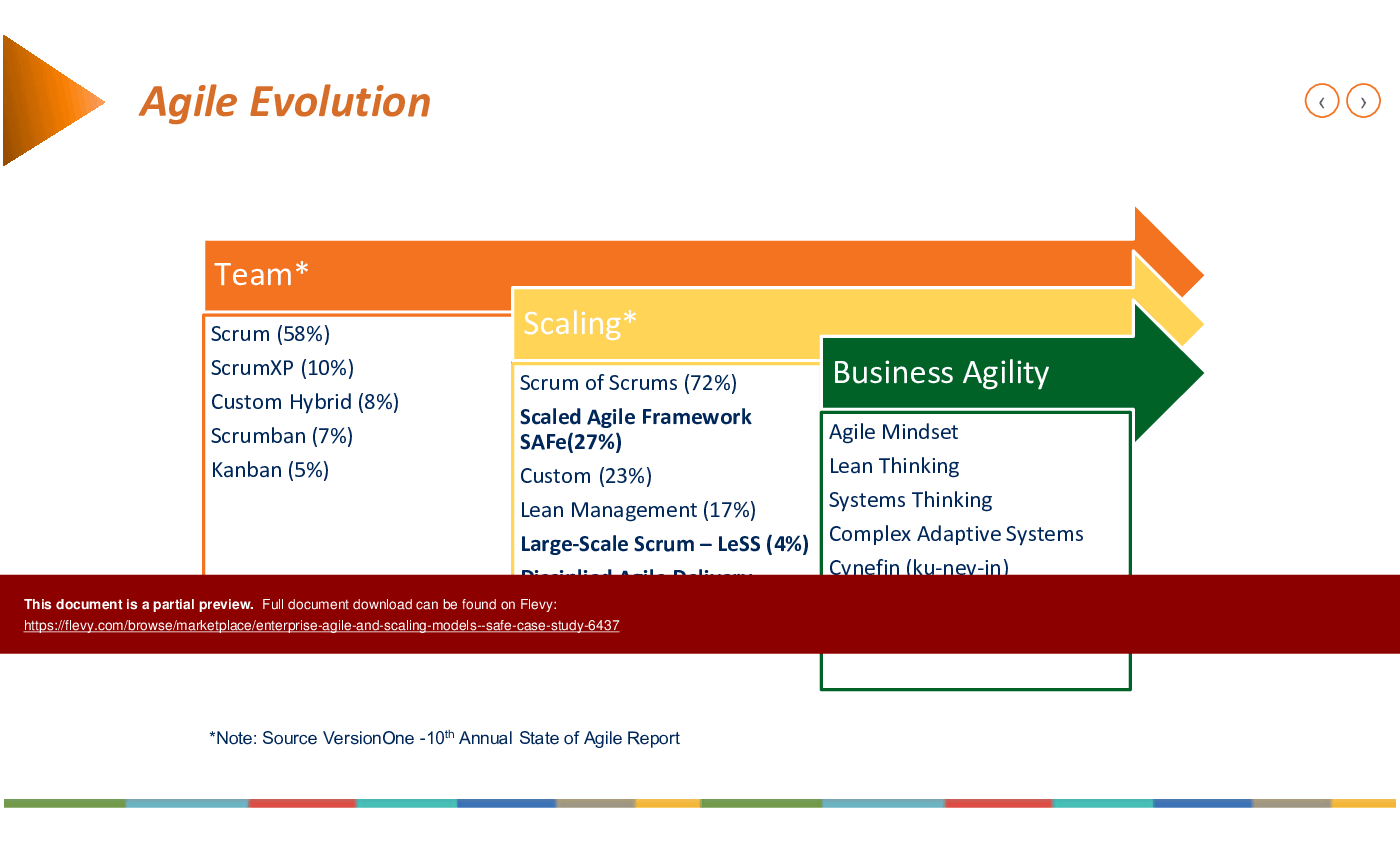
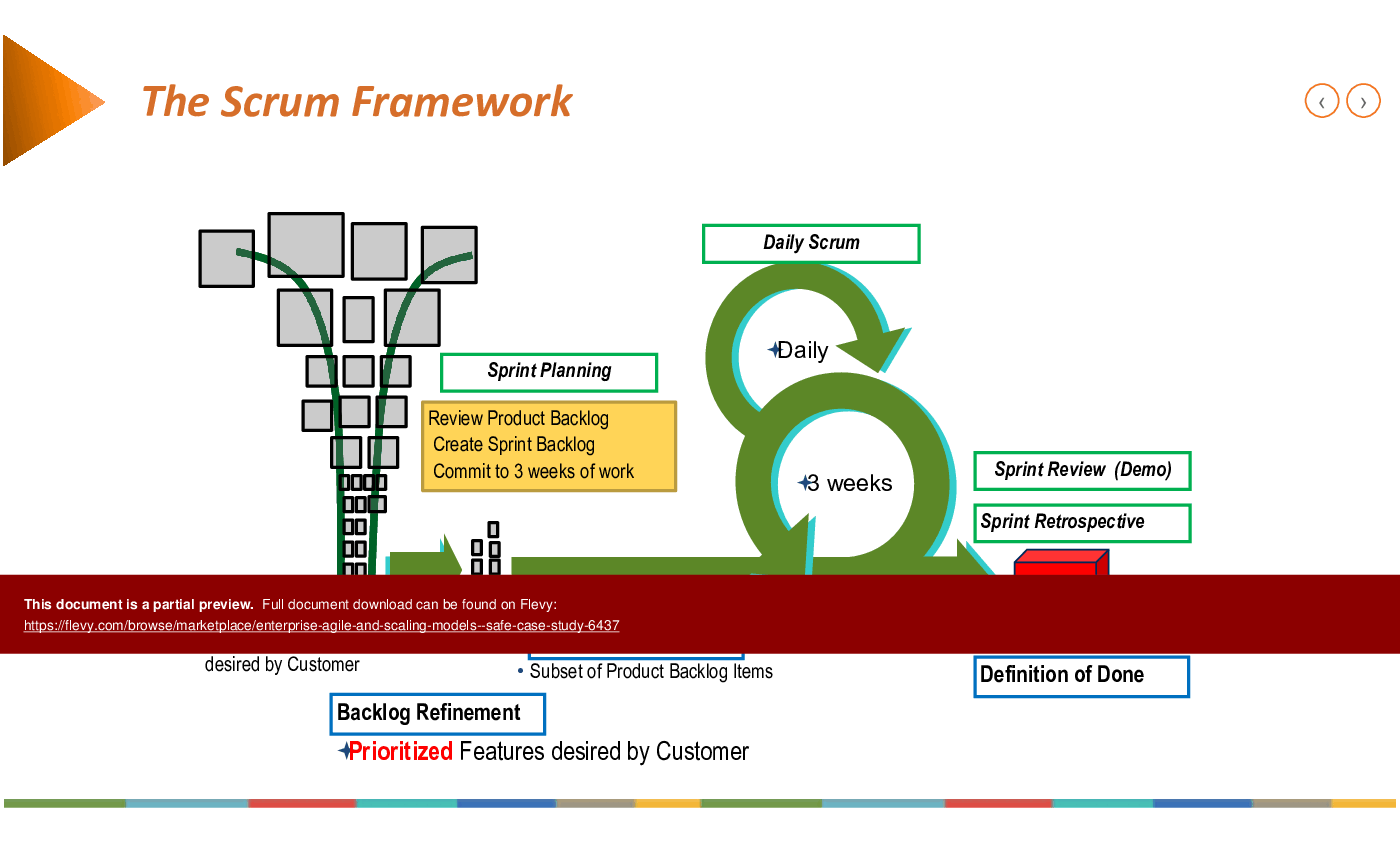

A framework helps you avoid reinventing the wheel with regard to the structure, processes and the principles to follow for you to become AGILE.
But the real challenges in an AGILE transition are at a completely different level.
They have to do with the mindset and the culture you need to become truly agile.
That means:
decentralizing decisions.
creating transparency and alignment around strategic goals and how you organize work.
finding a balance between autonomous teams and cross-team dependencies.
changing virtually everything in the way you organize work.
delivering sooner and perfecting products "in the wild."
collaborating throughout your business and with your customers.
updating, replacing, and integrating your information systems to enable transparent information flow throughout your company.
SAFeĀ® Framework provides guidance on three levels for product delivery in a scaled agile environment and adds guidance on extending agile across your enterprise with its fourth, portfolio level.
The last SAFe version extended that top level with a lot from Lean Portfolio Management.
Many agile practitioners consider SAFe overly prescriptive and complex.
This Powerpoint document can give you an effective way to understand the AGILE scaling concepts.
A generic SAFeĀ® study case will give you step-by-step understanding of the framework implementation process.
The pptx document is easily customizable, content can be removed. Plenty of graphics are included in order to get the holistic vision.
Got a question about the product? Email us at support@flevy.com or ask the author directly by using the "Ask the Author a Question" form. If you cannot view the preview above this document description, go here to view the large preview instead.
Executive Summary
The "Enterprise Agile and Scaling Models - SAFe Case Study" presentation provides a comprehensive overview of the Scaled Agile Framework (SAFe), detailing its implementation and operational strategies for large enterprises. Developed by a team with extensive consulting experience, this deck equips corporate executives and integration leaders with the tools to effectively adopt and scale Agile methodologies within their organizations. It emphasizes the importance of aligning teams, optimizing value streams, and fostering a culture of continuous improvement, ultimately enabling organizations to enhance their responsiveness to market demands and customer needs.
Who This Is For and When to Use
• Corporate executives overseeing Agile transformations
• Program and project managers implementing Agile methodologies
• Agile coaches and trainers facilitating team development
• IT leaders responsible for software delivery and integration
Best-fit moments to use this deck:
• During initial Agile adoption discussions to outline frameworks and methodologies
• In training sessions aimed at enhancing team fluency in Agile practices
• For strategic planning meetings focused on scaling Agile across multiple teams
Learning Objectives
• Define the core principles of the Scaled Agile Framework (SAFe)
• Identify the roles and responsibilities within Agile teams
• Establish a unified cadence for Agile Release Trains (ARTs)
• Develop strategies for optimizing value streams and reducing waste
• Implement metrics for measuring progress and value delivery
• Foster a culture of continuous improvement and collaboration
Table of Contents
• Agile Roots (page 3)
• Agile Fluency Model (page 5)
• Agile Methods Overview (page 7)
• Scaling Agile Frameworks (page 9)
• SAFe Overview (page 10)
• Implementation Strategy (page 55)
• Case Study Overview (page 58)
• SAFe Solution and Implications (page 59)
Primary Topics Covered
• Agile Roots - Explores the origins of Agile methodologies, including Lean and Six Sigma, and their evolution in software development.
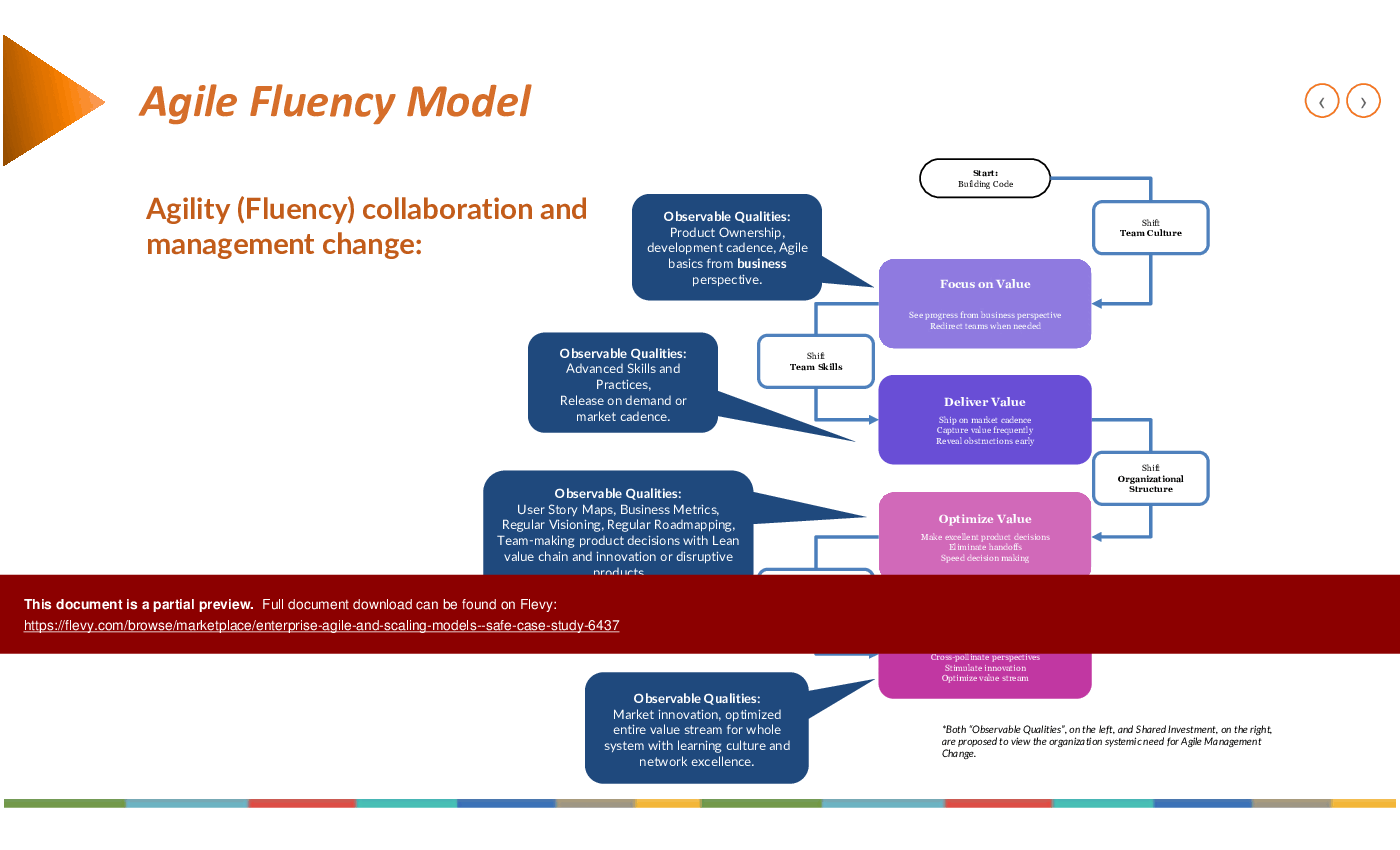
• Agile Fluency Model - Describes how teams progress through stages of Agile fluency, focusing on value delivery and optimization.
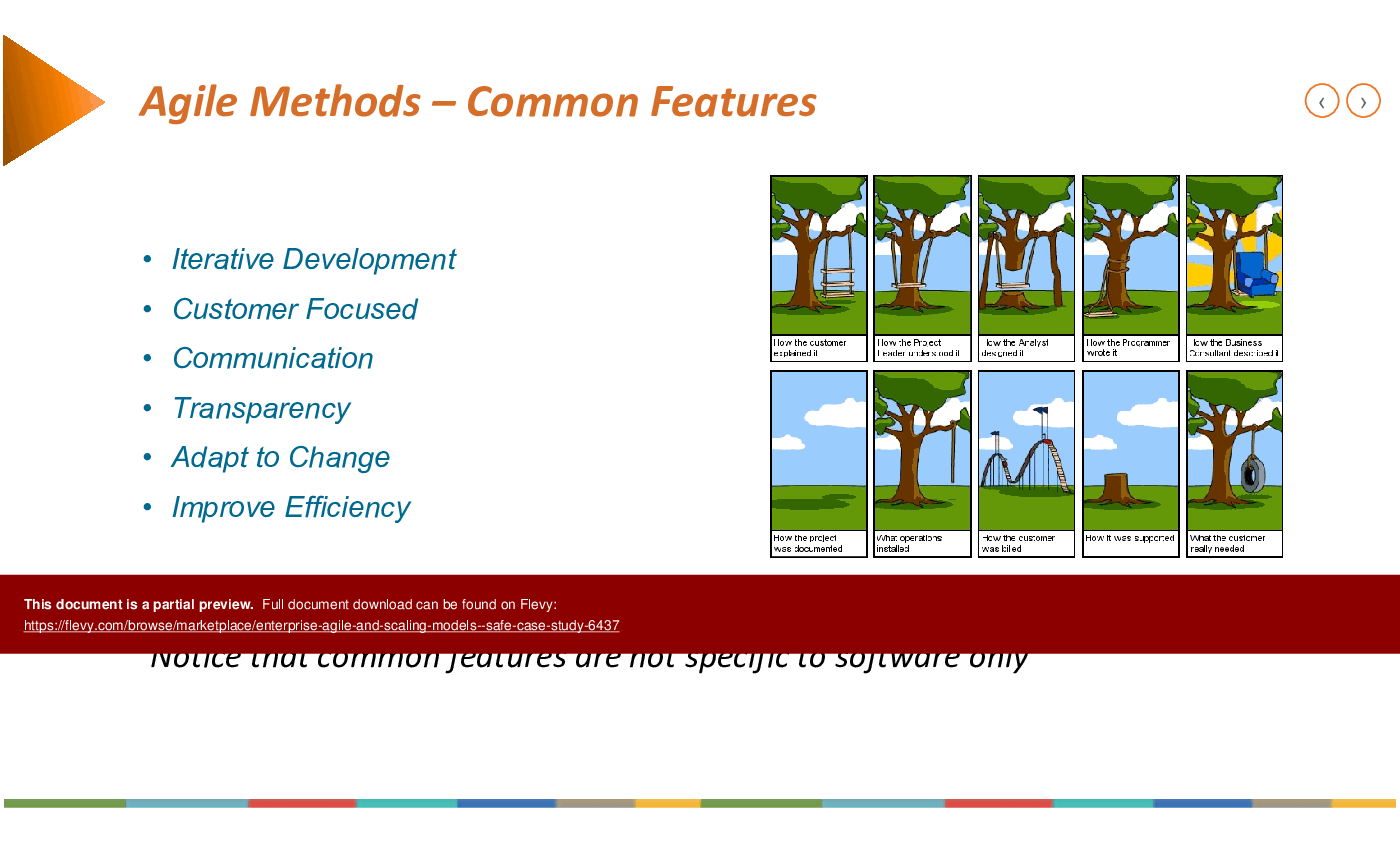
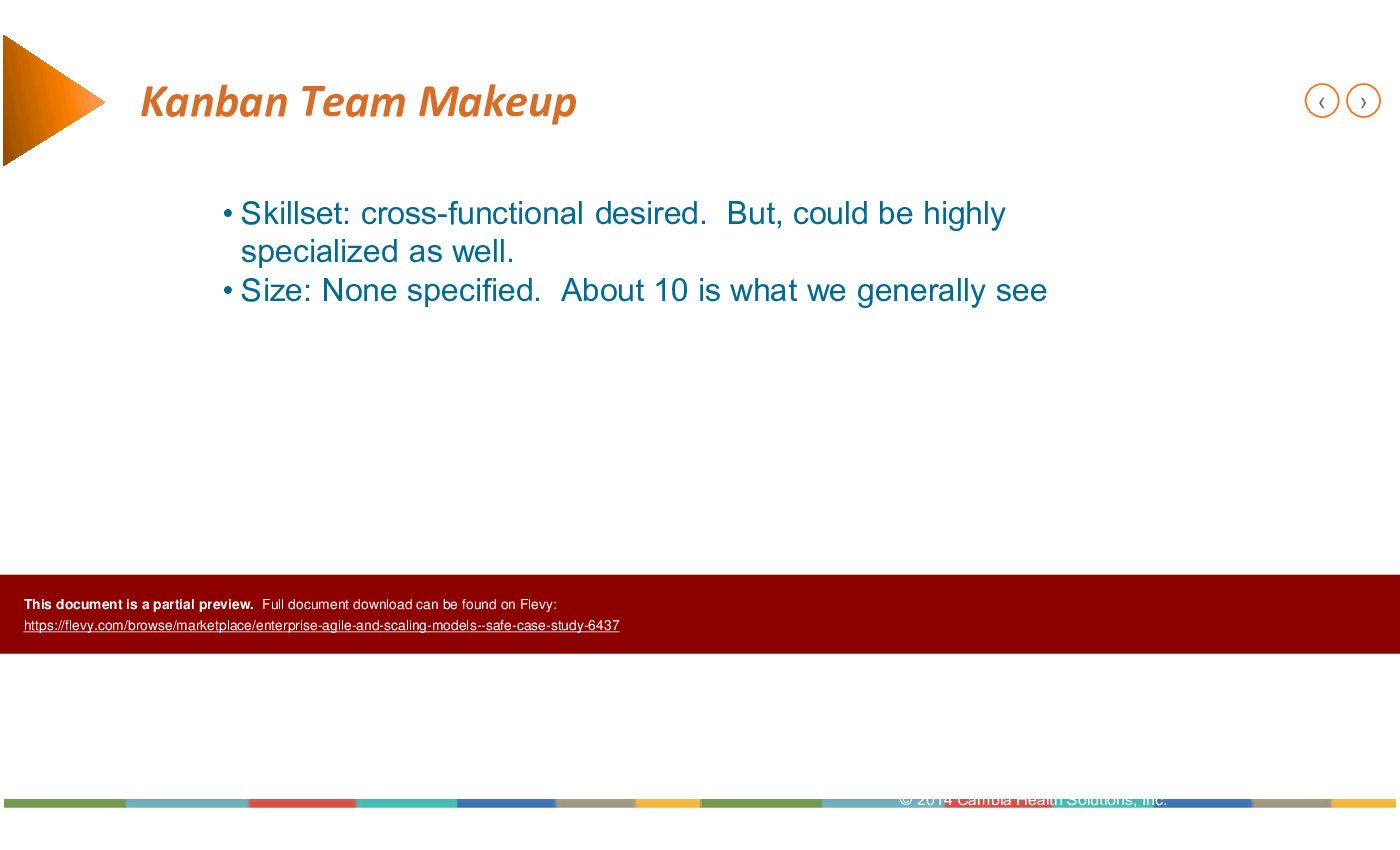
• Agile Methods - Outlines various Agile frameworks such as Scrum, Kanban, and Extreme Programming (XP), highlighting their common features.
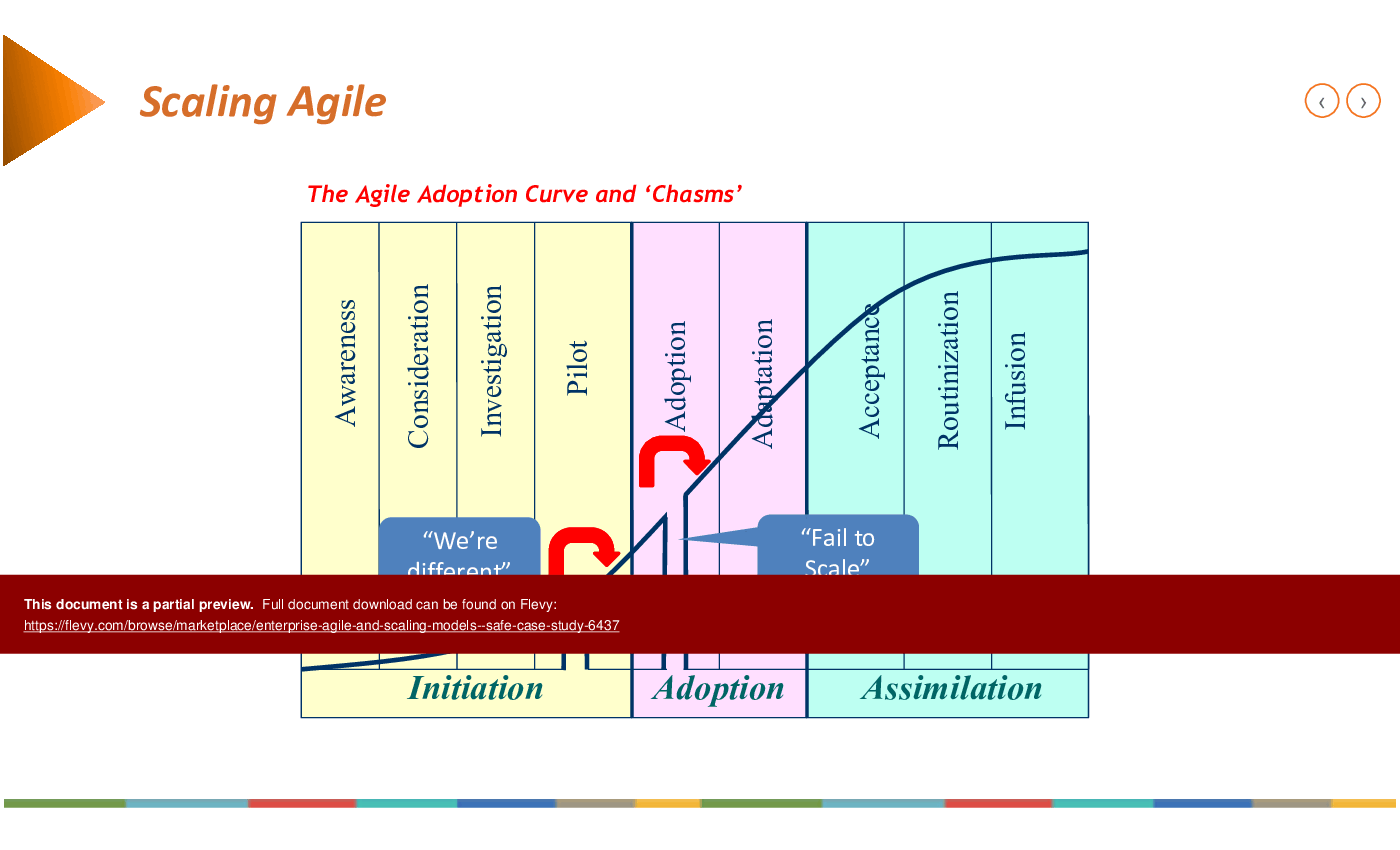
• Scaling Agile - Discusses frameworks for scaling Agile, including SAFe, Scrum of Scrums, and Large Scale Scrum (LeSS).
• SAFe Overview - Provides insights into the four-tier structure of SAFe and its application in large enterprises.
• Implementation Strategy - Details the roadmap for implementing SAFe, emphasizing training and continuous improvement.
Deliverables, Templates, and Tools
• Agile Release Train (ART) structure template
• SAFe implementation roadmap
• Metrics dashboard for tracking Agile performance
• Team roles and responsibilities matrix
• Value stream mapping tool
• Continuous improvement checklist
Slide Highlights
• Visual representation of the Agile Fluency Model illustrating team progression
• Overview of SAFe's four-tier structure, emphasizing alignment across teams
• Case study slide showcasing successful SAFe implementation in a corporate setting
• Metrics tracking slide detailing key performance indicators for Agile teams
• Agile methods comparison chart highlighting strengths and applications
Potential Workshop Agenda
SAFe Introduction and Overview (60 minutes)
• Discuss the principles of SAFe and its relevance to enterprise agility
• Review the Agile Fluency Model and its implications for team development
Implementation Strategy Session (90 minutes)
• Outline the steps for implementing SAFe within the organization
• Identify key roles and responsibilities in Agile teams
Metrics and Continuous Improvement Workshop (60 minutes)
• Explore metrics for measuring Agile success
• Develop a continuous improvement plan tailored to team needs
Customization Guidance
• Tailor the implementation roadmap to fit specific organizational contexts and timelines
• Adjust team roles and responsibilities based on existing structures and culture
• Incorporate company-specific metrics for tracking Agile performance
Secondary Topics Covered
• Lean principles and their application in Agile
• The role of leadership in fostering an Agile culture
• Techniques for effective backlog management
• Best practices for cross-team collaboration and communication
FAQ
What is the Scaled Agile Framework (SAFe)?
SAFe is a framework designed to help large organizations implement Agile practices at scale, focusing on alignment, collaboration, and delivery across multiple teams.
How does SAFe differ from other Agile methodologies?
SAFe provides a structured approach to scaling Agile across large enterprises, incorporating multiple levels of planning and coordination, unlike frameworks like Scrum that typically focus on individual teams.
What roles are defined within SAFe?
SAFe defines several key roles, including Product Owner, Scrum Master, and Release Train Engineer, each with specific responsibilities to ensure effective Agile delivery.
How can organizations measure the success of their Agile implementation?
Success can be measured through various metrics, including team velocity, customer satisfaction, and the frequency of value delivery, which help assess the effectiveness of Agile practices.
What is the Agile Fluency Model?
The Agile Fluency Model outlines the stages of team development in Agile practices, emphasizing the importance of value delivery and optimization as teams progress.
How can teams foster a culture of continuous improvement?
Teams can foster continuous improvement by regularly reflecting on their processes, incorporating feedback, and adapting practices based on lessons learned.
What are the key benefits of adopting SAFe?
Key benefits include improved alignment across teams, enhanced responsiveness to market changes, and increased efficiency in delivering value to customers.
How does SAFe support cross-team collaboration?
SAFe promotes cross-team collaboration through structured events like Program Increment (PI) planning, where multiple teams align on objectives and deliverables.
Glossary
• Agile - A methodology focused on iterative development and customer collaboration.
• Scrum - An Agile framework for managing complex projects with defined roles and ceremonies.
• Kanban - A visual workflow management method that emphasizes continuous delivery.
• SAFe - Scaled Agile Framework, designed for scaling Agile practices across large enterprises.
• Release Train Engineer (RTE) - A servant leader responsible for facilitating Agile Release Trains.
• Program Increment (PI) - A timebox for delivering value in SAFe, typically lasting 8-12 weeks.
• Value Stream - The series of steps that an organization takes to deliver a product or service to customers.
• Backlog - An ordered list of work items that need to be completed in Agile projects.
• Continuous Improvement - Ongoing efforts to enhance products, services, or processes.
• Agile Release Train (ART) - A team of Agile teams that work together to deliver value.
• Lean - A methodology focused on eliminating waste and maximizing value.
• Fluency - The level of proficiency a team has in Agile practices.
• Metrics - Quantitative measures used to assess performance and progress.
• Cross-Functional Team - A team composed of members with different expertise working towards a common goal.
• Iteration - A timebox during which a team works to complete a set of deliverables.
• Stakeholder - Any individual or group with an interest in the outcome of a project.
• Customer Collaboration - Engaging customers in the development process to ensure their needs are met.
• Feedback Loop - A process where outputs of a system are circled back as inputs to improve future performance.
• Empowered Team - A team that has the authority and autonomy to make decisions regarding their work.
• Self-Organizing Team - A team that organizes its own work without being directed by external authorities.
• Scrum Master - A facilitator for an Agile team, ensuring that Scrum practices are followed.
Source: Best Practices in Agile PowerPoint Slides: Enterprise Agile and Scaling Models - SAFe Case Study PowerPoint (PPTX) Presentation Slide Deck, RadVector Consulting
|
Download our FREE Digital Transformation Templates
Download our free compilation of 50+ Digital Transformation slides and templates. DX concepts covered include Digital Leadership, Digital Maturity, Digital Value Chain, Customer Experience, Customer Journey, RPA, etc. |










