
Domain Insights - Petroleum Industry   42-slide PPT PowerPoint presentation slide deck (PPTX)
$20.00

Domain Insights - Petroleum Industry (42-slide PPT PowerPoint presentation slide deck (PPTX)) Preview Image
Log in to unlock full preview.
Domain Insights - Petroleum Industry (42-slide PPT PowerPoint presentation slide deck (PPTX)) Preview Image
Arrow   Click main image to view in full screen.

Domain Insights - Petroleum Industry (PowerPoint PPTX Slide Deck)

PowerPoint (PPTX) 42 Slides

$20.00

Add to Cart


Immediate download
Fully editable PowerPoint
Free lifetime updates

OIL & GAS PPT DESCRIPTION

Editor Summary Domain Insights - Petroleum Industry is a 42-slide PowerPoint presentation (PPTX) delivering sector-level analysis of petroleum refining, including a historical timeline, industry value chain, refining process flow diagrams, product output models, IT solution frameworks, and challenge assessment tools. Read more

This document provides industry/domain insights on Petroleum industry.
Contents includes the following
Brief History Of Refining
Industry Value Chain
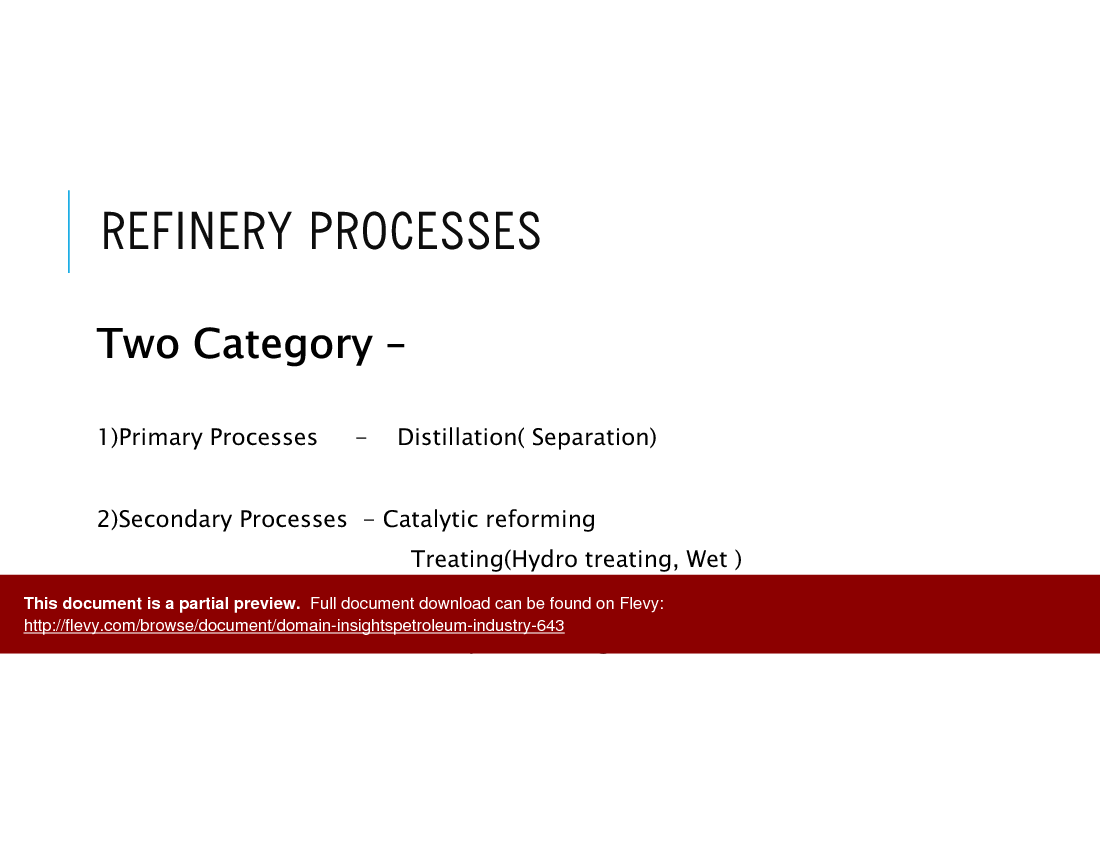
About Refining Processes
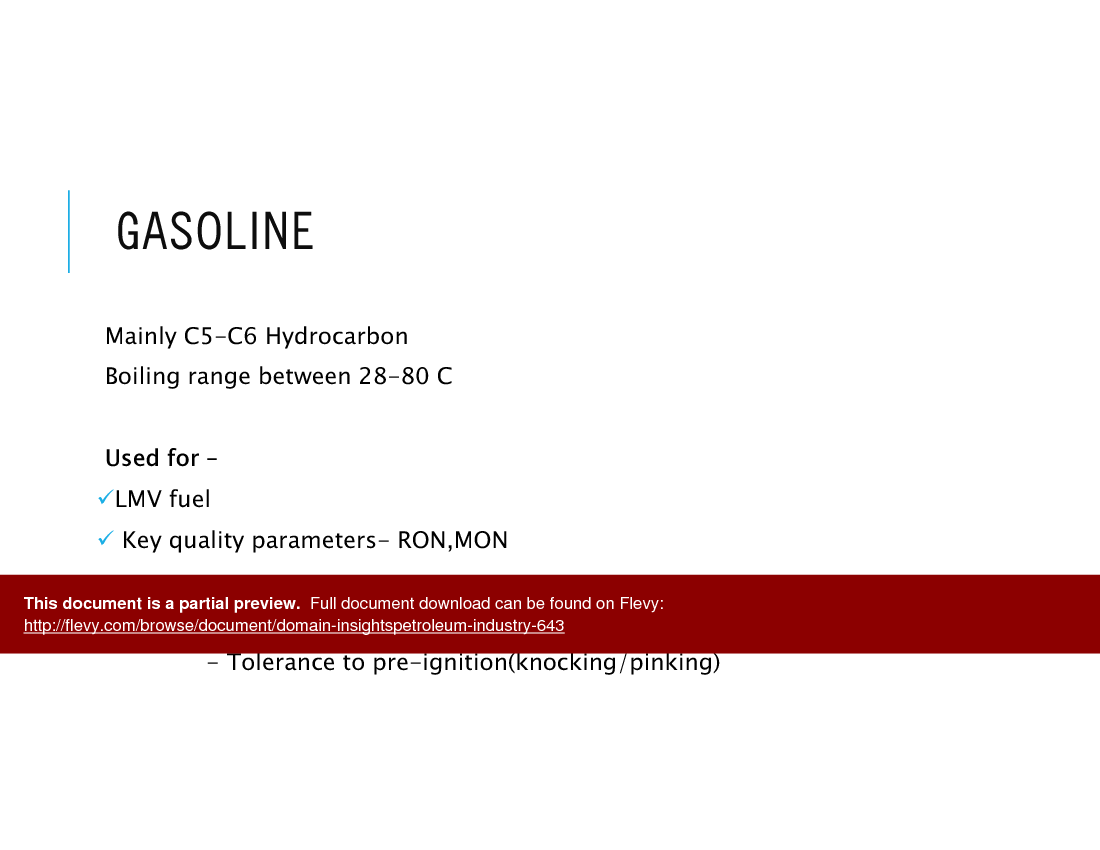
Different Refinery Products
Business Areas in Refining Industry
IT Solutions for the Refining Industry
Challenges in the Industry
Emerging Trends in Petroleum Industry

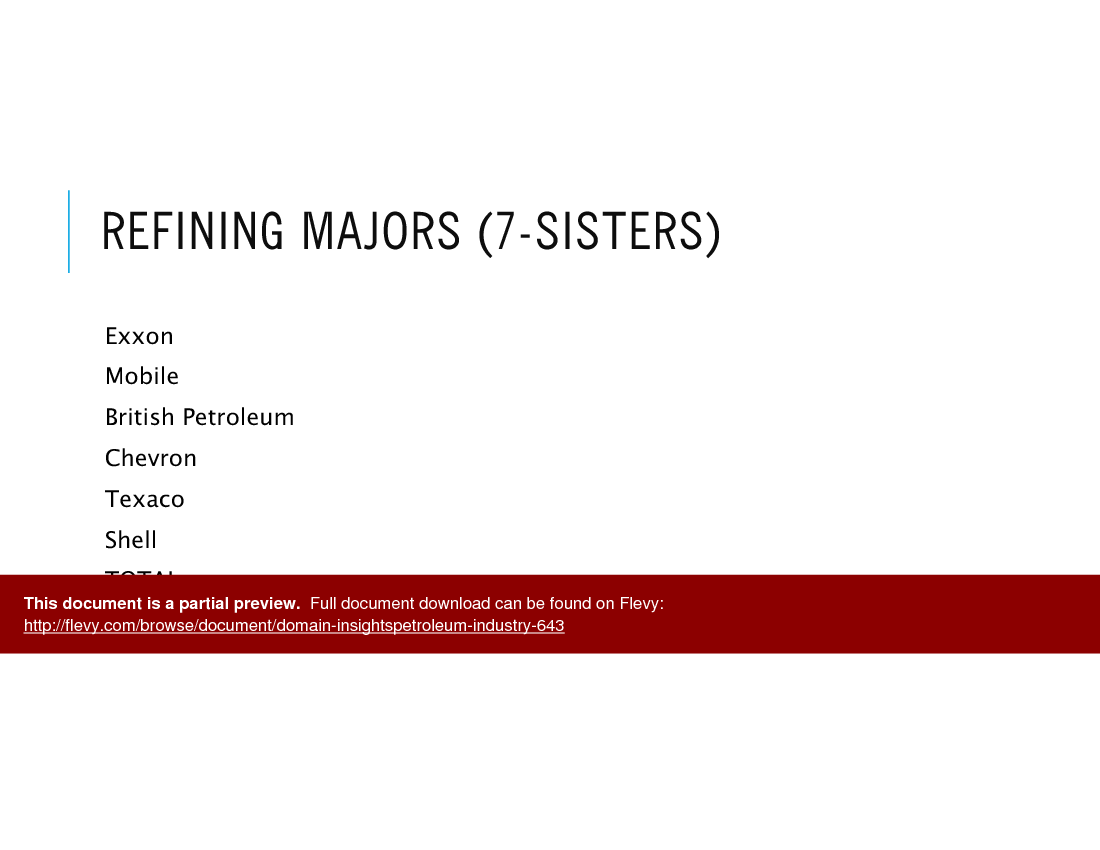
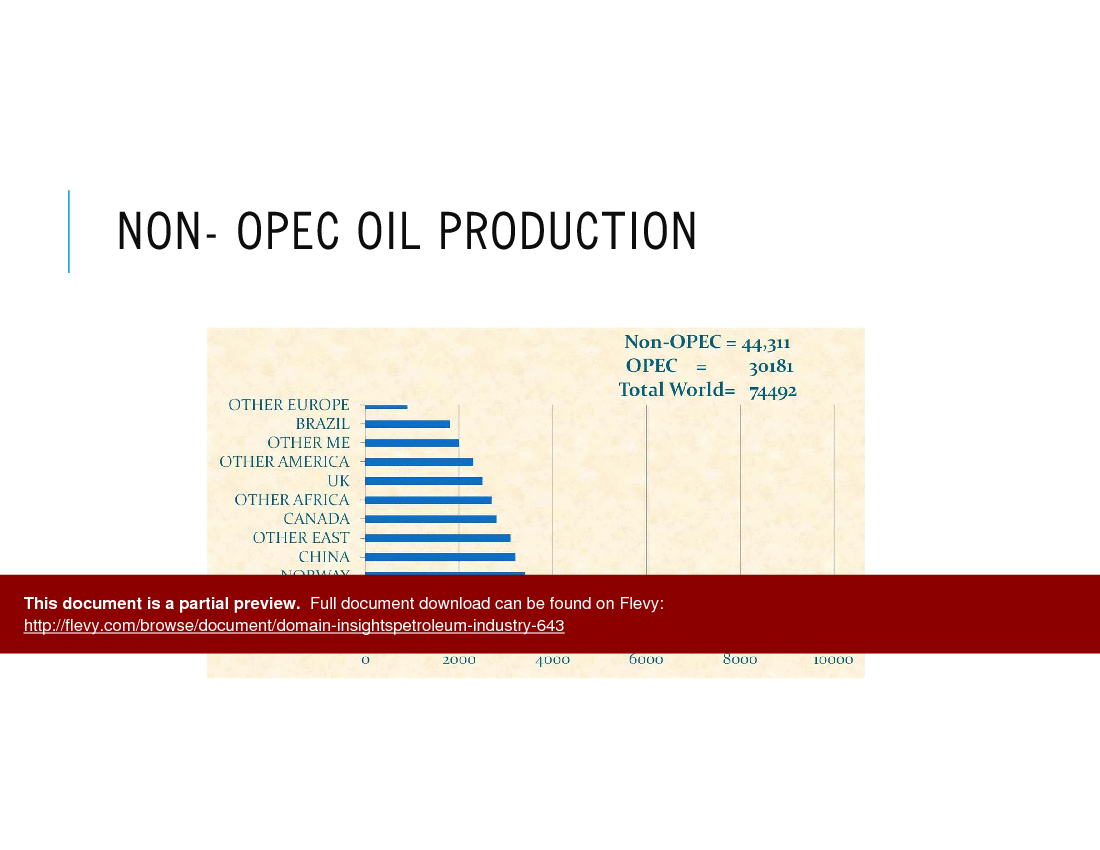
This presentation delves into the intricacies of the petroleum industry's refining majors, highlighting the key players known as the "7-Sisters." It provides a comprehensive overview of the major companies dominating the refining sector, such as Exxon, Shell, and Chevron. The document also explores the global landscape of oil production, distinguishing between OPEC and non-OPEC contributions. This segmentation is crucial for understanding market dynamics and the geopolitical factors influencing oil supply.

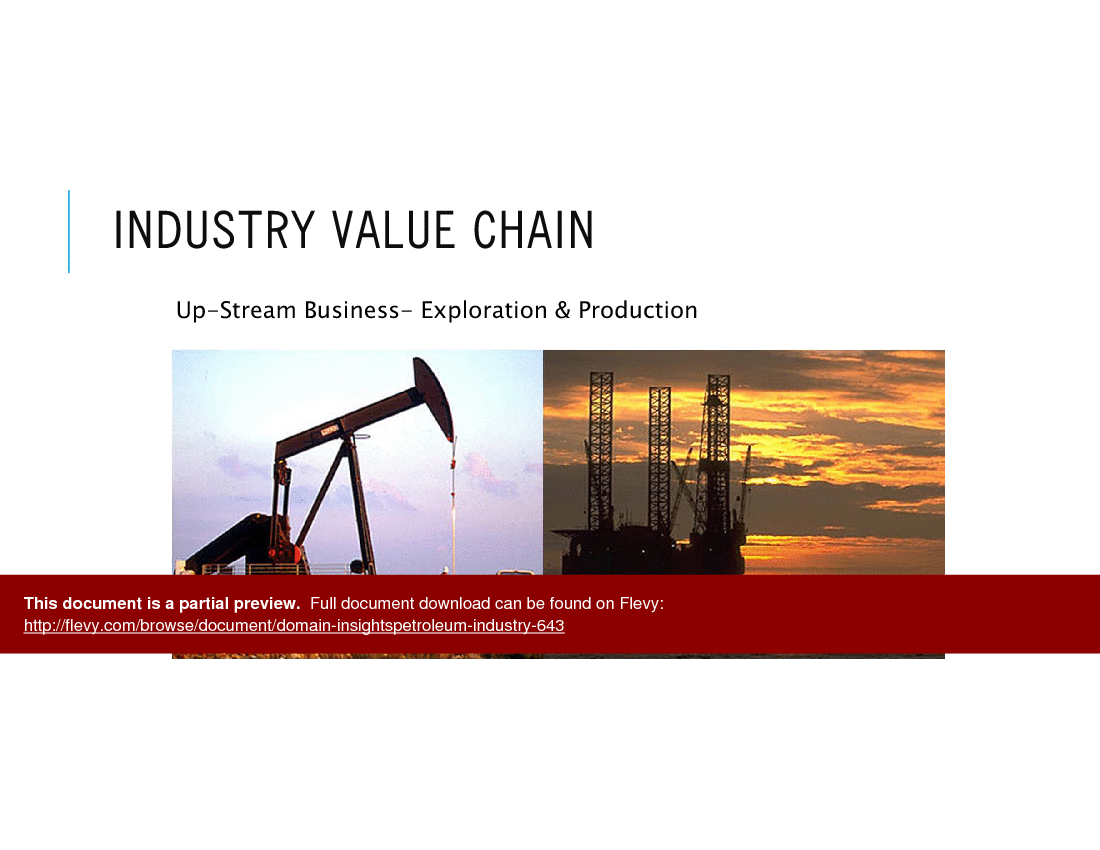
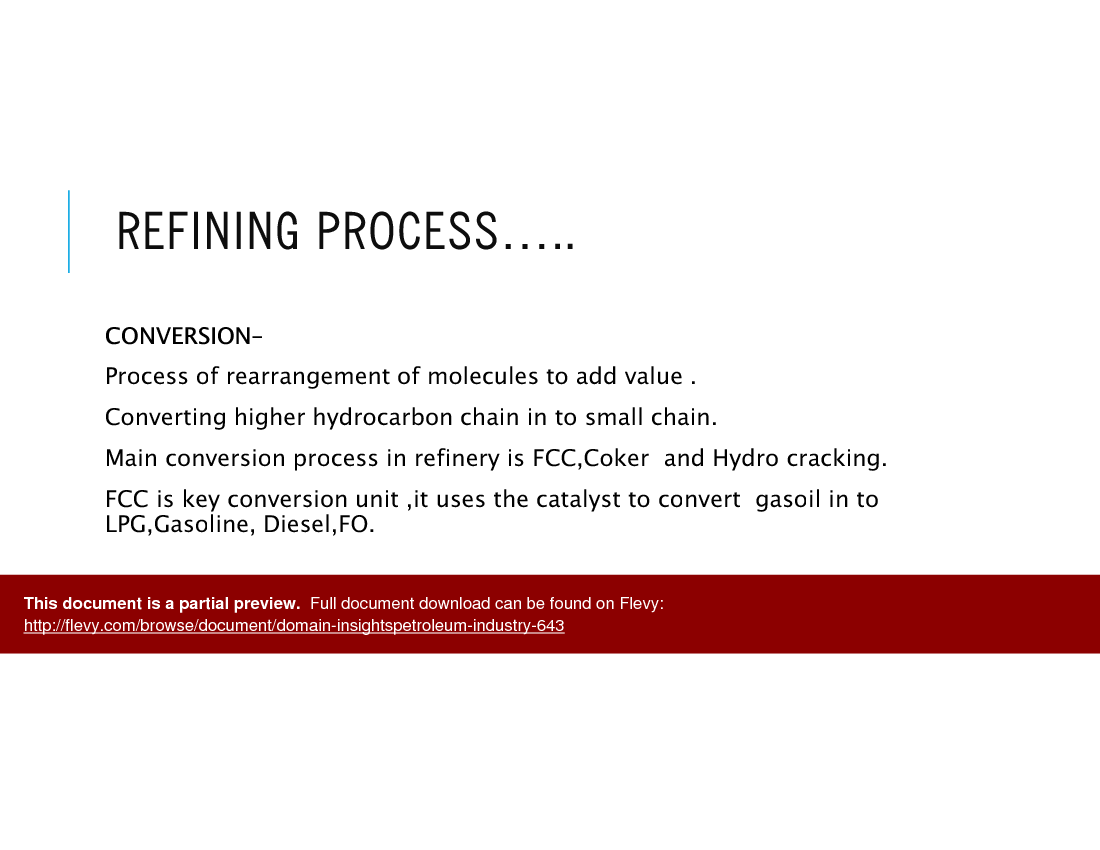
The industry value chain is meticulously detailed, covering upstream activities like exploration and production. The document breaks down refinery processes into primary and secondary categories, explaining essential techniques such as distillation and catalytic reforming. It also addresses the conversion processes that add value by rearranging hydrocarbon molecules, emphasizing the role of FCC units in producing key products like gasoline and diesel.

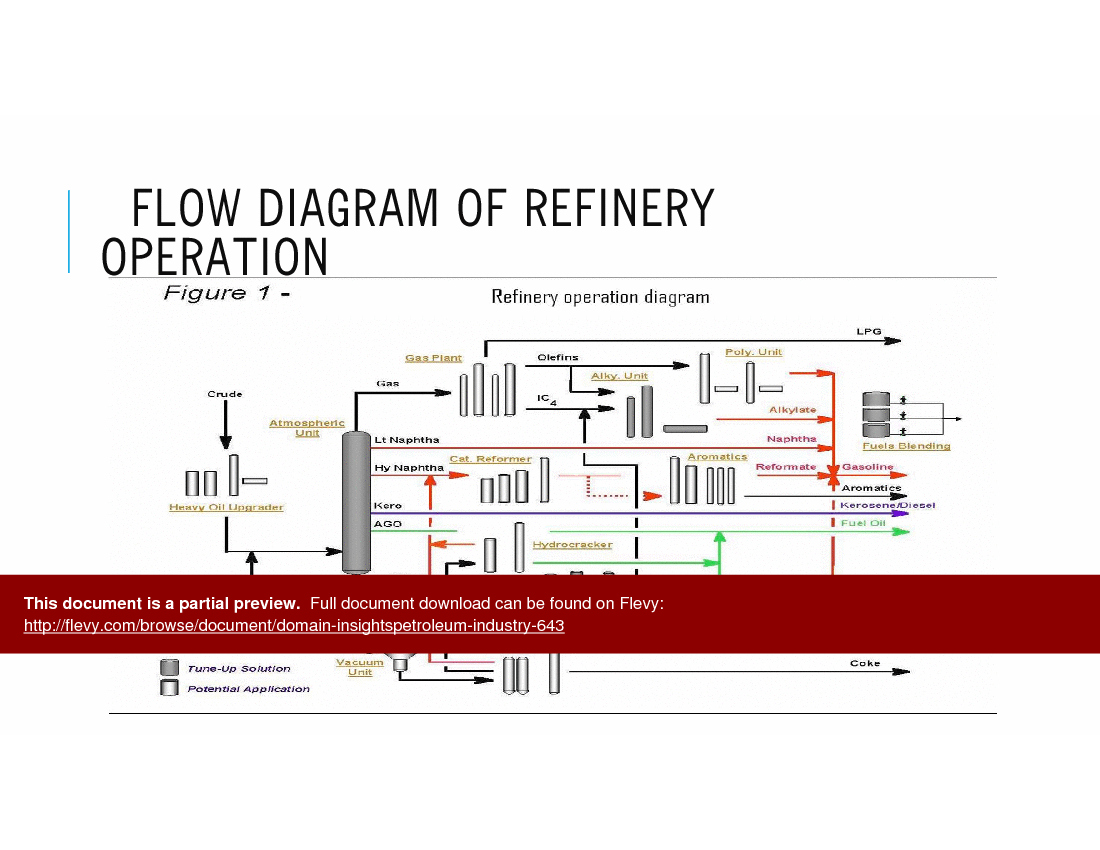
Visual aids, including flow diagrams of refinery operations and world oil product output charts, enhance the document's clarity. The presentation also touches on the logistics, supply, and trading aspects of the refining business, offering insights into crude oil pricing mechanisms. IT solutions tailored for the refining industry are discussed, highlighting their importance in managing plant information, assets, and incidents. This document is an invaluable resource for executives seeking a thorough understanding of the petroleum industry's refining segment.

Got a question about the product? Email us at support@flevy.com or ask the author directly by using the "Ask the Author a Question" form. If you cannot view the preview above this document description, go here to view the large preview instead.

MARCUS OVERVIEW

This synopsis was written by Marcus [?] based on the analysis of the full 42-slide presentation.


Executive Summary
The "Domain Insights - Petroleum Industry" presentation provides a comprehensive overview of the petroleum refining sector, detailing its historical context, value chain, refining processes, and emerging trends. This presentation is designed to equip corporate executives and consultants with critical insights into the industry's major players, including refining giants like Exxon and Shell, and the challenges they face. By leveraging this resource, users will gain a deeper understanding of refining processes, product outputs, and the integration of IT solutions, enabling informed decision-making and strategic planning.

Who This Is For and When to Use

•  Corporate executives in the petroleum sector
•  Consultants specializing in energy and resources
•  Business analysts focusing on refining and production
•  IT leaders implementing solutions in the refining industry

Best-fit moments to use this deck:

•  Strategic planning sessions for refining operations
•  Industry analysis and market entry discussions
•  Workshops on emerging trends and technological advancements
•  Training sessions for teams on refining processes and IT solutions

Learning Objectives

•  Define the historical context and evolution of the petroleum refining industry.
•  Analyze the industry value chain, including upstream and downstream processes.
•  Identify key refining processes and their significance in product output.
•  Evaluate the major players in the refining sector and their market dynamics.
•  Discuss the challenges faced by the petroleum industry and potential solutions.
•  Explore emerging trends, including alternative fuels and IT innovations.

Table of Contents

•  Brief History of Refining (page 3)
•  Industry Value Chain (page 10)
•  About Refining Processes (page 12)
•  Different Refinery Products (page 18)
•  Business Areas in Refining Industry (page 29)
•  IT Solutions for the Refining Industry (page 36)
•  Challenges in the Industry (page 40)
•  Emerging Trends in Petroleum Industry (page 41)

Primary Topics Covered

•  History of Refining - The presentation outlines the origins of the petroleum refining industry, highlighting the first refinery established in Romania in 1856 and the impact of historical events on its development.
•  Industry Value Chain - A detailed examination of the upstream and downstream segments of the petroleum industry, emphasizing exploration, production, and refining processes.
•  Refining Processes - An overview of primary and secondary refining processes, including distillation, catalytic reforming, and hydrocracking, which transform crude oil into usable products.
•  Refinery Products - A breakdown of key products derived from refining, such as gasoline, diesel, and LPG, along with their applications and significance in the market.
•  IT Solutions - Insights into technological advancements and IT solutions tailored for the refining industry, including process control, supply chain management, and quality control systems.
•  Challenges in the Industry - A discussion of current challenges, including rising costs, environmental regulations, and competition from alternative energy sources.

Deliverables, Templates, and Tools

•  Historical timeline of the petroleum refining industry
•  Value chain analysis template for upstream and downstream processes
•  Refining process flow diagrams for educational purposes
•  Product output analysis models for various refinery products
•  IT solution frameworks for refining operations
•  Challenge assessment tools for strategic planning

Slide Highlights

•  A historical overview slide detailing the first oil refinery and its evolution.
•  A visual representation of the industry value chain, showcasing upstream and downstream processes.
•  Flow diagrams illustrating the refining process from crude oil to finished products.
•  Graphs depicting world refining capacity and oil product outputs by region.
•  A slide summarizing the challenges faced by the refining industry and potential strategies.

Potential Workshop Agenda

Overview of Petroleum Industry (60 minutes)
•  Discuss the historical context and evolution of refining
•  Analyze the industry value chain and its components

Refining Processes and Products (90 minutes)
•  Review key refining processes and their significance
•  Explore various refinery products and their applications

IT Solutions and Challenges (60 minutes)
•  Examine IT solutions tailored for the refining industry
•  Discuss current challenges and emerging trends in the sector

Customization Guidance

•  Tailor the historical context section to reflect regional developments in refining.
•  Adjust the value chain analysis to include specific company data or market conditions.
•  Update the IT solutions section with current technologies relevant to the audience.
•  Incorporate localized challenges and trends based on geographic focus.

Secondary Topics Covered

•  Overview of refining majors and their market positions
•  Detailed analysis of crude oil pricing and market dynamics
•  Discussion on the role of OPEC and non-OPEC production
•  Insights into logistics, supply, and trading in the petroleum sector
•  Examination of alternative fuels and their impact on the industry

Topic FAQ

What are the primary and secondary refining processes I should know about?

Primary refining begins with distillation, which separates crude oil into component cuts by boiling point. Secondary processes modify or upgrade these cuts and include catalytic reforming, hydrocracking, and FCC units to produce higher-value fuels. The document lists distillation plus catalytic reforming and hydrocracking as key processes.

How is the petroleum industry value chain typically structured?

The industry value chain is divided into upstream activities—exploration and production—and downstream activities such as refining, logistics, supply, and trading. Understanding the split between upstream and downstream is central to assessing margins and strategic positioning, as highlighted in the value chain analysis template.

Which refinery products are most commonly produced and what are their uses?

Common refinery outputs include gasoline for light‑vehicle transport, diesel for freight and industrial use, and LPG used as a clean fuel or feedstock. The slides break down product outputs and applications, focusing on gasoline, diesel, and LPG as primary examples.

What major challenges are refiners facing today that should inform strategy?

Current industry challenges include rising input costs, tightening environmental regulations, and competition from alternative energy sources. These pressures affect refining margins and investment choices, and are summarized in the deck’s challenge assessment tools covering costs, regulation, and alternatives.

What should I expect from a paid industry slide deck when evaluating purchase options?

Look for historical context, value‑chain mapping, process flow diagrams, product-output models, IT solution coverage, and ready-to-use templates or workshop agendas. Domain Insights - Petroleum Industry explicitly provides these elements and a 42-slide structure for briefing or training needs.

How can a small consulting team justify buying a refinery industry briefing on a tight timeline?

A ready slide deck can save research and slide-creation time by supplying timeline slides, process flow diagrams, product output models, and workshop agendas that speed client briefings and workshops. Assess time saved against internal hours; this product includes process flow diagrams and templates.

I need materials to train operations staff on refining fundamentals—what should be included?

Training should cover refining history, primary and secondary processes, flow diagrams of refinery operations, product applications, and relevant IT/control systems. Domain Insights - Petroleum Industry includes timeline slides, refining process flow diagrams, and product breakdowns suitable for a training session.

When evaluating IT solutions for a refinery, which functional areas usually require priority investment?

Priority IT areas typically include process control systems, supply-chain management, quality control, plant information systems, and asset/incident management. The presentation discusses IT solutions tailored to refining operations, emphasizing process control and supply-chain management.

Document FAQ
These are questions addressed within this presentation.


What is the significance of the history of refining?
Understanding the history of refining provides context for current industry practices and challenges, illustrating how past events shape today's market dynamics.

Who are the major players in the refining industry?
Key players include Exxon, Shell, BP, and Chevron, known as the "Seven Sisters," which dominate the global refining landscape.

What are the primary refining processes?
Primary processes include distillation, which separates crude oil into components, and secondary processes like catalytic reforming, which enhance product quality.

What challenges does the refining industry face today?
Challenges include rising input costs, stringent environmental regulations, and competition from alternative energy sources.

How do IT solutions impact the refining industry?
IT solutions enhance operational efficiency, improve process control, and enable better supply chain management, ultimately driving profitability.

What are the emerging trends in the petroleum industry?
Emerging trends include the adoption of alternative fuels, advancements in refining technology, and increased focus on sustainability.

How is crude oil priced in the market?
Crude oil pricing is influenced by various factors, including location, quality, and supply-demand dynamics, with benchmark prices set by major markets like Brent and WTI.

What is the role of OPEC in the refining industry?
OPEC plays a crucial role in regulating oil production levels among member countries to stabilize prices and manage global supply.

Glossary

•  Refinery - An industrial facility where crude oil is processed into valuable petroleum products.
•  Distillation - A primary refining process that separates crude oil into its components based on boiling points.
•  Catalytic Reforming - A secondary refining process that converts low-octane naphthas into high-octane gasoline components.
•  LPG - Liquefied Petroleum Gas, a byproduct of refining used as a clean fuel.
•  OPEC - Organization of the Petroleum Exporting Countries, a group that coordinates oil production policies among member nations.
•  Crude Oil - Unrefined petroleum extracted from the ground, consisting of hydrocarbons and other organic materials.
•  Refining Margin - The difference between the cost of crude oil and the selling price of refined products.
•  Feedstock - Raw material supplied to a refinery for processing.
•  Hydrocracking - A refining process that breaks down heavy hydrocarbons into lighter products using hydrogen.
•  Cetane Index - A measure of the ignition quality of diesel fuel.
•  Octane Rating - A measure of a fuel's ability to resist knocking during combustion.
•  Biofuel - Renewable fuel derived from biological materials, seen as an alternative to traditional fossil fuels.

Source: Best Practices in Oil & Gas PowerPoint Slides: Domain Insights - Petroleum Industry PowerPoint (PPTX) Presentation Slide Deck, CreativeStrategist


$20.00

Add to Cart
  

ABOUT THE AUTHOR

Ask the Author a Question

You must be logged in to contact the author.

Click here to log in Click here register

Did you know?
The average daily rate of a McKinsey consultant is $6,625 (not including expenses). The average price of a Flevy document is $65.


Trusted by over 10,000+ Client Organizations
Since 2012, we have provided business templates to over 10,000 businesses and organizations of all sizes, from startups and small businesses to the Fortune 100, in over 130 countries.
AT&T GE Cisco Intel IBM Coke Dell Toyota HP Nike Samsung Microsoft Astrazeneca JP Morgan KPMG Walgreens Walmart 3M Kaiser Oracle SAP Google E&Y Volvo Bosch Merck Fedex Shell Amgen Eli Lilly Roche AIG Abbott Amazon PwC T-Mobile Broadcom Bayer Pearson Titleist ConEd Pfizer NTT Data Schwab



Read Customer Testimonials

 
"As a consultant requiring up to date and professional material that will be of value and use to my clients, I find Flevy a very reliable resource.

The variety and quality of material available through Flevy offers a very useful and commanding source for information. Using Flevy saves me time, enhances my expertise and ends up being a good decision."

– Dennis Gershowitz, Principal at DG Associates
 
"Last Sunday morning, I was diligently working on an important presentation for a client and found myself in need of additional content and suitable templates for various types of graphics. Flevy.com proved to be a treasure trove for both content and design at a reasonable price, considering the time I "

– M. E., Chief Commercial Officer, International Logistics Service Provider
 
"As a small business owner, the resource material available from FlevyPro has proven to be invaluable. The ability to search for material on demand based our project events and client requirements was great for me and proved very beneficial to my clients. Importantly, being able to easily edit and tailor "

– Michael Duff, Managing Director at Change Strategy (UK)
 
"One of the great discoveries that I have made for my business is the Flevy library of training materials.

As a Lean Transformation Expert, I am always making presentations to clients on a variety of topics: Training, Transformation, Total Productive Maintenance, Culture, Coaching, Tools, Leadership Behavior, etc. Flevy "

– Ed Kemmerling, Senior Lean Transformation Expert at PMG
 
"As a niche strategic consulting firm, Flevy and FlevyPro frameworks and documents are an on-going reference to help us structure our findings and recommendations to our clients as well as improve their clarity, strength, and visual power. For us, it is an invaluable resource to increase our impact and value."

– David Coloma, Consulting Area Manager at Cynertia Consulting
 
"I have used Flevy services for a number of years and have never, ever been disappointed. As a matter of fact, David and his team continue, time after time, to impress me with their willingness to assist and in the real sense of the word. I have concluded in fact "

– Roberto Pelliccia, Senior Executive in International Hospitality
 
"I have found Flevy to be an amazing resource and library of useful presentations for lean sigma, change management and so many other topics. This has reduced the time I need to spend on preparing for my performance consultation. The library is easily accessible and updates are regularly provided. A wealth of great information."

– Cynthia Howard RN, PhD, Executive Coach at Ei Leadership
 
"I am extremely grateful for the proactiveness and eagerness to help and I would gladly recommend the Flevy team if you are looking for data and toolkits to help you work through business solutions."

– Trevor Booth, Partner, Fast Forward Consulting


Customers Also Bought These Documents


Customers Also Like These Documents

Explore Templates on Related Management Topics


Your Recently Viewed Documents
Download our FREE Strategy & Transformation Framework Templates

Download our free compilation of 50+ Strategy & Transformation slides and templates. Frameworks include McKinsey 7-S Strategy Model, Balanced Scorecard, Disruptive Innovation, BCG Experience Curve, and many more.








